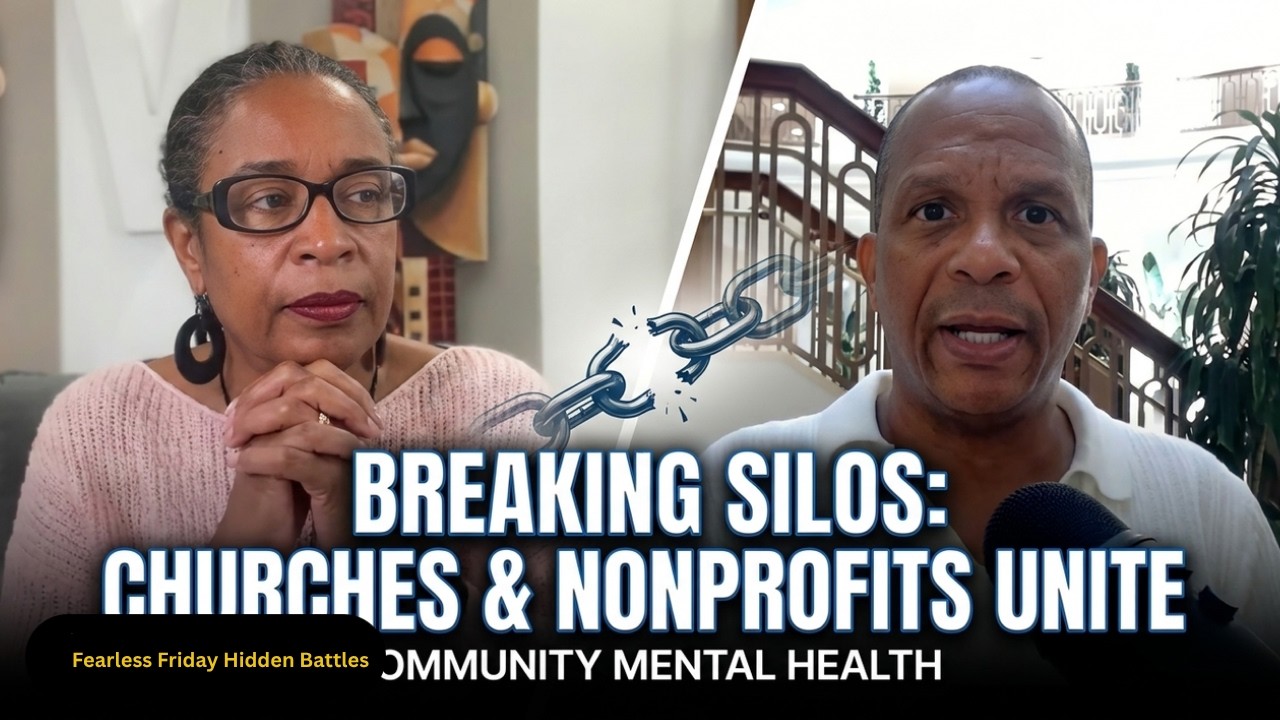
Vanessa Lindsey and Sidney Johnson argue that churches can become mental health hubs by partnering with nonprofits to secure federal grants and training. They cite examples from Black churches and HIV testing programs, and discuss using AI software to manage compliance and accountability in these integrated services.
Chapters
Ladies and gentlemen, welcome to Empowering Authentic Conversations with Vanessa Lindsey and Sidney Johnson. Enjoy the show.
We're dealing with the behavioral health issues. We are dealing with the, what they call mental health issues, and being able to build that as actual segments with inside the church itself. So that way it's internal into the community as opposed to external. If somebody is able and has issues on, on just want to be seen, just want to be talking to somebody, I believe like in most things that we was raised around inside ministry and church or organizations such as that, right? That used to be the all-call for everything. But now we have the space and the ability to be trained.
Yes.
I'm looking at this from different prisms right now and different directions. Hey, we can not only help facilitate ourselves internally with doing nonprofits, right, and specializing in it and being able to have programs, not the feel-good situations and think we having something, but literally programs that point directly to where the funding is in accordance with that program or in accordance with the root of that, of that source, if you will. I'm unpacking that. I believe that it's so much that can be obtained in building projects and programs or packages simply for that particular environment because there's so many faith-based organizations out that way. Hey, look, ministries, behavioral health has to be embedded inside. It's hard, Sidney.
I'm not even gonna lie. I'm not gonna sit up here and fake. That is, the churches were our hardest people for us to deal with when we were working in the community.
Yeah.
We could not get them to work, participate. We come to them with funding. They like— I'm sorry, churches work in silos. And I'm just going to be honest. You can find some that will, but the majority work in silos. They don't even want to work across the street with the church that's across the street and around the corner with the same name. We ain't working together.
I know.
And how do you get them out of silos? Because you got to do the work in the community.
It's the leadership.
It's leadership and training.
It really is. It's completely leadership-driven and trained. And when people have problems, they have problems. And spiritual edification is just one of the narratives with inside the problems that has to be educated and resolved, because you still have to get out practically and go do stuff. We can go to the altar, right? And we can get that manifestation. And then, but the training of the individual Church itself has to be trained to identify mental health and behavioral health patterns and situations so we can walk that out for them.
And you know, they serve us, right?
They have a service for that.
And how many resources could come into the churches? Because you have these nonprofits, the churches might not be able to write the grants to the federal government to get the funding, but guess what? They could partner with nonprofits. Nonprofits write the grants and they write them in as a partner. And then they can get the money to provide the services. Like Kathy is talking about, her thing is mental health in the Black church. Man, Kathy, find you a nonprofit, partner with them, have them write you in, and then they can help fund that within the church because it's powerful. We want to see the churches working together because we know that's where the people are. They're not— a lot of them aren't coming to the organizations as much as they used to, but the parents are still saying, if you don't get your butt up and go to church this morning, you better get up and go to church, right? They're going to be at church, and that's where you have an opportunity to get them.
Yeah, that's right. So back in the day, the church was the sole source of much of our communities and involvement inside of our communities, right?
Yeah.
The answer was always, we're going to have a church meeting. And so this is what allowed us to go through the worst of times. But today we need that same element, but we need to be thoroughly trained. People that go to church have backgrounds. Some of them are professionals. We come from all parts of society. So what's wrong with having that embedded with inside your nonprofit? As is in the actual program.
That's right, that's right. And at some church— I'm not gonna say all of them, but some of them were good. They know we want to come in and we may want to do HIV testing. Back in the day, they would let us come in. Right now, we want to come in and we want to do sexual abstinence, and so some may let us come in and do sexual abstinence. But to really partner— because what it would be ideal if you had people within the church that was trained on sexual abstinence and the same curriculum we're teaching to the kids in schools and on the streets, those ones that fall through the cracks. And they're in the churches, they can get the same information. So there's consistency. And where it doesn't cost the churches anything to come get this training. Oh, we'll pay for it if you'll partner with us and you would teach the kids this information. But there's so many resources. Yeah, there needs to be some type of partnership.
And that really needs to be explored. That's something that perhaps we need to get together on and start communicating about, because I'm down with that completely. I'm all about the accountability and the responsibility with inside the body of Christ. And that's a big nurture for me, even in the software that I— in the AI software that I design and build. build for organizations, churches, all the way down to legal and everything. It all has to deal with being grounded and responsible and accountable for what we're doing out here.
And I just, I want to comment on what Kathy said. She said that's why you offer services for the children and women. If you can serve them, you change the community, city, state, nation. And you're absolutely right. And one thing I find, I think that may be the key too, Kathy, is that a lot of the parents— oh my gosh, it's so hard in the community to get them to come to services. Come, we got the services for your child, we have these services for you parents. Oh, we want you to come and do this. They don't want to participate, but guess what? They'll go to church. And if you can access them in the church— but if we can get the nonprofits and the churches to work together, then those resources can go to the women. Because a lot of the mothers and the parents— oh, PTA, oh my, I'm busy, and now you want me to come to this class, you want me to learn this, you want me to do that. But we know on Sunday they're going to be in church. On Wednesday, there's probably going to be a Bible study. That's what we need to really access.
Those are the gateways. Those are the access points to them.
That's right.
You know, and a lot of them, they typically take their directions from the pastors or the senior leadership. But in the end, with that venue, this is why the access point is very imperative to go to the senior leaders to say, hey, this is what we're being provided.