Fearless Fridays - Hidden Battles
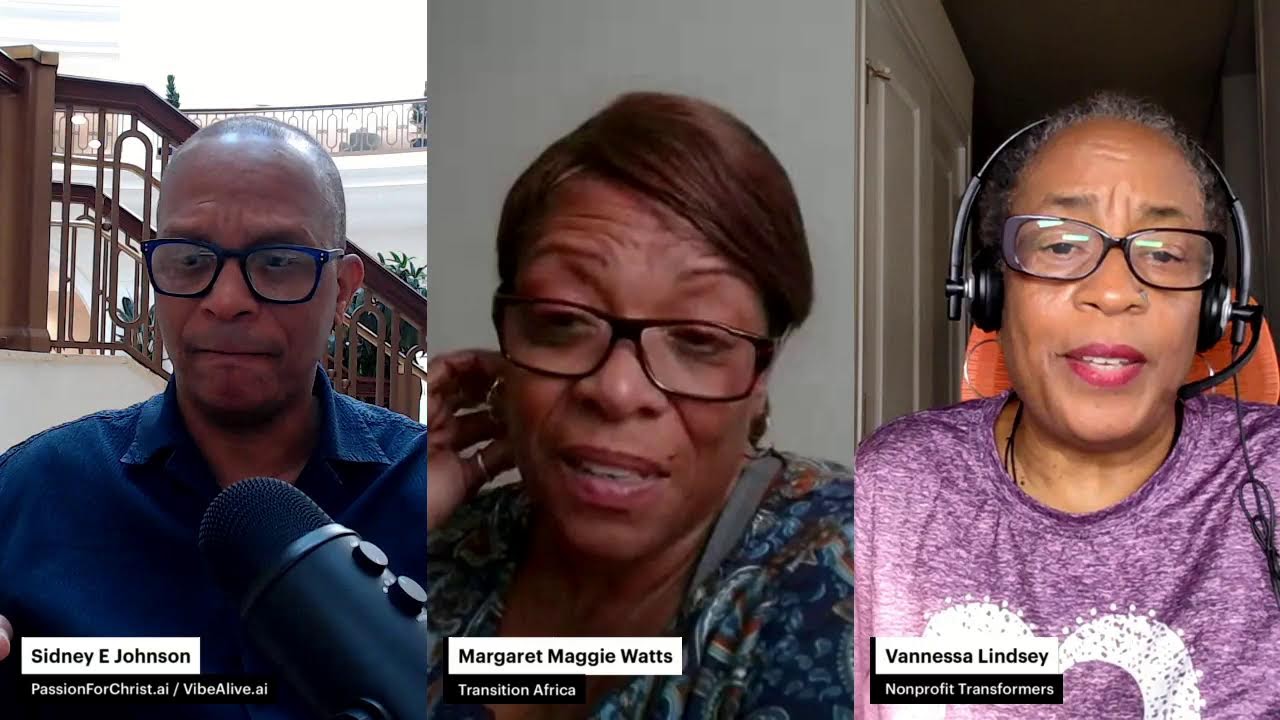
Maggie Lindsey, a retired civil servant and rehab counselor, is relocating to Ghana after 30 years of friendship with hosts Vanessa and Sydney. She's spent three years planning, bought two land plots in Cape Coast, and is building a 3,000-sq-ft round house. Shipping her vehicle alone costs $7-10k, and she plans to start a nonprofit bringing medical equipment to Ghana.
Chapters
Ladies and gentlemen and gentlemen, gentlemen, welcome to Fearless Friday with your hosts Vanessa Lindsey and Sydney Johnson, empowering to live fearlessly through authentic conversations that inspire purpose and action. I'm your resident DJ, DJ Woody Wood, and I hope you enjoy.
Hey, hey, hey, hey, everybody! I am so excited. Welcome to Fearless Fridays Hit Battles, and I am so excited because we have somebody. I was going to call him my childhood friend, but I guess we've known each other for over 30 years. So I guess we were really children back 30 years. I guess we were kind of children back then.
It's hard to count friends for 30 years now.
All right, we thought we was grown. When hindsight, we look at the 30-year-olds, we're like, look, that kid over there.
Exactly.
Yes.
So where'd y'all grow up at?
No, we, we, Sacramento. Sacramento, California.
Okay, that's right up the road.
Yes, yes, yes, yes, yes. And Margaret, I am excited. She is a retired civil servant. Civil servant. You don't see too many retired civil servants, so thank you, thank you, thank you. And we will talk about— so you have so many passions. It's just so good to have you here because Maggie— Margaret, I call her Maggie, everybody. So if I forget Margaret, I'm okay.
Thank you.
Margaret has so many— I can call her Maggie. Margaret has so many passions, and one of her biggest passions is working with people with disabilities. And that's where you were working at when we met, working with people with disability, right? Rehab.
So yes, I was a rehab counselor.
Yes. And so that's her plight. Her plight is to work with them. But what we're here to talk about today is something so exciting. If you are ready to exit the U.S. and move to Africa going to want to stay in conversation because Miss—
want to stick around—
is getting ready to exit the U.S. and head over to Africa. And those are some of the things that we want to unpeel today, is talk about what it's like to move over, to leave the U.S. and get ready to move to Africa. So Margaret, welcome, and tell us about yourself.
Okay, well, you said a lot. Uh, been retired since 2014, 2015. And I moved to North Carolina 21 years ago last May, which is—
Hey, for North Carolina in the house.
It seemed like it went so fast.
It did.
Yeah. So I guess I'm a North Carolinian. I think they say after 20 years you're considered a North Carolinian, right? But so I consider North Carolina now home, soon to be my transitioning home. And I have been here. I retired here from the state working in Medicaid. So I was working in Medicaid as the CHIP director, Children's Health Insurance Program director, with the Health Choice program. And I was running the Medicaid program for kids that, that had to pay. So I enjoyed that. It wasn't— Medicaid was never my choice, but actually I'm really glad I got into that field. And in California, I was working at the Office of Criminal Justice Collaboration, was my last job as the chief of the, um, that program. And that was doing drug treatment. We were actually allocating the drug treatment programs to the counties, Vanessa. So your program was probably getting some of that money. Oh, you know, yeah. And we oversaw the public drug courts. I think there was like 58 public drug courts. So I have a passion for working with people with disabilities and working in the mental health field and drug treatment and retired. Well, I didn't even retire. I left California. California was just getting way too expensive for me. And I came to visit North Carolina just like I did Ghana. And I told my family, I said, I'm leaving, I'm going to North Carolina. And they all kind of laughed at me and like, oh yeah, right, girl. So 3 years later, I was doing the Prince wave as I pulled out the driveway for the last time. And I'm like, see y'all later. So, uh, one of my sisters is here now. I'm actually staying with her as I transition. And, um, my kids were here. Most of them were here and left, went back to California, of course. So that's how I ended up here. And, um, right now I'm retired and I, I do whatever I want to do. That's what I tell people.
Amen to that.
That's what you're supposed to do, right?
That's what you're supposed to do. But really working on, uh, working with you, Vanessa, on setting up a nonprofit to take over to Ghana with me to do some service. And I'll talk to you about that when you're ready.
Oh yeah, we're excited because you're getting ready to exit out of the US just like you did the hand wave when you left California. You're about to do that now, head to Ghana, right?
Princess wave.
Yes, yes, the princess wave on out of here. So how—
so I know it doesn't feel like it's almost surreal. Yeah, it's almost surreal because this has been a 3-year process. It's not something I just willy-nilly did. It's been 3 years.
And sometimes you see how you say those 3 years— you did the 3 years exit out of California, and now you're doing the 3 years— took you 3 years to exit to go to Ghana.
Isn't that something? And you know, I was looking when I just sold my house. I want to share this with you guys real quick because I meant— I know the Most High works on numbers, okay? And so as I was signing, I was signing 8, 26, 26. And so when I looked at it, it was 888 when you add them up. And then I looked at the number 8 and it had a lot of things about— oh gosh, I had it all written down. But anyway, it's about finances and fulfillment and actually things being— you're flourishing. It's like the It's time to start anew. It was renewal, basically renewal. And I just thought that was really significant that the numbers when I signed for that house, to release that house, was 888. And then the numbers for the house I lived in and purchased was 9. It totaled 9, which means the Most High's number for completion too. And I signed the day before Um, I bought the house exactly 4 years. So I signed on the 26th of August and I signed to buy the house on the 27th of August, exactly 4 years. So anyway, I don't know, I just thought that was very significant and I was like, those guys really giving me a story here, right?
People don't realize how important those numbers are. We think, oh, that it's taboo or scary, woo woo woo, but the numbers are powerful. Their numbers are written for more than a reason than what we think. We We've taken them and said we're going to calculate this, we're going to do that. That was man's things. But that's so beautiful. That's exciting.
Symmetrically, very exciting.
So what made you decide to go to Africa? What made you decide that you're going to move to Africa?
So I got to give a shout out to my Ima, which is, um, my sister Karen King. Karen in Ghana. If you guys haven't heard of her, write her down. Go follow her on Facebook. Karen was in a sister group I was in, and I watched her journey for a couple of years. She was retiring and then she went over to Ghana and then she bought land and built a house. She went over with another group years ago. But anyway, she went and bought land and she said, you guys come, I bought all this land, I'm dividing it up, come buy you a plot. And I had never thought about going to Ghana or Africa like that. My friend had invited me to Africa maybe 10 years prior. And I couldn't go. I think something happened. I was sick or one of the kids were sick, but I just couldn't go. And I never thought— I believed the lies. I'm just going to tell you just straight up, I'm a pretty direct person. So I thought, you know, Africa, why would I go to Africa? It's a horrible place.
How would I go to Africa?
Yeah. And every— you know, that's the story we've been told about Africa here in the States. Not all the time, but in recent years, it's not a good place, you know. People are going to do this to you.
It's horrible.
But Sister Karen went over there and I was watching her, so when she put the land up, I just bought some land. I was like, okay, let me have plots.
I didn't know you would ever go over there. No, no, no, over there.
Well, I figure one day. I don't know what I'll do with it, but it was so inexpensive I thought, well, what the heck, let me just get— let me get 2. So After that, I was I was studying with a group, Greater Awakening International, and I thought they were going on this big mission. So I was looking at the mission; it said, "Oh, we're going to Ghana," and then they were going to Kenya. So I started participating in the mission group trips just to listen in and see if it was something I could afford or want to do. So one day we were talking, and the mission director, Mariah Yasharel, and bless her. family because they are actually holding her funeral today. She came back from Africa a few weeks ago and passed away, and not sure why, but just keep that family in prayer.
Yes.
Mariah's family today. Um, but Mariah, uh, when we were having a group, a mission meeting, I said, Mariah, um, I really want to participate, but I bought some land and I can't afford to do both. I need this. If I come on this trip, can you guys make this a stop to visit Karen? And so she talked, they talked about, and they said, yes, we're going to go. They knew Karen. We're going to go visit your land. And so that's how I ended up on the mission trip. And during that trip, I got to go get my land. I got to get what they call the indentures. And the indentures is your deed. So when I was there, congratulations to my land and person. I am While we were on that trip, we also went to— and that land is in Birbizi, Cape Coast metropolis, okay? And that's about 30 minutes from Cape Coast, from the beach, and it's in the country in a sense. But when I, when I went there and saw the land and I stood out there, it was sort of in a valley. I just felt like— I felt the spiritual move come on me, and I felt like I'm coming back. This is my land. It felt so comfortable, and I felt like this is where I was supposed to be. And at that point, I think it turned into a spiritual movement—not just me moving, but I felt like the Most High was saying, "Yep, you need to come here," because there was no other reasoning why suddenly just said, "I'm coming back." You know, I'm gonna live here on my land. And then we went to visit another area called Prampram, and it is called. Um, it's in the vicinity of Ghana. It's about 45 minutes from Ghana, 15 minutes off the beach. And I just bought a plot there. I got my indentures from there. I said, I'm coming to live on the beach.
I'm gonna live on the beach.
You know, that house will be done in a couple weeks. Your house will be done in a couple weeks? A couple weeks? And then, um, the house in Where Karen is in Cape Coast, I bought a roundhouse. It's— it'll be finished in a couple weeks, and it's really pretty. And then there's still 2 plots of land, so I'm hoping my family will come out eventually. I've offered them to build on the plots, or, uh, maybe I'll build one of those, um, those container homes or something. I don't know what I'm gonna do with the other 2 plots there, but, you know, I just said I'm gonna go. I was connected to a builder by Robert Menschel. So if you guys are interested, he has a travel company there that can give you a lot of great tours and stuff if you want the information. But he connected me to a builder. I started that building contract process, and that's the hard part. We'll talk about that. But—
Does he have, um, does he have a web link? I can bring that up and share it now.
If he does, I don't know what it is. But if Robert's on here and—
I didn't know if it was on.
Yeah, I, I think he does. I just don't have it on the name of the company.
Yeah, don't worry about that.
But anyway, I didn't know if you did that. Now that was my move. That was a spiritual move. And, and the only thing I can say is that the Most High, when I was there and I saw the children and I was really compelled, they asked us, well, what do you— are you— what's your connection here? I was looking around as I'm riding on the bus and we're going through all these towns and stuff. And I see people with disabilities and they got one crutch or they have nothing. They're dragging theirself on the ground. And I noticed that accessibility when we went places, there's no consciousness in that sense of the stairs aren't level or the curbs are cut, things that make it accessible. I didn't see a lot of wheelchairs and stuff. And I said, this country needs me. to help. I actually wrote a proposal to present to the president there and to the president of Burkina Faso about accessibility. I did that in California for many years, making the prisons accessible. So I have all that information. I know the guidelines and stuff. And they're rebuilding both of these countries. They're rebuilding Ghana and the roads and stuff. And that was a motivation to come. They said in the next 2 years, the roads will be accessible. There'll be a Speed train from the airport out to the Cape Coast. There's a new airport, international airport, going out in Cape Coast. So they're trying to make things more accessible to people. And I'm praying that as they do that, they'll keep in mind and conscious people with disabilities and older people, because, you know, I'm getting older and I have mobility issues sometimes. And so I want the— I want the country to build and keep Us in mind. And do you think that there—
I have so many questions, I don't even know where to begin. I have so many questions. And Sydney, you know, you— I'll ask a thousand questions, so you got to chime on in. So do you think from this point here, do you think that— I know there's a lot of people that's exiting the U.S. and they're going back to Ghana, and I hear a lot that Ghana's allowing us to come back, um, for— they're just allowing us a dual visa, dual citizenship, right? And so do you think that's one of the— so I will talk about with that how, how that process is, and was that an easy process? And I want to talk— then I want to ask you, do you think that they're redoing all of this infrastructure because a lot of us are exiting back to Africa? No, I'll say no on that.
I think that it's just time that the people are demanding over there that they come up to par, and then they're also working close with the Chinese. So the Chinese are engineering a lot of it, um, and I don't know what the Chinese are getting in exchange, but I'm sure it's natural resources of some type. So they are actually asking them to help upgrade the, the roads and stuff, which it's time. I mean, I think it's Ghana's realizing they got to move into the 21st century, and I hope and pray we do have some influence, like, you know, on the country as they're asking us to come back. Citizenship is not easy and it's not fast. It takes about 5 to 8 years. So it's not something you can just walk in and grab your dual citizenship and walk out with. Um, so you, you have to put in some time there, which is good. You know, it makes you really realize. And then for me, the way this country is acting real funny right now, you know, I'm glad that I have to wait because I don't want to be penalized or have an issue. with my own citizenship. And that's the truth that we have to realize, whether we like it or not. Um, that's what we're dealing with, right?
Because if you get over there and you've got that dual citizenship or that citizenship of Ghana, they may be like, you're in the citizenship here, you're not a citizen of the United States anymore. That's what they're trying to do because you chose to leave, right?
That's right. And it shouldn't be like that. It should be free choice. We get to— we should be able to do what we want to do.
And that's something to think about when you're talking about leaving this country and, and go and gone over there for an extended period of time. Yeah, so in some other countries— I don't know if you know this yet— but in some other countries you go to that you can only stay there 90 days, you have to leave that country and go to another country and then come back. Is it similar to that? You'll be in Ghana for 90 days, you may have to go to another part of the continent and then come— you can come back, or—
No, no, no, you can go over there and apply for a residency card right away. You just have to have certain paperwork in order. So when I tell people What I'm learning myself is, and what I'm trying to do is document this to help other people because I, I'm a helper, Vanessa, as you know. People ask, I try to— I'm like, share, share, share, because we as a people, we don't share enough, um, information. So bring your paperwork as you can and have it in order when you get there, and you can apply for a residency card like the next day or so. And that will allow you to stay there for extended— I think you gotta reapply every 2 years or something like that, and you keep doing that until it's time for you to get your citizenship. So no, you don't have to. I will be coming back to the country to visit family and my medical stuff, and, you know, just to keep updated on what my doctors and stuff like that. So I'm gonna try to come annually, probably during rainy season because it rains a lot over there.
Okay, she's like, I'm from sunny California, I need that sunshine. Or North Carolina, because North Carolina got some sunshine too.
Yeah, but we get a lot of rain here, but we don't get it all at once. You know, most of the time we get it and it leaves for a couple of days or once a day in the summertime. So yeah, there's a process and it is— it's not an easy process. And I don't tell people to take it lightly. It takes some planning. Like I said, this has been a 3-year process for me. And if you have property to sell and things like that, you have to kind of figure out how to time it out. And what the nice thing is for me, I don't know how it happens, but it does. And I know it's through prayer that things kind of line up, and they're lining up. I've ran into some glitches.
Wow.
I'm telling you, this has been the hardest thing I've ever done. I kind of feel like weird because I've always owned a home and stuff, and, and I sold my house, and I'm feeling like I told somebody, you know, I'm officially homeless. They said, don't say that, you're officially transitioning.
I'm sorry, you got 2 homes in Africa. You are not homeless, you're homeward bound.
I know, I need to get home.
You need to go home.
But it feels like I don't have a place right now. It's like I'm in somebody's space. So, um, yeah, I appreciate my sister and her brother-in-law letting me borrow this space up here for a minute. And, um, yeah, it's just, it's just in my mind, you know, because your mind can play tricks on you and you're like, oh my gosh. And I, I have, I've had moments of being really afraid, like crying. It's like, okay, am I doing the right thing? What am I gonna find when I get over there? You know, and honestly—
You're an imposter, huh, at being an imposter in your own movement.
No, right? I never heard that before. But yes, it does.
It's like we usually go there because we're part of so, so much part of the matrix of the cookie cutter that our neighbors do what we do, etc., etc., etc. But now that you're making an independent move, even though there's thousands of Americans has already moved to Ghana or multiple parts of Africa, Right. Yeah. We can feel because it's our individual move, our individual choice to transition to a different location that we can feel like an imposter because it's like, you know, really you're paving the way for your family and everybody's looking at you and your universe.
They are.
And what you're doing, don't do. They feed off your fears, your ideology, and then they try you with all their Rhetorical program, program communications about what are you doing or why. I mean, yeah, I spent— I mean, I remember I was in Kenya and I wasn't there 2 months. And after a while my son hit me up, my third boy. He says, hey, you coming back? I mean, basically, what are you doing over that way? And I had backed my plane ticket up 3 times.
Oh my God.
That's when I knew by the 5th month I ain't going back nowhere for a while. I mean, what am I going back to anyway? And for what? And all the cookie cutter stuff. I have to literally talk myself out of the— that it— but at the same time make sure I stay comparable to the rules and the authority of what I was raised up under in the citizenship. File your taxes and all that stuff. So those are— those would be the deeper points that we could dive into, you know. I want to ask you a question. Um, have you started your ECOA card yet, or your first Anchor was just your residential alien residence as a Ghanaian resident citizen.
And what did you call it? ECOWAS?
Yeah, ECOWAS. ECOWAS is the bigger picture because the bigger picture— the transition effect is one, Ghana, the resident status. The bigger picture is the ECOWAS, which is the West African economy. So that gives you borderless context, right, at that particular point.
Oh, what does the ECOA do? What does that ECOA do? You know, you got that, the residency, but what is the ECOA? What's the benefit? What's the reasoning for that one?
Right, so they're on the biometric security side of the house as well, but that does expand you towards other Western countries.
Oh, okay.
Right, so you become— go ahead, sorry.
I have a 5-year visa which allows me to go to 9 different countries.
And okay, those visas, I think, um, I'm not sure what all the 9 countries are, but I could pretty much Most of the Western countries, they all kind of connect or whatever. That's the lead into the Ekoas. And, and you may already have that in synonymous with, in sync with your direct Ghana residents. And, you know, we don't, you know.
Yeah, no, but I do.
Have you ever— have you done your, your genealogy to find out which country you're from?
Here we go. Yeah, you dig it in there. I love that one.
Well, most of my Genealogy comes from Nigeria, and we have a small fraction actually from Ghana. And guess what? My cousin, um, Emery— and he may be online— Emery connected me to 2 of my cousins there. So we have on the ground Enoch and my other cousin, I can't remember her name, but she's in training for a doctor. I've talked— spoken to Enoch before, so I will connect with him. And my family, they own a school for about 25 years. about 2 hours from, um, Ghana, from Accra. And so I will be going up to visit them in their school. And he connected me to another builder. I didn't use that builder, but it was a good connect to have. So, and we found out we're from the Ewe tribe. So that's directly from Ghana. And my cousin said he found another cousin in Ghana. So he will— he's always connecting us to—
That's awesome.
People. So I will be reaching out to folks. And so many, like my niece Kia— hey Kia, if you're online, shout out— she's down there. Shout out to all people. She has a friend who is from Ghana and his family, so he's gonna connect me with his family. And then my godson, I met his, um, really good friend from the military. He has a friend who opened the hospital over there, so we're going to connect when I get over there to help me with the equipment because, you know, I want to bring durable medical equipment to people in need there, free or low cost, because we throw so much stuff away here in the US. And that, that was one of the things that was on my mind when I came back. I was really depressed for a minute because I had so much stuff, and I was like, why do we in the US accumulate?
We are such that we consume everything.
We are so heavy.
And you know, the new term for that now is less is more. Because you have the viability to, to really pivot. We just collect stuff and we think our kids want it. Our kids don't want nothing.
They don't want your land.
They don't want your house. They don't want nothing.
I told my kids, I'm like, this was my mama's.
You know what? But you know what? It's really understandable. But it's understandable. I know when my sister and my mother passed away, they had houses and all this stuff. I got rid of every single thing. I said, I don't want none of it. And people were upset with me. They said, well, why didn't you keep— I said, that was their life. They bought that stuff. And anything that I want in this life for me, I will get mine. I don't have— I don't have to hold on to their stuff, their memories. That was for them.
I never thought about it like that. Yeah, because it insults me when I tell my daughter, don't you want this?
Oh, I don't want that stuff.
I want— girl, right? Because that's what they're doing.
Their lives, things they enjoy. It's like I let it— I mean, I let everything go. I let come— I don't— whatever happens to it wasn't mine. It's not mine. And people are like, yeah, but that's—
I mean, we're renting it anyway. We're renting our lives anyway. All this stuff we got. And yeah, it's like, what are we doing? You know what I'm saying? But that's a good anchoring point to identify your transition because most people will feel obligated not to move on with their life because of their past. And the past is anchoring them into a position.
Amen.
And it's given them a, a, uh, you know, you talked about a spiritual movement and the connection. Most people don't follow that connection that they got. The intuitive witness be speaking to them, but the extuitive gods we serve be anchoring you to—
Yeah, it is. You have to listen though, and you have to feed into that spirit of hearing.
I need my phone. I need my phone.
That I had to learn. And most people don't understand me because I move in silence a lot. And the move— the movement in silence is I don't want that negative influence in my ear.
Say it again. Say it again. Say it again and say it slow. Say it again.
Move in silence a lot, and people find out I'm doing stuff after the fact. Oh, I didn't know you. Because I don't want their negative energy or influence in my ear. That's right. You can turn around and be like, oh yes, I never thought about that. And it might— the Most High already told you what to do, and because of that, now you took a little turn here that you were not—
And to the witness, spoke to you. Yes, you heard, and then you started executing.
That's right.
First rule of thumb that we operate inside the military is, right— forgive me, I did 30 years, right— is to, um, watch what your loose lips Sink ships. That's right. And you don't want your ship to be sunk, right?
That's right. Isn't that what we've done our whole life, actually? Because y'all know, for y'all who know me, you know I'm giving— I have to say this. I wish I had my phone because Maggie did. My phone is back there. I can't get off and go get it. But when we came down to this Earth, we came down here and we had a calling on our life, right? And we're like switchboards. We came in, we came through that portal, through our— and Birkenau, we came out And we already knew what we were supposed to do. It was already in us. We didn't come down here just because, right? But what happens is the switchboard, everybody starts plugging in their calling. Your parents do this, do that. Teachers, you need to do this. And before you know it, what our purpose is, we got lost in our purpose. We didn't know. So we did everything. We went to— we did the jobs, retired, but along the way you picked up nuggets you didn't know that you were going to need for your— that fell in line with your calling. Because I hear you saying that I worked in rehab. I've done all these policies and procedures, and I know how to help with infrastructure. But along the way, you picked those up. You didn't know they was for your calling, but you all along, your calling has been calling you. And then you realized when you got to Africa, you said, hey, I was— wait a minute, I hear something. And you heard that calling. And so you said, I cut people off. I don't even let them get in my ear. So you started unplugging yourself from all the things that people— Right. Being who you are, answering your calling. And that is a beautiful thing. And a lot of us don't do that. And a lot of us, we have the fear, like you said, we're waiting— people are waiting to see if you fail. But you're like, I'm not going to fail. Listen to my higher power. Listen to the Most High. Listen to my source. He's telling me this is what I'm doing. I'm lined up with what I was supposed to do when I came here to Earth, right? And so now I'm going to Ghana and I am going to help the people because I see what my purpose is. But you didn't know your purpose, you got there, but you followed what you were supposed to. Oh my gosh, don't get me started. Y'all know.
You're exactly right. And then that fear And it's other people fear for you. And that fear, I think, is also in them. Like, I would never do that. Oh my gosh, she's— you're not gonna have family over there. What are you going to do? And I'm like, y'all don't know me. I'm a pioneer. I'll go. A pioneer. And I— listen, I have a lot of faith. I don't do stuff just willy-nilly. I ask the Most High. I pray about it. I have an awesome prayer team. Shout out to Karen, Latonya, Lynetta, Dr. Andrew. I have an awesome prayer team. And they keep me on track. They pray for me because I always pray, Lord, help me not lean to my own understanding. And I know when I am because, y'all, it don't start— it go crazy when you lean into your own understanding. It just starts—
You lean into your own—
Crazy stuff start happening. So you can't listen to other people. You've really got to tap into listening to what he's telling you. This is spiritual. What is the Most High telling you to do? You know, and if it's gonna go to Ghana, only thing can happen is you go come home. But I ain't going over there to fail. You're not gonna take me 8,000 miles away to let me fail. And that's how I believe it. I said, you did not let me sell my house, give up my beloved dog, say goodbye to my children. I'll see them when I can get— when they get there, I'll get over here, and my family, and then take me over there and let me fail.
This has to be a lot of courage. That's a lot of courage. She said, I gave up my dog, my— sold my house, I'm selling my car, my, my kids. I'm You're not selling your kids, but I don't leave my kids, my family, everything, and I'm just going. And so a lot of us have that fear. So, so what helped— what's helping you get over that fear? I know your, your faith, but then that human— we're in a human body and we have a lot of experiences. So what helps you?
I'm not gonna say I don't have moments of crying, especially like moving and my body saying Sit your behind down. Uh, cut my hand, put me back a couple days. I'm just mentally exhausted. And every time I get to that point, he provides out for me. Uh, my friends Phyllis and Myra came over and they helped me pack my house when I had no— I could literally not stand up. Those ladies cleaned that house out in 2 days. I had to get the stuff. The lady came to clean the house and said, bye, I can't clean this house. And she left. And then they cleared that house out in 2 hours so it could be cleaned. And I was closing in a The next day I was like, what am I— I would have never done it.
Your camera's getting blurry. Your camera is blurry.
Okay, I think it's me. Oh, there it is. Okay, when I move out the— it does a little weird stuff. So honestly, it is moments of weakness, but that faith of going into— I literally remember a couple weeks ago in my closet crying, saying, Most High, you have to help me. And I get upset when I think about it because I was so tired. I was like, I don't know how am I gonna do this? And then next thing I know, the girls are coming over saying, okay, Margaret, that house was— I was in shock. I was just standing around like I was crazy. And I was like, oh my gosh. And so, um, and when we closed, I had a ton of junk on the side of the house. And they said, well, you don't get that stuff out of here by 10 in the morning, we're charging $250. And they held back $250 of my money. I said, they're not getting no $250 of my money for trash or stuff I needed to move. So I went right over there after closing. I don't know where I found the energy, and I moved that stuff by myself. Oh, my neighbor came over and he helped me pack my car. My neighbor came over and helped me pack the car. And that was— he just came home from work and he said, Miss Margaret, you need some help? And I was like, Yeah, sure. And he helped me. And that was just— to me, those are little angels. I just had angel moments. But the endurance is I knew that it wasn't going to last forever. I kept my eyes focused. Okay, you got a buyer, prayed about a buyer, closed at a significant time. Things are kind of crazy right now. The market— I'm a real estate agent— market is going to crash. Um, maybe not, but it's the— the people can't even afford to buy. You know, so it's really, really challenging for us to stay focused on our goals and stuff, you know what I mean? So did you get rid of everything?
Did you sell your stuff? Did you have yard sales? What did you do with all your stuff that you— storage, did you? Okay.
Vanessa has so much stuff, I didn't have enough yard sales to the flea market. Uh, I still have a storage full of stuff, but half of it's me and my sister are going to have some more sales. So I'll be down to 3/4 full. This— the stuff I'm taking with me to me is essential. I don't want to get over there and start spending a whole bunch of money buying all new stuff all over again when I just, you know, I like my bed. I'm taking my bed. So just certain things to get started so I can save money and focus on something else.
So what does it take to take something back that big to Africa? Like, I'm taking my bed, I'm taking my car, I'm taking— what does that look like for someone who wants to move? They're gonna— they want to take some of their personal— large personal belongings. What's that look like?
Well, it looks like it's gonna probably cost me about $7,000. I'm gonna put the vehicle in the same, uh, container and all my stuff, and it's gonna cost around— you better plan about $10,000 or more because you're gonna have these duty fees when you get there to transfer your car, and they charge you by your car on the year it was made. and how much you paid for it. And they don't take vehicles over 2016, so if your car is older than 2016, you can't take it.
Really?
And then they charge you not by what the car is worth, which I think is kind of a scam, but they charge you a percentage of the, um, what you paid for the car originally.
Wow. And that's like your taxes?
That's, that's for the— is that for Just to have the have it containerized, or is that the kind of?
That's your duty taxes to bring it into the country. Containerized is the total price I'm putting it in with all my stuff.
Yeah, you can pack that as much as you want. So you pack out your car, pack around.
Yeah, but they will pick it up from my storage and they will deliver it to my place there door to door.
Nice.
Right, the whole container.
It's like I have to go to the port or none of that stuff. And I only—
You're not sharing the container, you're going to do it all on your own?
I got— I have to because I wanted to share and I wanted a smaller container, but because my vehicle is so large, um, I can't. It's gonna pretty much fill up a 40-foot container and there might be some room. My cousin may bring some of her stuff down from Pennsylvania and put it in there. Share.
Your cousin is going with you? Your cousin is also moving there?
She, she's building a big old house over there, her and her family, so they should be coming over next year. But she goes over there probably 3 to 6 months at a time. She just came back. She'll be there in November, so when I get there, I'll see her. And she has a business over there that I'll share with you guys, um, with— if you come over. And, um, she has a school. She sponsors a school. So I, I hope to go over and do some work with her school, bringing some supplies over and stuff. I have a lot of stuff. I'm gonna do some, um, some outreach work too with a friend of mine when I get there.
So you already have a community. You have your cousins, you have other cousins.
I keep telling people I'm not gonna be—
You got a whole entire tribe sitting on the— sitting over there in the motherland.
They're gonna look out for me. And you know, there's about 150, uh, Hebrews going over there in the village, and we have, um, I think we have 7 round homes left, and I believe there's 5 plots left. So if anybody wants to buy a round home, they are beautiful. I should have sent you the link. And, um, let me know. And a plot, because you can buy you a plot of land.
Nice. And just curious, what does a plot of land generally run? Not— we're not asking about your personal property, but what a plot of land— I hear you over there buying it like a bottle of water. Give me one of those.
You know, Y'all was— nobody was listening 3 years ago, so the prices are— she told me, and I hate to quote the price, so inbox me because I didn't write it down. I had, you know, so I apologize to you, but it ain't gonna break you. Anyway, uh, she might allow you to make payments, like partial payments or something.
Okay, is that the builder you're talking about, or—
That's Sister Karen, where she bought up the land and broke it all up in pieces. But see, people have to understand—
hold on, this is gonna It's gonna be a continuous conversation.
Yeah, yeah, that is so exciting, you know, to, to get the plot of land.
She got me pumped up, boy.
I'm telling you, like, well, let me tell you that. Uh-huh. I wish people would have listened to me, but they're scared. I said, y'all buy some land, just buy it and hold on to it, and they don't want to. And that was when it was $1,000. Where are we gonna buy land for $1,000?
Right, right. You know, you're not now.
3 or 4 times that amount, but it's still within—
it's still worth it because it's still worth it. You can't get that anywhere in the United States. Well, sometimes in the South you may find you a nice little couple acres for that, but you really can't get it. But it is— you do have to hold on to it. And especially when people are exiting out of here.
Well, it's still reasonable to build because the house I built, it's over 3,000 square feet. I don't even know how big it is. I didn't tell him to build it that big, but when he started building, I was like This thing's huge. And then I go back to purpose. Same thing with my house I bought before this one I just sold. I had no money, and all of a sudden I bought a house. I was on disability, I was sick, and I bought this house, and I couldn't figure out how. And all this money started coming in my account, and this house is huge. And I just turned it over. I said, okay, Most High, you must want me to let people come over, you know, and help them transition. And really, that's what I want to do is I'm marking this in my mind as a benchmark to keep in mind. I'm supposed to help people just like Sister Karen is helping people.
Right. You know, so we know you're able to buy your land for cash. So is there— do you get a loan to build the property or is that something else you pay out of your pocket?
I just paid for mine. They are now doing loans over there, but they— I think you have to pay them off in 3 chunks. is what I've seen. Most of the loans are they'll give you the money and you got a balloon payment, 3 balloon payments, you know.
Okay.
By the time the property's finished, you have to have paid it off. So I mortgaged my house, um, which I was blessed because it paid for the house. You know, I was— everybody can't do that. And I just sold the house and everything's paid for. So I have no mortgages. I have no mortgages. You know, I won't have a car note. And that's okay with me. I like my car. Otherwise I'd sell it. And, um, but that's— and I transferred my car to a credit union that would allow me to finance and take it out the country because all credit unions won't do that. Right. That's right. You're talking about the control.
You know what? That's serious because we're really into the thick of this. I mean, you're, you're, you're, you're, you're becoming the expert, the go-to person, because you're not just talking about, oh, and I know people who've done this. Oh, I got to get out of the States. I just fly over that way only to hear their story of non-planning and having to come back to the States just to suffice themselves. But the thorough thought process that you put into this is—it's absolutely incredible. It is absolutely. You are military. You definitely ex-government because the planning meticulously. That's military. That's my point. You know, between civil service and. And your upbringing really puts you on the methodical side. As Vanessa said, I am. And that's only because I understand planning is planning. If you ain't planning, you ain't planning, right?
Yes.
So you got to transfer to a credit union that'll let you— I've refinanced and they refinanced it. They met my current rate and then they gave me the letters quickly to take it out. They gave me the certified lien that I needed, the 3 copies. So the vehicle is ready to go. I just have to present it when it's shipped. And when I get there, you know, you got to pay the duty tax, but I think it's worth it because it's a fairly new vehicle and it has low miles. So I was like, why am I gonna go over there?
Did you take an accountability, um, long-term maintenance and care?
Yes. Well, it's a Hyundai and I have a, um, there is a big— I checked over there, there's a huge Hyundai dealer over there. So I bought the endurance warranty So that is the next thing I'm checking to make sure my warranty should be valid over there. I'm going to have the car serviced before I leave, and I am considering putting on, um, better, um, shocks, a little heavy-duty shocks, because—
Yeah, you know you need that up front.
Oh yeah, so that's the big expense I'll probably— I'd rather do it now than the car get all jacked up, you know what I mean? Because they are working on the roads, but It's going to be a minute. And the car is a 4x4. That was the other reason I said it would—
That's key too. But you have— so you match your car with what capabilities they have in country. Listen to that, people. Match your vehicle to whatever capabilities they have in the country and, um, do your transition effects on your vehicle before you get there. So that way, you know, it's properly in order that you— the way you were designed it to be.
And I love that you did your due diligence. You're like, there's already a Hyundai dealer over there. I've already checked that out. So you continue to get your car serviced. So it sounds like you did a lot of work. Now, you know, my mind is like— I have a couple of questions, but you know, my mind is like, huh, you have something of such value, like Sydney said, something of such— because you, you've done the methodical work, you've done the process of people who want to come over there. And of course, when we leave the country, we're like, well, you, you're retired, so you only have to worry about an income, right?
Right.
But as me being my, you know, entrepreneurial self that I am, I'm thinking that's a good business because if I wanted to come over there, I would— like, you're a life coach, I would have you coach me on moving to Africa, what it takes. Give me that support, make sure I follow A, B, and C, and I would put a price tag on that. I'm just saying, okay? Because that's something valuable. That's really powerful.
I love Vanessa. I mean, yeah, I love Vanessa because she's so powerful. Yes. And you know what? I struggle with that because I want people to come, and I feel like every time Americans go somewhere, we being charged something. Like, people try to—
And we need to be. You're not taking advantage, you're giving them knowledge. We've paid for these degrees out here. We'll go pay for anything we want, but your knowledge, your experience, and then that lets you know that, that people, they got skin in the game. I want to come over there. You said I want them to skin in the game. We'll help them set them up to succeed. We all do this together, right? And then you're like, hey, look, I want to help, uh, people with disabilities. I want to bring this equipment because America, we know we throw away a walker here, a toilet here, uh, everything.
I have 4 of them in my storage.
Right. Well, you could, you could take that extra money you're making too. He's like, I'm, I'm going to charge— I might need to charge you this because I need to do my business on this end. I am going to start a nonprofit. I'm going to work with Vanessa and I'm going to get my nonprofit started. And some of the things you have to do, what you want to do is set it up so— because you know how much it costs to have stuff shipped over there— where you're getting people to donate, you know, hit up all these different—
right, you know, and just connect with the shippers when I get enough stuff to get it over there and then have somewhere to put it. So yeah, I would love to donate.
People would love to— when you're talking about, I'm like, oh, how can I help? And that's the same thing you're— I believe you're gonna get is, how can we help, you know?
Well, I met a lady in the airport A couple months ago. I have her card, I mean her name in my phone, and we were just talking. We were in the American Express Lounge eating some good old grits and greens. I don't know where they made that, but it was so good. But anyway, we sit there and there was no seats. I think the Most High had me sit with her, and I just started chatting with her. And she's like, what are you doing? We start talking about business. I said, well, I'm gonna be moving to Africa. She's like, oh, I have a friend who's there and he has a nonprofit. And she going to connect me with him because he ships stuff. She said, Margaret, I will help you with your mission. This is how people are really excited about it. Yeah, she said it's a huge need and we will get him to help you ship stuff. Yeah, so I just need to get there and connect with her before I go. I'm gonna say, hey, remember me? I'm, I'm on my way. Uh, because now I'm just weeks away from leaving. And, uh, so I want to start putting those connectors in place.
So this is very powerful right here.
But it's really scary. And I tell people, as you get closer, you get more scared because it's like, this is really happening. When I signed on that house, I was like, oh my gosh, this is really happening, you know. So each step of the way, um, that my prayer warrior was telling me today, she's like, Margaret, I've been watching the Most High work this out for you each step of the way. And I'm like, you know, you're so right. And it is, it is tremendous. I'm picking out stuff for the house and watching the house go up and watching the lights come on and that kind of stuff. I'm like, I'm going to be living there one day. You know, I'm really into the law of attraction, not this— the aspect of like attracts like. And we can visualize stuff and we can see ourselves in places. And I visualize myself in my house. I visualize myself. Okay, I'm leaving. I'm on this plane and this is all a reality. that, um, we all have to deal with, you know. And so we as a people— I got— hold on, guys, I'm just gonna make sure my phone is saying that I'm running low on battery, so I want to make sure I have this plugged up correctly.
Yeah, take your time. Seem like this is such an incredible conversation, everybody. For the audience out that way, the focus of this conversation, um, the highlights is transitioning to Africa Um, I know quite a few people that have done so. Um, our guest for the day, Miss, uh, Margaret— uh, Margaret, she is transitioning into Ghana. She is definitely a person to listen to because she goes into the deep methodical planning process.
Mm-hmm.
She ain't just jumped up and went there off a whim and an emotional shift in her spirit. This has been 3 years in planning.
Yes.
Um, she's closing on houses over there, property owner over that way, owning value points inside, um, the motherland. You know, whatever which country you're going to, do your homework, do your transition effect, get on board.
Yes.
Get on board with you. Do not be afraid and keep and do what you're doing.
That's right. And, and I know, Sydney, you're going over there for a mission trip over to Africa in December.
Yeah, well, what I decided, I will be going in December. It's not primarily for just the mission trip. I will be on ground for there, pretty much doing what she's doing, strategizing, doing— I got a lot of meetings that I have to do with people of business and, and different cultural aspects. And it's really crossing multiple borders. We're looking at Tanzania, which I have One of my partners that was here in Oakland, a doctor, he has his own— he had his own watering factory over that way. He since then sold that, and now he's, um, he has his— he's even got a ketchup factory. This is around the Mount Kilimanjaro area. So I'm looking forward to these particular—
Huh? Did you say ketchup?
Yeah, yeah, this regular ketchup, right? But he has, of course, tomato farms, and so he's got into the ketchup business. He also built a transition hotel for when people are coming from the city. He's like, they have to go into the countryside. They usually need a midway point just so they can resuscitate themselves. So he's built that transitional point several years ago. And even as I was speaking to him, he was onboarding about maybe 100-something different guests that was coming in at that moment.
Wow.
So, you know, end of the day, it's all about What you see yourself doing.
That's right.
And trial by error. I mean, trying is action, is faith, is going forward. It ain't just talking about it, it's actually let me see what I can do. So go back to what Vannessa was saying. Yes, I got a mission trip going on, something that I've done since 20 years ago. So I'm doing it again now. I supported a lot of mission trips that went back and forth. It's just now for me to go back in, and I want to do my going back in by helping others and linking up up with some of my people in the Maasai land down that way. So I will be by the Maasai Mara, um, but right after that I will be a little bit everywhere, moving around, doing our thing. And, um, you know, see what, um, see what God has for me and which direction I'm gonna push into. And that's covering the East Africa, which is another derivative of the African Union portions. Now it's kind of like a different— now you got the ECOWAS like I was telling you about.
Yeah.
The East Economy of, um, West Africa. Excuse me, West Africa. But on the east side, they have something similar to the same effect. And I think Africa is moving as a whole to interlock borders, basically with a passport, so you're not stuck in one region, one area.
And, you know, I'm excited for Africa because she's moving so much to me in the right direction. It's progressing. And, um, There's a lot of wonderful things happening there. I'm hoping to get a visa that we can go from any country to any country because I really want to explore the other countries there. And I think you're going to see another power, um, come into play, a supreme power there. And so people ask me, am I running away from America? No, I'm not. This is, this is the only place I've known. But I feel like it's time for— like I heard Vanessa say in one broadcast, this is the last quarter of my life, you know, and I'm leaving because I can. I just— right now I'm healthy enough to, to get to go and to just try something different, to branch out. Let's see.
Yes.
We've been told so many lies about Africa, who— what it is and who we are. And now that I've awoken to who I am as a person and My calling. I want to see what the other— it was so beautiful. There was so much space.
Some of those lies, or what were some of the things that you just—
And all the kids are running around with snotty noses and stuff. We went to orphanage and the kids were fat and healthy and beautiful children. Yeah, they were in orphanages, but they weren't snotty nose and begging for food. And, um, that everybody lives in dirt huts and stuff. They don't. They have some beautiful homes and beautiful hotels.
They got some majestic stuff over there.
Infrastructure, the infrastructure, big malls and stuff, you know, stuff we like. Now, the time— people move on different times there, you know. We got Central Time, they got GP time.
They do.
We as Americans It's going to be an adjustment for me because when I call somebody up and say, hey, can you come over? And they say, yeah, I'll be there at 12, I expect them to be at the door at 12. But that's not how it moves over there. You know, they might come 12 o'clock 2 days later. So that's going to be an adjustment. And one thing I know we're doing as people in the community, our village and stuff, is we're using people who do good business with us. So you're reliable, you're resourceful. If you tell us you're going to do something, we know you're going to be there. And so that is building community too, because then they'll know, well, in order to work with, you know, this village, they want us to be there on time. Our expectations—
That's a smart community.
Right. So you— it's kind of like training people too to work with you Americans. Then it's training us to be more patient.
Yeah, because we don't have patience. We're like, I want what I want right now. Yeah.
Right, we got Instacart and stuff. I don't know about that over there. I don't do Instacart, but I don't think I'm gonna have it be able to order something instantly. No, trust me, I'm gonna be tapping into AI. And my doctors have been so beautiful here. They're like, if you need telehealth, we'll get you telehealth.
Uh-oh, we lost her. I think her stuff went dead. She'll get back on. She'll get back on. Yes.
So again, guys, We was talking about here, we're talking about Transition Africa. It came up as a conversation and now it's developing to walk itself out. Like I said, out of the plethora of people that I do know in Africa, if I can catch up with some of the folks and they're willing to come live, minding the time gap difference, uh, we'll see if we can, um, do that.
Just anybody— I'm sorry, if anybody's in Liberia, I would love for you to come online because I did my blood work and I'm from the Kru tribe in Liberia and I would love to talk to Oh, wow.
Oh, you saw? Oh, okay. Wow.
I would love to know more than just, just the stuff that I've read. I know there's a lot of them in the States, but I really haven't connected with any of them. So.
Right. Well, I'm along with, um, with Margaret. I did my blood test. Really, it was my paternal line, and that was back in 2013, I believe. Or right in that ballpark. But the walk away from that was it did the tribal breakdown for me. I am— I do have a lot of— a large content of Ghana bloodlines. It was split between 4 tribes. I did have now living, even, even traced back some of the relatives or distant cousins that I have that was in Nigeria as well.
Okay.
But you know, you find your people wherever you go, whether it's blood or bond. Blood or bond, you'll definitely find your spot, who you are, and you know, in that particular aspect right there. So she's going over some great points. So guys, again, we're talking Transition Africa. Go ahead, Vanessa.
Yeah, I was going to ask you, so you were in Africa for a long period of time. What brought you back from Africa? What brought you back from Africa?
Okay, so what brought me back is per se, quote unquote, back. We see you. So what brought me back, it wasn't that I went there to stay. I mean, out of the 8 countries that I visited, it was really— it started off with just me getting there, meeting people that I had already been communicating with, and most people that I just met while I was on the ground. Me coming back was one, I was Once several trips I took, I was still in the military. Outside the military was the, was the helm of it all. And, you know, I still had stuff to get in order. I didn't— I went to Kenya 3 days after I retired from the military. I just went straight to Kenya.
Oh, wow.
3 days later, it was some deliverables from that. So 3 days later, I was still living in Europe. So I had all my household goods, everything that I have. I had it packaged up between the house and storage. And so, um, um, people was watching over my stuff. My second-born son was living there with me, but he had his own spot in another city. My eldest son was transitioning within months after I was leaving. He transitioned into Germany. So basically all my housing goods and everything, I split up between the kids.
Wow.
So, and I didn't— my house in the States was rented, you know, and I had people Doing that. So, you know, that caused me to have a flexibility of not coming back just because of some unknown fear factor or because somebody in America felt some sort of kind of way. I stayed there. So I didn't go to— for that. I went to South Cameroun, be there a couple of months, and they end up being long periods of time. Okay.
Yeah. So what made you fall in love with Africa?
Well, okay, if you really want to know the true story, let's go all the way back to when I was just a— no, I'm gonna walk it out for you, you know. Okay, talk about— we talk about our journeys and our spiritual journeys and everything, right? But ever since I was 3, I would say a cognitive age of 4 years old, I will always have these visions. It was these 5 to 7 ladies would come to visit me all the time.
Okay, really?
And they had multiple colors on. They were African? Yeah, they was African. So back then, honestly, I didn't have a framework or reference point. The only reference point that I had at that point in time would be watching TV back in then, and that's like '70, maybe 1970, whatever the case may be. I was about 4 years old, and then the only reference point I had was The shows that was on TV would show gypsies, and the gypsies was always colorful with all their, you know, regalia and all this kind of stuff. But as the kingdom will come on, the animal kingdom, some of this, the identification start coming through because I start seeing people of color in color, literally living color.
Okay.
So this, this, these dreams or settings happened to me over a period of multiple years, all the way up until I started hitting like maybe 8 or 9 or 10 and stuff like this. And then, you know, but that reference point was already set into my spirit.
Wow.
So when I— as I began to learn about Africa, I started learning, I became more intrinsic, more enthusiastic about it. So when I hit the ground on the first time, I was in Ghana. I met Ghana. I went straight into Cameroon. And it was such a high impact that early in the morning, 1 o'clock in the morning, trying to get you settled in, people from all over the village came to visit me, um, with the household that I was staying in. And then from that point, I felt like I was just at home. Nobody was a stranger.
Wow.
I mean, even when I flew into the Cameroonian airport, I had, um, I forgot my shot record, so I didn't have evidence of yellow fever. And the big mama, she came over that way. Where's you? Da ba ba ba ba. And for twenty dollars, she stuck a big old needle in my arm, and that was it. So I learned that firsthand. Go with your shot records. Go with your shot records. Yeah, go with your shot records.
An exemption. So so how does that work too? But before we get to shout out, I gotta say hi to my family because somebody typed in there. I'm from the crew. We're from the crew tribe. My mother's African side. Hey, Sabrina Watts. Oh, that's your sister. Hey, Sabrina! Oh, we, we from the same crew tribe, Sabrina. Go ahead, girl. Okay, I'm sorry.
And the Ewe tribe, Brina, right?
That's why I want to tell you also, um, that I'm— I was Ga, Ewe. It was 4 different tribes that, that I had become. My paternal line got, got synced into, and so majority of my DNA is West Coast Ghana And Nigerian, for that matter. So, you know, shout out to all my people there, uh, cousins who don't know that even I exist.
Speaking of shots out, well, there is some—
there are shots that you're supposed to get, and you're supposed to take malaria before you leave, during your visit, and after you leave. But since you're staying, um, my doctor's like, well, you can just treat yourself And then you're done with the treatment once you're there, if you want to do that. That is a risk you take. Well, I'm allergic to the malaria pills, I found out. Um, okay, well, when I went last time, yeah, I had these huge rashes. So we have found a substitute that I can take, but since I'm going to be living there, I can't take it forever. I'm gonna treat, and then that's a risk that I take that I could get malaria. But, you know, you have to just be conscious of the whatever the warnings that you might have it, and they have treatment there. And, you know, you just have to pray that you're not going to get malaria. And the yellow fever, I choose not to get the vaccine. So I do have a letter to excuse me from that. Now, my doctors, I talked to my doctors and they said I'm fine if I want to miss the yellow fever. You just take the letter and say I'm not taking yellow fever and they'll excuse me. Excuse it, but they have warned me that be conscious of catching malaria because I have an underlying condition that might act a little different, and that's just a risk that I have to take.
So I caught malaria twice there. I caught malaria in Kenya. Yeah, I caught malaria in Kenya, and I thought I had, um, I had my pills, okay? But because I was there for so long and I was self-treating, right, that I actually simply stopped taking the pills. Yeah, that was my choice. I still had them. But also what I did at the same time, I mean, I cried. I thought I had a flu, but it wasn't that. And I had already been there nearly, nearly a year when that— up to that particular point. So, um, that, that was just not my fault. So everybody know, you know, you self-medicate, self, you know, do your own math. But what I did do while I was there, because I was doing the— when I got into the child rescue mode And, um, I vetted out the clinics that I would take my girls to. So every clinic that I may be— depending upon the region that I would send people to, I would go and go through the process before I sent the child there. Everything from blood pull, stool examination.
So you made a relationship?
I did relationships with all the same venues prior to me sending children there to be evaluated. Once I pulled them from the interior. So that, that was my place. So one of the things I would tell everybody, um, do your clinic observations or find out what clinic you're going to be going to before you go there. And it may just be a local neighborhood one because they're a dime a dozen everywhere.
Yes.
But just have whoever you may receive you to pinpoint out early enough so that way you have the direct line to that particular place, their WhatsApp line. And we could talk about communication too. All the direct deliverables so that way you could do your own homework of where you want to go for your neighborhood, much less the bigger piece of a hospital. So do your medical stuff. Maybe you could walk that out for us too. How did you mitigate your work, your medical relationship that you plan on?
Interesting enough, my neurologist, neurosurgeon, she— I was talking to her about moving. She said, I was just in Ghana last month. Training people. And she went again this summer. She said, they know I trained them exactly on— I have a shunt. I'm not afraid to tell people. I trained them on how to replace and fix what you have. She said, you will not have a problem there. And just recently, last month, Dr. Chito told me where I should go. So he gave me the hospitals. I want you to go here first. I want you to go here. And This is— they should call me. So I have those orders laid out for me. What connection? Telehealth. Yeah. Huh?
I was just thinking what connections you have with everything that you have going on, and for the doctors that you're working with to have those connections in Ghana to continue to provide your care. When you talk about you're following your path and this is— you're following— you hear the Most High, you're following what you're supposed to be doing, how everything just fell into place for you.
And listen, I have a cardiologist. I don't have any cardiologists Probably a couple years ago, I had problems with my blood pressure. Right now, guys, I don't take any pills like blood pressure pills or anything. So I say opportune time to go, right? And I went to see her just to follow up. And she said, well, I'm going to give you a blood pressure pill because you under a lot of stress. And if your blood pressure go up, I want you to take one as needed. I said, okay, I'll take it, you know, just in case. And she said, but guess what? We have a new doctor. He's from Ghana. She started typing to him. I got a patient right there. I'm in there. She's going to Ghana. We want you to meet her. So I have an appointment to meet him just so he's going to connect me with anybody out there if I have any problems. I mean, she did that right there in the office.
Wow.
She said, you'll love this doctor. He's a young doctor. He's from Ghana. She said, this is amazing. So you're exactly right. The Most High continues to connect me. And then a lady came— really quick story— to buy my exercise bike online. Her name was Augustine. I thought, Augustina, she might be online. I thought she was Hispanic with that name. Well, she comes up and she's an African lady. She says, I'm from— well, where are you moving to? I said, Ghana. She says, I'm from Ghana. Oh my gosh. And she— we immediately became sister friends. She's home now. She'll be there when I get there. And she's going to take me to find a primary care physician and a good dentist. So I, I can't be getting lined up any better than that.
And you have to tell us more when you get there. Oh my God, you have to come back on and you have to share everything when you get there.
It's amazing. You can share while you're there, right?
And I want to— when people come, I want to be able to line people up. I want to say, okay, here's what you do, here's the first step. So I want to do, um, I want to, um, benchmark these things so that people don't have to redo it.
It's too much. You know what, um, You know what, why don't we, why don't we just build that structure out? I'm in the middle of doing the Gateway African process right now, and one of my visionary points was to make sure that I literally have gateways to, into Africa. Not just the travel parts I'm talking about. I'm talking about make sure your connection with all your attorneys in the firm, different firms, whatever, right?
Yeah.
Um, um, your media presentations or who— how you funnel your media. So you may have a team coming in and they need to know the plethora, you know, the whole process of it all. So we can, we can make that a live process right there that people can always go and we track who's coming in and out.
Yeah, it's so needed because we don't get enough information. One thing we got to do is share it more. Sometimes we sit as— we just sit on stuff. Yes, out of fear, or just sometimes we just don't want to share with people, you know, or want to deal with the questions.
We think it's secret. It's a secret.
It is. It's like, I got something you ain't got. And at the same time, you're blessed when you share. You're blessed. It automatically opens the blessings up for you. I don't— people say, oh, she's rich. I am not. Y'all don't know my story, what I've been through. But that's— know a lot of my story, and I tell people it It's nothing but blessings. And I believe it's because I will help you if you ask me. And if you need help, I'll open that door. And that's something I learned, but I don't do it for that. I just do it. That's my nature, I guess, working with people that are not privileged and in a struggle. I was the one— my mom can tell you— the raggedy dogs would come in the neighborhood and I'd go beg, can we have them? Can we keep them? We have one named Rags. Yeah, right.
I would say this, right? Knowledge is vain unless you share.
Okay, that is— unless you share, you get nothing from it, right?
If you don't, right? But, but then you gotta remember who you're sharing it with. When you get the information, people, information is nothing unless you implement it. Because we have— there's so much information on the information highway. We know encyclopedias But until you implement it, information means nothing. Okay, it's nothing. Can I read some stuff somebody put in the quote? This is Miss Roberta Caldwell. She says, wow, I feel he's— I feel him step by step and everything lining up like that, like that. There's no coincidence. I feel a lot better listening to your plans and things in place about you leaving. Wow, it's a lot, but I feel you're going to be just fine.
That's my sister, actually. Yes, I just had— my family's— they're excited, but they're afraid.
Yeah, it's, it's scary, you know, because your family— you, you— what I do know about you and your family, you guys are tight-knit. Your sisters and all of you all are really tight-knit family. And yet, even when you moved to North Carolina, I think you said you had sisters that even came now, right? But now you're moving far away and they cannot get to you.
Yeah, that's what it is. My sister said, we can't get to you in hours now, it could be days. Yes, you just have to trust, you know, that it'll be fine.
I think I'm gonna tell you right now, they're gonna appreciate you more there than, than you were here once you get yourself established, because it's open up.
Yeah, and I want you guys online to know it. Come call me, come, and, you know, I'll make a way for you to come. Don't be afraid. It, it's, it's the fear that's keeping us in this country. And this is our home we built. Our ancestors built this country by the blood and sweat, tears. Nobody can say that more and more. But this is not our lineage. This is not what we're from.
Speaking of medical services, you can find most types represented there. Okay, speaking of medical services, you can probably find most types presented there. And I think sometimes we have a lot of fear. A lot of fear has been put into us, not just going to Africa, but the fear in general. Fear of traveling, fear of going places. You have people that have never even left their state, right? And so we have to be able to alleviate some of that fear because— and I think that fear has been put into us to keep us captive.
It is. You're exactly right. And, and that people— you know why I never wanted to get to Africa? Because I didn't want to fly 20 hours on no plane. I was like, I hate planes. But guess what? To Ghana, you can get a night flight from New York. It's 9 hours.
You wake up, you're in Ghana. What? 9 hours?
That's it. And there's a 10 o'clock flight from Ghana— from New York. And when you wake up, I think at 7 or 9, you're in Ghana. So that's like going across the country to California, you know, on an overnight flight. Yeah.
So I did it that way when I went to, um— I was going to Gambia. I was coming out of the States, but I flew out of, um, um, Dulles And it was literally South Africa Airlines. So I was in— I've landed in Senegal is the place I went. That'd be the major hub. I mean, you can get into Ghana— I mean, Gambia, um, via— they had a specific airline coming out of the UK, but you could fly in there. But the majority of people fly into Senegal and then by land is what I did, and ferry ended up in The Gambia. Because it sits in the middle of Senegal.
I want to go to The Gambia. I had— there was a question on why I can't take the dogs, and I'll tell you, I absolutely, um, want to take my dogs— my dog— because I had him since he was 6 weeks old. But, um, talking to other people, the cost was about $3,000. You have to get different vaccines. My dog's 10 years old, and just to put him under that— those vaccines, that pressure and the stress of the flight— he's not a dog that will eat And drink under stress. He will not. And so I feared that when he got there, he would not be in good condition because it would be about a 15-hour process for him to, you know, 3-hour check-in, 9 to 10-hour flight, and then another 2 hours to get him out of customs. By the time I get the dog back, if he hasn't eaten and drinking, I just— I love him more to know it's not worth it. And then I'll be coming home, you know, once a year for a couple months and stuff. So I didn't want to put him through that. And it— I cry every night almost because I had that dog forever, but it feels like forever. But you know what, it's the best for him, and that's why I can't take the dog. I could if he was younger. I absolutely would take him, but it's— I, I love him more than putting his life at risk just because of that. So.
And James says he lives in Ghana now for 4 years. He's currently visiting in Greensboro.
Yes, um, Moray Breyers online. Hello, shalom! Nice. Can't wait to see you guys when I get there. There's a big community there, you guys. I'm not going to be by myself. That's good.
Yeah, she's not gonna be by herself. That's amazing. It's amazing. This has been such a wonderful show. Look, we have gone way over our time because it's So wonderful. So, so, Margaret, what would you like to tell people? But what would you like to tell anybody who's thinking about going over to Ghana or leaving the country in general?
Now it's a good time to get out of America, not because we have to run, and I'm not saying that lightly, right? When the door opens for you, some of us don't go through it, and most of it keeps us in fear. It's huge. I'm not telling you something you can do lightly. And the people who have been walking through this, they know it's a, it's a step, it's a process, it's a mental process that you have to go through first. And then the second process, finances. Don't go over there without a way to support yourself. Even if you say, I'm gonna go over there and find a job, well, they have high unemployment over there. So come over there with the plan or process to support yourself, doing something online, your pension, sell whatever you need to sell, but you need to have a financial plan. Don't be, uh, negligent and careless of thinking you're gonna go over there and everything's gonna work out. Go visit first. Please visit and make sure that's where you want to be. Scope out your medical— have issues, medical issues, because as we're older, most people coming over there are older. We got medical issues. So you need to make sure that you can be cared for. And, um, there's a medical card you can buy that's $70 a year. Y'all, MRI costs $70 over there. What? I just got an MRI and I'm sure they charged $5,000 for the MRI.
Oh, that's, that was just— okay, you mean $35,000.
Yeah, they do have medical plans in different countries, stuff like this. I know that for sure because I was involved with some of the process for folks that— even Africans, they have their own medical HMOs or whatever the case might be like that.
Right. But guess how many African doctors we have here? When you go to medical care, a lot of times we've got a ton of medical African doctors. So they, they are getting trained in this country, and hopefully they're going back home providing the medical care they need— we need over there. So do your due diligence, talk to your doctors, make sure your medications are available that you have here. My doctor switched me to Which I don't take, but if I need it, he said, I'm putting you back on some older prescriptions because I know you can get it over there if you need it. Okay, so that's smart. That was right, perfect for me. He said, if you need telemed, I'm available for you.
Mm-hmm.
Just tell them you need telemed. We're gonna make sure you're okay. Ask them, do you know anybody in Ghana? Can you tell me? Yeah, just like they told me. Yeah, I want you to go here. Tell them to call me. I was just there last month if something happens. So you got to get connected. Don't be afraid to ask. Don't go over there nilly-dilly eating all the food first. Let your body adjust. Our bodies are used to a different level of biochemicals and bacteria. We're not used to that. Some people go over there and they start diving right into the food and no, let your body adjust. Take it slow. Let your body adjust to the time change. It's a process. It's a mental process. I remember I had dreams for about a month when I came back. I would wake up and I literally would not know who I— where I was. My— I was on this different time zone and I was in my own house and I'd wake up like, where am I? It was like I was dreaming. But it's gonna take a process, you know, to get used to it. And then I need to— I'm not a real outreaching person. I'm gonna force myself to go out and meet people and to get involved into the community. There's a big diaspora community there. I'm going to get involved in the activities and stuff so I can get to know people. And I have to. It's going to be a matter of survival. So I'm excited about that. But just, just start writing down your plan and write it down. And that's, that's where you start first. I want to go visit. Go visit. If you want to come, call me. I'll make sure you get there. If you want to buy some land now, call me. I'll make sure you get some land now. Um, and I'm living on the beach, y'all. I'm 15 minutes from the beach. I could have moved 5 minutes from the beach, but I was like, no, global warming, I'm gonna stay back here a little bit.
You got a guy online, you got a guy online, you got a guy online saying the name Caldwell Murphy, I believe. He's asking about the Social Security. Yeah, because he's getting Social Security now and he wants to know, can he still receive it there? Of course, you maintain your bank account too. Yeah, you just maintain your bank transition one.
Yeah, because you're still, you're still a citizen here, so you still have all of your Social Security, your retirement, your everything here.
Yeah, nothing changed.
Nothing changed with your location physically.
That's my location, and I'm gonna keep my bank connections, and I'll open up a bank account there too. Um, and I'll be home, you know, enough Visiting and doing my medical stuff a couple of times a year. Once a year, most likely for a couple of months, I'm going to come and just hang out and do medical, visit family, my mom and everything. So I'm not disconnecting from the continent. I'm just doing— I'm on an adventure. That's how I'm looking at it. It's a new life adventure. I'm afforded this opportunity right now, so I'm going to do it. And I just I'm so proud of you. Follow their dream. This has never been a dream. This is a spiritual thing that came up for me. I never dreamed I was going to move to Africa. My family like, you going where? I have an aunt who calls me. I love her, but she calls me all the time. You're going to get Ebola. You can't go. And I keep telling her, stop. I stopped taking her calls because I can't. I ain't getting no Ebola. I don't even know what you're talking about. And I don't want nobody speaking that into my life.
Stuff that fear factors and all that. Yeah, y'all be smart, but at the same time, don't live in the fear. I mean, right? Yes, yes. I'm gonna tell you one time when I was in— I was— yeah, your cousin Chip. You got your cousin Chip online. I love all these people online.
I think you guys love me too. Let me give a shout out, okay, real quick. Yes, please. First of all, to the Most High, because he put this into me. Sister Karen for her courage to go out and lead the way. And then I wanted to just give a shout out to Michelle McCoy. She helped me sell my house. She had a— she believed me when I said I want to sell this house. And Sister Dora for encouraging me to, uh, she called me up just to check on me all the time. And, um, Robert Mensah, who has been the mentor on the ground, just taking care of the house and checking and sending me pictures and Oh my gosh, that just wouldn't happen. You got to have a ground warrior. The hardest thing is to build somewhere else. I've never built a house in another continent, so it ain't perfect, y'all. But if I'm there and you're moving to Ghana, I'll help you because I can help you avoid the mistakes I've made.
Yes.
Okay, and I've made quite a few, and that's what I like to do. And then my prayer warriors, Lynetta and Karen, Latonya and Belinda and Marvin. Um, he was gonna go to Africa with us last year. He passed away from bone cancer. So my, my best friend Kim and Marcia, just because they always encourage me and keep saying, keep going, you could do this. When I'm at the end, sometimes I feel like I can't do it. They say, girl, get up. And my cousin Monique, she's— she is helping me with my shipping. I finally feel like I'm getting a barrel picked up next week. Yay! So the other thing is send a barrel ahead of time of what you're gonna need because it's gonna take 6 to 8 weeks to get your stuff. So you're gonna be over there with nothing and you're gonna be buying all this stuff. So I'm sending a big barrel full of things like sheets and, um, things that I want and I need every day that I like here in America. It'll be there waiting for me when I get there. So I'm sending it ahead of time. So I'm just telling you that, that'll save you And, uh, my sister Sabrina and her husband, because they have been big encouragers and they're coming over for a month. And Denore and Dennis for letting me stay with them, occupy a space here. And, um, all the supporters. My Omar Harris is gonna be my neighbor. I can see him. He's, he's coming over next. So he's actually, uh, went on the— he went on the first mission trip with me, so I see these people. My friend Lonnie, he's he said come and stay here in Texas. I'll help you. People are just really Judah of the Hebraic faith. I'm gonna go hang out with them for Feast of Tabernacles. They're coming over right after me. We're supposed to be going together, but they will be coming right behind. So I'm excited about seeing them. Y'all, I'm not gonna be by myself. Okay, and so you don't have to worry. Dr. Andrew, my prayer warriors. Just everybody and Vanessa, just for having this platform, you and Sydney, to know— let people know you don't have to be afraid. Sydney, you have so much more experience in Africa than me. I'm so excited to learn from you. So I am—
You just became my subject matter expert for Ghana.
I know, right?
Because I do have a lot of people I would love to connect you to, one of my sister friends.
Okay.
Matter of fact, her name Is Regina Ford, and Regina she's been there three times. She's in fact she's a retired nurse. I need to link you up. Matter of fact, let me see if I can.
You probably need me. I need all the links I can get.
Yeah, let me see if I can draw into the conversation because she's been there three times, and I imagine she's planning on going back.
So let me let me go at Regina and start here right now. It's a bridge building, guys. Karen. Made the bridge for me to walk over, so I'm gonna continue to extend the bridge for other people to come over. And, um, y'all gotta come, but y'all can't come for a week. You gotta stay, and we will, um, we will get everybody moving in the right direction. Judah, they're coming over. And so with that, you know, I think there's going to be a huge community to support each other, you know, and grow food. And my house is gonna be the bomb because I'm gonna have all kinds of avocados and fruit.
Yeah, avocado. When I was in Kenya, I mean, the ones that's up inside the trees, um, matter of fact, I went to a funeral one time and they were serving all the food in the big leaves. That's how they fed me my food. But the ladies would go up under the tree and take their dresses and well them up, and the little— the guys would get up in the trees and start dropping them down. They would catch it with their dresses. The dresses became like ketchups.
I know, you're gonna learn such— really get a hold of that culture that we didn't have the opportunity to have.
Yeah.
Okay.
Africa is rising and we're supposed to be a part of it. We are. That is where we're from.
Yeah.
Yeah.
Okay.
So I just linked you and, uh, Regina together. Hopefully she'll see that.
Um, and, um, Oh, I love all you guys. Yes.
Okay, so Miss Margaret, we have talked all things Africa. So in here I have a hand— I do this card, it's called How Dare You. And so I'm going to ask you a question out of this card that you must answer. It's not going to be about God, it's just going to be about you. Okay, so as I'm shuffling these cards, when you say stop This is gonna be your card. Okay, okay, okay. So the card on the bottom—
Do I get the right to say none of your business?
No. Oh, we probably don't want to ask this one. Okay, okay, keep it moving.
You're about to get none of your business on that one.
I can't— you want to do another one?
Yeah, let's do another one. That was not a very good one to do online right now.
Okay, girl.
Go ahead.
Refuse to answer it.
Okay. What is your worst childhood memory?
Oh my gosh. Oh, I have so many. No, um, it wasn't that bad. Ah, that was hard. I think the worst childhood memories I had was When my dad would go TDY because he was in the military, and my dad would always come home for a week or two, and he would say, oh, y'all, he would say, I gotta leave tomorrow, but I'm gonna wake you guys up before I leave, you know. And, uh, we'd be like, okay. We're sad because he would be gone sometime for a period of time. And when we would wake up, Daddy would be gone. And we would be crying and screaming because We wanted to say goodbye. We didn't care if you wake us up at 4. And he would say, well, I didn't want to wake you guys up. It was 4 in the morning. For a little kid, it was traumatic that you're there one minute and gone. So I think that is one of the worst memories I carry. It's like, and it did cause me some abandonment issues, but I hope I'm over it now. So I acknowledge that it did. But that's probably the worst one that was continuous, like several times.
Daddy was—
he would be gone for a long period of time. So that TDY separation is hard.
Yeah. Yeah, I think I can identify with some of that. My dad was military my whole life. I was born with ID card in my hand and I had one ever since.
Yeah. And so you know that feeling, right?
I know it all too well. Way too well. A year career, several years Germany. You know, than having to split us between one base to another base. So, and we didn't go with my mom. Right. That's my— she wanted to anchor us inside of a house that we just had, like what we call a normal childhood, if you will. So I was raised in Fort Bragg, North Carolina, Spring Lake, Fayetteville. So that's where that came from.
That's exactly right. I don't know if that's good or not because they said military kids are— when they travel, they're more well-rounded. more diverse.
And I was well-rounded because the neighborhood was nothing but military anyway.
Yeah, that's all my best friends met because of military. Yep. Yeah, but I think the kids, you gain more by going to other countries and learning more. That's my opinion. It is the most true opinion.
Absolutely. That's facts. That's not even a thing. That's the actual facts.
Yeah.
So I don't know if that was good or not, but, you know, I just want to encourage everybody to follow your dreams. Listen to the Most High. If he's telling you to do something, do it. Just do it, you know, and don't take significant risk. Plan. Talk to people. I've talked to so many people, listened to so many videos, listened to seminars. Just talk, gather information, and then make the best decision for yourself based on the information you gather.
And so how can people— if some people have questions for you, want to get in touch with you, how can someone get in touch with you?
Um, they can email me. My email is— I can put it— can you put it in chat, Vanessa? I don't like messing with this stuff. Hold on. Um, just give them maggiesblues@yahoo. It's maggiesblues, one word, at yahoo.com. Just email me. Um, I haven't been posting you guys my information on Facebook because I don't want the, the energy, um, right now as I go through this process. So you're not gonna see a lot of movement on my Facebook page, and that's purposeful. Uh, once I get there, I'll, I'll be documenting and sharing with people. And I'm gonna do what Vanessa said. I'm gonna—
You're definitely somebody at the track with, like I was telling you, when we get offline Let's see about Kumbaya and, and, um, see what our mutuality comes into effect.
Yeah. And let's see, I'm just excited for everybody.
Get your classes up. So we can get your classes up. You know, this is Maggie's Blues at Gmail.
If y'all need to do y'all nonprofit, this is the one. And, um, Sydney has a specialty in IT websites and stuff. But connect with people. I mean, start using people that are really good and know what they're doing. And Vanessa's the expert. Thirty years in this process of nonprofits. Thirty years. I can vouch. Definitely. I remember sitting there talking about forty, forty years. Her and I talking over lunch and stuff. Many, many, many, many times.
It's like da da da da da da. Yes. So if it is like like what you're doing, Meg, I'm so excited for you, and I can see how you could have your nonprofit in the United States. be able to help provide that support and, and reach your goals and your dreams of helping the people in Africa, um, yeah, with disabilities.
If you guys, if you guys missed it, I'm gonna do a nonprofit where I get durable used medical equipment from the United States and ship it over to Ghana.
Oh, we definitely got to knock that one out the box. That's an exciting one right there.
It really is. Yeah.
Because that, that's one, even in the process of building it, you're learning. And then we just do the cookie cutter. This is what you gotta— yeah, that'd be nice.
Right, getting that funding. Even having the stuff shipped, but then we're also talking about the financial donation because it's going to take a lot more. Because if you— not only will you be able to use it, but to also have to support and train them, you know, once they get it in. So it's going to be a lot more. So to be able to have that nonprofit to help support that is going to be amazing. So I'm looking forward to it. So that's your progress.
Yeah, the vision that the Most High has given me when I was there, just watching people, invisible people. I've always saw the invisible people, which is the people no one else sees. In fact, they were my friends in high school. They would nominate me for homecoming queen, the club that had all the disabled kids. I'm like, well, who nominated me? What? It would be them. And I was like, oh my gosh, because I was friends with I was friends with them. Hi, hey, you know, we— I just saw them, and I think that was my calling. I didn't realize that till later, but that was my call. Wow, to help. Beautiful. Yeah, so blessings to everyone, and I wish everyone shalom. Keep in touch, you guys. Just, just email me, WhatsApp. I'll be on WhatsApp. You can call me on WhatsApp.
And is your WhatsApp number, um, um, the one that you're using? It's your phone number. Yeah, that's cool.
And I'll publish when I get another one, I guess.
What I would— what I would say is, you just— just based upon experience of me being 50 million places, um, do you a VoIP line as the anchor for your WhatsApp? Because your VoIP line won't have to— VoIP, Voice over Internet Protocol, it's kind of like a You get Google.
Can you do Google? Google voice, like a Google voice.
Right. And it could be a line that you want one though that takes in text also. Oh, okay. Okay. So that way they can text you on it. But you the main thing you can attach your your WhatsApp to that and it could be a U.S.-based VoIP. I mean, WhatsApp. It does not affect.
Do you have a suggestion of one?
Um, yes, 50 million of them online. I mean, I have all types of them. Um, you could— I, I, matter of fact, you just V-O-I, V-O-I-P, VoIP. Oh, VoIP. Yeah, you know, you did that. See, this is the kind of information we need.
Maybe you can give a couple of different ones because I know I've heard— I know the VoIP. Yeah, the ones that you can text on, right?
But you want one that could text on, right? Because what takes place is you'll have that VoIP line up and going, and you want to connect your social media to that so that way it's not going— the traffic is not going towards your normal, um, cell phone in case something happens to the grid or whatever like this. All you got is a cloud-based number. And that helps facilitate your ongoing. And on top of that, with your VoIP line, you can set up as your information direct hotline or your communication line for whether your business or people from the States to be able to reach you globally.
Okay. Oh, well, I'm gonna call you when I'm ready to do that so you can—
Yeah, yeah, yep, yep. It's called Voice over Inter-Call Protocol, Voice over Internet Protocol, VoIP.
Okay, so everybody, I hate to be the one that cuts it off, but I'm always the one that cuts it off because, uh, Sydney, we will—
oh, we gotta go. That's it. He said like, we gotta go.
I don't know where y'all got to go, but y'all got to get on up out of here.
Kimberly Morris.
Yeah, so listen, um, I, you know, I give you all your praises. Uh, we really, really, really We are humbled by the guests that we have. I mean, who are we?
Hallelujah.
You know what I'm saying? Me and Vannessa contacted me, it's been less than 2 months ago now, and she said, I want to do a podcast, will you join me? And, um, you know, I think that thing resembled stuff that I wanted to go do anyway. Jumped straight in, and as a result, we're sharing the information that guides us And the people that is coming on to give them their platform. So we thank you, um, Miss Margaret, uh, coming online with us and sharing.
I'm glad we got the time.
Yes, um, it's really been beautiful. We greatly appreciate it. And yeah, we have a greater connection with this right now. All our guests has been so powerful.
So powerful. Oh my God. And my God, we are going to watch your journey. You're When do you get— when do you head to Africa? November?
No, uh, probably around October 16th, 18th, between the 16th and the 18th. My stuff will be picked up the second week of October, so as soon as it's gone, I'm out of here.
My, my mind is definitely on all types of stuff now because this is— to me, it ain't the one country, it's the grid. And I— yeah, God told me to simply be a facilitator.
Wow.
You know, and I tell everybody, it's kind of like writing software. Be an open developer, whereas people could take the snip of your code, whatever that is, and they could develop out their own because everybody has their own individual mindsets and everything.
That's right.
So without trying to gatekeep down to people's control factor, that ain't what this is about. It's about you getting it in. Hey, contact, uh, Miss Margaret, Sister Watts, Get with her. She's brilliant. She's intelligent. She's highly, highly energized, and she's carrying the right aptitude for this season right now.
That's right.
Connect with her. Connect with her. That's right.
It is a season. Yes, right. A season. And thank you for—
thank you for answering your call, Maggie, because a lot of us are not doing it.
So thank you for answering the call.
Where your phone at? My phone's back there. I really want to go get Can y'all hold up? I go get my phone. Go, go, go, go get your phone.
Who you calling?
Let me show you. You gonna see this phone.
She gonna go get your go get your phone.
Okay, I'm gonna go get my phone. I'm gonna let y'all. I'm gonna go get my phone. Plug off so you guys.
Yeah, see, you know, this is huge. You know, I've been to eight African countries so far, and everybody always asks where's the best place.
I don't have one. Which one?
Because every place bought its own nurturing points. To me, it was all about food, culture, and understanding, and most importantly, me finding me there. So I don't go there. The safari is with the people; it ain't with the animals and all the stuff we're doing when people go there. I'm not that that was the fact.
Huh? I never really my interest wasn't to do a safari, even though I love animals.
I mean, I mean this this in fact this time I go this time. will be my first one in the real area. The Masai Mara. I've been to— I did some space time in some of the areas, like in central Kenya. And that's only because I was running with business partners, some friends. So let's go in. And they was from that area. They just wanted to show me. But the real one that we see on TV and all these years, and I'll probably do that one next time. But that's going to be Mission Embedded.
Okay. Share your pictures. So I hope to see all you guys over there. Um, don't be a stranger, seriously.
Oh girl, you know I'm coming. You ain't gotta worry about that. I ain't even playing with you. You said 9 hours.
See me next year. Delta through New York.
So because I ain't one of them 20-hour people that I went through a couple times, there's 18, 20-hour flights was— I said I'm not going back. And if I go, I'm gonna stay for longer. But my goal is to go Because there is a, uh, 90-day trip from Barcelona to Africa, and, and it's on by boat, by cruise, and it does all the time, and it's 90 days. And that's my— that is my— that is my goal to do that.
I ain't got 90 days to give you, but that sounds fabulous.
Oh, I've got it. Wow. Okay, so you ready to end this life?
Y'all better live your best life. Live your best life.
You guys know that I know.
Quarter. We got a quarter left.
Got a quarter left. All right, so here's our phone. Maggie, thank you for answering your call. You heard your call. Thank you for unplugging from everybody else's calling and answering yours, because you are to really make a difference with the last quarter of your life. You're gonna make a difference in this world.
Maggie, she gonna switch up colors on that thing because I get different— yellow.
Yeah, I got different color phones. I want people to answer your call. You were put here on this earth for a Purpose. Make it happen. Don't bury. Don't bury. Don't don't don't hide your light.
And be the light that guides many many people that are that are wanting and needing your voice, your guidance. That's right. Don't be that pain. Be unafraid of it. And you're good because you know the upfront. Everything I did in Kenya, I documented videos, this, that, and the other. You know. So I can— it's easy for me to backtrace my life because I have a reference point in the visual effect, if not material, to God.
That's right. And leaving that legacy. So everybody, don't put your call on mute. Don't put it on hold. Do not put it on do not disturb. Pick it up, answer it, and walk it out. And that's what we are here to do. Thank you so much. Walk it out.
Thank you so much, everybody. Thank you for joining us today.
We appreciate you all, and now for the first time we are going to sign out. Everybody have a good one. Thank you for tuning in.
Turn that music up, girl.
Let's sing, y'all. All right, we're gonna turn our music up. Let me hear the music.
All right. Your kidney warrior DJ, DJ Woody Wood.
I don't wanna think about nothing, just watching you dancing. Feel like the beginning of










