Benchmark GP, Victor Lazarte: The 3 Traits All the Best Founders Have

In this candid interview, Victor Lazarte, General Partner at Benchmark, expands on the themes introduced earlier in the conversation, offering a deep dive into Benchmark’s investment philosophy, deal‑sourcing mechanics, and his personal vision for the future of AI and venture capital. Lazarte explains how Benchmark defines a “Benchmark round” – any early‑stage financing led by a capable founder targeting a massive market, regardless of raise size – and why the firm’s small size is not a constraint but a strategic advantage that forces the team to focus on early, relationship‑driven investments. He describes the firm’s voting system (1‑10 scale, no 5) as a way to surface clear signals about founder quality, and recounts the $55 million inaugural check into HeyGen as an example of the firm’s willingness to commit significant capital when the partnership feels right. Lazarte highlights the importance of initial conditions, using the Brad Taylor case to illustrate how personal rapport and mutual respect can outweigh pure financial considerations. He praises Peter Fenton’s unique ability to “open people up” through dinner meetings, positioning these interactions as a core vetting tool. In a quick‑fire segment, Lazarte predicts a near‑future where AI‑driven apps act as personal assistants that users willingly obey, and he spotlights Duolingo’s evolution into an AI‑powered tutor as a pivotal example of AI reshaping education. When asked about other funds he respects, he mentions Green Oaks and Conviction, emphasizing the value of conviction‑driven early‑stage investors. Looking ahead to 2034, Lazarte says he wants to be an integral board member or co‑founder of the most impactful AI companies, believing that AI will solve humanity’s biggest challenges from education to security. Throughout, he weaves broader reflections on the $10 trillion worth of new companies expected in the next decade and the societal implications of AI’s rise.
Chapters
Big company CEO talking about like, oh no, AI is not replacing people. AI is actually augmenting people's abilities. Like, this is bullshit. You know, like it's fully replacing people. But then the first question that we ask is, if models get a lot better, is your company worse or is your company better? Like, is there a bubble? Are people getting paid the risk they're taking? What I'm telling you is in the next 3 years, I'm sure someone will start a company that is going to be worth $1 trillion. So I think on average, buying the winners today will work out.
Ready to go? Victor, dude, I have basically stalked the shit out of you for the last 24 hours. I spoke to Peter, Chatham, Sarah, Bruce Dunlevy. I spoke to Pat Grady, the Brex founders. I mean, I did my work for this one. So thank you for joining me.
It's great to be here. Thank you for having me.
Now, when I spoke to Pedro, he was like, not many people know, but, you know, respectfully, Victor really came from nothing, like $100, to building a huge $350 million, I believe, revenue gaming business. Can you take me to that business build journey and one or two moments that really shaped who you are as a person and what you learned?
So yeah, I bootstrapped a mobile gaming business and it makes for a good story, but the reality is we tried really hard to raise money. Like we didn't bootstrap by choice.
Why don't you think you could raise? Like what did you do wrong in hindsight?
So I was never, I wasn't very business sophisticated. And I mean, this was like 2011 in Brazil. So, the venture capital scene there wasn't as developed, right? But the idea was like, I loved mobile games and I thought it was going to be a good business, but there wasn't a very strong, well-thought-out thesis. And I guess that's why the best term sheet that we got is Someone offered us like $50,000 for half the company, right? Which obviously we couldn't take.
That's a relief. We had Oscar on the show from Glovo in Europe and they sold a third for €100,000.
Yeah, yeah. Oh, you know, there's so many horror stories from like investors in Brazil at that time. And I think like less sophisticated. So I wasn't very sophisticated, but there were people that were even less sophisticated. So I had friends that they raised money in Brazil And they agreed to like a 20 times liquidation preference, which seems like, oh yeah, there's this clause in the contract, but I don't really know what it is. And again, like people do that and they end up losing their own company, their whole company, right?
Wow, that's absolutely nuts. Okay, so you're like, shit, we can't fundraise. No one's giving us money. We need to build this business just naturally. What happens then?
I think that the core, like the core insights, like the core thing that made us So I started a company with my brother and like the core thing that made us choose to do mobile games is like in college, we loved video games. And initially we said, hey, like let's build a company to compete with Nintendo. But that sounded like a really bad business idea. But then like we came, like we looked around and was like, hey, like what's working in the world? And we saw that app downloads, like this was 2010, we were studying the market and app downloads had grown 42 times. From 2008 to 2009, app downloads, mobile app downloads had grown like 42 times. And I was like, wow, like this growth is insane. So we should make mobile apps and we love games. So like, let's make mobile games, right? So like, I think that was like a great insight. And so we started the company and the first few games we did everything ourselves. Like we didn't have any employees.
Does that shape your thinking on market timing?
'Cause what you basically just referenced there is like— Yes, 100%.
How do you think about that?
I think when people wanna start companies, a lot of times they're trying to predict the future, but it turns out it's very hard to predict the future. It's much easier to understand the present. So a good heuristic is like, hey, what's working? What's working right now? There's the famous story that Jeff Bezos, he was at D.E. Shaw and he saw the internet was growing like 23 times a year and said, hey, I need to make a business on the internet. That was the initial insight. And then what's the insight right now? And it's quite clear. LLM usage has grown 100x in the last 2 years. So if you measure in the number of FLOPS, it went from 1 exaflop to 100 exaflops now. And of course, this data is not very precise, but it's directionally correct. So I think the first thing is understanding what's happening today, what's working, and then how can you build on top of that? So in the year 2000, building an internet company was an amazing thing. In 2010, building a mobile gaming company, building any app company was a great thing. And that's why you have some mobile gaming companies that were successful and other companies that were even more successful, like Uber and Instagram and all that. They were all started around the same time. And now, like, LLM companies, it's quite clear it's the best time in over a decade to start a company because we have this insane phenomenon of adoption, like adoption of LLM inference. We started like, okay, what's the thing in LLMs that is working? I think a year and a half ago, there was basically like 2 things that were working. I think there was like ChatGPT and Character AI. I would say Character AI was one of the things that was really working. And now I think you can argue that there's like Character AI, ChatGPT, and Cursor, right? So like those are, okay, what are the things that are working that people love? There's a lot of usage, like tens of millions of users, right? And what these things have in common, and a lot of times like the great opportunities is they're adjacent to things that are working today. So I think a great place to start It's just like having a very profound understanding of what's working.
And then build adjacencies to it.
Yeah, or build things that are inspired by it. So when you look at the history of the best companies, the most impactful companies, Facebook was not the first social network. When Zuck built Facebook, there was MySpace and Friendster before it. Right? But you could see that there were things in that direction that were working. And so the thing that I'm most excited right now, like the thing that frankly, the company I'd most love to work on is an AI companion. And I think in a few years, we're gonna look back and we're gonna say that character AI was Friendster. And what I mean by that is there's gonna be a company that is gonna be very important And we'll look back and we'll say Character AI was the precursor of that. And the reason I believe that is before the internet, the way businesses interacted with people was through physical branches. And then you have the internet and business interacted with websites. And then in 2010, you had mobile apps and then business interacts with mobile apps. And now the really cool thing that we have is agents. And this is just starting, but the smartest businesses, they realize that the way customers will interact with the businesses, it's as if they were able to talk to the business owner. Like they talk to this thing that feels like a person that knows everything about the business and is able to like solve anything you want and sell you anything you want. So these agents, right? Like I think Some of the incumbents will reinvent themselves to have like an agent interface. But whenever you have a shift, like a UI shift of this magnitude, a lot of the businesses, like, they don't adapt. And so I think there's an opportunity to recreate a lot of the successful business of today in an agent format. So I think there's 3 categories. Like, there's the category of incumbents that will adapt. There's the category of incumbents that will not adapt. And then startups will just recreate those businesses, but on an agent-first framework. And then there's a third category, which is businesses that weren't possible before but now are possible because the agent interface is the right one. But on that topic, I think social networking, and we now have software that makes us more efficient at connecting with our friends, like you have WhatsApp and you have Facebook and Instagram. What does an agent for that look like? What's an agent for your social life?
I mean, is it not bluntly the removal of other humans? It's a 24-hour-a-day constant companion that understands how you feel, responds to you in real time, and is your continuous on-demand friend.
So I think that's a really powerful idea.
Do you know what astounds me, Victor, honestly? And sorry, you said beforehand you wanted something Conversational, and I agree with you. I'm terrified about the mental health pandemic that we have today. Like, the young men are more likely to die of suicide than they are cancer. That is a terrifying statistic. And what I find astounding is that really the largest mental health company is, is what, Calm? Respectfully, it's not a huge business. It's, you know, $1.5 billion. A fantastic journey, but it's not a huge business.
Yeah.
If our job is to solve humanity's biggest problems, where's the disconnect?
I would even make a larger claim. And the claim is humanity— what do people want? And in the end, people just want to be happy. And there's a lot of study on what makes someone happy. And it turns out that wealth makes people happier. The more material wealth you have, the happier you are. But it's actually, it's not like a linear relationship. It's like log linear, right? So if you get to like $75,000 a year for a US household, like you start to taper off. And so making people wealthier actually does not affect their happiness that much. And then what does technology do? Like technology helps us be more productive, which is like, hey, it makes us wealthier and it makes us achieve the goals that we want. like better, right? So it makes us more productive. But research shows that the biggest predictor of your happiness is like the quality and depth of your relationships, right? And technology has not attacked that. But I think that the really cool thing now is we're able to have a digital friend. And I think that'll be fantastic. I think you look at the studies and like religious people on average are happier than non-religious people. A lot of the difference is explained because religious people, they have the stronger ties with the community, but also religious people, they have a relationship with God. So God is this friend that you never see. You talk to God, but God doesn't talk back. And so to me, that's an existence that proves that you can have this entity that you never see, that is an important relationship to you, and that makes you that much happier.
I say actually that the death of religion is the thesis for CPG and consumer brand investors today. And you're like, what thesis? Because we've shifted cult-like worshipping from God, Buddha, and these deist figures to Hi-Rox and CrossFit and Taylor Swift and Lululemon. And they are ironically, in the minds of modern consumers, a community which consolidates beliefs and brings unity, SoulCycle. It is this feeling of togetherness, which is extraordinary to say that's replaced God, uh, maybe is signifying of society. But I think about that a lot. Question, would you not say that social has brought more high quality and depth to relationships? If you think about your ability to follow your friend's wedding on Instagram?
No, I think social— I think social is definitely positive and You know, I first, like, I first started interacting with my wife. I met my wife like 3 years ago, and I first interacted with her like through Instagram. We had like friends in common, so I started following her and like commenting on her stories. And, you know, maybe our relationship wouldn't have happened because of Instagram, and she's the biggest source of joy in my life. So incredibly, incredibly grateful that these things exist. But I think this thing just scratches the surface. I think the way Instagram is set up, it does not help you connect nowhere near the way it would be able to. When you think about why is it adaptive to have friends, and a lot of it is like, okay, we need to have a story that helps us understand what's happening with us. We create our own internal narrative. And when you have friends, you explain your narrative to your friends and your friends comment on your narrative and help you shape it. And that makes you better able to understand yourself and where you're going. So humans, they have this intense need to feel seen and understood. And this is very adaptive. We're at a point where AI is able to do that for you. AI is able to help you shape, like, okay, what is your personal narrative? I have this very strong belief that 5 years from now, for the majority of people, the person that will understand you the most is going to be an AI.
Is that a world that you want your kids to grow up in?
I think that's where I disagree with a lot of people. I think we're always very afraid of technology. Humans are always very afraid of what's coming next. I actually think it's going to be wonderful. People feel isolated and like being isolated is bad for a bunch of reasons because like you feel like you don't understand yourself. Like, and if, and if you have a challenge, you have a hard time thinking about this challenge. Like imagine you have this hyper-capable friend that helps you understand yourself, like knows everything about you and whatever situation you have, he helps you like figure that out. So you feel supported, like you feel, you feel like you're never alone. Even more than that, like, I think a lot of people say, oh, this is very dystopic, 'cause like once you have these AI friends, like you won't have like regular friends. I think this is very untrue because in the end, like this is, we still wanna see people in person and your AI friend not only will help you like understand yourself, but it'll help you connect with great people. It'll help you like find out like, hey, I know you really well and turns out that there's, 100 million people that I know really well, and I'm gonna connect you guys, but it's gonna function like very much in the way that a person introducing you to someone else functions, which is like you got this intro, but you have a common friend, so you know you have to behave well. Because if you don't behave well, it's like, hey, I'm gonna tell your AI friends that you're an asshole, and your AI friend is never going to introduce you to anyone anymore.
Speaking of AI friends and the quality and depth of relationships, when I bluntly spoke to so many people about you, there was one relationship in particular which struck me, which was when I spoke to Pedro at Brax about you. And he mentioned a number of things which just really highlighted the depth of your friendship. You invested pre-product, pre-revenue. Can you take me to that and what that journey has taught you about investing, company trajectory, and shaped you actually?
So the way I met Pedro is, so I was building my company in Brazil. And as I said, we started, we bootstrapped the business, we eventually grew it to over a billion users. And there were very few people building technology companies in Brazil at the time. And then Pedro, he had a problem with an investor. When he was 16, he created his first payments company in Brazil. And turns out that he signed a deal that he shouldn't have, and he lost control of the company, and the investors made it impossible for him to capture any value. So I spent a ton of time with him and like with lawyers and say, hey, how do we get out of this? And after— and I had no shares, like I was just like, man, I was just, hey, this kid is so smart, like this kid is so good, he deserves to succeed, right? So I really wanted him to succeed. And then after a while, like, I was like, hey man, I'm selling like my mobile gaming company. We sell things in the US and the US is a much better market. And you should just, you should just like let go of the company that you have and you should go build something similar in the US. And so eventually he agreed to it. And so he moved to the US and he started Brex. And then when he started Brex, he's like, hey, like, can you, can you invest on my seed round? And like, can you be my first board member? And I was like, yeah, of course, I'd love to do that. And so I think our relationship came in from this shared distrust of investors and this idea that, hey, we're gonna have each other's back. And the other part that I really enjoyed is like, to me, it was just so fun spending time with this young kid that just loved business so much. And frankly, I don't think I would have invested in Mercor if I hadn't invested in Brex. Because when I met the Mercor guys, like, you know, at first glance, like, the businesses are so different. But I met the Mercor guys and, like, the company was doing $1 million in annual revenue. But, like, Brendan reminded me so much of the Brex founders.
Why?
Because, you know, like, there's these 2 traits that I look for in entrepreneurs. That they both have. And these 2 traits, they rarely come together. And so I like to invest in founders that they're very open-minded, but they're very disagreeable. And normally, if someone is very open-minded, like, okay, you say something and he wants to learn more and he's very curious about what you're saying, like you make your whole argument and then you start feeling, okay, like I convinced this person because he's just so interested in what I have to say. But then by the end of it, it's like the person says, no, I actually think that the opposite is true. So this idea that I'm interested in what you have to say, but I have no problem disagreeing with you to the point that it's gonna upset you. And both Pedro and Brendan had that to like a very high degree. And the other thing is like, I think a great way to understand founders is like, Ask them how they spend their free time. I think if you understand how founders spend their free time, you get a very deep window into who they are.
Can you unpack that? When you ask that, how do the best display themselves? What are the variants of answers?
To be honest, this is a trick that I stole from Uri Milner. I was having breakfast with Uri And I asked him, like, hey, like, what makes you a good investor? And he was telling me, like, oh, you know, when I meet a founder, I ask him, like, hey, what's your day like? But it's not like, oh, what, tell me 2, 3 things. No, no, what time you wake up? What is the first thing you do? And then walk through the entire day. And then, like, what time you go to bed and what do you do in bed? And these choices that people, the choices that people make on their free time are the ones that really tell you who they are. And for Pedro, it's like, hey, on my free time, man, I love sitting in front of my computer and tracking the packages that iOS, that the iPhones send to servers, 'cause I really wanna understand like how that architecture is done. 'Cause if I pay enough attention, then I get a chance to like hack it. Like, that's how he found like one of the jailbreaks that like back in the day, he was the first person to find one of the jailbreaks for the iPhone, right? But he did that for like no reason. Like, you know, like he didn't make money out of it. It's just like, you know, like it's just, okay, I like going very deep on this technical thing. And then with Brandon, You know, like our first conversation, like the guy's, okay, the guy's 21 years old, but you're talking with him about business and it feels like you're talking to your peer about business. And he was telling me, you know, like, what is it like to work with Bill Gurley? Like, I've read all the blog posts. And like, man, like why would you read like all of Bill Gurley's blog posts from like years and years and years ago? And again, like I heard all the podcasts and like, there wasn't a specific reason for the person to do that, but it's like, hey, I just love like studying businesses and like how these businesses work. When you have very young people that they spend a ton of time on something that are just like an intrinsic passion for them, like this thing compounds really well over time, right? So to me, it's like, hey, really smart kid in a very promising space, But it's a kid that is not just smart, it's very, very special because of this almost obsessiveness of understanding businesses. And then little did I know that Mercor and Brendan would have something else in common, which is Brex went from $0 to $100 million in revenue in 18 months after launch. And Mercor went from $1 million in revenue when I invested to over $100 million I want to talk about the revenue scale.
I do just want to talk about actually emotional maturity. I look back to myself when I was 21. I work with 21-year-olds. As brilliant as they are and as insightful as they are, in my mind, you gain scar tissue, nuance, just a little bit of wisdom with age.
Yeah.
And you can supplant that with great mentors. But do you find you have to change the type of investor that you are, the board member that you are, the coach that you are, With a younger founder?
Yes, I think 100%. And I think a lot about what's the role of a board member. I think it's related to what's special about Silicon Valley. And I was trying to come up with a number, but if you start a company on the West Coast of the United States, you are 1,000 times more likely to build a tech giant in the West Coast of the United States than you are anywhere else in the world. And the raw math is 70% of the largest tech companies, 70% of all companies in the world were started in the West Coast of the United States, like Bay Area, Seattle. And I think 0.1% of people live there. So you do the math, it's roughly 1,000 times more likely. So why is that? Because people are just as smart in Silicon Valley that they are in Europe or in Brazil. But the big difference here is there's so much knowledge about how companies are built. And when someone starts a company, he's able to access all that knowledge. So when Zuck did Facebook, he hired a bunch of people from Google and he had board members that had been at other places. So I think a lot of the role of a board member is how do you help, like, how do you catalyze that? How do you help a founder access all the knowledge of what has worked before? And then in the Brendan case, it's like, okay, he's a 21-year-old running a company doing $100 million a year. Like, there's very few people that have been in that place, but turns out that Pedro has been in that place, you know, like early 20s running a company in the hundreds of millions. And like, there's a bunch of common pathologies that emerge. And then it's like, hey, I'm gonna connect you guys. And they go, they spend time together. And then it's like, hey Pedro, like what were the things that you didn't know that you wish you did? And those types of things are very valuable, right? I think the way a board member adds value is like, it's a function of 2 things. One is like, how exposed have you been to hypergrowth, in the past, and then how much time do you put in to actually understand the context of that company so that you're able to draw from the right lessons?
Do you like being a board member?
I love being a board member. I wish that was the job.
How many companies do you meet a week on average, net new?
I probably meet like 1 or 2 companies a day.
Okay, so like 5 to 10 a week.
Yeah.
Interested. How many of those are raw inbound?
Like one.
One a week?
Yeah. That's pretty good. So one inbound, 9 outbound. Is that good?
Do you do active outbound? Like where you're like—
No. So the majority, like the majority of what I do is like outbound. Like the majority of what I do is outbound.
Really?
Yeah.
And frankly, like, Everyone thinks that you join Benchmark or you join Sequoia and just deals come to you. Deals just come. Does that happen?
So there's a lot of things that come to you, but the question is, are the deals that you want to do, are they coming to you or not? And I think as you build your network, and I'm not from Silicon Valley, and frankly, I've been a founder for 13 years and I've been an investor for for like a year and a half. So a lot of people don't think of me as an investor. So very little of what I wanna do just comes inbound and someone's like, hey, go meet this company. Most of the time, it's like you're talking to really high-quality people and you ask them like, hey, what has impressed you mostly? Or you get super interested in a sector and then you say, okay, like what are all the— we go to someone and say, hey, like what are all the companies in the sector?
Yeah.
And you do a little bit of homework and then it's like, oh, okay, this is an interesting company. Yeah, so I've done 4 companies since I started Benchmark. 3 have been this way. And then the 4th one, the 4th one, I actually, I'm a co-founder. So I started the company with someone that I knew for a long time.
You started a company?
Yeah, we're still in stealth. So like, we're not talking too much about it, but maybe a year from now, I'll come back and tell you all about it.
I absolutely love that. Okay, so we have that. Can we ask, when we go back to McCaw and Brex, as you said there, revenue scaling, I think Brex was 18 months to $100 million, McCaw was 11 months, insane. The challenge that I have is, have revenue rules broken in terms of scaling expectations? And have we lied to a generation of founders that triple, triple, double, double, and now that's just not the case?
Yeah, I do think that I think SaaS was a moment in time where rule-based investing worked really well. You get to $10 million in revenue, you're a category winner. I think this is no longer true.
Why?
Revenue. I think it's because of the nature of the revenue. I think a lot of the AI revenue is experimental. And the reality is, It's now incredibly easy to take ChatGPT and say, okay, what are companies using ChatGPT for? Let's say their lawyers are using ChatGPT to write demand letters. So, okay, I'm gonna make this very thin workflow around ChatGPT, and then I'm gonna go after like every law firm that writes demand letters and say, hey, like buy my tool. And you are going to get revenue. Like, you're going to get millions of dollars in revenue. But if that's all you're doing, there's just no enterprise value. Because the reality is, as the models get better, the workflow you're building becomes less valuable. So one test that we always do is a company comes in and pitches. First, you have revenue growth. It's still worth something. It's not worth what it was worth before. But it's like, hey, you have revenue growth. Okay, we should pay attention. But then the first question that we ask is, if models get a lot better, is your company worse or is your company better?
Right?
And if your company is worse, then it's going to be very hard to touch it. But if your company is like, hey, as the models get better, my company gets better, then it's like, oh, that's a great place to be in. So for example, on Merck Core, what got me excited is, so first, one thing that I think is super exciting right now is just replacing people. It sounds really bad when you say it this way, but I actually think it's the most exciting opportunity in venture right now. And it's actually gonna be fantastic for humanity. So it's like, okay, Figure out what's a profile of a person that does knowledge work that you can replace with a model. And Mercuro was replacing a human, replacing a recruiter. I was like, oh, that's pretty cool. I think models are going to be better at interviewing than people. And the recruiting process now is just so inefficient that if you have a model interviewing, that's going to make it a lot better. But then there's a few things that make it super interesting, which is interviewing someone is a very hard problem. Even you talk to the best founders in the world, like Elon Musk, like Bezos, they all spend a ton of time interviewing because figuring out who's the right person, you continue to have gains to quality. So, okay, there's a very This is a problem where we already have value now, but it continues, like as you get better, it continues to be valuable. And so investing a lot of money solving that specific problem is valuable. And then if you get specific data, like you hire people, you see how they perform, you adjust your model, like having that model is just incredibly valuable. And the other thing is you have this network effect with like, okay, there's a platform, everyone's coming into the platform. So you have this marketplace of people, right? So to me, it's like, okay, at the time they didn't have a lot of revenue. They had $1 million. But I was like, oh, this is a place where AIs were going to do a much better job than humans. And you have a lot of defensibility.
We spoke about quality of revenue and applying that to Macor. I had them on the show. Love the guys. People were like, it's not revenue. It's not ARR, Hari. And I had like smart people in my DMs be like, Harry, that's not revenue. Is it revenue? Is it not revenue? Was I wrong?
No, it's revenue. It's revenue for sure. And then on the defensive end—
But is it ARR?
No, it's not. It's not like you don't have like an annual contract that people are signing this annual contract. It's a run rate, right?
Yeah.
And I think a lot of, Some people criticize, and the criticism that I hear is, okay, you have this recruiter and you're building this platform, and a lot of the growth is coming from labs. The labs, they need— before, there were 3 stages of language models. I think the first stage of language models is you just Take text from the internet, you train your model, and you have GPT-3, which was very cool, but people didn't like to use it. And then first you had RLHF, which is models produced. So you take your base model, you produce a bunch of answers, and then you had humans pick what they like best. And then you build a model that gives answers that humans like a lot more. And then you have ChatGPT. That was the big ChatGPT innovation, was RLHF. And now we're getting to this third moment in models, which is pure RL. So it's like this, I think this is the most interesting thing happening right now in AI, which is models, if you want to get a model to be better in something, what you do is you find a deep expert in that subject and The expert will create a question that the model is not able to answer. And then instead of giving the model the answer, it will create a rubric to tell the models, hey, for any answer to that question, here's how you're going to rate it. And then once that's done, the model produces a very large number of answers. And then you have this very large number of pairs of questions and answers that are graded. And use that to train your model. So this is the most interesting thing happening in RL and AI. This is a big deal because what this means is we're getting to a point where if you're able to create a benchmark for any task, then through reinforcement learning and just through throwing a lot of compute at it, you're able to create a model that surpasses that benchmark. Where does Merckor come in? It turns out that to create questions that the models are not able to answer and to find people that are able to create these rubrics, this evaluation criteria, it's very hard. You got to be an amazing interviewer to find these people. That's the interviewing that Merckor does. Merckor helps all the labs get a lot of the really best people. And then, so the criticism is like, hey, is this recurring? It's not, it's not an annual contract. But the reality is for as long as humans are better than computers at any knowledge task, you're going to need people to create these evals so that you create this, you can create these RL environments that will make better models, right?
Completely understand and agree. My question to you is, am I getting paid for the risk that I'm taking? And when you have a reduction in revenue quality, like revenue run rate versus enterprise ARR, or I'm just like, take HeyGen, a lot of it, like other people in the space, it's experimental revenue. It's not super sticky ServiceNow revenue. You need to be paid for the risks that you're taking. Do you think we're getting paid for the risks that we're taking, given the price premiums that AI companies are demanding?
So I think in the case of— it's very much on a case-by-case. And I think like HeyGen and Merkur, I think they were like very cheap rounds. And I feel so lucky that I was able to like—
Do you think $2 billion was cheap?
No, I was talking about the round that I did.
Ah, right. Yeah.
But then like just a framework to talk about like the rounds in general, right? I think as an asset class, like, is there a bubble? Are people getting paid for the risk they're taking, right? So you think about like, I don't know, like Anthropic at $60, or you think about Perplexity at $15, right? I think the reality is AI is a big shift. I think AI is much bigger than mobile. Maybe like all the order of magnitude of the internet. And then if you take a basket of the winners, it's gonna work out. Because what I'm telling you is in the next 3 years, I'm sure someone will start a company that is gonna be worth $1 trillion. And how do you make sure you are in this company? It's like, okay, where's the best place to find these companies. It's like, what are the interesting spaces that have great teams and it's working? Because, okay, there's these trillion-dollar companies out there and the space, like, okay, the early winners, like, they're not that many, right? So I think smart investors are saying, hey, if software spend in the US is like $1 trillion, but labor spend is like $10 trillion, and now, like, the AI companies are going after the labor spend and So the outcomes are gonna be like insanely larger than they were before. So, okay, there's gonna be huge winners. So we gotta make sure that we're there. Like we've gotta make sure that we're in these companies, right? So I think on average, buying the winners today will work out. Are there some winners that are overpriced? In retrospect, the answer will be yes.
Absolutely. Listen, Gurley's spoken before about passing on Google on price and his lessons from that. And, you know, I always think of that. The question is, if you see this shift in budget from labor to technology spend. Something that I just worry inherently about is the increasing chasm between rich and poor and the inequality that comes as a result. Even if there are 5,000 people in that company that's worth a trillion dollars, it could replace a trillion dollars of spend on labor. Do you share my concern? And is that just an inevitable progression?
100%. What percentage of knowledge work as we know today will exist in 10 years? If you define knowledge work as work you do behind a computer, I think it's probably like 1%. The thing that I worry most about is if you're someone coming out of college, what are the things that you can do? If you're coming out of law school, what are the things that you can do that a model won't be able to do in 3 years? You know, there's not going to be that many things. And at the same time, companies will be more valuable because they're going to reduce costs so much. So people that own companies, people that own shares will get richer. Founders will get way richer. You're going to have these trillion-dollar companies being done by very small teams. So that's a very destabilizing force. And that's something that is something to worry about. And I think people— all these things are controversial. So you see these big leaders talking like the be a company CEO talking about like, oh no, AI is not replacing people. AI is actually augmenting people's abilities. Like, this is bullshit. It's fully replacing people.
My favorite line that we get on the show, we're just not hiring new, but we're keeping everything as is.
And you're like, really? Yeah. But net-net, I think this would be tremendous for society because I think companies are humanity's best invention. And if we need less people to create companies, like, we're gonna have more companies, right? So I grew up in Brazil, and Brazil is not a great place to grow up in. And then I moved to the US, and like the Bay Area, turns out it's a fantastic place to live. And the principal difference between Brazil and the Bay Area is the quality of the companies, right? So overall, it's gonna be fantastic for society. But then there's a huge problem of, okay, how do you distribute that wealth?
I don't buy UBI, by the way. I think that is fundamentally lacking. No, humanity requires purpose. If you add UBI, you remove purpose. And people say, oh, we're going to fish and we're going to paint. I promise you, that is not how human psychology works. That's why we have addiction. That's why we have drugs. That's why we have gambling. That's why we have prostitution. Sorry, This is the dark side of humanity. We will not paint and write poetry. Yeah.
Well, I think we either have UBI or it's the end of democracy. Imagine this society where there's a lot of abundance and there's a lot of wealth, but the majority of the people are not accessing that wealth. That wealth is very concentrated, but it's a democracy.
Is that not what we have today?
It's going to get way more extreme. And the other thing is, I think it's gonna be much harder for politicians to not do what's best for the entire population because the entire population will have a very powerful AI assistant in their pockets. So they will know, like they'll just ask the assistant, it's like, hey, this politician, like the stuff that he voted on, is that good for the general population or not? And then someone will come in and will have an agenda that is like, hey, big redistribution of wealth. And it's like a very populist agenda. And then I think if people very selfishly ask their AIs like, hey, is this politician better for me or not? Is this politician going to get me more material wealth or not? I think people that want to redistribute a lot, they'll get votes. So I think that's very destabilizing for democracy. And then a lot of people that are in control, they're gonna say, like, right now, like, you have people that are in control. Like, are they gonna, like, just cede control? Are they gonna be less powerful? Are they really gonna, like, let go of all the influence that they have? So I think AI is a destabilizing force because it makes the entire population way more informed and knowing, like, what's best for them. And at the same time, It concentrates wealth, which makes the scenario more propense to, like, hey, the population wanting to get more. But then I think there's one— I think China is actually a very stabilizing force because I think the US right now has this external threat. And the US cannot cannot spend a lot of time with internal conflict because we're at a very important moment in time where someone will get to a powerful AI very soon and it needs to be the US because we want to live in a world where powerful AI is controlled by the US. And if we spend too much time in internal conflict, China will do it. So I think China is actually a very stabilizing force for the US.
I mean, the best way to unite is to have a common enemy.
Exactly.
So I agree with you. That said, I, I don't feel the US is winning the race against China. I think China are absolutely crushing the US. I mean, Europe's not even in the fucking race. Um, when you look at the investments that China have into their education infrastructure systems and the depths of their talent, respectfully, it— and, and the work ethic that they have. Yeah. It just completely destroys anything we have elsewhere on the planet.
Yeah, I think China has better work ethic and they have more people. So they have more people working harder. But I'm still so bullish in the US because there's just so much knowledge here. I think our advantage is the true network effect is a city. So we have Silicon Valley and you say, hey, I think China's winning. I think by all measures, the US is winning. If you look at all the AI products ChatGPT is the most used AI assistant in the world. And sure, you can talk about, how about DeepSeek and this and that? But the reality is ChatGPT still is the best product out there.
Yeah. I mean, look at that.
What's better than ChatGPT?
Listen, I completely agree with what you say. I do not trust or believe anything that China says. And I think they have an armory of weapons, AI-related, that they do not show the world that they have ready to go. I think TikTok is a weapon of consumer data aggregation and acquisition. I think they are so strategic and smart in how they've leveraged Shein and Temu as well. Their infrastructure investments in Africa. I think people don't spend enough time on. It's a shit answer from me because I'm not really giving you one. I'm just saying I don't underestimate them and I know that they are doing strategic things which I don't even know about, which I think we're not doing.
No, I agree. It's like a very serious competitor. I 100% agree with you. I think we're still in the lead, but we cannot afford to waste time on anything else.
We cannot afford to waste time into internal Can I ask you, I think it's very easy for us to get excited by transitions, by improvements in human lives, and how we won't be doing mundane tasks that we all kind of fucking hate doing anyway. But then it's very easy to get caught up in the kind of short term. Do you think we overestimate adoption in the short term and underestimate it in the long? Or do you think this will happen much quicker than we think?
Yeah, I think there's a lot of wisdom in saying, hey, we overestimate what we can do in a year and underestimate what we can do in 10. I think there's a lot of truth to that. I still think in AI, you look at how much, like 3 years ago, we didn't have ChatGPT and now there's close to a billion people that use it every month and they have a Meaningful different experience. I personally think that in the next, not in the next year, but in the next 5 years, lives will be meaningfully changed. I think AI is going to happen way faster than people believe.
What crazy thing or what thing do we do today that we will look back on and go, that's crazy? Do you remember, hey, you'll find your Loved one on a dating app. Bullshit, you won't. Hey, you'd put your credit card details into the internet? No way. What's that?
I think this thing that will happen quite soon is like, we're gonna have an app and like, you're gonna wake up and you're gonna look at your app and you're gonna read what it says and you're just gonna do it. Like, the app will tell you, like, go do this. You're not gonna understand, but you're just gonna do it. And you're gonna do it And it turns out that you're gonna be happier after you do this thing. And over time, like, you just learn to trust the app. It's gonna be a complete reversal. Like, you're not going to apps to make it easier to do the things you wanna do. For example, like, oh, I go on Instacart to like get my groceries. Like, you know what you wanna do, you go there, and it just makes it easier for that to happen. It's like you go to the app for the app to tell you what to do. And it just blindly trusts and does whatever the app says.
How far away do you think that is?
We see glimpses of this, right? So, you know, there's these companion apps, like there's a— I don't know if you've seen Finch or like this self-care pets, you know, it's like, oh, I'm gonna help you exercise, I'm gonna be your accountability buddy, I'm gonna help you exercise every day, and I'm gonna help you Like, make sure you're drinking water and like taking your meds. So I think it starts with like the simple things, you know, like you open up your app. So for example, I try to work out every morning for like 20 minutes, but a lot of times, like, you know, like I wake up and I just don't have the energy. But imagine like you wake up and it's like, hey, it's your 20 minutes. Like, remember, 'cause like if you do that for like X days, you're gonna be better. And then like you're just getting into those routines. Like, it's gonna— like these apps, they're helping you like form routines. So that's like, I think that's the beginning. Like these apps that are helping you form routines, they're telling you what to do. And it'll get to a point where like AIs are gonna be smarter than us. Like AI is gonna be smarter than us on most things. And then we're just gonna learn how to trust their judgment, right?
So you—
They have context on you. They know what your long-term goals is. And so you wake up and say, hey, go spend an hour like reading this book. And like you just do it. Now, like, go meet with that person and just do it.
It's funny, I got asked the other day, what advice do you have for me? I'm leaving university— sorry, I'm leaving school, about to go into university. And I said, very simple, become a brain surgeon or a dentist. Promise you'll be safe for about 20 years minimum. What advice would you have?
I have the opposite view. Like, I think go study computer science.
Really?
Yes. And to me, it's like—
That's completely antithetical to what everyone is saying. That's a fascinating piece of advice. Yeah.
They say, hey, go in computer science. To me, I feel very strongly about that. And to me, it's like before we had calculators, machines, we had human calculators. If you saw the Apollo movie, they were typically women and they were calculating these tables. There were people that were just doing math. And then calculators were invented. And then when calculators were invented, it's not like, oh, people shouldn't study math. No, people should study math. And if you study math, the reality is you're studying math in high school and you're studying math in college. The first few years of college, you're doing stuff that computers can do, but it doesn't matter because first, you're understanding the technology. And 2, there's so much transfer learning. I think when we train models to code, they get better at a lot of other stuff. So I think why I advise people like, hey, go in computer science is the transformation right now. It's technology transformation, it's an AI transformation. So go study computer science because even if you're not going to be a developer and you're probably not going to be a developer, but just having the basis to understand how that's done, It's going to be extremely helpful. And then the transfer learning of just being very logical and being able to take a big task and break it down into smaller tasks and be very rigorous, I think that will continue to be very valuable.
When you look at the AI companies of the last 18 months, you're in several absolute bangers. Which one are you not in? that you had the chance to and you just missed?
So we participated in one round of Cursor. I think that the coding space is very interesting.
That's an interesting one. You participated in one round. I'm just interested, Benchmark are famed for leading the A. How do you think in the partnership now about plasticity around stage and whether you have to lead? I obviously know Fantom well, and he did Airtable, I think, the C. Girlies have flexibility around. How do you think about actually the rigidity of, no, we have to lead the A?
I think rigidity is nonsense. And frankly, what defines Benchmark, we want to be a partner to the most important companies being created, which is similar to most venture firms out there. And I think the difference is we want to be the first call. We want to be the first call To like every entrepreneur that we work with. And in order to do that, like the easiest way to do it—
Can I be a dick as a friend?
Sure.
Every VC says that. I don't even want to be first call. Like your mom should be your first call.
Yeah.
No, I think that's fair. I want to be your worst call in terms of like when the shit really hits the fan. Call me. It may never happen, but that terrible time, I'm the person who's gonna help you.
All else being equal, I think everyone wants to be the closest partner. But I think the part that changes, like, the all else being equal, right? And I think it's like, hey, we're willing to take a lot of trade-offs in order to be a very close partner, right? So why does Benchmark make very few investments? It's because we spend more time with our companies. And you know, you're saying like, All investors want to be the first call. I don't think it's true because the reality is, if you're a financial investor, you don't want to be the call. You want to— okay, you made your investments, you want to find the next company. And like, there's a lot of investors, there's a lot of really smart investors that say, hey, you know what, like, I hate the board work, you know, I want to write the check. And there's some investors that say, hey, like, that's not the product that I have. Like, I put my check in and that's it.
Do you think an investor can move the needle for a founder? You know, Keith Rabois says that, you know, the best founders don't need you.
If you call the people that I work with, and you should call them, and it's like—
I did.
I think you can, right? And like, so one thing that made me very happy is like a few months back, like Pedro came to me and said, hey, man, I'm so grateful that you've been a partner on this and that you're the closest thing that I have to a co-founder outside of the company, right? So can you make a difference? I think it's actually very hard to make a significant difference from the outside. But the way you do it is founders need a thought partner and founders need a way to access all the knowledge in the ecosystem and you can catalyze that. But I think the good founders, they have access to a bunch of people. The good founders, they don't work in isolation. They have access to a bunch of people. But the difference, the thing that you can do as a board member that is very hard for other people to do is I've been at the Brexport for, I don't know, like 7 years. And for every important hire that he did, I discussed that with him. And I've done so many close calls with candidates that once he has a problem, he calls me just because I have way more context than he does, than other people do. So I think, how do you add value? What's the way to add value? It's like, hey, you have a lot of context, but the thing is, it's just very costly to have context. And that's why we— the reason we do very few deals is because getting context on the companies takes a bunch of time.
If you're then flexy on your insertion point, maybe participating in a cursor round or doing a later round, do you have that ability to add context even? Because you're probably not on the board.
So not in all. When we're participating, we don't have that ability. And that's why we don't do it normally. And the reason we do it sometimes is like, hey, maybe this is a way to start building a relationship with the founder and over time we'll grow our position and we'll build a relationship. But the reality is if you write a small check and you're one of many, then you don't make any difference. It doesn't matter how smart you are.
Did you feel the weight of the benchmark GP role? When you come into any investing role, it's a lot of responsibility. Respectfully, You're a GP at Benchmark as your first investment. I know you're like a billion-dollar founder, but it's still like a steep position to come into.
Yeah. You know, the thing that I love about Benchmark is, so I came in and the partner said, hey, you're coming here to co-found the firm. And like, there's a lot of tradition, but a venture firm that is like sticking to its tradition is soon gonna be very irrelevant. So we believe a lot in like creative destruction. And like, you feel like, oh, okay. You almost feel like, really? And then I met with the founding partners at Benchmark and they're just like, hey, yeah. Like the only way, like the only way we continue to be a great firm is like if we have no attachment to just how the way things were done, right? And I actually think like this is a big advantage for Benchmark because like, because we don't have any process and we have a small team, It's easier for us to change things. And I think venture is changing. I think venture is changing a lot.
How do you think venture is changing?
You think about a couple of decades ago, the role of a board member was governance. It's like capital was so scarce. Once you put capital into a company, a lot of your job is just managing the downsides. Like, hey, make sure that this guy is not going to lose all your money. And that's understandable because there had been like less big outcomes in tech. So people that invested, they're kind of afraid. You know, like fast forward to today, like everyone knows investing in technology, it's a great thing. People should do that, right? And it turns out that it's more important to like maximize the upside than it is to manage your losses, right? So, and the way this changes the role of a board member is you're not that concerned with like, oh, like some of your investments are gonna lose money. And like your role is not governance. Like your role is not there to say, hey, like founder, like you can do this or you can do that. No, your role is to like maximize what the founder wants to do. So it goes from like oversight to like catalyzing, like to amplifying the founder's ambition.
Really? I agree with you, but officially the job of a board member is to have a fiduciary duty to shareholders. Fiduciary duty to shareholders is not always the same as maximizing a founder's ambition. How do you think about that?
If you're taking a lot of decisions in isolation, it's like, oh, okay, in this case, I believe that if we do this, it's going to be better for the shareholders. But if you look at it in aggregate, your policy is, I'm going to choose the best founders and I'm going to trust them. And my fiduciary duty comes in at the moment where I write the check. It's like I'm underwriting that person. It's like, hey, do I think this guy will be a good CEO? And once you're there, it's like, I'm here to enable this guy. And even when I disagree with him, I'm just going to help him do what he wants to do.
Have you ever lost faith in a founder?
Describe what lost faith means.
When you no longer believe that actually they are the right person to drive the company and actually you don't trust the decisions that they make are the best decisions. It's the thing I find hardest. Yeah.
So the reality is, I haven't done a ton of investments, right? But I've done a couple of angel investments where It didn't go well. And then in that case, man, like one of the things that I've learned, like after joining Benchmark and like, so I work a lot with Peter and like Peter sits on 2 of my boards and I sit on 2 of his boards. And you know, like you see these companies go through these ups and downs. Like the thing that I learned is like, we don't give up, you know? It's like, hey, as long as the founder wants to do it, And it's completely uneconomical, completely uneconomical. It's like, hey, you know, so I was talking with Peter and like there was a company that wasn't doing well. And it's like, I know, I know, I know what we have to do. A lot of venture capitalists would say, hey, like just cut it loose, you know, like forget about this thing. Like we should double the frequency of the board meetings. I said, oh, okay. And it's because We're here for as long as the founder wants to try it. So it's like you made the commitment to the founder, and from that point on, you try to be true to this unconditional belief in the founder.
So you mentioned Peter there. What would you most change about the current process Benchmark has for investment decision-making?
I think our process It's a very lightweight process, which is very good. So the way we work is, you know, you find a company, if you like it, you need to like get your partner's opinion, but you don't need to get your partner's approval, right?
Do you bring them into early meetings with team, with founders? Do you kind of hunt as solo? How does that work? Do you tag team?
It's all optional. It's like all optional. The one thing that is not optional is like you have to present the idea to the other partners and everything else is optional. But the way it typically works is like you meet a founder and then you do a second meeting, like where you bring another partner in so you guys can have that discussion. But then like, if you know you wanna do it and you like it, typically like you bring the company in, everyone talks to the company and then people vote. But it doesn't matter what the vote is. If you really wanna do it, You can do it.
And so why vote? The vote is just a temperature gauge?
So the vote is to disambiguate what people actually think. It's like you got a clear signal because, you know, you're going to bring a company in. It doesn't matter what the company is. There's always like a ton of reasons to do it and a ton of reasons not to do it. And then people will argue both sides. So you force them to put a number to it. That number carries a lot of information. So we vote from 1 to 10 and you can't vote 5.
I asked Peter what should I ask him. He said the one question I'd really want to know from Victor is, if you look back in 10 years, in what ways do you want to have meaningfully changed Benchmark to prevent its extinction?
I don't know if preventing the extinction is the function we're trying to maximize. I think the function we're trying to maximize is like, there's gonna be $10 trillion companies created in the next decade. How do we make it so that we're in a large number of them and we have a deep relationship with those founders? I think that's the maximizing function. And to me, it's just like, it works backwards from how are you obviously the right choice for the founders that have a ton of choices. And right now Benchmark, like when we wanna do something, like we typically do it, you know, like typically we have the chance to partner with the companies that we wanna partner. But the problem is because we're a small firm, there's a lot of stuff that we don't even see. And like, there's a lot of stuff that, and then sometimes people are raising a round that doesn't look like a Benchmark round. And I think that is the thing that is most important for us to change. It's like a lot of times people think, oh, this is a benchmark round. Like, this is not a benchmark round. So I think what it means, like, it needs to be clear to everyone, like, hey, what's a benchmark round? And a benchmark round is when there's a founder that is very capable going after a very big market. And as long as you have that, like, that's a benchmark founder. It doesn't matter if you're raising like $5 million, or if you're raising like, like $200 million.
It's a fund size, now a constraint. The constraint always was beautiful to everyone. It was a craft of benchmark. In today's AI landscape, the rounds we just see are so big, they're $25, $50 million to start. Shit, if you want 15% ownership, you're putting 10% of the fund out on the first check. Yeah.
So my first check at Benchmark was a $55 million check into HeyGen. Right? So this was my inaugural—
$55 million?
Yeah. This was my first check. $55 million check. And yeah, because, you know, and then like, hey, we got to be true to—
No, I know, but dude, that's 10.5% of the fund if it's a $500 fund.
So it's like a $600 million fund.
That's a lot. I mean, that's amazing balls, dude.
And, you know, I think a lot of funds, like, they think about, you know, portfolio construction and this and that, but they realize, like, our LPs, like, they're the same LPs in all funds. So if you want to do, like, one, like, $3 billion fund, or if you want to do, like, 5, like, $600 million funds, like, for our LPs, like, it's actually the same. And so I think that the fund size has never been a constraint. I think the constraint is where we can make a difference is like in the beginning. So it's like early, and we work best with founders that wanna have a relationship. Like some founders, they're like, hey, I do think it's valuable to have a sounding partner that is gonna have a lot of context on the business. And If you believe in that, then it's like, yeah, benchmark is a good fit. Most early rounds are less than $50 million. But we've done things that are later, like we've done larger checks. And sometimes if we're going to do a larger check, we do an SPV. But the check size is not— if you're talking about inception rounds, it's never been a constraint.
Does Brett Taylor come in and Pitch to partnership. Like, he's a special dude. Sierra is a special company. Does he like come in and be like?
So I think I think on Brad's I think on Brad's case is like I think had dinner with the partners. It was more like a conversation than than a pitch. I think like Brad Taylor's case, you know, I think it's a good example. It's like hey, the guy is so accomplished. Like he could raise from anyone who do whatever he wanted. But I think he valued like he valued the relationship with Peter. And said, hey, like I think it's going to be valuable to like have you along this way, right? And because it's an equal partnership, like hey, these people they're going to be my partners in this company. So it's like it's like it's like get to know you much more than like hey, like I'm pitching you, right?
That is an insane one. Like Brett could fund it himself for for the rest of eternity in in many respects, but he values Peter so much that he brings him in at that stage. That's pretty special.
Yeah, and frankly, I think it's a. And I think it's a smart choice. And I think the best people, what they want to maximize for is like, hey, how do I get my conditions, my initial conditions right? How do I get the smartest people around the table? Because in the end, the initial conditions affect so much what you can actually do.
Dude, I could talk to you all day. Do you mind if we do a quickfire round and then I'll let you actually get on with some proper work? What do you believe that most around you disbelieve?
So I think, I believe that like pretty soon, this thing that we talked about, I think that pretty soon we're gonna have an app and like we're just gonna wake up and do whatever the app tells us to do. And in a way it's like we're gonna be obedient to machines and we're gonna love it.
Single biggest lesson from working with Peter Fenton?
I think the thing that Peter does better than anyone I've met is he can understands people and he can get people to open up. So lots of times before we decide to work with a founder, Peter takes people to dinner. And a lot of times I would introduce people to Peter and I take Peter to dinner with someone. And even, so for example, I took the Brex COO to have dinner with Peter and it's someone that I've known for Many, many years. At the end of like that two and a half hour dinner, I felt like I knew the person a lot better than I did before. And so I think Peter does this thing where he's able to make people open up in a way, and the effect that it has is like people leave the dinner and they said, "Wow, like I just had a really special dinner," right? So I think it's a superpower, and I think it's kind of known that that that. This thing happens. So a lot of times, like if I want to if I want to spend time with someone and like it's kind of hard, a lot of times I invite hey like you want to go have dinner with Peter and I and and most times people say yes and people say yes they have a fantastic experience and then they'll tell more people like if you get the invite like you take it.
I love the founder that's like nah sorry I'm watching Netflix.
I'm sure it'll happen at some point but that hasn't happened yet.
No, I don't think it's going to happen. Don't worry. That's just too funny. You can buy and hold one public company stock for 10 years. What do you buy and hold? Duolingo.
Man, AI is going to change people's lives in really important ways. And I think one really important thing is the way we're going to learn is going to be through AI teachers. And Duolingo, I think it's very sneaky. Sneaky in a good way. Like, they started with like this language app, but they're making like, they're making your AI friend that teaches languages, and then they're going to teach more stuff. And Luis, the founder, like, he's a total genius. So I think he's going to make a free AI tutor for everyone that's going to be incredibly important to humanity, and it's going to be a very valuable company.
You can invest in one seed fund And one growth fund. I'm not choosing A because that's tough for you. Who do you choose?
Oh, there's so many great ones. I go, I'm actually an investor. Like, so there's a, there's a, there's an objective answer to that. It's like, I'm investing in Green Oaks. I think, I think they're really good.
Neil Mason, just tape me already. I mean, God, this man is brilliant.
Yeah, he's amazing. No, I really like him. And then I'd go, like, early, I'd go with Conviction because I think Sarah's great.
Okay. Final one. When you think about the next 10 years for you, if we do this in 2034, where do you want to be then? What do you want to have achieved? What does Victor Lazarte look like then?
I want to be an important part to the most important companies created. And that can be an early board member, and that can be a co-founder. But I wanna look back and say, hey, AI is gonna solve so many of humanity's biggest problems, you know, like from like education to security. And these companies are being created now to companionship. And I wanna be An important part of their story.
Dude, I am so glad that we had this schedule that I completely ignored, and I, I think you saw that it was a much more free-flowing discussion. I, I so appreciate you rolling with the free-flowing discussion. Um, you've been fantastic to have on. Thank you so much for joining me, man.
Thank you, man. This was a lot of fun.
More from Victor
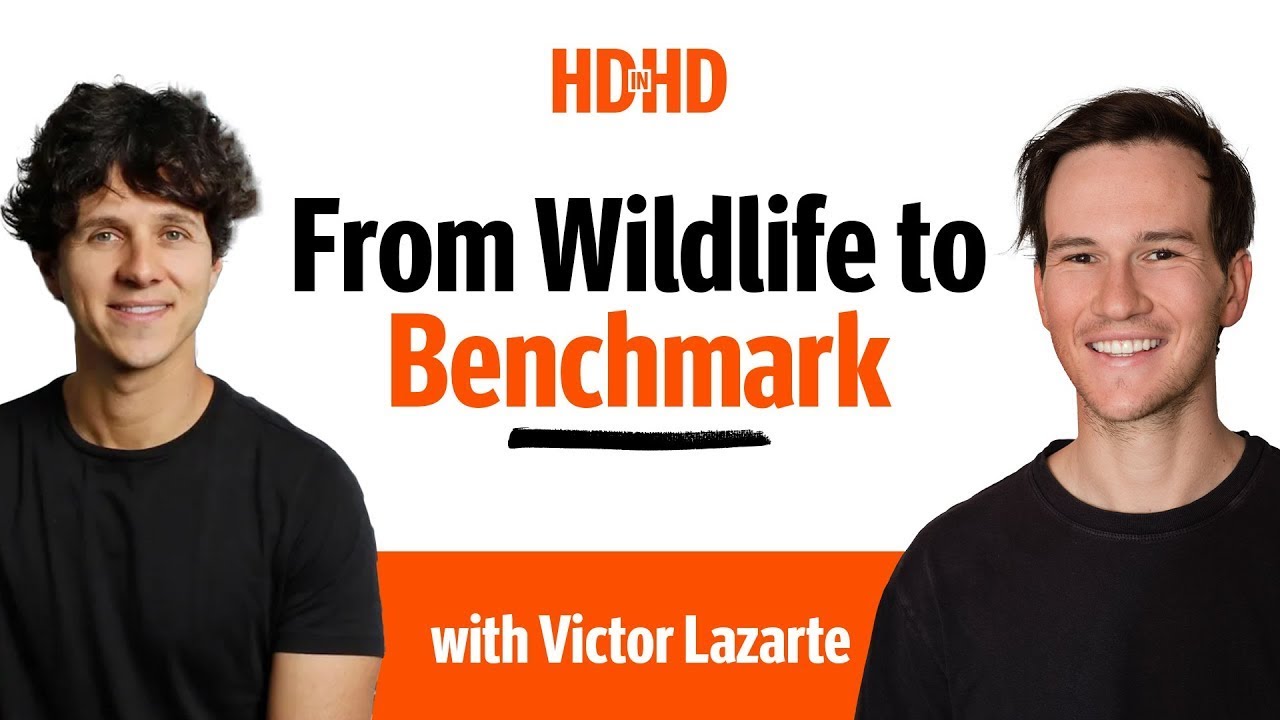

Victor Lazarte: From Building One of the Largest Mobile Gaming Companies to Investor at Benchmark