Season 3 Dubarry Head of eComm | Margin Discipline Independent Brands Already Have - Marc O Donnell
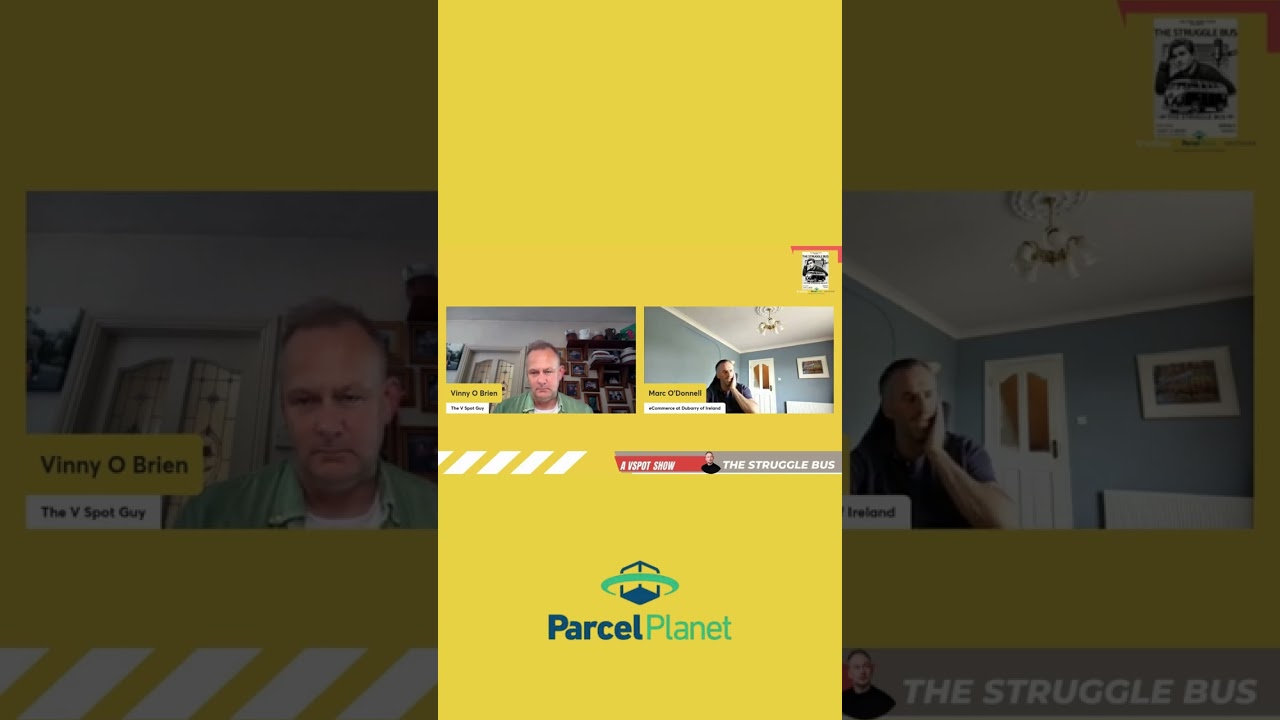
This content was created by Vinny O Brien. This content was uploaded by Vinny O Brien. This is a YouTube interview episode (Season 3) of the podcast/series “The Struggle Bus” titled “Dubarry Head of eComm | Margin Discipline Independent Brands Already Have - Marc O Donnell” (posted 2026-08-05). It’s a recorded conversation between host Vinny O Brien and Marc O'Donnell (Head of E‑commerce at Dubarry). They discuss e‑commerce and omnichannel strategy, leadership and team coaching, technical/ERP and Shopify tradeoffs, supply‑chain and manufacturing advantages of Dubarry, pop‑up retail as a marketing channel, SEO and early AI adoption, product quality, and skills for modern e‑commerce practitioners. The metadata indicates a YouTube content type and the episode format is an interviewer/guest dialogue.
Chapters
Welcome to The Struggle Bus. I am your host, Vinny O Brien, or as my friends like to call me, hey you in the bushes. With me today is the head of e-commerce and veteran and old friend from the industry, Mark O'Donnell, up in the Midlands in Ireland. Mark, how you doing?
Very good, very good. Enjoying the weather.
Yeah, it's very un-Irish, I think, is the way we would describe it right now. There's probably nobody working in the country, which is why we can take our time here, enjoy a chat, and not be too bothered that our email inboxes are going to be going crazy.
Yeah, absolutely. And there's, um, there's— we always in retail refer to the weather, and when sales, sales are down, it's always the weather's fault. But when it's like this, there's a bit more acceptance of that.
Well, just before we did this, I went for a quick dip down in the ocean. I was standing talking to someone on the way back. Another word of a lie, my sandals got stuck to the tarmac because it was so hot. So there you go. There's a marker in the sand for us. Mark, you've been around in our industry quite a long time and we've chatted over the years about different things, but where is e-commerce today? I mean that from the point of view, you're in an omnichannel business, you ship all over the world. E-com has traditionally been a siloed part of the industry or for business, but where, where does it sit today and how do leadership teams think about it from an omni perspective?
Yeah, I think, um, that's a good question. I think from Dubarry's perspective and in the industry as a whole, like, e-commerce is still growing, um, and in different markets like general retail and, um, fashion and apparel and footwear it can be, it's difficult, but there is a real growth opportunity there for everyone in e-com and it's becoming, it's becoming more important to businesses as a bigger proportion of their sales that it's passing milestones where it used to be like the same size as one of the bigger stores and now it could be bigger than all of the stores put together. Now it varies from one business to the next. And then there's like, there would have always been research online and purchase in the store and trying to support those journeys. And now there's more of an acknowledgement that that actually works in both directions, that like, you're using your stores to support your e-com and your e-com to support your stores and actually really building out that omnichannel journey. And like you mentioned, omni. And with that, it also leaves room for more investment that people are more willing to actually make it all come together. And then sometimes it gets easier as well with Shopify when it's not having an outage, as it used to never have, but more recently. But with Shopify, if you can get everything into Shopify, it's a funny thing that you see some enterprise businesses that don't have as good an omnichannel experience as like the, the small independent retailer in the corner because they've decided to do Shopify point of sale and it's connected seamlessly then with their website. Whereas if you have an ERP and a legacy architecture, sometimes now that's getting in the way.
Yeah, I've been through those challenges myself over the years. You've used a lot of language there I'm quite interested in and It kind of leads me on to my next ask of you. It's about your leadership style, because working in an independent brand, you have got to bring people on a journey with you, and you're always kind of effortless in the way that you talk about this. Is it something you agonize over? And how do you describe your leadership style, say, today versus when you first moved into a leadership role?
It's come on a lot. Over the time that I've been with Dubarry. But the one thing is that it— I would change, it depends who I'm talking to, that like when I'm bringing my team members, I try to be, play more of a coaching and a teaching role and trying to bring them on the journey and to help them learn in the way that I would have learned from people going back in previous roles and continue to learn from people like, um, across the industry and within Dubarry as well. And then when, when you're speaking to management and other stakeholders within the business, I think I would always try and figure out what motivates the person that I'm talking to, because everyone is interested in a different, um, it has their own angle on it. Like, some of them just want numbers, they just want the profit. Others, they actually wanted to creatively represent how they envisaged the brand. And it's the thing that I would always make an effort to do is to try and figure out what it is the person that I'm talking to is looking for, and then kind of tailor my responses and that. And, and the other thing that bears mentioning is that Brigid and I are like total e-commerce nerds. And you've spoken to us at events and that, and you know that we probably spend an unhealthy amount of time talking about it outside of work, where Brigid obviously is my wife, and we would have met working together on the e-commerce team in Brown Thomas, like, just over 10 years ago.
And they obviously had no HR policies there that you were preaching or anything then.
Didn't ask.
Good answer. Good answer. I think you said you've got this expression you use when you've talked too much about e-com. Remind me what that was.
Oh yeah, Bridget will tell me to like, you know, that's enough on stock integrity. Because it was, I think, in past roles and in every role, like having the actual available stock match what's showing on your website is very important. So you're not having unfulfilled orders, but maybe not that interesting for your neighbors or your friends when you're out for a pint.
You must be great crack at dinner parties. And the way that you describe it is to me what an old e-com manager or e-com head is. You've got to know everything for every interested party, which means you've got to connect all these dots right across the business, which, which in itself is a, is, is a big skill to have. If you fast forward to today and you talk about coaching and mentoring your team. What are the things that you're having to learn to bring under that umbrella as well? Like, what are those new skills that you're learning or new areas of business that continue to challenge you?
Like, the technical elements, and what I mean by that is just like the providers and the, the architecture, and be it AI elements or just, um, apps or how the integrations work. Like, that's a space that's always changing, and so it's a case of trying to find people that you can trust to, um, to stay educated on that stuff and to stay not ahead of the curve but close enough to the top of the curve that you're not being left behind. And then in terms of like the business as a whole, it's— you're trying to strike a balance of like, uh, not, um, like when I would have started in Dewberry, I would have tried to do Everton, tried to change Everton, and Whereas now I have a much better working relationship with like the customer service teams and operations and everyone kind of knows what their area of responsibility is and what we're trying to achieve when I'm sending them through their monthly NPS and asking them about certain comments that have come back and they know that it's from a constructive place as opposed to just There's so many in that. I'm sure I've left out a lot. And the other thing is, in terms of business as a whole, just from having been in Dubarry, you kind of, you learn a lot just from like listening to the senior management and the decisions they've made over time and the way that they've run the business. And I have kind of come full circle. Like sometimes I would like to be more aggressive in performance media and, um, what we're doing to actually like really drive sales on a day-to-day basis. But then they're much happier to keep the cost profile where it is and to let the growth be more patient. And always, they've always had margin at the top of their agenda. And it's funny to me then when you have a lot of providers speaking about margin and they're like talking to a different audience for the person that's not really aware of that when in, um, established retail businesses, there's always somebody there that's been thinking about that a lot longer than I have.
There's a real truth to that. And one of the areas we talked about over the last little while was the advantage you, you have as a brand of, of being that manufacturer as well. And the idea here that supply chain is really the thing that, that is driving, you know, a huge part of your success. It's allowing you to control margin. Could you maybe just describe the nature of the business for, for people maybe unfamiliar with Dubarry and just that advantage that, that manufacturing gives you?
Yeah, so Dubarry, um, is coming up on our, uh, 90th anniversary. So it was founded in 1937 as a footwear manufacturing collective in Ballinasloe in Galway, and it was family-owned then for some time, um, I can't remember the exact dates, but in the '80s or so, there was, um, a management buyout, and, uh, Eamon, who was still the managing director, was part of that buyout. And himself, Michael Walsh, my boss, marketing director, and the other two directors, they're still finance and design. Four of them owned the business and are still actively working in the business, um, day to day. And when they would have taken over They would have been primarily a manufacturer where they would have done some stuff under their own brand in the Irish market, but largely they were contract manufacturer for other brands. Um, it was like, um, a Danish brand that they talk about because the design for the, the deck shoes that we know so well came in lieu of payment on, uh, on shoes that were manufactured and they company went bust and they said, you know what, we'll take these designs and we'll put them out under our own brand. And they would have been doing deck shoes and they started into sailing boots, and they would have gotten, um, contract with Gore-Tex to make leather sail— sailing boots with the Gore-Tex lining. And they were first to market with that and would still be considered like, um, by a lot of ocean, like Volvo Ocean Race and that, a lot of teams would wear the Dubarry boots, unsponsored, some of them sponsored, but more of them unsponsored, just because they think they're the best sailing boots, um, in the world for that kind of rough weather. And then they moved into more of a country space with the design of the sailing boot, which was Gore-Tex-lined leather boot, um, but with a different sole unit on it for, um, kind of outdoor pursuits, be it walking the dog or hunting, fishing, and shooting. And it was a real new-to-market product, and they actually had to find their own market for it. And they ended up doing a lot of pop-up retail, which is still a cornerstone of the business in terms of brand marketing and actually physically getting in front of customers with those boots and the clothing lines that have followed. Yeah, and pop-ups are very important through the UK, the US, and Germany and France especially. And what we see with the web business is that most of our most successful markets on web are the same, where we either have one of two things. We either have a successful event marketing team with pop-up retail where they go to outdoor events, give out some champagne and sell some boots. And the other thing, like the Netherlands and Ireland, we'd have decent-sized business, and that is more built on third-party retailer footprint.
A lot in that. And the thing that springs to mind is you got some great reference marketing in Ireland. When I think of Russell Carroll Kelly and his association with Dubes for the last 20 years, like, you're part of the vernacular, which is kind of an interesting place for a brand to be. But when it comes to the pop-ups, what comes first? Do you do research on the event and the location, or is it you get there and then you understand there's a market that you can then serve? Is it chicken and egg? Kind of thing?
So it's a very established circuit that, um, at the time, I think mid to late '90s, when they were trying to sell this, um, Gore-Tex-lined leather boot, uh, well before I was with Du Barry, um, they weren't having success in selling it into retail. And retail didn't really understand the product. They're like, you know, why would somebody pay 4 times as much as what they're going to pay for their Wellies or whatever. And what they ended up doing was they said, we'll take it directly to customers. And they started doing outdoor events where they identified kind of just outdoor events where people were likely to be the customer for the booth. And over time, over the last 30 years, that has become distilled. So we now know in the UK that our sweet spot is around like 3-day eventing. Especially with badminton and burley being our two biggest events. And then those— we do 8 or 9 events in the UK, and they're quite large kind of heritage country events, um, whether they're centered on, um, like the game fair or the, uh, equestrian, as I was saying, but specifically 3-day eventing. And then in the other markets, it's slightly different. It's a similar model in France um, and similar pastimes. But then it could be like dog shows or just, um, general country events. And then we have a much more busy kind of pop-up, um, retail team in the US where they're doing over 100 events a year, I think. And they've like 3 teams, so they could be in 3 places any given weekend.
It's incredible. But the richness as well that it must provide for you as a, as an e-com leader in terms of knowing your customer. You're able to describe them very well and understand where they are what they're drinking, what their pastimes are, who their friends are. That, that must make it incredibly tough and incredibly, uh, I suppose, heartening on the other side of it as well for you.
It's a real asset, and it's like, it's— that's our core audience. And I guess, um, we're trying to drive some growth with our core audience where we're always presenting the new seasonal products. And like this year, we've a new waterproof trainer which is, um, new product for us and has had a good reaction with our core audience. But then the challenge outside of that is that we're in those kind of niche spaces. It's around sailing internationally, but it's trying to take the core products and put them in front of a new audience is always the open question of like, who can we get in front of that's likely to have a need for our product? Because it's not so much a fashion brand that's built off, um, like it's, it's functional products. Yeah, like they're, um, they're waterproof jacket, waterproof boots. They're like hard-wearing jackets. We do really good waterproof jackets, um, do nice polo shirts and that, but they have like the wicking qualities. They've like, um, really nice material. It's made to, um, high quality standard. And because we come from the manufacturing background, even though it's third-party manufacturing now, imbalance low in the head office. Like, the core of the business is still the design team and the quality team that are able to, um, they're able to understand that. And Michal, who runs our quality, if he sees an issue in the product, he could fly out, go to the factory floor, and actually show the person that stitched it incorrectly what they should be doing.
That's such a powerful asset, as you say, to the business. It's one of those things as well that strikes me, and I've heard you speak at a few events over the years, and You've great clarity in the way that you can speak. I wanted to flip that on you though. When you go to events to hear other people speak, what is it you're looking to hear? Because everyone says they want to get that one nugget or that one takeaway. What is it that you specifically go to figure out?
It's interesting that you never really know before you get there. Like I do, sometimes I'll see something and I'll want to see it. And sometimes something will sneak up on me. In terms of like a speaker will surprise you, like whether it's talking about conversion rate optimization or something specific that they've done. Well, what I really like at those events is outside, away from the stage, of like the casual conversations you can have. And even though we're all nominally competing with each other for customers, I've always found the e-commerce space and the other e-commerce managers and people that you speak to, people are willing to share how they're getting on with various providers, what's working for them, what's not working for them. And those conversations I find are invaluable because I can't learn every provider, especially if you try going through the sales process with them and you get the, like, these are all the magic things we're going to do for you. And those conversations is what I really look for in those events.
What's been— speaking of those areas, I mean, we've had loads of shifts and trends in e-com. What's been your biggest disappointment over the last 10 years where you thought this is going to be something that can really work, not just for you, but for the industry that's just let you down so badly?
I didn't have any investment in it. In terms of via stocks or shares, or hadn't spent effort building for it to try and get it to work for Dubarry. But something that a few years ago, when like voice search and that was kind of all the rage, I actually really thought that was going to be a thing. And I thought like, yeah, that makes sense. We should start thinking about that. And you're like, we start doing an Amazon scale or whatever. And it's like, No, I'll wait and see if somebody is doing it well, and then we'll figure it out from them of how we can go after it. And then, because I'd said it to loads of people, it's like a bit embarrassed then when it's like that thing really kind of fizzled out a bit. But then in Dubarry, I'm not going to get into the specific provider or what it was, but I did, we did actually enter into a contract with somebody once on good faith. And what they had at that moment in time wasn't actually what we needed, but they weren't lying to us when they said it. It was on their roadmap to be released in the next quarter, and it was going to meet all of our needs then. And it ended up 6 months later where they gave us a full refund and everything, but we'd spent time and effort and we'd been building for this thing. And, um, and that was like a massive disappointment and a massive learning that like Even though they weren't lying to us, they thought they were going to deliver it. They were never able to deliver it then after because they just underestimated the difficulty of that particular technical piece. And it was a deal breaker for us. And it was like, that's something that has stood to me since then as a rule of thumb. You just can't buy anything that hasn't been built yet and it isn't live in production.
With that in mind, where do you fall on the AI hype cycle? Are you still wait and see? Are you planning for it? How do you feel about it? Because it's not going away, it doesn't feel like anyway.
We're researching, we've like actively over the last month or so, the marketing team have been doing a good piece of analysis where market by market, model by model, they've been asking a few generic questions where we'd be hoping to show up. Yeah, no, and, um, that's given us a good start point that we— what we've been doing in general for SEO has given us good rankings on like Gemini and, um, ChatGPT, but then isn't really resonating with Claude. And now we're starting to have conversations with our SEO team because like our main focus with them, uh, well, our SEO agency, our main focus with them is to continue to do what we've been doing and investing in like SEO content and technical side for the business to, to rank for where the traffic and revenue is coming from on organic search, like classic organic search, but also like just what wrinkles do we need to bring in to, to be visible in those spaces. And apart from that, like it's less of a formal organization from a technical point of view, so individual team members would be encouraged to like and learn with the various tools and see if they're valuable for them. But it's not something that I want to like massively invest in either, because if it doesn't play out the way that— you just don't know how it's going to play out. You kind of have to wait and see at the same time as all that.
Yeah, it's difficult because I guess on one side we're being told we've got to be ready and get your data prepared and do all these things. And then it's like, how confident am I that there's any resulting?
My key focus is where I see overlap between like good practice for SEO and what we're being advised to do for DEO. I'm like, we'll do that straight away because we know we'll see the benefit of it in your organic search. And then if it's a bit more out there and it's, um, if there's any kind of a, this will be how it's going to look in the future, then you're kind of like, well, we'll do it then when it looks like that.
Yeah, I'd love to be back involved in that test and learn culture within a brand and working on projects like this because it is such an exciting time. Getting close to time, I tried to keep this to about 25 minutes, but as you look forward in e-com and like you said yourself and Brij are e-com nerds, you love talking about the subject. What are those things that continue to excite you or keep the curiosity high? When it comes to your own career trajectory?
I always loved like good projects, and whether that's like a smaller project like doing, um, like a kind of user experience audit on the site where you're, um, getting in somebody externally and going through that process of like, um, doing the user interviews and having the back and forth with the team internally and and trying to get to a point where you've actually learned something, or whether it's like a bigger kind of replatform project, or as I'd be kind of nudging the IT guy inside, the head of IT, to like, you know, maybe they should be looking at the ERP and getting something that's going to be a bit more friendly and forward-facing, because like you talked about getting your data in order for, to make use of the AI tools and like one of the things for that is that like there would be a massive overlap with just having your data in order in terms of your backend systems and Everton and having it be modular and capable of plugging pieces in and out so that they, they play nice with the other tools that are in the market, be it for accounts or plugging into Shopify. And, um, so it's about trying to find those nice projects that kind of, um, give you that bit extra to be working on at the same time as you're doing your weekly trading and you're keeping Everton rolling as you want it and making the incremental improvements and, um, just keeping that side of the house moving on. But I, I do personally, I like projects.
Yeah, it's, it's an, it's an interesting space for anyone that's into projects as well. And, and then final, final kind of question to you, or getting close to the very end now. What kind of skills do you see the modern e-com practitioner needing, like going from junior to senior? You're coming in day one. What are those things that you think maybe are slightly different to what you had going in on day one?
I think they've, obviously everyone thinks that they're good. So I'm going to say like the same thing that I had when I was starting is very important and it's the ability to learn. It's like the ability to listen and learn from the people in the team. And like that hasn't changed, that regardless of the toolkit, like the person that's able to come in and learn and listen and make mistakes and learn from them, that's always what I would look for. And there's sometimes you're hiring for a junior person, you're trying to find somebody that's able to learn, and then for specific areas that are important to the business, I'd be trying to hire somebody experienced that I can learn from.
I love that idea. I've heard the expression around the ability to learn described as we have two ears and one mouth for a reason. We should be listening twice as much as we're talking, which is something I fail at every time. Mark, I want to say huge thanks for joining me on the Struggle Bus. I hope we get to chat a little bit more over the summer. Where can people find you if they want to connect, unless they're a vendor trying to sell you something?
Well, look, I'm on LinkedIn. I'm there for the vendors as well. They're mostly muted. So The LinkedIn mute button in the chat is very useful to me.
That's going to be the soundbite for the showreel.
Yeah, I'm happy to, like, I love meeting people that are in other businesses and kind of learning about what they're doing, even just from a point of curiosity. You've been open to that and you could have 10 conversations to get like half a nugget that's going to be taken away.
Keep doing what you're doing as well, Mark, and I hope to see you on stage again soon telling us about the next phase of the growth in Dubarry and your own personal journey as well. It's always really interesting to listen to. So thanks so much for taking time out.
Thanks, Vinny O Brien. Thanks for inviting me and good to chat.
More from Vinny







Where is the consumer now? Reagan took to the field for the V Spot news .. #ecomm #ecommerce



Shopify's $4bn Loan Book and the Winter of Discounts | The Ostrich Report Live
