The Cost of Caring: Nick Kaplan on Building, Breaking, and Believing Again.
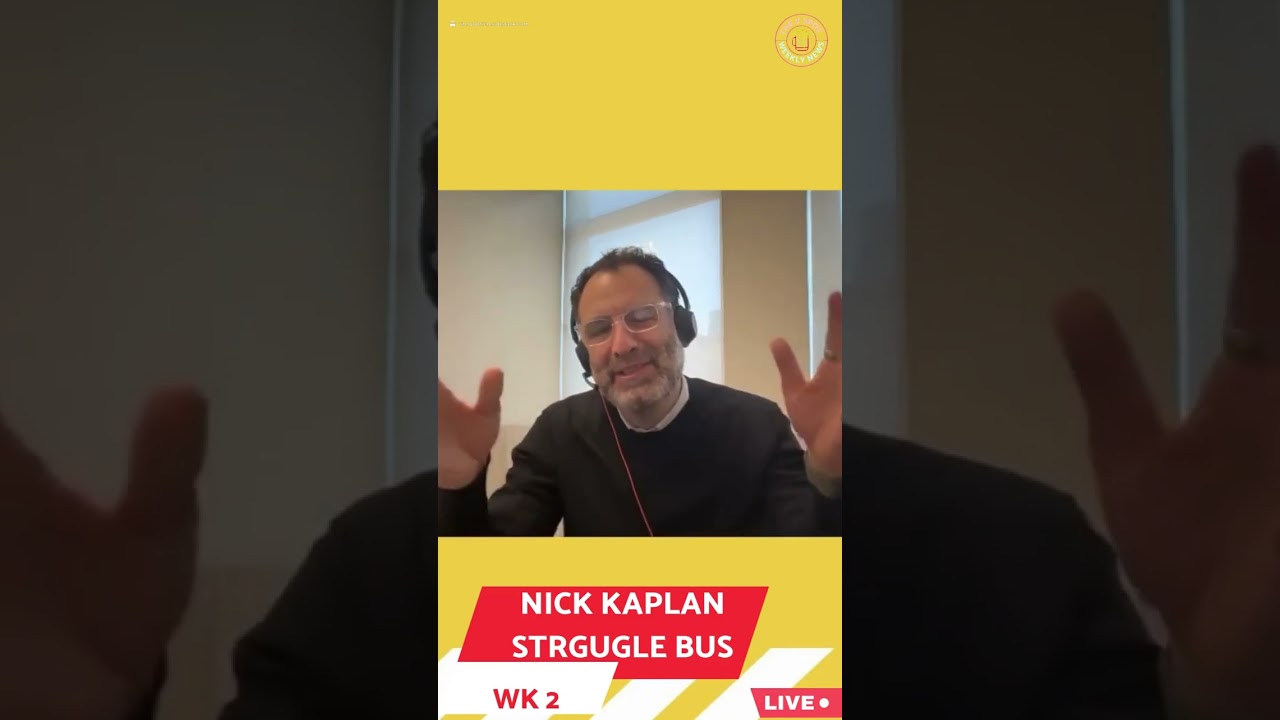
Vinny O Brien talks with Nick Kaplan, director at RNW Commerce, about his path from Saks through retail and e-commerce. They dig into merchandising tactics, why physical stores and online shopping pull in opposite directions, and what mentors taught him about building something that lasts.
Chapters
Welcome to the Struggle Bus of the eSpot Show, the home of the e-commerce and early news. I am your host Vinny O Brien, or as my friends love to call me, hey you in the bushes. As an aged journeyman of e-com, I wanted to create a Struggle Bus journey to help bring empathy to the world of e-com because it is a tough dog-eat-dog, dog-eat-anything world out there. With me today is a friend and colleague, director in RNW Commerce, Mr. Nick Kaplan. Nick is, as you can see if you're getting this on video, is based out of New York. It's early in the morning. He's not caffeinated yet and has to have a root canal. Nick, how you doing?
I'm caffeinating.
Oof.
I'm always good. I don't think people ever look at me and they're like, wow, but I'm like on the inside.
You're glowing today. I think it's this whole new regime that you're under. But there's something else about you as well that I've always pondered, and that's kind of my first opening gambit to you. We deal a lot in heart and head. Today you look like you're dealing in heart. How does that manifest for you on a daily basis?
It's a good question. I would love to balanced and try to be able to do both. But I'm really a head person, always thinking, maybe sometimes even much too thinking, but I'm a head person who then lets the heart catch up and it always factors in eventually.
The first time I noticed that about you was walking the floor at NRF in 2024.
That was so much fun.
But you were perplexed. You were constantly in this state of, I think it was head and heart trying to get there. And what brought you to heart every time is when you talk about your kids, and I don't want to talk too much about your family other than to go backwards. So you're a merchandiser at your core as well. Where did that all start?
So yeah, I think it's one of the things that makes me unique is I sort of grew up like on one side and then I made this kind of weird jump inadvertently to the other side and then kind of came and came back again. So I grew up, I mean, a lot of people don't know this about me. So both my grandmother and my great-grandmother were women who started or took over businesses that were out of necessity. So my great-grandmother is Lane Bryant. Retail sort of legend and had a baby and was a widow and had a pair of diamond earrings from her marriage and pawned them for a sewing machine and like built Lane Bryant. My other grandmother was a teacher, 4 kids, New York, and a high rolling husband at the age of 48 that dropped dead, took over his dress business. And with my uncle who just graduated from business school, like 21 years old, super smart. Built into something super big. So I always had this kind of entrepreneurial spirit and I'm like, what am I going to do? And so it was kind of like, oh, sales and trading at Merrill Lynch or Saks Fifth Avenue training program. And my grandmother, who I was super close to, said, you should go to Saks. So I did. So I, I spent my formative years getting lucky, being in the right place at the right time, working super hard. My favorite job to this day is still the department manager of women's coats, my first job at Saks. I was a trader. You know, everyone—
what was that first morning like?
What's that?
That first morning walking into Sachs, what was that like?
So I was hired for the training program, but at like an odd time. And so meaning like, I was hired a few months before it started, because one had sort of already filled up because I had been late. So I became an intern, begrudgingly, but I walked in as an intern, you know, sort of, you not sure, feeling on the one hand a little bit marginalized as an intern, but on the other hand excited. And I wound up actually never going into the training program formally. And it was awesome. I loved it. I loved it. But it was, it was like anything new, exciting, but for me, a little bit nerve-wracking.
And was it the work or the people around you that all of a sudden became this kind of visceral sounding experience?
I love being in it. Like, I love the art of the transaction, the intoxicating moments of commerce, right? And I think that there's a natural, even more so today, I make a lot of references to like some of the products that we're able to use to like be at a cockpit of a fighter jet, and in a game on some level. So I loved, I loved managing people. I loved, I loved being in it for one year. Swear to God, for one year I worked 7 days a week, every day. I never missed a day for a year. I was young, I was like 22.
What was driving— like, was that some sort of inner drive or competition? What, were you on commission?
No, no, I didn't get anything. I have always believed like setting a high mark. So I wanted to be the best. And what happened was, and you know, I may not look it, I'm a little old. There was a crazy winter where like 17 snowstorms, it was like insane. And so what happened in those days, and I imagine it's probably still the same and it's still like kind of like the way, it's like you take a mark down. You take a second markdown, and then you would take a third markdown, and your product would go to sell-off. Like, you just send it away. But I was like, wait. And I remember the first sort of conversation with my mentor there, this guy named Bill Lynch, and saying to him, like, why are we marking coats down on Columbus Day? It was like October, right? Um, and so he's like, well, you're only as strong as your weakest link, like a bicycle chain. So Bloomingdale's or Macy's or Nordstrom's breaks price, like, everyone has to break price because you'll just go cheapest. So the winter came, and rather than sending my coats to sell off, I just kept them. And then I kept calling all the stores, like, 'Transfer your coats, transfer your coats,' because they wanted the space.
Okay.
And then I was like fighting for floor space. The buyers hated me. But to this day, I had a $2 million— I had a $2 million sales plan, and I did $3 million of sales. And like, it's still one of my proudest moments. But yeah, I, I just wanted to be the best. And I wanted also for political purposes to be able, and I was able to trade on that reputation going forward. I was a little bit, I'm sure this will surprise you, a little bit polarizing.
You said a few things already that I just wanted to jump on. Like you begrudgingly do everything, you're polarizing, you smile all the time though. You're this conundrum of things, which I think is interesting. But can I ask you, the environment that you describe and the environment that we work in on e-commerce, we cannot recreate that same retail format in e-com. And it feels like for 20 years we've wrestled with trying to embed experiences together that fundamentally are opposing forces. And we're still doing the same thing. How can they coexist better knowing that e-commerce is not going away? Because they're like these two—
Yeah. So, I mean, yes, the answer is— or no, rather, we can't recreate that. But that's okay. I think that what we were doing then and what we were doing now is solving problems. So I was always amazed. And, you know, I can move on to the rest of my career later. But this is definitely a fun part of it. When it rained, we would sell raincoats, and when it didn't rain, we wouldn't sell raincoats. Like, it was crazy. Like, literally, it could rain one day and we'd sell like 18 or 20 coats, and the next day it wouldn't rain and we'd sell like 2. Okay, we solved the problem. Like, someone's like, oh, I need a raincoat, I'm gonna go to Saks, I'm gonna get a raincoat. So we help them find a raincoat, the colors, prices, styles. It's the same thing now, just the arena has changed. People need things. And we help them find them and buy them. And instead of being in a store, we now are trying to provide them with the information they need to be able to trust in us and the decision they're making that it's right. And if it's not, that they can trust that they can right it. You know, by returning it. So I'd say that like we were putting way too much then and now emphasis on we have to be able to recreate the store experience. And I still believe in stores. I really love them. I think that they're really important. And I would advocate that people, you know, have them if they can afford them. It's part of their model or get into the wholesale distribution for that ability. But like, I don't think we're asking the right question for saying, how can I recreate this? It's more how can I solve a problem? And what's the experience that I need to be able to do that?
When you talk about experiential commerce, though, or retail, you talk about it in a way that I think is fundamental that other people don't. And you talk about making sure it's in stock or letting me get visibility where I can put it back. Give me signals or way signs that I can get around the store and be that online or in the physical world. And I think that comes down to your background a little bit. How much of the e-commerce world then has been kind of made much less rich because of poor marketing? And I mean technology companies predominantly, they've really got it wrong because What you describe is something that was taught to me very early, which is, if it's raining, bring the umbrellas to the front of the shop. Like a really simple concept. But here we are 20 years later, still teaching people that this is something that needs to be taught. How have we got it so far wrong? Or allowed it to? I mean, it must be frustrating for someone like you to sit there and think about that.
Next time you're here in New York. Yeah, you walk around the streets and it's not raining. Look at how many people you see out there like hawking umbrellas. And then when it rains, they're just like everywhere. It's like, where do they come from? And where's all this inventory being kept? Literally, it's like they're all sitting in a warehouse somewhere. It's like, yeah, I mean, it's frustrating. I think to see obvious things that are not either done right or adopted, or I think that's not always the best technology that wins. I say that to clients a lot, you know, because Rick and I, we do kind of a couple different things. And like, one of them is trying to help people on that level with more just like, wait, How do we continue to evolve our strategy? And what is the problem we're solving? And in a world where we see consolidation, like, there's no more email service provider, right? Like, it's so far expanded into like email service provider, personalization, CDP, SMS. It's like so many different things, and it continues to consolidate. So I don't know that I'm answering your question specifically, but I think that we, we overthink everything, literally everything. And so we need to market to that mentality.
And then as a strategist, you mentioned Bill Lynch earlier in the call. You had a mentor. How important is a mentor for people in the industry right now? Or should everybody have one?
So I had a couple, and at all the wrong times, like really early in my career and really late in my career. I think when I most needed one, I didn't have one. I think it's—
can I pause you there? Because having one at the wrong time is not always something we can control, but we then learn stuff from them so that when they're not there, we have to stand on our own two feet and think for ourselves. So maybe somewhere in the middle, that allowed Nick Kaplan to spread his wings and to grow and to feel empowered to make these decisions by yourself. Is that accurate?
Um, yes, but what I would say, sir, from a qualifying perspective is like, what is a mentor, right? Mentor is two things. Mentor is a teacher. But a mentor is sort of a guardrail. You know, the mentor says, hey, there's maybe a better way. But the guardrail is like just the trusted. So Emmett Shein, who we both know, like, whom I would consider— there's a lot— I don't know how and why, and why me, but there's a lot of people I feel like I mentor. Like I'd say he's one, right? We have like, but I learned so much from him and it's a wonderful relationship, but he has referred to me as a professional dad.
What a title.
But it's like funny, but when people say to me, like, what do you do? Because me, I work with, you know, often founder-led businesses, right? Because when founders get to like that point where it's like, okay, I have founded a business and I've now reached this inflection point where I'm sort of, it's slowing down. Like it's not, it's no longer enough. And so the mentor, the professional dad comes in and can say, hey, person, like you need to prioritize. You need to think about what kind of asymmetric bets you're going to make to get ahead, what kind of capital you need. So a mentor helps you think through that. And the mentor has that trust and that relationship with you. I remember one day when Bill got so angry at me, yelling at me, and I needed it. I mean, I was a really brash young person, not sure, confident. I know, right? It's like the very humble me. But seriously, he was like, he's like, and I never forgot, it was the first time I ever heard perception is reality. Yeah, like I needed to hear that from someone, but someone that I could hear that from. Yeah, so your mentor is that person that could be like, hey, let's talk about this. What are you thinking? And, and you can hear yourself talk and they can say, well, maybe it's not left, it's right. And why is it right? Because when I made that huge mistake and I went left and like blew up my business, you don't have to do that. You can go right. And then your mentor and like the founders or the CEOs that I work with, they can come to me and be like, you're gonna tell me I need to get rid of this person. And I don't know that I can.
There's something really recognizable though. And so the few people that I've spoken to that I know that you mentor and their use of language is really deliberate. And from spending time with you, it's something I think you study and have a real appreciation for. And the one that springs to mind, I stole it a lot this week. I listened to Suze Dowling. I've spoken to her a few times. I know you work with Suze, but she used this word about compounding effects. And in my head, that was you speaking through Suze, right?
That is not one of my expressions. Suze is super smart. I have so many expressions though, like someone at Pattern And I've worked at Pattern for a while, which is where I got, it's where I got my kind of consulting start. And I'm still there and I love them and it's where I met Emmett, it's where I met Suze. But there was a kid there who's no longer there who kept like a, it's called the, we've talked about this before, but the Kaplan Bible. Like my kids make so much fun of me, but no, that's not my expression.
But it sounds like your thought process.
I love, like, if I could make, if I could be wealthy from teaching, I would be. I love to teach people and learn. And like, I find myself oftentimes, I think it's why I talk a lot, because I always feel like I have to get the point across. And not because I want to be heard, but because I feel so, so emphatic, so passionate about like, teaching my poor children. But, um, but yeah, I mean, you ask my kids, and I've said this before, I think you've heard me say it, but you put my kids in two different rooms, you walk in and you say, hey, Phoebe, Stella, what are the two most important things in life? And we'll both say to you immediately, listening and thinking. Like, that's where it starts as a mentor. It's like you listen to someone, you think about what they say, and then you respond. Because if I had to distill years and years and years and years of therapy down to one word: pause and think and respond. Versus we as an, we as an industry, we as people, we react to everything because there is no opportunity to respond. Like, what has happened is technology has created an arms race. And it's unclear to me, like, what wins in the end, right? Like, brand trust, commodity price. Chanel's never gonna die. Like, you're always going to want that Chanel on your handbag or your butt or your cosmetics, because it's like symbol of like your status in society. But When you get outside of that.
So for those reasons, I don't think a modern brand can exist the way legacy brands did. And that's a conversation for another day.
But I feel like I'm all over the place today. Sorry. No, it's got me going.
It's amazing. There's a couple of things, like there's lots of things I love about you and hanging with you, Nick, and spending time with you. One is that you're so unabashed about loving being a teacher. A lot of people adopt the role but don't want the responsibility of saying it verbally that this is what I want to do and where I want to be and spend time. And even more so now where information is commoditized in this post-truth world where we're really not ready to listen. You also brought me back. I remember my dad when I was going out working for eBay, I was going out to warehouses for the first time and I was over with JD Sports and Argos and these huge UK retailers. And he said, have a look around the warehouse before you do anything. You're going to know what kind of culture exists in that organization before you do anything. And I ended up working for about 4 days in the JD Sports warehouse to figure out what the hell was going on. And I learned so much during that phase. I promised you before the call, we'd get to 18 to 20 minutes to try and keep this on par with all the other Struggle Bus conversations. Big question coming at you. Okay. If your career was a song right now, what song is it going to be?
Uh, I mean, it goes on your permanent record, I guess. Um, I mean, I wish I could be super witty, but, um, Life Is a Highway.
Life Is a Highway, that's going on the list. What— give us a couple of sentences as to why. I mean, symbolic.
You're just moving. Like, it doesn't— if you get off, like, I like one of my expressions is stagnation equals death. So life is a highway, you're on it. Like, enjoy the journey, do the best you can, don't stop.
And in describing this to you, I never really told you what the Struggle Bus is about, what it's about, but it's about trying to create empathy in a positive way so we recognize a little bit of ourselves along the way. And I think when people hear that song and hear what you have to say, they're really gonna empathize, particularly those people who've been hanging around their industry for a while looking for a better way to do things. And if they want to, I think they should pick up the phone and speak with you. They're gonna feel better about themselves.
Always here. By the way, I don't even like that song, but it just came like, it's a good title.
It's a good title.
Wow.
So cerebral and deep thinking.
I mean, I, now I'm gonna have that song. Life is a highway. I'm going to have it in my head all day long now.
Well, all I have in my head right now is Free Fallin' by Tom Petty.
Is that yours?
Oh, no. Mine is Hard Knock Life, the Jay-Z version, not the Annie version.
I'm with you. It's a great song.
Yeah, it's reflective. But there's a dog biting my hand as I speak to you right now, so maybe that's what's driving it. But, Nick, look, I've taken a lot of your time. I've really enjoyed learning a little bit about the journey.
Thank you for having me. That's the beginning of the journey. It was a long journey, but thank you for having me.
No, look, it shapes you. And to talk to you is to listen to living proof of everything you said. I love listening to you. I want to see more of your Kaplan's Corner. I want to see more of you on LinkedIn.
You're my biggest fan. You're my biggest advocate too. It's like, do it. You're like, you are like, just like, do it.
I have a LinkedIn group for all your fans and it's just me. It's great.
I have found I'm better at giving advice than taking in life, which is my teaching thing. I'll leave you with that.
Amazing. On that note, I'm gonna let you get your Friday going. Thanks so much, my friend.
Thanks, man. Ciao.
More from Vinny







Where is the consumer now? Reagan took to the field for the V Spot news .. #ecomm #ecommerce



Shopify's $4bn Loan Book and the Winter of Discounts | The Ostrich Report Live
