The Quiet Power of Not Falling Apart (Feat. Jeremy Levine)
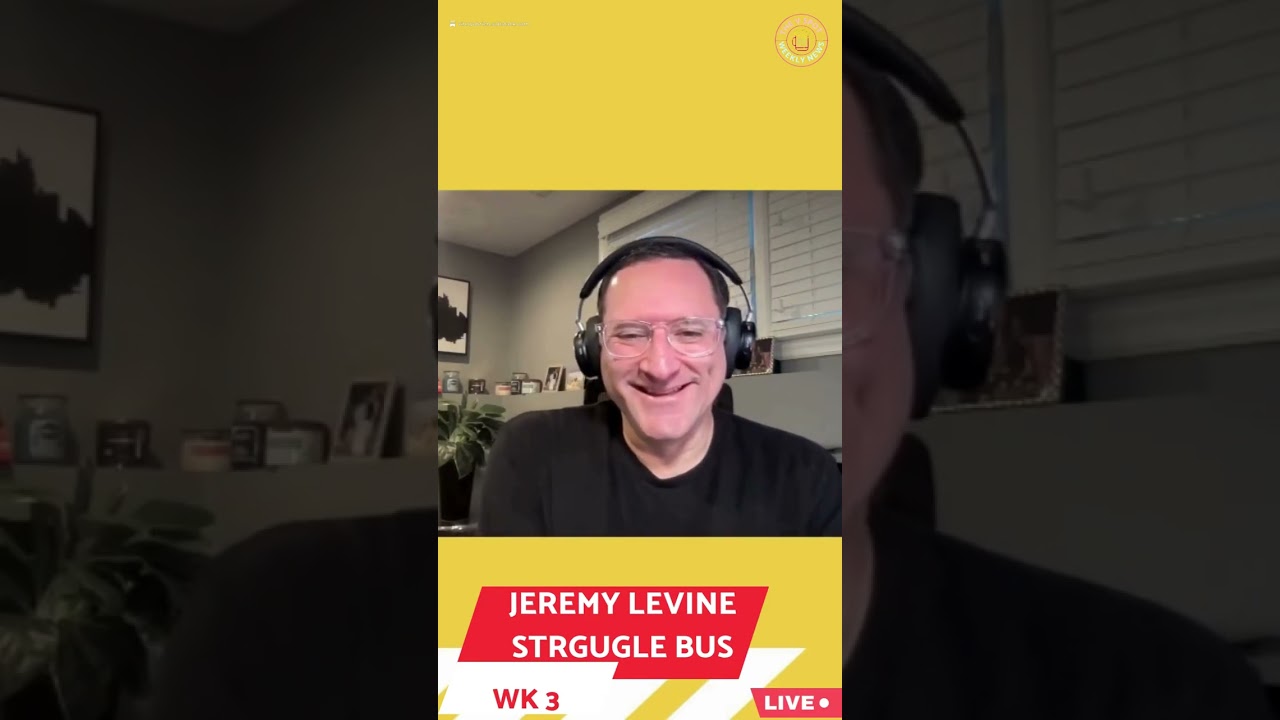
This content was created by Vinny O Brien. This content was uploaded by Vinny O Brien. This is a YouTube interview episode titled "The Quiet Power of Not Falling Apart (Feat. Jeremy Levine)" from the Struggle Bus VSpot Show, hosted by Vinny O Brien with guest Jeremy Levine (Head of Client Strategy & Chief Revenue Officer at Maze Group). Recorded/posted 2025-11-20, the conversation covers Jeremy's career in e‑commerce (brand and agency experience), early internet anecdotes, the interplay of culture/commerce/technology, agency strategy and client foundations (data, systems, agility), plus personal themes like curiosity, empathy, pragmatism and networking.
Chapters
Welcome to the Struggle Bus VSpot Show, the home of the e-com nerdy news. I am your host Vinny O Brien, or as my friends love to call me, hey you in the bushes. As an aged journeyman in e-commerce, I wanted to create the Struggle Bus to create a space to allow empathy manifest into something happy through shared experience. With me today is a man who is as tall as he is charming, Jeremy Levine, Head of Client Strategy and Chief Revenue Officer at the Maze Group.
Jeremy, how's it going? Fantastic. I don't appreciate the fact that you refer to me as being 2 feet tall, but I get the sentiment.
Well, then how do you measure yourself against other agencies other than by height?
I think that's it. That's the lone measure. Thanks for having me. Happy to be here.
Yeah, no, look, I'm super excited and I don't say that too lightly because it's not an expression we use too much here in Ireland without getting without getting a kick or a punch. I reached out to someone that knows you very well and he said to me, if he could describe you in 3 words, it would be veteran, pragmatist, and there was one other word, but I want to start at veteran. You've had an incredible career. Some of the brands you worked with, Vitamin Shoppe, Michael Kors, amongst others. What would you be doing if you weren't in this world we call e-com?
That's a fantastic question. It's funny, I have a daughter who's a junior in college and a son who's a senior in high school. And I often tell them, and I've told them this since they were little, you know, as you move up through the world, as you start to study, as you start to pursue a career, understand that what you might end up doing may not even exist today. And that was the case with me. I, you know, when I was in college, we had dial-up internet. I'm not that old. And there was, at the time, there was a free, I guess, semi-illegal or fully illegal tool called Napster, where you could find any song sort of in existence and download it. And, you know, for those kids at home, that download would probably take 30 to 40 minutes for a single song over dial-up. But my roommates and I used to challenge each other to find the most obscure cover songs. That experience, uh, really started to excite me about what this internet thing could do and could be. And I was fortunate to have a professor sponsor me to do, um, uh, an independent, independent focus, uh, on, um, internet marketing, which was a brand new concept. You know, there's little to no e-commerce at the time.
Okay.
But I just knew that like, this was a game changer. This was exciting and interesting to me. Um, and, and so I sort of fell into, uh, working for, uh, monster.com. Uh, I was an internet producer amongst other things. And actually my first job was, um, at the time, um, if you placed a help wanted ad in the newspaper with us, we would give you a free online posting. Um, and so, uh, I firsthand saw the, um, transformation from sort of old world printed, uh, you know, newspaper and ad revenue to online. Uh, and that's sort of how I, I could tell you the long story about how I got into e-commerce itself, but, you know, I knew even if I wasn't doing what I'm doing today, it would have been something internet related just because from the start I just felt electrified by what the opportunities could be there.
There's a couple of things in there that are hugely interesting. One, you're going to have to tell us what the most unique cover song you guys found was. And then there's something about the frame of reference of that transition. I'd love you to bring us up to speed into placing AI today, which we're all trying to do, but being able to watch and observe the emergence of online advertising over a much longer time period must give you a good sense of the signals to watch out for, the noise to avoid, and everything in between. But let's start with that cover song.
Yeah, that's a great question. Um, can you remember? I, I think at the— I don't remember at the time. I'll tell you today, I still pursue that desire to find amazing cover songs. And, uh, literally, I think every day I take my dog for a walk, I go to Apple Music, and I'm looking for new cover songs. Um, I, I think the, the, the number one cover, um, is Johnny Cash doing Nine Inch Nails' Hurt. Um, might be my favorite cover of all time. Um, but I, I have thousands of them in my cover playlist. Uh, I just love the, you know, seeing other people's take on, on any particular song.
And, and there's so much poignancy attached to the video where he closes the piano and Oh yeah, that's got shivers going down my spine. So there's another thing in this, and I spoke with Scott Lux last year around this kind of curiosity that was naturally in him. It feels like you have this crossover between culture and commerce and technology. Where did that start? Was it at home or something you just built into yourself?
I remember being a kid, maybe in, I don't know, 4th or 5th grade and getting my first PC at home and learning BASIC, you know, BASIC programming. And you could write like, you know, all I really knew was like print whatever the word was, you know, uh, 20 was the next line and it said repeat that previous line and it just had the word repeating all down the screen forever, right, until you stopped it. Um, and I was like, oh cool, I can tell this thing what to do. Um, and then I've always been into sort of gadgets and new technology and those kinds of things. And so being able to make a career out of being involved in this world has been an incredible blessing. And, um, you know, being— I always tell people, you know, especially when they, when they're new and they start with us or, or, you know, when I'm mentoring younger people, you know, I tell people we were working on the internet and we, it was in black and white and we used to ride dinosaurs to work. We were, we were there at the beginning and we had to build everything from scratch and figure out how everything worked from scratch. And that is, uh, experience and learning that you can't get today because things are easy today, or at least they should be. Um, but the technology is easy. The setup is easy. You don't have to understand how everything works. Should you? Absolutely, that will make you better no matter what you're doing. But you don't need to. We needed to understand the technical aspects, the experience aspects, the user aspects, the impact on, on every piece of the business. And I think those of us that came up over the past, you know, 20 years, and were there in the early days, have an experience and an education that you can't really get today.
There's, again, there's so many aspects of that I'd love to explore, but I'm going to take one that sits at the top of my head right now. And it's the clash between legacy people like you and I who have that depth of experience, but it sometimes feels like it's a burden, like it's holding us back from new opportunity. And I did this retreat last week with 15 CEOs and within the group, it was kind of split 50/50, almost like the old guard and it was this new wave of brand owner who have set their store up in Shopify, it's linked with TikTok Shop, and that's how they operate. Everything is in their hand. They're not held back by the way we think about the world, and it seems to present them with a new way to find opportunity out. Now, I can imagine on your side, on agency, you probably breathe a sigh of relief when you hear someone that can talk about Netscape to you or has a point of view and you're like, oh, thank God. I was terrified it was gonna be something else versus where you go into a room and you're saying to them, no, no, you can't do it like that. This is the way we should be doing it. But yet they're getting success. Do you see that kind of disparity in the world today?
I've never felt that legacy experience and understanding has held me back. And I think it's because I'm a genuinely curious person. I wanna understand how things work, how they change, you know, what questions to ask so that we can really get to the root of a problem and how to solve it. And I think because I'm just in the day-to-day details all the time, and I choose to be, a lot of times I probably shouldn't be in the weeds, but I enjoy the weeds. I think it makes me stronger. I think it helps me be a better advocate for our clients, for our teams. But I do think that is an issue with many executives who are part of legacy organization, legacy technology is they don't necessarily have the bandwidth to go out and keep up with the real details of what's changing and how it's changing. They're so busy keeping the lights on, running the business, trying to react to the changes that are out of their control that most of them either don't have the time, energy, bandwidth, or risk tolerance to really change from legacy to a modern technology and stack. And you know, you said curiosity before, and I think curiosity is probably one of the main attributes that's kept me alive in this career. I've been in this industry and has allowed me to work with our clients to provide points of view and solutions. And even, you know, when I was on the brand side, same thing, right? To understand and be able to see what's coming and how you need to get ahead of that. What are the steps to be able to affect change in an organization? I think You know, that experience, that learning, that curiosity, um, has worked out well for me, and I'm really happy that that's just how I naturally respond to things.
The second word that was used to describe you was pragmatic, and it feels like that behavior is feeding that pragmatism machine, which I think is really great because today we definitely need people who can process fast but think slow. That's the way I describe it. And when I think about the future of agencies, it's getting harder and harder to earn white space, to earn revenue. So when I talk to someone like you, even though it was brief before we get on the call, it gives me a sense of calm and a sense of hope. And you've got no wrinkles. So this pragmatism is well placed. How much of that did you learn through these amazing brand experiences that you've had versus it's just innate in you?
Um, I will say, first of all, thank you for the kind compliment. We have a lot of beauty clients, and clearly it's paying off. Yeah. Um, so I, I think pragmatic is an interesting word to describe me. I think it's got— throughout my career, it's had, uh, a lot of pros, probably more cons along the way. I still have this mindset and I always did, which is, I'm right. I know the answer. Let me do my job. And it, that obviously doesn't always work when you have bosses and you are part of a larger company. And it took me a very long time to figure out, way too long, how to balance that with building consensus, uh, you know, getting everybody on board, educating people, understanding what's in it for them, how this is going to affect their job, um, their team, um, getting their input, taking the time to really make them feel comfortable. Um, and I was fortunate to have enough really amazing, uh, bosses and mentors along my career who saw that like the value was there, but the way I delivered that value could use some tweaking. And, uh, they, they gave me very good feedback over the years. And, and like I said, it took me a little too long to be able to really digest that and, and, and utilize it. But, um, I've always been, I think, uh, an optimistic realist, if that's a made-up term potentially, if those aren't contradictory.
Makes a lot of sense.
Yeah. And so, you know, I think what I always saw was that you had to constantly change and evolve, but you also had to deliver results. You had to get things done. You know, the whole don't let perfect be the enemy of done or whatever people say. I love a good cliché, right? Like that's true. And I, and especially in, I think, some of the companies and, and verticals that I've been in, you know, luxury and fashion, you know, perfect is the only way, right? It's gotta be pixel perfect. It's gotta be the right word. It's gotta be the right color. And I think that's changing now a little bit. But throughout my career, that's always been a very important thing. And, and so it, it was challenging sometimes to be pragmatic, um, but it also taught me some amazing things. I was fortunate enough when I was at Ralph Lauren to be able to work with David Lauren, and he taught me firsthand what being a brand meant. I would literally sit with him and go through printed versions of our emails. The week and talk to him about why we're doing this and why we're doing this. And he would tell me, well, here's why we're not doing that and why we're not doing this. And the pragmatic side of me said, well, that doesn't necessarily make sense. But over time, learning about how you build a brand and what are the things that are important in a brand, um, that was a lesson you can't get in a notebook, I mean, in a, in a book or in a class or whatever. This was learning from a guy who grew up as part of a brand, lived and breathed brand. And I was so fortunate to have learned that early in my career from him and being able to then, you know, one of the other things we talked about before we joined was empathy. And we use empathy at Maze all the time. And we, that's a, that's a tenet of how we work with our clients because the majority of our employees have come from the brand side. So we have empathy with our clients. We understand what their struggles are beyond whatever the work is we're doing. And so, you know, that understanding of what's necessary in a brand, understanding that pixel perfect, while it may not be pragmatic, is how your brand got to where they are today. And it is not our place to say that doesn't make any sense. Why are we wasting so much time on that? But your brand comes first. It comes above speed to market. It comes above, um, you know, don't let perfect be the enemy of done, right? And so those are interesting learnings. I don't think everybody has had the chance to get, and, and I feel very fortunate for having gone through some of those experiences in my career.
There was an expression used last week when we were offsite. It was accuracy over speed. And, and I, I think some of what you're saying resonates a little bit with me there. And, and then on, on the the empathy within May's piece, I think, is really true. I've been lucky enough to meet Vince and spend time talking to Nick and some more of your team as well. And it's evident in abundance that it's not a forced value as well. And something that you talk through here is something that a lot of the guests on the show seem to demonstrate. And I just want to ask you a little bit about it before we move to the third word. It is self-awareness. Feels like you're someone who is able to measure yourself really quickly and say, okay, I know what I've just learned there. Like sitting with David, a lot of people could have taken it for granted and said, oh shit, I got to do all that work again. And why me? Whereas you saw this as an opportunity to upskill and you've brought that throughout your career, even to today. Right. So how does self-awareness play a part in your continuing development?
That's a great question. And again, something that I think I recognized and learned, uh, too late in my career, right? Which is, um, my own self-awareness, right? Perception is reality. How I was being perceived, um, not because I was, um, I wanted conflict, not because, um, you know, I, uh, I had some ax to grind, but going back to what I said earlier, I knew I was right. And, um, I never understood why people got in the way of that, right? And, and, and understand—
sorry, there's a second part of the guess that I have. Sometimes you're a product of where you're from. You said you live in Jersey. Did you grow up in Jersey?
I did not. I grew up in a suburb of New York, uh, actually, uh, at the time had the highest concentration of Irish I think in the United States, a town called Pearl River, New York. Um, and, uh, it was, it was many of my friends, their parents were first generation. Right. And so, um, you know, a lot of blue collar, um, you know, everybody's parents were, were, you know, cops and firemen and, um, you know, worked in factories and things like that. And so I grew up with a very sort of blue collar, hands-on, right? Like, very interesting mix of cultures. And I don't know.
But there's a— again, there's a lot in that. There's something formative in your parents being from that background. My dad was in the army in Ireland, and he was, you know, he worked in warehousing and all that kind of stuff. He wanted me to be better than where he was, so he gave me the at least the opportunity to have better self-belief than maybe he did. And I'm just wondering, is part of that attitude that you have born out of the fight of being in such a, you know, a culturally diverse area where conviction in your own belief can be the difference between you getting to a school or making a football team, or, you know, it can be a quiet inner self-belief or it can be a very outspoken one. Um, it's a hard thing to shake.
Yeah, my, uh, So my parents were amazing. I was very lucky to grow up in a loving, supportive household. My dad was a salesman. He worked for Xerox for a long time, and then he started his own company, you know, basically when I was in high school. He started with like a couple guys who he worked with, and, you know, he was the sales guy. The other guy was the, you know, the hands-on technical guy. Another guy was, you know, the operations guy. Guy. And so he took these, you know, the three of them started this company and were extremely entrepreneurial. And I saw firsthand what that took. And then, you know, I think that translated for me, you know, as I moved from the brand side to the agency side and much of my role becomes business development. I think I, through osmosis and just being around it, learned, you know, what the the important aspects of sales work from my dad. And, you know, it's interesting, my parents were hippies growing up, right? They were at Woodstock. And then, you know, you can't today get a Gucci bag out of my mom's hand, right? And, but I was very lucky in how I grew up, where I grew up. And I think that was absolutely formative to my life today. You know, uh, we're, we're family first. Um, you know, we always have focused on our children's education, on making them feel good about themselves, helping them pursue the things that are interesting to them. I have two completely different kids, and, uh you know, my wife grew up in a somewhat similar household. And so those formative aspects of my life absolutely have impacted who I am today.
Yeah, the little cues that you've taken along at different times can only come from a loving household, I think. And then being able to recognize the differences in your kids and stuff, they're all They're all very shared qualities I'm seeing as I speak to everyone. And I mentioned to you my previous interviewee last week, who will remain nameless, but he's very much in that frame of mind as well, a good friend of ours. The third word that was used, you touched on it yourself actually, and it's a nice segue before we get into the end because I try to keep this to about 25 minutes, but the realist, and I'm going to give your version of the optimistic realist. Is going to be an important thing as we move into next year and beyond. And from an agency perspective, it feels like you're getting more and more into consulting, which is very hard to multiply yourself across so many clients. And I mean consulting in that you have to be front and center for every new piece of information that emerges, and you've got to assimilate that and represent that to people who now are paying for your trust and paying for your ability to articulate these things in ways that that makes sense to them all in the world that makes less sense to us every day. How does the optimistic realist feel about the years ahead as we look at them, even though they're going to be dog years, worse than we've ever done before?
Yeah, um, I will tell you that, um, I am trying to think, um, a lot less in years and more in months. Because the speed of change is so fast. And so, you know, the, as you said, like clients look to us for strategy and for the most part, our billable work, strategy is a gift with purchase for the most part, right? It's just part, it's part of what we do. It is not necessarily, you know, the major, part of, of our revenue. It just comes as we work with clients. And we've built this agency to be what I always wanted it to be when I was on the client side. I could never find an agency like we've built, and, uh, one that understood my needs, that was flexible, that was a true partner. Um, and that's how we've built Maze. But, you know, thinking about the future here, what we have continued to reiterate to our clients over and over and over again, and I realize I'm using words that all mean the same thing in that sentence, is that your foundation needs to be strong and it needs to be flexible. Your data needs to be in a good place. It needs to be clean. Your systems need to be connected. You need to be agile so that you are in a place to take advantage of this constantly changing world. If you are legacy, if you don't know how things work, if your data is terrible and disconnected, you are gonna be left behind. But if your foundation is strong, if you've built process and systems that are agile and flexible, you're able to take advantage of the millions and billions of dollars that your technology partners are putting into research and development. You are going to be okay. You're going to be able to figure it out because honestly, the, the rate of innovation that's happening, uh, nobody is able to keep up with.
And it's on that note that I'm going to get to our final two questions because you've reaffirmed for me my belief in the idea that arbitrage is kind of what we're trying to do every day and gain that competitive advantage. It's only built on those foundations that you you talk about, but being prepared to do it, I think, is the first key step for people. There's two questions I always ask at the end of this. The first one is, if your career was a song, what might it be today?
I'll go back to Hurt. Uh, no, I'm just kidding. Um, that's a great question. I wish I had a good answer for you. Um, but one in which, um, I think the, uh, tone of the song changes multiple times along the way because that's how I think about my career. I've had a lot of changes, uh, you know. I think before I joined Maze, my average time span at a company was, you know, probably less than 2 years. Um, I've been at Maze for 6 years, which is, you know, it's like dog years for me, uh, years at a company. Um, and, you know, it was because I always wanted new. I always wanted to— I always loved the building and the change. And, you know, at a lot of companies, uh, it becomes harder and harder to do that over time. And so I was always looking for the next thing. Um, and, and so, you know, a song that the tone of it changes throughout would, would be appropriate.
Amazing. Uh, there's a cover, I don't know if you've heard it, but I'll send it on to you if not. It's Arctic Monkeys doing Drake, Hold On, I'm Coming.
No, I'll have to look for that one.
All right.
Thank you. Add it to my list.
It's an amazing one. And final question. And when you think about the struggle bus and where it sits for you, what are those three words you'd like to leave people with to think about when they think about their own career or where it's going or how they feel about themselves right now? Because it can be isolating. Being in a position where you have to give advice and be that sounding board for people. So what are the 3 words you, you might like to share with people right now?
Um, curiosity, which we've covered, uh, empathy, which we've covered, um, and, you know, uh, I think networking is, is the third. And I wish I had done a better job of networking and staying connected to people earlier in my career because, you know, we were talking earlier about some of these events and things you show up to. And for me, the joy is not listening to somebody on a stage talk about AI. The joy is running into the people who I've known and worked with, worked for over the past, you know, 25 years and talking about those sort of like brutal moments that we had to go through and figure out and sort of, you know, the, those going to war analogies, right? Being in the foxhole together. And then, so I would say, you know, that would be my advice to everybody is really be curious, have empathy for those around you that you work for, that you work with, your customers, your clients, and, you know, stay in touch. I've burned a lot of bridges early in my career because I was always right and they were always wrong. And again, As I've gotten older, I've learned from that. But in hindsight, really just making sure that those networks are strong, not being afraid to ask people for help or ask questions or introduce you to somebody. You know, I think those are qualities that will help you be successful in whatever career you pursue.
They are sound words, I think, for anybody listening in any walk of life. And just to say that the few times I have been lucky enough to meet you in person, your wonderful company, um, someone who I, I always enjoy spending time with. I just wish I could do more. So hopefully come January, you and I can enjoy a drink, um, have a chat about the real world and reflect on hopefully a year that's looking quite exciting for us all. But Jeremy, thank you so much for joining me on the Struggle Bus. It's been an absolute pleasure. Thanks for taking the time.
Always a pleasure. Thank you for having me.
Take care, my friend.
All right, thanks.
More from Vinny







Where is the consumer now? Reagan took to the field for the V Spot news .. #ecomm #ecommerce



Shopify's $4bn Loan Book and the Winter of Discounts | The Ostrich Report Live
