The Struggle Bus eComm Nearly News Ep 2 The Bon Jovi fan who built billion-dollar beauty machines.
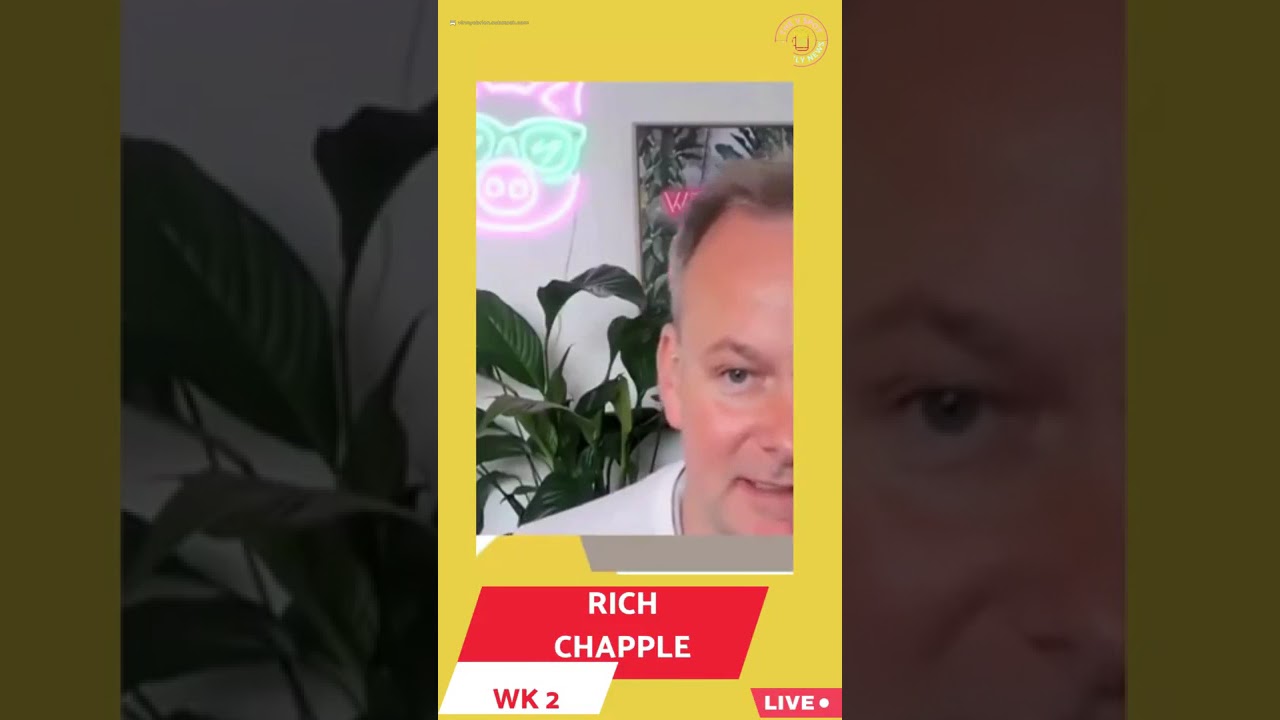
This content was created by Vinny O Brien. This content was uploaded by Vinny O Brien. This is a YouTube podcast episode titled "The Struggle Bus eComm Nearly News Ep 2 The Bon Jovi fan who built billion-dollar beauty machines" (published 2025-07-17T11:07:43Z). It's an interview-style conversation hosted by Vinny O Brien with guest Richard Chapple (co-founder & Chief Growth Officer at the Growth Foundation). The discussion covers e‑commerce growth strategy, RFM/CRM analysis, trade/trading (trade‑marketing) sensibilities, conversion rate optimization (CRO), talent and team structure for scaleups, the evolving CMO role, and practical advice for founders and e‑commerce managers. The episode mixes tactical recommendations, career anecdotes, and a closing rapid-fire segment.
Chapters
Welcome to the Struggle Bus, the VSpot Show, the home of the e-commerce nearly news. I'm your host Vinny O Brien, or as my friends like to call me, hey you in the bushes. This is the podcast where I share my inadequacies with people in the hope to make me feel better about myself. Just kidding, we're building an anthology of the best stories at this moment in time where e-commerce has become a needy toddler. Strong parents needed with the patience and stamina to see this through. Today I am joined by a man who easily qualifies as a super parent, when it comes to e-commerce.
Welcome, Richard Chapple. Thanks, Vinny O Brien. And likewise to say mutual respect to you, equal super parenting.
I am no joke. I'm a super fan. I've put fanboy in my window. This is an audio podcast and we'll be using video for shorts, but for those who can't see it, I'm a huge fan of yours. Your work over the years has been formative for some of the stuff that I have learned. I quote your book Shop Floor all the time and I do quote you. I don't just use it. I know some of the Horizon work that you've done, the framework stuff you've done with customers before. They've shared that with me. And then you did a piece of work on RFM analysis, which I'm going to jump in on a little bit because it feels like it's close to you. But you did this great piece on Osborne Chapel, this big document on RFM analysis that you shared with me in Cork one time. And it still stands up to the tests of time. It's an absolutely amazing piece of work. But for those who are not familiar with Rich, I don't care that you were the former CMO of Gymshark, rising them to $200 million. I don't care that you were a founder and CEO at THG, the Hood Group, who are a billion-dollar enterprise.
On the ingenuity side of their business, yeah.
On the ingenuity side, which is an amazing place to be. You must have learned a lot there. Head of marketing at Play.com. What I'm really interested in is where you are now. Could you tell us about the Growth Foundation?
Yeah, so I'm co-founder and chief growth officer at the Growth Foundation. So In summary, and I'm conscious we'll eat up the time, taking all that pattern recognition from those 3 incredible journeys in direct-to-consumer e-commerce and a little bit— you talk about walking the shop floor. I started on the shop floor at Homebase in the UK back in the late '90s and then went into a junior marketing role at Carpetrite, the floor covering business. So had some real brilliant immersion actually being on the cold face of retail, you know, dressing the store and all that and walking the shop floor, then into a, you know, a at the time, 100% offline physical retail business in home improvement with a few hundred stores and managing sort of marketing and comms and point of sale and all that sort of stuff. So yeah, I've been lived and breathed retail my whole life. And with that pattern recognition and the journey I've been on, you like you, Vinny, I'm sure, and what you're building here, you build a network of people that you admire and love working with and understand intersection of art and science, you know, brand and creative and messaging and comms, and then more analytical scientific approach to deployment of money around demand creation or what the team needs to look like in terms of as you grow through from, uh, you know, starting up in a bedroom with your best mate, um, like Ben did at Gymshark, all the way through to a $200 million turnover business with hundreds of employees. So you could get all of that and thought, well, how can I, I suppose, effectively generate revenue and make a brilliant living for me and the team around that knowledge and that experience we've had. And we now focus on two streams really. So consultancy. So I've got a team of 20 and the 15 of them approximately are working on growth strategy, where to play, how to win, you know, helping founders and investors like remove choice paralysis of like, is it new country, new products, new audiences, new channels, how to win, like how do you turn up and stand out when you've made those where to play choices. And we're also then very happy and enjoy working on fractional interim engagements to actually sometimes deploy that clarity and strategy and help them. So that might be, we can see a brand's materially underplaying their CRM opportunity and their RFM one. Can we join in and jump in like an extra pair of hands for a period of time, sometimes on a fixed project or for longer? And then The balance of the team, we've got amazing team of talent and recruiters here. So again, typically, actually, I'm a strong believer in growth comes from brilliant people. And every day and every minute, algorithms change and platforms change. And this year and the last maybe year and a half has been around AI. And I saw your post around 2007 being a big fun, you know, change in the dynamics of the internet. Those things are going to continue to change forever, but brilliant people equal brilliant companies. So yeah, we help our portfolio and people we know find that talent. And it's really interesting as well as obviously the hard skills in what you need to actually do the job and execute, but actually particularly in the area that we spend a lot of time in, which is that scale-up, you know, maturing and becoming more sophisticated. The attitude and soft skills for individuals are absolutely key for success as well. Right. So yeah, and there we go. So hopefully that's done a good job, but check us out. We're a with the Growth Stock Foundation.
Yeah, and we will put the link to the business in the show notes as well. There's a few things in there that are really interesting to me, but the people aspect is the first area I want to focus on. You kind of, you firmed up for me years ago the idea of trade marketing or trade e-commerce as being probably the most fundamental skill in there. And I've always believed that you don't need to be a technologist or a digital marketer to be in that role. For those who are not familiar with what a trade marketer is, that person who walks the shop floor, what kind of sensibilities does that person need?
It's— that's a great question. I'm trying to sort of define the word sensibilities in my head. There's an element of being able to change your own persona to shop like your customer does. Yeah, right. So you might be a male like me in my mid-40s, but you might be working on a I'd say, yeah, pushing on a bit towards 50. Um, there's, uh, you know, you might be working on a brand that it's, you know, target audience is 16 to 24. Actually, it would be the Gymshark stuff is a good one. I was a, say, you know, middle-aged white guy thinking about how do we create a brilliant engagement and trade to men and women who are in the gym who are 16 to 24. And, you know, I'm not that, but the ability to try and think and understand how those people make decisions, right? So there's that sensibility. There's an element of, like all great marketers overall, when I talk about, you know, maybe sort of performance marketing or digital marketing, there's the really good ones are both-brained, you know, that creative analytical need. And that may be the way to sort of also understand that for me would be, you know, that in, in building homes and offices and property, you have architects, right? Who, and the ones that really stand out seem to be able to balance form and function and what a place makes you feel, but also it's really functional and does what it does and fall down and everything works. And I think that's a really key sensibility and skill set for a trading manager. And again, perhaps for those who don't understand the word trading, it's effectively the online or e-commerce equivalent of what a brilliant physical store manager is, right? It's someone who can understand what great visual merchandising looks like, you know, in those examples. And I think, you know, like all the tourist shops in central London or in big metropolitan cities that are brilliant at putting umbrellas out when it starts raining and then taking them in and putting, you know, caps and sunglasses out when it's sunny. I mean, that element of knowing the sort of the natural demand of the customers and what they're looking for and their intent, you know, and reacting to it, but doing it in a way that, again, form and function all the way through.
It's amazing. I'd love to see those people right at the front for AI because in this agentic world that we're moving into, I think they'll articulate really, really well what it is they want that agent to do for them because they'll know instinctively what it is. And the thing about people is interesting because I love the idea of you've got crack teams that can go in and do jobs for people that are really, really specialists because you've said before I'm quoting you here, achieving growth isn't solely about expansion. It's about ensuring every foundational aspect of your business, branding, trading, product, CRM, and people works in tandem. In many cases for an e-com manager right now, they have to do all of those things themselves. And that's kind of the core concept here. And the thing that people fail to realize, I've done a study on the roles on LinkedIn this year and what number of skills that they have. And I think the average e-commerce manager needs between 12 and 14 skills and at least 8 years experience. Yeah, it's insane. It's really tough.
Yeah, it is really broad. Yeah. And, um, and again, as, as you know, Vinny, as well, that breadth can often be pushed, or the boundaries of that breadth are being pushed all the time, perhaps in smaller businesses in that startup scale-up space where you just don't have the working capital to deconstruct each one of those skills into a dedicated role. And yeah, you're right. I mean, not only do you think like that, we talked, you know, I mentioned being sort of that art and science, both-brained ability, but you also have to be quite technical as well, right? You need to understand the connectivity between these platforms and even down to, and I'm sure you have this conversation with your network or clients, but the word sales and revenue is different in every platform and having a bit of financial acumen, you know, because you say sales to that person and, you know, Shopify will tell you, well, that it's got discounts or not in it and that, and you know, all the taxes, and then that platform isn't, they're showing you just growth in the till. And so yeah, it's a really fascinating sort of, you know, I suppose cluster of skills, both hard and soft, that you need to be successful in that space for sure.
And taking that cue, you've had a lot of CMO roles. The way I've looked at the CFO role in the last 2 years is that the CFO has become so well-versed in e-commerce, they traverse into marketing a lot better than they did 10 years ago. But if you, if you reflect on where your CMO role was, say, 10 years ago, and how much it's changed to where it is now, how has your own thinking around that role, or the skills that you need, or the actual day-to-day operational role, how much has that changed, or not, in your opinion?
I don't think the actual role, the breadth and the needs and the ways of working have changed a great deal. I think other than the pace of change, if I think about the, the appetite and volume of content in particular that the platforms that you can utilize require, so that constant feedback loops and, you know, around creative and messaging, um, that has sped up. Obviously the number of channels has also increased, and I suppose the barriers to entry, particularly in, I would say, the UK and other let's say, you know, mature markets, it's relatively easy to start a brand more than ever before in terms of getting going with the likes of platforms like Shopify and make it super easy. I think it's the speed. The speed is one. And then obviously having that foundation underneath, trying to make sure you have a, a clear understanding across either a small or larger team of what the definition of revenue and sales and the various metrics are. Because I think one thing that is still common is a lot of the brands and companies and businesses I talk to still are— there's a tyranny of information. Sometimes there's not a single truth, right? And you end up with a potential lower return on energy by having to say, you know, just to go through those things like, what are we talking about? Are we agreeing on the number? I suppose positively, you're right, non-demand leaders are becoming more aware and understand those metrics more than before. Still, which is good, right?
So, and the conflict that has occurred for me, I don't know how you feel about this, but I think time is a thief. And what I mean by that is we deal in accountancy periods. So that has made this expectation on the CMO's return on investment or kind of delivering profitability as two really broad statements for effectiveness. And you know that brand building takes a lot longer. And Brand building leads to LTV and leads to all these other things that we want, and that's lifetime value. We, we want to make sure that we try and retain customers for a longer time. Has, has there been an over-reliance on financial metrics to determine performance of, of good marketing? How do— have we lost some of, some, some really good brands along the way? Maybe given more time, more flexibility, could have done a better job?
Overall, I think that's true, Vinny, but the reality is, you know, you've You can't take that brand equity to the bank and you've got to make sure that you are balancing that long-term, short-term need of the business. And there are some brands that I'm very close to that don't have amazing first-order unit economics in terms of they're not profitable on that first order, but they have a brilliant, I suppose, proposition and offer architecture in their product that either can create profitability on second, third, fourth order. And actually sometimes, you know, there are some brands that are so new and are creating a category or a behavior or a ritual for a customer that doesn't exist yet, but has every chance that it should do. So, you know, that timing element is really key on that as well. And I suppose there are— I would imagine there are thousands, if not tens of thousands of brands or products that if they had a war chest of brand building to continue to talk about behavior change for consumers, and given that time to grow into that, they would still be here. And there are others. And I suppose that's where, you know, what's a perfect, I suppose, pure-play direct-to-consumer brand. That's why you sort of still see, I think, a lot of success in very high-margin, high-repeat purchase kind of categories like beauty, nutrition, you know, apparel to some degree as well, right? You know, where you've got gross margins of 60, 70, 80% and then, and reasonably good average order values of £50 to £100+ suddenly, that's a lovely starting space to get close to first-order profitability.
So for people who are starting out, you've got a great language around e-commerce as well. I love the terminology that you use, because it's all very deliberate. And it's well considered. And I think that's almost like muscle memory for you, you know, these expressions. So while I'm starting out, or even if I'm at that stage of mid-maturity, how much of this should I be thinking about all at once? Because that, for me, is that overwhelming piece. And I want to follow on from that because you talk a lot about tapping into customers' anxieties, which I think is absolutely perfect in terms of its language. But how do I get from understanding those anxieties and going back to, I need to do these 50 or 60 things right now? Is it good enough just to be aware of them, that you can get to them? Or should you be deploying?
Awareness is really key. I think. I suppose the 3 takeouts that I would look at in terms of mandatory, either daily or weekly, and we talked about this, about timing, is first of all, most of the brands and businesses I've ever looked at underplay and underinvest in CRM. So that the ability to create lifetime value, greater retention, greater frequency of purchase, and increasing the size of those purchases to their audience. And very quickly, that is being constructed through that recency, frequency, monetary analysis of that audience. So segmenting and, you know, finding in using a Pareto principle, you often— virtually every e-commerce brand I've ever looked at, that 20% of their customers generate somewhere between 55% and 65% of their revenue. And that group is massive in terms of its importance. And then if you dive in deeper and go, well, within that, what's the next layer down? And quite often I see brands that have got between 5% and 10% of their customer volume generating 30% to 40% of their revenue. So just obsessing about that group and going, how do I get them to engage more? Because they're already telling me they love, they love my proposition. Are there any signals across those weaker segments that could show that they could become that VIP or that very best customer for me? And that is really key. So spending time and energy, and it's not an overnight switch and a button in a in a platform. You've got to do the work and understand it, even to the point where—
in your— sorry for jumping in— in your RFM analysis, you've got down to Ipsos data and overlaying it into—
yeah, we try and put some social demographic on it. We look at persona, we try and capture in checkout maybe with surveys and other kind of triggers like, is this a gift, is this for yourself? Build that picture of who that best customer is. And again, comes back to the principle of thinking like a physical retailer, because if you had a small boutique selling your product, you would know standing there every day at the till. Here's a brand new customer I've never seen and they're showing intent. They're picking stuff up, they're putting it in the basket, they're walking around. But someone who's low intent, just super browsing, they're popping their head in at the front door, what's in here? Or you've got someone that you know that's been in 7 times over the last year. You know their name, you know what car they drive, you know, maybe what their kids are called. And that starts to build a picture, doesn't it? And you probably as a salesperson in that environment will change how you speak to them. So that low intent browser, you think, well, this is what we do. This is why we're here. These are our products. This is our bestseller. Whereas the repeat customer, it might be a, how are you? And we know you're going to buy the same thing again, because it's run out. It was the, I don't need to educate you about my brand. It might be actually I've got an exclusive thing, or here's a gift I can give you to say thank you. There's a very, it's all of that stuff. Think like a, think like a retailer, physical one.
What I think it gets down to is that there's, there's a huge body of work to be done every single day. And what worked today doesn't work yesterday. What I'd love, I'd love to put a challenge to you the next time the US presidential election is on. Watch the magic wall. John King is kind of a favorite of mine. My wife, I think she's got a bit of a thing for him. But we have to watch it every 4 years. When you look at the demographic breakdown, he goes at a state level, then he goes into a region, then he goes into a suburb, and he's able to tell you on two sides of the street they're red or blue. And he gets into this really minute detail. And I've interviewed two digital marketers from two presidential campaigns, one from Obama's 2012 on This Week. And I was speaking to someone from the Trump team yesterday, just, and it was really, really interesting just to hear how they think about marketing and how little they say on calls as well. They're very good at listening and they force you into different things. But I'd love you to take that magic wall and use it for RFM analysis. I think the visualization of it would be amazing. Incredible.
But the same things are going on there, right? Is that I imagine based on that knowledge, if you've got one side of the street red, one side of the street blue, what you say to them and how you leverage either their conscious needs for as a consumer, or you play on their anxieties that are conscious. And then the deeper trick, or tactic might be a better word, is the unconscious needs and anxieties that those people have that they probably wouldn't admit on a call if you spoke to them in person. You know, people have deep down anxieties and needs that sometimes are less less conscious, they're in the subconscious brain, or deeper down, right? And by then I'd have—
I agree.
I said I had 3 things, I suppose, right? So CRM, typically underplayed, try and put more into it. The one I'm obsessed about is conversion rate optimization. If you're a trader, an e-commerce manager, lots of time and energy gets spent quite rightly on landing pages and entry pages. Never enough attention and reviewing of cart and checkout. So just dedicating a bit more time into what is the flow and what's happening in that space. Because if you think about like the cost, you're often a metric you'll see is cost per visit or cost per click to arrive. But we typically will break down that journey into what's the cost to get someone to a product or a listing page? What's the cost to get them to the cart? What's the cost to get them into the checkout finally? And then the cost of conversion, right? And often you see cost per visit, cost per conversion, and you never look at the steps in between. And quite often it can be material where you go from a pound or a dollar to get someone to visit and suddenly you're at, let's say, $30 or pounds to convert. You go, well, actually imagine now that you consider that it's probably cost you £15 to £20 to get someone to the cart. And it's easy to leave, right? Super easy to leave, as we know, because it's like online, you can have very little investment in time and energy to get to that place. So again, imagine that in physical retail, you've got someone with a cart at the checkout and they go, yeah, I'm going to get, I'm going to leave, just leaving. You would stop at the door and say, what's happened? Where are you going?
You know, so there's a couple of things for people who are listening that I want to point to. Your career has been really deliberately planned. The Growth Foundation is centered around people and how they operate within organizations and the recognition as well that there's an underserving of certain skills. You've also built a product. Which is around CRO and around all the rest of it. Yeah. And I think for people listening, this is not by accident. These are things that have been planned and seen with like decades of experience here. So conscious of time, Richard said I try and keep this to a certain length. So I have two questions I'm going to ask everyone at the end of each of these shows. First one is, if your career could be defined in a song today, what song would that be?
Uh, song. Blimey, you've got me there. Uh, Living on a Prayer.
Bon Jovi, Living on a Prayer. Oh, I love it. Get your air guitars out now when you're listening and rock on to it. And then finally, some people might say someone with your experience shouldn't deserve a seat on the struggle bus. Why do you think you deserve a seat on the struggle bus?
Because I think if I built a consultancy with a lifetime of consultancy and advising and never owning it, I would say, yeah, I shouldn't be here. I have And even today, you know, I've got the feeling of anxiety and dopamine for certain results and client calls that we have now because I feel it. I feel the dopamine hit and the buzz of that, you know, Shopify bell ringing and looking at that and then the anxiety and the pain of like loading the dashboard, hoping that that number is where it should be and what we promised. And I've been there, right? I've been up at 4 o'clock in the morning to drive from my London home to the Huck Group in Manchester for a few days a week. I've, you know, I think I've earned my stripes in that regard. So in terms of struggle, Vinny, like, like you have, right? And I've had some incredibly high moments and some incredibly tough low ones as well, where you have to then look for your network and your support, both family, friends, and professional contacts, to pick you up from a heap on the floor and get you going again. So Yeah, hopefully I can pay some money.
I can't argue with that. Look, I love to welcome you when we get together in London. Yeah, we'll talk these out in person and hopefully share some more stories. But Rich, thanks so much for taking time out, for being so generous with your knowledge. I'd love to see more of it detailed in the wild, but I know you're busy.
You have to. And that's one of those things, isn't it, that, you know, time and helping others grow. It's a bit like that. Builders often build other people's houses beautifully and theirs is a bit of a mess. And that definitely comes to me when it comes to the content point. You're right. So yeah, something to work on, Vinny. Maybe you're brilliant at it. So again, that's something we've always discussed is like, how can we get this knowledge and pattern recognition out in the world?
Maybe we'll tackle that for Q4.
Super stuff. Okay. Great to see you.
Thanks so much, Richard. See ya.
More from Vinny







Where is the consumer now? Reagan took to the field for the V Spot news .. #ecomm #ecommerce



Shopify's $4bn Loan Book and the Winter of Discounts | The Ostrich Report Live
