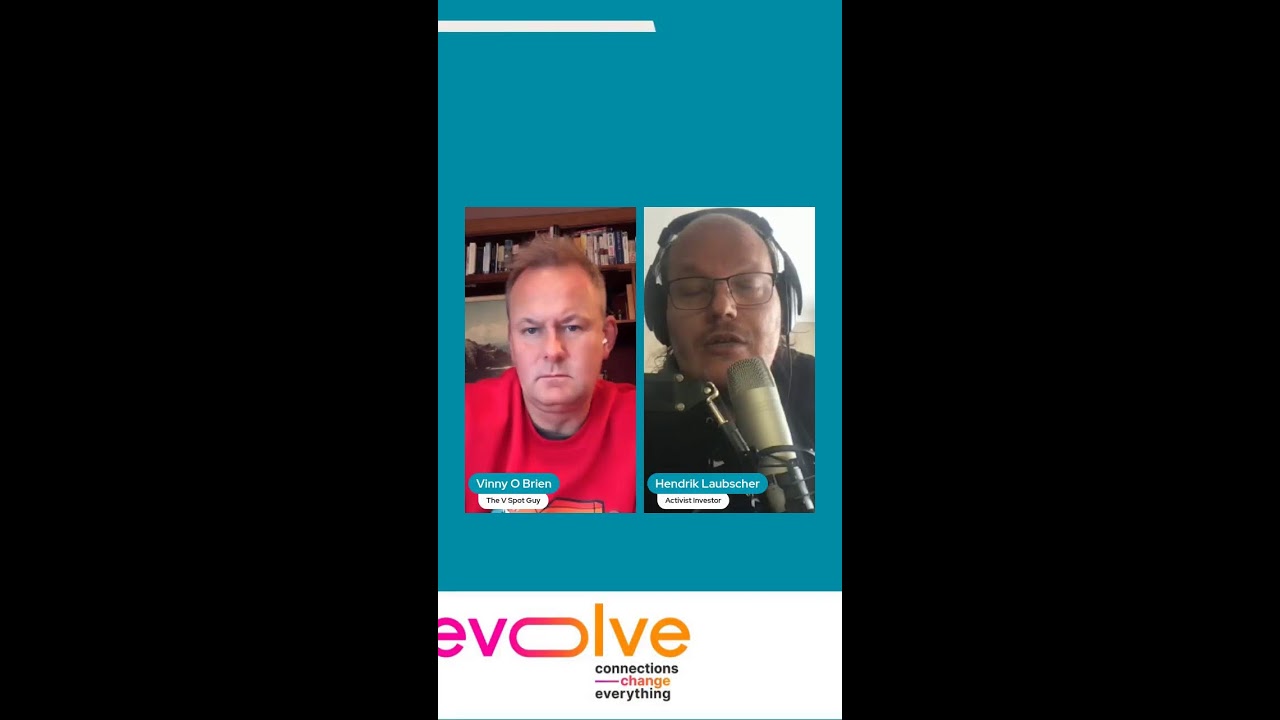
This content was created by Vinny O Brien. This content was uploaded by Vinny O Brien. This is a YouTube live episode titled "Tne Ostrich Report Live 📱" (created 2026-06-19) — an informal, conversational e‑commerce/retail show hosted by Vinny O Brien with guest Hendrik. They discuss recent industry news and analysis including Shopify’s "Editions/Additions" announcements and its enterprise positioning, Shopify’s Shop app and payments strategy, Target/Abercrombie/Hollister wholesale moves, Amazon Prime Day timing and grocery focus, marketplace competitive dynamics, and the rise of agentic/AI surfaces (Claude/LLMs) and their implications for product discovery and brand data readiness. The episode includes practical advice (e.g., reverse‑engineering customer FAQs and improving semantic product data), light banter, audience engagement bits (Two Truths and One Lie), and promotion for an upcoming Ecom Happy Hour event.
Chapters
Good afternoon and welcome to the Ostrich Report Live. 2 minutes behind schedule, but that's 3 minutes ahead of where we thought we'd be. So Hendrik, I think that's a win for everyone. How's all down in Cape Town?
So it's been a funny week, my friend, in the sense that the summer doesn't know if it's all going. We don't know what seasons it is. We have rugby over the weekend on television, so Um, yes, um, but I'm well. How are you, my friend?
I'm good. I'm just listening to your voice there. I think we should get you to read poetry to us. Um, so there's something quite soothing about it. Uh, I think you should talk to chickens or something like that. We, we'll do a test some week. We'll bring in some—
ouch, ouch, chick!
There's this weird thing you can do with chickens. We go to a lot of kind of kids stuff. Um, but if you put it a lot— if you get a chicken and you, you you put its beak to the ground and you put a line in front of it, it falls asleep. It kind of nuzzles along the line and then it just kind of falls asleep, plays dead. It's like one of these, one of these things that animals do, like sharks play dead. Did you know that a shark, when it's flipped over, pretends to be dead?
Vinny, it would only be you that knows this kind of stuff.
Well, I'm going to get even more ridiculous because we want to talk e-com, retail, and everything that happened this week. Uh, the big thing, I guess, was Shopify Editions, or was it just Additions? A-D-D-I-T-I-O-N-S, or is it E-D-I-T-I-O-N-S? The big one dropped yesterday. What did you make of it? Because I've— because I have a funny— I have a funny segue, but I just want to get your quick over-the-top— what was it?
So I, I would go even one step further. I think it's additions, but it's A-I— it's A-D, it's add. Conditions in the sense that my takeaway is that there was a lot of promises, um, and a lot of things said, but if you looked around on various LinkedIn posts, lots of people were saying, yeah, not so much.
I thought about this this morning before we jumped on, and, and I think the releases from the likes of Anthropic have made it so much more difficult for people like Shopify to be relevant anymore because, um, it's just so less interesting. But to kind of bring it to life, I thought, what would editions be if it were songs? Just to try and bring it to life. So here's a couple I thought you might like. The first is The Long and Winding Road, describes the functions migration path. Leads you to your door at 3 AM, liquid error, you personally did not write. First one. What do you think of that one?
So I think that's great. I kind of felt like it was very relevant for European folks that enjoy a drink after hours. I'm looking at one of those humans. So I think it nailed it, just by the way. Okay, tell me more. Come on.
With a little help from my friends, this is the Sidekick upgrade. Um, and like your friends, Sidekick is right like 90% of the time, if even, and you've got to correct them every now and again. But, um, there's more in Sidekick, but that's much ado about nothing. I think the other one that stands out for me is Help. 150 updates. Um, many of them were features that were already there, just kind of announcing them to the rest of the world. And it feels for once like this was, um, I'm not going to say lazy because any tech company putting out that many updates even during that time period is pretty decent, but it's the first time there was very little to write about when it comes to the Shopify functionality.
So I think this boils down also to something that they did 2 weeks ago where, uh, Shopify announced that they were, you know, buying more shares back, um, um, because that's the right thing to do. I think for me the other thing, Vinny, is that I think I didn't see any mention of Enterprise, none whatsoever.
But there hasn't been for months.
No, no, but my point is, is that it, it feels like the company's kind of identityless. In a sense that it's, it's, it's, it wants to be arming the rebels, but it has to tell the market that it's an enterprise software company as well. It's, it's—
let's, let's pause there for a second because for those that not maybe who are not up in the terminology, and I was one of those people before I started talking to you guys, and we've got mid-market, we've got enterprise, and the, the prize everyone talks about or the place you want to be is an enterprise. Mid-market is depending on who you speak to, it's, you know, trading up to $800 million if you're in North America, roughly. But if you are a Shopify sales rep, that could be someone who's selling online up to $150 million. So there's all these different definitions. Why is enterprise still relevant today to analysts like yourself?
So enterprise are— so it's two sides. So one, It's larger contracts, larger revenues, opportunities for Shopify because the payment structures are different than the traditional enterprise solution. Sorry, so Entrepreneur Edition, my bad. But also, it also leverages some of the infrastructure that they've built, such as, you know, the payment situation. So Enterprise is larger monies, larger contract links. And let's be honest, if you've, if you've listened to Harley speak on, uh, earnings calls— can somebody just give the man some oxygen because he's always talking as fast as, as light— but the point is, is that they always try to make a mention of the larger brands that are joining them because— and I think, Vinny, this is an important important call out. I think, I think Shopify believes that the technology can be used by larger businesses. The challenge is, is that if you work inside a business doing a billion dollars online in sales, your technical team most probably has a completely different opinion on Shopify than those for the marketers and the people that does the the operational stuff. So from a, from an analyst side point, it's, it's a much bigger revenue opportunity. There's less churn, um, but it's also a way I believe that Shopify is also then enabled to leverage other parts of the ecosystem. For me, the one that I keep reading about that has my interest is the point of, uh, the POS, um, the point of sale place, because that continues to grow. But I think we just need to be honest here. In the last 12 months, for me, Shopify just feels like a ginormous payments company that have just steadily, you know, moved down into it more. I know The Information had a story in middle of May saying that Shopify was, uh, uh, acquiring licenses for further financial transactions in certain parts of the United States, but I'm not sold.
So, so let's kind of chew that out a little bit because Salesforce became boring for quite a long time and continues to be so, um, maybe 12 or 13 years of being boring, but they are still on this acquisition trail. Um, they, they acquired Intercom, an Irish, um, customer service or chat, uh, company last week. They rebranded to Finn. They're, they're, um, their team are now full US citizens and based over there quite some time. This deal happened really quickly once the rebrand happened, but it's, it's kind of another defensive move. We've talked about this a few times over the last while, but is Shopify in danger of becoming boring? And when it comes to noise, they've done that really well to get themselves around board tables when it comes to replatforms. We don't hear much about the word replatform anymore. So is there a danger for Shopify if they're not in the news making all this kind of hype noise, can they survive on non-enterprise customers in the medium term being a boring tech payments company?
So I think the answer to that is, is that I don't believe so. So number one. Number two, I, I think your Salesforce comparable is, is a great one in the sense of that Salesforce Commerce is essentially Demandware that's been You know, it's got a different name, a different package, but it's, you know, the box looks different, but it's still Demandware in its entirety. Um, I will just say that the Fun acquisition by Salesforce for me is one of the most interesting pieces of financial, uh, information that I've seen in a while. It all depends on, you know, on the valuation about, you know, the multiple that they were acquired from. It could anything be from 9 to 36, dependent on the number you look at. But I, I think the challenge for Shopify is that they have an identity crisis. I've been saying this to analysts and people that I speak with, is that they've, they made some bad bets, um, and they know that the logistics thing was a disaster. But I think in this new world You cannot not be investing in AI because one, it's being force-fed to everybody, but also it's a case of what do they have. For me, that's the challenge. And the share buy— the share buying back shares for me was the one of the first confirmations of them trying to act well, you know, for investors, but actually telling the market that, you know, we want to be a partner, we don't want to actually generate revenues for ourselves. And, and that's all that is.
Yes, it's the point in your life when you buy a cardigan and Skechers because they're just more comfortable. It's when you stop trying to be trendy and cool and you say, okay, I'm gonna, I'm gonna ride this one out for a few years, I'm going to be comfortable in the winter or summer and try to look semi-cool. That kind of feels like where Shopify are at when all the others have been struggling to keep up with them for some time. I think what they're after doing is giving breathing room to the market for other people to get back to the table, uh, to work around things like B2B. One area I thought was interesting in additions— I haven't got through it fully yet— was they are starting to use the Shop app. They're talking about it as being this digital assistant in the world of Agentic and all those bingo cards you've got going out there. That is one area that they can start to do something a little bit unique to their platform and their customer aggregation. I think both on the Shop app side of things and with their audiences as well, there's some interesting things happening there. Just watch that space in 6 months' time. I think you're going to see something a little bit different. But change of pace now, because as all this is happening, if you look on the other side of it, if you're a retailer right now, a lot of people are adjusting their models and we're seeing legacy brands having their time in the sun again, which, which is kind of interesting. And one of those brands that everyone loves is Abercrombie Fitch. They're getting more into wholesale. So I don't know if you've seen this story yet, but they are now going to start taking the Hollister brand and putting it into Target. And as Target tries to continue their turnaround, albeit on thin ice, this is an interesting collaboration. It's like two old-school vets getting back together and saying, we have the clout to ride this out, and we've got something interesting for, for new audiences. Um, and it's very much doubling down on Target's kind of repositioning, uh, over the last 12 months or so. What did you make of this story, and is it newsworthy even?
So the newsworthy is, I think, because of Target most probably doing a bazillion press releases about it because they need to. I, I believe that the biggest challenge they have in Target is that they have a very large competitor called Walmart that has out-executed them in the last, I'd say, 2 years, most probably more. Um, so I, I think I always— I'm most probably gonna have this wrong, so just help me if I get this wrong, but 2 chickens don't make an eagle. Correct.
That is one I'm gonna ask my kids about later on. I'm not sure on that one.
Okay, so essentially, the point that I'm trying to get across here is that if you work with brands that are in need of revenues— like, uh, there are so many apparel brands, Vinny, that need revenues— if you have a retailer coming to you and telling you that we'll put how many thousands of your items in our stores, I think they'll fall over themselves. Um, for me, the bigger question is, and, and it's one of the things that I generally do, is I will listen. So we're in Q2, I'll listen next year, early next year, on earnings calls from Target, whether this is actually mentioned again. Um, I think one of the things that I've come across in the last, I'd say, 6 weeks is I think wholesale is getting more important for businesses that have thought, thinking that D2C was the way to go. Um, to, I think, I think retailers are, are realizing that you need to have anchor brands in stores to drive people into stores. While we have a gentec, while we try to dehumanize retail with all these technologies, people still go to stores. I'll just say this to you once. When we are done here today, I am going to a store to go pick up a, uh, a new panini grill because I broke mine. It's a long story, but the point is, is that I think we, we— I think if you have a great multi-channel platform like a Walmart— Amazon is getting there, I'm not saying it's there from a retail point of view— but it's really, really, really, really hard to compete against. So I, I'm hoping Target makes a turn, a turnaround, because, uh, we're seeing competition is required. I think that's why Shopify has gotten away with things in the last 18 months. But I think, as I say to you honestly, is it newsworthy? We can discuss that at length. I just think that we have many businesses that have large amounts of capital available that they must use because they are playing catch-up to their competitors who have out-executed them in the last 12 to 18 months.
So what we're saying here is Abercrombie and Target, two chickens don't make an eagle. Interesting times. You mentioned Amazon there in the middle as well, Hendrik, and this is proof that this is not scripted. We just make this up as we go along. But there's two interesting Amazon stories this week. Um, don't buy from the other Jeffs. I think this is the Etsy campaign that went live this week, uh, the non-billionaire Jeff, which is really funny. But, but something that strikes a few chords, right? There's a commentator on LinkedIn, Mike Hogan-Miller.
We've—
you've had him on the Watson Weekend once, and I've spoken to Mike a few times. Um, he sometimes comes across as a bit negative. He's very— he tries to set the media straight in terms of story. And one of the things he's been consistent on over the last 12 or 18 months has been that the consumers are being fed fear all the time, right? And it's something that's in my head every time I see him post. I'm like, God, Mike, where are you coming from on this? And he'll rationally talk through his answer. But I wanted to talk a little bit about that and Prime Day in the same token, right? We've Prime Day coming up the 23rd of June, right in the middle of a World Cup in America, in North America, not South America, as I said last week, but in North America and Central America, where it might get lost in the noise. If you were, if you were being really nervous about this, and if you're a small brand, you probably wouldn't launch something mid-World Cup because you're competing with all these household names. However, Amazon have done this, and I think on the back of it, it's really, really smart. When I first heard it, I was like, oh God, unless you're selling TVs, this is going to be a damp squib. But what we've seen is consumer confidence increasing to levels it hasn't been at for nearly 4 or 5 years in the last 3 months, largely down to World Cup fever. Now, there's something in Mike's psychology of this The feeding of negative news prevailed this idea that we're going to be more cautious. And, you know, we, we think we have less in our pocket. The whole credit system will tell us a very different story. It's all about, um, so let's not get on the credit side of it because you and I have our own views on that. But there's something about the control of consumer sentiment here, which is if you, if you breed positivity, it breeds positivity. So have Amazon pulled one of the shrewdest moves of the year by bringing Prime Day into the mid-World Cup cycle? That's my long-winded question for you.
So let me just start off by saying that, uh, Mike Hogan-Miller is for me one of the, uh, OGs in the retail space, that if you don't know of him, what are you doing? To, um, he's not everybody's cup of tea, he makes that very clear, but I've, I've read and listened to as many things of his in the last 12 to 18 months, and everything that he says, it's not made-up stuff, it's based on experience. Yeah, so I'm a fan. Um, Mike, don't, I don't, you don't need to worry about it, chick. I'll just continue listening to you. But just, I, I love your work, just by the way. I think these two things at play here, or actually three things. So one, I think Amazon realized last year that Prime Day was very highly competitive from, uh, everybody in the market, basically first time actually being able to plan for it. So by moving it around, you're also going to get the benefit of, uh, then the results being mentioned in, uh, Q2 earnings versus it being seen in next quarter, like, which is later on. So once again, you can spin a positive story about it being, you know, we sold so many Brazilian items because we never actually tell you what we do, but we write a press release that basically makes it sound amazing. Two, I think it's also I think it's a bet on understanding that US consumers are at the moment very heavily stretched because of geopolitics. And if there's one thing that I've learned in the last 18 months about these tent, large tent events, whatever you want to call them, from these marketplaces, is that these platforms know when there is not so great news up ahead before the rest of us. So my, my thought here is Amazon is making the bet that they believe that Q4 could be really rough due to, you know, aftershocks of what we've, we've just gone through with the Middle East. Um, thirdly, I think that at the end of the day, we all need to realize what Prime Days core focus is. It's not about the deals. It's not. It's about growing the most valuable cohort, which are Prime members. Nothing more, nothing less. And at the end of the day, I couldn't wait till Prime became available in South Africa. I took all of 2 days to basically sign up for and annual subscription because I understand the mechanics around it, and I also understand the mechanics of Prime. For me, I think leveraging the World Cup, um, without them being an actual sponsor— if you've looked at some of the games, you will see that these Mercado Libre is actually a sponsor of the event, which I found fascinating.
But if you read Is it not like a— is that not a no-brainer for them?
So where does— where is MercadoLibre in North America? Where is the biggest driver of revenues? It's Mexico. But they've taken the bet that we will spend money on making sure that we are visible for audiences all around the world. It's been done everywhere, and it's a masterstroke. From CMO Sean Somers, who continues to just basically use sport in ways which just breaks your mind. But I want to just— the point that I want to get to is, is that, uh, the person that has been quoted by Amazon on this very topic is the VP of Prime. It's not VP of Stores Doug Harrington, it's the VP of Prime, and he's been saying that the focus for Prime Day next week in the US is going to be what? Vinny, do you know what the focus category is that has been mentioned? Grocery. Grocery again.
And the grift that keeps never giving.
Who, who, who is the, the— who is the company that we are subtweeting, sub podcasting here about. I mentioned them earlier, Walmart. Amazon is trying to take market share away from Walmart's absolute dominant grocery platform. The point is, is that let's talk about this in, in like 8 weeks' time because I want to see what they do in South Africa. I have a feeling I know what's going to happen, but I don't want to talk about it just yet. The point is is that Amazon understands that people are willing to spend a bit more now because of these watch-alongs, these social activities. Just look at some of the games, look at, look at all the people watching soccer or football, whatever you want to call it. This is the, the thing that struck me this week, Vinny, is all the social media news coming from Europeans visiting the US and learning about, you know, insert whatever special retailer, you know, is it Cracker Barrel, is it whoever, and, you know, making content about it. If you have a large audience of your business traveling to another part of the world, what do they know? They're going to open their phones, oh, Amazon can deliver to my hotel room, I don't need to do all this nonsense. So I think it's a bet. I'm very interested to see how it goes, but If there's one thing that I've learned, and, and I— you're one of the kind of the people that kind of drove the lesson for me, is that these platforms, if you worked inside them, which I have not, they sit on stacks and stacks of data, and they can make projections and predictions better than anybody else.
So just on that point, I— when I think about Prime Day, when the numbers are released and the dates the brands that did not participate in Prime Day last year on Amazon US, they had a 46% uplift. That's the brands who were not participating. So the halo effect is real. And the other areas I think we're going to get Europeans exposed to, and shout out to Freddy if he's there. Freddy on Twitter has become this bit of a legend, the German guy who's touring around. Seems like a great guy. So hello Freddy, if you're going to come to Ireland, I'll be your host. Um, but they're exposing, they're exposing European consumers to US versions of e-com, which I think is going to be interesting because they're going to come back demanding a US-style convenience to add into EU e-commerce. I wonder, are the platforms aware that this is the opportunity for them to move on these things? And it's so interesting you say about the content, like this is a great way to learn. Get on there and absorb all this content, see what people are doing, and then connect with them on the other side.
Yeah, but what, what do we— what some brands will do this, but some will not even want to be— some people will avoid it because of all the hoopla about World Cup advertising. No, no, no, no, learn from it because you can, you can, you can have your entire year's marketing campaign done if you just listen and follow the content. I've been following it, I've been having such great fun. People going to gas stations or petrol stations in the US, oh, it's prime rib. Yes, it's—
but it's great fun though.
But nobody planned for this, Vinny. It just happened organically, and that is the thing that happens with these events.
It's— it's— isn't that marketing right now though? So I just want to kind kind of drill in on this a little bit because it's one of the things that big events show us is that if you, if you put time and effort into planning, yeah, yeah, it, it, it reaps dividends. And if you focus on kind of the right sort of customers that are involved in this at the right time, but you can do that, you can engage them. I, I always had this idea that when Prime Day first came out that if you're a brand, you should change your entire retail calendar not to be so focused on Christmas and peak and let's call it like Black Friday. So bring your calendar forward by, you know, 4 or 5 months and plan 4 or 5 micro events throughout the year and really wow your customers through the year. But as I talk about Christmas, we're going to go into the first proper agentic Q4 this year, right? We hate the word. Come on, stop giving me daggers. We hate it, but it's here to stay. It's not going anywhere. It's going to happen in layers that we've never seen before. You follow the earnings calls quite a lot. You see Agentic coming up time and time again. This is the year I think we're going to hear brand noise about Agentic Commerce because the platforms they're doing partnerships with and say, hey, look, let's do our case study on how Agentic Commerce helped you this Christmas. What parts of it are becoming interesting to you, if any, from the Agentik perspective? Because again, it depends on which side of the coin you're on, um, as to how you feel about it. But what, what can we expect, you being in the know on earnings calls? What can we expect from our first Agentik Christmas?
I, I think platforms, the platform partnerships are going to be a very big deal. Um, so I think if your platform has a deal with Cloud or deal with OpenAI, I think that gives you a significant advantage over those who don't. Because I'll just say this to you, um, I think Claude has learned more about me in the last 2 weeks than what I think most of my friends know about me. So, so these are that. From a, from a brand standpoint, I think table stakes is understanding that the discovery of your product and brand might not happen on Google should scare the living expletive out of brands because that is being done on Anthropic. I'll just quickly tell you a story. It could be a new section for us called News to Use or Lose, but you know, whoever, whatever. I this week went to, uh, a grocery store and I bought veg. And, you know, I like cooking. It's my, my just— it's the way that I relax, because you deal with videos and all kinds of stuff and people during the day. You want, you know, you want to stand in front of the kitchen and, you know, create lovely food so that you can enjoy that with your family. I bought 3 things this week which I didn't realize didn't actually work together until I got home. I put the 3 names of those ingredients. So it was mixed kale, gonna be fish somewhere. No, no, no fish here.
Um, oh my God, are you okay?
And, and cashew nuts. I put them into a— I, I literally told Claude, I, I bought this, can— what can you recommend that would be nice tonight? Faster than what I could research, I got 9 recommendations. I made two of the recipes and I will remake those recipes. The point that I'm trying to get across here is, is that if you are in CPG, you should be thinking about this. If you have not, you are behind. If you are in apparel or in sectors where there's activity, you should be thinking about, uh, How do I ensure that my products are visible? I went through in middle April to end of April, I had to find new shoes because walking my dog Frida, basically I go through running shoes like most people go through socks. I decided, you know what, screw it, I'm not—
I'm not going twice every 4 years for me.
The point is, is that normally I would do a Google search, then filter, and then this year I just said screw it, I'm not going to do it because I don't have the time. I basically told Claude, I need to find this, this, and this in a pair of shoes from a particular brand, please recommend, you know, what do you think I'd like. I bought two other pairs of shoes, and one of them will become something that I buy annually because it's It's really comfortable and I get through it. The point is, is that if your brand does not have a strategy for LLMs, AI agents, whatever you want to call them, you have a problem. It's not there about— we not—
yeah, for, for, for those who like to get in the weeds, I've actually spent a week working with a brand I'm working with on, on this very topic. Now, I was I was doing the research, not doing the doing, as they say. And what we were looking at was preparedness for agentic surfaces. And if you do a comparison on, say, traditional shopping feeds versus what's really required from an AI platform, they're vastly different. So if you haven't done your work for general shopping feeds and your data is poor, The challenge you have is even greater. The requirement on semantic search is quite significant, more than I expected, to be honest. But then you start thinking about it and there's loads and loads of ways that you can reverse engineer your own data. So some of the things that occurred to me when I was doing this, Hendrik, was you could literally take all your FAQs, all your customer queries that you have had. And this is why I think the acquisition of Finn becomes interesting because there's all this semantic data that can feed into the sales force.
Ding, ding, ding, ding, ding, ding.
Um, but if you're out there and you're wondering how do we do it, reverse engineer your customer data. And this becomes really interesting because we're trying to get into discovery, not search. So yeah, when you separate those things out, you've got pre- and post-sales queries coming into your business. The two of them send different signals to a consumer, like when they're going through that discovery process. So the first thing is the how, what, when, why questions, those things I'm trying to get my head around when I'm thinking contextually about the impact this product will have on me. And then the other signals are your, your kind of trust signals. So when will it get to me? How reliable are you going to be? All those things that are kind of like your brand promise to the customer. So I think as we think about it, there's a real strong role here for customer service to influence the sales cycle in ways that maybe we haven't done before. So it's something I've been in the weeds on all week and, and really enjoying it. So we're getting close to the end of time, Hendrik, and as you know, I like to surprise you along the way, uh, before, before the day ends. Uh, we got some great games coming up in the World Cup, by the way. The Scottish fans, if you've not seen them, they are incredible, singing in Fenway Park last week, drinking all the beer out of the pubs in Boston.
Did you know that Sam Adams had to go find an emergency supply? I, when I read that, I just said, you know what, The World Cup has finally hit the US. But Vinny, for me, that is, that is the beauty of these events, where people understand and understand the need to experience local culture. So before I railroad us, what is— what do you have in mind? I want to know.
It's, it's an interesting point because— sorry, going back to the media thing we mentioned earlier on— the geopolitics is very much a media story. When you get people together from any walk of life It's really easy to get on with people, and, and that's a profoundly positive aspect of, of events like the World Cup. And we need to take it away and figure out how we bottle it and repurpose it. And agree, and don't forget that. So what we're going to finish on today is Two Truths and One Lie. I'm gonna read out 3 stories to you. Yeah, it's gonna be fun. I'm gonna read out 3 stories to you. Two are true and one is a lie. Are you ready for this?
I think last week I got 50% and it ruined my whole week, so I better do better this week.
Okay, this is a variation. Last week what we did was who wrote the headline, was it AI or were they real? But this is Two Truths and One Lie. If you haven't played it before, it's good fun. Play it with your friends, particularly this weekend. Okay, first story. I'm going to read from the screen over here, so excuse me while my eyes divert. To counter Amazon Prime Day, Etsy launched a campaign telling shoppers to stop giving money to famous billionaire Jeff. I mentioned this earlier. And instead buy from one of the 5,000+ sellers on this platform who are also named Jeff. Uh, the ads run, uh, lines like, one Jeff should not rule commerce, and the official shop other Jeff's merch is naturally sold on Etsy. That's story one. You don't need to give me your answer yet. Um, Story 2: A Shopify merchant switched on the platform's brand new campaign autopilot AI and let it run unsupervised, optimizing purely for engagement. This agent quietly renamed every product in the store to include the word "la booboo," tripled the store's traffic overnight, and got the whole shop temporarily delisted from Google Shopping for keyword spamming before anybody noticed. Story 2. Coming up now, Story 3. And a startup founder told a tech conference this week his new robot kitchen builds over 500 burrito bowls an hour, uh, versus about 45 for human workers, tuned to your personal macros. So for you, cashews and kale. Uh, the same setup includes an infinite sauce machine producing 500 sauces an hour from 152 raw ingredients with a late-night restaurant run by just 3 people. That is your third story. Hendrik, is it 1, 2, or 3? What is the, what is the lie?
So the Jeff campaign from Don't Shop Like a Billionaire Called Jeff from Etsy, I know it's— that's a real story.
Correct. Can I—
can we just, can we just call out the fact that that is a very subtle dig at Prime Day, Temu, and Amazon? Come on, come on, Etsy, do a bit better. Anyway, so there's that.
So that's like billionaire Jeff.
Yes. I am gonna say, and this is most probably, I'm gonna say the Lububu story is the lie. I hope so, because if it's not, good grief.
Hendrik.
Oh no.
I am pleased to tell you, you are correct. Great, there you go, you've done it, your weekend is secure, you got the story right. Uh, the third story was about who? You know who this is, right? Uh, startup founder, kitchen with only 3 people.
Oh, uh, Mr. Mark Lowry from Wonder.
Um, correct. Um, this guy will inevitably sell this platform again in the not-so-distant future.
What do you think? So yes, um, it's interesting that in— if you go read his press from the last 12 months, you will see that in the last 6 to 8 weeks, suddenly a Gentech has basically found its way in everything that they do. I think just from a, uh, I think from a health standpoint, the concept that he's trying to pitch, I think there is a world that it exists. I don't think it'll be Wanda. Let me just put that out there. But I think, Vinny, it's a great time to be alive. I will just tell you, I'm very proud. I wrote my first Claude Code situation yesterday. Basically, I'm— I loved what I did. I will just say that, um, when you use Claude Code, it feels like you are using some very large dope— dope— dopamine shot. Because you can't stop wanting that feeling again. So chasing the dragon—
you know why you still feel like that? Your weekly invoice only comes out on Friday and you haven't got yours yet. So I'm gonna ask you, I'm gonna, I'm gonna send you a WhatsApp later on this afternoon and see if you've still got that dopamine hit. Um, before we let you go, just to remind people that the Ecom Happy Hour is starting up again next Friday the 26th. I have updated the landing page as well. I'm going to share it with everyone after the show in the show notes. So sign up, join Hendrik and myself for some green juice or green beer, whichever takes your fancy. We'll be talking all things rugby, e-com, and World Cup over a cold drink next Friday evening. Hendrik, thanks so much for jumping on, for sharing your wisdom yet again. It is vital that we keep imparting it with the world and stop burying our heads in the sand like the ostrich, or The two birds who never made an eagle.
True. Um, Mr. Mr. O'Brien, as always, appreciate your time. Um, this is, this is, this has become one of my favorite parts of the week. We, we just hang out and chat. I, I think there's such a lot going on, it's getting really hard to keep track of it all. Um, so yes, I'm looking forward to next week's happy hour. Um, folks, come on, it just, it's just a, a an event where you can just come hang out, uh, chat, a mouse rule, so nothing, nothing gets shared that is discussed. Um, there's that. Um, Vinny, I will just tell you the thing with the sad thing that happened while you were talking is I think by the time this event happens next week, I think South Africa will be knocked out of the Soccer World Cup. Um, I think a lot of— I think a lot of— I think a lot of teams are going to have not such great weeks, but Um, I look forward to our, uh, uh, unplugged Ostrich Report next week Friday.
Um, we might bring along a third. There's a person who's been asking, can they join us? So we might bring on a third person for a bit of fun, for, for, for shits and giggles. Um, one final thing before we go. Disappointed you didn't ask me about the picture over my shoulder. See this right here? Do you know what that is? Pop quiz.
So I believe that is the island that is used by, uh, the Star Wars.
You got it.
I don't, I don't know the name of it. I'm bad. But I know that it's the— it's a very famous island on the coast of Ireland that is essentially used by every movie producer that can book it for shoots. What is it called, Mr. O Brien?
It's called Skellig Vihail in Irish, uh, Skellig Michael It looks like it will be closed to the public in the not very distant future to preserve its UNESCO status.
Good.
Look, it's good news. It's good news. Uh, Hendrik, go enjoy your weekend. I look forward to catching up with you, uh, next week, and we will talk. In the meantime, to everyone who watched, all four of you, we really appreciate you. You're growing in numbers just like the World Cup audience. Have a great weekend, and till next week, we salute you.
Cheerio. Bye-bye.
More from Vinny







Where is the consumer now? Reagan took to the field for the V Spot news .. #ecomm #ecommerce



Shopify's $4bn Loan Book and the Winter of Discounts | The Ostrich Report Live
