Zero Ads, 40,000 Sales: How Exploded Sweets Cracked Temu
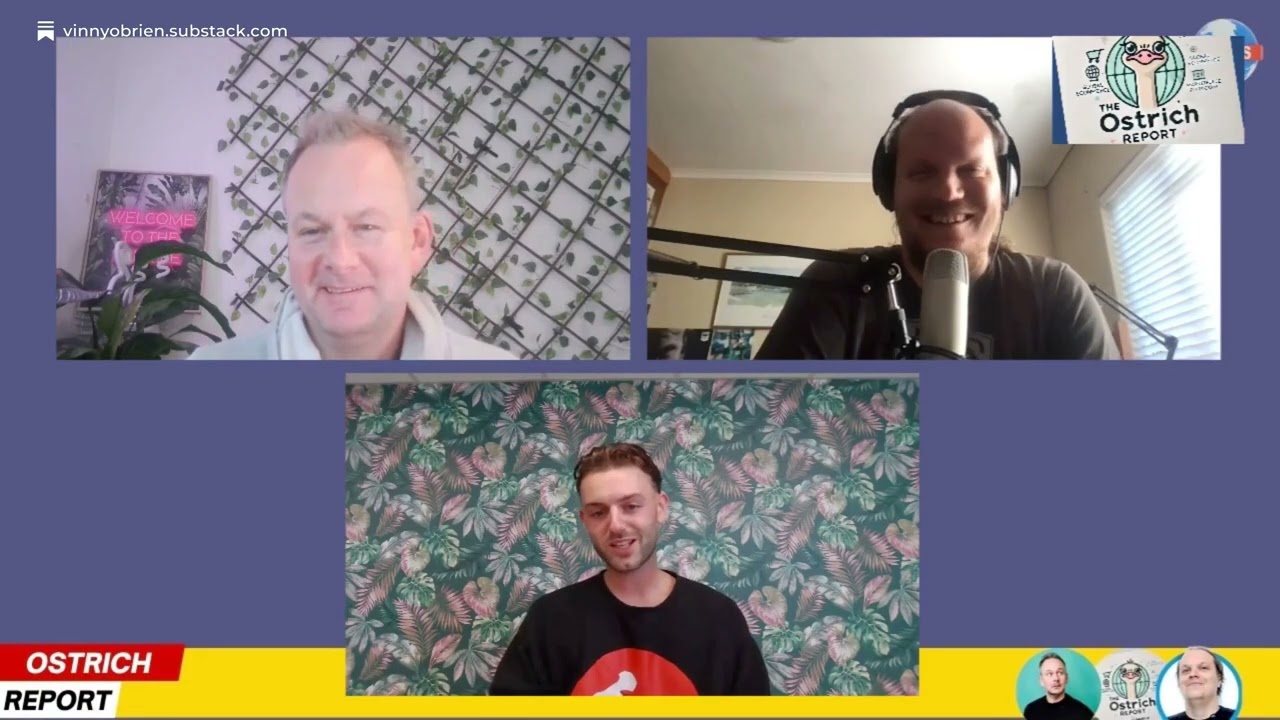
Rhys Sandberg of Exploded Sweets sold 40,000 units on Temu without paid ads. The conversation covers how he got hundreds of sales in days, iterated products based on customer feedback, and built repeat purchases through packaging tests and SKU strategy.
Chapters
So in all honesty, it was about 3 days. We were still in, like most selling platforms, it normally takes probably a week to get signed up on and get everything fully set up or automated and make sure you can kind of leave it running in the background for a bit. We were, to quote someone from Temu, a dog with a bone with it all. We got the initial setup, we got the setup all sorted. I think it took us a day and a half to get it all sorted and set up. We had a range of, I think, 10 products on there, and within 3 days I think we'd hit over 500 units sold. So at that point we'd already started ringing alarm bells that let's throw some more.
Welcome to The Ostrich Report. I am your co-host Vinny O Brien. Joining me today in Cape Town is my good friend Hendrik Laubscher. Hendrik, you want to say hello?
Hello folks, um, yes, it's me down here from Cape Town. It's a beautiful day. It's even a better day because I've got, um, a man that's very close to my heart. Not you, Vinny, uh, it's Rhys Sandberg from, um, Exploded Sweets, um, Rhys, just admission before we get going, I have an incredibly large sweet tooth. So when Vinny told me that we have Exploded Sweets coming on the show, I jumped for joy.
Rhys, thanks so much for taking time out to join us. You've been in the media loads lately, and anyone who's interested in marketplace and multichannel selling will have read some of the story along the way, and we'd love to dig in a little bit deeper. But maybe just for people who are not aware of it, can you tell them who you are, where you're coming from, as Cilla Black might have said back in the day?
Yeah, thanks for having me on the podcast. I'm obviously Rhys. I'm based in Nottingham. I work with SME businesses growing on sort of many e-com platforms and ways they can utilize social media as well to increase sales and traffic. We've done a lot of work at Exploded Sweets growing to pretty much be on every single social media platform you could probably think of and also selling on some of the biggest e-com platforms that have been coming in over the last sort of 3 to 5 years. So your Amazons, Temus, TikTok Shop, Etsy, and Ebays. One of the recent projects was obviously Temu where we had a massive expansion. From pretty much 2 months into selling, we were over 40,000 products sold. So it was a twist in the—
Good grief. That is incredible. Nottingham, I think, is the curry capital of the UK. I could be corrected on that one. Have you heard that?
Curry capital? No, I've not heard that one before.
It came up in debate. My brother, my friend's brother was in University of Manchester and we went to the Curry Mile and He informed us on the day that Nottingham in fact is the curry capital. But we're talking about sweets, not curry today. There's a lot of things that we want to get through, and I know that we've kind of spoken briefly about it. But one thing that strikes me about you and the way you just even mention marketplaces, you don't seem like you have to think about it too much. You've already been sold on the idea. How did you get there? Like, what career trajectory have you taken to arrive at a point like this where it seems like it's very simple for you to adopt and adopt early?
So I took a very weird career progress to get to where I am. Um, started in Wetherspoons, Wetherspoons kitchens, um, just making food on Friday, Saturday nights. But obviously during that time I was already in depth with a lot of my computer programming, Excel, data-driven sort of projects. Um, I then moved to work for a childcare provider, um, based in Nottingham called The Lime Trees, who I essentially ran the social media aspect and pushing traffic to the website, ways of generating bookings on times where people wasn't really wanting to spend money on a product that they wanted. Um, I then obviously left there, came to Exploded Sweets, and that then launched into these small packets of sweets, a very trend-driven product of freeze-dried confectionery, and helping promote a more inflated product when it comes to your pricing and still reaching those consumers in a way that you could drive those sales consistently, not sort of a leapfrog into massive revenue figures and then something that drifts off within a few weeks' time. So it was more building a culture around a brand on these platforms as well.
There's something in the Lime Trees that I'd like to explore a little bit because we talk a lot about paid and social as channels we operate in. You must have done a lot of earned work in there and then using own channels. Did you consciously think of it in those terms and what were the things that you learned during those days that you were able to then translate, either consciously or subconsciously?
So the thing that I managed to learn from what the service we were providing people was, the way people look at something they're not really willing to invest in, even if it's a requirement and not a requirement. So it's how you would be able to target these people in a way that not only convinces them but also justifies the decisions they're making in what they're purchasing from you.
And how, how did you create that, that sense of I will now invest in it? Because some people talk about spend, you, you use the word investor, and it doesn't feel like it wasn't deliberate.
So that comes from the core of building obviously your brand behind what you're providing. So No one ever buys something for the first time they see it. You've got to constantly have these implants into people's brains where we currently use it at Exploded Sweets, where this cross-platform approach of being in people's faces. So for example, people's attention spans at the minute, they'll scroll through, say, 100 TikTok videos within 10 minutes, but then they'll potentially get bored, they'll get a text message or a WhatsApp of something go off that platform and then more commonly they won't go back to TikTok, they'll go say onto YouTube or Facebook. So having that cross-platform advertisement as well, if they've seen a video 10 minutes ago on TikTok of your brand, your product, and then they come on to something else and they're seeing not the same content, for example. So you don't just repurpose the same video on everything, but more of a twist or a different take on what you've already shown them and displayed. That helps build those imprints into people quite early on. So where most people will commonly have to see something maybe 3 to 5 times before they'll then go into that research phase of having a look what it is you're offering before buying, if you manage to funnel that in within sort of the first 20-30 minutes across different things, they will have it in their head that you're not just something that's come up over the last 30 minutes. You're something that in their head is recognized as, oh well, I keep seeing this, and it could have been 2 weeks, 3 weeks, but they don't process it in that way. So you're able to funnel people's approaches to that brand trust quicker.
It's, it's really interesting. And, and as I think about it, you know, I go back to things like Willy Wonka because sweets are kind of a nostalgic part of our lives or something you associate with being a kid and then revisiting as you get older. And it must be really difficult on one side to control yourself to say, I'm going to try and focus on the discipline of doing the right things versus this is something that, you know, we're going to have this scattergun approach. It feels like yours is very deliberate, but maybe just take us back to where Exploded Sweets was when you joined them as a brand, did you have to make a huge amount of cultural change, or was— were the raw ingredients there for you then just to build your knowledge and channel knowledge across the, the different outputs?
So when I started, Exploded Sweets were trading on their own websites. They originally grew from their Etsy channel, um, they were selling on eBay and TikTok Shop. Obviously TikTok shot the way it normally does with new brands, massively pushed it out. They were driving a decent amount of revenue, but that obviously starts to drip off the more you're selling on there because what you throw out is quid pro quo really with what you get back out of it. And it was a lot of investment in time and infrastructure we didn't quite have at that point. So we when I came in, I was quite lucky that the target market that we were selling this product to was still quite similar to the target market I was aiming at previously. So with childcare, it's parents who are having to send their kids to these holiday camps, after-hours sort of school clubs. And with the new trend of freeze-dried sweets, it was quite the same people we were targeting. It was parents looking to buy this trending product that their kids would have seen and buying it for them. So in terms of the demographic that we were targeting, the way I approached that was still quite similar. It was just a completely different thing I was providing them, essentially. Instead of childcare, it was sweets. Bit of a weird difference.
So what I'm hearing from you, Reece, is that initially you started with using established channels, why did you then try to go to a pretty new platform, Temu?
So we went to Temu. I was a bit paranoid at first with it because we launched on a few platforms that were meant to be up and coming, but obviously with some bad reputations, we'd launched on them in the past and they hadn't really been fruitful, maybe like 2, 3 orders a month sort of level. But the way I saw Temu, my mum shops on it loads, sister does as well. So I knew there was a customer basis there that our product would potentially sell well to. So we launched on Temu as a test, essentially. We threw, I think it was our top 10 bestsellers that we'd seen across all of the platforms, whether it be websites, eBay, Amazon, TikTok. And we launched those on there just to essentially test what the market would be, who's buying on that platform, is the product as successful on this platform as it is on others, the growth conversion rate, stuff like that, those key metrics you look at to depend on what your product is. So when we launched on Temu, it was fully just a test basis. I actually didn't expect what it turned into originally.
So on that, when, when, when did the light go off saying, whoa, this, this is a channel that I need to do a lot more for?
So in all honesty, it was about 3 days. We were still in, like most, most selling platforms, it normally takes probably a week to get signed up on and get everything fully set up or automated and make sure you can kind of leave it running in the background for a bit. We were, to quote someone from Temu, a dog with a bone with it all. We got the initial setup, we got the setup all sorted. I think it took us a day and a half to get it all sorted and set up. We had a range of, I think, 10 products on there, and within 3 days I think we'd hit over 500 units sold. Wow.
So at that point we'd already started ringing alarm bells that 'Let's throw some more at this.' And did it help internally that you were getting traction so early and it was so easy to onboard? Because I know onboarding can lead to internal challenge when it comes to getting some sort of feeling that this is the right thing for us to do. Like, you know, if it takes 6 weeks, you're kind of pulling your hair out saying, 'Oh, we'll be there, we'll be there.' How impactful was something like that?
Having that speed of being able to get things set up and sorted was so nice to have. Obviously, in my time here, we've set up on 4 different platforms, and the investment we put into it was hindered on those long-time setups because it's like, well, we're not actually selling anything yet, where's this time going, what's the, what's the benefit of it? And then when you finally go through that, say, 4-week setup and all you're getting in return is these drip-fed 4 or 5 orders. It's a bit of a slap in the face, essentially, at the end of it. But with Temu, seeing this tiny investment of time and effort, for them, what the return we've got out of it, priceless in terms of return.
And just for those of us, we've also learned that it's Temu. The guys told us a couple of weeks ago on a call. So even though we're all calling it Temu, I'm not going to correct anyone, just putting it out there for the record. Could you also explain to us maybe how you onboarded? Was it direct integration, Rhys? Maybe for the technically minded amongst us, because I think marketplace audiences tend to be self-starters or people who like doing things themselves.
So the initial setup, in all honesty, I will do myself an injustice here and say I'd actually originally done it wrong.
Oh, wow.
Obviously, You know, with say an Amazon Seller Center, you can set up to either sell in the UK, the US, wherever. Um, I'd actually clicked through the wrong link to sign up as a seller on Temu, and I was going through the complete wrong way. So I ended up reaching out to what is probably our unofficial account manager guy at Temu called Tom. I searched my LinkedIn for anyone that worked in the UK at Temu, connected with him, and Tom Wintle.
Tom Wintle, look, shout out to Tom.
Yeah, so I'd messaged him saying, having some issues, this is the brand, this is what we're like, this is what we sell, want to get on the platform, can you give me a hand? Within 5 minutes of me sending that message, he'd sent me his phone number and I was on a phone call with him getting it all set up. Um, so going through that process, you obviously have your whole pain points of setting up, which is filing all your business registrations, tax documents. But the speed in which we managed to get all of that sorted was ridiculous in comparison to most other sites. But then moving forward from that, it was just so easy to— the product listings within themselves, for example, on Amazon you can spend like 15 minutes writing a product listing form, whereas on Temu it's eyeball part, 5 to 10 minutes at best. All you essentially have to do is make sure you're listing the correct specifications and compliance documents.
Can I ask, going backwards a little bit to talk about the demographic side of things, you mentioned that your mum shops on Temu. I shop there as well.
Me too. Me too. Me too. Me too. And let's not forget that.
Hands up if you shop there. One of the things that I found really interesting in this story was your ability to find your audience seemed to happen really, really quickly. Were you confident or had you done research, even if it's desk-based research? How did you arrive at that point, Rhys, to, to be confident that you could deliver on this?
So in terms of marketing, it is a lot of trust base. You've got to be trusting in yourself essentially to be able to get a product out there in front of the right people. Obviously, with working with Exploded Sweets for 18 months, I had confidence in the product we were selling. We had reviews from other platforms. We knew what people liked, what people didn't. So then moving on to Temu, what we then managed to learn was not only how to sell better to our demographic, because the feedback you get on Temu is so quick with people leaving you reviews, what they like about the product, what they don't. Is it a pricing issue? Is it— we obviously do some packets where they're not resealable bags. Do people like that? Do people not? So being able to quickly chop and change our products in order to suit different demographics as well was great. But then we also learned that the people we were selling to now on Temu weren't just our number one demographic. We weren't just selling to these parents and young kids anymore. We were selling to these other older generations who are there shopping for other bits but see these sweets and are like, oh well, what is this? Our product is now more discoverable by a lot much larger demographic of people. So it's— Temu's helped us chop and change our products in a way that it's more universal on who we target. Yes, we still have a target demographic of where the majority of our sales come from, but it opened the door to these other markets that we can chop and change our product to suit their needs instead.
Can I ask, because myself and Hendrik have talked before about marketplace sellers being the most innovative in e-commerce in general, and you've just given a mini masterclass there. I don't know if you feel the same, Hendrik, but you've talked about changing your product mix in real time, taking feedback, responding to it. Can you maybe just give us an example and talk through, like, did you change your pack size? Was it the type of packaging? Because you kind of alluded to having to change packaging there, which I think is just amazing.
So one of the tests we ran, we do freeze-dried Sweet Explosions, the little balls that are crunchy and freeze-dried sweets. In order to do a little bit of a test on what people wanted, we ran the same products in different sizes and different actual packets. So we have a product which is packed in VFFS film, so it's all done on a packaging machine. So we've got a lower cost of manufacturing on that product. And what we did is we ran 50-gram bags and 150-gram bags of that product. But then in parallel, what we also ran is we've got like little doy packets with resealable tabs that are heat sealed. And we also ran them as 50g and 150g packets. What we then managed to look at is, yes, these 50g and 150g film packets were cheaper. Some people were actually buying the hand-filled products more because, for example, the 50g bags people would normally commonly eat in one sitting, whereas 150g bags on most people wouldn't, but some do eat in one sitting. So we noticed the 50-gram bags were selling well in the film, but the 150-gram bags weren't. Whereas the 50-gram bags weren't selling that well in these pouch packets because it was a— it was more expensive for the consumer. Whereas the 150-gram bags were selling well even though it was a much higher cost product they were selling just as well as the cheapest product because people liked the fact they could have it, seal it, leave it to one side, and then come back to it in a few days and eat it again.
You talk about the feedback loop. Sorry, sorry, I had to jump in. I was just going to ask about the feedback loop. You talk about it being quick. Over what time frame are you getting feedback? And then on top of that, how quickly are you as an organization responding to it?
So the feedback we're getting Based off when the customer orders, we normally ship our orders within a couple of days, depending on the weekend, obviously. So by the time the customer's got the order, looked at it, we're getting that feedback within sort of 3 to 5 days, which is really quick. So say, for example, someone orders something on a Sunday, we pack it and send it on the Monday, it's with them by Wednesday. They open it, give us the feedback on a Wednesday. We as a business are actually quite adaptable. So if they've given us some feedback, which is a massive drastic change we need to make in order to ensure our product quality, we can have that change implemented by the Thursday. So any order that then goes out at the back end of that week is to a higher product quality.
Well, one, can I just state the absolute obvious here? As somebody that works with brands of all shapes and sizes, CPG brands getting this kind of feedback. Vinny, I don't know about you, but I've not heard of these feedback cycles. One. Two, the other thing that I find super interesting is in our call this far and in this conversation, you know what the word Reece has not mentioned is advertising. If you deal with marketplaces like eBay, Etsy, insert whatever name, what is the one thing that you kind of get forced to do inside like a week? You need to start paying the piper. And now you see, I mean, you need to pay to get eyeballs onto your traffic. Rhys has not mentioned that. So, so, Rhys, Rhys, tell me, how do you—
But there's a clue, Hendrik, up top when he told us about his time in Lime Trees and getting into understanding audiences and earned audiences and, and places like that. So I think the right person in the right role as well though.
I get that. But I think if, if, if, if our audience is listening, This is a new form of marketplace selling where there's not really like the pay-to-play space, and that is not what drives success. Is it the product iteration? Is it the fact that you are listening? What is driving that consumer coming back and saying, you know what, I want another, I want another order of Exploded Sweets, and I don't particularly care if this is the first one. How do you get to that place? Without spending a dollar of, or a pound, a pound, sorry, a pound of advertising. Sorry, sorry, sorry.
So it's quite great with Temu, obviously, without spending any money on advertisement is the way they put your product in front of consumers, where these marketplaces like Amazon, you're having to either pay to get your listing anywhere near in front of someone or these Ebays and Etsys where the actual wording inside your product listing needs to meet certain search queries. What Temu does is far better because they will look at what users they've currently got on their platforms and show them the relevant products they already want to buy because of what they've already bought. So in order for us to just make sure we stand out better, all we've got to do is make our product better. So these feedback loops that we get, these real-time insights into what people are wanting, why, why are they unhappy with our product, what changes do they want to see— that is the crucial aspect of it. We're not paying to advertise. All we're doing is fixing someone's pain point and problem with the product, whereas any other platform like your TikTok Shop and eBay, Etsy, Amazon, it's You can't do that if someone doesn't buy from you again, short of going and contacting them and asking them, what's up, why didn't you like it? You don't get that feedback. Whereas on Temu, it's within 3 to 4 days at best you're getting that feedback back from these consumers telling you what's making them stay, what hesitance do they have to want them to leave and not buy from you again.
It's really unique getting that level of insight that quickly from a consumer base that allows you to respond. I think you've got to have the culture to respond, first of all. The second part of this, you've mentioned it a few times, is discover. The idea of discovery, you've got a very unique product in that it doesn't have latent demand. There's no one really out there doing search volumes to, or not enough volume to allow you to tap into it from an advertising perspective. It lends itself very well to the sort of advertising that you do. How do you then build funnels or do you even bother? Because you've talked about this nonlinear approach, Rhys, to having content available everywhere that it goes. How do you plan a campaign? Like even a simple thing like an entertainment video on TikTok and you guys have driven millions and millions of views. How do you even get into that kind of campaign setting mindset?
So we have a lot of built-in systems that will monitor where our traffic's coming from, where it's going, whether it's being fed to our website, is it our Facebook, TikToks, where that traffic then goes and purchases. We can sort of very loosely track and monitor, um, obviously short with the data protection and stuff that you've got, there's only so much you can do. But we can check our engagements on these platforms. See, most, for example, most people who watch our content on TikTok, they'll either come to our website or go to our TikTok shop. On Temu, it is very much targeting these people inside this platform. We do keep our campaigns separate, so the customers that we have in terms of brand loyalty, they do normally just come and shop direct on our website. These these new customers in terms of growth and feedback that we're getting, these new customers we're finding on Temu due to the discoverability you've got on this platform, the demand we have there is high to say the least. And in terms of campaign planning, we normally differentiate those platforms out of each other. So we'll drive a different campaign inside of these platforms. On their own. And then as they lead into these other funnels, to say that we've got, we do branch them into obviously the website and repeat customer of our brand, not just on a shopping platform.
So in simple terms, you have millions of minions running inside your data systems to Number one, check that you have engagement. Then based on that, you generate content. Then based on that, you're using tools on the platforms to generate engagement. That engagement then leads to sales. And then it almost reads like you've cracked the code. Or am I missing something here, Rhys?
No, you've pretty much hit the nail on the head. The only thing you're then probably missing is that final step of that sale then turns into more feedback that then just funnels straight back to the start that you can then feed more into this. So it works as— it's not just a funnel, as most people say, into one place. It is a proper loop of what we do to start with is pretty much what we finish with at the end. But the new feedback we get just constantly changes. So instead of it just being funneling people through until they no longer want it, it is just making sure this repeat customer lifecycle continues to flow. Because someone who's been buying your product, say, 8 orders, they might then get bored and don't want anything else. So the feedback you then get over those 8 orders you then make something new for them to keep it there as well.
And do you have people ordering that kind of frequency with you?
Yes, I actually went through a few today and I was quite shocked that over the, I want to say just over 6 months we've been selling on Temu, I found that a customer has actually ordered 48 times with us.
Oh my God.
In the 6 months.
That's incredible. Sorry, can you just say 48?
48, 4-8, yes.
I would love to verify. This has got to be a record for any brand anywhere.
It's incredible. Yeah, I was having a look through and it was 48 orders within the space of 6 months of selling. And I think their first order was somewhere in between the first or second month.
And they don't need a dentist at the end of 6 months either because of the freeze dry.
Oh, come on.
It was a consideration. I was having a joke with a few people in the office saying, as a loyalty bonus, might have to pay for dental care. But yeah, it was one of those.
It's incredible because you've talked about a feedback loop in the way modern marketing is kind of designed, not by choice, but the way that the systems mean that we have to operate within them. Have you thought about repeating this in other categories. Do you think you can, or is it unique to the sort of product that you have? Hendrik, you're nodding.
So we do sell a few different things. So we started mainly as a freeze-dried confectionery seller. We used to manufacture everything in-house and sell them. We did branch into normal confectionery. We call it raw stock. Um, because obviously it's unfreezed, right? So we did branch into these sort of jelly sweets, chocolate stuff like that, and we've seen the exact same stuff moving outside of confectionery. I'm arrogant enough to say I could probably do it, but it's not really something we've done just in terms of branding.
But it must be really exciting given the category you're in and for the rest of the business to know that you've got this ability to to excite customers to try new flavors, new products. It gives you this almost like a playground that probably doesn't exist in too many other places that you can, you know, fail and fail quickly or succeed and succeed really quickly as well. And it seems like your ultimate success is going to be determined on your ability to satisfy those customers. Is that right or wrong or inaccurate or how do you feel about it looking into the future?
Yeah, so one of the, I'd say, weird things we've had is obviously the fast-moving consumables and confectionery platforms has took a bit of a decline. So seeing the increase in sales at this given moment in time is confusing looking at the market trend, but it's nice to see. We're not, we're not complaining essentially, but looking at the way things are trending in terms of the market as a whole and where that market is now diversifying into, still seeing those strong sales in something that should be declining but isn't is a massive boost in the brand, the product. So having that loyalty with these consumers is great because it means when that market does decrease, we have that brand loyalty with the market that's still there as well. And being able to quickly adapt our products based on these feedbacks as well makes it so nice to know that if the market then does change for what these consumers are wanting, then we can quickly adapt to that as well.
And operationally then, is that putting huge strain on the business to be flexible, or is it something you can do relatively simply?
So chopping and changing the actual products themselves, whether it's bringing out a new flavor or a new packet within itself, We are quite quick with what we can do. So we had someone message, they wanted to try this certain flavor of sweets and they wanted it freeze-dried. And I think within 3 days we had a packet ready just to ship out for them. So operationally we are quite fluid and flexible with what we do. And obviously the increase in what we're doing and the units that we're selling at the minute, it does allow for substantial growth as a business as well to develop these new things and change and swap things out. We started doing fruit, I think it was 3 months ago. We were freeze-drying fruit just as a test of the market. Let's see what people think if we give them a healthy alternative as well.
So what's the craziest thing you've been asked for by a customer at this point? Like, is it pickled onion and peanut butter flavor, or is it a particular type of product?
We've had a few different weird queries from people asking if we can freeze dry certain things.
Like what?
So, completely out of the sweet realm, so stuff like, I don't know, ice cream, for example, would be some. And there's other things that people obviously want to freeze dry and just see what the difference would be. So, I think we did, I think there's 12 different types of fruit we freeze-dried just as a— wow, one of these experimental processes. Um, and then we ended up listing a few of them onto Temu, and the feedback we got off that was amazing as well. So it was one of those weird projects that turned out all right in the end.
It feels like, again, one of those products and companies that are so unique you could get into personalization at an individual level. If you really decided you want to, if someone's ordering 48 times in 6 months for you.
Yeah, definitely. We could, we can very easily make a product up if someone said, dropped us an email and went, we've seen these out there, could you start doing it? We could do it quite easily and quite quickly. We are very adaptable.
Hendrik's about to jump on the mic. What have you got, Hendrik?
I will just say, I think there's 2 things for me that's like, for me, the takeaway from today's call. One, if you're a CBG seller, you should be looking at horizontal marketplaces like Temu as an opportunity. For me, Rhys has kind of confirmed that if you are not testing or trying, then what are you doing? Secondly, I think for me the most interesting thing, and that was kind of like the aha moment I had now, just while you were calling me out about the mic, is I think exploded suites have a massive advantage over most companies. Do you know what that is, Vinny? They have a culture of understanding, working in channels, but more importantly, they have a business that is able to quickly iterate. I'm honest, I'm utterly mind-blown of what I've heard in the last 35-plus minutes. I, for me, this is like utopia. I'm gonna just say This is utopia, and this is the kind of stuff that you don't hear of because this does not exist. So Rhys, you're a droid. I'm going to just say you're a droid. You don't exist. There, I said it.
You're a unicorn, Rhys, all by yourself. So, Mr. Unicorn, looking into the future, what are the things that you're excited about looking into peak, where you're going to get an even bigger increase in terms of volumes coming through? As a brand and personally as you learn in your career?
So one of the things that I'm quite looking forward to, obviously the difference will be Halloween for us as well in terms of a brand and the product we sell. Previously, with freeze-dried sweets being quite a high-priced product, there wasn't really these large bulk bags that people can buy for their, say, trick-or-treaters, stuff like that. Obviously with these bulk prices that we've been doing on Temu and stuff like these other platforms, Halloween could look very differently for us now because it is more of a cost benefit to buy these larger products that people can redistribute out to, say, trick-or-treaters. Looking at how this market develops moving into sort of this holiday period as well and moving forward is going to be very interesting. With it being a new platform, you don't know what is going to happen. Obviously, we've got data from last year on these other platforms on how we performed, but with us only starting on Temu this year, it's going to be interesting to see what the future holds moving forward with them. And then branching out as an actual business is going to be nice.
My final question to you is kind of along those lines as well, and it's as a practitioner, How do you evaluate early adoption and then how quick are you to adjust your position on it? Like, do you need to move away? So I suppose when it comes to something like Temu or other places, even on TikTok Shop and so on, how do you determine when to get out of them? Or do you think this is kind of like a cyclical thing? How do you think about it?
So in terms of these e-commerce platforms, there's, there's always the growing signs of when your product is not performing, to say the least, and when platforms are then hindering your products. When you get to a point where you're fighting a platform to still generate sales, that's your time to get out. Obviously, as long as you use these platforms as another tool in the box, then you'll never be in that position. But it's just then knowing when these platforms grow into what they always plan to be, that's where you need to be using these platforms for those reasons. So for example, Temu at the minute is a discoverable channel. Use it to test trends, products, fine-tune your product so when you release it into a growing market as well, your product meets that demand. But then also these other platforms that are now quite cemented in what they do. Say Etsy is quite a niche market with people finding things specifically. TikTok is very content-driven marketing, and say Amazon is, like Hendrik said earlier, paid just to be seen. So these platforms are fine to use forever as long as you use them in the right way, but if you're then having to fight these platforms to sell your product, then just get out, in my opinion.
Rhys, you have reaffirmed my love of marketplaces, and over the last 40 minutes or so, you have given us kind of a masterclass. I don't use the word lightly in how to handle modern cross-channel marketing. Hendrik, I know that you're probably going to be excited having listened to all this, right?
Well, one, For me, this is arguably one of the best 40 minutes of the year for me in a sense that one, Rhys has given us a masterclass, and I agree with you, it's not a word that I use often, a masterclass, how businesses need to think about marketplaces. That last 2 minutes, if I could bottle that and send it to more people to understand. So, yeah, Rhys, all I can say is good luck. Um, continue to do what you do, but more importantly, continue telling the story because this is not the norm.
Uh, just bear in mind he said that's the best 40 minutes he's had when South Africa beat the All Blacks, had a particularly big 40 minutes about 2 weeks ago as well, so that is saying a lot for a man who loves his rugby. Uh, but, but look, just to echo everything Hendrik said, Rhys, thank you so much for taking time out. We were Really excited about having you on. I think having listened to you speak directly for the last 40 minutes has enthused us even further. And there's so much for us that we could probably do another episode just picking apart the things that you've said. It was absolutely brilliant. So thank you so much.
Thanks, Rhys. You are awesome.
Thank you for having me on.
And maybe you'll come back on in a few years' time when you've done this with multiple other brands and say hello to us. You look a bit older and more disheveled like myself and Hendrik.
Already going grey, don't worry.
That's only the beginning. But look, thanks so much to you and to your team for giving you the time out this afternoon. Rhys, we let you jump off, get back to the day job. Hendrik, don't know what we're going to do after that one. We're not going to beat that.
Well, simple.
I need to go.
Thank you for having me on, guys. You're very welcome.
Thank you very much.
More from Vinny







Where is the consumer now? Reagan took to the field for the V Spot news .. #ecomm #ecommerce



Shopify's $4bn Loan Book and the Winter of Discounts | The Ostrich Report Live
