A Conversation With Trailblazing Advocate For Women's Entrepreneurship Virginia Littlejohn

In this interview, Virginia Littlejohn recounts her journey from a San Francisco‑based women‑entrepreneurs’ group president in the mid‑1970s to national leader of NAWBO (National Association of Women Business Owners). She describes how she helped merge independent regional groups into a unified national organization, leveraging relationships with the Carter administration and early White House Conferences on Small Business. Littlejohn details the sophisticated advocacy tactics NAWBO employed—identifying expert members, crafting policy positions on mainstream issues (tax, Prompt Pay Act, patent law), using distinctive attire and numbered introductions at conferences, and coordinating real‑time voting via walkie‑talkies and a mandatory voicemail system. She explains how these tactics secured a disproportionate share of delegates and policy wins, culminating in the passage of the Women’s Business Ownership Act of 1988. The narrative also covers her personal mentorship by Susan Haver, her reluctant but successful run for NAWBO national president in 1984, and the organization’s evolution into a global force. Littlejohn now co‑heads the U.S. delegation to the G20 Women’s 20 (W20) and advocates for ethical AI adoption to accelerate gender parity, emphasizing the need for guardrails against misuse. Throughout, she reflects on the lasting impact of NAWBO on women’s entrepreneurship in the United States and worldwide.
Chapters
Sorry, how about how you got started? How you found it and how you got started? How about that? What your business was, how you found NABO. Okay, I was president of a group of women entrepreneurs in San Francisco in the mid-'70s, the same time NABO was getting created. And then I became president of a coalition of groups around the country that were not part of NAVBO, and I had a consulting business in the San Francisco Bay Area. But NAVBO had the national name. NAVBO had the most incredibly brilliant women I had ever encountered. And I decided very early on that NABO and the independent groups should amalgamate. We all got to know each other through different SBA activities and some early NABO events during the Carter administration when NABO was instrumental in getting an interagency Committee on Women's Entrepreneurship set up. It started off as a task force, and they were all senior women in the Carter administration. But NAWBO was behind the scenes in everything. And later, some of the people who were involved with the administration became NAWBO members also. So we had a cadre of people who knew how to manipulate the government. Some of them were speechwriters who would be writing things for the Secretary of Commerce, for example, so our ideas would appear there and so forth. And in 1979, I organized a meeting in San Francisco of all of the NAACP chapter presidents— there were not very many then— and all of the independent presidents, of which there were about 8. And I, I'm embarrassed to say this, but I locked them in the room. One person desperately needed to go to the restroom. Oh, no. She was not allowed to go. Another person had a call from her husband who was planning their wedding. That was Edie Frazier, who was one of the 12 founding members of Capital Area NAABO. She was not allowed to leave the room. But we did figure out how we were going to be moving things forward. And over time, a number of the independent groups did join NALBO, including the JALBO, the big New Jersey organization. And it made so much sense for everybody to come together. It was so stupid To have all of these independent groups. I moved to Washington, D.C. in 1980, and who adopted me was Susan Haver, for whom Susan, your wonderful new AI program, was invented. Susan housed me for a while in her office while I was getting settled. Oh, my goodness. She helped me find my first client in Washington. She tutored me on public policy within an inch of my life. And she also provided the babysitter for our 2 sons in the form of her daughter. So her influence on me was very, very substantial. I absolutely adored her. And we worked on many, many projects together. One really interesting thing about the early days was we did not have people leave the organization right after their presidency. They came on to— well, we had a lot of Capital Area leaders, but many people went on to other people's boards. There was a There was a real continuity and an enormous amount of sharing in the early days. That was incredibly important because there were people who had contacts, who had relationships, who had relationships on the Hill, in the White House, etc. And Being able to hand those off to later generations of leaders was just enormously important. We also were able to use the White House Conference on Small Businesses. There was one held in 1980, one 1986, one 1995, and we used those as a way of educating our members On policy issues, on advocacy skills, etc. And I can say more about the role of the White House Conference later because it really put us on the map. Thank you. Can you share what they give of give a goo give a goo? Okay. At the 1986 White House Conference, all NAWO members. Were so enormously knowledgeable about the White House Conference on Small Business. And one of the sort of mantras, I would say, was the term GIPAGOO, which meant get into politics or go out of business. And at that point, we also coalesced a lot with The National Women's Political Caucus. And so we were learning a lot about getting women to become mayors, city council members, and we had a lot of focus on getting into politics or going out on— out of business. So the chapters were very focused on getting to know their mayors, their city council people. Their school boards, things like that. And we also used that as an initial training ground. But we used especially the 1986 White House Conference on Small Business, which I was in charge of for NABO, to get people really trained on advocacy and public policy. And we had a really interesting strategy for doing that. We identified who our very best members were on every possible issue that the White House Conference would focus on. So, if we had a great tax attorney in Indianapolis, if we had a guru in Washington on prompt pay, if we had an affordable healthcare expert in Florida, All of these people became part of our brain trust. Our very best person, and we asked all of the chapter presidents, were our board members. We had a gigantic board as our chapters grew, and both the chapter president and the board members were on the group. So, we had really good knowledge of expertise around the country. Then we would we decided what issues we were going to run on to get elected because it was a highly competitive process to be elected for the White House Conference. So our best person wrote up a policy position. We had about five issues that we decided we would all campaign on. Every state had a state. Competition for people trying to be elected. And so we trained everybody on the 5 issues that did not have anything to do with women's entrepreneurship. They were mainstream issues. Many of them were issues that no one at the time would have thought that a woman business owner would be interested in. They thought At that point that we all had small flower shops or we, you know, sold cookies at bake sales. I mean, literally, that's what they thought. The State of Small Business said that women-owned businesses only earned $10,000 or less. They only knew about sole proprietors. They did not know about women who owned corporations or who and partnerships. So, for a number of years, the State of Small Business said that women-owned businesses in our little tiny chapter had only $10,000 in revenue or less. So, anyhow, we had issues like very sophisticated tax policy issues, the Prompt Pay Act, Patent law absolutely stupefied the guys who were all trying to become delegates, and every small business group was madly trying to get their people elected. We came up with a system of having our Capital Area novel writers go around to the early states and to try to figure out what the process was to So what it turned out was we realized that everybody had a name badge, but more importantly, they had a number. And we also saw that every single man in the place was wearing a navy blue blazer or a dark suit. So we all wore orange, emerald green, red, yellow, etc. jackets. And we were the only women. We also positioned ourselves at the front of the room. We went to Maryland, Virginia, and Delaware, if I'm recalling correctly. So we had everybody have a number that they would stand at the front of the room and say, hi, I'm Virginia, I'm number 86, and the issue I would like to talk about is prompt pay for federal procurement contracts. Not saying a word about women or anything like that. And then again, I'm number 86, and we had everybody at a place where they could turn and see almost everybody in the room. So it wasn't like we had everybody exactly on the front row. Can you hear me? I'm reliving the experience. I'm 86. Actually, I'm, I'm 84. But anyhow, that was enormously effective. And then people would remember that you were 86. And that prompt, hey, I absolutely agree with that, I'm writing down 86. We ended up with 12% of all of the delegates We had more delegates. We had at that point we had 2,500 members in Navajo. We had the U.S. Chamber had 2,500 to 2,250,000 members. NFIB had 5,000 members. We had more members than they did. We were in 25 states at that point. We had 15 of the state chairs at that time, and we absolutely dominated the conference. What we did was we used technology, pre-internet of course, but what we did was we had a mandatory voicemail system. 2 times a week, all of our 200 members have to be on a call to be updated on what had happened at the state conferences held. There were always 2 every week, and we just had breathtaking uptake. And at the national conference, we got— we published something called Framework for the Future, which had 26 policy issues in it. We got 25 of them adopted at the national conference because we did block voting. We used walkie-talkies and we sent our members around when we would hear there's a vote in prompt pay. You know, the myth of the marching millions, it was our high heels on the floor of the Washington Hilton. And, uh, so we Absolutely dominated the conference. We got massive media coverage out of it. Susan Hager's firm coordinated the PR, and it absolutely changed how we were viewed in the business community because after that, every major organization wanted NABO members who had been White House conference delegates to be on their boards of directors. Okay, now tell me, what does NAVO mean to you? Because there are books of Kleenex in the house. Okay, what NAVO means to me. Oh my God. NAVO absolutely changed my life. I knew I was interested in advocacy when I lived in San Francisco. But so what happened was, first of all, I was Capital Area president for 2 years. For one and a half of those years, I was also National Public Affairs Chair. The first six months I was not, and I was very happy just being Capitol Area President. But then Susan Davis, who was another one of our founding members, Susan got a contract to be the representative in the United States for. The president of Egypt for all of their commercial and all of their government contracts. Redheaded Catholic Susan Davis. Susan Davis was the chair leader of the NAABO nominations committee, and she had been trying to talk me into running for national president for the longest time, but I had 2 young sons at that point, and I didn't think that I could abandon them to travel around the country. We had a large— in 19— this was leading up to the '84 elections. We decided since everybody thought women had bake sales that that was what we would do for our big fundraiser at the Mayflower Hotel. But what we did was We asked all of the presidential candidates in 1984 to bake a cake for us, and that was what we sold at the bake sale. Wow. And this was based on a poster of Golda Meir, who was at that point the president or prime minister of Israel, but can she type? There was a picture of her in front of a typewriter, but can she type? So we had, but can he bake? It was a wonderful, wonderful event. But at that event, Susan Davis announced publicly with my husband and 2 sons in the audience that I was going to run for national president. I had not agreed to it. I had told her no about 10 times. I had not discussed it with him. With my husband or children yet. They were quite young. They were quite young, but I ended up doing it, and I ended up getting elected, and it really just absolutely changed my life. I had worked on women's entrepreneurial advocacy since then. I was one of a long line of women With Hope Eastman and several other people, Jill Inrud and Susan Hager and Laura Henderson, we did the HR 5050 hearings, which resulted in the Women's Business Ownership Act of 1988, which really transformed absolutely everything. And I wish to hell we could have all of that back. Back right now, I think we have to regain some of the ground that that we have lost. And by the way, it's not just an American phenomenon; it's happening in a number of countries right now. And so, Nava has really got me my mind's working. I love this organization to pieces, and in the other room I have my checkbook, and I'm going to be giving Jen or whoever I'm supposed to give the check to, and I want to be on your poster, and I hope we have all of, you know, the other people who love this organization the way so many of us do. Thank you. Supporting the organization so we can continue this incredible, incredible mission that NAWO really launched in the United States. And NAWO's influence at a global level has just been also remarkable. Also, I don't know if you all know that, but so much of what has been advocacy in the United States States has become policy in other countries. And NAVBO, its predecessor to the Institute, the Center for Women's Business Research, which had a somewhat different mission. But NAVBO's impact really is so gigantic, and I think probably a lot of members don't know just how much NAVBO has changed opportunities for women's entrepreneurship around the world. I work a lot on international issues now. I'm co-head of the U.S. delegation to the Women's 20 of the G20 countries, and I co-chair with Seema Lajawari and Erin— where are you? Here. The Women's Entrepreneurship Working Group But we are continuing what really needs to be a long-term initiative. The World Economic Forum, in their 2025 report on the global gender gap, says it's 123 years before women have full parity at the global level. And we have helped so much in some of those areas. this over time, and we have so much more to do. I personally believe that if we embrace AI in the right kind of way, with empathy, with ethics, with the kind of community-mindedness that, that women entrepreneurs have, I think we can really accelerate that process. But we must We need to put guardrails up. We need to have ways of controlling the potential for scams, the potential for evil. But I think that we can bring so much to the world that is really enormously important. And for me, it's all about knowledge.
More from Virginia
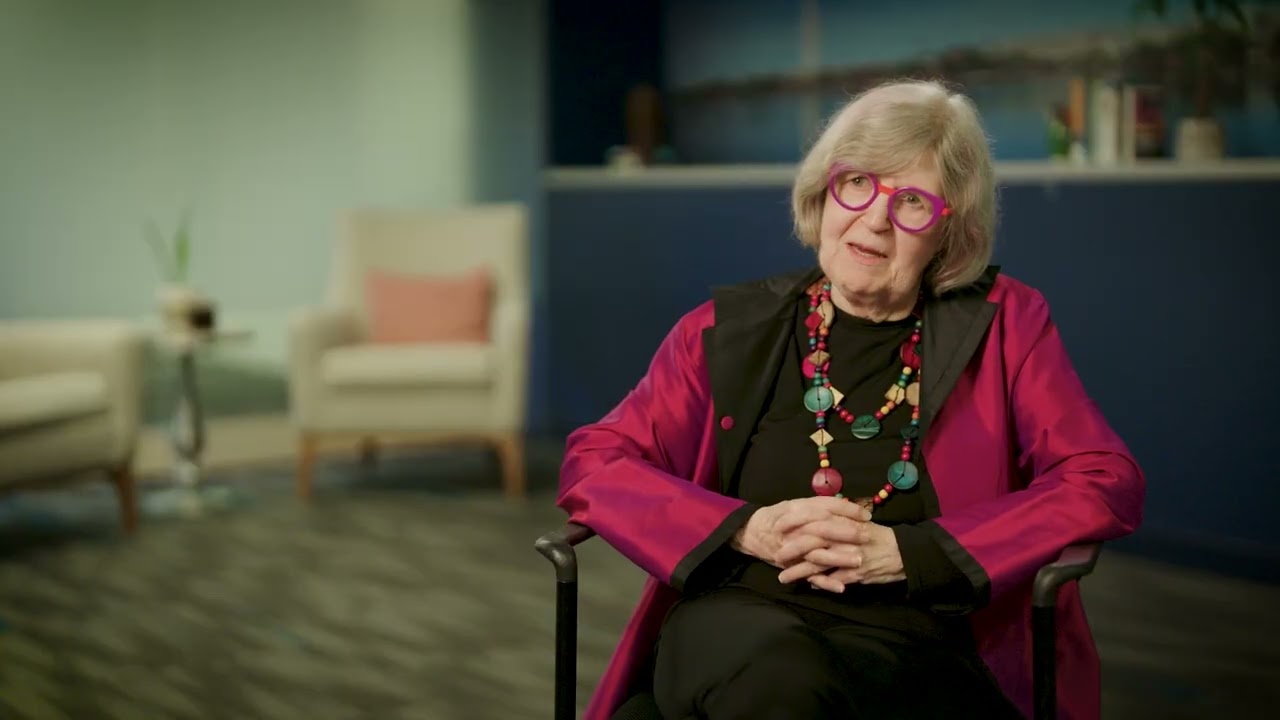
Virginia Littlejohn: Co-Founder and President, Quantum Leaps; Former President, NAWBO
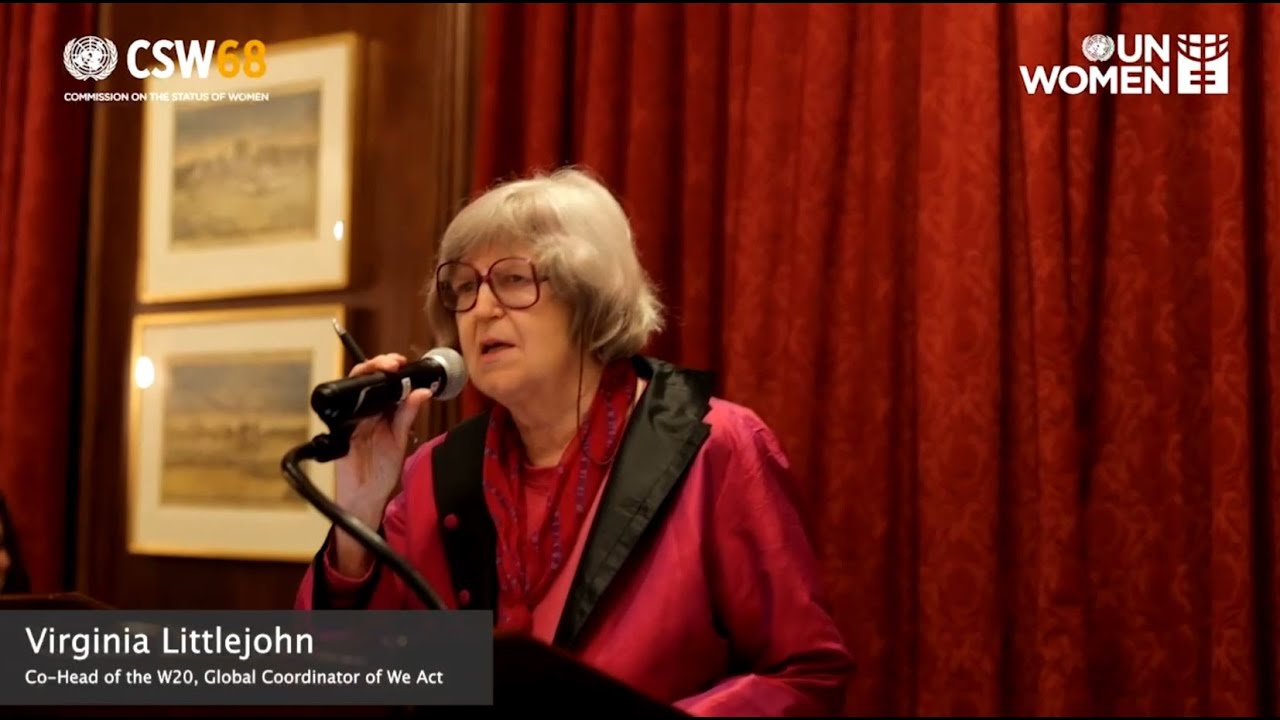
Virginia Littlejohn, Partnering for Impact: Advancing Women Entrepreneurship at CSW68


WOMEN'S ECONOMIC EMPOWERMENT, ACCOUNTABILITY AND NATIONAL OWNERSHIP - Virginia Littlejohn speech.wmv
