AcornOak Leadership Award 2024

The livestream, hosted by Virginie Glaenzer (founder of Acorn Oak), opened with a welcome and a brief definition of "feminine leadership" as a set of qualities—curiosity, communication, emotional intelligence—that are not gender‑bound but essential for modern organizations. Lisa Shenk, Chief People & Talent Officer, presented data showing the persistent under‑representation of women in senior roles (10 % of Fortune 500 CEOs, 12 % of executive positions) despite evidence that women‑led companies outperform. She introduced six "feminine sensibilities" identified from five years of research with Dr. Patricia Geist: (1) challenging absurdities, (2) strengthening affiliations, (3) integrating nuances, (4) stimulating energies, (5) treasuring feminine traits, and (6) cultivating collective vision. A panel of three women leaders—Kate Lucio (founder of Luminary), Heather Eason (CEO of Select Power Systems), and Rebecca Saltman (partner at Value Flow Innovation)—shared personal strategies for interacting with men in male‑dominated fields, emphasizing visibility, merit‑based respect, and leveraging empathy. The discussion moved to how women can inspire men, focusing on allyship, inclusive language, and co‑creation of vision. The ceremony then announced the winners of several award categories (Leadership, Visionary, Collective Brilliance, Heartfelt Leader) highlighting the achievements of Kate Lucio, Jennick Edwards, Rebecca Saltman, and Lindsay Chakraborty. The closing segment offered practical advice for young women facing bias or imposter syndrome, stressing respectful self‑advocacy, network building, asking questions, and reframing narratives, while acknowledging that current leadership models are historically masculine and need systemic change. The event concluded with gratitude and a look toward the 2025 awards.
Chapters
One. Okay, hi Lisa, how are you doing?
Hello there, well, thank you, happy to be here.
Absolutely, so we're gonna, hopefully we are live on LinkedIn and on YouTube. I'm going to wait for a few people to maybe say something on the LinkedIn page and see if we are flowing correctly. And we might wait a few minutes. I know we're live on LinkedIn. Econoc has a channel where we had really interesting conversation. So we're just going to start a little bit, maybe in a in a minute or two, but I think it is live, and I'll give some time for people to join and take some time out of their busy, busy schedule. We're all too busy these days. I see people jumping in.
That's fantastic. Marina and Suzanne and, and many others. Maybe they could all sort of say hi and maybe where you're, where you're calling in from as we're getting things started here.
Wonderful idea. Please write where you're calling from, and if you already have on top of mind questions that you would want to ask or discuss around the topic of feminine leadership, please take the time to write those questions. We will monitor the LinkedIn channel on a regular basis.
I hope by we you mean you.
I might do it. Yes, absolutely. Okay, well, I think it's 5:02. I want to be respectful of everyone's time. Welcome to the leadership, the Summer Leadership Awards. This is a very special moment for us. Today we're going to celebrate the achievement of feminine leadership. Now, for those wondering, what is feminine leadership? What does that truly mean? Let Let me clarify, femininity and masculinity are not tied to gender. They are qualities inherent in every person. So today we want to celebrate feminine leadership for its emphasis on curiosity, communication, and emotional intelligence, traits that are so greatly needed in today's world. My name is Virginie Glaenzer, Fractional Chief Marketing Officer and founder of Acorn Oak, a community of fractional executive women committed to the advancement of women in leadership and in power. Welcome. So today we have a packed— oh, I missed my video— we have a packed agenda, and in a few minutes you will hear from Lisa Shenk Chief People and Talent Officer, on the current state of women in leadership. You will also hear 3 women leaders share their incredible journeys and what it means to them to be a woman in leadership. And finally, we will reveal the 2024 Summer Leadership Awards winners. Before we begin this celebration, we want to take a moment to acknowledge all the minorities around the world who have suffered oppression and submission. We also want to show our respect to those in power who have demonstrated compassion for those minorities suffering through multiple generations. So together, let's pause and take 30 seconds of silence to remember the battles that they've endured and the freedom they are granting us today. Okay, well, thank you for taking the time. But let's not stop there. We want to invite you to join us to build a world where our gender, our culture, religion, and belief are celebrated as part of the vibrant diversity that enriches our human experience. And now it is my great pleasure and honor to introduce you to Lisa Sheng, Fractional Chief People Chief Talent Officer.
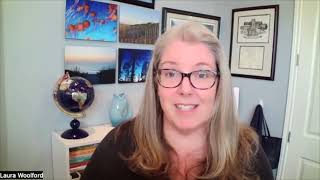
Thank you, Virginie. I'm so happy to be here today. I'm sitting in Chicago, but big hello to my colleagues in California. I just have a few minutes here to talk about the current state of women in leadership. And of course, we could, we could spend quite a bit of time on this.. But let me just give you a kind of quick overview. The first, the first way we can look at where things stand is by the numbers, right? And I can tell you, having been in the leadership space for, we'll call it 30 years, that a lot has changed. I mean, I actually remember when I was finally allowed to wear pants to work at the bank. A lot has changed, but also very little has changed. The numbers have been pretty consistent and pretty similar over the last 20 years, in spite of huge efforts to get more women into leadership positions. So only 10% of Fortune 500 companies are led by women. And only 12% of executive leadership roles in US companies are held by women. Only 24% of our states have women governors. And all of this is true when we know that women-led companies outperform male-dominated companies by as much as 35%. So the fact is things are not changing quickly enough in terms of having women in leadership, nor are they changing very quickly in terms of bringing the feminine into leadership. So the numbers tell us one story, the cultural conversation tells us A slightly different story. If you're paying attention at all, you notice that again, the most competent person for the job is a woman. Two of the men who probably have the most followers, the most reach of anyone in the world, the Pope and the Dalai Lama, have explicitly called upon women to help us move toward a more sustainable and harmonious future. And I think it's really important to note that in the entertainment and media space, we, given the, although it is only slight increase in women writers and producers and directors, we are seeing powerful women characters that are leading in ways that are often surprising from The Great, if you haven't seen that, Yellowjackets and Shrinking all give us versions of women leading that we, that we haven't seen before. So those are my 3 hot tips, by the way, if you need a show. And then, you know, I mean, if you've been on Instagram lately, the middle-aged woman is having a comeback. So we're seeing constantly in our environment the call for more of the feminine and more women to lead us in a direction that will get all of us to a better place. But really the most important kind of description or the most important insight into where we are now comes from our own lived experience. And I, along with my writing partner, Dr. Patricia Geist, who I think is here with us today, have spent the last 5 years interviewing women leaders to understand if we built a model of leadership was based on the feminine, how might it look different than the models that we have now, which are based in patriarchal, hierarchical, and often hyper-masculine modes of leading? And what we've discovered are 6 sensibilities that make women leaders different and also that stem from the feminine, whether in a man or a woman. So, so let me just kind of run through these quickly because they really are the foundation of our leadership awards today. The first is that women know something is up, right? Women are starting to challenge some of the absurdities. I mean, we can go back to not being allowed to wear pants to work, but we don't have to go that far. We don't have to go all the way back to the '80s, right? There's still all kinds of absurdities that women face in the workplace. One that often comes to mind is the notion that emotion doesn't belong at work. Yet we all know that we're living such an important part of our lives at work. That of course there are emotions at play. So challenging these absurdities is one of the things women leaders have been telling us is important for our movement forward. Next one is strengthening affiliations. You know, we all know that relationships are important, but women have a special place for relating in their DNA and prioritize relationships in a different way than the masculine does at work. Third is integrating nuances. These women tell us decisions aren't black and white. It's not often as clear as that. So being able to bring in the nuances around decision-making and bringing other aspects of decision-making beyond just linear logic become really important elements of feminine leadership. Stimulating energies is another aspect of the feminine that we saw a lot in these women leaders. They could read a room, they could feel when the energy was off, and they didn't ignore that. They pay attention to that. There's something to be done with that energy. And the fifth endowment we talk about is treasuring our own feminine traits. So often, so many aspects of being feminine at work are, you know, have been shutdown or not appropriate or not acceptable. And what these women are saying is, no, the things that make me strong, many of those things are things that come from my feminine, natural feminine traits. And when I apply those with power at work, it makes a difference. And finally, and sometimes I think this is most important, is that women have not been seen as visionary. And yet we have visionary women all around us. The difference that we're finding is that women cultivate vision, right? So they bring vision out of the people around them and they bring people along with them to create vision that moves the whole forward, not just a vision for the sake of my own independent view of things. So these sensibilities are the foundation for Rewilding Leadership, a project that Dr. Geist and I have worked on now for 5 years and hope to be able to share more with you as time goes on. And in the meantime, are really the foundation for these awards so that we can start recognizing and highlighting the feminine traits that we need most in leadership right now in order to not only be successful in business, but to serve all of us better. Thanks, Virginie. I'll pass it back to you.
Thank you so much, Lisa. This was an inspiring presentation. Thank you for taking the time. So before we reveal the winners of the 2024 Acorn Oak Summer Leadership Awards, I'd like to invite Kate Lucio, Rebecca Saltman, and Heather Eason to the stage for a panel discussion. Okay, I think we're all here. Oh, there's a camera off for Rebecca, but I guess— let me check again. I don't know if you hear me, Rebecca, if you're hearing us, but your screen is black. Hopefully it's just an internet, something about internet, and it will come back very soon. So the discussion is going to be— oh, is it my screen that is off? Oh yes, okay. So she will come back. The discussion is going to be short but powerful. So let me first start by introducing each of our speakers. So Kate Lucio is the founder of Luminary, and while I do that, I think we're going to stay the same. A global— so let me start again. Kate Lucio is the founder of Luminary, a global professional education and networking platform. Kate founded Luminary in 2018 to uplift and advance women in their careers. It has grown into a global movement with thousands of members across 30 countries and over 60 corporate partners. Kate's work has provided support to women's professional growth during a critical workplace crisis. Welcome, Kate. And you can hear us?
Yes.
Yes. Hi, thanks for having me.
Heather Eason is the founder, president, and CEO of Select Power Systems, an engineering firm supporting gas and electric utilities and a certified woman-owned firm with a national presence. As a coach, mentor, and effective leader, Heather exemplifies integrities and work ethic, paving the way in a male-dominated field. Thank you, Heather, for joining our panel.
Thank you for letting me be here.
And let me see if we have— we're still waiting. Oh, she was just there. We did the whole testing and— oh, here she is. Rebecca. Yes, it's because you're traveling to Portugal, which is why. Can you hear us? I think she might. Okay, so Rebecca Saltman is the partner, is a partner at Value Flow Innovation providing coaching, workshop, and consulting to empower innovation and drive social change. Rebecca is a futurist and a change agent who has spent her career bringing more reciprocity into our world. By disrupting old narratives, she's making the way for something new. Thank you for being here, Rebecca. Can you hear us? Well, we'll see. Hopefully the internet will be back. So let's begin with what you've all learned as a leader. And my first question is to look back at your past experiences. So reflecting on your past experiences, what are the unique approaches that you took when interacting with the men around you and in your industry? Kate, would you like to begin? Sure.
You know, I, so I started my career in tech and then was recruited into finance for part of two decades. I also grew up with two brothers and a very strong father, and I was the middle child of one girl and two boys. And I think a lot of how I experienced and honed sort of how I dealt with men throughout my career and continue to came from that childhood. It was more— it was no difference. I just knew that I probably had to work a little bit harder. I had to be a little bit more visible, and I had to probably use my voice a bit more to make sure that people knew who I was and what I could bring to the table. So when I got into finance, where I spent again the majority of my career, I already felt pretty prepared because of how I was raised and how I was brought up.. And so my process was to really make sure that they understood who I was, again, what my background was, the skills that I brought, and really lean into those versus the fact that I was a woman or they were a man or, or various, um, or, or all genders, in fact. And so for me, it was less about I'm a woman, they're a man, and I really played into my strengths just as an employee, as a manager, and a leader, and really demonstrated my worth in that way. For my entire career in banking, I, I only ever had male managers and saw very few women leaders. So really learned to leverage them and use them to my advantage, building mentorship and sponsorship. So I use my my gender as a woman to my advantage throughout my career and continue to do that.
Wonderful. Leveraging people around you, men and others included. I love that. Thank you for this authentic response. What about you, Heather? Reflecting on your past experience, what unique approaches you take when interacting with the men around or in your industry?
So, mine was a little bit different because I was the only female electrical engineer that graduated. And so, I was surrounded by all guys from college age through my career. And I found that when I finally was sitting at the table and the pronoun guys was used and they forgot that I was a female, that I was just accepted as another engineer for my talents and my skills, that I had made it at that point. So I never got offended when, you know, it was, hey guys, do you want to do this? Or, hey guys, what do you think about that? I always felt that it was a badge of honor that they forgot that I was a female and they really just saw me as just one of the other engineers at the table and on the team. So for me, being a female, while it's important to me and I do have a lot of skills that I bring in, emotional intelligence in my interactions and my relationships, Being able to be seen as an equal and just as an engineer and not as a female engineer, that was when I knew I had made it. And really, that, that was my cornerstone. That, that was my award in my mind.
I love that. So you must have had quite a strong personality to remind everyone that you're just to be seen the way you wanted. Thank you for that. Um, let's ask Rebecca. I know she's back online. I'm not sure if you can hear us. And if you don't, we'll go to the second question and wait for you to come back. Are you able to hear us, Rebecca?
Well, can I just add? Yes, please do. Heather, I just love that. I love that you shared that. I think I have a similar feeling around that when I wasn't thought of as who's the woman at the table and I was thought of who's the experienced banker and leader at the table. That to me too was very telling. And to your point, I think you leverage that. That is a badge of honor. And as things change in our industries and there are more women and more diverse representation around the table, hopefully that gets normalized, but I love that you shared that.
What about you, Rebecca? Reflecting on your past experiences, What unique approach can you think of that you took when interacting with men around you or in your industry?
Well, first of all, thank you so much. I apologize. I literally am in the middle of a forest in Portugal and we lost all electricity. So, so I apologize. And as women, I think that one of our unique features is that we are super MacGyver. We have to figure out— so I pick up my phone. I plug into my power strip of my backup battery and get on, on non-Wi-Fi.
So you figure it out, right?
Glad to have you back.
Absolutely. Well, and I think that that's one of the superpowers of women in leadership, right? That we, we have the opportunity to think more holistically. You know, oftentimes we, we're, you know, feeding the children and cleaning the house and doing all of these things and working and getting, meeting deadlines and all of these things. And yet You know, and all of these things are continually happening in this circle. And men in leadership don't often have the same kind of cycle that they don't have to— they're more like, hunt the deer, hunt the deer, hunt the deer, like one, one piece. And I think that women in leadership have this multiple capacity to be able to do things that are of amazing resource. Ways that is uniquely feminine, I think.
Thank you for that. And I can hear, I can read that Jennifer on the LinkedIn, LinkedIn says that she can relate as one being one of the very few women in her engineering class. So I think we're, we're not the only one to have felt me. I've been in technology my entire career and most of my mentors and bosses were, were men. So now looking ahead, You know, for years— that's my next question— for years we believed that breaking the glass ceiling meant competing with men on their terms. Today we recognize that the world needs the distinctive qualities of feminine leadership, you know, traits like compassion, curiosity, genuine care for others, and creativity, which are essential now more than ever So it is clear that rather than competing for dominance, we should foster collaboration. So when organizations bring more women into leadership roles on their board or on their executive team, what they're actually doing, in addition to making their company more profitable, and we have the data to back that up, it's also that they're creating opportunities to help the men on the teams embrace and integrate their own valuable feminine qualities into their leadership styles. So looking ahead, how do you believe women leaders can inspire and teach the men around them? And let's go with you, Rebecca, since you're still there.
I'm still here.
Yay!
One of the things that I think is really amazing about all the women in my world is that we share a sense of empathy. And the idea that we can have empathy allows for us to be able to meet men where they are and not exclude them because they're not our enemy. This allows for us to be able to put ourselves in another's shoes and have a deep sense of connection and enable us to move forward. And so that, I would say, that was one of the main pieces that, um, that for, uh, is a main part of my leadership and my ability to create connections and weave webs of people that can resource all kinds of things in, especially in the workplace.
Wonderful. Thank you for that. Kate, what do you think?
So I think a big part of this is creating allyship and bringing the men along with us versus continuing to exclude, which is what they have done. Uh, it's one of the reasons why I think what Heather said resonated with me so much around feeling like you're already one of them. I think embracing and making them feel like they're part of the conversation. I think the other thing is, is calling out the wrong behaviors in a positive way, in a teaching way where it's not just about the us versus them. It's one of the reasons why Luminary, when I launched it now almost 6 years ago, we decided that from the very beginning it would be gender inclusive. While our mission is to advance women and allies in the workforce, we can't do that alone.. And we have to do that collectively, whether it's a field like engineering or finance or tech, whatever that is, where it might be more male-dominated, even more of the reason to create that allyship.
At—
when you think of the statistics that you mentioned in the very beginning, if we want to see more women in leadership roles, if we want to see more women in the boardrooms, on the boards. We have to do this together and we're going to need them to help and work with us to make sure that we're at those, in those positions. So I think a big part of this is allyship and ensuring that they don't feel excluded, that they're part of the conversation.
I love that. Yes. Thank you so much. Heather, what are your thoughts?
I kind of feel like I almost have the easy answer on this one because green energy is important. We have to move toward a clean energy environment. We can't get there by ourselves. They can't get there by ourselves. We have to be included. This is such a large challenge. We need men, we need women, we need them, we need they, we need every color, we need every person on the planet. To get on board and help us solve this problem. It can't be solved by men, it can't be solved by women. We have to be inclusive, we have to work together toward a clean, green energy environment. And so I feel like I've got just the easy platform to say, hey, we've got to work together because we can't solve this individually.
I love that. There is definitely a mirror between building a world more green with green energy and needing the rest of the other industries to come along the same way that we need more women in power, and we need to bring the men along with us. And collaboration is definitely a feminine characteristic. So thank you so much. Thank you for participating to this panel. I really enjoyed the conversation. I hope— I haven't seen any questions, but I know our time is limited and we want to get to the meat of this event. So thank you so much for participating to this panel. We all appreciate your presence and your time.
Thank you.
Thank you so much. And I'm going to call and bring back Lisa for our final section of this event. It is now with great pleasure that we will unveil the ACOANOC 2024 Summer Leadership Awards. We have a real award that will be sent to all the winners by mail, because even though we're doing it online, it's something very real. So welcome, and I'm going to bring, I think, the presentation moving forward with the first award. And I think it's you, Lisa, who's going to present the first award.
Oh, is it? Well, because I thought it was you, but I'll do it. This award honors a woman who has broken free from the constraints that society puts on women to lead. She has overcome the obstacles to lead authentically, which is really what we're looking at here is how women can lead as themselves. We have— I personally, and I think many of us will recognize this— spent a lot of years coaching women to behave more like the men around them. And what we want to start doing is recognizing that a woman, when a woman brings her own unique characteristics and strengths to leadership, she does more for the company and for the employees and for customers and for the planet than when she tries to lead as if she is a man. So in great gratitude for women who are leading like women, we would like to give this award to Kate Lucio. Thank you, Kate. Kate founded Luminary in 2018 to uplift and advance women in their careers. And Kate, we are so grateful to have you here as a representative and winner of this first Summer Acorn Oak Awards. Just want to say thank you so much and certainly give you a moment if you'd like to say a few words as, uh, as we hand off this award.
No, thank you. I'm honored. I've known Virginie now for several years and, uh, and also love what, what you all are building. And I think, you know, based on just the, the stats that you were talking about and the research and, and more importantly the panel conversation, there's so much more work we need to do. But I think there are so many more women ready to roll their sleeves up and get this done. So I'm proud to be a part of this, and thank you again for having me and, and the award.
It's amazing. You'll be receiving that by mail. Thank you. Thank you so much for your inspiration. All right, Virginie, you want to do the next one, or do you want me to? Sure, I'll do the next one. So the Vision— next one is the Visionary Award. And I want to share the description. So historically, and I think you mentioned something, Lisa, about this, the women have not been considered visionary, and this view persists even today. We argue that this is an artifact of women's preference to co-create a collective vision. The result is a vision that is inclusive and collective rather than heroic. And individualistic. These leaders cultivate vision by inviting others to join in the process and to contribute their passion in search of an even greater impact. So the nominees for this award was Nina Mak-Lemore, Suzanne Kapendjic, Fijisimo Mona Elbessy, and Janick Edwards. And the awards goes to Jennick Edwards. Unfortunately, she is unable to be with us today, but we are grateful that she has inspired us. Jennick is an entrepreneur. She founded Eat Okra to support local Black-owned businesses and amplify the vibrant culture, cultural voices of her community. Through Eat Okra, she champions awareness and creates equal opportunities for Black business owners in the food and beverage industry, fostering a platform that celebrates and uplifts their contribution. So even though she could not be with us, we want to extend our heartfelt congratulations to her for the inspiring inspiration that she has given us.
Thank you. Yay, Shanique. All right, well, this is— this, I was going to say, this is my favorite. I'm not sure I get to have a favorite, but the Collective Brilliance Award is really about honoring a leader's ability to strengthen affiliations for the better of the whole, right? Leaders who privilege their relationships are able to cultivate deeper and more meaningful connections with all of their stakeholders. And they reach across boundaries to build webs of support and influence that elevate all of us and create new pathways. And so this award, I think, is really important representation of women in leadership and the ways that women's ability to create affiliations really matters. And I'd like to just probably introduce each of the nominees. We have Rebecca Saltman joining us today from a cave in Portugal, Christina Ivac, and Soumana Amar. And the winner is Rebecca. Rebecca is a futurist and a change agent who spent her entire career bringing more reciprocity into our world. I, I am glad to have nominated Rebecca for this award. She really does embody this notion of bringing together this collective brilliance of the people around her in order to create programs and businesses that really change lives and have impact to change the world. Rebecca, thank you so much for the work you're doing. Maybe you could just say a little bit about the work you're doing value flow so that people know a little bit more about it?
Well, first of all, I want to thank both of you so much for this incredible award and honor for being nominated, Lisa. So I'm grateful for your friendship and all of these pieces. I think that one of the things is that when we think about value and values, that they're what is uniquely a again feminine thing is that values flow when we're, when we are women in collaboration and women working together. And my work is about measuring what matters. And so we are, uh, we at Value Flow Innovations are measuring things that are not just money, that things that matter like time and attention and legacy and things that matter to all of us as humans. And so we are able to then bring out the best qualities of men and women to be able to showcase the real important work of social impact around the world. And I'm very grateful to be working on a land-based project up here in Portugal that is creating collective impact by having many, many co-owners that will then be moved to co-stewards and guardians of a 20-hectare piece of pristine forest up here. So, um, I want to thank you all for, uh, for participating today, and I, again, I'm so very grateful and honored to be here today.
So thanks all. Congratulations. Thank you. Thank you. Okay, and the next one, I think I will do it. The Heartfelt Leader Award. So, women— and I'm going to give you the description— women have been forced to lead with only half of their power, their innate feminine gift, such as empathy, caring, intuition, sensitivity, emotional intelligence, grace, are too often dismissed or demeaned in the workplace. This award celebrates women who combine this gift with their strength, determination, fairness, and power to lead authentically. This award, we had a few nominees, Lindsay Mary Sharp-Crabbe-Borty and Paulina Lopez. And the winner is Lindsay Marie Chakraborty. Lindsay is a compassionate leader and sustainability advocate dedicated to ending human trafficking. Her business contributes to purposeful consumerism, supporting the fight against human trafficking and slave labor. Though she could not be with us today, we want to extend our heartfelt Congratulations! And I'm going to bring back Lisa here with me. So again, she is unable to attend today, but we are so grateful for the inspiration that she has given us. And congratulations, Lisa! Lindsay! And that's it. So we— let me go back to this. It's hard to manage the platform and talk.
I think you should be the Feminine Multitasking Award for being able to manage the slides and the technology. And I think as, as we do this in the future, I think we need to have a tech specialist so that you can just present beautifully as you do.
Well, as we close this year's ACON Oak 2024 Summer Leadership awards, I want to take a moment to not only thank everyone for joining us in celebrating this remarkable woman that you just heard, but I also want to celebrate the power of feminine leadership in all humans. Today we've heard inspiring stories of resilience, vision, and collaboration, stories that remind us of the importance of diverse leadership styles that value empathy, curiosity, and emotional intelligence.
Thank you, Virginie. And I wonder if in closing we could take a few questions. I see one coming up here from Lee Glaenzer. Whoa, wait a minute. Where have I seen that name before? So Lee asks, how do you handle situations where you feel underestimated or face implicit bias or microaggressions, what advice would you give to young women entering the professional world today? I love the idea of responding to that question, but I also wonder if others from our panel might have some perspective on this. Maybe I'll start and give them a moment to think about it. But I have a daughter who's entering the workforce today, And one of the things that I see over and over again is that she has experienced being underestimated and being treated in ways that we wouldn't really find acceptable. And we all know as women in the workplace that there's been this kind of mode of communication and work, which is like the boss tells you to do it. So you do it. No questions, no comments. If you think it's wrong, you don't say anything. We've all held our tongues, I think, in times when we knew we couldn't really have that impact. And the question really for young women especially is, you know, do they keep responding in the ways that we always did? And, you know, my answer with my daughter and with the young women I work with is absolutely not. Call that behavior out. Do it respectfully, but to be able to say that this experience I'm having doesn't line up with my expectations. Here's what my expectations are. And given that, I'd love to go forward and make sure I understand better what you're looking for. I tell young women to actually call out those behaviors in a respectful way because very often the leaders and managers who are behaving in those ways they don't even realize they're doing it. And they haven't been called on it because, as with so many other aspects of these generational differences, kind of we just didn't know. It's very tempting to say to young women, you know, look, I had to suck it up, you're gonna have to suck it up. And so just like take it and, you know, dig down and just white-knuckle your way through it. And I don't think that's the right answer. So I would say, with respect to call out behaviors that don't feel appropriate to you and also then be open and willing to hear some new perspectives that you may not have thought of. Kate, I wonder, do you have a different or an added perspective for Leah?
No, I think that respectful and appropriate— I think it's not always easy for a young professional to kind of figure out what that is. So one thing is make sure that you're building a robust and diverse network within the organization, no matter how small. And the easiest way to do that is to show up and listen. I think there is a tendency for everyone to want to immediately tell how great they are, which is needed. I'm all for self-advocacy and self-promotion.. But I think when you're entering the workforce, so much of it is about listening and learning. And you can do that and start to establish a more senior network of champions, mentors, and then over time sponsors by really understanding their experience, their time, their tenure, right? Because that's a big deal in companies, especially medium to large size. It's the culture. It's how long they've been there. But I always tell young professionals, especially if they've done internships or they have or they should be doing internships, is develop that network early and really nurture it. And remember, it's a two-way street. So it's not just about what you're getting. It's also about over time what you're giving. So I think that in combination with having real conversations with your managers or whoever's not behaving the way that you would like. And I think you're right, Liza. I think it is people don't realize it. People are busy. They're just trying to get things done. And the last thing that I would say is remember to always put yourself in their shoes, right? They may not even realize they're underestimating or providing microaggressions towards you. They may just be under pressure. They've got their own goals and objectives. And so having real conversations, I think, in the workplace is really important.
I think you raised such an important point around— about affiliation and relationships, right? Having people you can go to in your workplace to understand, is this behavior or situation something that you should— that you do need to figure out what your role is in, Or is it something that is actually not okay and needs to be addressed? But other people in the organization will help you understand that better.
Yeah.
And just let me just— because Alex asked a question that I think dovetails into this, and then I'd love Rebecca's perspective. But I think I really hate the words imposter syndrome because while I know it exists, I think we are proliferating it in particular women because we, we say, I have it, I have it. I don't care if you're the first— your first job in your career or your 50th, you are there for a reason, right? And so lean into the fact that you've got the job, you're in the job, you're going to do the hard work, you're going to, you know, hopefully excel and produce incredible quality work, and you're going to build a work. So lean into the fact that you've— you're in it, right? Forget the whoever's giving you the impos— it's usually us, our own selves. And so I really think that managing that is— that is your perspective. And so if you are really concerned with how you're being perceived or what you're producing and providing, ask for feedback. Ask for feedback more regularly and be open to receiving that feedback if you truly want to continue to invest in your skills and develop.
Thank you, Kate. Rebecca, you want to add to either or both of those?
Absolutely. Um, so first of all, thank you both. Thank you all for those answers. Uh, and I will say some ands. My first and would be, um, to, uh, Leah's, uh, question, and that I would ask, I would start asking some questions, right? And oftentimes, when, when we're junior, or we're new to a situation, we can get defensive, or we can have moments that create fear and otherwise. And if instead of jumping to that place, we can start asking questions instead of coming to conclusions or judgments, we can Oftentimes flip the conversation. And so people really like questions actually, and they're much more open to answering them. So this is a sort of an addition to what Kate was describing, that if you, if as you're creating your network and surrounding yourself, if you can start asking questions about some of these things to those people that are maybe senior to you, or even people that are lateral with you that have maybe had a little bit more experience, you can, um, you can glean so many more things, and it can allow for you to lift yourself and everybody up at the same time by asking the questions. And then in terms of imposter syndrome, I totally agree with you, Kate, and I'm super grateful to hear that. The other piece is that oftentimes I have had leaders that have said that they were imposters. I'll give a quick example. I was working as a fundraiser for a neurological disease and the neurologist called herself an imposter. She had like 15 degrees on her wall. She was a teeny tiny thing, 5 foot something, weighed 100 pounds maybe. And she was like, I'm an imposter. And I'm like, okay, so my, my The other side of this is that when the ecosystem is talking about imposter syndrome, then again, I'll bring this up again, is asking questions about why. Why is there this idea of imposter syndrome as opposed to— and I like your answer that we shouldn't proliferate it anymore. At all. And what is creating that in this system so that we can instead lift each other up again in that as well.
So those are my yes-ands. Thank you, Rebecca. I love the idea of getting— being in someone else's shoes or to get some perspective or ask questions. Whether it's for the imposter syndrome or feeling underappreciated. And I think it's because really what you're talking about is tapping into our own inner power, and the inner power comes from being aware of those stories that our mind is telling us. You know, what are the voices in our head? What's the conversation in my head about me? And I think when When we take control of the narrative inside our head, that's when we can really change how we feel about ourselves. And sometimes that can help.
Well, and I'd like to add one layer onto this as we close out, because part of why we are offering up these awards and the particular awards that we have is because the ways that we have worked for, you know, since the Industrial Revolution at least, have privileged a very certain set of behaviors that are very masculine, are very hierarchical, are very aggressive, are very assertive. All of these things that people, you know, I don't know, in my age group, you know, 50 and over, right, were taught early on are the things that make a good leader and a good worker. And part of the reason that young women in particular feel imposter syndrome is because the roles that we have created in organizations do not look like the way they believe they are inside. And so what I like to tell people is, yes, this is about your narrative about who you are and your right to be here. But also note that in a way, we are all imposters in this system that really isn't built for us. Our modes of leading, organizing, running businesses, businesses were built by and for men in the Industrial Revolution and have changed very little since then. So when you're thinking about what, what you can bring to the table, it's really about being authentically yourself. And what is it about yourself that can grow in this moment? And what is it about yourself that can contribute in this moment? And I think that And while we don't love the phrase imposter syndrome, I think that it's also important to let yourself off the hook because people have been made to feel like they're imposters when they don't fit the old ways of doing things. And I think the way we do things is changing. So I hope we can all be part of that change.
Absolutely. Absolutely. Thank you so much again for being here. On this special moment, and congratulations again to Kate and Rebecca for your accomplishment, and to all the nominees, because these were all incredible women. And as Lizette said, we are changing these personalities of leadership. And maybe when we don't feel like a true leader, it's because this image that we have about leadership has become obsolete. So we have to reinvent what it means to be a leader, a feminine leader, and change the stories and the narrative and the culture, culture shift that needs to happen. Thank you everyone, and on this note, I think we've answered those questions. Thank you so much for those questions that were brilliant, to have young women voicing their truth, their questions. So you're in that, a role model for others. And thank you everyone for the very kind comment and for being here and supporting all of us. We'll see you next year. Exactly. To 2025. And again, congratulations and thank you everyone for being here.
Thank you, ladies. Thank you so much.
More from Virginie










Unlocking Fintech Success: Strategic Trends for Profitable Growth: Webinar Leadership Series