Answer These 3 Questions To ACHIEVE Your Most Ambitious Goals TODAY | Vishen Lakhiani
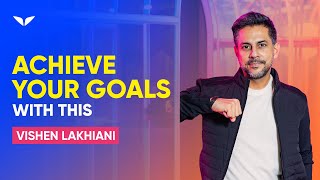
Vishen Lakhiani walks through a goal-setting exercise that separates what you actually want from what society tells you to want. Ask yourself three things: what experiences do you want, how must you grow, and how will you contribute. People who do this exercise report their lives shift.
Chapters
A really powerful exercise that I designed way back in 2012, and I designed it for my own Life. But in 2012, I shot a little video of this exercise on YouTube. I think it was 13 minutes and it blew up. The next thing I knew, this exercise was being tweeted by the American Management association to manage us all across the United States. And then it started getting deployed in schools around the world, in places like the U.S. mexico, Canada, India. And the exercise was merely something I did to give me clarity in my own life. Now, it's a really quick exercise, but it is based on the idea, and I think the reason why it was so popular is because it's based on the idea that goal setting, as we learn it in the modern world can actually be a bad practice. You see, many people, when they practice goal setting, they think that they are setting their own goals. But we forget that very often our goals are not coming from us. Our goals are programmed into us. It is programmed into us through advertising, through the media, through politicians who tell you how to think and what to want, through all sorts of things that come from what I call in my book, the code of the Extraordinary Mind. The culture state. It's a mass set of beliefs and rituals that human beings all around us, buy into without questioning. And so, very often, what we think are our goals are nothing more than stuff that has been programmed into us. They are wants or desires that we were induced to believe to enrich a business or someone else or to be compliant to what society says you need to do. And this is why so many people wake up one day at the age of 40 going, what on earth happened to my life? So the three most important questions is a framework to help you unplug yourself from society's versions of how you should be and what you should want, and to listen deep down inside you to identify what your soul truly wants. I've come to believe that we are not just human beings. We are souls having a human experience. And every soul chooses a life because of what it wants to experience in that life. So no matter where you are right now, whether you are sitting stuck at home and you are anxious and annoyed and depressed at this whole coronavirus thing, or whether you are wildly successful or whether you're struggling and you feel that there's something else for you, I believe that your soul chose to be in that situation. And it chose to be in that situation so it can learn something, so it can grow, so it can learn through this growth. But your soul does not want you setting goals that are going to force it to do things that are not meant in your path. So the three most important questions is a simple way to go straight in and to listen to that soul or that heart or that intuition or that gut, whatever you want to call it. Now, to understand the three most important questions, I want to show you a framework to help understand the difference between goals that come from within and goals that come from. From outside us. So give me a second as I share my screen. So you can now see my slides. And Christina, can you confirm that you can see my slides? Okay, so in our life, there are two types of goals. They are means goals, and they are end goals. We confuse both of them, but these are actually really, really different. A means goal is a means to an end. An end goal is the end goal itself. So when you think about it, right, a means goal is get good grades so you can get to a good university. Work hard so you can get good grades again so that you can get a job. Apply for that job, get that job, Work your butt off, grow so that someday you can retire so that someday you can live the life you were meant to live. But all of these things in between were means to an end. What is the true end that people are chasing? And to many people, they don't know what that end is. I was once teaching a class in New York, and I was teaching people how to access their mind, to program whatever abilities that they wanted in life. And a woman came up to me and she said, can you teach me how to be a faster typist? And I'm like, what do you mean? Why do you want to be a faster typist? And she said, well, because I work in data entry, and the more data I can input into this computer, the more I get paid. So I said, okay, but surely if you've just unlocked all of these powers of your mind, you might want something bigger. So let me ask you this. You want to be a faster typist so you can earn more, but why do you want to earn more? And she says, well, I want to earn more because I need to grow my savings. And I said, good, we're getting somewhere. Why do you want to grow your savings? And she said, I need to grow my savings because I'm trying to buy a home. I said, good, that's even better. Why do you want that home? And she says, I need this home because my mother lives in Detroit. It's not a safe city. And I want to get my mother to leave Detroit, move to New York and live with me in my home. And I go, now we're getting somewhere. Why do you want your mother to live with you in your home in New York? And she said, well, because we're the last two surviving members of our family. And in my mother's home in Detroit, we have this huge number of family heirlooms and antiques. I want to move it all to New York. I want to decorate this home with the legacy of my family so that when I have children, they never forget their family heritage. And I said, amazing, that's what you're looking for. Now, why, again, are you trying to focus your mind on just being a faster typist? So you see, she had forgotten the difference between the end goal and the means goal. To her, being a faster typist was a means. But that's not how your subconscious mind works. You have to give your subconscious mind the end end goal and then be open and allow it to guide you to the right opportunities, the right parts, the right things to get you to that end goal. You see, if you aim to be a faster typist, if there is no passion in there, you lose the momentum and the energy towards that goal. But there's definitely passion for that woman in having that home, imagining her future children running around it, seeing that home decorated with her family heirlooms. And perhaps being a faster typist isn't the fastest way to get there. Perhaps there's a better way. She may not know it right now, but her subconscious might be able to figure it out. And so you want to aim for the end goal and not the mean goal. Means goals are usually a means to something. They end in a so I need this so that I can have that. But end goals, they are straight up feelings. Being able to be a parent and hold your new baby in your arms, that's a beautiful end goal. Waking up next to the person you love is a beautiful end goal. Owning a home that you can decorate in a special way is a beautiful end goal. So you want to focus on end goals. Now, here's a quick checklist. So I want you to take out a pen and a paper to see the difference between mean school and end school. Now, the first rule is mean skulls usually have a so. So if you think about goals that have a I need to get this so I can get that. That's probably a means goal. Second means goals are about conforming to brules. A brule is an English word I coined meaning bullshit rule. Means goals are conforming to bullshit rules that May come from societal programming, but are not necessarily true. For example, in America, a bullshit rule is that to be truly successful, you need two cars, a garage and two kids. Right? That was really the picture of the American dream in the 80s. It's not today. Why pursue that? It is a bullshit rule. Now. The second thing is end goals. How do you know that you are pursuing an end goal? End goals are about following your heart. When you think about an end goal, something about it lights you up. The second thing is end goals are about feelings. Very often the end goal isn't an object, isn't a possession. It is a feeling itself. Remember the examples I gave earlier? The feeling of holding your newborn child in your arms. The feeling of waking up next to someone you love. Do you care if the room looks good? Do you care if what brand of sheets you have? It's about the feeling. Objects are often programmed into us by good advertising. But feelings, they are the true measure of happiness. So end goals often are direct goals towards feelings. Now, how do we ensure that when we set goals, we are pursuing our end goals? And this is where the three most important questions come in. These are three questions that you're going to ask yourself. And we're going to do the exercise and we're going to go really fast. And all of you are going to get a really clear vision of what your end goals might be. Now here's the trick. You got to ask these questions in a specific sequence. The first question is, what are the experiences I want to have in my life? An example of an experience might be traveling the seven countries by train with a camera and photographing every beautiful thing I see. An example of an experience might be being able to dine at a specific restaurant in Paris that you read about. An example experience might be being able to rent a motorcycle and cycle across South America as you learn the Spanish language. Now, the second question is to be the man or woman who has all of these experiences. How do I need to grow? And this is where you answer the second set of questions which are related to your growth. For example, if you want to backpack across South America, maybe you need to learn Spanish. If you want to travel around the world and do photography, maybe you need to learn or take a photography course. If you want to start a new company in the software space, be an author. You may want to take classes on writing. If you want to be a great engineer, you may need to go and study a particular field of engineering. So this is where you make a list of how you want to Grow. Now, growth isn't just skills. Growth is also personal growth. If you want to have the experience of running your first marathon or Spartan race, your goal for growth might to work out in the gym four times a week for two hours each to train yourself. So think about growth. Now, the three most. So the first question is experiences. The second one is growth. And then we come to the third question, and this is an interesting one, Contribution. Here you're going to ask yourself, if I were the man or woman with all of these experiences who has grown in this way, how do I contribute to the rest of the world? And this is where you talk about service, about doing things to better humanity. Now, when you put all of these together, note that all through, each of these connects to the one before. And when you put them on a sheet, it will look something like this. You're going to take out a piece of paper, draw two lines in the center, create three columns. And these columns are going to be experiences, growth and contribution. And you're going to write that in English or in Russian or whatever language you speak. And we're going to take you through this exercise. Now, before you do this, I want to actually show you the power of this exercise. These are a couple of people who work at mindvalley who have done incredibly well. And, and I want to show you what happened to them when they do this exercise. Because when I found that this worked for me, I made everyone in my team around something like 300 people do it. Once a year, we take everyone to a team retreat and we make them do this exercise. This is what a guy from Brazil, his name is Ronan. This is what Ronan wrote down. He wanted to inspire people to follow their dreams, have a healthy, strong body, speak at ted, have a super effective mind. Now, interesting things started happening when Ronan did this. As he started listing down his three most important questions, he started getting clarity in his life. Then he noticed that coincidences, synchronicities, seemed to happen to move him towards the exact things he wrote down. For example, he took part in a race called Viper Challenge. He came in number one out of 20,000 competitors. And note, one of his goals was to speak at ted. As a result of this, he achieved a lot of his goals on health and fitness. But then out of nowhere, he got a request to speak at a TEDx conference in Malaysia. He did so well as a speaker, he got invited to speak in Paris. He flew to Paris to speak at TEDx. And today, Ronan just launched his fitness channel on YouTube. You can go check it out. He is a fitness teacher and trainer on Mindvalley. The stuff that he put on in his three most important questions mysteriously came true. Now here's another example. This is Jason Campbell. So Jason wrote down, he wanted to teach entrepreneurship, sales and living. Awesome. He wanted to be a manager, delegator. He wanted to be a world class speaker, build a team of people and manage them to do amazing things. Now, Jason one day was at the back of the room when we were having a big seminar. So he was the guy controlling the av, playing the music, making sure the light and the sound was going well. And on that particular day at our event, we had a speaker fall sick. So Jason came to me and he said, vishen, you know, you have 20 minutes to fill. Could you put me on stage? And I said, jason, I'm sorry, but this is only for professional speakers. You've never spoken before. And he said, dishonor. I put this down in my three most important questions and you promised that you would support us in our dreams. So 20 minutes. What's the worst that could happen? So I said, okay, Jason, I'm going to put you on stage just for 20 minutes. So I put him on stage and Jason was voted best speaker. Today Jason hosts Superhumans at Work, a podcast on Mindvalley where he gets to interview so many of the most amazing business minds in the world. And he's doing exactly what he put down to do on his three most important questions. Again, a remarkable series of coincidences, one after the other to get in there. So are you excited yet? Because you can see what you might experience next. Now, this is a third person, Luminita Sovia. She used to work at mindvalley. She was a girl from Romania. Now, she put this, put this down in the three most important questions. I'm going to read it out to you because the text is a little bit small. She wanted to be a highly paid photographer. She wanted to be a writer. She wanted to speak and do photography. Now, Luminita, when she did this, she maintained a blog and she wrote a blog post called 15 Things to Give up to Be Happy. This was maybe in 2013. Hardly anyone visited the blog post because most blogs don't get that much traffic. But one day someone shared that post on Facebook and then another person shared the post and then a third, and the post got shared more and more. And the next thing you know, that post became the most viral personal growth post in history on Facebook. Penguin Random House, the major publishing company, reached out and said, we'd like to give you $30,000. $30,000 to turn this into a book. Luminita wrote the book and it became featured on Amazon. She made money from it and she got to travel around the world, taking photography, being a writer and doing what she dreamed of doing. She left Mindvalley, of course, when she got that huge check because she no longer needed to have a regular job. But she was so grateful for this exercise, she asked me to write a forward for her book. So this is what often happens to people when they do this exercise. And I want to now show you what happens when groups of people do it. So we spoke about individuals, but what if we do this as a group? So in our company we have everyone's three most important questions on a board and people look at each other's questions and they collaborate. These four individuals found that all four of them wanted to hike Nepal. So they got together and did a trip to the Himalayas. And it's really beautiful because when you're doing this, not only are you identifying and getting clarity on your goals, but you are creating a blueprint for your soul that your family, that your co workers can look at as well. And when they get to know you, they can understand how to support you. This is why this exercise is being used in companies. And recently I got this photo. This is a group of school children in India. Notice they are basically outside, right? They don't even have walls or a roof in this particular village school. But they are doing the three most important questions because it changed the life of their teacher. So you guys ready to get started? So what you want to do is you want to get a piece of paper, you want to make sure the paper looks like this. I'm going to give you a moment and write down experiences, growth, contribution. And I'm now going to take you through the exercise. Now, to ensure that you do this well, it's important that you shut down your logical mind. In other words, you want to listen to your right brain, your creative brain, your inspiration. If you are bound to negative self talk, you don't want to give room for that negative self talk. So we're going to do this in really fast, three minutes per category. I want you to write down everything you can think of in three minutes that will first fit experiences, then grow, then contribution. And I'll give you examples along the way. So I'm going to set a timer now for three minutes and we are going to begin in the first column, experiences. I want you to write down the experiences in life you crave. It could Be related to your love life and your love relationships. What type of love relationship do you want? What type of man or woman do you want to be with? What type of adventures do you want to go on with this person? It could be your friendships. Who are your closest friends? How do you spend time with them? How do you make them feel? And how do they make you feel? Next, adventures. What adventures do you want in life? Where would you like to visit, to travel to? Would you like to experience something unique? Maybe canoeing down the Grand Canyon, Jumping out of a plane with a parachute? Of course. What adventures and experiences do you want to have in life? A thought might be your environment. What type of office do you want to live in? What type of workspace do you want to have? What would your house look like? How many houses or homes would you like to have when you travel? What types of hotels or locations do you get to stay at? Write down your vision for the environments that you want to experience. And I'm going to give you one more minute to complete this. Write down as many as you can. You can come back and fine tune and clean this up. You can even spend hours on this fine tuning it later. But now it's important that you get started. You have 20 seconds left. Now we go to the second column. Growth. Ask yourself to be the man or woman who had all of these adventures. How do I need to grow? What skills do I need to learn? What classes do I need to take? What mentorship do I need? What types of personal growth program should I enroll in? The best type of growth is personal growth. Because once you train your mind or your spirit or your soul or your body, everything else becomes unlimited to you. The second is the regular education that you get in school. Crafts, engineering. But that is always second, because if you focus on personal growth first, if you focus on improving your mind, your soul, your brain, such as what we're doing now, you gain the clarity, the powers, the ability to accelerate through everything else in life. You can learn computer engineering as I did, but you could also be a broke, stressed out engineer who's bored with their job. But if you focus on personal growth, you gain wisdom and the rest of your life will work out. So here are some examples of personal growth that you could put down. Health and fitness. What type of body do you want? What type of energy levels do you want? Do you have a desire to be able to do certain feats of physicality at the gym? What are your goals for your intellectual life? How often do you study? What programs do you enroll in the best, most successful people in the world. Do about 20 to 30 minutes every morning of personal growth. It could be meditation, it could be learning a program, it could be reading a book. But they focus on growing themselves little by little, every single day. Next, goals for your spiritual life. What new spiritual skills do you want to learn? Manifesting intuition, connecting with a higher power, and finally, skills. This is where you put in new languages, writing ability, entrepreneurship training and everything else. Our education systems tends to focus on this one most and forget the others. This is important, but personal growth is always the first one. So you have 40 seconds. Complete your list of how you want to grow. And as you go through this live event, note that there will be many opportunities for you to participate in incredible growth opportunities for you. Now we come to the final one, contribution. So you finish growth and don't worry, you can go back and fine tune it here. In contribution you're going to make a list of. If you have all of these amazing experiences, if you've grown in all of these amazing ways, how now do you give back to your society, to your loved ones, to your community? You could give back to your career. Are you in a job where you're contributing to the world in a favorable way? You could give back to your creative life. Maybe some writing or some art, Something that lights people up. Giving back doesn't mean that you have to do it for free. Earn money. You can still create products, services, art, creativity that people pay you for, but are contributing to people's lives. How can you contribute to your family life? You can set goals to be an amazing mom or dad or son or daughter. And finally, how can you contribute to your community itself through volunteering, donations and so on. Especially in this time of COVID 19, there are so many different ways you can communicate, contribute to people who are in need. So I'm going to give you a minute. Write down how you want to contribute and this slide gives you a list of how all of it flows together. Don't worry if you cannot read it. For those of you who are in Russian, it's right now. Just focus on contribution to the world and make your list. And if you're done with contribution, you can go Back to the first of the second column to fine tune things. You have 20 seconds left. So congratulations, you just finished your three most important questions. Now what do you do next? Take it, stick it on your wall, Share it with your loved ones. Teach this exercise to other people. I made this exercise free. Put it up on the web so as many people as possible could go through it. So I hope you enjoyed this exercise. I hope you enjoyed the three most important questions, and thank you for joining us today.
More from Vishen






Brown Noise for Deep Focus and Concentration (Best with Headphones) | Gabriel Loynaz



Your Appointment With the Eternal | Guided Meditation with Michael Bernard Beckwith