Dr. Mindy Pelz on Embracing Womanhood & Reconnecting With Your Body | The Mindvalley Show | Ep #45
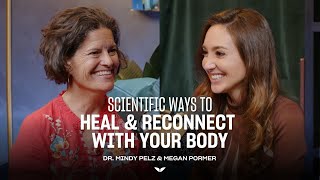
Interview with Dr. Mindy Pelz about reconnecting women with their bodies through fasting and lifestyle changes. Key claims: fasting (via autophagy) helps cellular repair and emotional reset; environmental toxins (including phthalates in many beauty/fragrance products) harm mitochondria and fertility; hormonal shifts begin around age 35 (progesterone decline) and can be managed by woman-specific, cyclical fasting and metabolic strategies; menopause can be reframed as a spiritual/collective awakening and an opportunity for elder contribution. The episode also critiques quick-fix drugs (e.g., Ozempic) and emphasizes empowerment through self-led practices.
Chapters
For women, we put on over 200 cancer causing, endocrine disrupting chemicals on our body every single day, which is destroying our eggs.
Dr. Mindy Peltz is a best selling author, a keynote speaker, and most importantly, the leader of a fasting movement that has revolutionized thousands of lives around the world.
We are looking at menopause through a medical lens. The part of the brain that cared what other people think of her went away. That's empowerment right there.
She's a recognized leader in the alternative health field and a pioneer in the fasting movement.
Okay, next problem with Ozempic and the other weight loss drugs, you can't get off of it, you gain all the weight back. It never solved the root cause problem. This is proven science. There's actually one chemical in particular that destroys the whole reproductive system for both men and women. And it's called thank you. Literally, that was the best interview I ever had. Oh my God. No, you just got it. You got it.
Very inspiring to be in your presence. You're a true leader. I'm really grateful you're here. And let's take a deep dive.
Yeah, thank you. I'm happy to be here.
Your journey to create this fasting movement, I call it a fasting movement. I think you're a leader and you've created a movement. What was your biggest inspiration that led you to start this journey?
Oh, that's such a good question. Nobody's ever asked me that before. You know what I'm going to say? It really is my patience because I was in. I had a clinic for over 25 years and my clinic specialized in teaching lifestyle. So we were doing everything from teaching people how to eat, teaching people how to detox, fast supplements. I would take people to the grocery store and show them how to read a label. I would educate them on how their bodies work. So, and out of that, what I started to see is that as the years went on, my patients were more and more and more needing more tools. And it was like people who normally would walk in with one symptom were now walking in with like 10 and 20 different symptoms. And I felt like something had changed in the environment that was causing my patients to be so sick and the new people to come in to be so sick. So I went searching for answers. And about that time, there was an incredible researcher. His name is Dr. Osumi, Yoshinori Osumi. And he won the Nobel Prize for a concept called autophagy, which is this idea that when we don't eat, the body heals itself. And I thought, well, this is really interesting, because if the environment is causing people to not feel well, what parts of the environment can we remove so that their bodies can heal much quicker? And food was the most logical thing. And I thought, well, it's the thing we do so many times in a day. If we remove food out of the equation in this toxic environment, would my patients heal? And they did. And, like, people who couldn't lose weight were finally losing weight. And people hormones that weren't balancing were finally balancing, and aches and pains, chronic pain that wouldn't go away was finally going away. And there was, like, a vibrancy about people that just, like, they would walk in the door of my clinic, and I would look at them, and I'd be like, you're fasting, aren't you? And they're like, yeah. Like, their skin color would change. Their eyes would be brighter. And it was like this huge aha. That we have now hit a point in this modern world where our food choices have become so toxic that I can sit and tell you all the thousands of reasons why you need to eat better, but how about I just take food out of the equation for 15, 24, 48 hours, and let's watch your body heal? And that's literally what happened.
So this is the ultimate trusting the body. Yes. So you saw that people are getting sicker and sicker, and you trust that. That the body should have the ability to heal itself if we don't overburden the body.
That's right.
And how do we overburden the body? Food is, I think, the biggest component.
Yeah, because we do it all so much. Think about it. If you go to work out, you work out, like, once in a day, but you're eating five people, typically. I think the research says, like, 17 times a day, people put something in their mouth. So if I can take that out of the equation, then could the body do what it needs to do? So I call it interferences. You have to start from this idea that the body heals itself, and there is a physical, emotional, mental, or chemical interference that is holding the body back from healing. So I started with the chemical. I was like, well, let me take food out. And then what I noticed is, like, 90% of my patients would heal. And then we would go to the other interferences and be like, well, what if I take this interference out now? Can your body do its job?
So when the body is in a state of disease, you said there are three different interferences. Mental.
I usually say four. Mental, emotional, Because I think of those as differently physical and chemical and chemical.
And once you take the food out, you're taking out the chemical aspect of it. Which, what percentage of your patients do you say heal just by taking food out?
Oh, 99% of them. I mean, we, we. There were other tweaks some of them needed, but it got. Here's, here's something really interesting. When you are sick, you don't need motivation to get well. You need momentum. So what happened was I changed the chemical interference by putting them on these one day. We would do three day water fasts in my office all the time and I would remove this interference. And now they got a little glimmer of how their body was responding and healing and now they were motivated. So then it was like, okay, what else can we do? How about we get you walking? How about we, you know, get you like working on your structure? Everything from chiropractic to acupuncture to reiki and massage. Like, let's work on that physical piece. And I just kept thinking about all the things we could remove, remove, remove the toxic thinking, let's just remove that and then let's see how your body heals. And that, that's a principle that is so simple and needs to really be highlighted.
Like the biggest aha that is coming for me right now, which is a shock to me, is I'd never thought about actually trust the body that I can trust that this body of mine that I did not create, but whoever created it also gave it the ability to heal itself. Because if you look at everything through that lens, then we maybe need to stop labeling our body, oh, I'm obese, I have adhd. Oh, I'm, you know, too skinny or I'm like, I have adrenal fatigue, I have thyroid issues. Yeah, maybe like the fact that we label the body is very disempowering.
Yes.
Like, as a woman, I feel like when we label the body, oh, I have this, you know, physical issue. My pancreas is not doing well, my hormones are not doing well. This is very disempowering to us, which takes me to where I am now in my life, which is for the first time in my life, I'm noticing hormonal changes in my body and I am welcome. But at the same time, it's very disempowering for a woman to feel like something on the outside has power over, like her life. And I don't know, like, I'm seeing all these hormones going up and down and how it, this is affecting me and I feel like, oh my God, I'm being attacked by my own hormones. I'm being attacked by my. My own age. Yeah. So if we were to trust our own body in a concept like that, as a woman, you're a woman, you're in your 30s, your hormones start to go up and down. If you were to trust your body, how can you maintain a good life without being affected by all these hormonal ups and downs? That's right.
So two things I wanna say on that. The first, so just so I always. People I have friends who are always like, you always talk about how old you are. I'm like, yeah, because I'm really proud to be a 54 year old woman. And I've gone through the whole perimenopause and menopausal process now. And there was a moment somewhere in the middle of my 40s where I was really struggling with my hormones and I kept finding myself being mad at my body. Like, why don't you perform the way you used to perform in your 20s and early 30s? And it was like, then I stopped and I thought, wait a second, I'm never gonna heal if I'm energetically at odds with my body. So what is happening to me hormonally? And the idea at 35, your ovaries are starting to wind down. By 40, they're starting to go into retirement. And I know for women that wanna have children, that feels really scary. Don't worry, it's a long process. It's a 15 year process. But in my case, I got to this point where I was like, wait a second. My ovaries have shown up for me every single month since I was 13, every single month, my ovaries have released an egg. And two times that egg was fertilized and gave me these two beautiful children that I have been blessed to raise. How can I be mad at this organ system that has showed up for me over and over and over again? You could say the same thing about your adrenals. Every single time you have had a stressor, your adrenals have shown up for you. And what it has done is given you an incredible hormone called cortisol. And cortisol has moved you into action to handle the stress that you were given. So don't be at odds with the adrenals. They're tired and the brain has been coordinating those adrenals. And there has been this beautiful feedback loop that's been going on every moment of the day. If somebody came running into this place right now and said that the building was on fire. All of our adrenals would give us this massive surge of cortisol that would give us motivation and energy to get out of the building to save our life. We can't be mad at these organs. These organs are always doing the right thing at the right time. So that's the first thing I'll say. Second, and you and I talked about this prior to recording that what happens at 35 for women that I just want to scream from the rooftops is that the first hormone to go is progesterone. So this is gonna be really relevant to you because progesterone starts to go down at 35. And progesterone is the hormone that calms us. So all of a sudden, we don't have progesterone. She brings with her gaba. So progesterone stimulates gaba. GABA calms us too. So now we're less calm. And when a stressor hits us, our adrenals are hyperactive. So they're, like, trying to fight the battle and handle the stress. But you've lost two key nutrients or hormones by the time you hit 40 or 45. Now you're losing estrogen. And I always say estrogen brings her girl gang with her. She brings serotonin and dopamine and acetylcholine and BDNF and oxytocin and glutamate. These are neurotransmitters that keep us happy and motivated and clear in our mind. And so it's a neurochemical armor that is coming down at 35.
We lose our armor. We lose our neurochemical armor at 35.
Chemical armor. It starts at 35, and it's complete by 50.
Which means our armor that was shielding us against environmental stressors, the shield is coming down.
That's right. So we're more reactive. So now, I mean, this is the. What I always say for. You know, you're in a relationship, and, like, all of a sudden, your partner looks at you wrong, and you're like, I'm gonna tear his eyeballs out. And nobody understands what's going on with this woman who's gone through this, is going through this neurochemical armor shedding. She doesn't even understand herself because she's. We're too. We become more reactionary stress. We can't handle stress as much. And so. And we start to. Our thoughts become loopy, and our amygdala starts over talking to us. You said it earlier, like, sometimes I Can't meditate because my mind is chattering at me over and over and over again. So what we have to do is come back to compassion for ourselves, understanding what our bodies are doing at 35, and then creating a lifestyle plan that works with the shedding of this neurochemical armor.
If you add in here that despite all of that, we have to still trust the body and say, okay, if my neuro. Neurochemical armor is coming down, I trust the body, that this is the right thing for the body right now. Yet you know that by losing your neurochemical armor, you're going to be more reactive. Okay. Does this mean the body is trying to push you to go deeper inside and work on your traumas?
I believe it is. And. And this is part of the new languaging that I'm talking about. And I'm actually currently writing a book about this because I think it's an opportunity to heal ourselves. And one of the reasons we have such an intense menopausal, perimenopausal chaos right now in our culture is because we're missing the part of the conversation that says, hey, guess what? Your neurochemical armor starts to come down at 35. All those traumas you could avoid, all those situations that don't work for you. The more you go along your perimenopause and menopausal journey, the more difficult it is going to be to ignore those cries.
But can we say menopause is a spiritual way to force a woman to awaken?
Oh, I like that. Yes, let's say that.
Because I always thought to myself, I believe God is a woman. I believe the ultimate creator is feminine to create. And I thought she wouldn't do us wrong. No, why would she go to menopause? Why would she stop our fertility? There must be something she knows better.
Yeah, exactly. And she's coordinating every single cell in your body. There's an intelligence in every single one of the 72 trillion cells in your body. If I took that intelligence out of those cells and I just laid a bunch of cells down here on the ground that represent you, they wouldn't function. There has to be a life force, an energy. We can call it the goddess, whatever you want to call it has to be in those cells, making those cells work, come constantly back into a state of health, and yet we completely ignore that. But you said it so well. We are looking at menopause through a medical lens.
Yes. And that means our body is against us.
That's right.
Our body's doing Us wrong.
That's right. So we need to look at it through a spiritual lens.
If we look at it through a spiritual lens, we say goddess mother. She's the mother for the first 35 years of our lives. She's saying, I'm holding your hand. I'm giving you all these tools. I'm giving you the neurochemical armor. I'm giving you young organs because I'm letting you get on your feet. But now that you're on your feet, I'm gonna take these away because I want you to get strong on your own feet without my help.
You said it so well.
I'm not taking away the youth. I'm forced to remove the youth as a crotch, so you get to find youth within.
So you said it so well. So something that I've just recently been talking about is a term that I learned from Lisa Moscone. Lisa Moscone is, like, the top female brain scientist that we have research right now. And I brought her onto my podcast, and I wanted to know what is going on with the female brain when we go through this process. And she said, well, do you know about the grandmother hypothesis? And I was like, no. What's the grandmother hypothesis? And she said, if you go back into the hunter and gatherer days, what ended up happening around the cave was that the men typically went out and hunted. And now there's, you know, just so that we're fair to both sexes here, there was probably also. The teenage girls probably went out, the teenage boys went out, but there was a group that went out to go find food. Staying at home around the cave was the mom who was burying children. So she was either pregnant or she had a young infant. So. And then there were other kids that couldn't go out and hunt. So it was the grandmother that took care of the culture of the cave, made sure that the kids were taken care of, the mom was fed, she would go and forage. They actually have documentation that the grandmother would go and forage for tubers, which are roots, like sweet potatoes and carrots, and bring them back to feed so that the people back home could stay alive while they were waiting for the hunter and gatherers to come back. So I tell you this to say what had to have happen for the grandmother to be able to have this insight, to be able to see how to take care of the cave culture, is her brain had to change. And so when her hormones went away because she was no longer in a reproductive cycle, her. Her brain reconfigured itself. And what happened was the part of the brain that cared what other people think of her went away. Those neurons pruned away. Her sense of, like, oh, I gotta figure, make sure that everybody's okay with me. That goes away. Ask any menopausal woman. That goes away. And her amygdala that was working to keep her safe no longer is keeping her safe anymore. It moves more towards empathy. And now it's in a place where it can look and see what the cave culture needs so everybody can stay alive. But check this out, Megan. That's happening to every menopausal woman today. But what are we doing? We toss her aside because we say, you are too old. You have wrinkles. You're not. You have menopausal belly weight. You're not useful to the society. But actually you're the most useful to the society because your brain just went through a massive remodel process. And we need you. We need you to take care of the culture. Wow.
And that age, like, for a woman, when they hit, I believe with my mother, I'm seeing how as soon as she turns 60, she is considering herself of no use to the society.
Most useful then. Wow. This is what I'm trying to change in the next book I'm writing. She is the most useful then because her brain is geared towards empathy. And her brain can see the culture and what it needs. It can see what society needs. And you know what society needs right now? A grandmother. Society needs an elder woman to bring love and compassion back.
That's why it matters for world leaders to be older.
That's bingo.
And then. But the whole. The culture is all pro youth, pro hiring women that they're in their 20s, they're better than when they're in their 30s and their 40s, but it's exactly the opposite. So we're culturally judging women based on their physical youth and their hormonal youth.
That's right.
When in fact, a woman is at her most useful and wise for the society once she gets older.
Yeah. Lisa said it's about six years after the last period that the brain has finished remodeling itself. And it's standing in this glorious moment that we toss aside because while we.
Are on our periods and our menstrual cycles are up and down, we care so much about the way we look. Are we sexy enough? Which man is gonna pick us? Do we look good? Are we sexy? Are in demand. And it occupies our mind so much that we can't pay too much attention to what's around us. In a sense, it's a bit of narcissism.
Yeah.
As a woman, while you're going through your hormonal, like your top hormonal years, you're very focused on some meaning. So you're not a good leader by default.
Yeah, well, so your hormones are demanding that you focus on that because you know, when testosterone comes in mid ovulation, testosterone of course gives you libido. But a woman only gets testosterone during ovulation. She doesn't get as much testosterone the rest of her cycle. So it's so fascinating to me that once a month a woman gets this dose of testosterone so she will procreate, so she'll reproduce herself. So everything when that neurochemical armor is up, everything for that woman is focused on, on finding a mate and reproducing. Now, just so we don't offend anybody who doesn't want to have kids or people who are in same sex relationships, I'm not saying that everybody should have kids. I'm not saying that or everybody should have a partner that's the opposite sex. I'm just saying that we are hormonally programmed humans with a neurochemical armor that makes us think a certain way, act a certain way, behave a certain way. And when that armor comes down, there is a different version of you. And that's the version that I'm now focused on highlighting so we can bring that elder wisdom back into the community because the world really needs it right now.
Wow, that's amazing.
Right?
So when. So we under, we understood that this, the spiritual reason behind menopause is for a woman to start focusing on what matters and how she can serve the community versus the hormonal me, me, me. You know, the self image that most women, myself included, unfortunately, are focused on. But then another area where I struggle to see how I can look at my body as being on my side is a loss of egg counts and fertility. I always Wonder, the first 35 years of a woman's life is the hardest and the most immature, and those are the most fertile years of her life. Why does her fertility reduce as her wisdom goes up?
Oh, that's a, that's such. I love how you phrase that. Okay, for starters, something about the egg that I just have to point out. I've spent a lot of the last 10 years really understanding the power of the mitochondria. And the mitochondria are like these little powerhouses in our cells and they give us ATP, which is energy. And you know, in the biohacking World. That's is what everybody's trying to do. This is the mitochondria get supercharged in fasting. Ketones are a supply to the mitochondria. The mitochondria I've looked at. Where is the most dense part where we have the most amount of mitochondria and some of the highest mitochondria places are our eyes and our heart, because those keep us alive, right? And so in hunter gatherer days, we needed our heart to pump so we could go hunt food. And we need our eyes to be able to find food. So the intelligence, the goddess put a dense amount of mitochondria in there, but that's not the most dense place for mitochondria. The most dense place in anybody is the egg. The egg has the most amount of mitochondria. And the egg actually is a lineage of wisdom. So every single part of that intelligence within your mother got put into your eggs when you were in the womb. And when your mom was in the womb, all the intelligence of her body, of your grandmother' into her eggs, so that those eggs are like this lineage that goes all the way back to all the women that you have been blessed to come from.
Oh, wow.
So I always think when we get talking about fertility, the first thing we have to honor is the power of this egg that gets released every single month. Okay, so now we have deep respect, hopefully. And I mean, because what do we do in our culture? We were like, oh, I'm cramping. Oh, I'm PMSing. Oh, I got my period. We bitch about it, but it's the most beautiful thing that happens to a female body. So we need to start praising it and honoring it and seeing that it has this connection that goes all the way back to all the women that we've ever come from. Once we get our mind around that, then we have to ask, okay, well, what destroys the egg? It has all these mitochondria in it. What destroys it? Well, the number one thing that destroys mitochondria right now are toxins. And we're back at we live in the most toxic time in human history. And so we are breathing in toxins, we are wearing toxins, we are eating toxins, we're watching toxic stuff. I mean, we are bombarded with back at the physical, emotional, mental, and chemical stressors. So if you want to be fertile, then the first thing we have to think about is honoring the lineage and honoring this incredible female body that we're in. But then the second thing we have to think about Is what in my environment is toxic. So I think for women, this is a hard one. Well, I believe we start with food and we can chat about fasting and why I think it works so well. But one of the reasons I think it does is because it's a break from the chemicals that come in through our food. But for women, we put on over 200 cancer causing, endocrine disrupting chemicals on our body every single day. Our makeups, our shampoos, our fabric, like even in our fabrics, we are constantly our beauty products. All of this that we're putting on ourselves is destroying these mitochondria, which is destroying our eggs. So we have to start with, there's actually one chemical in particular that destroys the whole reproductive system for both men and women. And it's called a phthalate. And the phthalates are in all the fragrances. They're in our colognes, our perfumes, our plugins, the Christmas tree and the Uber. The Christmas tree, I call it the Christmas tree Hanging air freshener. And the Uber, all of that is just is in creating an influx of a chemical called phthalates. And those phthalates are destroying our endocrine system for both men and women. Wow.
How can we. Is it. How can we find out if that chemical is in something or not?
Yeah, the first thing I would say would be that there's not a great measurement for your toxic load. I've spent again, remember that so much in my clinic was a detox clinic. And I kept trying to find, because this conversation we're having now, I've been having with my patients for over 15 years. And now people are kind of waking up to it. So I wanted to find some kind of functional medicine test that we could do. So we've done heavy metal tests, we've done environmental tests and on thousands and thousands of people. And I will tell you, I haven't had one person come back without some kind of environmental toxin in it. So we can just all assume we have a lot of toxins in our environment. So then the next question is, how do I avoid them? So this is why I love fasting, because we get to take these long breaks from the toxic food. So. And we can talk more about that when it comes to our beauty products. There's apps out there to help us now. So Skin Deep is one of them. Think Dirty is another app that's been put out that you can just scan all your products and see how toxic it is. It gives you a rating. You want something that's under A three, anything over a three, throw it out. That's a toxic ingredient, so a toxic product. So we have to start looking at everything in our environment with this toxic lens in mind because we're now living in this toxic culture. I don't think a test is going to help you. I can just tell you we're all toxic. So it's just a matter of how big your toxic load is and can you start to bring it down.
So I feel like the more we understand the environmental stressors and what happens inside of our body and the connections, the more empowering it is because you start to go from, oh, I don't know why my body's doing this, oh, I, I'm on, we're on the same side. That's right, we're going through this together, we're doing this together. Now back to trusting the body to heal itself and a woman hitting 35. So at 35, what happens to us?
So at 35 you start to lose progesterone, so you're losing that calm feeling. Some women start to not to be able to sleep very well. Like an injuries don't heal as well, they find themselves a little more edgy. By 40, now estrogen's doing, she's up, she's down, she's up, she's down. By 45, she's just starting to go down. What's interesting about these two hormones is that I always say they're like twin sisters. We call them the same, we put them in the same family, but they have vastly different personalities. So what I have noticed in the work that I've been doing is that once these two hormones start to go on this wild ride, once they start to decline, our lifestyle matters more than ever. So for example, let's talk about estrogen for a moment. When estrogen starts to go down, you become more insulin resistant. This is why so many 40 year olds, 50 year olds, I mean so many women over 40. I was mentioning earlier, like I'm still blown away at the reviews on my book and it's because after 40, women were becoming more insulin resistant without a change to anything in their diet. And so it's because estrogen made you insulin sensitive, estrogen cleaned up your whole metabolic system and now she's gone and so she's going away. So you're in a metabolic mess. So the quickest way to get out of a metabolic mess is to start learning that you have two metabolisms. You have one metabolism that kicks in when you eat. We call that the sugar burner. Metabolism. And you have one metabolism that kicks in when you fast. And it's called the fat burning metabolism. And you were meant to switch in and out of these two metabolisms. And so when we look at estrogen, she wants you to go over here and fast a little more. Because when you fast, you bring glucose down, you bring insulin down, and now estrogen can make. Can. Can balance herself out. So we see this in my community. Women who thought they were going into menopause at 45, we teach them how to metabolically switch in and out of these two metabolisms. And now, at 48, they have the best periods of their life because they cleaned up their metabolic system so that they could start to actually balance estrogen on their own. Progesterone's completely the other way. Progesterone does not want you to fast. Progesterone doesn't like when cortisol comes in. She actually wants you to bring glucose up. And every woman knows this because what do we crave the week before our periods?
Chocolates.
Chocolate Carbs.
Carbs, yes.
We're hungry. So there's a biological reason for that. Chocolate is packed with magnesium. You need magnesium to make progesterone. Carbs brings glucose up. You need glucose to be able to make progesterone. And you need progesterone to peak so that uterine lining starts to shed. So, okay, well, these are opposing theories. One hormone needs you to not eat and to keep insulin down. And the other hormone wants you to eat. And I have both of these hormones in me all month long. And I have both of these hormones coming in and out throughout the whole menopausal experience. How do I rectify that? And so this is why I teach this cyclical way to switch. Some days you fast, some days you don't. Some days you go low carb, some days you don't. We are meant to have more variety in how we. In what we eat and when we eat as women.
Can fasting make us prolong our. Have our menopause later?
What I have seen is it's a piece of what makes our menopause come later.
Come later.
Yeah.
So that means that menopause comes in when the body's trying to tell you something. The body's trying to say, I'm losing estrogen, I'm losing progesterone, and I need you to make some adjustments. And if we do make the adjustments, then we can maintain those hormones in.
Our bodies as long as age appropriate.
So, but what is age appropriate here? Right.
So this is Such a good question. Because the research, when I first started looking into this 15 years ago, it said 55 was the average age to go through menopause. Then fast forward seven years now, then we said 52. 52 is the average age. And then just the other day I heard somebody say the average age is 50. I'm like, why is the average age going down? On the other end of the spectrum, we have women that are girls that are getting periods earlier and earlier and earlier. When I was a kid, the average age to get your period was 12 to 13. They're now saying nine year olds. So why is our hormonal system changing so dramatically? I'm back at environment. Our hormones are always responding to the environment we put ourselves in. So if you want to clean up estrogen, start to learn how to balance your insulin system. Make sure you're bringing your carb load down or you're eating what I call nature's carbs. Like just get off the cakes, the cookies, the pastas, like get off that stuff, the rices, get off of all of that and eat fruits and vegetables and potatoes and anything that came from the earth and that will, and then start to learn to fast. And now we've cleaned up estrogen. Progesterone doesn't want you to fast. So you have to learn when not to fast. Which can be confusing for somebody listening to this that didn't understand fasting. That was what Fast Like a Girl was all about. It was like, here's when you fast, here's when you don't fast. But progesterone doesn't want you to fast and progesterone doesn't want you to stress out. So if you're a woman, I saw this so much. This is why I think so many women lost weight with Fast Like a girl is that when we hit that point the week before our periods or we hit that point after 35 where we started gaining weight and we were frustrated. What we did is we doubled down on all of our health habits. We dieted more, we exercised more. I saw it in my community where women were going into three day water fast too much because they were trying to lose that weight. But really progesterone just wanted you to, to bring cortisol down. Progesterone wanted you just to calm. Progesterone didn't want, wanted you to eat fruits and vegetables and bring, bring up and, and eat some of the more the potatoes and squashes and bring that glucose into chocolate. Bring the, the glucose level up.
Wow. So depending on where your. What your body's going through at that moment. You need a particular fast to make up for a particular hormone or an issue you're dealing with. So fasting's not a one size fit all at all?
No.
What about intermittent fasting?
Yeah. So in the book, I have six different levels fasts, and I call the 13 to 15 hour fast intermittent fasting. So it's going 13 to 15 hours without fasting. And it's the same thing when you're trying to build progesterone. You shouldn't be fasting. So you just don't fast. And then, you know, if you have a cycle, you don't fast. And then the week before your period is when you don't fast. And then once your period starts now, you start fasting again. And you can choose from these six different late fasts.
So we need different fasting protocols depending on where our body's at. That's right. So we understood that by removing a big chemical stressor out of the body, which is food, and fasting, the body has the ability to heal itself. Then we also understood that with every hormonal imbalance, let's call it hormonal changes, or any changes that the body's going through, the body's trying to communicate something with us.
Thank you.
That's it.
Love it. Yeah, keep going. No, I just. You get it. That's, that's, that's. That's empowerment right there.
The first empowerment step for a woman is to understand her own body and to take control of her own body and to understand that the body's on her side, has the power to heal itself.
Yes.
So we're not at the mercy of a bunch of pharmaceutical companies and doctors. At the end of the day, we are. We have power over our own body.
Thank you.
You got it.
Thank you, thank you, thank you. That's what I'm trying to teach women. And what was so beautiful about fasting is that once I taught a woman how to fast and she experienced her body in a new way. I told you this earlier. Like people. People would stop me on the street or they send me messages, and they're like, you changed my life. And I'm like, no, I didn't. I didn't change your life. You changed your life. I just taught you how your body worked. And when you took food out of the equation, there was nothing you could point at as to why you were feeling better other than, I removed food and my body did something. So you were forced to have to fall in Love with your body.
Yes, yes.
And now you'll never fall prey to big pharma and big food and mixed messaging because you're like, oh, I did that for myself, myself, myself.
And what are your thoughts on Ozempic?
Yeah, this is a fun one. I love this one. I was just on Diary of the CEO, which is a huge global podcast, and it was the second time I went on and Ozempic came up and Steve and I had a really fun conversation about it and I have a lot of thoughts on it. So let's start by honoring the people that lost a tremendous amount of weight on Ozempic. If you were in a metabolic crisis and you took Ozempic, it saved your life. And I, and I never want to be disrespectful for that. And that's how that drug was made. It wasn't made to help you lose 10 pounds. It wasn't made to help you lose 50 pounds. It was for the person that was about to lose a limb because they were so metabolic in such a metabolic mess. Now we've now using it for people to lose weight so they can feel better about themselves. Okay, in that concept, we have a couple problems. For starters, we as a culture need to stop looking for quick fixes and we need to respect that when a drug like this comes to market for something new, there should be some long term studies that are done before we all jump in and decide this is the most amazing thing. So we have no long term studies on Ozempic and we don't know what happens when you stay on this 10, 20, 30 years. Okay, next problem with Ozempic and the other weight loss drugs, you can't get off of it. If you go to get off of it, you gain all the weight back. It never solved the root cause problem. And I was just. When I was in London, several of the people who were interviewing me there said that ozempic costs like $400 a month in London. It costs $1,000 a month here in the States. So it's expensive. So now you're on a thousand dollars a month to keep the same, the same weight. So now how are we helping the person who doesn't have $1,000 a month? That's. So it's for people who are wealthy that can afford that. Okay, still not the only problem. Ozempic kills hunger and that's one of the reasons it's causing people to lose weight. You need food to make hair and nails and muscles and hormones and neurotransmitters. In Eat Like a Girl, the new book that I'm putting out, there are 24 key nutrients that a woman needs to be able to make hormones. Most everybody I've talked to on Ozempic is like, I'm just not hungry anymore.
Correct. That's what I've heard too.
How is she going to get that 20, the 24? What's going to happen to the hormone of women? Okay, still not the only problem. We don't know what it does to the microbiome. And the microbiome is what is making serotonin that keeps us happy. The microbiome. There's a set of bacteria in our gut called the estrobolome that break estrogen down. So I want to know long term what Ozempic is going to do to the microbiome. Because if we destroy our microbiome, you destroy your body and you destroy your mind. So where's the research on that? Still not the worst. The last one that I will tell you is that it's the empowerment piece. When I inject something into me and I lose weight, who do I give credit to?
Ozempic, you're codependent on Ozempic.
Where is the self empowerment? Whereas in that. Whereas. What I loved about this interview with Stephen Bartlett, the very first beginning of the interview, he read me two reviews from a prior interview that I did with him. And. And the second review was from a 48 year old woman who said, I struggled to lose weight, I didn't know what to do. I listened to the interview you did with Dr. Mindy and I put her principles into action and I dropped over 50 pounds. And what I know now is that I can do hard things.
Wow.
Let's not rob what happens when the human forgets how powerful they are. Let's not rob a woman of the experience of figuring out how to drop weight. And by the way, a fasting lifestyle will give you the same weight loss result and save you money as Ozempic. And you walk out of that and you are like, I'm a badass. I did this, I did that for me by. You don't get that if you inject.
Yourself with something by becoming codependent on Ozempic, you are basically admitting that you don't have the ability or the power to understand what your body needs right now to lose weight.
That's right. You've given your power away once more.
You've given your power away once more and you admit that you're disconnected from your body.
That's right. I can't do this on my own. My body doesn't know how to drop this weight. And so I'm gonna inject myself and that's gonna be. All of a sudden, the injection and the doctor that gave me is the hero, by the way, to concept that I also am trying to get out to the world that really needs to be expressed is, why do we gain weight? So here's what your intelligent body's doing. You have been, let's say you've been eating bad over and over and over again, and all these chemicals are going into your body, and all this extra glucose and sugar is going into your body. And your body's like, wait a second, I've been calling on the pancreas. And the pancreas keeps making insulin and making insulin and making insulin. But the pancreas is getting a little tired. And the cells are like, oh, my God. All day long, all this glucose is coming at me. And insulin is like, I can't get glucose into the cell because it's just coming at all day long. So the body makes an intelligent decision. It says, I have so much excess right now. I have the possibility of where am I going to store this? I don't want to store it in organs, because if I store it around the heart and the lungs and I store it, you know, in the, you know, put that glucose up into the brain like Alzheimer's, or I put it in the eyes, which is macular de generation, if I stored in organs, now the body's at a threat of survival. So I'm going to store it as fat. I'm going to put it around the belly. I'm going to put on the booty, I'm going to put it on the back of the arm, I'm going to put it around your face, because that is the safest place for me to store all this excess that you have been pouring into your body over and over and over again. And then we go and we look in the mirror and we go, I hate this fat. And your body, if it could talk to you, it would say, but I put it there to save you because I didn't want to put it in the organs. So I need you to work with me here a little bit and stop giving me all this excess. So fat was literally a storage pantry to save your life.
And we tell the body, shut up. I'm going to inject you with ozempic.
Yeah.
Get suppressed.
Yep.
I can't listen to you. I can't deal with you. I'm disconnected. From you. So I'm gonna forcefully give you something to shut you up. Like sticking a pacifier into a child's crying child's mouth.
That's such a good analogy.
That's it.
And as humans, we are moving further and further away in belief of our own bodies.
God, that's sad.
It's really sad.
Putting a pacifier into our own crying baby's mouth to shut her up so then she can lose weight and she can look good and she become more disconnected from her inner beauty.
That's right. And then, and then we go to Instagram, we go to Facebook and we.
Say, look at me, I'm skinny.
And, and, and the women that aren't skinny go and go, why am I not that? Why am I not that? It's like how we started this earlier. Like, why am I not that? Why can't I look like Megan? Why can't I look like Mindy? Why can't I look like or whoever, you know, like, why can't I look like all these people? I don't look like that. I mean, I've. I think the mindvalley community is overall a very healthy community. But I have sat with some people that are really, really in a deep health hole and their self talk is horrible. I had a woman that I was coaching when I did one on one coaching that when we got on Zoom, she would only show me half of her face. She wouldn't show me the lower part from her nose down because she was so embarrassed by how heavy she was. And as we started, I started to teach her lifestyle. She started showing me her face more and more. I got to see more and I got to see her shoulders and it was like you could see her self pride coming back. That's what we all need to be focused on is how do we lift and empower people up through free tools. And fasting is the freest, is the most free tool. I know. Everybody can do it.
I think fasting is a way for women to reunite with their bodies.
Thank you. I think so too.
The more I'm understanding how fasting can empower a woman, help her understand her body and help her trust her body. It makes me wonder, do you think by fasting and avoiding toxins, we are also shedding toxic emotional layers?
Oh, yeah. Oh, I'm so happy you brought this up. I could talk to you all day. You're like right in my. Everything you're saying is like so sticky for my brain. So thank you. Bruce Lipton brought us that work that emotions are on the outside of the cells. Okay, so let's talk about that. I've, let's say I've been raised in a culture that has forced me to be something that I'm not. I heard this statistic the other day and it's a new one that I'm going to really start talking about, which is at 12 and 13 years old is when a girl makes a decision that she has to change herself to fit into a patriarchal society and she starts to betray herself and move away from her authentic self at 12 and 13 years old. And so each time she compares herself to the culture that wants her to act a certain way, she creates a network of self talk. And that self talk usually looks like, I'm not worthy, I'm not good enough, I'm doing something wrong. If I'm overweight, something's wrong with me. It was me that was the problem. Like we turn within and we start to, I call it, turn on ourselves. And all that inner talk now goes down to the cells and it starts to vibrate a different frequency within the cell. And literally what Bruce proved is it creates cellular inflammation. This is not woo woo, this is proven science. So now I teach a woman how to fast. And you know what happens when she fasts? She stimulates something called autophagy. And autophagy is the inner working, the intelligence inside the cell that says, huh, we haven't had any food come in, we don't have any glucose, we don't have any nutrients. Something different is going on here. I better make myself stronger. And in autophagy, once autophagy is stimulated, the intelligence inside the cell, that repairs everything inside the cell and makes the cellphone anew. Now sometimes when autophagy is stimulated, which by the way starts at 17 hours, a 17 hour fast is when autophagy stimulates. Once autophagy gets stimulated, that intelligence may look around the cell and go, this cell is going to be a cancer cell. This cell is going to be a zombie aging cell. This cell is really not good for the system. I need to kill it. And it's a cellular death called apoptosis. So at 17 hours of fasting, you are redesigning your cells and you are getting rid of the cells that no longer serve you. And when you get rid of those cells that no longer serve you, you get rid of the thoughts that created that cellular inflammation and you become reset for new thoughts to come in. So one thing that we started doing in the fasting window with our community is meditating. And I always speak Affirmations. When I gather my community together, I'm always trying to pour positive thinking in, because when you are in that fasted state, you have the ability to reprogram the belief system and the. And the thoughts that have been in living inside your cells as you get rid of the cells that had the negative thoughts.
So do you think we eat our negative self talks? Well, when we eat like our negative self talks, does it affect what we eat?
Oh, oh, yes. This is. That's such a good question. So check this out. When I go to eat something that isn't good for me, let's say, let's just use chocolate cake as an example. I see, I'm in the supermarket, I see my favorite chocolate cake. I'm like, oh, I love this. What I am actually creating in looking at that food is dopamine. I haven't even eaten the food. I just know that food gives me dopamine. The food industry knows this. So what they do is they spray chemicals, they spray flavors, they enhance the sugar, they enhance the salt, so that when we eat it, we get a dopamine response. Now all I have to do is think about that food, and I'm wanting to get that dopamine response. Dopamine makes us addicted to everything. So we have absolutely been high. The food industry has hijacked our taste buds so that we search for food that gives us that high dopamine. So we have that piece. Okay, now we. So we're. We're not making choices based off of what does my body need? We make choices based off of how do I get more dopamine. So we have that issue going on. Then we have the woman issue. And the woman that has, at 12 and 13 years old, decided she wasn't enough and she needed to change so the culture could like her. And we've been doing that forever as women. Like, I'm not pretty enough. I'm not smart enough. I'm too. I'm. I'm too loud. I'm not loud enough. I'm too much. This, like, the culture has a lot of opinions about how women should be. And so we're constantly adapting ourselves. And at most, the women I've talked to, when you really get to the core of what's struggling for them is they don't feel worthy. And so when we don't feel worthy, we want to fill that and feel worthy. So we start eating and eating, and then we get a dopamine high and we're like, oh, my God, that feels better. And so we Start eating and eating and we just start pushing down this feeling of not enough. And then now we're addicted to food because our food has conditioned our brain to have a dopamine response every time we eat. Wow.
So we're in fact eating to suppress our negative self talks.
Yeah.
And the more we suppress the body, the more we disconnect from the body and that's when we start to divide from the body.
Yeah. Thank you.
And again, back to what I said. I think your movement, the fasting movement for women eat like a girl, fast like a girl is a conduit for women to reunite with their own bodies.
Thank you.
And to anyone who is listening to this interview, I would love to invite all women to remember that their body has the power and the ability to heal itself if you don't suppress it, if you don't overburden it, if you don't use food to suppress your negative self talks. And fasting is a great way for all of us women to shed toxins, not just on the physical level, but as you explain, on the emotional and on the mental level. So the more we reunite with the body and the more understand the body and knowing that it's on our side, we can use the body as a conduit to our bliss and happiness and joy and not self judgment.
Thank you.
Right now, women, we are us women, we are using our bodies as a way to bash ourselves. It's just every morning you wake up to look at this body to either call yourself fat, wrinkled, ugly, and having like puffy eyes and having dark circles. So right now our body is our conduit to attack ourselves. That's right, to judge ourselves. Let's change that to the conduit of bliss and our awakening.
That was one of the best. Well stated. Thank you. Like, I just want to tell you in, in, in, in that statement, I feel like my life's work was just seen and heard. Oh my God. And you asked me earlier, was I surprised at how well this book did? And I have spent so many times where I've gone back and reread the book because I'm like, what did I say in there? That's resonating with everybody. And why has this created a movement? Like, I'm in awe of what's happened, but the way you just explained that, I've like, yeah, you get it, you get it.
You awakened us to remember that the bodies are conduit for awakening for bliss, not a conduit to judge and shame ourselves.
You got it. Thank you.
Thank you.
Wow. That was amazing. That was amazing. Thank you. Literally, that was the best interview I ever had. Oh, my God. No, you just got it. You got it. You got it. You got it.
I got you.
Thank you. You did get me. Thank you.
I got you. Because this has come in the exact time in my life that I am shifting from using my body as a way to bash myself versus let me understand what it's saying. Let me not shut it up.
Yeah. And the. And the 30 year olds are suffering. The 20 year olds are suffering. I really. That was like a really big, like, aha. I had from this book is how much your generation is. Is really struggling. It's like almost like we had it easier because we didn't have socials, we didn't have the toxic food. So, like, we had a lot easier than you guys do. And when social media has really caused.
Us to weaponize our bodies, we weaponize our bodies. The body become our. Your worst enemy and therefore it becomes your enemy.
Yeah. Amazing.
Thank you.
Yeah. Thank you.
Thank you, thank you. Thank you, Megan.
More from Vishen






Brown Noise for Deep Focus and Concentration (Best with Headphones) | Gabriel Loynaz



Your Appointment With the Eternal | Guided Meditation with Michael Bernard Beckwith