Ep #001 | How @NasDaily's Nuseir Yassin Turned a Simple Idea into a Global Movement with 60M Fans
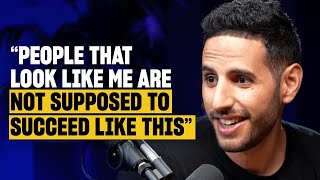
Episode 001 (published Mar 19, 2023) — a long-form conversation between Vishen Lakhiani (founder of Mindvalley) and Nuseir Yassin (Nas/Nas Daily). Major threads: Nuseir’s mission to create positive, unifying media (and the story of acquiring an alternate passport to enter Malaysia); personal experiences with political identity (Palestinian Israeli) and travel restrictions; Nas Daily’s evolution into a tech-enabled company (Nas I/O / NAS Academy), company size and fundraising; Vishen’s own experiences building Mindvalley and lessons on culture/process; a substantive debate on founder work-hours (minimalist/21-hour-week approach vs. high-output daily grind), and practical tactics for founders (use of Airtable/no-code, constraints, hiring). Tone alternates between candid personal storytelling, pragmatic entrepreneurship advice, and normative discussion about media’s role in unity.
Questions this video answers
$150,000
~120 people
$23 million
A thousand videos in a thousand days (daily 60-second videos)
30
Chapters
Foreign. Welcome to the first ever episode of the new mindvalley podcast. So I'm here with a man that probably needs more. No introduction, because you are one of the most popular and famous social media personalities on the entire planet. Nas Daily is one of the biggest voices in media right now, and if you haven't heard of him, you soon will. His channel is is taking social media in a completely different direction from what we are used to. So much of media today is focused on scandal, defamation, fear mongering. Nisaya is a Palestinian Israeli who's traveling the world to bring you stories that inspire and create hope. Shining a light on entrepreneurs, inventors, people doing remarkable things, absolute acts of kindness in countries all around the world that you will never hear of in the mainstream media. In this episode, I bring Nusser, the creator of Nas Daily, to share his take on the future of media and share his remarkable story as a Palestinian growing up in Israel to creating a media empire that's changing the world. What you do is actually so important to the world. Why I wanted Nusaya to be the first guest on this podcast is because, yes, there are many social media personalities on the planet, but Nisayer is a person who has used social media for true good. If you follow his Instagram channel, Nas Daily, you will notice that it's not about. About fancy clothes, you know, about me. It's. It's not even about you. You are elevating people. You're elevating scientists, you're elevating inventors. Sometimes you're elevating entire countries. You're helping people discover new technologies. You're helping shine a light on men and women who are doing great things in the world.
Vishen, this is the best description I've heard of Nas Daily in a while.
I wanted to honor you for that. Thank you. Recently, Nasiah, do you hold an Israeli passport? Yes, I am. So this is the crazy story that happened recently. I hold a Malaysian passport, which is crazy. And even though we are friends, we can never, ever visit each other's countries legally because Israelis are not allowed in Malaysia and Malaysians are not allowed to go to Israel. It is a stupid, stupid, stupid system. But that's just the way politics has caused this world to get divided. But what I love about you, Nasiah, is recently you found a loophole.
I am scared at the border, trying to enter a country I am banned from. And the border officer knew it. Knew it. Crazy.
He knew.
Not daily. Four years ago, I was standing outside a country I could not enter because of My Israeli passport. But I really wanted to see this country from the inside. So I bought a new passport from a Caribbean country, which is now not banned. And four years later, I went back to the same border just to enter with my new passport and show you the country.
And guess what?
This time it worked.
We're in.
Welcome to Malaysia. Welcome to Malaysia. This video cost me $150,000. That's the cost of the passport to enter Malays and show it to you. Forget politics. This country is unique.
You acquired a passport from another country, snuck your way into Malaysia legally.
Legally.
And then created the most beautiful video celebrating my country and its culture, which is crazy. Yeah. Tell us about that.
NAS Daily is above politics. And as an Israeli citizen, I find myself stuck in politics. And I'm actually Palestinian as well. So it's double whammy. It's double as bad to be part of this conflict. So I really wanted to elevate NAS Daily beyond politics. And to do that, I had to buy another passport and just, like, go to the countries I'm banned from, like, you know, Malaysia, Indonesia, Saudi Arabia. And I just don't want to be defined as an Israeli or as a Palestinian. And so I want to elevate people, all people, even Iranians and Russians and Ukrainians and Malaysians and Singaporeans, you know, And I think this is part of your mission as well, which is elevating the brain, which is any brain.
Right.
You know?
Right. And. And I think that's so important because I grew up in Malaysia. I lived in Malaysia most of my life. I moved to the U.S. briefly for about nine years.
Yeah.
And then after September 11, people who know my story know what happened next. I was added to the Muslim watch list and I had to leave America.
You yourself, personally.
I'm not. I'm not a Muslim. Not there's anything wrong with that. But I was born in a Muslim country. And after September 11, things got a little bit crazy. And so this watch list was created. And 72,000 men who had passports from Muslim countries were added to this watch list. And what it meant is we couldn't use certain airports. We needed to go for a two hour.
You personally had to do that two.
Hour interrogation before boarding a plane. Two hour interrogation after coming off a plane. But worst of all was this. I was living in New York at that time. And every four weeks, I had to line up every four weeks for five to six hours in a long line going around the block at the immigration center in New York just to show up there and show them my passport, my ID and my credit card so they could see if I was, I don't know, I guess, buying fertilizer or something.
No. You're kidding.
I felt I loved America. I loved America, but I felt so, so jaded by it. Me and my. My then girlfriend Christina, who was from Estonia, we decided to move back to Malaysia. What?
You had to report to the US Government every four weeks and all your purchases.
Right, right.
But how is it you're not making videos about this? This is an amazing NAS Daily video.
It is. Right. But let me tell you what happened next. And I'm sharing it for the first time publicly here. Publicly here. I'm showing it for the first time right now because now I know I'm safe. Because here's what happened. Trump just tried to bring this back in 2016. Now, we're not talking about Trump, whether you agree, but him wanting to bring back the Muslim watch list in 2016 or not is irrelevant. He tried to bring it back in 2016. There were mass protests all around America. Like the founders of Google, the founders of Airbnb marched in the streets and protested. And that idea was, was. Was torn down. But the Muslim Watch list existed between 2003 and 2008. In 2008, Obama ruled it unconstitutional. Not a single terrorist was caught, and the whole thing was disbanded. But that is why I left America.
There was a five year program in America that targeted people of religion. And you're not even Muslim yourself.
Not even Muslim.
So why were you on the list?
I was on the list, I guess because I had a Muslim sounding name. And here's where we come into the crazy, the craziness of politics. I had a Muslim sounding name because in Malaysia, if you happen to be of Indian descent, Malaysia is a country where the society is segregated.
Yes.
Chinese, native Malays who are Muslim and Indians are all separated. So in Malaysia, basically, if you happen to be of Indian descent, most Indians from Malaysia come from the state of Tamil Nadu. Now, the unique thing about Tamil Nadu, which is a state in India, is that they do not have last names. So what is your father's first name?
Ziyad.
So you would be Nusay Ziyad. Right. You're named after the first name of your father.
That's your system.
That's not my system. That is the Malaysian system imposed on me. My actual last name is Lakhiani, but I had to take on the name Mohandas because my father's name is Mohandas. So I became Vishen Mohandas. But here's where it gets weirder. In the English version of my passport, it says vision son of Mohan Das S O. But then they changed the language in the passports to Malay. And in Malay, Sanof is anatlalaki, which is shortened to Al. So my name.
Don'T get the vish.
So I show up at JFK one day, I'm maybe 22, 23. I show up at JFK one day and I get pulled aside and the immigration officer says, vishal Al Muhand, Al Muhammad, are you here? He's saying Al Muhammad and I'm really confused and no one is raising their hand. So finally I go up to him and I said, do you by chance mean Al Mohandas? I figure out and he goes, mohammad Mohandas. All the same, you're officially now on special registration.
Oh my God.
And that's how I ended up on this watch list.
Al Muhandas means in Arabic, like the engineer.
Really? That's wonderful.
Well, you could be engineering somebody.
But in our case it means nothing. It was just a weird naming system. Now here's where it gets weirder. Three years later, I'm in Malaysia and I'm attending, I'm attending my cousin's wedding in Boston and I'm with my mom. So we are leaving. We are leaving from New York City. I'm helping my mom onto the plane and I forget to go for the two hour interview before boarding the plane. So I'm on the plane, the door shuts and I go. I just lost my right to re enter the United States. So I go back to Malaysia and my passport is now officially void because I did not pass my security clearance getting on that plane.
Oh my God.
So coincidentally the next day I happened to drop my passport down the toilet. And then, beautiful coincidence. Synchronicity of the universe. And then I go to the Malaysian government. At this point, the Malaysian government is getting so much protest because of the stupid Al thing in the passports. They allow me to take back my original family last name, which is Lakhiani, and I become vishen lakhani. In 2008, I get a new American visa, I show up in the US and I'm off the Muslim watch list.
What is this story?
Think about the stupidity of this system. The stupidity of this system, the craziness of this, this excessive security burden. Now, when Donald Trump wanted to bring this back in 2016, he said thousands of potential terrorists were found, thousands of lawbreakers. I was one of those lawbreakers because I accidentally got on the plane to help my aging mother and I Forgot to get out before they shut the plane door. But I was positioned by Donald Trump as this crazy lawbreaker. So now you understand why you have.
So much anger towards certain things.
It's not anger, it's passionate. But it's because of that that unity became my number one value in Mindvalley. It's because of that that Mindvalley employs people from 60 countries. It's because of that that I love what you do.
Yeah.
Because you shine a light on people across the world with different sounding names, with different skin colors, with different religions, and you show that we are all the same.
Yeah, well, because I suffered the same way as you did, but I still suffer for 30 years, which is being born as a Palestinian in Israel.
Right.
As a, as a Muslim in, in. In a Jewish majority country. That's very, very complicated. And I think people forget how sensitive it is to even say the I word on the Internet. You can't say you're from Israel because to them Israel doesn't exist. And you're like, but, but this is where I'm from. And like, you're not going to delete where I'm from. And so it's been a constant battle between Israel versus Palestine as opposed to Israel and Palestine. So really, I want to dedicate the rest of my life like you to the and as opposed to the or. And it's a lot harder to do and versus or.
The point of this podcast is to have no holds bad. You and I have a respect for each other.
Yes.
And so I'm not asking this to poke you in any way, but how do you feel as a. You're Palestinian, living in Israel? What is that like? Do you feel resonance towards. Towards the state of Israel? Do you feel that what's going on there is in a way unfair to your people?
Ooh, that's a hard one. I'll say this publicly for the first time, actually, I feel like in the last few years I'm starting to feel more Israeli and I feel that, you know, I think a lot of people are afforded the luxury of being from two countries and being able to belong to one country. You know, you can be a Nigerian American and you proudly say, I'm a man American, and no one can tell you you're an. You can be Cameroonian and Swiss and you can say, I'm Swiss, but I'm also from Cameroonian origin. But I never got the luxury to say I'm Israeli, you know, because it's the people who are fighting my people. But I think recently I've come to terms with the idea that this is where I'm from, this is who I am, whether you like it or not, to the millions of people, whether you like it or not. I don't give two damns.
And.
And I'm Israeli first, and I'm Palestinian by origin second. And I think just reaching that conclusion has taken me more than 10 years, just thinking about that every single day of, what am I? Who am I? And so, look, I mean, injustice happens every single day to Palestinians. And I do think that our goal is not to discuss what happened 70 years ago. And. And seven years ago is to discuss, like, what will happen in the next 70 years. And in the next 70 years is, you know, peace will happen and somebody's got to do it. And so I think we got to just push that narrative every single day for the next 70 years in the hopes that some government out there listens.
Right. And I think one of the things I like about the way you position yourself and one of the things I learned the hard way is that we do not have to forcefully take sides right now.
Yeah.
I mean, people watching this want you to say that one party is bad.
Yes.
They want me to say Republicans are bad or Democrat. That's not our point.
Because you are their voice.
Exactly. But what I like about the way NAS Daily handles it and the way mindvalley handles it is that we're not concerned about that. We're concerned in spreading unity by shining the light on people of different ethnicities, teachers of different nations, inventors who may be of different backgrounds, and Bitcoin by bit by bit by bit by bit. We chip away with the old system without directly saying, this is. This is bad. Because I think you and I both know this. There is no black and white. Everything is, in a way, a shade of gray.
Yes. Completely agree. Completely agree. And I think it's. I think social media has only made it more black and white.
Yeah.
As opposed to less. That's why I'm starting to question social media. And I live on social media. My job is social media. We are guilty of doing black and white things. The best teacher, the best country. Country, the worst commercial. You know, like, we do the black and white thing in our content, but it's. It's never polarizing in a way. It's always, like, positive, you know, positive enforcements. And I think that's something you do as well.
I'd love to get your advice on that.
Yeah.
So I noticed that a lot of news media out. Out there believe that they need to sensationalize stories. While so much of media, from Fox News, which is ultra right, to Vice, which is ultra left, are doing this, you are actually able to get millions upon millions of views through inspiration. Yeah, tell us about that.
So, you know, I don't know if people could look at me and see, like, me, but I don't belong in Hollywood. You know, people that look like me do not belong in Hollywood. I don't belong in journalism either. I don't belong in New York media. I just don't belong there. And so as I looked around, like, finding my own space in life, I just realized that my goal in life is to go find the next NAS Daily and tell their story. And I think if you just make a video about somebody and you get them 10 million views about their story, this can change their life forever. And I just think that there's a lot of stories around the world that nobody's paying attention to. And I just found that as an opportunity. It's a loophole. Nobody gives a shit, man. Nobody gives a shit about anybody, you know? You know, a journalist only cares about Kenya when there's a bomb attack. Does a journalist ever go to Kenya to highlight a Kenyan entrepreneur? Like, did the ever mainstream media in America know where Kenya is on the map until there's a terrorist bomb attack? And if it's relevant to them, they definitely care. What I'm trying to say is for every story about a bomb attack in Kenya, there's a thousand stories about a heartwarming improvement in Kenya. So we need a thousand stories for every one negative story. And I just think that right now it's like a thousand negative stories for zero positive stories. That's the hole I want NAS Daily to fill. This is the opportunity I see, and I'm loving it.
And I love what you do. I love what you do. Because every time I see you feature an entrepreneur who is from a country that most people can't find on the map, it is freaking inspiring to see. Because I grew up in one of.
Those countries, it almost feels like fake news. Like, there's no way somebody is so amazing in Malaysia, for example. Right. But it's like, it's true. Your story is one of them.
Yeah. And so I really appreciate what you're doing there. One of the things you built, which I'm really proud of, is NAS Academy, where you're actually training storytellers from around the world to tell their stories. Yeah, you are. You're giving people the tools, the narrative, the platform to actually Go out there and highlight these stories which are inspirational. Tell us about NAS Academy.
I'm actually inspired by what you did, right, which is build a technology platform that helps others, right. And I think that's like my next thing in life. I've created a lot of content, got a lot of views, Great. But my goal in life is not to be famous. My goal in life is to be impactful. And for that I need to build a company, a technology company. So what NAS Academy does, or actually it's called NAS I.O. now, it's basically we're building community infrastructure. So to be able to run an online community on the Internet, like an educational community, an inspiring community, it is very hard, right? I mean, you need Facebook, you need Facebook groups, you need WhatsApp, you need Google Forms, you need like a million different things. And so online communities are struggling on the Internet right now. So what NAS IO does, it's an all in one technology solution to help you manage your online community. And I think you would understand that because, you know, running a Facebook group these days is not enough, Right? Nobody uses Facebook anymore, so we're building that. And the reason why we're building this is because when I was a kid, I learned that the right community can change your life. The wrong community can destroy you.
Right.
If you are around 10 terrorists, for lack of a better word, with enough time, you will become a terrorist and you will literally go and suicide bomb yourself because that's what your community tells you to do.
Did you really have to use that as an example after I shared my story?
I'm so sorry. But the opposite is just as amazing, right? Which is if you surround yourself with 10 tech entrepreneurs, with enough time, you will become a tech entrepreneur. And so I really think everybody should double down and research who are the 10 people that I interact with on a daily basis. And if they are even just slightly questionable, you must shut them off. And so that's why joining an online community or like building one is so important. Because the easiest way in the world to change the world is to build tolerant and passionate communities. That's it. If you take a kid from a village and put him in an online community of like incredible people, that kid from a village will become incredible. And that's what Nasio tries to do.
I see. So you've gone from, from being a social media star and a storyteller to actually building a company that's venture funded and growing and growing and growing. How many employees do you have now?
So all in all, we're 120 people now.
And you operate as the CEO? Yes.
We were 70 people in the technology company and 40 people in. 40, 50 people in the production house. And we raised $23 million in venture funding. And every single day is torture, as you definitely know. I just can't imagine how difficult it is to build a company.
It's not easy. It's not easy. I have been gone through depression building this company.
How many years already? 14 years. How many were filled with depression and how many filled with.
There was an entire year that was, was miserable for me because I wasn't clicking with my business partner.
That's.
And eventually my business partner who was my best friend in college tried to kick me out of my own company.
Oh no.
And so I had to buy back his shares. I had to go. I had to buy back and share his share so I could save my baby.
Oh my God.
And that cost me four and a half million dollars I didn't have. Which I didn't have. So I had to borrow from the bank. I'm still repaying that loan. No, that four and a half million. Right.
That's a big risk.
That's a big risk. So I bought. And, and the thing is, because he was a Stanford MBA and I wasn't. I had no, see, I took on a business partner because I didn't believe in myself. I nearly dropped out of college. This guy had a Stanford MBA. So I gave him 45% of my company. And I'm like, help me not fuck this up.
That's the biggest mistake.
It was a big mistake. He tried to kick me out of my own company. So in the end I had to buy back his 45% at a 10 million valuation which he inflated because he was the brilliant Stanford mba.
So it was not a ten million dollar company.
It was a two million dollar company. I paid ten million for it.
Oh my God. But that was the best decision you did in your Life.
Now that 10 million dollar company is on its way to becoming a billion dollar unicorn. Wow. Right now that's not me saying that. It's HSBC and Price Waterhouse scoopers in a report they did of the most, the most likely Malaysian companies to be the next unicorn. So we're likely going to be able to.
How big is that list from like two companies? 10, 10 companies.
We, we were number five though, just to be fair. We're not a Malaysian company, we're an American company. We just operate in Malaysia.
So you're paying taxes in America?
We pay taxes in America.
And you have nothing to do with America.
We. Well, our market is America and we registered the company in America. So here's the crazy situation.
That's another mistake.
Here's the crazy situation. America freaking kicked me out, but I still pay taxes in America. I can't get out of that because I started this company.
Yes, yes, yes.
But that's. So you can see how unfair the system is.
Super.
But at the same time, I believe it is a responsibility of all entrepreneurs to pay their taxes. I want to pay taxes somewhere.
But you're paying the wrong government.
Maybe, maybe. But at the same time, American culture made me who I am. I went to an American university. I learned from American TV shows. I read American books.
I love America.
So I'm happy to pay American taxes.
So I also incorporated in America. And then I was. I had nothing, but I had nothing to do with America. And then I was literally paying like hundreds of thousands of dollars in taxes to America. And I was like, where is this money going? So I had to exit America. Unlike you, I left.
Right.
And I did. I paid the exit tax, did everything fair. And I just came to Asia and I was like, now it's like an Asian company. And I do believe in paying taxes, but I just don't believe in paying taxes to a government you have nothing to do with.
You could be right. You could be right. Firstly, I know this may not be the right thing to say to other entrepreneurs, but I believe in the responsibility of taxes. I live in northern Europe right now, right? Oh, that's why.
Yes.
Which is where we take care of people. Mothers get 18 months maternity leave. So do dads.
Capitalist entrepreneur says we have to take care of people. You heard it here first.
We pay. Yeah. Healthcare is free, university is free. And that's amazing by. By tax dollars. And I support that. And still, even in northern Europe, by the way, Estonia, it's 20% tax rate. Wow. Yeah. So. So. So a couple.
Yeah. So let's see if you support a vision when you're paying 60% in Sweden.
That's true.
That's will not be supporting it.
You could. You could be right. You could be right. I'm coming there from an Estonian lens. Right, let's go on to a question for you. You are now a CEO. You're responsible for 120 people. But at your heart you're a storyteller. I had to face the same thing. I was a meditation teacher who suddenly became a CEO. What are the biggest challenges you are facing and what are your biggest lessons?
You know I said this before, and I'll say it again. I feel like I'm playing. I'm competing in two races. One race is the content creator race, the storytelling race. You know, you're competing with, you know, the Mr. Beast. You're competing with a Johnny Harris. You're competing with everybody who's getting views on the Internet because you got to stay relevant. And then at the same time, I'm in the startup race and I'm competing with people like you, with people like, you know, Masterclass or whatever. And it's just so difficult to compete in two races. So this is my biggest struggle is at some point I need to give up on one of the races and just go all in on one race and get the championship in that and then come back and do another race. And that's my biggest problem is, like, you, on one day you're like, doing, like, performance reviews, and the next day you're like, in the middle of the desert making content. It's like, okay, you're right. How does this content serve this business? And just at the end, no one should feel bad for me. I have the best life in the world, but I do struggle with this.
Yeah.
How did you fix it?
Well, I'm struggling as well. For me, the biggest struggle. So the biggest struggle was trying to be a writer, an author, a teacher of spirituality and meditation. Just sharing my wisdom and at the same time, juggling being a CEO. I mean, my last book, the Six Phase Meditation Method, was a lot of.
Give me the British title.
The British title. Zero Bullshit Meditation. Right. So I don't think I can. I will have the bandwidth to write another book. Right now, we're about to do our first fundraising round. So mindvalley has gotten to our level with zero drops of VC money. That gave me some freedom. But right now, we're about to close our first. First fundraising round, and I don't think I'm going to have time to write another book for the next three to five years.
Basically.
It's hard to do both.
Yeah.
The biggest thing I struggle with, though, is people's perception. People don't want to understand that I'm a CEO. They insist on seeing me as this guy dishing out, like, roomy quotes on the Internet.
You have to be nice.
Or their meditation teacher. If I'm in the office, even with my own team, and I am stern with someone because I a.m. a stern CEO, you have to be. This process is broken. We need to fix this. Okay. I'm expecting this in 24 hours.
I can't be so terrified of working under you.
And what happens. What happens is that people are like, oh, my God, he's not who he says he is. No, that is who I say I am. I'm a CEO first. So my brand right now is I'm a CEO first. I got. I got numbers to deliver. I have a product which I need to polish into the best gem it could be for my customer. My own meditation stuff, my own books, I'm going to put to the side while I help get other people's wisdom out.
Well, I call this the niceness trap, where if you create content and content about bringing people together, if you create content about being nice to other humans, the expectation is that you cannot be un nice.
Right.
And the minute you are, everything you do falls apart. And I realized this last year, and I was like, oh, my God. People perceive that I'm a nice guy, and I really, really, really do not want people to think I'm a nice guy. So I started making content saying, notice that? Why I'm an asshole. Like, I am an asshole. I break the rules. Like, I do this. Like, I curse. I do this.
You put up a piece of content, which was remarkable, and it's something that I shared with a few friends of mine. And NASA's content was, I am not a nice guy, but kind. But you're a kind person. Right? And there's a difference.
Yes. For anybody watching this, like, yeah, we want to bring the world together and be nice and amplify stories, but if at some point things are not going the way they should be going, in my opinion, you know, unfortunately, hard decisions need to be made.
Yeah. So.
And also, being a CEO, like, I also found the most effective managers are the ones that are able to put their heart aside. The least effective managers are the ones that think with their heart and want to be kind and nice to everybody around. Because when you consider your company as family, you cannot fire them. You cannot fire your dad.
Right.
Your dad is unfired. So I never call my company family. We make it very clear. Nobody here is family. We're an NBA team. Like, you know, it's the Netflix culture, right? We're an NBA team. Everybody could be replaced at any second if you cannot pass the ball to you.
Right. So you just did yourself a massive favor by realizing that early. I made the mistake. I ran my company like a family.
As a family.
As a family. My closest friends were the people I worked with. I ran that as a family for until around 2017, 2018. When I found that I couldn't fire someone with ease, and if I did, there was a huge scandal internally, Right? Yeah, yeah, yeah, yeah. Like, like people would, Would. Would be upset if somebody got fired even if they were a non performer. It was considered wrong.
Yes.
And so we changed the narrative. First thing I did was I got a world class chro. Alex, if you are hearing this, know how much I love and appreciate you. World class chro. And I trusted him to make the decisions. And I stopped. I stopped thinking of a company as a family, but as an NBA team. Yeah, right. You got to be able to pass the ball, you got to be able to make those, those throws. But if you consistently fail, we have to replace you with another player. That's just the rule.
This is the rule.
And so it's so good that you realize that early.
Yeah, yeah, it's working. It's working. I think, I think everybody now realizes that. And if we let people go or if somebody quits, sometimes we're not right company for people. Somebody quits, it's completely fine too. And there's another thing I think you may like. It's called the Ship of Theseus Paradox. Do you know about it?
No. Tell us about it.
This is going to blow your mind. Ship of Theseus. Hundreds of years ago in the Greek empire, blah, blah, blah, there was a ship that the Greeks went to war with and they won the war, okay. Then they brought back this ship and put it in a museum. And they were like, this ship brought us victory, and we love it. Over many, many years, the ship started to fall. Fall apart and required maintenance. So they started to take out one piece of wood and replace it with another new piece of wood. Another piece of wood fell and they replaced with another piece of wood. Hundreds of years later, the entire ship is now made up of new pieces of wood. And the question became, wait a minute, did we go to war with this ship or did we not? Is this the ship that actually brought us victory or is not? Because it's made up of completely new pieces of wood. Nothing of the original ship is still here. And that's the ship of Theseus Paradox. Is this the same ship or is it not? And so the same applies to companies, right? In a company, you have a hundred people, but you know, in five years, some of these people quit, some are fired, and new people are coming in. New pieces of wood are coming in to complete this ship. And so is this the same company as it was before or not? So the answer, in my opinion, is it is the same ship, because it doesn't matter what the ship is made of. It matters what the ship signifies. But many people disagree. Many people say the pieces of wood are different. It's not the same ship. It's a completely new ship, you know, so my goal in life is to build a company like the ship of Theseus, no matter who comes in, no matter who the CEO is, no matter who the software engineer is.
Right.
NAS Company stands for something bigger than any individual. And that is how you can build a 100 year company, in my opinion.
I love that NAS. That's beautiful wisdom. What I think you're doing, saying, is that the essence of a company is the culture and the process. I'm sure you've heard that quote, great people build great process.
Yes.
Right. So everything is the culture and the process. The people who come in who are truly great, embody the culture and they build up the process.
Exactly.
And no one's going to stay with you forever. I think the average millennial stays at a job for 18 months right now. Crazy.
So even the CEOs don't stay forever.
As people come in, the processes are tight. They embrace the process. And that's what makes a company a company.
Yeah, culture and process, actually. And. And many, many people say, oh, it's the people. It's the people. I agree, it is the people. But this assumes that people will last forever. You cannot build a company on top of people, because people have. In the long, long run, nobody's gonna be working for anybody. Everybody's gonna be a freelancer. And so, like, you can't build companies. So I really think it's the culture and the process that defines a company. And that's why Apple is still amazing 20 years after Steve Jobs left it or whatever.
Right. So what we're gonna do next, guys, is Nas and I are gonna actually have a. A little debate. A debate on a topic which I think is going to interest a lot of you. Yes. Let's talk about just how much time should an entrepreneur work? I'm a minimalist. I believe entrepreneurs should work as little as possible. Nass, who's super successful as an entrepreneur with his new platform NAS Academy, believes entrepreneurs should work a lot. So let's see what side of this debate you agree on. And I admit that both of our views are going to clash. We're talking about entrepreneurs, we're talking about people like you, people like me, who have a responsibility to the people we employ, a responsibility to our customers. Customers who have a massive audience we can't just take a vacation when we want to. Or can we. Let's hear your thoughts first.
Well, to the audience, I'm going to talk to you first. This guy I like. Okay? This guy I like, but just look at him. I disagree with so much about this guy. It's crazy, right? The glasses, the nice shirt, the sexual vibes, the work life balance that you have sexual wife, you have so many sexual vibes. Do you really not see your sexual vibes? He's pretending like he doesn't know.
I have no idea what you're talking about when you say sexual vibes.
I don't know what you're talking about, but look at my muscles. Anyway, so we agree. We agree on many things, but we disagree on many more things. The first thing I think we disagree on is this whole idea of manifestation. Okay, you are the king of manifestation. But is it manifestation or is it just white privilege? That's really the question. That's a good point.
That's a good point. So would you like me to answer that?
Well, you're going to say you're not white.
I, I am not white. I mean, I grew up in Malaysia. I wasn't a freaking like Muslim watch list. I, I had to, I had to fight my way to the top. My parents weren't rich. My mom was a Malaysian school teacher. My dad worked, worked in a, in a big department store. And that's how I started. Yeah, but, but on the manifesting thing, I do believe, I do believe that our mind influences our reality. I think there's evidence for this in sports. There's evidence for this in terms of the placebo effect in the body. Is there evidence that we can create coincidences and just bump into the right people? There isn't.
Yeah, but, but do you believe in it?
Yes, because of the brain's reticular activation system.
What is.
There's something called the ras, which is this back part of your brain that says if you give your brain.
It's the part of fake news stars.
If you give. No, it's not. Google it. Reticular activation system. There's a part of your brain. So even if you don't believe in the spiritual mumbo jumbo, there's a part of your brain which is basically the brain's goal. Sensing system. Right. It's what in, in primitive man allowed us to hunt the bison. It allowed women to find the berries. It's, it's our brain will help us notice things that we need to notice. So if you are constantly telling yourself, I I live this amazing life. I have the most inspiring conversations. You are more likely to notice the inspiration in the conversations you have. You're more likely to notice people that might inspire you. Yeah, it could simply be the rest. If that's the case, it still applies.
I just, when I hear that, I just feel dumb. I don't know why I feel dumb. Maybe I just don't get it, but I feel like I'm just like a basic guy. I'm just like, I wear the same T shirt, I do the same thing every day. I eat the same thing. I don't meditate. I don't, you know, I don't do any of this spiritual stuff. I just look at the world. I'm like, okay, this is wrong, fix it. This is wrong, fix it. This is, you know, problem solving. Make a video, blah, blah, blah, Build the technology.
And what are you done and what are you doing? You have these clear goals. You know what you want in the world. You literally said that you look at a problem and you want to fix it.
Yeah, but this abstraction level all.
I just never understood Jose Silva. Okay, who is the, the, the teacher that I most cite? And he was a guy, he a chef? No, he's the founder of the, of, of the Silva Method. He was a Mexican American mind science pioneer. He said the point of meditation is, is not to just relax. The point of meditation is to turn problems into projects. He's talking about what you did, looking at the world and seeing what are problems that we can turn into projects that we can work on and then fine tuning our minds so we have the focus, so we have the clarity to tackle that. Is that manifesting? I think people think it's magic fairy dust. And if you believe that, that's fine. I don't bash anyone who believes that. But perhaps it's simply a way of orienting the brain to turn problems into projects and have that relentless focus that you or I have.
You could be right again. I don't know. I just, I don't know. I just, I just feel dumb. So I think maybe I'm just intellectually unable. I'm intellectually unable to.
I think you're a brilliant man and I think we do have to poke holes in stuff that is spiritual mumbo jumbo, in magical thinking.
I just think my biggest issue is like, if you look at, if you look at the world, oh, 7 billion people look at the people that are creating things and look at the people that are not creating things. Oftentimes you see that the ones who Are creating things are less spiritual. So spirituality increases with the less you do.
Ah, so this is where we're gonna disagree. I mean totally disagree on this one.
Are you gonna give me five examples of incredible CEOs?
No, no, no, Meditate. I'm saying the, the. I think your definition of spirituality is a completely separate definition from, from, from. Yeah, it's possible from my definition. My book the Buddha and the Badass is basically about that. So my book the Buddha and the Badass is inspired by an essay by Ken Wilber. Okay? Now Ken Wilber wrote an essay called Egolessness. So he's a. If you don't know Ken Wilber, he's one of, he's America's most cited academic.
You see what he does? He says the name of a person. If you don't know him, he's like a super amazing person. Whatever he says must be true. And I'm going to quote him in the next two minutes.
No, no, no.
To make a point.
You know why I say that? You know why I say that? Because I never want anyone ever accusing me of plagiarizing someone's quote. Got it. Right. It's not.
But you know, it makes the, it makes the argument sound more believable in a way.
You know it does, in a way, yes. But at the same time it also is a way of honoring the academic, the thinkers and our work. So Ken Wilbur said the big mistake we made about spiritual sages, from Jesus to Padma, Sambhava to Moses, is that they were simple minded milquetoasts. Rather, they were not people who subdued the ego. They were movers and shakers who took the forces of ego and created revolutions that changed the world from bullwhips in the temple to subduing entire continents. What he points out is that this idea of the passive spiritual teacher is actually non existent. You look at any spiritual teacher, Buddha, Jesus, they were all badasses. Muhammad subdued continents. Nelson Mandela, one calls him a spiritual teacher. Look at what he did. He went on to lead his country. So I don't believe that of this idea of spiritual teachers who are just sitting around doing nothing. If you look at many of the greatest entrepreneurs in the world, many of them do take care of their health. They have a meditation practice, they pray, they credit God. They have different aspects of spirituality. But I don't think it's right to say that they are non spiritual.
Look, maybe in five, seven, ten years I'm going to look back and I'll be like, wow, I was such an idiot. Spirituality is key. To like, you know, self peace and self meditation and self help and all the self, self, self stuff. I guess I'm not there and sometimes I feel guilty for not being there. I would love to get to a point where I'm able to like, understand this, like, complex, you know, intersection of universe, signs and pieces in your brain and meditation and manifestation.
Right.
But I just have not been able to understand it. And so I.
And there is a lot of mumbo jumbo. There's a lot of spooky ideas. There are people, people who tell you that if you rub this crystal this way, you know, this is.
But you know, I mean, with like, with just like you were one step away from having crystals.
No, we're not.
So have you never done crystals or done anything with crystals?
I don't.
Has anyone that, you know, has done things with crystals?
Of course I know people who believe in crystals. Right.
So it's. It just gets to the crazy level very fast. And it's just, it makes me feel like I'm just not there. But I think that the debate that we want to talk about is, you know, an hour ago you were talking about how an entrepreneur should work 20 hours a week and ideally four hours a week.
Right?
That's fucking crazy.
I never said four hours a week. That's. I think you can.
Okay, sorry. Even 20 hours a week is crazy.
Okay, so it's lunatic. Sorry. Hours a week do you work?
So it's very clear. I wake up at 8, 8:30. I just look at the Internet. 8:30 until 8:30 and then. Okay, and then 11 to 12. So 13 hours a day, something like that.
Okay. And I've been there. I've been there. I've done. I've done 11 hour days.
So you've done that?
Yes, I've. I've. I've done 11 hour days. I have done 13 hour days. When I became a father, I was doing 10, 8, 9, 10, 11 hour days. So I, I can respect that. What I found right now is that there was a smarter way to do things. And it started with a conversation I had with a guy called Wayne Boss, whom I'm about to bring in the podcast. So Wayne's actually recording with us tomorrow. So Wayne's a billionaire. In 2000, the World Economic Forum declared him as one of the top 100 people in technology. He started seven companies and he has this gorgeous apartment in Dubai that I got to visit recently. And Wayne took me out to his balcony and you could see the entire Palm island from his balcony. It was the most glorious view. And as he was looking out there, he. He said this thing to me. He's like, vishen, do you want to be a billionaire? And I go, yeah, that would be nice. And he goes, well, let me give you some advice. Work 21 hours a week. So I'm like, what? No way. So he says, let me tell you how I see things.
So I categorically disagree with this.
Okay, so. So let me. Let me just share what. What he told. Told me, and then you decide. Please. Okay. Yeah. And the audience, you decide. Wayne said, work seven hours on a Tuesday, seven hours on a Wednesday, seven hours on a Thursday. Okay. Keep Monday and Friday free for opportunity. This means if a friend calls me up and says, hey, Wayne, come to London and check out this new business proposal, I can fly out Thursday evening, be in London for the weekend, hang out with my friend, check out the business proposal, get inspired, be back by Monday evening to start my workday on Tuesday. And he said, when you do that, two things happen. First, you're giving yourself the theory of constraints. You're constraining how much time you have. So you force yourself to be effective.
Yes, that. That I believe in.
And you also have enough time for rest, for recuperation. So you also more energetic, more effective every day. But also you now open yourself up to opportunity. And so when you open yourself up to opportunity, you end up finding unique ways to grow your business rather than banging at the same problem the same way. So, okay, so your take.
There are two types of people in the world. Okay, let's talk about media. There's one type of person in the world who takes it easy, disappears for three years, comes back with an amazing documentary, submits it to Netflix, it becomes number one on Netflix and becomes the biggest thing in the world. I call this person the sniper, okay? They snipe one piece of content and you're number one on Netflix. You're global news. Another type of person is called the dumb hard worker, okay? The forcer. The person who forces luck. The one who disappears for three years and every single day he makes a piece of content. He makes a thousand videos in a thousand days, and he fails hundreds of times. And one out of a thousand pieces of content makes it really big and creates his career as a human. I am not a sniper. I am a machine gun where I fire a lot of bullets to try to get some bullets on the target. That's why I created a thousand videos in a thousand days. So I believe that I don't have the foresight Necessary to be able to. Able to snipe. But I do have the grit and the perseverance to learn from mistake number 500 and fix it on day number 501. And so to make a thousand videos in a thousand days, you can't do it in 21 hours. You can do 21 hours a week if you're a sniper, but if you're a machine gun, you really need to work like a donkey for 10 years until you get lucky and then you make it big. So nothing wrong with either, I think just people need to ask themselves, are you a sniper or a machine gun?
Right? And I think. And I think there are pros and cons to both approach. So let me tell you what I did with Wayne's advice. Because when I met Wayne, I was working 50 hours a week, right? Which itself is pretty decent for a CEO. I was working 50 hours a week. But what I started doing was I started analyzing the algorithms in my head as a CEO and figuring out how could I codify these algorithms using no code software like Airtable. So I started putting everything on in MindValley that I touched on Airtable. Airtable is a software that allows you to rapidly code your own application, your own systems, and I started turning everything into a process. Then I read this quote by McKinsey that said 20% of a knowledge worker's time is wasted just looking up information. 20%. I'm a knowledge worker. This applies if you're a CEO or if you work for any company. So I started ensuring that Mindvalley was a level 5 compliant data organization, meaning that every piece of data in MindValley is easily tied together, easily searchable. If I am on an Emirates flight and I watch a mindvalley video, I should be able to pull up the data on that video on my airtable and see what does this video cover? What is the rating for this video? How many people watch this video? What. What are related videos to this video, to other people who like this video? And we built that. It is a. A epically complex data structure. Millions upon millions of records and fields and tables, but everything interlaced. And I started codifying my thinking immediately. I shaved off 20% of my time because I no longer had to search for information. The next thing I did is I got off email, I got off Slack, and I told my team, the only way you can reach me is through WhatsApp. Okay? And if you reach me on WhatsApp, let's not have meetings, let's not waste time in meetings. Leave me a 1990 second voice note with what you're thinking. I will leave you a 90 second voice note. All the data is on airtable. We can make decisions easily.
Yeah. You're talking about your process after 14 years of building it. We are not equal. Because you have 14 years ahead and I'm just two years in. Right. And so most people watching, but they're not 14 years in. You cannot be wake up one day and build this. That you need to get to the. To the top of the mountain. You need to go through the climbing.
There are things you can do. You can teach yourself computational thinking. You can teach yourself airtable. Anybody can learn tools like airtable. I teach it to all of my employees.
But it's not about airtable and the air table is not the thing.
There's a third thing as well.
Thinking like an air table.
Exactly. But you can learn that. You can literally get on Udemy and take a class on computational thinking.
You can't take a class in computational computational thinking and become a computational thinker.
You can take a class in computational thinking. You can take a class on airtable and you can already rapidly.
It doesn't work.
Efficient.
It doesn't work.
It does. Yes.
It worked for you after 14 years of trial. Why did it not work for you year two?
Because in year two, I wasn't looking to give myself constraints. In year two, I prided myself in the amount of hours I worked. And it messed me up. You know, I was borderline obese. My hair was falling out. I was super stressed. I was antsy. I was. Was not creative. I couldn't create anything of that was good like my books in my later career.
There is a limit to what you're describing. If you take an immigrant shop owner who needs to be open 7 days a week, 12 hours a day to make money, these guys cannot do work life balance. These guys cannot do 21 hour work week or 4 hour workweek or whatever fucking hour work week. They have to do 90 hour work weeks. The guy who's editing this is doing 90 hours work week. This guy's doing 90 hour work week. This guy's doing. I'm doing nine hour work week.
Right.
There's an element of privilege that comes with being able to work for 20 hours.
And I have great respect for people who can pull that off. Right. Elon Musk just did. Just shared on Twitter that he's now working like 120 hour weeks. Great for him.
Yeah.
But that's not the choice I'm making. Great.
You're the sniper.
To me, to me. No, I'm not a sniper. I'm very deliberate with my process. What I'm saying is there's another way. To me, the most important thing is my health and my children. Okay? So every single day I make time for my health and my children. Like, I will go. So at 8pm I stop all my meetings, even if I have an important thing for the next day. I will go have dinner with my kids. They live with their mother. I'll go visit them, have dinner with my kids, and then we'll do our favorite thing, which is just hang out and watch a Netflix episode.
Yeah, Two hours. Hours.
And I do that sometimes two, three nights a week. So by having these non negotiable values, my health, I, I don't skip gym, I don't skip meditation. My kids, it takes away some of my time. But because I'm so rejuvenated with love from, from being able to spend time with my daughter and my son, my health is so good, the next day when I wake up, I can absolutely crush it. And I think that's what many entrepreneurs forget.
Well, well, I cannot relate to this. I have no kids.
Right. So you do have a human body. You do have your health, you do have your partner. Yeah. So you have your friends.
I have.
Are you making time for them?
I don't actually, I don't have friends, unfortunately.
But I, I, I'll be your friend. I really like you. You're a phenomenal man.
Thank you, man. Thank you. I just made a friend, but I cannot have time for this friendship.
I know I invited you to a freaking event with me and you couldn't come. Your partner came, but you couldn't come.
I do have the same thing you talk about, which is one hour every day of the week for health.
That's it.
So if I have 24 hours, 23 hours are for work, one hour is for health. For me, that's fine.
But there are still things you can do. There are still things you can do. Like, you don't have to be a year 14 entrepreneur to start understanding how to hire the right people, how to compartmentalize what you're doing as a CEO or a founder.
You need to go through that.
How to do computational thinking, how to build Airtel. And yes, you do go through the mistakes. That's true. Mistakes are great.
No, no, you must go through the mistakes. It's like if somebody doesn't go through the mistakes, I would never invest in them. Like, you've gone through the mistakes for five years. I mean, I think something that I came to realize recently, especially with the Qatar World cup stuff is like, you know, countries are on different journeys of liberalizing.
Right.
You know, America liberalized everything in the last 10 years. Great. But the Middle east cannot do it today. Neither can Singapore, neither can India, neither can Asia.
Right?
So we're all at different journeys to get to a destination. One is 20 years ahead.
Right.
So similarly with humans, everybody is in. We don't start life like a race for the Olympics where everybody starts at the same second.
Right.
You started your race 14 years ago. Right. And so, so your rules and your life and everything you believe in applies for where you are in this race. But when you feel at the beginning of the race, the, the rules are different, and if you're at the end of the race, the rules are different. So that's why I think everything should be put like in a timestamp.
Right? And the rules are also different. If you have children, if you are married versus single, if you are single and you do not have kids, you can put in a lot more hours. The younger you are, you can put in a lot more hours. How old are you?
I'm 30.
You're 30? I'm 46. Right. And I don't want to be working the same way I worked when I was 30. When I am 50. Right. So the older you are, the rules are going to change. So I think we're acknowledging that the rules are going to be different based on the time of your life you're in.
Yes, that we agree on. That's why, that's why you can't tell me, work 20 hours a week. I'm like, get the hell out of here.
Of course you have the energy, you have the youth, you can put in more time. But I still think that you can benefit from the theory of constraints.
Well, I did benefit. Right. Because I made one minute videos. My constraints were 60 seconds.
That's brilliant.
And actually it was daily. So every 24 hours I had to create a video or else I literally cannot. I break my promise. So I did that for a thousand days. And I believe, you know, this thing is called work expands to the time allowed for it. If I give you one week to complete a task, you will complete it in one week. But if I give you one day to complete a task, you will do it in one day. Work expands to the time allowed for it. And that's called Parkinson's Law or something. So I do believe in the theory of constraints. A Lot. And that's why my constraint is 24 hours. It's not five hours.
Right. And I'm always blown away by the speed at which you create these videos.
Well, so that's a bit slow.
That's good. The fact that you think it's slow is awesome because you are giving yourself a higher and higher target and I bet you're going to make it faster and faster. What are some of the biggest lessons you've learned in terms of running your company employing 120 people? What are some of the. If you could just rattle off like one or two or three lessons for other entrepreneurs. Listening.
Biggest lesson for hiring people, be careful of virtual signaling. The university you go to, the Forbes 30 under 30, the all that stuff, the companies you work at before working at Facebook, these, these are like actually very weak indicators. So be careful of people who virtue signal that they are strong when in fact they're not strong. So do not be too enamored by brands. I made that mistake. Number two is take chances at young people. The most inexperienced people are oftentimes the most creative and so take many chances at people that literally come from nowhere with no education, nothing. They're oftentimes the best. Nas Daily's videos were edited by a 1990s year old girl in the Philippines with no college education.
Wow.
And she's amazing and she's reaching millions of people and she lives in God knows Island. So take chances at young people. And third is we have core values. We have like three core values, which is always share secrets. You must be transparent in the company. If I'm giving you my life, I need to know if the company is healthy or not. Right. So we always share secrets, always think in days which is like everything must be like give me a day to complete it, not a month.
Right.
So I complete this in five days, in seven days, not in five weeks. And third, well, we have many others but I actually want to introduce this soon which is called Leaders work harder. Everybody wants to be a leader. Everybody wants to give the manager title. But people forget that being a manager means you must work harder, not less. And so this attraction to title and also in a company you must, you must realize that your leaders are working their ass off. And you know, the people at the bottom don't have to, but the people at the top must work their ass off. So and I think it's part of signaling to the rest of the company because people emulate leaders.
Yeah. And that's a very, very valid point. I don't Want the people who work for me thinking that I only work 21 hour days.
Well, they're working 60 hour days.
Right.
Or 60 hour weeks.
In Mindvalley we actually asked for a healthy 40 to 45 hour week.
So you're like weekends off and everything?
Yeah, yeah, yeah.
Wow. Incredible. But you are in year 14.
But let me just clarify. No, but the 45 hour work week was the principle we had from year one. What? Right. Year one we said we expect you to work 45 hours a week. 40 hours doing your job, 5 hours. We will give you a budget to read books, to go through courses to make you better at your job. Job for Mindvalley or any other company you join. Right. So it. There was a principle of learning in there as well. We call it the 40, 45 rule. Now in my case, I just want to set the record straight. I did the work I did before. Before what took me 50 hours, I now do in 21 hours. Because of Airtable. Because of Airtable and no code software. Right. But again my background is computer engineering. I can do that. I'm not expecting everyone to do that. But in the balance 30 hours, what I do is I seek new opportunity. I seek to figure out how can I expand Mind Valley into hotels and resorts into.
I'd like to be part of that.
New types of apps. Right. Into clothing line and Mind Valley gear. Yeah. I mean if you could sell those shitty little T shirts, I'm sure we.
Could sell some shitty little T shirts. You just call my T shirt shitty?
Thanks, I love it.
I wish my T shirt was as sexualizing as yours. Maybe I'll get more money.
I mean that with love. I love your T shirts. I have two of them. Except if anyone. Except when you're 46 years old like me, it shows that you're more than 60% done. It makes me so sad every time I put it.
You are on your way out, you know that?
So.
So Mindvalley Hotel, when is that?
I am still working 50 hours a week. It's just that 30 hours of that is dreaming.
So all this debating you were just doing is just facade?
No, my point is I'm not stressing myself out on that extra.
But you're actually putting in the hours I'm creating. You're asking people to work 21 hours. You're asking people to take Monday off.
No, no, no, no, no.
This guy was about to take Monday off.
The camera guy saying constrain what you do now. Figure out how to constrain whatever you're doing now, figure out how to do it in 50% less time the rest of that time. I'm not saying sit down and just watch Netflix. I'm saying seek new opportunities.
But in terms of work, you are working 50 hours a week.
In terms of work, it is closer to 50 hours a week. Yeah.
Okay. See, this is the truth. Finally comes out, Mr. Vision.
But you're misunderstanding what I'm saying. If I. If that. That extra 30 hours, if I chose to not do it in a given week because I need to go on a holiday with my kids like I recently did, nothing collapses in the business, and that is freedom. You don't want to start a business so that you're now tied to that business and you've lost your freedom once again.
Yes, yes, yes. That.
That is a problem. That's an important.
But that's only something a CEO could afford.
It's something founders and CEOs can do. Yeah.
Yeah. Amazing.
Yeah. Any closing words?
Yeah. No judgments whatsoever. I'm a big fan of what you've built, and actually, I look up to what you've built, and I'm excited to stay at the first mindvalley Hotel at some point soon. I think that's gonna be awesome. And I think physical experiences translated from online experiences is going to be the future. So I'm excited to see what you build there. My only advice or my only question to people is, you know, ask yourself, are you a sniper? Are you a machine gun? And it really boils down to that kind of question, what are you intrinsically? Because you cannot change who you are. People say you can change, you can change. I just don't believe people can change fundamentally. So if you're a sniper, then definitely do the measured path to life and succeed much bigger than I will ever succeed. Or if you're a machine gun, you know, join me at my party. It's a lot of fun. It's very chaotic. It's a lot of stress. I thrive off of stress. I hope you do too. So thank you, Vishen, for having me. And I'm excited to go to war together.
Thank you, Naz. And did you say you're excited to go to war together?
You're my sniper.
War towards a more unified world.
You need a couple of snipers, skin.
Color or the country you were born in. You can be recognized for who you are and you can be uplifted.
Yes.
And a world where news is inspirational and news makes you realize that the human species is beautiful, is wonderful, and there's so much about this world that we can still discover and. And nurture and love.
Yes.
Awesome.
Thank you for the conversation. And thank you for having me go.
Check out Nas Daily. Thank you, Nisser, for being here.
Thank you.
Love you, brother. Can't wait to see you again.
Thank you so much.
More from Vishen






Brown Noise for Deep Focus and Concentration (Best with Headphones) | Gabriel Loynaz



Your Appointment With the Eternal | Guided Meditation with Michael Bernard Beckwith