Ep #003 | Rising Through Grief: Uncovering Hope and Resilience in the Midst of Loss
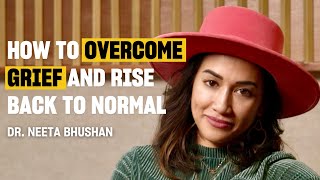
A recorded Mindvalley Show interview (Vishen Lakhiani with Dr. Nita Bhushan) exploring Bhushan’s personal history of multiple family losses and how those experiences shaped her work on emotional health. The episode centers on her four-step resilience framework (the "bounce factor": examine upbringing, shape current environment/good stress, expand emotional capacity, and develop radical self-awareness) and practical practices for grieving and recovery. The book promoted is That Sucked, Now What?, and the episode weaves personal story, metaphors (Rumi, Guest House; Inside Out), and actionable exercises (scheduled grieving, hand-over-heart breathing).
Questions this video answers
Dr. Nita Bhushan
That Sucked, Now What?
thatsuckednowwhat.com
16
15
Chapters
Foreign. Welcome everyone to the Mindvalley Show. This is our new format of Mindvalley Podcast. If you're watching this on YouTube, we now call this the Mindvalley Show. And I hope you enjoy being able to see our guests up close on camera. But you can also listen to this on Spotify as part of the Mindvalley podcast. So our guest today is a person who is a brilliant author. This is her new book, that sucked. Now what? And let me tell you about Dr. Nita Bhushan. So Dr. Nita is a cosmetic dentist, turned three time international best selling author and world renowned emotional health advocate. She's the founder of the Global Grit Institute, a wellness education platform for optimizing well being. And co founder of Dharma Coaching Institute, an organization training coaches to become the highest version of themselves. She shares her thought leadership on grit and resilience on international stages and on her top rated podcast, the Brave Table. Sunita went through a situation where she felt trapped in her job as a dentist. This set her on a journey across 45 countries towards self mastery, towards deciding to become an expert in grit and resilience. She now resides with her husband and two kids in Austin, Texas. Nita, welcome to the mindvalley show.
I'm so excited we're here, we're doing it.
So first people, confession, right? You and I have known each other since 2014 when we met at Burning Man.
Isn't that crazy?
And we did not get along.
I know we didn't.
We. You absolutely. You were really mean to me. And then we had a mystical experience in Burning man and we became friends.
Yeah, we did.
And with your permission, I want to share some of those. What, what happened there. But before we get there, Nida, tell us what brought you here. What brought you to the seat right now with this book and in the life you're living right now.
Oh, wow. So I have to say I think it starts out with where I come from. Like born and raised Chicago to immigrant parents. My mom was Filipino, she was from the Philippines and my dad was from India. So like typical tiger parenting. And of course they wanted the American dream and so they settled in Chicago. And I was the oldest of two younger brothers. And as you would, I grew up very needing to, to do all of the accolades and the achievements because my parents wanted us to be in dance and piano and all of these things. At 10 years old, I became a caretaker to my mom and she fell sick and she had breast cancer. And so for those six years, she would be in and out of hospitals. And so our life would completely change when my mom would transition. So she passed when I was 16. And then a year later, a year later, my brother DJ, who was 15 months younger than me, he was like, he was my best friend. We were super close. He had an asthma attack at school and he never made it. They tried to revive him three times.
How old was he?
He was 15. And so that definitely shocked us. I mean, this was not even a year after my mom died. So lots of trauma, lots of big emot. And there is my Punjabi dad again, my Punjabi father, who didn't have the wherewithal he was. He just completely took him out. I mean, he lost his son and he lost his, his wife within a year. And so two years after my brother dies, my dad gets this diagnosis, stage four lung cancer. And he died 10 months to the date. So at 19, within this span, I lost my mom, my brother.
And your father.
And my father.
And you were not even 20, correct?
Yeah. So a decade later, when I would go to dental school, I would get the good grades, I fell in love. I finally felt love in my life. And I'm rebuilding my life in this way, and I get the biggest unconventional love story. But in fact, it was me losing myself because I got into a very abusive, tumultuous relationship where then I had to leave haphazardly December 31, which would change my life forever. And shortly after that, when you were.
Married, before you had to leave your abusive husband.
We were married for about 15 months.
I see.
We were married for 15 months. But it was that day, December 31, that would fully shift my life, because that's when I had to realize that I was living my life for other people, that I had not really integrated, I had not worked through a lot of the grief. I had not accepted my reality for so many years, for a whole decade. But from the outside, I had a million dollar practice for the outside. I was changing smiles.
You lost your mom, your brother and your father all in the span of two years. And you were not even 20 years old when this happened. You were 19.
Yeah.
And so you had to raise your baby brother on your own.
Yeah.
How did you end up paying for. For dentistry school?
Yeah. So in the US we have what's called student loans.
Right.
And. And that's what it was. I took loans out. I actually, there was a time where I worked not one, not two, but three jobs. I mean, there was a really big struggle, definitely. I mean, that's, it's contributed to how obviously I've been able to create the, you know, audacity of resilience, what I call in the book, and the grit and resilience that I'm. I'm known to speak about. I mean, people call me the queen of grit and resilience for. For a reason. And I think to have the contrast going and starting from some of those deeper, darker days of not knowing what's going to happen. And of course, I also had so much support. It's one of the reasons why I think the other superpower that I really love is connecting with other people. So all this to say, this is what led me to create what I call the bounce. Four steps to build unshakable resilience. In my book that sucked now up.
I know so few people who have gone through what you've gone through. So knowing what I know about you right now, you have definitely bounced back in a dramatic way. So let's talk about these four steps to unshakeable resilience. Now, first, let's start by defining resilience.
The definition of resilience is. Well, in Latin, the term is actually to bounce. Resiliar in Latin means to bounce. But what we're taught and what I was taught, and I don't know vishen if you were taught this growing up, but the whole idea that people say, you know, the buzzword of resiliency is toughness, mental toughness. We've got to be tough, we've got to be strong. Well, if I take that example of this glass as I just shared and I let it go, that's going. That glass is going to shatter. But you're saying, wait, Neeta, it's tough, it's strong, it's brittle, it's not supposed to break, but when you let it go, well, guess what? It shatters into a million pieces. Kind of like what I did on December 31st. And so while that's a great definition of resilience, the true meaning of resilience is resiliency in Latin, to bounce. So what does that mean? Well, if we actually take the same concept, but we think of maybe a basketball or maybe a tiny little ball. I have small kids, so a tiny little ball that I would give to my kid from, like a gumball machine, and it would. And I drop it, I let it go, and it starts to bounce, well, guess what? That has a little bit of give to it. It has a little bit of softness. Not just brittle. It's got that agility. It's got the ability to flow back and forth. If you Think about, you know, aerial or trapeze artists in the air. If you've ever seen Cirque du Soleil. They're going back and forth. There's no breaking there. They're holding onto each other, but they're also. They're also agile. They're. They're in flow with each other.
Flexibility and an agility in true resilience.
Absolutely. And. And so for. For these four steps. So it's not just mental toughness. And that's what I would love everybody to get.
But why is that agility and that. That flexibility necessary in resilience? Why can't you just be tough?
So we need.
I get that the glass breaks.
Yeah.
But what does being tough do for you?
Well, of course, we all know it's counterintuitive to think that, okay, resiliency isn't going to be. Isn't going to give you that strength. It's going to give you that strength. But we also have to allow ourselves the softness. We have to allow ourselves the compassion, the human compassion to actually feel. Because I think for so much of my time, I was so used to, and I think so many listeners and watchers are so used to. When something bad happens, I'm going to shove it under a rug. When something bad happens, I'm going to open overwork, and I'm going to prove them wrong. And so when we're so tough and we don't stop, then we do have a fall. Maybe the fall looks like a breakup. Maybe the fall looks like a literal fall where it's a medical diagnosis. Maybe the fall looks like a car accident or something that you cannot control, but it happens to wake us up, and that's why we need to have that softness.
What you're saying reminds me of this, this poem by Rumi called the Guest House. May I read it out?
Oh, absolutely.
Have you heard of this?
No, but I love Rumi. He's one of my favorites.
So Rumi wrote this 400 years ago. And I love this poem because it takes away that need for fake positivity, you know? And this poem helps people understand that that sadness is part of life and that there is a blessing in sitting in sadness. Rumi said this being human is a guest house. Every morning a new arrival, a joy, a depression, a meanness. Some momentary awareness comes as an unexpected visitor. Welcome and entertain them all, even if they are a crowd of sorrows who violently sweep your house empty of its furniture. Still, treat each guest honorably. He may be clearing you out for some new delight. The dark thought, the shame, the malice. Meet them at the door, laughing, and invite them in. Be grateful for whoever comes, because each has been sent as a guide from beyond.
So beautiful. It's, it's, it's the entire book. It's meeting all of, all of the feelings and embracing all of.
And that's why we don't want to be tough. We don't want to be rock solid in terms of resilience. We want to be pliable.
Absolutely. I mean, that's where the agility comes in, because there are going to be days. I mean, there were days in my deepest, darkest days where I was sitting in the sadness. I was sitting in the suck. And you know, for anybody who's ever lost anyone really important or could be a friend or even a colleague, but you have these moments and these waves of grief that will stay with you.
There's a beautiful line from the. The Disney TV series WandaVision on grief. Right. That show, by the way, was. Was one of the most popular shows of 2022.
Oh, so good.
What is grief but love persevering? I think there's so much beautiful wisdom in these emotions. And, and I think that the common misconception in the personal growth field is that you have to always be positive. Happiness definitely has its advantages, like being in happy, blissful states. Correlates with better health. It correlates with, with better friendships, longevity. We've seen all of this. But does happen in life. We will, we will experience. Almost everyone will experience the death of a loved one. Almost everyone I know has experienced moments where they were in bed, hospitalized. Almost every entrepreneur I know has faced inevitable bankruptcy or failure. And you cannot be positive. You cannot just be happy in these moments. There's this beautiful wisdom in seeking to feel and embrace what you're feeling. As Rumi said in his poem the Guest House, letting those feelings come in, but then being able to introspect, to go within, to try to understand what we would have done differently. How are we going to cope? Or like you say in the title of your book, well, that sucked. Now what? Now what do I do? I think it was Reverend Michael Beckwith who said that we grow true moments of inspiration, satori moments in Zen Buddhism, but we also grow through kensho moments, moments of pain, moments when the universe just needs to, like, punch us in the gut because something needs to shift in our life.
Oh, absolutely. I mean, I think all of these metaphors are such a brilliant example of kind of like what I always say is embracing the joy and the chaos Making room for all of them. Because I want to just circle back to what you just shared about. Well, happiness has its benefits. Well, if we also suppress those feelings that we are ashamed of or we think that are negative emotions. I mean there's research that supports that. Well, they'll start manifesting disease in our body because we are not aligning ourselves with. We're holding in the resentment, we're holding in the pain or that grudge from somebody else. Where is it going to show up? It's going to show up in our liver or our lungs. The spiritual aspect of the grief that my dad had, he died because of lung cancer. He was holding in a ton of grief. Louise Howes talks about where are we energetically holding pain? And the same thing with my brother died of.
You're right, you're right. Because our body keeps score, right? As the title of that book goes, our body keeps score. Whatever pain we are feeling will, if we try to hold it in it can manifest itself as an illness, as disease. And so we need to deal with it, to embrace it, to let it flow through us. And that's why, that's what Rumi suggests in his poem the Guest House. And that's why that idea of feeling, what you feel is so important. So let's go on to the four steps, the four steps to building resilience.
So okay, this is, it's called the bounce factor. And so the first, and I think we've kind of maybe alluded to it, but we have to really know what and how our upbringing was. So number one, the first step is understanding our upbringing. Well, what do you mean by that? Well, we have to know how, how we grew up and did we grow up in a household with two parents or one parent? Did we grow up in a household where we had helicopter parents? Or that we were allowed to speak our voice, that we were allowed to feel certain feelings or were we judged or shamed because we were feel. I mean you imagine I have a, you know, I have an almost two year old daughter at home and she basically, when she doesn't get her way, she's about 19, 20 months now and when she doesn't get her way, she starts to wail and scream and you know, you probably remember this with your kids on the floor and she's acting out. Well, she wants, she wants mama and dada's attention. But as a two year old and they're the biggest gifts or the biggest teachers if you've ever been around a crying kid who just wants what they Want. First of all, their prefrontal cortex text has not been formed. It doesn't get formed until 25. So they have zero emotional regulation. They're our biggest teachers. So they're going to feel all of their feels. They are going to whine and scream and pout and all of the things. And I can just start saying, stop right now. Stop crying. Stop it. Don't you dare. Because that's what I heard when I was growing up. I'm sure you probably heard the same thing. A lot of us heard that growing up. And what are we then doing to the little girl? Well, we're teaching her that. Nope. We're not going to get love. We're not going to get approval. We're not going to get anything until you actually show me a happy face.
Right, because you're also teaching them to suppress their emotions.
Absolutely. So then what are they going to do? They're going to come up to you and, and, and say, okay, I'm, I'm going to just. I'm going to be my happy self because the happiness is only going to get dad or mom's attention. Right. So was that taught in your household? So to be able to really go back, this is the first part of the balance factor where we cannot change anything. We can only make peace with it, but we cannot change anything. And we can really introspect and ask, okay, were things allowed in our upbringing or were they not allowed in our upbringing? So that's the first part is looking into our upbringing. What were we taught? Was it okay to spe? Were we allowed to share that we don't like a certain thing to express our opinion? Were we actually seen, heard, and validated at the dinner table, or were we just. I know in brown cultures you're just looking up to your elders and respecting them and not sharing anything whatsoever. Right. So that's. The first part is understanding the upbringing. The second part, which is what I love, which is leaning into this unshakable resiliency is your current environment. So looking into building good stress. So there's a difference between good stress and obviously overwhelm anxiety. Those are things we probably want to curb. But there is an invitation to invite good stress. So are we actually right now complacent where we're at, or are we actually growing ourselves in some way? Take for example, you know, cold showers are all the rage. Cold plunges are all the rage. Well, if anybody who's never done a cold plunge before or never taken a cold shower, they're probably not Gonna like doing that, right? It's a physical sensation. You're not gonna put cold water on your body. But when we invite ourselves to these moments of inviting good stress, kind of like maybe an emotional aspect of this is maybe sharing how we're actually feeling instead of denying those feelings, I'm actually feeling hurt that you said that. I'm actually feeling sad right now. I'm actually feeling jealous, and I don't know why. I'm actually feeling like I need personal time right now. So I'm not going to say yes to that. And many times this will come up in our interpersonal relationships and our interpersonal dynamics. That is a growth edge for most people. Nobody wants to shake the boat. Nobody wants to have difficult or courageous conversations because it can offend somebody else. And I don't know about you, but I was a former people pleaser for many, many years. So to build good stress in stating my boundaries or stating, actually, no, I don't want you to do that, actually, no, I'm not going to do that for you. That was a really big thing for me to do. And I think for a lot of people listening, nobody wants to rock the boat because at the end of the day, our truest desires is to be accepted, to be loved, to fit in, to belong. And so instead, we don't speak our truth yet. If we can invite some of this good stress to expose ourselves, to create a current environment that's really supportive of who we are becoming, that is actually key steps to building unshakable resiliency.
So, Nita, how does good stress. How does good stress translate to resilience?
Oh, I'm so glad you asked this question. So if we're inviting more and more incremental changes of good stress, well, we're actually building our resiliency. We are building our strength in that way. We are building our agility to grow. Just take for example, going to the gym, lifting weights. You talk about, you know, health and longevity a lot of. And so. Well, let's take that for example. When we first go to the gym and we're building our muscles, we're building our biceps in the beginning, we are not going to like it, we're going to be sore. But if we actually stick to those small incremental changes where we are daily showing up and we are growing and we are committing to the intention of growing our muscles, well, guess what? By the end of the 30 days, by the end of the 60 days, you're going to see a resiliency. The heavy weights that you thought that were heavy on day one, probably on day 30 are going to be a piece of cake, hopefully. So that's what I mean by exposing yourself to the things that we are afraid of.
You're right. I like that. It reminds me of what happened just last week with my daughter. So I was with my 9 year old daughter Eve at Universal Studios in Singapore and there's a really scary roller coaster there. Now I have a slight fear of heights, so I do not do scary roller coasters. But my son, who's 15, wanted to do it because he's a brave kid. And I said, you know, I'm just going to sit back, I'm not going to do this. And my daughter said, dad, I'm going to do this. I'm like, eva, you sure? It's super scary. She goes, yeah, but after I do this, nothing else in the park is going to make me scared. And I thought, wow, this girl is really, really, really wise. And then she held my hand and said, would you come with me? And now I can't turn to my daughter and go, no, your dad's a chicken. You have to do this by yourself. So I had to ride the roller coaster with her. And honestly, it was not scary at all. I was just so in awe at this nine year old girl that precisely what she said, if I do this, nothing else here in this park is going to scare me. And that reminds me of what you're talking about. Good. Stress, good. Taking those steps to do things that we fear that make us uncomfortable because it only makes us stronger.
It's leaning to the uncomfortable.
You got to ride that roller coaster.
Ride it so good.
Now let's go on to the third idea.
Okay, so the third, so the third aspect of this is we alluded to it a little bit before, but being able to stretch our emotional capacity to feel and to really allow ourselves room for perhaps, maybe some of the anger that we've suppressed, maybe allow ourselves the room to feel the rage. Because most experts talk about, yeah, we shouldn't be feeling these negative feelings. But it's not, there's no issue with feeling these feelings. In fact, it's actually really good for you. Let's move through it. There's a beautiful example. Have you seen the movie the Inside Out?
Yes. Yeah.
Yeah. Well, I mean, joy cannot live without sadness. Right. And anger has to be there at the same time. And it's a beautiful movie. Pixar did a wonderful representation of feeling our feelings and that each feeling was a character. It was an Emotion. And so they were, were friends, but they couldn't live without each other, right? Joy was feeling joy all the time. Anger was feeling anger all the time. Sadness was feeling sad all the time. But they needed each other. And that also, it all lies within us. But because of our upbringing, many times we were told something about one of our feelings or two of our feelings, or maybe this societal idea and view of emotional perfectionism that certain feelings are more acceptable than other feelings. Oh, you're an author, you shouldn't be feeling this way, or you're a leader, you shouldn't be feeling this way. So in all our emotional capacity to feel is so important so that we're not. We're accepting all of ourselves and all parts of ourselves and our ability to really feel what is coming up instead of judging our feelings, shaming our feelings, or thinking that we are not allowed to feel a certain way just because we don't deem it's acceptable, or society thinks it's unacceptable, or there's no place for that. I mean, you know, there's so many memes of when people get so angry. But it's not what we. It's not about what we do with the anger or the rage or the sadness or the depression or the overwhelm. It's. It's what we do with that. It's the output. We're okay to feel. And to bring that up.
But isn't that caveat there, though? Like, if you're a parent and you have children around the house, don't you have to watch how you express your feelings? If you are, if you're in a corporate environment, right, and you're feeling super stressed, don't you have to worry about how other people are going to perceive what you're feeling? I mean, isn't there. I get that you should let yourself feel, but there are people around us and shouldn't we in some way be accountable to how we make them feel if we truly express our feelings?
So this is a good, this is a good point that you're making because we should be able to fully express in the ways that we, that, that we feel. And we shouldn't just think that, oh, because my friend is in that corner, I should, I should diminish what I'm feeling right now. I should invalidate my feelings right now because my feelings actually matter to me and it should matter to me. When we start doing this to our children when they are really young, then we're training them to think, oh, look outside of yourself for validation. And it starts even with our emotional health. I think what you're also alluding to is, are there ways of coping mechanisms and healthy coping mechanisms to actually express our emotions in a healthy way? Because if you're going to. When you're feeling the urge of sadness or overwhelm or frustration or anxious, and if you're expressing it in a way where you're, you know, jittery or walking all over the, you know, the office or maybe screaming and yelling at people, that is what you're actually doing to express. It's probably not the healthiest way, right? I have a whole list of ways where there's healthy ways to express.
What are some of the healthy ways?
Well, some of the healthy ways could just be putting your hand over your heart, for one. This is a perfect example. And this is actually a physical sign. It's a physiological sign that you're actually catching yourself. So when you're feeling hurt, when you're feeling that tinge of, oh, okay, there they go again. They're triggering me. And you're feeling this, like, triggering response, and you want to react, you want to say something, you put your hand over your heart and you know that you're breathing shallow because you're in fight, flight or freeze and your nervous system is going wacky and you want to respond right away. But actually, this is your physical representation of saying, I got this, I got this. And taking a deep breath and literally reminding yourself that we're going to move this breath that's here in my chest all the way to my belly and saying, I got this, I got this. And just allowing ourselves to actually breathe, that's the simplest thing that we can do to catch ourselves, to change our state from fight, flight and freeze to rest and digest. That's a healthy coping mechanism. Because what are we actually doing? We're activating our vagus nerve. Now, for all the science nerds in the room, we know that our vagus nerve is the one nerve throughout our entire body that connects our mind and our gut as well as it's responsible for resting and digesting, which is why a lot of the chants and the mantras are activating Our vocal cords are activating our throat chakra to open ourselves up, which is why singing is such a beautiful thing that we can actually do.
What if the feeling is something that really sucks? Like the something that, you know, might manifest through the death of a loved one, suddenly being diagnosed with cancer? Both of these situations happen to friends of mine in just the past 10 days. How. How might that show up.
So again, so you want to that this representation of putting your hand over your heart and really just taking a moment to embrace you and embrace. And you can even close your eyes, but just take a moment to embrace you and just say, I got you, I got this. And it sucks. And even to just articulate, I have a whole practice in my book where we're actually how to actually embrace the sock. And it starts with putting your hand over your heart, closing your eyes, taking a few deep centering breaths. But you're also then saying, I got this and this sucks and saying it out loud. Because when we're actually saying it out loud, we're not saying I suck. And we're not saying I'm sad. We're saying I'm feeling sad right now. I'm feeling really upset right now. I'm feeling really unfair right now. This is unfair. So to actually acknowledge it, because most of the time we numb, we avoid, we shove it under a rug. These are all of our distraction techniques. And we'll do this while we pick up the phone and we start swiping and we start swiping. That's what we do. But what I'm actually inviting you to do in this third aspect, especially when it's hard, is to lean into the discomfort. Yes, it's going to suck. Many times when I was going through my losses, I would actually schedule time to grieve. I would schedule time in my day, even after my divorce, 10 minutes a day to cry my eyes out, to really let the emotions take over me and wallow over me.
That's an important point. Scheduling time to actually go through these emotions. So let's do a recap of the first three pillars.
So the first and the first pillar is your upbringing. Your second pillar is your current environment and your ability to invite good stress. Your third pillar is your emotional capacity to feel.
And now let's go on to the final pillar.
Okay, so the final pillar is your radical self awareness. This is where we are integrating parts of ourselves. This is where we are putting everything together and. And really paying attention and paying attention to the small subtleties that may no longer need you to embrace or accept. It just is. And what do I mean by that when we're actually aligning ourselves with perhaps maybe different decisions that we've made. I made a wrong decision about somebody I hired. Oh, man, why do I keep doing that? Or I made a wrong decision about who I'm dating. Why do I keep attracting the same people? Well, in actuality, we're asking ourselves a different question. With radical self awareness, we're not just saying the why me Anymore. We're not going into our victim state. We're actually changing this and going into our victor state of saying what is my pattern? What has my pattern been in hiring people? And how am I actually picking people? How am I actually picking partners? What is it in myself that I'm attracting all these different kinds of people that are not my people? And so you're asking a different question instead of why is this happening to me, how am I playing a role in this and what do I want to create? So you're asking out of curiosity. And that's where we're starting to build our radical self awareness. Because when we're asking more of those questions, then we're actually inviting opportunities for change, for growth, for evolution, where we're not sitting in the stuck anymore. We're now inviting possibilities for what's that now what going to look like? And then we can be even more consistent with actually saying no. So it could look like, nope, this opportunity doesn't feel really good right now. I'm actually going to say no. This party that I got invited to, I know that I've been running a lot and I think I just need to stay in tonight. I'm going to say no to that. So really paying attention to how it's feeling in your body even because you've built this radical self awareness to pay attention to your needs.
I love that, Nita. So thank you, Nita. The book is called that Sucked now what? And this book is for anyone who's going through any type of situation in your life where you're trying to bounce back from a traumatic experience. It could be the loss of a loved one, it could be divorce, it could be being diagnosed with a horrible illness. This book is going to help you bounce back and develop incredible amounts of resilience from a woman who has been through so much and has turned out so amazing. Thank you, Dr. Nita Bhushan.
Oh my gosh. Thank you for having me here, Vishen.
And where can they get this book from?
What's the website that sucked now what.com.
Left that name that that sucked now what.com so good that that domain was available.
It was true.
Yes. All right. Thanks, Nita.
Thanks for having me.
More from Vishen






Brown Noise for Deep Focus and Concentration (Best with Headphones) | Gabriel Loynaz



Your Appointment With the Eternal | Guided Meditation with Michael Bernard Beckwith