Ep #004 | Reduce Anxiety Instantly | Easy Techniques from #1 NYT bestselling Author Gretchen Rubin
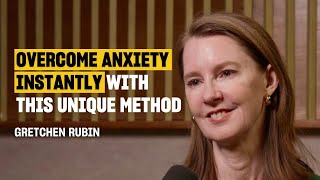
Gretchen Rubin shares techniques from her book Life in Five Senses to reduce anxiety by engaging each sense. After an eye scare made her senses feel intensely vivid, she developed practical rituals: holding grounding objects, adjusting sound, using sight cues, creating taste rituals like herbal tea, and anchoring calm with familiar smells.
Chapters
Foreign.
Welcome back, everyone. I'm here with the incredible Gretchen Root. Author of nine books on a wide diversity of different topics, ranging from the human experience to happiness. Gretchen is one of the most celebrated writers of our generation, and her newest book is called Life in Five Senses. How Exploring the senses Got me out of my head and and into the world. And today's conversation is going to be about how to apply this concept of fully embracing your five senses for the purpose of overcoming anxiety. Anxiety hits us all. And I was just telling this to Gretchen, but in the past five hours, just before making my way to the studio here in New York to record this episode, I had two friends message me. One was going for surgery to remove a tumor on an eyeball, and you can imagine the anxiety that she must be going through. Another was facing anxiety and was asking me to recommend a good brain doctor so he could understand why he was facing this paralyzing fear so frequently. Anxiety is quite normal if you face it. You want to be paying attention to this conversation? Gretchen, welcome to Mindvalley.
I'm so happy to be talking to you.
So let's talk about life in five senses. Well, firstly, tell us what made you write this book.
You know, I just had this feeling, and I think a lot of people share it, where I was just, like, up in my head. I wasn't appreciating the moment. I felt like the world was sort of flat and thin and behind a screen. But then it also felt sort of, like, hyper saturated and processed and like, overly, you know, vivid. And so I wanted to recapture that feeling of really connecting with the present moment and other people and myself. And I realized that an important way to do that was through my body and through my five senses.
Now, I notice you. When I read the opening chapter of the book, you spoke about a condition that happened to your eye.
Yes.
That caused all of your other senses to become fully crisp and clear. Tell us about that.
So I got an ordinary case of pink eye, and I had to go into the eye doctor, and he said to me, well, you know, just very offhandedly, like, oh, you know, you need to come in for a checkup because you're so nearsighted, you're at very high risk for having your retina detach. And I had just had a friend who had lost vision because he had a detached retina. So this was a big shock to me. I had not known this. No one had told me this. And it sounds so silly to say, like, I had never really thought about it because obviously intellectually I had thought about the fact that at any moment anything could happen. We all know this intellectually, but. But for some reason at that, just him saying this casual comment, it hit me with just this intensity. And I walked out of his office. I live in New York City. So I'm walking down this New York City street, going back to my apartment, and it was like a dial God just turned up in my brain. And everything just came in so vivid and so rich. And I could smell everything and hear everything and feel everything and just even feeling like the cool air against the face.
But your eyes were fine.
My eyes were fine. No, it was this realization. It was this realization like at any moment it can go away. I was like, you know, and of course I could be happy and have a fulfilled life if I lost my vision. But it was just realizing like. But am I even really taking advantage of it? Am I even really looking at the world around me? Like, I looked up at the trees and I'm like, when was the last time I really. But I am kind of an absent minded person. I'm just like up in my head. I'm constantly like revising a paragraph as I'm walking along. And I just. Now it's like I remember seeing the. Like the tree. Well, and the plant and everything just looks so vivid. And the smells that were just floating. New York is very smelly. The smells that were floating around. And I thought, I've been overlooking it all. I've been walking around in this fog and I've been taking it all for granted. And if I lost any of these senses, then how much regret I would feel.
You're right. You're right. If we lose the. We don't give enough attention to the other than touch and sight. We don't really pay as much attention, I think, to hearing, to taste and to smell.
Well, and interesting, because smell is very, especially in the west, tends to be overlooked and seen as kind of like a bonus sense. But Covid changed that because so many people lost their sense of smell. It was very interesting because people are like, they now realize like how precious it is and how if people lose their sense of smell, they often fall into depression. They feel detached from other people. They're not. We don't realize how much. Right. And I mean, and I had a friend who lost her sense of smell and she's like, I just felt so claustrophobic. Like I felt like I couldn't get fresh air in my face. I felt like everything was behind a pane of glass. And then fortunately for her, her sense of smell came back. But I think everyone experienced that or, like, got, you know, was made aware of it. And so now it's like, this is precious. Let's not take it for granted, but really go out of our way to amplify it. Because when we dial into our senses, there's. There's so much del. So much connection. There's memories that come from it, creativity. We spark our creativity and our energy, and it's all. It's all we can reach us right there in our own bodies.
Your new book, Life in Five Senses, really is about embracing all five senses. But we wanted to. In this conversation, we wanted to zero in on the topic of anxiety.
Yes.
Right. So let's discuss that. How does embracing all five senses help us ease the pains of anxiety?
Well, one thing is to think about all your five senses generally, and then you can think about your five senses specifically. So generally, this is just like. Like taking a moment if you're feeling very anxious and thinking, I'm just going to take a minute and I'm just going to dial into my body and my five senses. And people do this as a meditation technique where they go through their five senses and they think, what am I seeing? What am I hearing? Smelling, tasting, touching? And so that itself can be very grounding. I think it's actually more interesting and more helpful to zero in on a particular sense. For instance, touch. One thing that many people have told me, you know, we think of like pop fidget toys, or fidget spinners, but often people find something to hold and that will ground them. So, for instance, teachers often say, well, I will hold a mug of coffee. Or a teacher who was very anxious during COVID said she would hold a stone. There's something about just having something in your hand. A photographer said that often his subjects are nervous and, like, they're not professional models, so they're. They're nervous getting their picture. And so he'll give them. He works in the wine industry, so he'll give them like a wine glass or a bunch of grapes or just something to. And he said once they have that, they ground it. A lot of actors want to have a prop that they hold. Some don't like it, but then some feel like it releases it. I found I had a habit that I never understood. I always want to hold a pen, even if I'm at, like, a cocktail party. When you're like, Gretchen, you don't need to take notes here. Why do you have a pen in your hand? Just feels Right to me. I feel better when I have a pen in my hand. There's something about. Somebody said that she gets kind of hot when she's anxious and she feels like she's floating out of her body. So she holds a very cold water bottle with ice water in it. And the coldness and just the weight of it gives her something to hold. There's something very grounding that's so interesting.
I never even realized I was doing this, but I stroke my beard a lot.
There you go.
Stroking my beard calms me down. Calms me down. And if I'm working, I need a hot cup of tea or coffee.
And do you curve your spirit?
Exactly, exactly. I need. When I'm holding a cup, when I'm holding a cup, there's something grounding about it.
Yes.
And now I understand why.
Yes. Well, and I'm a hair twister, so I know about the. There's something about it. Well, and another thing, kind of, kind of along the same lines is petting a cat or a dog, Right? Oh, my gosh. Because that's also the connection. But there's just something about that. And you know, even if you don't have a dog or a cat, little kids have sort of lovies and stuff, animals. But you see that, like, somebody was telling me that at hospice, that at hospices they'll often have like very like soft, fluffy blankets because people just like something comforting to hold, something warm and soft.
So that's touch. So in other words, if we're facing anxiety, if we understand how touch can help ease us, we can create the right, the right ambiance, the right objects that we can hold on to. What about the other senses?
So think about hearing. Okay, so a lot of times people are talking about clearing clutter. You got a clear clatter. And I think a lot of times when people are feeling anxious, they don't realize, like, you've got notifications and things buzzing and like a lot of noise that's just in the background sort of giving you this mild irritation or these mild alerts. So you really want to think about the sounds that surround you. Can you turn off notifications? Can you pick a less jarring alarm sound for when you wake up in the morning? You know, it doesn't have to be like the. Are there things making noise that you can turn off or minimize? Like, maybe you're in your household, people have TV running in the background. Maybe you're like, you know what? That's just like a low level irritation for me. Maybe I've Gotten in the habit of eating at restaurants that are really loud. That's the number one complaint of restaurants is that they're too loud. And it's just like, I finally realized, like, I'm not paying attention to this and steering my choices, even though when I get there, I find it, like, it's really stressful to be having it. And like, what are people saying? And having to lean in. It's just. It's just, it. It just contributes to this low level of anxiety. And we can think about, well, how do I bring this down? I think a lot of times we think about, like, adding music. And that's great, but also you want to think about taking away things that might be adding to that.
That's very true. Now I find that I cannot work without music.
See, I'm just the opposite.
See, this happened since the pandemic. I used to work in an office with 200 people, and there was noise constantly. And I enjoyed it. The sound of discussions, like, it was just wonderful. And then working from home for the past three years, I've decided I never want to go back to an office again. But I can only work from home if my Spotify playlist is playing. If it's absolute silence, I can't work. Something feels off.
But see, this is such a great example how we each really have to know ourselves, because there's no one magic, one size fits all solutions, right? And there's. And I need silence. And, and, but sometimes we like. And like, let's say we worked in an office together and I need silence. It's not a question of, like, you're right, I'm wrong, or like, let's show the research or whatever. It's really like, well, given that we have different preferences, how can we create an environment where both people can thrive? And so, but you have to begin by knowing yourself. And I think sometimes people don't even bother to say, like, well, I maybe just assumed that everybody has music on when they work.
You're right, because we're all so different. And I realized, so I.
Or maybe as a kid, your teachers and your parents were like, turn off that music. Turn off that music. If you're. And you never thought to say, like, that's not good advice for me. I'm not that kind of person. Something else works for me.
And I notice in my office we have 350 people in our company, and 70% of them voted to work from home. So we decided to give everyone a choice. 30% wanted to return to the office. And our Office is world class. Our office was Inc. Magazine top 10 most beautiful offices in the world.
Wow.
But only 30% of our staff wanted to return to the office. 70% wanted to work from home. And one of the biggest things is silence. We had open plan offices, just like Google, just like it was a big trend in Silicon Valley years ago. And now evidence shows that it's actually a pretty stupid idea. Right. It's distracting primarily for people who need their silence.
But here's what's interesting about the senses, is the senses are most attuned to other people. We are going to select if you see, this is why you see a face kind of like in the electric socket. You know, the brain is looking for faces. You see them in the front of cars, in the clouds. The brain is looking for faces. Your brain has special hearing for voices. We're attuned to voices. It's going to jump out at you.
Right. I remember reading, I remember reading that the human mind, the human brain will recognize faces. But if you show someone 20 rocks, 20 pieces of rocks, rocks can be as diverse as human faces, but it's hard for us to recognize rocks. But we can recognize the human face because we needed to recognize the human face to survive.
And it's kind of astonishing when you think faces are pretty much the same, that you can show somebody like a flash of a face in print and you know, like just half of a face and how good we are at it. And so working in an office, it's very distracting because the other people are there, because the brain is just like, oh, those two people are talking. And intellectually I'm like, I don't need to know what they're talking about. But part of my brain is like, what are they saying? What are they thinking? You know, and so it can be distracting.
Let's go on to the next sense.
Well, touching. And so you want to think about ways to connect with other people. I mean, that's another reason why during COVID it was very difficult is people would say how difficult, how challenging it was to just feel out of, literally out of touch with people. And I think if you look like the growing popularity of things like airport massage, manicures, acupuncture, these are massage. These are ways for people appropriately to get that physical touch, which maybe if they're not getting in other ways, they're really craving it. Because this is something that will, it's really good for our health and it will bring down our stress. So if you're very stressed out, you want to think Like, I mean, it sounds Sicily to be like, well, maybe you need a hug, but maybe you do need a hug, you know, and really going out of your way to have that physical. That physical contact now. And related to sight, one of the ways to bring down sight is, you know, we love seeing the faces of people that we love or experiences that we love. And so look for, like, maybe on your phone, have the. The home screen be a picture of something that is going to bring you down.
Your pet.
Yes. Or like, you know, something that is going to bring you that sense of calm. Or what some people like to do is they like to have a word that they feel like is grounding to them. Like, for some people, it might be something like calm or focus or embrace or enjoy or whatever a powerful word might be as well. Because when you see that, it can just like spark that memory that you're okay, calm down. And then there's little things like relax your jaw.
I remember reading a study done at the Heart Med Institute in Los Gatos on heart resonance, which is a biomarker of health. And they said that if you see the face of someone you love and you just imagine sending love to them, instantly your heart resonance changes and your. And you move away from anxiety, from stress, towards a more peaceful, peaceful way of living. When I face anxiety, I picture the face of my daughter and that Eve. And seeing Eve's face instantly calms me down.
And again, it's that this is very available to you. This is not hard. This doesn't take a lot of time, energy, your money. But you sort of have to have the presence of mind to think. I know I can reach for this. If I bring this up, then it will give me this result.
So we've spoken about touch, spoken about sound, and spoken about sight. Now, what would be the sensory hacks for reducing anxiety using smell and taste?
Okay, well, the warning about taste, because that is the thing where a lot of people will eat to calm themselves down.
I do that with chocolate.
Right, Right. It's a very common thing. So it's something that you want to be aware of, that if it's. If it works for you, that's fine. But for many people, they feel like they're not in control of it or it's not really the healthy choice.
It can be dangerous.
Right. And so you want to think about not doing that. So what might you do instead? You might turn to another sense. You might think, okay, if I need to give myself that comfort, I'm going to have a pickle. And not ice cream.
You know, you just made me realize, because when I have a stressful day, I love closing my day with a glass of red wine. But I just realized it may not be the alcohol, it may be the taste of red wine that I've developed this calming association with.
Right? So what you might try to do is substitute herbal tea or something like that, where you're like, okay, right? Or you like a hot drink, right? Or a non alcoholic wine, because. And again, it's like let it. And have it not be some kind of afterthought, but build a ritual around it. Have it be special, have it be something that you really enjoy. Maybe you're sharing it with somebody else so that it's not a deprivation, it's an indulgence on its own. And it begins to have that association of like, it's the end of the day now I'm like transitioning into my leisure time and I'm really gonna have this positive association with this taste. Because you're right, it's the alcohol. But then it's just. That's the Pavlovian response. When I get this, then all the fun leisure time is coming. But you could do that with something else.
And then the final one is smell. Smell is really overlooked.
I love the sense of smell. So you can use this in a couple different ways. So you might have a smell that you love that evokes memories. So maybe you have a grandmother who you love her so much, and when you smell the. And she's been gone for years, but when you smell her perfume, it's sort of like looking at the picture of your daughter. It like conjures up the presence of somebody that you love so you can use it. Or maybe it's. You have, you know, like a seashell that still has kind of a briny smell. Sometimes they have like kind of briny smell. And that reminds you of the beach on Maine where you go every summer. And that calms you down. There are associations like lavender and things where people just have kind of over the years been like, oh, this is a calming smell. Actually, those are purely associational. Smells don't have like, you know, so in Brazil, they think lavender is invigorating. And so it's like, okay, but if you've learned that lavender is calming can help you calm down. One of my favorite things is I. One of the things that's stressful is if you have like to perform, right? Like you've got a big presentation or you've got something that you're Anxious about. So I have a lucky smell. I only. It's a smell that I love. It's the smell of hay. So it's a sweet honey smell. And I only smell it when I need good luck, so I save it. And when I smell that, I'm like, calm down. Take a deep breath. You've got your lucky smell. You're gonna do great. And so that's. So that's kind of a ritual that I have that gives me luck.
That's amazing. So I never thought about how amazing our five senses can be as a way to calm us down. I remember having a conversation with Michael Gallup, the man who wrote the book how to Think Like Leonardo da Vinci. And he spoke about this chapter in the book called Sension. And apparently Leonardo da Vinci, in his diaries. In the da Vinci diaries, he wrote about this concept where we need to live life embracing all our five senses. And if we lived life like that, it opens us up to greater creativity, greater happiness, and all the other juicy, good things. And so I started really embracing that. In my. In my living room, I have beautiful sheepskin rugs to sit on. At night, I light candles because I love the sight of candlelight. I constantly have. Have my Spotify playlist playing, and I have 25 playlists, each adjusted for a particular mood.
Oh, yeah.
And then I. I constantly have smells. So I have a friend called Rodrigo Nikaido who has a company in Mexico called Aromara Aromaria, and they provide these sense boxes, and you get. You get scented candles, but you also get a custom spray. So they designed a custom. A custom scent that I spray in my living room that just creates this. This unique vibe. So I have these scents as well. So you have touch, you have sight, you have sound, you have scents. And then I love having easy access to red wine or chocolate or just stuff that I can put on my tongue. And I find that this is the most amazing way to relax after work.
See, this is why I wrote the book, was to be more like you, because I didn't do any of those things. I never thought about that. I never enhanced my environment. I never thought about it. So. But I'm sure it made you calmer, more creative, more connected to your body, to other people, because you said it's exciting to talk about. It just adds so much richness to our lives. So, yeah, I mean, that's great. I think for some people, it comes easily. And then for some people, they really have to be reminded to do it and to sort of see, well, how would you do it and I think we can all learn from each other. It's wonderful to get ideas like a sheepskin rug. It's like of course everybody loves that feeling. Like I could do that. I could just have a throw that I would love to touch or I could have a lamb's wool plant that has those like crazy leaves to touch. I could add that to my life.
This idea of sensionale by Leonardo da Vinci has become how I design my bedroom, how I design my living room, how I live life. And it just, it makes you so appreciative of your body and everything that life has to offer.
Well and it brings, it calms you because you're getting that feedback from your body. You're getting those pleasant sensations that make you feel comfortable and comforted.
Amazing. Well, thank you Gretchen. Thank you for this conversation. And check out Life in Five Senses by Gretchen Rubin. I'll see you in the next episode.
It.
More from Vishen






Brown Noise for Deep Focus and Concentration (Best with Headphones) | Gabriel Loynaz



Your Appointment With the Eternal | Guided Meditation with Michael Bernard Beckwith