Ep #008 | Mathew Knowles, Father of @beyonce on How to Raise a Daughter
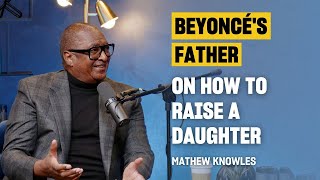
Mathew Knowles, who managed Beyoncé and Solange, talks about raising daughters with passion and resilience. He emphasizes the difference between a hobby and intrinsic drive, the importance of follow-through over talk, and how his own parents' entrepreneurial example shaped his approach to parenting and management.
Chapters
My mother says if something happens, Jesse, take your brother, get under that barbed wire fence and just run as fast as you can.
I'm really excited about our guest today. Matthew Knowles is the man who helped create Destiny's Child. He is the father of Beyonce and Solange. Beyonce has gone on to become the biggest Grammy winner in history and the greatest female musical act of the last 100 years.
We are witnessing history tonight, breaking the.
Record for the most Grammy wins of all time.
Beyonce to thank my parents, my father, my mother, for loving me and pushing me.
The topic today that we're going to be discussing is how to raise a daughter. And this is a topic that means a lot to me because I have a 9 year old daughter who is the love of my life, Eve. And I really wanted to have this conversation because as a man, I think there are so many things that we can learn that we can get better at when it comes to raising children. But specifically, I want to focus on raising a daughter because when I was googling online, I couldn't find enough content on this. And who better to interview on this topic than Matthew? Now the other reason I'm super excited about this, Matthew, and welcome to the Mindvalley podcast.
Thank you.
Vishen is this video. Let me, let me play this video. This is a video I took of my daughter Eve. The first time she danced, we had the song Single Ladies on. On tv.
Wow.
And Eve got up and started imitating Beyonce all the way down. And I was shocked because she was one years, one year old, she just learned to walk. And all of a sudden she was hooked on this video imitating Beyonce. And I thought that was really, really, really cool. Why I'm excited to have you is because you didn't just raise a really remarkable daughter, but you raised a daughter who is inspiring women everywhere. All across the world, billions of women, literally billions of women have been inspired by the girl that you raised. And I think that is something that you have to be so proud of. So monumental, Beyonce. It was so monumental.
You changed my life.
You clearly are the artists of our lives.
I'm actually proud of both Beyonce and Solange. When they were growing up, we always, my former wife and I always raised them to be respectful, gracious to the janitor, the same way they would be to the president. And I love that people ask me what am I most proud of. That's what I'm most proud of, is the woman that Beyonce has become. The mother, the wife, the leader, all of the roles she's accepted and is doing. An amazing job at.
So, Matthew, I'd like to do something in this interview. I read both your books. The first is the DNA of Achievers, and the second was the Story of Destiny's Child. And there were three themes that came up in this book as practices that you mentioned we need to do to achieve. The first was passion. Following your passion. I'm going to ask you in a moment to talk about that in relation to raising your daughter. The second was vision, how you were raising kids who had this solid vision for who they want to be. And the third was a term you coined, talk to do ratio. So we're going to come to that in a moment and I'm excited to hear that. But before we begin, I want to learn about you. Tell us about how you grew up. Tell us about your childhood.
Well, you know, I have one book called Racism from the Eyes of a Child Vision. And it starts out with my mom, my brother and I going to Marion, Alabama, which is where my grandparents lived. And my mother and grandmother were like oil and water. They just didn't get along. And it's 10 o' clock at night. They in an argument, we leave and we are walking up a dirt road to the highway. There's no lights, just the moon and stars. And in the distance you could see these car lights. And then eventually we heard the horns and they got closer and closer, horns got louder. And then my mother said, just abruptly, we got to get in the woods. We got to get in the woods now. In the bushes. In the bushes. And I'm five years old, and my brother's nine years older than I, so he's 14. And we get in the bushes on the side of the road and there's a barbed wire fence and there's cows on the other side. And my mother says, if something happens, my brother's name was Jesse. If something happens, Jesse, take your brother, get under that barbed wire fence and just run as fast as you can. Eventually the cars passed by. It was a caravan and it was a kkk Kluklux Klan. And I remember my mother on top of me praying, and I'm crying. And then once we got out of the bushes, they had these Confederate stickers and flags. And I picked one up, my mom spanked my hand and I still, I'm five years old and I'm not understanding what just happened. That's one of my earliest moments. And you know, my mother eventually moved to Gaston, Alabama, and I was born in 1952. So in 1958, I'm in elementary school. My mother went to high school with Coretta King. Took that spirit of integration and desegregation. And so I was one of the first blacks to integrate in Gaston, Alabama. Elementary School, Jr. High school, Gaston High School, even University of Tennessee at Chattanooga. Lot of trauma. A lot of trauma. I've been electric prodded. I was spit on. I've been called every word, every name, made to feel so type, so many types of negative feelings. One point in my life, 10 years of therapy for racial trauma. And that's a thing. Racial trauma is a thing that most people don't understand.
Wow. I, it's. It's incredible to hear stories like that. I think we forget what African Americans went through back then. This was in the 60s.
Yeah, this was actually started in the 50s again. 58. I'm in elementary school. You know, times were different then.
You went to a mostly white school?
Yes. 98%, 99% white.
What was that like?
It's not good. I, I remember my first day of junior high school and I'm in English class and I'm asked to read a paragraph out of Shakespeare, which is quite difficult even when you're an adult. And I'm reading and I obviously made a lot of mistakes. And the white kids just started laughing and throwing spitballs and airplanes at me and calling me all sorts of names. It takes away your pride and your dignity and your confidence.
So how did you keep that pride and dignity and confidence?
I had these amazing parents. I had a father who was a truck driver, made $30 a week working as a produce truck driver. He convinced the white owners that he could use that truck 24, 7. He would go and he would tear down old houses and he would sell all the copper and aluminum. He would buy used cars and he would sell all of the parts. My mom was a colored maid who made $3 a day. And she convinced a white woman she worked for to give her all the hand me downs and her girlfriends and neighbors all the hand me downs. And then they would make quotes, my mom and two of her girlfriends on the weekends. So I grew up with parents that were entrepreneurs. Actually, my grandparents were third generation entrepreneurs, but they had this entrepreneurial spirit. My dad was a volunteer fireman. His passion was to be a fireman, but he was black, so he had to volunteer. And so I grew up with parents who gave back to the community, had pride in the community and themselves as black people. You know, they wanted to do the right thing with integrity and had a lot of faith. And that's the Kind of home. I grew up with my mom especially, and my dad saying I, I could do anything that I could put my mind to. If I wanted to be the president, I could be the president. Imagine hearing that, and I'm like, there's no way in hell I could be the president. And then one day, Obama becomes the president. And so that was a real special moment. But, man, my parents were amazing.
How do you think your parents would feel seeing how. How remarkable their grandchildren have become?
Beyonce used to spend the summers in Gaston, Alabama. As a matter of fact, you know, some people give her the name B. My father used to call her B when he used to rock her in the sleepy would sing to her because he couldn't pronounce Beyonce. So he would say B. And so he was the first. But they would be so proud. They would be so proud.
Where did that name Beyonce come from?
It's my former wife and friend. I always like to add in. Friend Tina. Her maiden name is Beyonce. I see Tina, Beyonce. And from New Iberia, Louisiana. Their roots go all the way back to France. So that's how we got the name Beyonce. Solange means soul angel. And so that culture coming out of Louisiana.
So I'm really amazed by the love and the parenting that you experience. It's so beautiful for you to hear that despite the racism and the hard life that you went through, you've become the man that you are because of those parents. And it shows how important a parent's role can be.
Yes.
Tell me what happened after you graduated. How did you start your career?
Well, you know, I took a risk. I was in Nashville, Tennessee, had never been to Houston, Texas. And my fraternity brothers make a sci fi. Two or three. It was three of us. We just got in a car and drove one day from Nashville to Houston. Had enough money for gas, didn't even have a spare tire tire on the. In the trunk. And then when I got to Houston, I saw all the amazing opportunities, and I saw my fraternity brothers doing so well, and I just made a decision to move to Houston. And literally three months later, in no December, I moved to Houston with no job. I was working at AT&T in Nashville. But back then, you couldn't transfer to the other AT&T systems, which became Bell Systems. So I came to Houston and literally in the first month, was working at two companies at the same time, because back then I'm a sales and marketing person. So you could. Pitney Bowles was one of the companies. And then I give you these manuals to go and study for a month. And then Lanier Business Products was the other one. They gave me a manual to go to my apartment and study for a month. And then you would, then they would send you to training. So I said, well, I'll just work at both and then I'll decide at the end which one I like better after I go through the stack of manuals. And so I picked Pitney Bowles. Worked there for a brief period. And literally on a Friday with a, a bunch of friend of friends of mine, guys, we were just hanging out like guys do on Friday at a bar. And this guy comes up to me and he says, you know, I've been listening to you and you guys are really, really leaders, but there's something special about you. How would you like to work at Xerox? And you know this Xerox, IBM are like, you can't get any better. I'm thinking a guy who's a short white guy, I'm thinking he's BSing me and he gives me a card and sure enough he's, he's over hr. And that's how I went on the Xerox and worked there 10 years, moved into the medical. Only sold copiers for a year, sold engineering equipment, then went to the medical division at 80s. We were at a number one modality for breast cancer. Go figure. Because fast forward, it saved my life. I'm sure we'll talk about that. And then became the number one sales rep in the world. And a lot of head honors reaching out. And then in 1988, I went to Phillips Medical Systems to be the first black to sell MRI CT scanners in America. And then ended my career only ever I had a goal to work 20 years in corporate America during this period. Also my former wife and I had started a hair salon in Houston and it had really grown and mushroom and we made our first million dollars in like 86. And so I have always been entrepreneurial. Now you know why. And so I went on to Johnson and Johnson as a neurosurgical specialist. And then one day I'm in a surgical procedure and afterwards I get paged and I'm thinking, oh wow, something bad must have happened. And so I go to the neurosurgeon's office and he tells me he can't use my instruments anymore because this new thing called managed care, we all know what that is now how we, we manage expenses. My passion was just gone at that point. So I had to redefine what was it that I was passionate about Now.
I notice passion is a constant theme in your book. In your books, right? In both the Story of Destiny's Child and the DNA of Achievers. I remember the story about how you asked your former wife, what was she passionate about? And you suggested the idea of her opening a hairdressing salon, which was really beautiful. Likewise with your children, that passion was music, and you noticed that early. So let's go into this first concept of raising a daughter. Passion. Talk about passion and how to identify that in a child, even in ourselves. And how do we stimulate that?
Well, for me, passion is that thing that excites, that thing that fuels you. You know, I still. At 71 years old, I wake up excited. I was excited last night, researched you last night, excited about the interview. That's who I am. And with my kids, I wanted to see and my wife and I wanted to see. When they were younger, and I mean, five, six, seven years old, we would take them to NASA, we would take them to science fairs, the library, we would take them to cultural events, and we just kind of watch and notice what they kind of navigated and gravitated to. And we then we understood because they were always singing, always singing and entertaining. And, you know, ask Beyonce, what is it that you want to be one day? And her answer would always be, I want to be a star. I want to sing. And so we surrounded her with the tools. And I always say this. How do you know if your kid's passionate about something or it's a hobby when you have to tell them to go to practice one time, it's a hobby. It's not a passion. Think about that.
Oh, I like that. I like that. Because I realized that there are certain, Certain things that my kids like. My. My son's learning how to play the saxophone and the electric guitar. My daughter's playing the violin and the piano. But sometimes I gotta tell them multiple times, go practice.
I have never, one time had to tell Beyonce to go to practice. She's always, daddy, I have practice tomorrow. Daddy, I want to go practice on this. That lets, you know, and defines with kids for me, passion. Right now, you'll hear me say that word all the time. I. I use it rather. Rather frequently. Passion. The word passion.
Now, you went. You went beyond that. You spoke about how you literally built a stage, a performance stage for your girls to rehearse on in your backyard. How much should a parent go into really supporting that passion?
Well, I think by that time, we have to realize, give context to that. They had gone to Star Search and Lost. Then I got involved after Star Search as a co manager and then I became the manager. I believe in development and artist development. And so that's why we got and built a stage, because we wanted to have a place that they could practice at their will and whenever they wanted to. But I think, again, it's about the parent identifying and understanding. Not again. If it. Is it what you want them to be? I'm totally so against that. I just don't like hearing parents said, she's going to be a doctor, or, you know, and they're like 9, 10 years old. How do you know that?
What you're saying reminds me of this poem by Khalil Gibran and it goes like this. Your children are not your children. They are the sons and daughters of life's longing for itself. They come through you, but not from you. And though they are with you, yet they belong not to you. You may give them your love, but not your thoughts, for they have their own thoughts.
I love that especially. You can give them your love, but not their thoughts.
So there's a beautiful story in one of your books where you speak about a teacher telling Beyonce or telling you about why Beyonce needed to get better at math.
Yeah. This was Montessori school, and I was on the board there. And this teacher walks up to me and says, well, you know, Beyonce made a C plus in math and she could do better. And she's spending too much time with music. She's always talking about music and singing. She's not going to do anything with that. And I said, you know, I just want my kids to do the very best that they can. I can tell you, because I work with her, she's doing the very best she can in math. So I'm happy with that as a father, as long as they're doing the very best that they can. I realize every area we're not experts in, and I think parents, as parents, sometimes we forget that. That ourselves. We're not experts in every area. There'll be some areas our kids will.
Struggle in, but we demand that our kids get A's in every subject.
I don't believe in that. I believe that they do their best in every subject.
Right. They work hard, they apply themselves. Exactly right. So they really know that they're doing their best, but we should nurture them in what they are really passionate about.
Exactly. And in this case, it was music. Always was music.
If you could think back, what was the conversation you had with Beyonce about the C grade?
It was just that that I knew she had done her best and I supported her.
But how did you know that having that conversation wouldn't, say, maybe make her work less hard at school?
Well, you have to remember, and we're talking about dads and their daughters. I had a quite an unusual opportunity because my former wife, we own a major hair salon, which means my wife worked late during the weekdays and all day Saturdays. So that mean I had to play that role. I had to pick up the kids, I had to work with them with their homework. I had to take them to dance with practice on the weekend. So I really knew, because I work with Beyonce with her homework, I knew she, that was a challenging area for her math and she was doing her very best at that. And there was other areas that she was doing exceptional because she had the skill set and also the love of those areas.
And you accepted the fact that she couldn't be great at everything.
Exactly.
You really nurtured the areas that she was super passionate about. And I think that's a really important message for parents especially. I grew up in Asia. I'm sure you've heard of the concept of Asian parenting. Right? Right. Which is all about grades, grades, grades, grades, grades. And you have to be good at everything. But I think in that situation, you actually cause a child to lose their gifts, to lose what they are passionate about. I went into engineering because growing up in an Asian family, like you had to be like a lawyer or a doctor or an engineer. That was the pressure. I went into engineering, I got a job at Microsoft, and I quit after 11 weeks because I absolutely hated it. You know what I was really passionate about acting. Never got to do that. I was a super talented stage actor. The only thing I scored A's for in college was performance arts classes, but I gaffed it up for 20 years until actually this week. This week, I'm actually enrolling. Enrolling in acting school tomorrow.
You should see how your face lit up. You should see how your face is lining up right now.
See my passion.
So.
So that's why I'm so happy to hear you, to hear you talk about that. Now let's go on to the second. A second idea vision. Because it's not just about passion. A child must have a vision for how far they want to take their passion. Right. How did you nurture bold thinking and vision in your daughters?
Well, again, give some context because I was on the school board and there's been, and I'm an educator, so I can really say this. There's been, unfortunately, a Number of teachers that have destroyed the vision and passion of our kids. Because, let's face it, and I'm talking more elementary school, early education, when kids are just developing and it goes back, we talk about parents and what we want our kids to be. But also in early education, you have teachers who are just like parents, want the kid to be something. Right. I think our kids really are sponges around what they see from their parents. And our kids saw two very successful parents. But we also shared our mistakes with them and our failures with them. We didn't hide that from our kids. And, and I think that was a positive thing.
Give us, give us an example of that. Sharing your failures with your children.
Yeah, I, I mean, sometimes I would come home, I, you know, was working on the sale that I was working on, and it didn't come through. Or maybe, you know, my former wife would come home and there'd be some challenges at the hair salon with the staff, and we would share those things.
Unwrap that for me. How did you have that conversation with your girls?
Well, we would have it, you know, just mainly at dinner table kind of conversation. What was your day like? We always go around, what was your day like? And we get to what was my day? My day wasn't great every day. You know how some parents be, oh, it was great. It was great. Well, I didn't hide that today was a lousy day for me and then explain why.
How did you play a role to encourage your girls to dream bigger and bigger. Right. Because there were opportunities when they were aiming for these competitive events and they would fail.
I am so happy you brought that up. I talk about this a lot. I used to say, if you had a dream or a goal and it was a small goal and you made it, I'm not impressed. If you had a big dream or a large goal and you didn't quite make it, I am very, very impressed and happy.
Wow, Matthew, that is a beautiful distinction. Beautiful distinction. And so you basically taught them that it wasn't the failure that that meant anything. It was, were they chasing or were.
They the right goals and, and, and explaining and helping them to understand that failure and mistakes are opportunities to grow and not a reason to quit.
What happened when they went through their first failure?
Gosh, man. Beyonce had won 30 plus consecutive talent shows for, for singing. We wouldn't let it be in a beauty contest. That's a whole different thing. And then they finally went to Star Search, which is, for those of you that don't know, like American Idol Right. And. And they lost. And that was devastating because she had never lost before. And I Talked to Ed McMahon. What does a dad do? Going back to fathers, he says, I don't know. All the people that are successful on my show every week go on professionally, didn't do nothing. It's the people that lose. And he went on a, talked about all the people that had lost.
Justin, they went on to do something.
Oh, Justin, Timberlake, Usher, Christina. I mean, you could go on and on. The great names lost and went on to be successful.
Why do you think that's so?
Because I think. And he said this people went back and they rededicated, they restructured and they made the changes in the organizations. Like he said. Boys to Men that performed on Star Search went back and the Boyz to Men that we know now was a different trio and they made changes. I eventually had to make changes in destiny.
Shall, what was the conversation you had with Beyonce when she had that first big loss on Star Search?
I asked her, what did she learn? When we had a chance, just she and I to talk, I asked her, what did she learn?
That's a beautiful, beautiful, beautiful lesson. So I'm curious about one thing. I wonder if children I, I believe we are souls that choose our human body, right? That we choose our parents. That that's just my belief. I grew up in Hindu culture where we believe in reincarnation. We believe that souls choose the, the parents that they want to be born into. And I've often wondered if children are born with a seed of a vision in their mind. But then our schooling system and sometimes parents who don't know better beat it out of them. I'm curious to know your thoughts, but I want to explain this story. I developed a goal setting methodology called the three Most Important questions, which is a very popular goal setting methodology. And I was in at an event in Thailand teaching it to a crowd of like hundreds of people. And my son was there, he was seven years old and he was sitting in the back of the room and he asked if he could do the exercise as well. So the exercise was you had to set a series of goals, experiences you wanted in life, how you want it to grow and how you want it to give back. And just for fun, I had the mic runner pass the mic to my 7 year old son and he spoke about what he wanted and he said, being an innocent child, he said in terms of experiences, he wanted to build a flying car. In terms of growth, he wanted to learn how to speak all the languages in the world. And in terms of contribution, he wanted to help clean the air because we lived in Kuala Lumpur, a city that had really smoggy air. I forgot about that. Around nine years later, a friend reminded me of what my, my son had said. My son is now turning 16 and for some bizarre reason, he just picks up languages like crazy. I caught him a few months ago in November. I caught him reading a book in French. And not just a French book, but a classical French book written in 1920, like complex French. And I'm like, Hayden, when did you learn how to speak French? He goes, oh, just a few months ago. He's now learning his sixth language. Not all the languages in the world, but he's just picking up languages. He recently came to me and I forgot that he said he wanted to build a flying car. But last year he came to us and he said he wanted to learn how to fly a plane. Today he's about to become the youngest pilot in his country.
Wow.
And he hasn't learned to clean the air yet, so he's slacking on that one. But when my. I'd forgotten about this until a friend reminded me and I realized that even as a seven year old, he seemed to know precisely what his soul wanted to do. Do you believe that children, even at a young age, even at 6 or 7 or 8, know to some degree what their vision for life is meant to be?
I think that, you know, first of all, I believe that there's a person greater than I, the spirit greater than I, that exists. I don't know the answer to that question. And as I've gotten older, I can say I don't know. And there's sometimes beauty in that and just saying your truth, I don't know.
But if a child is expressing a vision, even at a young age, six or seven, do you believe that we should be nurturing that or helping or taking that in some way seriously?
I think a child, if you had a glass of water, when they're born, the glass is empty. And I think the world experiences even early, early in their years, influences who they are. And I think we as parents and as fathers, it's up to us to make sure that that glass gets full of water, that we want it to be and take the negative influences and help build belief systems and our children. And that's parenting for me.
So you helped your girls think bigger and bigger. You thought them. There were two really insightful things you said. Number one, you mentioned to them that if they accomplish small goals, it didn't Impress you. But if they failed at big goals, that was more impressive. And when they did fail, you ask them, what did you learn from this failure?
Exactly. Every time. Every time. And even today, it's interesting because even today, I just recently I was watching Beyonce's rehearsal and we had our. It's not dad manager anymore. And I'm really, really pleased for that. Right, that, that it's dad, the father, not the manager. And we have a conversation and I was surprised she listened and she made some changes. So we're building, building stronger, stronger relationship every day. And I'm very proud of that.
Let's go on to the third idea. Talk to do ratio. Tell us what that is.
Well, I kind of coined that phrase because especially in the music industry and entertainment, you meet so many people, especially when you have had some success. Oh, man. Get with me next week. Here's my number. Yeah, let's do this deal. Oh, yeah, let's talk about this. And I just got so frustrated with hearing that all the time that I just one day in my head came up with your talk to do ratio. How much of what you say do you follow up on? That you actually implement? And that's what talk to do for me to do what you say you're going to do. If I say I'm going to be here at 10:30, I'm here at 10:30. And if I'm not going to be here at 10:30, then I'm going to call and let you know. Just follow up as part of it as well.
Now, you also speak about work ethic. Is that part of the concept of talk to do ratio?
Yes, it's part of it. But work ethics really, again, comes from that word passion. Because when you live your passion, I believe you never work a day in your life. See, I'm having fun right now. I'm not working. When I go and speak on the stage to hundreds of people, I'm not working. I'm sharing my knowledge, my experiences. And so from that passion, what coexists with that are work ethics. Some people have million dollars type of ideas with a minimum work ethic. Think about that. Big ideas, minimum work ethic and passion and living. Your passion is not work. Beyonce's not working. She's enjoying this amazing thing called entertainment and being an entertainer.
You know what, what is the balance there when it comes to raising a child? I've heard different parenting philosophies. There are many, many parents who the kid comes back from school, has homework, but the parents still want to push the Kid to do extracurricular activities. So, you know, they. They have something else to put on their college application. Then they are parenting teachers like Shefali Sabari, who said, don't do that. When your kids come back from school, let them relax. It's okay if they want to watch Netflix, let them do what they need to do, but don't pressure them to do anything, because you can burn out that child. What do you think is the right answer? What is a parent's role in that situation?
Yeah, that's a tough one, because I think each child is different. Each situation, each thing that they're passionate about, and what is the type of work that's required to become really great at that? And I just used the word great. Do we instill greatness in our kids? That's a whole thing by itself. Do we instill that they can be good at something? I always use the words great, that if you want to be great at something, this is what it requires. I always use Kobe Bryant, who I got to know personally, he had a thing called 666. After basketball season, six months. He would practice those remaining six months out of a year. Six days a week, six hours a day. Six, six, six. And that's what's required to be great. But you're not working. You're having fun.
You're doing what drives your passion, drives you.
And so that's the thing. I keep using the word passion over and over and over and over.
So, Matthew, you know, you really touched my heart when you spoke about your parents. Right. Growing up in an era of segregation, your mom having to take cover from the Ku Klux Klan. What do you think, consciously or unconsciously, were the lessons in parenting that you imparted on your daughters, that you learned from your parents, your mom or your dad?
Well, for example, my parents, they weren't. They were poor, but not poor in spirit, not poor in love, financially. I had encyclopedias. My mother encouraged me to take piano lessons and bought a piano. It was out of key, but she bought a piano so I could practice on it. You know, they gave me the tools. I wanted to play basketball. They bought a basketball goal. And, you know, they supported me just like I supported my kids.
They saved up money to support you?
Yes.
You know what, what's so funny about that? That reminds me of a story that May Musk Elon's mother told me. And when I interviewed her when she was broke and the only thing she had in her barren apartment was a carpet. That's the only thing she could buy because she could sleep in a carpet. You could sit in a carpet. She saved up money to buy Elon a computer because he really, really, really wanted a computer. And of course, the rest is history. And I think that's a really important fourth lesson that's worth mentioning.
It is, it is. And I remember that so vividly when I got that set of encyclopedias. None of the kids in my neighborhood had encyclopedias. And I love to read. I always wanted to be a businessman. I didn't even know what that quite meant when I was a kid. But if you asked me at 5 years old what I wanted to be, I would say a businessman.
And was that because of how you saw your father? But what he was doing with the.
Fencing and the used cars and my mother, what she was doing, making those quilts and selling them, that was a big thing in the South. And seeing my grandfather who had 300 acres of land and he partial out 100 acres of those land, of that land to the paper mill so that they could make cut down the trees for paper. And he would go behind them and farm. And I used to think that's genius, they're paying him to cut down his trees. I just. My grandmother on my father's side, you know, there was a club across the street and at night she would have those chicken fish sandwiches and she would have the kind of turn your head bootleg, you know, drinks. And so my family grew up with this entrepreneurial, passionate about it and being open minded about their kids and surrounding us with the tools. So this is, wasn't the first time when I had my kids. It happened to me.
I, I love that. Because what you're essentially saying is that a parent is giving the child presents as a parent. Who you are is going to inevitably influence your child.
It will.
And so I got two things from what you said. One is who you are as a parent, your entrepreneurial drive, your, your levels of happiness, your levels of gratitude are going to have an unconscious impact on your child. But the second thing that you mentioned is that parent, child should invest, save up some money, invest to give their kid the tools that they need to discover their passion.
And I think it also can work in the reverse in that sometimes parents give their kids negativity like racism.
How do you know if you're a parent, if you are giving your kid.
Negativity, you are negative. That's how you know.
Are there any certain rules or boundaries that you say parents have to be conscious of to ensure that they aren't Imparting negative beliefs or ideas on their kids.
Yeah, I think the feedback that we give. Words matter, especially with kids. What words? You. You say critically important. And I think when we have a topic like race or we have a topic like education, we have to be very careful how we say those words to our kids, because again, they're like an empty glass and we're filling them up with our belief system. I tell you a quick story. Solange has always been the one that's. That's like, I'm going to do it my way. I'm going to get your attention. But there's consequences. So we used to always teach our kids, look, make a decision, but know there's a consequence. So, Solange, if you want to play on the stairwell, the consequence might be you fall. But know that I'm not going to be like, no, don't do that. Thank you. No, no. Just know what the consequences are going. You play with this fire, you might get burned. That's the consequence of it. And we always, you know, parented in that kind of way.
And your parents did that to you as well.
Exactly.
Do you remember an example or you have a memory of where your parents allowed you to do something and explain to you the consequences?
I remember the consequence one Christmas when they bought me a bicycle and me and my best friend, we went into the white neighborhood and that was forbidden in Gaston, Alabama. And we got lost and night came upon us and they panicked and everybody was looking for us. I did get a spanking that night. As they said in Alabama, I got a whipping.
So let's recap Matthew's rules on how to raise a daughter. Okay? The first one is passion. Nurture your kid's passion. The second one is give them permission to dream. Let them know that it's the size of their vision that. That they need to pay attention to. Failure is. Is not an issue. The third thing was talk to do ratio. Live up to your commitments, work hard. And then there were three lessons that you mentioned that you gained from your parents. These were not in your book. Your book is amazing. But I really loved hearing about the lessons that you gained from your parents. I just think that is so beautiful. I would love to. To meet your mom and dad because just to think about the legacy that they created. And those lessons were basically role modeling. Right. Your kids are gonna emulate you, so be a good role model. Be conscious of your words, of negative emotions, of how you show up. Number two, invest in your kids and what your kids are passionate about. Just like Your parents bought you a bicycle, they bought you a piano, even though they were dirt. Horror.
Yeah.
The third one was give your kids permission to grow, to make mistakes. Explain the consequences and let them decide. Don't bind them. I think these are really beautiful. Now, my final question is this. You know, there's a tendency in the world today to make movies about the fathers of iconic figures. There was that Will Smith movie about the father of Venus and Serena Williams. There was that famous miniseries on the Jackson 5 and the patriarchy, the Jackson 5 family. I wouldn't be surprised if there's a biography, a biopic of you at some point.
I wouldn't be surprised if you're right.
But in all of those movies, in all of those movies, because of this desire to be objective, they always, always show one dark side of the father figure. Now, my intention here isn't to paint any. Sure isn't to paint anyone in a bad light. If there was one approach to parenting that you can think in this biopic of yours, they might exaggerate or make it look unusual or bad or dark, what would that be?
Well, I wrote the script, so had to have a little control there. Actually, we're working on a project now. I co wrote the script of it, but, you know, it does. It talked about a lot of what we spoke on today. I didn't want to have a movie that was just on Beyonce and Destiny's Child and Solange in the music industry. I wanted to share that chaotic part of self. And at a point in my life, there was a chaotic part of self. And I talked earlier about the years of therapy and racial trauma had a significant impact years ago in my marriage. You know, Beyonce and Solange were older, they were in their 30s, and. And when I got a divorce, so it was a different kind of impact than on a younger kind of kid. But it was very impactful. And so I share that part. I share that trauma. As my therapist once said, because of the racial trauma, I have a tendency to want to be the best at everything. And compulsive is a word used. And so that has been part of my failure, my compulsivity. But my uber success has been because of my compulsivity. So I have to learn to balance it. And which I'm learning today is how to balance that compulsivity.
Could you give us a story of this compulsivity as a father in terms of raising your daughters? An example of that? An example that happened, that was a.
Point in time as a manager, because that was really, really difficult to manage your kid and be their father at the same time. And there's a tendency at times that I would just add on more and more things as Beyonce got successful for her to do which I look back on now and say some of that, not all, but some of that was my compulsivity of wanting to do more, do more, do more, do more, do more.
Beautiful. Thank you for being so vulnerable.
There in my vulnerability lies my safety. What you see is what you get.
Brother Matthew. Thank you so much. The book is called the DNA of Achievers and you can also check out Matthew's other book which is on the story of Destiny's Child. I read both books on my 16 hour flight from Dubai here. Love the books and you have done. I mean you've made such a mark in the world because of who you are as a man along with your former wife and the remarkable children that you raised. Congratulations.
Thank you so much.
It.
More from Vishen






Brown Noise for Deep Focus and Concentration (Best with Headphones) | Gabriel Loynaz



Your Appointment With the Eternal | Guided Meditation with Michael Bernard Beckwith