Ep #014: The Power of Mushrooms and Gratitude with Fantastic Fungi’s Louie Schwartzberg
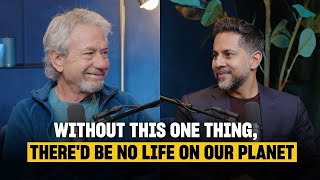
A June 18, 2023 YouTube interview (Ep #014) in which Vishen Lakhiani talks with filmmaker Louis Schwartzberg about the ecological and therapeutic importance of fungi (including psilocybin), and about gratitude as a practical, evidence-backed daily practice. The conversation covers Schwartzberg’s filmmaking origins and projects (Fantastic Fungi; Gratitude Revealed), scientific studies linking gratitude to health outcomes, clinical and anecdotal reports of psilocybin-assisted healing and psychotherapy, and daily gratitude practices and exercises (journaling, sensory awareness).
Questions this video answers
YouTube episode titled Ep #014, created/uploaded June 18, 2023.
gratitudereveal.com (referred to in the interview).
Grateful individuals reported hemoglobin A1C decreases of about 9–13% (as stated in the interview).
He said signing the Founder's Pledge will result in donating approximately $20–50 million upon exit (as stated in the interview).
Chapters
So I had a mushroom trip that probably will end up costing me 20 to 30 million dollars.
I show people reality in my films that they can't see.
Today, I'm thrilled to be joined by filmmaker, photographer and visual artist Louis Schwarzberg. Louis is known for his stunning time lapse photography and nature films that capture the beauty and wonder of the natural world. He's best known for Fantastic Fungi, which is a masterpiece of a documentary. His latest project, Gratitude Revealed, is a collection of interviews with individuals from all walks of life who share their experiences with gratitude and how it transformed their lives. Louis is also a deep thinker and explorer of the human experience. In this episode we'll dive into the science, spirituality and practical applications of gratitude and explore how this simple yet profound practice is can lead to all of us having a far more fulfilling lives. So Louis, welcome to the Mindvalley Show.
It's great to be here with you.
What made you become a filmmaker? Because your, your documentaries are just absolutely mind blowing.
I would say that I was turned on to photography when I went to ucla. I was first actually filming a lot of the student protests, the anti war protests. I was going to be a history a poli sci major, probably wanting to be a lawyer, to fight for social justice, given that my parents are holocaust survivors. So that really I think shaped my, my worldview. And I learned photography to document the protests which was covering police brutality during the anti war movement. But then that turned me on to nature. And when I discovered nature, found my greatest teacher, she taught me everything about lighting, composition, texture, rhythms. Also a portal into universal rhythms that connect to the deepest part of your soul.
What inspired Fantastic Fungi?
Well, when I started filming, when I started becoming a filmmaker, I wanted to shoot 35 millimeter movie film, the highest resolution you could. But that was expensive. It's $100aminute. One of the things I did was I pioneered time lapse, which is now on your iPhone. Time lapse cinematography had never been done before on 35 millimeter movie film. So I had to build motors, retrofit these old cameras. The beautiful thing is that when you shoot time lapse, you shoot like one frame every minute for a flower to open. That means you're not shooting a lot of film. Back then, even in the early 70s, film was $100aminute for film and processing. And I didn't have much money. It did two things. It fulfilled my sense of wonder and it worked out economically because it would take me a month to shoot a roll of film. So I'm trying to answer Your question? What got me turned on to doing fantastic fungi is I started to shoot flowers, and flowers turned me on to doing Wings of Life. It's a film I did for Disneynature where Meryl Streep is the voice of the flower, turning on bees, bats, hummingbirds, and butterflies to come get her to get fertilized. And that intersection, I thought, was the foundation of life on Earth. Because unless you have pollination, you don't get the fruits, nuts, vegetables, and seeds we all need to survive. The intersection between the animal and plant world is what makes life go forward. But then you have to ask the bigger question, always asking the bigger question, trying to unveil the mystery. What do plants need? They need soil. Where does soil come from? Most people don't know that answer.
Where does soil come from?
Comes from fungi. Fungi break down organic matter, including rocks, to make soil. They're the recyclers of nature. Without them, we choke on organic matter if nothing broke down. So fungi, mushrooms, break down organic matter, which creates soil. And without soil, there'd be no plants. So without fungi, there'd be no life on our planet.
And that's how you got the idea to create that movie.
Primarily, it is because as an environmentalist, I want to get people to understand what makes life work. But secondly, also, it is a spiritual journey, because fungi can heal the planet, can heal your body. Things like lion's mane are good for your brain, turkey tail for your immune system. But psilocybin can also shift your consciousness and is being used therapeutically with people that have cancer. And I'm involved in several clinical trials combining my imagery with psilocybin to treat things like trauma and alcohol disorder.
That is another whole fascinating conversation that we can go into. So I know the original conversation here was supposed to be on gratitude.
Yes.
But I want to come back to this.
Okay.
Okay. Now, your latest movie, Gratitude, revealed what led to that.
With my parents being a Holocaust survivor, I definitely grew up wanting to appreciate the little things in life. For them, food on the table, a roof over your head, a steady job. Those were all things they were extraordinarily grateful for. To them, that was heaven on earth. The miracle of being able to have children, that was a miracle, given what they went through in concentration camps where they were given. My mom was given soup that would make women sterile, so she had no idea if she would ever have children. So underneath that lens. Yeah. You appreciate the little things. Well, as I got involved with nature and the environmental movement, it's the little things in life that make the world go round. It's the bees, it's the fungi, it's the microorganisms, it's the bacteria in your body that if you didn't have that, you would be able to digest food. So I love making films not only about the little things, but also about unveiling the mystery. What is the foundation of life? Too many documentaries, unfortunately, look at the top of the food chain. And in order to get ratings, it's all about kill or be killed. It's about survival of the fittest. It's the macho story. And the real story of nature is more about the feminine. It's about relationships, it's about connection, it's about rebirth, regeneration, love, nurturing. Billions of interactions are happening in. In this second right now throughout the world, throughout the planet that we don't notice, that we often take for granted. So gratitude is about being grateful for all of those little things we do take for granted.
But what sparked you to choose gratitude? Of the wide variety of different topics out there, from compassion to forgiveness to meditation to spirituality, why gratitude in particular?
I think gratitude is the umbrella for all of those values. And in the movie, not being an academic exper on positive psychology, I just did these little short stories about courage, about forgiveness, about patience, creativity, curiosity, wonder, connection. All of those, I think, add up to gratitude because gratitude is such a easy thing to do for anyone to practice. Basically, it's saying thank you. Being grateful for the gift we have, that we're breathing right now that I'm talking to you, that my fingers move. I mean, it's so easy to fall into a practice of gratitude. And it stops the negative thinking that we all get, I think, sucked into, especially in today's world. You know, the politics, environmental degradation coming out of the pandemic, this idea of disconnection. It's one of the reasons why I made a movie on gratitude, is because I'd been saving all these little short stories and I couldn't go out and film during COVID But what was the thing we suffered from the most during the pandemic? Think about it. I mean, it's sad that a lot of people died, but everybody suffered from the fact you couldn't go out to dinner with friends or family. Something we always took for granted, that we couldn't get together with our friends.
You're right. There were so many things I realized that we took for granted, that we lost during that pandemic. Now, I read a scientific study that said that of all human characteristics, gratitude is the human Characteristic most associated with overall feelings of well being. And, and there have been so many scientific studies on what gratitude does for, for us. Could you share some of what you know?
Well, there's been a lot of studies as you mentioned, I mean at ucsd, Dean Ornish and the, you know, if people journal, they found out that like they rate their heart rate, the cardiovascular disease would disappear.
If they journal. If they journal gratitude.
Yeah. Basically write down five things you're grateful.
For every single day.
Every day.
And it reduces your odds of heart disease by that much.
Yes, heart disease, people that journal, it helps them tremendously. Just children go to school, helps them improve their grades. Expressing gratitude helps with relationships. You know, it's been, you know, the Greater Good Science center at UC Berkeley has been studying this for decades and have lots of really great scientific data to prove the benefits of gratitude.
You're absolutely right. Gratitude is, is one of the most important things one can do. I developed a type of meditation called the six phase meditation. It's the subject of a new book that recently came out. And a key part of this meditation is phase two, where you go deep into gratitude. There are numerous studies on gratitude all across the Internet. Research.com has a list of 35 scientific benefits of gratitude. Harvard Health has an article called giving thanks can make you happier. Even the Mayo Clinic has a complete list of what gratitude can do to improve your health.
So on gratituderevilled.com with the scientific data we got from UC Berkeley's Greater Good Science center, we have exercises that people can do and you click on one of these values like purpose. For example, if you have purpose, you live longer. And then we show the scientific study that proved it. So happiness shows the evidence that kids get better grades, et cetera. And there's exercises for parents to do with children, exercises people could do in the faith based community as well. And just anyone that wants to practice gratitude, that's incredible.
And that website again is gratitudereveal.com same website where you can watch the documentary now on research.com there's a whole list of the benefits of gratitude and a couple of things you are really, really, really worth knowing about. First, gratitude is powerful for improving sleep. According to Dr. Emmons, gratitude is a great form of medicine. For example, it reduces blood pressure but also helps reduce instances of smoking and drinking alcohol. Susan Pearce Thompson, Ph.D. found that gratitude helps prevent overeating. Gratitude motivates you to exercise more. According to a study by emmons and Michael McCullough, it helped strengthen the immune system. Sued2009emmons, 2010. It helps keep glucose levels under control. According to the study, grateful individuals have been reported to have their hemoglobin A1C levels decreased by 9 to 13%, according to a medical study that focuses on the risk of developing heart disease and risk for death among women. Participants who scored high in optimism only had a 9% risk of developing heart illness. Optimistic women also scored 14% lower risk of dying compared to a woman who scored high in cynicism and hostility. And so, as you can see, with so many scientific benefits for gratitude, this is a really powerful practice with gratitude.
Resilience is one of the things you mentioned. People are always going to have little bumps in their life, you know, and so like, let's say somebody rear ends you and you have a. You know, you can go around for two or three days in depression, or people that practice gratitude that go, no big deal, you bounce back faster. And resilience is something that I love to tell stories about.
Tell me about that.
Well, again, my parents had a lot of love and hope in their lives, and they were resilient, given what they went through surviving Auschwitz, for example. And when I do my films about nature, it's all about resilience. I'm always admiring the fact that the plants that can survive the strongest with the least amount of water that live on the edge of. Like in the Galapagos, there's hardly any water. And you have to admire those plants that are more like desert plants. In a way, they're the most evolved because they've moved furthest away from the ocean where plants kind of came out of. And in a way, being the most resilient perhaps means you're the most evolved.
That's an interesting take on it. Being the most resilient means you're the most evolved. There's actually interesting research on that. People who go through trauma, who go through grief, actually end up more compassionate, end up kinder, end up being gentler individuals than those who do not go through such instances.
You become more grateful. You appreciate, again, all those things that you took for granted. The blue sky, the clouds, the coffee.
In your research, when you were making this documentary, were there any stories of gratitude that absolutely blew you away?
I didn't actually approach it from that angle, like saying, I'm going to make a movie about gratitude and what stories do I need to go out and find that, emulate that? What I had been doing for almost four decades is finding stories of people who had overcome adversity but still had hope and joy in Their life. And that tends to be stories of resilience. Again, inspired by what I saw my parents go through, what I see. People that struggle have a deeper appreciation for the gifts that they eventually are able to attain.
As you produced this movie, was there a shift that happened within you?
Great question. Yes, it was kind of like love that this feeling of gratitude can just go deeper and deeper. And when I would film certain stories, like the rug weaver I filmed in Appalachia was a real powerful story for me. She had her husband plowing the fields outside. And as she was weaving on this giant loom, making a rug by hand, you know, she talked about the fact how he works in rows and I work in rows of fabric going back and forth. It helps her separate the wheat from the chaff and her thoughts. But he goes out and works every morning. And that's called self discipline. And that I need to learn that. I mean, getting wisdom from what you might think as a mountain hillbilly in a red state. What's really, I think, great about the film is I think it bridges that political divide because you see how people who struggle everywhere, who overcome adversity everywhere, who have hope and joy in their life are inspiring and that we are all the same, just different versions of each other.
So when you look at all of these practices of gratitude, plus what you have put into your own life, take us through a day like a regular human's day. How do you see gratitude playing out in the course of 24 hours?
I think as soon as you wake up, what I do is I go to my time lapse studio and I look at the flowers to see if they opened or closed overnight. I squeezed 40 years into 20 hours of film by shooting around the clock, but for the ordinary person, and this is true in Blue Zones. From the research that I've read, people go out in their garden before they have coffee or tea, and they connect with the circadian rhythms, with the organic world of flowers. That to me, is a great way to get started in the morning.
How do you do that?
Just observe. Just look at the color, look at the patterns. If a bee lands on the flower, appreciate what you're witnessing. You're witnessing the birth of life on our planet. You know, the intersection between the animal world and the plant world. It's not sex, right? But they're moving DNA forward. And if DNA doesn't go forward, all of life comes to a dead halt. And that engenders gratitude. You know, when you have the intellectual understanding of what you're looking at. Combined with the beauty. And what's really great is that beauty. Beauty, I believe, is nature's tool for survival because it makes you fall in love with the planet. It makes you protect what you love. We're hardwired to feel beauty. Neither of us went to beauty school. Neither one of us were taught what is beautiful. And even though there are nuances from culture to culture, beauty motivates behavior. Beauty motivates reproduction. Beauty motivates what we care about. That's why puppies are cute. That's why kittens are cute. That's why babies are cute. Because then you have to, like, take care of them.
And there's a great power, you're saying, in observing the beauty of life in the morning when you wake up.
And what I try to do is I try to really understand why do I feel that way? Not like, it's just pretty, which is superficial. Oh, it's beautiful. What is it about that vibration of magenta in that flower that makes me feel a certain way? And I can think about it scientifically, that it's a wavelength of energy hitting my retina, creating electrical impulses to the brain that secretes serotonin throughout my body. It's one way of looking at it, the artistic way of looking at it, is just to feel that color, to understand the differences and the feelings between the turquoise and the magenta, and I just soak up all that color. And to be present with that is really to put you in a moment of bliss. Probably the closest spiritual experience you can have by being present.
What next in the course of the day? How else might one express gratitude?
I just got. I just woke up with the flowers. I think being grateful for the fruit that's on my table, the pollinators that made that fruit, because I have fruit with cereal. And I think about the people who harvested it, grateful for them to people who, you know, package it, and the fact that it somehow miraculously ended up on my table for me to eat. I'm grateful for the experience of my taste buds going crazy, you know, when I bite into the blueberries. And then I think about the fact that blueberries are supposedly good for you, right? Antioxidant, good for the brain. But, God, do they taste good, right? So sensory, immersive experiences is what I relish. And I think we've lost that. I think we don't savor the moment. I think we intellectualize quickly. What does that mean? What is it, you know, what's the analytics around that? But being in the moment, and that's what your sensory receptors allow you to do. And for me, visuals is the most important sensory receptor. 80% of the data you receive comes into your eyes. So we have healing modalities for touch with massage, you know, music for hearing, healthy food for taste. What about vision? What is there for vision? I think nature's imagery is medicine. Medicine for your soul, Medicine for every cell in your body.
Now, what about as we go through our day.
Oh, sorry. And then get us through the rest of the day. I just finished breakfast. Right?
Yes, but what about the people around us?
Yeah, definitely. So go to work. You've got a great team. I've got a great team. Grateful for my editors, grateful for the people that I work with. Total gratitude that I get to be creative with people that share my vision, you know? And I'm sure you experience the same thing as well.
Yeah.
You got so many people to work for you. Right. Grateful for each and one of them, I'm sure, and what they contribute on your mission of trying to make the world more awake, more conscious. So grateful for all the people in my life.
Do you have kids? Are you married?
Yes, I've got two daughters and three grandchildren, a fourth on the way. And yes, I'm married to Sarah. And grateful for those family relationships.
How do you express gratitude for your family? What does that look like in your life?
Giving them big hugs, you know, I like to hug people. I got hugged and I walked in here. Thank you for that. Being present with them, being able to. What I want to try to do, and I'm doing it, spend more time. The greatest gift you can give anyone is your presence. And we're all so busy in our lives that it's difficult at times. Plus, they're busy as well. My children and grandchildren, they got schedules, thank God they're in la. But I try to coordinate as much as I can to spend more time with them.
And then as the day goes. True. You come to bedtime.
Exactly. And then when I go to bed, I think about all the gifts and all the things I was grateful for in that day. I think it's really important for people to just be grateful for the little things. This is not a big philosophical question, like, what are you grateful for? You know, this is simply like the valet, you know, parked my car, smiled.
Right.
Little things is what you really have to focus on. And that's what really makes the world go round. I smile to someone, they smiled back at me. And I think about all those little moments, you know, not that the sun came up and I got all that, like, you know, solar energy on me and on the planet, but the little things that I need to be more mindful about.
So in your life, Louis, what would you say were probably like, three or four of the most special things that you experience in life that you're grateful for?
Well, having children, you know, certainly was magical. And I think when I've had the gift of filming extraordinary and remarkable places, one of the highlights was filming the monarch migration in the highlands of Mexico, being surrounded by millions of butterflies, being able to hear the sound of butterfly wings, that was spectacular.
What documentary is that in?
It's a documentary called Wigs of Life, and you can see it on Disney Plus. You can find the beauty of pollination on YouTube. It has over 30 million views, and it's a beautiful montage of hummingbirds and bees and bats all pollinating flowers, which is the foundation of the food we get on our planet, the healthy food.
I love what you're espousing, Louis. Now, what you're speaking about is so deeply spiritual. But I'm curious, what is spiritual to you? What does that word mean to you?
Life. Life. I want to do everything I can for life to move forward. I want to do everything I can to protect life from not going extinct. They say by 2050, we may lose half the species on our planet. Right? Look at what we've lost. Look at the R and D that went into all of that complex DNA that took hundreds of millions of years of trial and error to get to that point. And we're going to toss that away. We haven't even identified 80 to 90% of the fungi species on our planet, and fungi is the largest kingdom on our planet. So there's a tremendous amount of knowledge that's literally beneath our feet that we need to protect. So my spiritual practice is to protect life, and I want life to flourish. And what is life? Life is DNA going forward. So you could say it's evolution. Life is a force of energy because it's unstoppable.
I really like that definition of spirituality. So I know we were talking about this earlier, and you mentioned at the beginning of this interview that we were talking about psychedelic research involving psilocybin, which is a type of mushroom that can put you into altered states. What are you discovering about psilocybin? I know it's for therapeutic uses. It's now legalized in countries like Australia. It was recently decriminalized in San Francisco. But because it's still not officially completely legal in the United States, there are A lot of studies which we are not able to do.
Right.
But you've traveled, you've probably been to places and met incredible individuals who are working with psilocybin in therapeutic purposes. What were some of the most interesting things you found?
Well, Johns Hopkins, they're one of the leading research centers in America, probably the number one medical school in America. But they've been doing, you know, psychedelic research with psilocybin for decades. So in Fantastic Fungi, we filmed cancer patients that were given a severe diagnosis, and they take psilocybin to help them ease their anxiety. What is remarkable is that they lose their fear of dying.
Really?
Yes. Which is when you think about after.
That, how many, how many times?
One session.
One session, yes. And they lose their fear of dying.
Of dying. So it's bad enough you have a severe diagnosis that your life may be coming to a short end. You know, what do you do about that? And of course, then it becomes the psychological dilemma of, well, what does that mean when I die?
Right.
You know, most people, their biggest fear is dying. Their number one fear is dying. So now you've compound a physical, you know, disease problem that you've got with this, you know, psychological dilemma of what happens to me when I die. You lose your fear of dying because you feel connected to a grand universe when you take a psychedelic journey. You feel love, you feel connection, you feel you're part of this giant or, you know, molecular dance of life. And it's comforting to know that it's comforting to be small in a grand universe, but I think creates this feeling of connection which is also ineffable. It's very difficult to describe a psychedelic experience.
Yeah.
You know, is it God? Is it connecting with all the energy that's in the universe? However you want to describe it, that is the experience. It's a portal into feeling, the energy that's all around us that we normally don't see. And I gotta, I'll share with you that my, my filmmaking was certainly influenced by psychedelic experiences that I had in college because I'm showing you reality that the human eye doesn't see. You know, speeding up time by time lapse. Flowers open and close. They're not static, slow motion shots of hummingbirds. You know, to be able to see the world from their point of view opens up your consciousness to a broader vision that is beyond your narrow point of view. Just as a microscope enables you to look at things in the molecular way, telescope helps you see the planets. Psychedelics can also broaden your worldview.
In addition to removing fear of dying. What are some of the other things that. That psychedelics, specifically psilocybin, has been credited with?
You know, a lot of people have really never had a spiritual or transformational experience when it. When you are opened up in that way and you feel connected to everything, it opens up the ability to look at trauma, to look at things that you've been suppressing for a long time. A lot of people, you know, describe that psychedelic experience, the benefits of it, like 20 years of therapy. You are able to without having to become an expert, you know, guru, Tibetan meditation practitioner. You can almost get similar results in one day. To be able to look at the issues that are buried deep inside of you in a more 360 degree point of view. By being able to do that, you're able to eventually, I believe, move forward. You can look at what is bothering you, what is troubling you. Objectively. Once you can recognize what that is, it's step one, right, for healing. So it's a miracle that it does it. Look, why would the universe and why would nature create a molecule that unlocks the serotonin receptors in your brain, that gives you the ability to feel, you know, have a loss of ego, to feel bliss, to be able to deal with traumas that you might be aware of or unaware of. Is that chance? I think it's beyond mathematical probability. I think plant medicines and mushrooms are speaking to us. And if they're speaking to us, how else could they speak to you? But chemically, they don't have language. Only we have language. You know, the majority of living organisms on the planet speak chemically. You know, you look at ants on the trail. That's not vision, that's chemical, you know.
Yeah.
Everything speaks through what is scent, you know?
Right.
That makes a pollinator go to a flower. Aroma. Everything is chemical primarily as a means of communication. Either, you know, eat me and I'm really good, or eat me and you're gonna get sick and die.
And what you're saying is that mushrooms are speaking to us chemically? Yes, we are literally speaking with life itself. That is such an interesting way of viewing it.
What do you think the message is.
So I can tell you about. I want to share one of my experiences. So I had a mushroom trip that probably will end up costing me 20 to 30 million dollars. Now let me tell you what happened. So it was just before New Year's 2022. I was with a therapist, therapist shaman, who understood how to guide someone on these trips in a safe, healthy way. I Think that's really, really, really important.
Yes.
And I went on this trip, and I suddenly felt like I was speaking to a higher power. Now, being an entrepreneur, what I asked as higher power was, help me refine my business strategy for 2022 so I can generate more revenue and cash flow for my company. Okay. And I heard a clear nope. And I'm like, what do you mean? My company helps millions of lives. This will help millions of lives. And the answer is nope. And I'm like, all right, well, tell me, what am I supposed to be doing while I'm talking to you? And I heard a clear voice that said, don't ask me for help with money, but I will help you with acts of love. And then that voice shut up for a while. And then for the next two hours, intermittently during this trip, I would hear commands. You need to do this to expand your ability to love. You need to do this to expand your ability to love. Some of it was really interesting. One of it, for example, was truly understand your customer. Call and speak to 300 customers before the year is over to understand what they like about your product and what you can improve to make life better for them. That was one. Another one was really interesting. It was super specific. It said, sign the Founder's Pledge. Like, what is the Founder's Pledge? It turns out, is a. Is a pledge that founders of companies signed. It's an organization in Europe, and you basically pledge to donate a portion of your wealth to charity when you have an exit. And so before the end of 2022, I actually signed the Founder's Pledge. And that will. Will mean that eventually, when I have my company exits, I'll be donating anywhere from 20 to 50 million to help NGOs which are working to fight climate change. But that command was so specific.
Yeah.
I could not avoid it. And so that was just one example. So I was joking. I was. I was half jesting when I said, you didn't lose me tens of millions of dollars. But, no, there was something that. It was so real. I felt so good about giving away this money.
Well, you're actually gaining a lot of money because the 80% or 70% that you retain is because you're doing acts of love and kindness. You know, you wouldn't have the 20% to give away if you didn't do the acts of kindness. I interviewed Ben Cohen. I think it's actually gratitude revealed. Asking him, like, what he loved to do from Ben and Jerry's. He's an entrepreneur. He got fired from being a janitor, got fired from being a baker's helper. Then what he really found out he loved to do was eating ice cream. So, you know, had a little shop in the back of a gas station, and they grew that company. But what he said was, you have a successful business when you create a good product and a great service, and you make money as a byproduct of doing that.
Right. And so this. And so psilocybin is one of the things which I hope governments around the world start legalizing, because the research is just insane. And what I shared was just a tiny glimpse. I use it again in a safe, legal way to help with ideation, to help even with designing new technologies, new algorithms, new apps. I've had entire algorithms, including complex algorithms for ideas such as AI human matching, come to me in this state. But one of the most mysterious things which I experienced, and I'm wondering if you might have something similar to share, was a really remarkable healing. I'd injured my shoulder in such a way where for 18 months, I couldn't. I didn't have full mobility on my right shoulder. If I went to the gym to lift weights, my left hand could go up, my right hand could not go up at the same level because of this intense pain in my shoulder. So I was going to schedule an appointment with a doctor to have surgery to fix this pain in my shoulder.
Right.
And then I heard a story from a friend of mine. She had done psilocybin, and while she was in meditation during psilocybin, she had a. A growth in her cervix. And she saw this tumor literally float up above her body and leave her body, and she just knew it was gone. She was scheduled to go for surgery to have it removed. Three months out, she called up the doctor, the doctor examined her. This was a few days after the trip, and it was truly gone. So when she told me that, I wondered, could I do the same thing with my shoulder now? She was healed in. She said one day. Right. I was slightly skeptical, but again, I wanted to try it. So I went on a trip with the purpose of healing my shoulder. I woke up the next day and went to the gym. And for the first time in 18 months, I could lift. I could do the shoulder press again.
Yeah.
The pain was completely gone. It's now been. It's now been a year since that incident. And again, no more shoulder pain.
Right.
So I. I don't. I can't explain how this happens.
Well, I had a similar shoulder problem, and I Had the same intention. I heard about that for about a year. My left arm was just getting like a buzz, like my arm was falling asleep, you know, really annoying for a year and a half. Went did the mri, you know, they found out there might be a pinched nerve in my neck. They were going to, you know, give me shots in the neck or want to do something more invasive next. But I went on this psilocybin journey and I asked for that to be healed. And it was. And here's why I think it works. First of all, there's a biology belief, you know, where you got a trillion cells in your body that are working in harmony. What if miracle that is, that you don't have to manage that, right? How does that happen every day? But the other thing is when you think about mushrooms, they're famous for Myco remediation. What that means is they clean up toxic oil spills, they clean up pollution in the ground by breaking down these complex molecules and they figure out what to do and they, they make life come back, you know, and so I think they travel through your body and they know what needs to be repaired both physically and psychologically. That's the gift of what I think they offer. I mean, how do they know what to fix in the soil, right? They do. Wherever something is toxic, they will go to it and they will break it down.
Yeah, it's, it's fascinating. Fascinating what, what, what's going on now? What about neurogenesis? I saw this image from Dr. Jackaloka. An MRI scan of a person's brain is showing how the brain completely lights up, right? These areas of the brain get lit up and connected under psilocybin. That, that's fascinating, right? It could be that maybe it's also doing something to our brain and giving us access to a higher level of intelligence for us to solve some of these problems. Maybe that is what I was talking to when I was told to give money away to the Founders fund.
Yeah, well, I think what would it also it's like filters are being removed. It isn't like you're going to a higher place of elevated consciousness or elevated communication. I think what's happening is that the filters are being removed. I mean there's energy happening out here right now. We don't see it. I have cameras that can show you what it looks like. Infrared, slo mo, time lapse. I can show you things that your eye isn't seeing in terms of light energy so that when the filters are removed, we're actually seeing reality. I Mean, I show people reality in my films that they can't see. It isn't like I'm Deepak Chopra and I'm talking about stuff that's very esoteric. And then you have to really focus and follow the logic of the words that gets you through this place. I mean, if I told you I want you to stare at a rose for like three days to watch it open, you wouldn't be able to do it. You'd blink, you'd have to go to the bathroom, you'd fall asleep. I can show you what that's like. And for you, that could be a transformational experience.
Right, so it's removing some filter and giving us access to true reality that we cannot see with our eyes.
Exactly. I love making the invisible visual. Yeah, that's what I love to do with films. That's why the psychedelic trips that I did early on has certainly influenced the films I make.
What are your thoughts on. On mushrooms? Psilocybin as a way to heal or recover from ptsd?
Well, I definitely think it's a valuable tool because we just finished a clinical trial here in Santa Monica at the Pacific Neuroscience Institute, treating patients with alcohol addiction. They get psilocybin, a pharmaceutical quality dose. And then I did a 30 to 40 minute video that they watch as they're slowly coming on. And the video is nature's energy and rhythms and patterns to feel connected. The data is being analyzed yet and we haven't published it, but I can tell you that it's very positive that the combination of the visual imagery with. With psilocybin creates better results for the patients that are in the study. And it's kind of weird that we have a Schedule 1 drug being used to treat people on alcohol addiction. And alcohol is by far the number one biggest drug problem we have in terms of people dying, accidents, you name it.
Yeah, yeah, you're right. Yet alcohol is completely legal. And mushrooms, it's off the chart. Yeah.
The number of victims from.
Exactly. And. And mushrooms are still illegal. But a lot of that comes from bad governance. A lot of that comes from bad government policy and billions, billions of dollars.
Of marketing advertising that tells you should drink alcohol if you want to get a cute girl or, or be successful or be a great sports athlete.
And many governments, or many people who work in governments mean well, but they confuse psilocybin with really hard, dangerous drugs like cocaine or heroin. They think it's the same thing when it's completely not. What I'm starting to see amongst people I meet, particularly in places like California or Colorado, where these things are more acceptable is that many young people choose to take a little bit of magic chocolate, which is chocolate infused with a little bit of psilocybin when going out and not alcohol. Alcohol consumption amongst the younger generation is actually falling. And I found that I participated in this as well. The feeling that you get is unbeatable. You do not even feel like you need a drink, but you feel so open, so loving, so good. You are in full control of your faculties and senses and you wake up the next day and you have no hangover.
Totally.
And also there's hardly any calories in that.
Well, so we've got 60 universities right now that are studying the therapeutic, you know, benefits of psilocybin, which is safer to say than LSD because it's acid. It's got more baggage, but it's great. Harvard, ucla, Stanford, Yale, all these, you know, top universities are doing studies. What's odd is it like, you know, let's Silicon Valley. You got people that are microdosing for the purposes of, you know, wanting to make more money or having, you know, breakthroughs in terms of software engineering. I think that's a little odd because of the fact that it, the goal shouldn't be to make more money, you know, with these sacred plants or sacred fungi. But that is a phenomena. I think it's pretty obvious, everybody knows about it Forbes, that people microdose like crazy.
Yeah.
You know, in order to get ahead of the game.
But on the other hand, anything, I don't think there's anything wrong with that. John, John Butcher, who is a well known entrepreneur who teaches in the mindvalley platform said any Silicon Valley CEO who is not experimenting with plant medicine is at a competitive disadvantage.
That's great, that's great. Well, Steve Jobs, you know.
Yeah. I mean, the same thing, right?
Yeah, exactly.
You know, when do you think these.
Well, one thing's important to know. When this thing got shut down, it was Richard Nixon that, you know, declared the war on drugs. Psilocybin was never a drug, it's a mushroom. Okay, number one. But it was a way to retaliate against his political enemies, you know, the anti war protesters, the hippies, people of color. And we have suffered the negative results of that since it shut down all the research that was happening at Stanford and at Yale. That's why Timothy Leary broke out and then it kind of escaped the lab. This was the most promising research that was given to scientists to help them with breakthroughs in scientific research when they were Stuck. Where did the. You know, was it Wilson and Crick? They invented the spiral helix for the. For DNA that was on an acid trip.
That's amazing.
It legitimately can be used for scientific breakthrough because you're able to see things differently. That's such an important part of being an entrepreneur, of being an inventor, of being an artist.
I think we're gonna see psilocybin legalized pretty much across most progressive countries in the world within the next 10 years. The benefits are just so remarkable already.
In Portugal, Jamaica, countries in South Australia. Australia. Yeah. And then cities that have decriminalized it, obviously. Denver, Oregon, the entire state. But again, it's for. It's following the footpath of. Of cannabis. But it's got way more potential because with all the studies with cannabis, they haven't found the therapeutic benefits.
Exactly.
That the, you know, psilocybin has.
Yes. And cannabis can actually hurt the brain.
Right?
It has. It does have some negative health effects. But with psilocybin, I mean, if it does have negative health effects, we will know eventually when. When it becomes legalized and it can be put under scientific scrutiny. But right now, what we are seeing is that it's just a really remarkable tool for people to heal, to reverse trauma, to discover themselves, to open their eyes up to spirituality. So thank you for sharing that with us.
Yeah.
We were told at the start of this podcast, don't stop talking too much about psilocybin. It became the focus of this podcast, and I think. I think that's okay.
I think it's great. Listen, a lot of people have asked Louis, why did you make a film about gratitude after Fantastic Fungi? Because Fantastic Fungi did trigger a movement. You know, I showed how it can heal the planet, heal your body, and shift consciousness. And because of that, every day, I mean, I get people telling me, thanks. Thank you for your movie. You enabled me to have a conversation with my parents, with my. With my family, with my coworkers. Otherwise, you get fear of being ostracized. Well, so we created a movement there. And in gratitude, the connection to that is the fact that, for me, Fantastic Fungi was a journey, a portal into the mycelial network underground, looking at a shared economy that makes ecosystems flourish without greed. When you see that, then the big question is, what do you do about that? How do you integrate that wisdom and knowledge into your life? Well, that's what integration is all about. And gratitude revealed is the integration. It's taking that wisdom and asking, how do I take that and make that a journey into my soul? How do I become the Jedi Warrior? How do I become the peaceful person inside of me in order to fight the good fight, in order to do the things I want to do, Build businesses, heal the world, create goodness, show love. How do I do all of that? Well, you have to start by being really clear inside of yourself. And psychedelics enable you to do that. Music enables you to do that. Beautiful imagery enables you to do that. There are many portals into the divine. Psychedelics happens to be one of them.
Thank you, Louis. That was beautifully said. So go check out fantastic fungi and gratitude revealed. Thank you, Louis.
My pleasure.
More from Vishen






Brown Noise for Deep Focus and Concentration (Best with Headphones) | Gabriel Loynaz



Your Appointment With the Eternal | Guided Meditation with Michael Bernard Beckwith