Ep #018 | Viome’s Naveen Jain on Raising Kids With Values and Building Life-Changing Companies
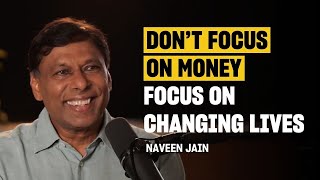
A recorded interview (Mindvalley podcast) in which Vishen Lakhiani interviews entrepreneur Naveen Jain about his parenting approach, how he raised three entrepreneur children, and his methods for building mission-driven, high-impact companies. Key themes: taking children into real work environments to model problem-solving; insisting on obsession (not mere passion) to solve billion-person problems; the storytelling frame for fundraising (Imagine → What if → It turns out); and company examples (Viome, Moon Express, Bilt, Evvy) illustrating those principles.
Chapters
A few years ago, I sat on the board of the XPRIZE Foundation. Now, at one of the many XPRIZE meetings, I bumped into this Indian man who would speak with such incredible confidence that when he opened his mouth, everyone else would listen. You know, I talk about this idea called the Buddha and the Badass. This man is like a badass Buddha supreme wisdom, but an utter badass who rattles and shakes the world. When I got to know this man, Naveen Jain, I began to understand how this type of thinking, call it chutzpah, call it boldness, call it ironic thinking. His unique style of thinking was actually leading to a style of entrepreneurship that was creating companies that people wouldn't stop talking about. Naveen went on to create Moon Express, and he became one of the only private individuals in the world to gain permission to land in the moon, even landing a $2.5 billion contract from NASA. Naveen went on to found Viome because his unique level of entrepreneurial thinking started imagining a world where you did not make money from sick care, but you made money by keeping people healthy. Something so opposed to how traditional big Pharma works. But it's not just Naveen. It is his children. His son, Ankor went on to reinvent the way rent is paid, founding built in the middle of a pandemic and raising hundreds of millions of dollars for a company which went on to be valued at over a billion. His daughter, Priyanka built an incredible company that uses artificial intelligence to understand and help create healthier vaginal microbiomes. Naveen and his entire family uses this unique way of looking at the world, of understanding the world's problems, and then of launching ideas and innovations that create billions in value that people won't stop talking about and that have also create incredible shareholder wealth and incredible success and wealth for themselves while changing the world. So welcome Naveen Jain to the mindvalley podcast.
What an honor. Vishen, every single time I sit down with you and I find that this energy that we create together is something that needs to be shared with the world and the wisdom that I have learned from you over the years. And I just want to thank you for what you do.
I appreciate that you are too kind. So I want to start with a quick story, Naveen, because I mentioned your son Anko. And congratulations to Anko, because it's all over the news. Built is such an incredible success. Viome, your company has become such an incredible success. Using artificial intelligence to test your gut microbiome and then create customized supplements. Both you and your son are incredible American entrepreneurial pioneers. But I remember a funny story you told me about how you raised your children. And that story changed my life because based on that story, I changed my parenting style. Tell me the story of Angkor and what you did with him when he was 6.
Well, so first of all, there's several things that parenting is so counterintuitive. Everything we believe we are doing for the good of the children actually turns out to be extremely selfish thing to do for our own benefit rather than actually helping the children really grow up to be very contributing, great, contributing society. What do you mean by that? One of the biggest mistakes that parents make is actually step out of their work and want to spend time with their children.
Wait, you're saying the big mistake parents make is they step away from work to spend time with their kids?
Yes, and here's why. Because the kids, look at them sitting at home watching tv, waiting for the kids to come back from school so they can be entertained. Right. As opposed to teaching the kids that starting another business and doing something that can improve people's lives is a lifelong journey. That means just because your one business has been successful, you have enough money, doesn't mean you get to sit down because it's not about making money.
So are you saying that we shouldn't have any rest time? That our kids should constantly see us working?
Well, it's about them seeing that you work. What is it that you're obsessed about? So one of the things, another things I learned in life is passion. We all parents talk about finding the passion for our children. Passion is for losers. Passion is for hobbies. The real winners have obsession to solve problems. So imagine you are spending time with your children because you believe that's what they need to see you do. What they see instead is when they go to school. They see you sitting at home doing things, household things, watching tv, making breakfast. They come back from school, they see you at home watching tv, doing things. When they grow up, they want to be just like you. Sitting at home and doing household things. Right. They don't see you changing the world. So when you want your children to go out and do things that can fundamentally change the way people live their lives, they don't see you see you do that unless they go with you to work and see what you do. What is it that drives you? Why are you so driven to make a change?
Wow.
Okay.
That's a really counterintuitive point. Because on weekends when I have my kids with me, I try not to work. I don't show them what I do, I sit down with them and we will watch Cobra Kai or we will play around with chat, GPT and storytelling. But I don't show them my work. And what you're saying is that's actually wrong. I should be showing my children how I work. My kids should be seeing me work. Doesn't that make them feel like they're not as important?
Well, actually, other way around, they start to see that the work they do is important. And the work that my dad does is so important. And every minute he spends with me is the most important thing he has in the world. So even if you spend half an hour with them, they know that's the most important thing. My dad has that half an hour of his time that he's giving me. So what I did was I took our children by the time they turned 6 to 10 to start taking them to the office. I took them to every business dinner. I took them to the board meetings. I took them to the analyst meeting. I took them to the meeting that I knew were going to be the toughest meeting. So they can see dad getting frustrated and not having an answer to problems.
Wow. Okay. So that part I didn't know. So I want to share with the audience a story Naveen told me 10 years ago, possibly maybe around 2013. And that story shifted the course of my life in some way. I asked you how all your kids were so successful and you told me about how you would take Angkor when he was six years old to networking events. And because what did you say about the impact of that?
Well, first of all was him learning to talk with adults. As an adult, there was not things he could not talk about. He was no longer a child. He was actually learning how the world actually works. In fact, I'm going to tell you some story that I've never shared is he actually started to teach me how to do it better. So he's now 15 or 16. I am at Bill Gates CEO Summit. Every CEO that you want to know is there. And I'm meeting Ratan Tata and what do I do? I go to Ratan Tata and say, Mr. Tata, I want you to know that I used to work for you. I'm so happy to meet you. And all he could was thank you, thank you, thank you. And I walked out. Ankur Stern came, my son. He goes to him and says, Mr. Tata, you are very successful. I have started an entrepreneur club where I have other 16, 17 year old who would learn to love from your wisdom. Would you have time 30 minutes to talk to me and see how you can engage, engage with that. Mr. Tata said of course I would. Would you come back at 9:30 and let's figure out how we can do that Now I'm like surprised that I would have loved to spend that half an hour with Mr. Tata and here he was 16 years old and he was 16. Yeah. And you know what he told me? He said dad, everywhere in the networking when people go there trying to praise the person who is there and all the other person can say is thank you. You didn't give them any chance to actually ask them them that you need their help. I went and said I'm not asking for help for myself. I am asking a help for someone else and the other children who could benefit from his presence.
Wow, that's a really, really, really important tip. So 10 years ago you, you describe situations like this. You told me about taking Encore when he was 6 to these, these incredible meetings. And let's keep in mind Anor was on to do so many amazing things. He started the Cairo Society which unites the top students from universities around the world. He went on to start built and many other companies in between. Now because of of Naveen's that vision that Naveen put in my head, I started Mindvalley University which is basically one of the world's only conferences where adults go with their kids. And I started this because I wanted to expose my kids to brilliant adults. And today Mindvalley University is one of those events, I started it in 2017 where incredible entrepreneurs come and they bring their children with them and we all help elevate each other's kids as well as each other. But that idea was sparked because of the conversation we had because I went and I tried to search for events that would allow children. There were so few of them and so I created one. But thank you for sparking that idea.
Well, first of all Vishen, I mean you have done some amazing things and these are, this is just one of the examples. Right. If you start to think about how you have taken your children now on the journey beyond that, the first thing is you don't just tell them what to do. You ask for their opinions, them thinking that they, what they think matters. Right, right, right. Other thing that you have to do is separate that your love for them. So what we did is when they were young we would do couple of things which I think are another counterintuitive. But most parents read story to their children. Right? Now reading story to the children is great but you're not helping them actually develop. So I created something totally different. I would ask them to tell me a story and I would pick up objects that are completely disconnected as far as possible. So I would say, tell me a story about ocean and a monkey and a stone. And that allows them to think that how can we connect these things that are so desperate? But in their brain now, they started to realize that everything in the world, every dot, can be connected. If they think hard enough, then their job was to say, dad, now you tell me a story about these three things in their mind that cannot be connected, and then I will connect them together. And that's how we started to learn that everything in the thing in the world is possible, can be connected if you actually think differently than everyone else is thinking.
I love that. And based on what I learned from you, I started bringing my kids to conferences. So I'm sure you guys noticed this weird golden tattoo on my bicep. We are here at a fest recording in Katahe. Now, last night we had this incredible party for all the Mindvalley members. And I was at the party with my daughter until like 12:30am and it was a little like Mindvalley tattoo boot. These are the Mindvalley wings. And my daughter slapped this on me. And obviously I'm not gonna say no when my 9 year old daughter wants to tattoo. Totally forgot I had a podcast today, but I'm going to keep this on and you guys now know the story behind this. But again, the fact that I bring my kids to these conferences and I was just attending a talk with my kids and my 9 year old was as best as she could trying to understand what the speaker was saying. It was so cute. But I learned that from you, so thank you. Now let's talk about entrepreneurship in general. One of the things that's really amazing about you is you get really high valuations for your company. You get people paying attention to you when you speak. And it has to do with your way of speaking about change and speaking about what you want to do. Tell us about that.
You know, life is all about storytelling. And most entrepreneurs always want to explain what is it that they do. And they think the investors want to know about what they do and how that business works. What really the entrepreneurs need to really rethink is that investors want to know what is their moonshot? What would the world look like when they are successful? So I always start in saying, imagine a world where this is happening. So I start in saying, when I am successful and there is no doubt I will be, God forbid, if I'm actually successful. This is what the world is going to look like. And I describe that world and then I say, this is what I'm doing and here are the steps for me to get there. So I give them the path to get there. But I'm being valued from my moonshot. What if that is possible? And those are the things I always use in storytelling is imagine. And imagine is the most powerful word. The reason is so powerful is when you tell someone to say imagine all of their preconceived ideas go away. I can now fill in your mind with anything I want as long as I can make it visual. That means I have to describe the world in so much detail, so much vivid color, that you can start imagining it. Because when your mind starts to imagine it, it starts to believe it is real. Because that's how we are taught. Because we only see things that are real. And now I'm seeing this thing, it must be real. So suddenly the word you created for them is real for them and they're willing to invest in that world.
That's beautiful. I wish I had done that in, in, in some of my presentations. So take us through this as an example. When you created Moon Express, right, to land a robot on the moon, what was that statement?
We never said it is about landing on the moon. We said going to the moon is simply a symbolic exercise to show what entrepreneurs are, you know, what entrepreneurs can create, what is possible when human mind wants to do something and it is about saving the humanity from potential extinction. Because all 8 billion of us are living on a single spacecraft. And what if our spacecraft got damaged because we got hit by an asteroid? Just like dinosaurs, they were substantially larger species. They all became extinct because an asteroid hits hit the planet Earth. Now imagine if that happened to us, we as humanity will get wiped out. Why wouldn't you want to distribute humanity on multiple planets? The moon is a first stepping stone. Then you want to go to Mars and Venus. Then you want to go beyond our solar system into a different galaxy. And then you want to go from different galaxy all the way into possibly in different universe, right? And go into a multiverse. So you're able to distribute humanity so you can save our species from not becoming an xt.
I love that. So that was the pitch for Moon Express. Now tell us about Biome. Well, first for the audience that doesn't know Biome, give us a really quick idea of what VIOME does.
So Viome started with a simple belief. What if we can understand what changes in the human body when we start to develop any of the chronic diseases, whether it's a heart disease, obesity, diabetes, depression, anxiety, cancer, aging. Why do we age? And what if we can understand what changes in the human body? Because once we know that, we can potentially find a way to prevent it, stop the progression of it, and potentially reverse it.
So Biome does a form of testing through saliva, through stools, and through your fingerprint blood. Your blood, right? And then tell us what it gives you.
So basically you get a kit at home, so you can go to ym.com, get a kit at home, and you spit in a tube, and then you get a fingerprint blood, four drops of your blood and a touch of your stool. And we analyze everything in your body. So in your blood, we are looking at all of your human gene expression. So we are the only company that looks at the gene expression, not your genes. Remember, your DNA never changes when you become diabetic or you have depression. In fact, even when you die, just.
Different genes are expressed, different genes are.
Expressed, which is what makes you old, even though it's the same DNA. So we analyze everything, then we tell you what is happening in your body. What's your biological age, which is really not how old you are, Calendar, how old are you inside your body?
And then you get the right supplements.
Then we actually tell you what foods to eat and why, what foods you should not eat and why. Because there is no such thing as universal healthy food. So broccoli can be good for someone. It can actually be harming other people. So if you have high sulfide, you shouldn't be eating broccoli. Spinach, you shouldn't be eating spinach if you have high oxalate.
And I'm a Biome customer and full disclosure, I've also invested in Biome, but Biome is a great product. Now I want to go to the Imagine concept, right when you were selling Biome to investors, what was that picture you painted?
First of all, every one of our kids has this tagline, Imagine living in a world where illness is optional.
I remember that you even put that on your kid. Love it.
Now, our thing was very simple. Today, medical industrial complex, everyone makes money when you are sick. And our concept was, what if we can create something where you actually, as a business, make money when people are healthy? Because everyone in the medical industrial complex wants you to stay sick, but you don't want to be sick. And what if we can go direct to consumer? That is the pain point. They have because they are sick and tired of taking a medicine for rest of their life because they have diabetes or because they have heart disease, or because they have depression. And these diseases are constant diseases that rest of your life you'll be taking a drug. And we say, what if we can actually stop that?
I remember reading a quote, until we can make more money from curing cancer than treating and maintaining cancerous society, there will never be a cure for cancer.
And that is fundamentally true, that I'm not suggesting that people are evil, but.
The incentives are not aligned, the algorithms are not aligned. Yes.
And that's a fundamental problem.
Love it. Okay, so this, this tip is really powerful for everyone who's an entrepreneur. Imagine, right, imagine what the world would look like. Gosh, I wish I'd interviewed you. So mindvalley, after, after many years of running this company as a private, as a private enterprise and getting to over 100 million in, in revenue, we finally decided to go forth and raise our first investment round. I wish I'd spoken to you because that imagine tip is so powerful. And here's which, I'm gonna try it on my next investment.
But here's one something, my first slide after that is what if? And really says what if we can understand what changes in the human biology that causes you to develop these diseases. That was what if? And then say the next part is it turns out you can actually do that. If you can collect massive amount of data that actually is a dynamic data on a large population, we can use AI to be able to actually understand what is going on. So I describe the imagine, then I say, what if this was possible? And then we say it turns out it actually is possible by doing this. And now suddenly I showed them the path idea of giving them actual step wise, not only giving them the big vision, then we showed them this is what if this was possible. And we showed them what, why it is possible. And this is how we are starting to actually get there. So they have a complete picture of how we're going to get there.
So if you're painting the picture for your business, it starts with imagine.
Yes.
Then it is what if.
Yes. And it turns out.
And it turns out, yeah, imagine what if. And it turns out, which is this, this new truth or this new solution? It turns out we can do X with Y. Beautiful. Okay, now could you. So we, so this really sinks in. Could you take, take us through this for Built, which is your son's company.
So at Bilt, my son Ankur started Built Rewards with a very simple belief he said, imagine a world where every renter feels they're being rewarded for actually being a renter. Because today everyone feels they're jumped, they're stupid, they're wasting money just simply renting. They're not getting any closer to owning a home. They're not getting any closer to actually even enjoy the benefits of points that you earn. You earn points on eating out, you earn points in filling gas, but you can't earn points on paying rent. And the reason is because landlord has no incentive whatsoever to allow a payment on a credit card because it costs the landlord 2 1/2% or 3%.
Right.
They have no incentive to do that because they know you have to pay the way they want it. And he realized that what if that could change? So he really said, what if the credit card companies would waive the credit card fees for rent payment? That will allow them to now have $660 billion worth of payment going through that. And that will allow every renter, every landlord to push the credit card as a default method of payment. That means the cost of acquiring a customer will go down to zero. And instead of spending 5, $600 acquiring a customer, they could just waive the fee on a rent and that will be cheaper for them to acquire a customer just by waiving the fee.
So the imagine, yeah, the imagine was.
What if the renters can be rewarded for renting and the landlords can actually get the payments faster and fundamentally changing.
With no credit card fees and then. Got it. So that was the imagine and then the what if. Yeah, so what if was that explanation?
Yeah, what if was what if the credit card fees could be waived to. Right. So that, so that every renter would want to actually earn point. Every landlord would want to actually use push renters to use the credit card so they can get the money faster and actually have a guaranteed money.
I love that. I love that. So, so, and what is the valuation of Bilt?
So Bilt, actually in this market where most entrepreneurs are struggling to raise money, remember this is now we are talking in early 2023, right. Nobody can raise money. He raised 150 million at 1.5 billion valuation for a company that's seven months old already, processing billions of dollars in transactions already.
That's incredible. Seven months old company with a valuation over a billion. And that's your son. Encore. And I, and I know Anko, what an amazing, what an amazing guy.
You know that kid, when he's grow up, he saw me, he start not just the first company that became widely Successful dad could have sat at home. Instead, dad decided to go to a second company and a third company. And then he saw dad doesn't care about money. He wants to continue to solve the big problem. Dad is going to the moon. Ankur says, dad, you're crazy. No private company has ever done that. You cannot do that. And showing that it is possible, dad is now 58. Dad wants to start a healthcare company. Dad, it's time for you to retire. No one changes health care. Just you're going to get bloodied. It's a time for you to go ride into sunset. Well, looks to me you haven't learned the lesson. Just let me show you how it is done right now. Guess what happened. When they see that their fundamental mindset changes, everything is possible. And here's the thing that you will learn best about the children. Children think the parents are complete morons. If my dad can do this, I can do it 10x better.
So what you're saying is we owe it to our children to do great.
Things because that's how they learn. And by the way, he went to Wharton and came out becoming an entrepreneur rather than a finance guy. Our daughter Priyanka went to Stanford. And you know, again, this is another counterintuitive story. When she was 16, she came to me and said, dad, I know you love science and technology. I have no interest in science and technology. I have found my passion and I'm going to pursue it. And most dad will melt away and say, sweetie, whatever is your passion is, I'm going to help you get there. That's not what this dad did. This dad says, what did you do? Dad says, you're too young to have a passion. Dad hasn't done his job yet to expose you to other things that you don't even know what they are. You have no right to tell them you don't like something unless you know what they are. Instead, I told her, sweetie, I want you to go to Singularity University to learn about nanotechnology. I want you to learn about neuroscience. I want you to learn about genetics. I want you to learn about artificial intelligence. And she rolled her eyes and said, dad, you don't hear a word I'm saying to you. I have no interest in that. And I said, sweetie, all I'm asking you is go with an open mind. Wanting to like and wanting to. To learn. And once you are exposed to it, you come back to me and say, whatever decision you make, I will support you. Because now I have exposed you to the things that you should be. She went to Singularity University, comes back after two weeks and says, dad, I have now made up my mind. My first words were, oh. And I said, sweetie, I've given you my word, so tell me, what would you like to do? And she said, dad, I've decided I'm going to be a neuroscientist or genetist. I say, sweetie, at the risk of you changing your mind, can you tell me what happened? She said that you're so dumb. I'm in high school. I go to these classes in science. I mix things, change color. I'm learning about these things. I'm thinking, why would I ever use these things in my life? Why do I even care? And suddenly I realize the science and technology are simply the tools for me to do what I wanted to do. I always wanted to help girls and women, and now I know how. And guess what? She went to Stanford, became a Stanford Stamp Fellow, Stanford Mayfield Fellow. And she did the first company using AI to remove gender bias. And now she started the second company during COVID just when Ankur was building built it started Evvy, which is Evvy, a women's health company with a simple belief. She says, until 93 women weren't even allowed to be in the clinical research. That means every drug the women take today have never been tested on women. And no wonder they don't work for women. They have more side effects on women because they were never tested on women because they were considered a small man, Right? And that is fundamentally a child who wakes up and says, I can change the way things are done. If my dad can do this, I can do it better. Right? And that didn't stop. Now we have a third child named Neil. Now Neil is obviously growing up watching these two amazing siblings, and he's thinking, oh, my God, how am I going to top that? Right? He went on to say, dad, I think I'm going to look at the world very differently. And I remember when he was writing an application for Stanford, he has gone to, you know, singular to university, learning about neuroscience. He's going out and doing the works in almost every different things, and now came to write the application. She said, dad, I don't have anything single thing that I can describe. This is what I'm passionate about, and this is why I should be at Stanford. And I said, you forgot this art of storytelling. I said, when you were young, remember, everything can be connected. And suddenly he comes to me, said, dad, I know exactly what to do. I'm going to talk about me being that him being an intellectually curious person and that's why he did all the different things that didn't look like could be connected, but how everything, when they connect, you can solve the problems that were unsolvable.
And what did Neil end up starting?
Neil went to actually Stanford again. He became a Schwarzman Scholar and he actually now working on a company that completely rethinks how mortgage payments are made. So my dad, while the oldest sibling is looking at the rent and he's saying, hey, the people who currently own home, what do they hate most? Making payment because your loan is constantly being resold. And he said, what if we can change that? Right. So fundamentally rethinking everything that is done.
And how old is Neil?
Neil is now 25.
25. That's incredible. Absolutely incredible. Well, you are a great father and your wife Anu is a great mom. So kudos to you guys. And as I'm hearing these stories about your kids, there's also lots of ideas here for aspiring entrepreneurs and existing entrepreneurs who are watching this. If you could break it down, if you could give advice to people who want to be an entrepreneur or want to scale their business to hundreds of millions, what are some of the key ideas? Unconventional truths. Naveen, you're famous for unconventional truths. I don't want to hear common wisdom.
Absolutely.
I want to hear Naveen Jain's unconventional truths for entrepreneurs.
So number one thing I find is passion. Passion is for losers. Passion is for hobbies. The real entrepreneurs have obsession. Obsession not for things or people. Obsession to solve the problem.
How is passion for losers? I mean, don't you need passion to love what you're doing?
The point is passion is weak, weak thing. Because every time you run into a obstacle, you back off and you find a new passion until you have such a true obsession to solve that problem that you go to bed thinking about it and you wake up in the morning thinking about it. Right? And there is a couple of ways to find what you're truly obsessed about. Number one is when you wake up in the morning and if you don't jump out of the bed, even if it takes you two minutes lying in the bed, you're not jumping out of the bed. You should quit what you're doing that day and find something that's your true obsession, your true North Star. Because when you find your true purpose in life, you never lie in bed because you wake up with joy. You wake up that you're doing God's work and you want to pursue that, right?
So what you're Saying is that passion is for wimps, right? Passion is something we do, but it's often a hobby. Yes, Obsession is then what?
Obsession to solve problems is what drives us. It doesn't matter what obstacle we run into. We step back and we say, obsession is relentless, relentless pursuit of purpose.
Because we want to create something that can make a dent in the universe.
And more than that, we know to make a dent in the universe, you have to improve people's lives. That means if you can find any problem that helps a billion people live a better life, you can create a $100 billion company. You don't wake up in the morning and say, what should I do to create $100 billion company? Because making money is a byproduct of actually doing things that improve other people's lives.
So be obsessed, be obsessed, obsessed about.
Solution to a problem that you care about.
So what is Naveen Jain's second unconventional truth?
For entrepreneurs, making money is like having an orgasm. That means when you focus on it, you're never going to get it. The only way to get orgasm is to actually just enjoy the process of doing it. Right? And that is how making money works, is that you go out and do things that you truly care about. And it's not about finding the purpose of life, it's finding the purpose in life, finding the meaning in life. That means enjoying the things that you're doing and being totally obsessed about it.
I love that. Okay, so making money is like an orgasm, right? It is the journey and not the ending.
That's right. When you focus on it, you never get orgasm. That's just amazing. Point.
So I noticed that in all of the companies that you and your kids started, there was always this greater social good, right? Whether it's optimizing the way people pay mortgages, giving rewards to people who are paying rent, giving people a healthy gut microbiome. Amazing. I love that. So your entire family is focused on solving grand problems that can impact a billion people or more.
Well, that's the thing. Because, you know, if you can anyway help a billion people live a better life, you can create a 100 billion dollar company because that's a byproduct of it.
So the third unconventional idea.
Yeah, the third idea that I really find fascinating is people believe they want to live a stable or smooth life. And what I find is that actually you have to feel you're alive. And the only way you know you're alive is you have a heartbeat that goes out up and down and up and down. And when it's flat, you're dead. So anytime you're looking for a smooth life, you're asking to live a life of a dead person. And this ups and down tells you you're alive. So when you are down, all you have to do is hunker down and know the next beat is going to be up. And when you're on top of that beat, never become too arrogant. Because always remember, the winter is coming and winter shall come. Embracing the ups and downs, embracing the failures when they happen. It's about not really looking for something to go in a straight line up or looking for something to stay smooth. Life. It's just embracing the failures.
So what you're saying is that life will have its ups and downs. Embrace the downs, embrace the downs. Because that is what life is. Life isn't meant to be a constant.
Because if it is constant, you're dead.
Right? Right.
So imagine most entrepreneurs looking at this thing, well, this glass is half empty or half full. Well that is not the point. The point is do we want to fill this glass or not? Is this glass even worth filling? Because what you're saying is that is my time worth it to be spending a decade of my life trying to pursue something that I may end up regretting? So my goal really is to find out should I even be spending my time filling this glass rather than focusing on is this glass half empty or half full.
So it's pick the right drink, pick the right drink. I love that. I love that. So while our obsession is important, we have to choose carefully the glass that we want to spend a decade or so filling. So let me ask you this question, Naveen. What is success to you?
Well, success to me is really about how many lives you have actually improved. Improved. So most people define success as how much money they make or how much their bank account is. To me, I always told our children their success will always be defined by how many lives they have improved, not how much money they have in the bank. And their self worth never comes from how much you own. It comes from what they have actually contributed or created. And if you have not created anything and you still own a lot of, you're simply a parasite on society.
But what about trust fund kids?
Well that's my point. So trust fund kids are basically a parasite on society because they own a lot but they don't have, they have not created anything.
And so you are remarkably wealthy and you have kids and your kids obviously don't have to work if they for the rest of their lives, if they don't want to. What inspires them to put so much work into their projects? NGOs or companies that are solving world problems.
First of all, our kids, when they were young, we told them never until they graduate from college, which is 21, I don't want them to be starting any for profit companies. We only wanted them to do the non profit. But once they graduate, they don't do any NGOs anymore. Their job is to actually create for profit companies.
So that's a really interesting point. So your children were not allowed to start anything for profit until they were 21. They had to work and build or create NGOs.
Create things that improve people's life without a focus on making money. Because when you start focusing on making money, your mindset changes to short term. So when they were young, I wanted them to learn about what is it they want to do that will move the humanity forward. But once they graduated, our thinking was the reason they need to start for profit is if you want to do a small good in the world, you do non profit. If you want to do a large good in the world, you do for profit. Because profit is the engine that allows you to scale. So when you help 1,000 people and you make profit, you can now help 10,000 people. And if you make profit, you can help hundred -thousand million people, 100 million people, billion people. But you need that engine that actually constantly.
But what I like about that is that because your kids started NGOs in their earliest like Cairo Society, which is such an incredible idea, they had that drive to improve the world. And because you as a father, your definition of success was not money in the bank, but how many lives do you change? I can see how all of this came together.
And better yet, that nonprofit is what allowed Ankur to build the for profit companies. So remember what was happening as he was creating Kairos as a nonprofit. He was now building the connections with the top CEOs to come there to actually help and mentor other children. He wasn't asking anything for himself, he was asking for others. So he got to know every CEO. He was on the COVID of Inc. Magazine, world's most connected 21 year old. Because he was able to go and meet all these people. And suddenly he's meeting the Prime Minister of Greece, he's meeting Richard Branson, he's meeting everyone you want to meet. And guess what? He became the youngest person to join the World Economic Forum because his recommendations came from all these top CEOs.
Wow. Wow. And he was getting these CEOs to come and talk, talk and give education and wisdom to some of the world's top college kids.
And completely nonprofit. And knowing that he's not asking for himself. People loved the fact he was asking for other help for other people.
What about a brilliant, brilliant kid? I remember you telling me a story about a shoe, and Ankur tell us that story.
Yeah. So I remember when Ankur was young, you know, every kid wants to be on a team. He thought he could be a basketball player. And he's a tiny kid, you know, slim kid. And he said, dad, I see these shoes that have springs in them that allow me to jump higher, and maybe I will actually be able to shoot the basketball. And I need these shoes. Shoes that are $200. And I said, uncle, that's not how life works. I do not believe you need the shoes. Now, if you want those shoes, go figure out how you're going to get them. Right? So I didn't tell them the money is important. Go earn money. Go find out. If this is so important to you, how will you get them? He starts a website. He calls the CEO, all the way from the receptionist, the CEO of this company, and says, I'm starting a website, and I want you to be a sponsor. And I cannot recommend a product that I have not personally used. So if you can send me the shoes that I personally can watch that they work, I'll be happy to promote these shoes for you. And they sent him the free shoes.
What was the website? And how old was he?
He was now 10 years. 10 years. 11 years old. Point was, it worked. It worked. But this is really how we actually got him to start thinking. He started a website because dad was doing at that point, some of the yellow Pages and white pages and stuff for the cell phones, Right. One of these days, he said, dad, I want to go in my website. I think you get paid a lot of money for these yellow pages. I want to put that on our website. And how much money do you get paid from these Verizon guys? And I say, it doesn't matter. You need to go figure out how to do the deal for yourself. And he said, I don't think they're gonna pay me enough. And I said, go find out. And I remember him calling the Verizon CEO, right, and negotiating a deal. It so happened he was traveling with me that day, and he said, you son is calling. I said, take a call. And they were negotiating a deal for himself. And he said, you should be paying me at least 25 cents. He said, no, you're too small a website. We're going to only pay you 5 cents. And he said, finally settled on 15 cents.
The point was he was like 10 years old.
He's 10 years old. But the point was he didn't care. And that kid today when we need something he said, dad, you need to speak to Bharat and CEO. Let me call him right now and connect you.
He's super connected.
Super connected.
Let's now let's talk about that connection. How important are connections and your network in terms of being an entrepreneur?
So it's really interesting you brought that up because most people believe the success depends on who you know. Actually, that is not correct. Who you know simply opens the door for you. Then the next part is, do they like you? Even if they like you, they're not going to do business with you. Then the third thing is, do they trust you? Even if they trust you, they still not going to do business with you. Let me give you an example. You have a nanny. You obviously know her, you obviously like her. You even trust her with your most important asset in your life, which is your children. But you're not going to invest in her business. The last part that is the most important part is do they respect you? Right? The minute they start respecting you for your business, for your intellect, for something that you want to do now, they're willing to invest in you. They're going to do business with you. So for an entrepreneur, when you go to a networking event and you simply exchange the business card or your contact, that is a complete waste of time. Now you have to build real relationships.
And that real relationship is they have to like you, they have to trust you. They have to trust you, but they have to respect your abilities. Love that Naveen. Thank you. This has been such an incredible conversation.
Well, thank you very much, Vishal. It's always an honor and a pleasure.
So you can check out more of Naveen's work. His book is called Moonshots and it's an incredible book that inspires you to think big. I love that book. And for me the chapter on education was just so inspirational. Naveen also has an incredible program on mindvalley called the Power of Boldness. And this program teaches you to think at visionary level. If you are an entrepreneur, you must watch the Power of Boldness. How you pitch your company, how you talk about your product, how you think about your own capabilities in the world are completely going to change just from this program. So go check out the Power of Boldness by Naveen Jain on Mindvalley. And of course, try viome v I o m e.com I do want to add I'm an investor, but Viome is an incredible product. I use it and you get customized supplements and remarkable knowledge of your entire health system so you can make better choices. Thank you, Naveen.
Thank you.
More from Vishen






Brown Noise for Deep Focus and Concentration (Best with Headphones) | Gabriel Loynaz



Your Appointment With the Eternal | Guided Meditation with Michael Bernard Beckwith