Ep #019 | How To Build A High 6-Figure Online Business, Work Less and Travel The World
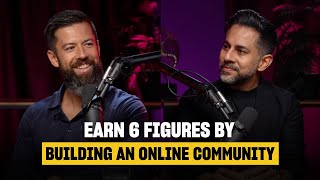
A Mindvalley Show interview with Vishen Lakhiani and Jimmy Narain about becoming an 'edupreneur'—building online courses to earn passive income, gain lifestyle freedom, and scale impact. Vishen shares Mindvalley's origin (launched from a meditation ebook in 2002) and company outcomes; Jimmy recounts his path from insecurity to teaching on Udemy, his course-creation process, results (hundreds of thousands of students), and a lifestyle of travel/freelance contractors. The episode promotes their 30-day Course Pro program on Mindvalley that teaches course design, production, platforms, and marketing.
Questions this video answers
December 22, 2002.
Month 1: lost $300; Month 2: lost $800; Month 3: first $200 profit (transcript phrasing).
By end of Thanksgiving 2003 (reached $4,000/month).
Approximately 350,000 paying students.
Close to 40 courses.
Chapters
There's a beautiful career opportunity that many people are not aware of, but it's one of the most amazing ways to earn passive income while helping the world. This career opportunity is called being an Edu Preneur Edupreneur. What this means is education entrepreneur. You see this space? This is Mindvalley HQ in Malaysia. This office was an Inc. Magazine 2019 as one of the top 10 most beautiful offices in the world. But Mindvalley started because around 20 years ago, I quit Silicon Valley to become an Edupreneur. I started a tiny website, teaching Meditation, because I was passionate about it. In my first month, I lost 300 bucks. My second month, I lost 800 bucks. The third month, I made my first 200 bucks. But it started growing and growing and growing and growing and growing. And today, mindvalley is a company on the verge of going IPO within the next five, five years. So in this episode of the mindvalley Show, I want to open your eyes up to this possibility that all of us have some knowledge that other people want. There could potentially be something that you do really well, that you are consciously competent at, that you could teach. And it is such an incredible way to not just change the world, but earn the income and the money to live the life you want. I was able to scale a small meditation business into a large company, and maybe that's not for everyone. Maybe you want freedom, you want lifestyle, you want to create a course, teach online, make money. And then you don't want to be boxed into an office. You want to travel the world, have adventures. And so in this episode, it's not just me that's going to teach you. I'm going to bring in one of my closest friends, Jimmy Narain. Jimmy Narain is one of the top instructors on Udemy. Udemy is a platform for where anyone can teach anything they want and earn money from it. It's sort of a marketplace for educational courses. So Jimmy and I are going to come together in this episode of the mindvalley Show. We're going to open up your eyes to the concept of being an entrepreneur, but we're going to look at it from two different perspectives in terms of building a large business. Mindvalley has sold close to half a billion dollars worth of online courses, and Jimmy is going to show you how to do it in a way where you don't have to be in an office as beautiful as this is, but you can build a lifestyle of freedom. So in this interview, you're going to learn from both of us. And we'll be sharing our views, we'll be interrupting each other, we'll be diving in and sharing our different perspectives. Because there are really two paths here. Right now, before I begin, you know who I am. Let me introduce my good friend, Jimmy Naray. Today he's a mindvalley author. But when I bumped into Jimmy, I was captivated by this man. When I found out what he did. You see, Jimmy had built an empire on the online learning platform Udemy, which is essentially a marketplace for teachers and students. He had taken something that he had once really suffered from, confidence issues.
The school system and then other kids kind of pushed me down, pushed me into the corner, and I started questioning if I'm worthy.
He mastered confidence for himself. And then he thought, well, why don't I teach this to people? So he started teaching on Udemy.
It was the tipping point of getting so frustrated with the current state that I knew I had to do something.
Within a matter of years, Jimmy amassed 350,000 paying students on Udemy, buying his various programs on confidence for men and women.
I think it's close to 40 courses.
He created a lifestyle where he was earning so much selling his knowledge online that he could quit his job at Goldman Sachs.
I did something crazy.
Today, Jimmy lives a crazy life of adventure. But not only that, but he's one of those people that's consciously competent. He can teach other people to create this life. And I realized this when Jimmy sent me this video. As he's greeting me, look at the man in the background. That's Jimmy's father, who is in his spirit. 50s, Jimmy taught his father to create the same lifestyle.
Check this out.
So my mom is filming my father over there. Dr. Reiner Rain. Crazy to think got my entire family to make video courses and this Guy is teaching 150,000 people now. So it's quite a bit, huh?
In his 50s, Jimmy's father started teaching on Udemy as well. When I saw that Jimmy could not just do this for himself, but could teach his dad, I. I asked him a question. Could you teach this to thousands of people? Welcome to this episode of the Mindvalley Podcast. Jimmy, so good to have you here.
Amazing to be here. Thank you for an incredible introduction. It's probably one of the best introductions I've ever received.
Well now, why was that?
Because it actually shared the story from the beginning till the end, right with. With some of the milestones. It added some emotions into it. A lot of introductions are just about the stats. Teaching these many people did this, did that. But you injected some emotions and you made it relatable.
Exactly.
So thank you for that.
Well, I'll tell you why else. That introduction was good. So just as Jimmy teaches people how to create online courses, I'm probably one of the most successful online course publishers on the planet because I've sold close to half a billion dollars worth of online courses. Right. My top courses, like LifeBook, have sold 50 to 60 million. But one of the reasons that introduction was good, and this is a lesson you're going to learn, is that storytelling, storytelling is so important. I didn't just read a boring bio of Jimmy. I told a story. And that story was also personal. I shared with you a video that Jimmy sent me. That video was not meant for the public, but I shared with you that intimate video. I told the story of Jimmy traveling with his dad. That creates a sense of connection, vulnerability. It humanizes you. And then I told the story of you guys being on that cliffside in Madeira. You living the life of your dreams, but your dad learning from you. And he is a 50 year old man doing the same thing. Storytelling. When you're teaching online, one of the most remarkable things are your own stories. And this is what you're going to learn over here. You're going to learn about how to take whatever knowledge you have. Maybe you are really great at making kitchen dining tables. Maybe you're really great at editing Instagram reels. No matter what you've learned, there are people who will pay you to learn the same thing. And if you can learn to put that knowledge together, teach, and also infuse ideas like storytelling, you can be really successful.
Exactly. Let me add something to this, because a lot of people feel like they have to be the biggest experts in the world to teach. Right. I have to be a celebrity. I have to be famous in order to share my knowledge with the world. This could be further from the truth. Okay. You just have to be a few steps ahead of the people that you want to help. So, for example, if you want to lose weight, would you rather learn from a bodybuilder with a six pack? Right. Amazing genetics. Or would you rather learn from somebody who actually lost weight and reminds you of yourself?
Exactly.
You know that that person resonates with your struggle. That person can understand what you feel.
Right.
Therefore, he or she can give you the blueprint.
But I'd add a caveat. I don't want to. I don't want to learn from someone who was just a random guy of my age who lost weight. I want to. But neither do I want to learn from the bodybuilder because I'm not trying to get to have a bodybuilder's body. I want to have a body that's in the top 1% of men my age. But I want to learn from the guy who went from really suffering to getting that top 1% body. But I want to learn from a guy or a girl who knows how to teach and was able to do it in the minimal time and in the most effective way.
That's a great point.
Right, so you're not the most confident man in the world. I don't know who's the most confident man in the world, but I'd like to meet him. But you overcame a big hurdle to teach yourself confidence and then you turned it into a system to teach your friends and then you started teaching it on Udemy. Tell us about that story.
Exactly. So a lot of people nowadays, when they see me and studios like this, when they see me on stages, they often say, oh, it's easy for you. You are a confident guy. Right? You are a spartan. Well, the reality is that I wasn't always like this. So as you know, I grew up in post communist Poland, making, trying to make ends meet, didn't have too much money, had a lot of confidence issues that I feel like they came from the fact that my father came from South America. So I'm mixed race and kids can be very brutal. So kids kept reminding me that I was different. Hey, why is your name Jimmy Narain? Actually, they would mispronounce my name a lot. Like, when will you go back to your own country? And I was confused as a kid. I am in my country, but it seems like I'm not. So I always felt like an outsider. Of course I know you, so I know that you can resonate.
You are, you are Polish, but you're half Indian.
Yeah, half. Well, half South American from British Guyana with some Indian blood. So there's like a massive mixture in there. But I always felt like an outsider. And because of that, you know, when you feel like an outsider, you start developing this idea that you are not good enough and it destroys your self esteem, your confidence. So I had situations when, you know, at the very, very beginning, I had dreams, I had passions. I was a rambunctious kid, mischievous kid, running around, wanted to travel the world, wanted to embrace adventure. But then the school system and then other kids kind of pushed me down, pushed me into the corner and I started questioning if I'm worthy of anything. Great in this world. And it took a lot of work to unlearn that.
And so you had to overcome your own confidence hurdle. And what were some of the things that you did?
So, first of all, I feel like it was the tipping point of getting so frustrated with the current state that I knew I had to do something. Right. I feel like sometimes you have to welcome frustration. I knew I didn't want to live like this. I didn't want to live in a way where I see somebody I want to talk to and as I'm walking towards that person, I suddenly turn around.
You stop believing in yourself like.
Like a meter before them. So imagine, imagine like they are looking at me. They are waiting for me to say something and I'm walking away. Right. Anytime we had some type of school gathering when there was a possibility of me having to speak up, I would get those just heart palpitations. I would start sweating profusely. And I got sick and tired of that. And at the same time, I discovered personal development. I started reading books, devouring books, hundreds of them. And I realized that there are people out there who overcame much bigger challenges. I read about Rwanda genocide, 1994, and people who came from that, and they managed to build better lives for themselves. And I realized, wow, so there are people out there from Rwanda, from Sierra Leone, from Cambodia, who literally lost their entire families, had to fight in the war as teenagers, and now they actually built up amazing lives for themselves. Clearly, I have absolutely no excuses. So I began to work on myself.
Right, and you started integrating the knowledge of all of these books. And then when was the point when you decided to monetize this knowledge and sell it online?
So that happened much later. You know, I bootstrapped myself to British University. Back then, you know, the pinnacle wasn't to be an entrepreneur, Right. The pinnacle was to work for the mighty Goldman Sachs. Right. I'll never forget, you know, back at the university, everyone kept saying, hey, if you work for Goldman or BCG or McKinsey or JP Morgan, right. A couple of companies, the big players.
You will have major former Goldman guy.
Yeah, yeah. So back then, I have to television. Back then I. I didn't know exactly what I wanted to do. I kind of sensed that working for a bank wasn't for me. But I had a lot of insecurity in me. I already overcame a lot of my challenges. I built the confidence to go to the UK to study there, to speak up. But I had a void deep inside, right? Insecurities from growing up as this poor Polish Kid, my identity was still negative. I still, if I close my eyes, I still saw myself as this, you know, little poor shy kid with elf ears that still have, as you can see, but now I, I get to appreciate them. Back then I didn't like them crooked teeth, you know, my self image was very negative. And I figured, well, maybe I can fix it if I go to Goldman Sachs and I make a bunch of money and I get the prestige. But very quickly I realized.
How long were you at Goldman for?
Wasn't that long. Just over a year. Just over a year.
And what year was that?
Oh, that was 20, I think. 2012.
2012. Okay. 2011.
2012.
When did you start teaching online?
I started teaching online. It was the New Year's Eve, literally New Year's Eve Day, 2013.
2013. Now those dates are important. Those dates are important because growing up, I graduated in 1999, there was no such concept as being an entrepreneur. Right. And so when you grew up, your model for career was Goldman Sachs? My model for career was computer engineering. This whole field of teaching online emerged around 2 2003, 2004, when Google AdWords emerged, people could buy ads. It democratized advertising.
Yeah.
So you could now publish a course and you could buy ads for the course. Essentially how I got started and built Mindvalley into the massive media company it is, is I started teaching online. I bought Google Advertising to drive people to a 75e75 page ebook on meditation. And that was December 22, 2002. Now my friends thought I was crazy. I was a VP of sales of a company. They're like, you're going to make money selling a 75 page meditation ebook online. Well, because I started there and I continued growing and growing and growing. Today that company is Mindvalley. We employ 400 people, revenues well over 100 million. And our next goal is to, is to reach a billion people. It's a massive company. But it started with me realizing that there was a way to become an entrepreneur. So I share that story because I want you guys to understand that there is no limit, there is no limit on how much you can earn here right now. You may not want to have the lifestyle I have, having to lead a company as a CEO with 400 employees. But I bet you more of you want Jimmy's lifestyle. So you were at Goldman Sachs, which was your dream job. You quit Goldman Sachs and then what, you joined the startup?
So I worked for a startup company.
Okay, and then you quit that startup.
Yeah.
And then you started teaching online. Okay. Now, were you earning more teaching online than from Goldman Sachs and the startup?
Not initially.
Right.
So how long did it take you? The beginning. Okay, so this is a good question. So to earn more than I was earning before, per month, it took me roughly eight months.
Eight months. Eight months is nothing.
However, I have to tell you. Okay, it doesn't sound like a lot. However, when you get started, you make your first thousand bucks and the second month you make $293 and then $636, you start doubting yourself.
Right?
Because you have to pay the bills.
Right.
And you know you have to keep up. So it doesn't seem like a lot now when you connect the dots, but when you are in that moment, it feels like eternity. But. But this is the point. Everyone who wants to build courses, you have to realize that it's a long game. You just have to stick at it. A lot of people nowadays, they publish.
It, but it took you eight months. So the first months down, but in eight months later, you were earning more than what? Than your salary?
Yeah.
Okay, now can you give us an idea of how much you're currently earning?
I don't like to share the exact numbers. Have a blanket policy on that.
Give us an idea.
But I earn six figures high. Six figures. And soon I hope to get to seven. So approaching.
You're approaching a million. A million earnings.
I am on the path.
That's phenomenal. Okay, now the next question. And I want, I want the audience paying attention to this because this is what is going to shock them. How many hours a week do you have to work? Do you have to work?
Okay, so, okay, one distinction.
Right? Right.
I work a lot. However, I do it because I love doing it and it's part of my lifestyle. Right? My work.
What is my life for you?
So I do things all the time because I love it. It's no longer work. I love creating content. I love talking to my audience. I love talking to you. I love getting on stage. However, if now I decided to go to Thailand to do some Thai boxing for two or three months and then go to the Himalayas and hike up for another five months, when I come back, I still make the same money exactly. Almost the same, minus corporate. Corporate training.
You, my friend, have achieved freedom like most entrepreneurs don't. You can take six months off. And I know this because I've done trips with you. Like we've gone to Brazil together. You can take six months off. You can learn languages, you can have. You've gotten yourself in peak fitness because you can go for all of these adventures like kickboxing, and you come back and your business is still running.
Yes.
Do you have employees?
I do.
How many employees?
It depends and varies. I would say it's usually between five to eight.
Okay. So so many people want to gain freedom. So they decide, I'm going to be a startup entrepreneur. And I can tell you, if you want to gain freedom, becoming a startup entrepreneur is one of the least freedom oriented choices you can make. Right? Because you're, you're going to be bound to investors, you're going to be bound to employees, you're going to be bound to customers. It is a hustle. Jimmy chose a different path. He became an edupreneur. That's educator plus entrepreneur. An edupreneur like Jimmy, your income might cap at a million a year, Right. Where else? If you're a startup entrepreneur and you hit a great product, you could be making 50 million. But that's very rare. But your odds of becoming a successful entrepreneur like Jimmy are a lot easier. But again, if freedom is what you value, this could be the lifestyle choice for you.
Exactly. Because even the employees, right, I hired them on upwork primarily. So I don't have, I don't hire anybody full time.
Right. They're contractors. So you hire them when you need a project and then you, you don't, you're not obligated to keep them employed.
So sometimes, you know, usually I have at least five people like, like, like doing things at any given time. But sometimes if I have a bigger project, I decide to get five extra people, but I can, I can then, you know, complete those contracts. So there's complete freedom.
And what, what surprises me is that you got to beat your salary after eight months. Now, in that eight months, did you quit your job cold turkey or were you working during the day and then building your online course at night?
Now, so this is a good question because I literally, I did something crazy. I basically borned all the bridges. So check this out. Within one week, quit my job in a startup. The CEO told me, come on, man, like, we have, we have big future here. You know, you shouldn't be quitting, you should stay here. But I couldn't work for someone else. I just knew I couldn't take it anymore. It was the glass, you know, the water just spilled over. So that's number one. Number two, I quit my relationship after almost three years. And it wasn't easy. I, I loved her. I still loved her, but we were going different directions. And when I told her about my ideas of exploring the world and going to Japan and going to Thailand and building a business. She just responded, why can't you just work for a bank? Why can't we just have kids and, you know, a dog or a cat and just be comfortable? I don't want to be comfortable. I wanted to go out there on a conquest. So I quit the relationship and I moved out of Budapest. I was in Budapest back then. So three major life decisions. So picture this.
You changed your relationship, you changed your job, and you changed your city. Okay? So. So something very important.
And I was broken. And I was broken, but I was also inspired because the canvas was blank.
You cut a lot of bridges. My friend so Naval Ravikant, who is a philosopher, who's very well known in Silicon Val, he has a book out. The book is called the Almanac Namal Ravikant. And he said something really interesting. He said, the three most important decisions we have to make in life is who do we love, what city are we going to live in, and what career are we going to build? And you decided to question all three of those decisions and make choices. Make choices that would give you the life of freedom that you wanted. And I respect you for that. But I do want to say to the people listening that Statistically, you are 30% more likely to succeed if you don't quit your job cold turkey. But if you stay at your job and try to build your side hustle in the evenings, literally, that's why they call it the side hustle, right? That's how I started Mindvalley. I stayed in my job as a VP of Sales, where I was earning. So this was 2003 in New York City. I was earning $7,500 a month, which gave me the money I needed to pay rent and so on. I built mindvalley as a side hustle in evenings and weekends. And I quit. I quit about one year in when I was able to make 4,000amonth from Mindvalley because I knew 4,000amonth was the bare minimum I needed to eat, pay rent, and, you know, have, like, a decent, yet limited lifestyle. Okay, so important note here. For those of you listening, this statistic is from the book Breakthrough company. You are 30% more likely to succeed on your entrepreneurial endeavor if you don't quit cold turkey. Because quitting can give you financial strain, which can cause stress, which will disrupt your performance. So try doing it on evenings and weekends. I think, Jimmy, you. You were an exception.
And I agree with you. I agree with You. So when I. When I decided to quit, I was very young. I felt like I had nothing to lose. I had everything to gain. But nowadays, a lot of people come up to me at different conferences and they say, hey, I want to build a course. Should I quit my job? And I tell them the same thing. Don't quit it yet.
Right?
Right. Build your MVP minimum viable product. Build something out there. Right? Find your audience, figure out who's your avatar, start serving them, and then if it's working now, we can make a conscious decision.
Okay, so let me give you an equation for that. Now, the equation for that is what is your minimal livable income? Your mli. Okay? So you got to look at what you're spending life right now. So I was living in New York. High rents, even food in New York can be pricey. I went out maybe twice a week for drinks with friends. And I had a girlfriend who was European, but she didn't have a green card, so she couldn't work. So she was looking for a job. And it took years for her to get a job. So I had to support my girlfriend as well. I knew my minimal livable income. When I put everything together on an Excel spreadsheet, it was 4,000amonth. So I set a goal. I had to make 4,000amonth in profit from my business before I could quit. And that took me. I remember it took me. I started in around December 22, 2002, the first complete month, which was January 2003, I lost maybe 800 bucks spending money on Google AdWords. Right. Second month, I lost 300 bucks. Then I started making. In month three, I started making four bucks a day in profit. And that, that started going up. It started going up and up and up. By end of Thanksgiving, 2003, I hit 4,000amonth. End of Thanksgiving, I called up my boss and I quit.
Beautiful.
So know your MLI because it's going to give you that, that goal. And you got to have that goal. You got to. You got to be realistic with that goal. You got to know how much you need. And you, you, as soon as you hit that number, that's when you can quit. But one, but one really key idea, which I think you shared to me, which I love, is that you really deliberately made those choices. Relationship, city, career path, you made those choices. Just as Naval Ravikant in his book the Almanac of Naval Ravikant, said, are three of the most important choices people have to make. And most people don't. They live where they were born. They Go into careers that their culture, their society or their dad said they might want to explore and they choose to stay in a mediocre relationship.
Yeah, and it wasn't easy. It wasn't easy, right? I was heartbroken. And a lot of guys, we have this, right? We, we decided I'm gonna have this breakup. And then one month later, with a delay, we realized, oh, maybe, maybe I made a mistake. I really miss her. But she already moved on. So this is what happened to me. So picture this, right? I'm in Budapest, beautiful girlfriend, startup job, everything's going well. One month later I'm in my parents house, right? Sitting by the computer, trying to figure things out. And I don't have much money in my bank account, I don't have any girlfriend. And I'm back in Poland, a place that reminds me of all of those difficulties I went through, right? All of the limiting beliefs, all of the anxieties. Kind of felt like, did I fail?
Right?
Like I used to work for Goldman, I worked for Allianz as well, was at British University, did all of those things now back in Poland. So my self esteem was, you know, I have to say, honestly, it was quite damaged. But at the same time that was a good reminder that this is how it feels, right? And I really wanted to help people with their confidence issues, with anxiety issues with, with self esteem, because I know how debilitating it feels to experience those issues. And that's when I built my first course about confidence. And I, I used some of that emotion in that course. So that course is still doing really well. And I feel like maybe one of the reasons is that there was real emotion in there. When I was talking about struggling with confidence, when I was talking about feeling anxious before, for example, meeting new people or looking at yourself exactly like. And what you see, I wasn't claiming to know everything. I told everyone, I do not know everything. I do not claim to be the most confident person in the world. But what I know is that I've experienced this, I overcame it, and I'm suffering a little bit now, but that's okay, right? Because it's not about being always confident. It's about finding the internal power. Creating the tools in your own mind to deal with life's challenges. That's what it's all about.
And that's beautiful. And how many courses do you have on Udemy right now?
That's a good question. I think it's close to 40 courses.
40 courses.
Now let me make something clear, right? So when I say 40 courses people often say, wow, but how can you possibly know so many things? So the way I treat Udemy is the way I would treat YouTube. Okay. Instead of publishing one 40 hour masterclass, I divide my content into different bits and pieces. There is for example, a five hour confidence course, but I have a shorter one as well for those who are busy, right? Busy professionals, CEOs, people like that. Some people like challenges. So I have different challenges. I have a body language challenge, for example. Every day you learn about different body language techniques. So I cater my courses to different audiences and I fully customize them. I increase my reach this way as well.
I see.
And this creates big numbers because you see vision. A lot of people have this misconception.
What does it cost to produce a course?
It's much less than people think. Give it an idea. I'll give an example. So you mentioned my father before, right? So my father, a couple of years into my course creation adventure, maybe we can put up some pictures as well. You know, I started brainwashing my father and my brother to create courses. My father used to be a medical doctor, very smart guy. Came to Poland at the age of 18 to study medicine in Polish. So they gave him one year to learn Polish from scratch and then study medicine in Polish.
And he came from where?
From Guyana. British Guyana. Very smart guy. And I told him, listen, you went through a lot life, slapped you in the face so many times. You have so much wisdom. You have to share it. You just have, I want to listen to it. You have to share it. Eventually they decided, we will do it. They had an iPhone 4. And my brother, he's very resourceful. So.
So the iPhone 4, not the iPhone 14, iPhone 4.
And it's now, it feels like archaic technology, right? So my brother ordered basic studio setup, maybe 200 bucks. It was really, really cheap. Set it up. Set up iPhone for basic microphone. You can all this. You can get them for $20. 20, $30. They recorded the course and that course became a bestseller. And this is how cheap it can get. Now.
What was this course about?
I think it was about either assertiveness or communication skills. One of those things, right? Like I pay people to film me, but initially I didn't have any money. Right? So when you don't have the money, you can either cry in the corner. I don't have the money. I'm not going to publish a course. It is not possible. Or can try to figure out a different strategy. So. So I met this video crew. I paid them for two hours. That's What I had, I'm like, okay, I can pay you for two hours. More than that will be irresponsible. And then I started filming. Felt anxious initially, but once I got into my flow, they stopped looking at the cameras and they began looking at me. And at some point they said, hey, listen, why don't we give you your money back? And we just figure out a way to work together. Because we normally don't listen to what people are talking about, but we are listening to you. Like this resonates. I said, sure. So we made a deal. We made a percentage deal. And I told them, listen, I'll give you a percentage of my profits and we will travel the world and we're going to be filming and we either we take a gamble, we do lose it, and we have a nice adventure and we're going to be friends, or we make a ton of money and help a lot of people. And they, and they are gamblers. So they said, you know what? Let's do it.
Can I believe in what percentage you offered them?
I gave them initially 20. So this is an interesting story. I gave them 20% initially, but one of the guys was working so hard editing. I remember after the final shoot, I drove him back to his place and I said, hey, Greg. And by the way, turned out later, this is a crazy story. Can't make this up. Turned out later that we are related. We are like far closets, but that's a completely different thing. So that's the magic. But I remember I was dropping him off and I said, hey, Greg, Gregos in Polish said, listen, before you go, I'm giving you extra 10% from my, from my side because you've been working your ass off. And he couldn't believe in it, right? Back then wasn't that much money. Now it is. You can, you know, you can buy like it. Nice.
That's amazing. So you made a lot of people very happy. So. So firstly, that. That's absolutely fascinating. Now, of course, when people hear this, there's a lot more that you got to do, right? But notice what Jimmy did. He set the goal to create his online course and everything that he did not know how to show up in front of camera, how to hire a film crew. He figured it out as he went by. And that's something I want you guys to understand. If you are telling yourself right now, I don't know how to be in front of a camera. I don't know how to teach. I don't have charisma. I don't know how to speak in public. All of those four things you can literally learn on YouTube videos. And even on Mindvalley we have courses on all of those things. You can learn how to speak with, speak and inspire. You can learn charisma with Vanessa Van Edwards with her course on charisma on mindvalley. You can learn how to look good in the camera with Paulie Astanius and his course on photography and camera skills. All of that is available. So learn that and don't make it an excuse. Now that said, when I saw Jimmy's success, I approached Jimmy and I said, so many people should be learning this because you truly have created a new way of teaching. Now my mom is a schoolteacher, so I really respect teachers. But my mom was a school teacher, a public school teacher in Malaysia. I, I mean I remember it was tough work and she earned maybe 400 US a month in, in 1970s and 1980s money that, that wasn't a lot. School teachers have it tough. But if you can understand that today you don't have to be employed by a school or a university to be an educator. You can become an edupreneur. Then the whole game changes. You could be making millions like Jimmy. So I went to Jimmy and I said, Jimmy, let's produce a program on mindvalley. We'll put it on mindvalley to teach people how to be entrepreneurs. And it's called Course Pro. And I want to congratulate you because Course Pro last year was our fourth best selling program on mindvalley. It was the most, the fourth most listened to and watched content on mindvalley. Even though it's so niche and so cost. Pro is a 30 day program. It's Jimmy and myself, I come in teaching you transformational theory, how to truly transform people using the mindvalley methodologies. And Jimmy teaches you how to build it into a freedom business. And in 30 days you master this and you learn everything. How to show up in front of a camera, how to hire your film crew, how to structure your course, how to use udemy. It's all there. And so if you want to go further, if you listen to this episode of the mindvalley show and you're going, I dig this, I want to go further. Enroll in mindvalley or if you already have a membership, just type in Course Pro. That's two words. And Course Pro will show up and just go to the lessons. And I think you're going to be blown away.
I'm so happy to hear this because I didn't know, it was number four, which is incredible. And I think it really shows how many people feel like they have a gift in them, but they are still afraid to share it with the world. Right? So people think that course creation has to be complicated, has to be scary, has to be confusing. It can be actually very simple. Not easy, right? Take takes effort, but it can be simple if you have the right steps. And I feel like you mentioned before you talked about your story, right, how you build this massive company. I want everyone listening or watching to this. I want you to ask yourself what would happen if you couldn't find that courage to take the first step, right? We wouldn't be sitting here, I wouldn't know you. None of those people would be watching this or listening to it. So the ripple effect is real, right? And the question I feel like everyone has to ask themselves, whenever you feel like you're being held back by limiting beliefs or some type of maybe anxiety, right? Publishing something, getting yourself out there, you have to understand that maybe you are meant to inspire other people. And if you don't share your gift with the world, you're not just depriving yourself, you're also depriving other people of the opportunity to be impacted by you.
Everything that you are, you can enhance, you can improve. So you mentioned about, you know, self doubt. One of the biggest things that people face when they create an online course is imposter syndrome. Yeah. I can tell you, when I got certified to become a meditation teacher and then I wrote a 75 page E book on meditation, I faced imposter syndrome. I kept telling myself, no one's gonna buy this, who cares? Like, what do I know? I've not spent years in an ashram, but I wrote it anyway. And then I got better and better and better through practice. I became a better teacher as I was teaching. And if you face imposter syndrome again, this is, it's so normal. But this is one of those things that you can hack. The best person who teaches people how to overcome imposter syndrome is Shada Zaren. She's also an online educator. Her course on overcoming imposter syndrome is going to be on mindvalley in a couple of months. So listen to that and you'll overcome that imposter syndrome. But here's where overcoming that imposter syndrome got me. So it's now 20 years since that day I launched that little ebook on meditation. Tomorrow I'm going to get on stage here in Dubai in front of 2,000 people, 2,000 people to speak about consciousness. And these 2,000 people are 2,000 individuals out of maybe 20 million on Mindvalley. These are the number of lives we can touch. If I let that imposter syndrome hold me back, that's 20 million people who would have been not gotten the, the knowledge of meditation and consciousness that they, they now have. And what is holding you back could actually be holding you back from serving and improving the lives of millions of people. And I believe if you truly feel in your heart that you have a gift to give, you have to listen to that. And you got to take every step possible to overcome the imposter syndrome, overcome the shyness in front of a camera, overcome any other limiting belief, and get out there and spread your wisdom.
Very well said. And the lights will never seem green. The light is always red or yellow. That's an important distinction. A lot of people are waiting for this moment when they're going to feel fully ready, right? I have to feel ready to be ready. No, oftentimes actually most of the times you are ready, but you don't know about it, right? Like how many times I'm sure you had situations, you are getting on the biggest stage, right? And you don't feel completely ready. There is a part of you, wow, this is, this is new, right? Or you embarked on a new business venture. This is new. We've never done this. Or setting up mind value for the first time, right? Like back in the day in Barcelona, you weren't, you didn't feel ready, but you were ready. You just, in order to realize that you were ready, had to take the first step. So, and you learn so much in the process, it's going to teach you more than any podcast, any course, any book. Just getting your feet wet, right? And making things happen.
And expect to fail, expect to fail. But every failure is going to make you stronger and stronger. I just interviewed a mountain climber, Mohamed Salamere, for this podcast. And he was telling me before he summited Everest, he failed on other climbs, he failed and he failed. And eventually he did Everest, then He did the seven biggest peaks in the seven continents. Then he became one of only 20 people in the world to complete the grand slam of mountain climbing. But he failed. And that's likely going to happen to you as well. And that's okay. Learn from that failure and get better.
Exactly. And it's all here, right? It's all here. We both jumped from that cliff. And I remember right, when we went to that cliff and we jumped together at 10 meter, 12 meter cliff, everything is in the head. I was just with Wim Hof for a week, right? And I saw people who didn't believe they could get into ice water for a minute. And on last day, we went into ice at night, right, with a bunch of people. And we stayed there for 10 minutes.
In ice water.
In ice water for 10 minutes. And at the end, by the way, this is not a medical advice. Notice you have to say this. And at the end, we put our heads underneath the water and we came out and everyone made it. And, you know, so Wim was talking about it. This is all in the head. When he broke those 26 world records, it was all in the head, right?
You.
If you say to your body, I feel warm, you eventually start feeling warm. As weird as it sounds now, most people discredit it and say, well, it doesn't work. Try it. Try it next time you feel limiting beliefs before going out there, getting on a stage, filming a product, whatever it is, while doing a negotiation, start talking to yourself. Better. We bully ourselves all the time.
You're right. And. And I realized something. We're talking about creating a life of freedom where you only work as much as you want. Creating a life where you can earn hundreds of thousands of dollars teaching online. Creating a life where you're influencing millions. All of these three things are noble goals. But there's a fourth thing that happens when you take that plunge, right? And that fourth thing is you become a better you. Because everything that's holding you back in life, shyness, the ability to speak in public, the confidence to share your knowledge. Overcoming imposter syndrome. As you overcome all of these demons, you become the best version of you you can be. And that itself is one of the greatest reasons to do this. So thank you, Jimmy, for joining us on this episode of the mindvalley Show. And again, if you guys want to go deeper in these lessons, you can find Jimmy on Udemy. That's Jimmy Narain Udemy. You'll find his courses. And you can also, if you're a MindValley member, go to the MindValley platform. Type in course pro and me and Jimmy will take your hand for 30 days and show you how to become an Edupreneur.
Thank you so much. It's been a pleasure. Thanks to everybody watching. And listen, if you are still wondering, do I have what it takes? Just tune into that deep voice, right, that sometimes is whispering to you that you have to share your knowledge with the world and listen to it. Give it a shot. Remind yourself that you will never feel Completely ready. But it doesn't mean that you're not ready. Go out there, get your feet wet, share your knowledge with the world, See what happens. Worst case, you help a bunch of people. Best case, you help millions of people.
I love that, Jimmy. Now here's the URL that you can access to learn about Course Pro, which is the program that me and Jimmy teach in building online courses. It's mindvalley.com course c o u r s e pro p r o mindvalley.com coursepro. You'll see the entire curriculum, the entire agenda, everything we're going to teach you. And I think this is something that for the right people, it's going to completely transform your life. I'll see you in the next episode of the Mindvalley Show. So if you like this episode, here's what I'd like you to do next. Jimmy and I produced a program together called Course Pro. And you can check out this program on mindvalley. It's part of mindvalley membership. So if you already are a Mindvalley member, check out Course Pro. And over a month, maybe 20 minutes a day, bit by bit by bit, we guide you to building your first course and getting it up so you can earn this passive stream of income. And if you're not a Mindvalley member, you can become a member@mindvalley.com for just a few bucks a month or get an annual subscription and you'll have full access to Cost Pro. A program like Cost Pro really can be sold for two to $3,000. The Jimmy and I created this as a passion project and we put it in mindvalley because we want to share our knowledge with the world. We think it's an incredible opportunity to help people become entrepreneurs. And that's why this program, which otherwise you will find competitive programs for two to three grand on online. We're just taking our program and we're making it part of mindvalley membership for just a couple of bucks a month because we want to encourage people to become Mindvalley members. So go check it out on mindvalley.com it's called course Pro. And I think you're. You're absolutely going to love it. Here's a trailer for the program so you can learn a little bit more about it. And at the end of this trailer, remember to subscribe to our YouTube channel or Spotify wherever you're watching this episode. And then head to mindvalley.com, create an account if you haven't, or if you Are a member. Dive on in search for course pro and check it out. For the first time, mindvalley is producing a program on how to create winning online courses.
In this quest, we will teach you exactly how we can build an incredible online course from A to Z.
I'm.
Here with the one and only Vishal Nakiani, the founder of Mindvalley who have produced 40 courses that made over $1 million each. And his best selling course made over $50 million, which is unheard of.
Partnered with me is Jimmy Narain, who has won the Udemy Innovation Award for teaching a quarter million students on Udemy. Jimmy has built a lifestyle business where he's been able to travel to 76 countries, fueled and funded by the online courses he's created on Udemy. Jimmy's experience and my experience are now together. And if you've ever dreamed of creating an online course that could give you passive income, that could change your lifestyle, that could help you change the world, this is your chance.
So if you ever dabbled in the idea of producing an online course, but.
Some type of limiting belief, maybe fear.
Confusion, perceived complexity, have been holding you.
Back, you are in the right place.
Because the reality is that course creation doesn't have to be complicated. And this is exactly what we will show you in this quiz.
Maybe you're a beginner and you just need the confidence and the knowledge to get started. Maybe you already have your wisdom, your expertise in a book, in a speech, but you want to create an online course. Or maybe you already have an online course, but you want to get it to the next level. No matter what level you're at, we're going to hold your hand and we're going to take you on a journey.
We divided this quest into four parts. So part one, we are tackling all your limiting beliefs.
We will help you to become confident.
To change your identity from I'm just a consumer and I'm not worthy to I am a creator.
We will also show you how you.
Can create a compelling vision and how online courses can give you some incredible benefits beyond just making money. Now in part two, we will show you exactly how you can design your compelling course from A to Z. And we will make it simple for you. Now in part three, we will focus on producing your course. We will show you how you can film your course on any budget and how you can present it with confidence and charisma. So in part four, we will tell you exactly which course platform to choose. We will teach you some of the most powerful marketing strategies that will help you to approach marketing holistically so you can keep promoting your courses and building your brand over years.
Our job here is to teach you the secrets that we know about creating successful courses. Nelson Mandela said, if you want to change the world, change education.
Take this quest right now and shift from being just a consumer to being a creator who's changing the lives all over the world.
More from Vishen






Brown Noise for Deep Focus and Concentration (Best with Headphones) | Gabriel Loynaz



Your Appointment With the Eternal | Guided Meditation with Michael Bernard Beckwith