Ep #021 | How Gretchen Rubin's Famous 5-Minute Quiz Will Effortlessly Enhance Your Life
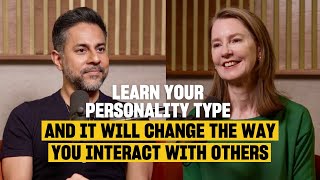
This YouTube episode (Ep #021, uploaded Aug 6, 2023) features Vishen Lakhiani interviewing Gretchen Rubin about her “Four Tendencies” personality framework and the free online quiz that helps people identify which tendency fits them. Rubin defines the tendencies in terms of responses to expectations (outer vs inner): Upholders (meet both), Questioners (meet expectations that make sense to them), Obligers (meet outer but struggle with inner expectations), and Rebels (resist both). The conversation includes concrete examples, common benefits and pitfalls of each tendency, strategies for individuals (e.g., obligers create outer accountability; questioners need reasons), and practical advice for leaders on communicating and managing teams with mixed tendencies. The episode ends with a prompt to take the free quiz on gretchenrubin.com.
Questions this video answers
GretchenRubin.com — the quiz is free.
August 6, 2023.
Nine books.
Obliger.
About seven minutes.
Chapters
Welcome to our episode of the Mindvalley show with Gretchen Rubin on the four Tendencies. You're gonna love this because before this video is done, you're gonna be asked to take a simple quiz on Gretchen's website that's gonna help you establish one of four personality types for yourself. I just did this. I'm what you would call a questioner. And when you understand your personality type, this is gonna change. The way you interact with other people, the way you show up at work, you're gonna understand little nuances about yourself. But first, let me introd Rubin. Gretchen Rubin is one of today's most influential and thought provoking observers of happiness and human nature. An acclaimed writer, she's known for her ability to distill and convey complex ideas with humor and clarity. She's written nine books and today we're going to be diving into ideas from the four tendencies. One of my favorite Gretchen Rubin books. Gretchen, welcome to Mindvalley.
I'm so happy to be talking to you.
So I did the quiz today. I'm a questioner, but before we get started into that, I just want to say I found this quiz, it took me about maybe seven minutes to do. I found it really intriguing, the questions that were asked, but also the insights that came from it. Tell us about the four tendencies, how you came up with this idea, and what our audience needs to know.
Well, I realized in my study of habits that there were patterns that people fell into. Like certain people didn't. Like New Year's resolutions because they were arbitrary or certain people are worth thinking. Why is it that I can always keep my promises to other people, but I can't keep my prom to myself? And some people are saying, why do people always tell me that I ask too many questions? Why is it that I never want to do anything that somebody tells me to do? And I realized that there was a way to understand these patterns and so we could really set ourselves up for success or help other people find more success by understanding themselves better.
So the basic idea, from what I understand has to do with your commitments to yourself and your commitments to other people.
I would use the word expectations because we might say, oh, I'm very committed to doing it. But it's about, how do you respond when somebody expects something from you or when you expect something from yourself?
I notice that my children have completely different ways they deal with expectations. And I noticed the same thing about myself. So I am better at keeping a promise to someone else with helping someone else with their health, with their wellness than I Am with my own. So I've been trying to commit to learning Estonian as a language. I keep failing my commitment.
Well then you sound like an obliger, because that is the definition of an obliger. An obliger is somebody who is able to meet their commitments to other people, but has trouble keeping their promises to others.
But as I did the test, I fell into questionnaire. But let's go further. Let's talk about the four tendencies and let's invite the audience here to take that test for themselves and figure out where they might fall. But before we go into the test, why is it important to know this?
If you know this, you can set yourself up for success. You can meet your aims for yourself and you can also understand why you have conflict with other people or why you're just baffled by what they do or what they don't do. Because you don't. It's very hard for us to understand how people just see the world in a different way from the way that we see it. So I keep thinking, I can do this. Why can't you do it? Or I think, oh, you can do this. What's my problem? What's wrong with me? Where in fact you just need to set things up differently because maybe you need outer accountability and someone else resists outer accountability. There's no right, there's no wrong. It's just whatever works for you.
You know, when I, when I read your book, what I began to realize is that even on the mindvalley platform, the way we motivate people to live up to their personal growth promises, their health and wellness challenges has to be taking into account some of these four tendencies.
I'm sure it does.
So let's start with the first personality type.
So what this is looking at is how you respond to expectations. Outer expectations like a work deadline, and inner expectations like my own desire to keep a New Year's resolution. An upholder is someone who readily meets both out and inner expectations. They meet the work deadline, they keep the New Year's resolution without much fuss. They want to know what other people expect from them. But their expectations for themselves are just as important. So their motto is Discipline is my freedom.
Uhuh. So is this like the. The best type? Is there a best type?
There is not a best type.
But this type upholder sounds pretty damn good.
But there are. Every tendency has upsides and downsides. And as, as an upholder, I can tell you the downsides are rigidity. We get something in our mind and we want to execute it. It's hard to be flexible. It's harder to handle ambiguity if it's not clear what success looks like. Upholders can be judgmental because they don't understand why other people struggle with things that come fairly easy to upholders. They can have tightening where the rules for themselves get tighter and tighter. So they're sort of trapped in their own bureaucracy. So each tendency has strengths and weaknesses. The people who are the happiest, healthiest, most productive and most creative. It's not a matter of tendency. It's a matter of do you know yourself and have you put yourself in a context where you can thrive and do your best rather than trying to jam yourself into someone else's model.
Okay, so the first personality type is the upholder. What about the second?
Second is questioner. Questioners question all expectations. They'll do something if they think it makes sense. So they resist anything. Arbitrary, inefficient, unjustified. They're always asking why. They're often told that they ask too many questions. They tend to love to customize. They tend to love research. So if something meets their inner standard, they will do it no problem. If it fails their inner standard, they will push back. So their motto is, I'll comply if you convince me why this sounds like.
This sounds like me. And this is what the quiz said I was so when I was a teenager, I just had the hardest time accepting the religious beliefs of my family. By the time I was 19, I told my dad, I'm no longer a Hindu. I do not want to embrace religion in this way because I couldn't understand all the rules and the rituals and the traditions that everyone else was forcing me to do. Does that sound like question of behavior?
Yes, because questioners are like, if I don't understand why, I just can't get on board. And so, and I'm sure you see in you know that when people understand why they're being told or suggested to do something, then they follow through. If it doesn't make sense to them, they won't do it.
So that's. So what is the downside of questionnaire?
Questioners can drain and overwhelm people with their constant questioning. Sometimes they ask too many questions. Other if, like if I'm a thin skinned boss or like a teacher, I might say, you know, your questions mean you're questioning my judgment or my authority. You don't feel like a team player. Sometimes they get analysis paralysis. This is when they love research so much that it's hard for them to move forward or make a decision because they just what bike should I buy? I could research that for the next year. And they can make others feel very defensive because it's sort of like people will say, I feel like I'm a witness on the stand. Or I feel like a reporter is investigating me for a crime. Because these questions. Whereas the questioner's like, what? Well, why isn't everybody asking these questions? Like why are we going to do something if it doesn't make sense? So to them it feels constructive, but they have to learn how to ask questions in a way that other people feel is constructive.
And the third type?
The third type is obliger. This is the biggest tendency for both men and women.
So this is the most common one.
So you either are an obliger or you have many obligers in your life. So we all have to understand Obliger obligers readily meet outer expectations, but they struggle to meet inner expectations. So these are people who say, I keep my promises to other people, I can't keep my promises to myself. Why can't I take time for self care? Why can't I make myself a priority? Why can't I put myself first? And the secret for an obliger is to create outer accountability, even for an inner expectation. If you want to read more, join a book group. If you want to exercise more, take a class where the instructor knows if you don't show up. Work out with a friend who's annoyed if you don't show up. Take your dog for a run who's so disappointed if she doesn't get to go raise money for a charity. Think of your duty to your future self or your duty to be a role model. There are so many ways to create outer accountability. Once you realize that that's what you need. Many obligers are told by the other tendencies, oh, just put yourself first, make up your mind and do it. And it's like, no. They need outer accountability even for inner expectations.
So that's interesting because I think I may have some obliger tendencies. Because I noticed that the people in my company that I hire to work, I don't have an assistant, but I have people who assist me at various tasks. But all of them have to be people who crack a whip on me. So when I'm writing a book, my editor isn't just editing the book. My editor makes sure that I am putting in the work. I'm showing up for our scheduled appointments, that I'm writing X number of pages a week. Because if not I tend to slip.
Then it sounds like you're an obliger who has done exactly what is the best thing to do, which is to say, how do I do my best work? How do I need to engage with the people around me? I have a friend when she said whenever she gets a job, she says I need a tough boss. Are you a tough boss? Because that's how I do my best.
Work and I need tough assistance. Everybody I have who's assisting me with something is a badass because they have to kick my butt, especially when what I need to do is something for myself.
So that's exactly what you've done. You've created outer expectations so that you can meet your inner expectations for yourself. And rebels are the opposite.
So rebels, this is the thought personality.
So the rebel tendency, they resist outer and inner expectations. They want to do what they want to do in their own way, in their own time. They can do anything they want to do, anything they choose to do. They tend to love a challenge, but if you ask or tell them to do something, they're very likely to resist. Typically, they don't even tell themselves what to do. Like they don't sign up for a 10am yoga class on Saturdays because they think, well, I don't know what I'm going to want to do on a Saturday. And just the idea that someone's telling me to show up is going to annoy me. So their motto is, you can't make me and neither can I.
So what's the downside of being a rebel?
Well, it can be very difficult for other people to live or work with somebody who, if you ask or tell them to do something, they're very likely to resist. And also rebels can get frustrated with themselves because they, like a rebel said to me, I decided I was going to give up bread and the next day I ate an entire loaf of sourdough because nobody tells me what to do, not even me. And so they have to use the rebel tendency. So for you, outer accountability works great. You have all these people who are holding you accountable. A rebel can't do that because the minute somebody holds them accountable, they'll start to push back. So they do things like thinking about their identity. I'm a creative person, I'm a leader, I'm a responsible boss. I'm an environmentalist, I'm an animal lover, I'm a poet. They live up to that identity. Or you can point out information, consequences, choice. And here's the information, here's what's going to happen if you do it. Or don't do it. Up to you. But you can see how if you don't know your tendency or you don't know someone else's tendency, you might pick the wrong way to engage with them. So let's say I'm an editor. If I'm working with an Obliger, I need this chapter by this month and I'm going to be disappointed if I don't get it. And you're going to mess up my schedule. And I'm looking for it, and when is it coming? If it's a Rebel, it's like, I know you've got the chops to write this book. I can't wait to see the book you're gonna write because I know how much you have to tell the world. So, you know, if you get it to me, if you give it to me by December, we can get this thing published in a year. But if I don't get it till January, well, you know, I got another book slotted in. It's gonna be a lot longer wait. Up to you.
I love that. Okay, so that's the Obliger and the Rebel. What about the Question and the Upholder. How would a book publisher deal with a writer who was in that personality type?
So with a questioner, it's why. It'd be like, this is the schedule. And this is why. Because if you say something like, I need it by Friday, and I'm like, hey, listen, I know you're not going to read it till Monday, but if you're like, I need it by Friday because I'm going on a long flight and if I have it with me, I'll read it on the flight and I can get you edits back right away. It's like, well, that makes sense. You've given me a reason. I'm willing to do what you ask. Upholders tend to be like, okay, fine, just whatever. Like, tell me, you know how high, and I'll do it sometimes to a fault. Right? So maybe they should say like, well, why are you telling me Monday if Friday works just as well? What? You know, so Upholders need to learn.
I'm definitely not an Upholder.
Okay, well, I'm an Upholder.
I'm beginning to see that my publishers at Penguin Random House know exactly what they're doing. Because without knowing my personality type, they use all four. All four of what they say to get me to release my book sometime.
They're not taking any chances. Right, Right. Well. And that's the thing, is, if you're trying to deal with a lot of people. You want to think about, well, how do I push all these buttons or be prepared for all these different types.
So if you're, if you're running a team, if you're leading a team and you don't know the personality types of the people in your team, I mean, you may kind of suspect, but you don't know for sure. Let's say you're the, you're, you're the, you're the owner of a 10 or 20 or 100 person company. How do you communicate? Let's say there's an important deadline, it's an important project. How would you communicate that? To hit as many personality types as possible.
So you want to be very clear. First of all, you want to provide reasons, but you don't want to exhaust everybody with a reason. So let's say you want everybody to start using a new software program. You might have a meeting where you explain to everybody briefly, this is the reason that we're doing it and this is why it's important that you do it. And then you might say, if you have further questions, I'm happy to stay here and explain more. If you feel like you've heard enough, feel free to return to your desk because why am I going to drain everybody? Because I'm like, look, you're the boss. You're telling me what to do. I don't care. Like, that's not my problem. It's your problem to figure out the software. But the question is like, if I don't think it's a good idea to change, I'm not going to change. And then you've got a company running on two softwares. For an Obliger, it has to be cleared. There is like, they often do better with deadlines and they definitely do better with a sense that others are going to notice. So you would never say to an Obliger something like, hey, listen, when you've got some downtime, would you do XYZ thing? Because we're going to make this software change. It's like, that's never going to happen.
So upholders are probably the easiest employees, right? And in a way the most professional.
Well, they, but they can be very rigid. And so it depends on what kind of work you have. Because if you're like, let's say you're a rebel boss and you're like, I'm getting a great idea and we're going.
To change everything, they're probably the ones who will complain about change. Oh, things are always changing.
Well, they're going to have more difficulty with that because upholders tend to want to execute on a plan and there's a lot of upside to that. But if you're in a place where, hey, we need flexibility, we need lots of flexibility and we need people who can just like turn on a dime, like have upheaval in a schedule, a lot of unpredictability, that can be very hard. Also, if you're doing anything where it's not like upholders are often very concerned about what the rules are. In some professions they want you to be very kind of open.
And with questioners, I'm guessing you really have to give them the reason for this strategy, the reason for this tactic.
Yes.
And now with obligers, I'm guessing that's also a very easy group of people to lead.
I've had many people say to me, how do I scream? I only want to hire obligers.
Well, that's good. I've been a really good, I'm probably very, I have very good Obliger tendencies. Yeah, yeah, but the ribble.
But let me tell you about the right, an important thing about obligers. Sometimes obligers have Obliger rebellion. Tell me if you've ever experienced this. This is when an obliger will meet, meet, meet meet an expectation and then suddenly they snap and they say, this I will not do. And sometimes they'll do something funny like I'm just going to sit in my car in the parking lot and be late for work or I'm not going to answer your emails for two weeks or it can be very, very dramatic. I'm going to get a divorce. I'm going to quit right now, right now, today, I'm walking out the door or I'm going to end a 30 year friendship. And it happens when obligers feel overwhelmed by expectations, they become unmanageable. So they feel exploited or ignored or taken advantage of. And so the Obliger rebellion kind of blows situation to protect the obliger. And so it is meant to be protective. That's the reason that it happens. But it sometimes can have very, very dramatic consequences and kind of negative reputational consequences because I'm like, hey, listen, I asked you if you wanted to be on this committee and you said yes. So I don't understand now why you're so mad at me. Like what's the problem here? Because I, unless I understand obligers, I don't understand the immense pressure that you feel like you're under. You're like you asked me to do it. Of course I said yes. But, like, why am I on nine committees and everybody else is on two committees? It's like, I need to look at that situation and say, I don't want my most valuable employee walking out the door because of Obliger.
Just a caveat here. Right. But I'm guessing that people don't necessarily fall cleanly into a box. One can be.
They pretty much do.
They pretty much do. Because I feel like I'm between Obliger and questioner.
Probably what you are then, from the way you're describing yourself, is you're probably a very, very curious and analytical Obliger. So you're very interested in. But. But what this looks at is why do you do what you do? And when you don't do something, what gets you to do it?
Right.
And the thing about an Obliger is, for a question, or what gets them to do it is explanations, reasons that will get them to do it. You're saying knowing that someone's holding me accountable, depending on me, enforcing deadlines, looking for my product, that's what makes you do it right?
Now let's go on to rebels.
Yes.
So rebels, I'm guessing, are some of the toughest employees to lead.
Well, it depends on what you want, because rebels are unstoppable. There's enormous power in the rebel tendency. They tend to be great entrepreneurs because then they're making the rules and doing things their own way. They're often really good at sales. They're very good at places where there's a lot of variation. Like somebody was a restaurant manager, so she was on the road every day. Every day was different. People were different. Nobody was looking over her shoulder. As long as she excelled at what she did, she kind of, like, set her own way. Some rebels are very attracted to the military, the clergy, the police, and corporations with high regulation. These rebels kind of take their energy from resisting and pushing back. And if you look a lot, those organizations sort of know how to manage that kind of personality type. But I will say that in general, it is the most different from the other three. And it can be sort of the hardest to manage, I think, because people don't really understand it. So they often are, like, interfering with the rebel. If I keep coming at you with deadlines and micromanaging and watching over you, instead of finding that helpful, you're actually igniting the spirit of resistance in me. So you're slowing things down.
So this is so, so, so fascinating. It also makes me realize that there Is no one one accurate leadership style?
No.
If you're running a company.
Oh, no, no, no, no. But just like you have surrounded yourself.
What is Your advice to CEOs, to founders, to entrepreneurs who are running teams? And these teams have these different personality styles. How do we, how do we motivate and keep everything healthy?
Well, the first thing to do is to avoid the obvious tendency, which is to favor your tendency, because of course, you understand your tendency the best. The way people behave makes the most sense to you. You can predict it the best. But you don't want to overload your team with any one of the tendencies because you're going to. It's like any kind of diversity. You want people having different views, different strengths, different weaknesses, and so they're bringing different perspectives. So as an upholder, I love working with upholders, but I know if I'm surrounded by upholders, we'll just reinforce each other's traits. We won't have that depth and that complexity that we need. So first is to know yourself and to make sure that you're not just favoring other people who see the world the way you do. You get a bunch of questioners in a room, they'll never make a decision because they're like, but did you think about this? Well, what about that?
So I realized I'm going to have some of the 10 to 20 people I work most closest with take the quiz.
Yes.
And share with me their types so that we can better work together. So I love this work. This work is incredible. Now, those of you watching right now, you've heard about the four personality types. There is the Obliger, which is the most common. There's the rebel, there's the upholder, and there's the A questionnaire. Where do you think you fit in? And if you don't know yet or if you have a clue, take the quiz. And the quiz will help you narrow it down. Where can they take the quiz? Gretchen.
Gretchenrubin.com quiz and you can take the quiz there. It's free.
Amazing. Well, thank you, Gretchen. I'll see you in the next episode.
More from Vishen






Brown Noise for Deep Focus and Concentration (Best with Headphones) | Gabriel Loynaz



Your Appointment With the Eternal | Guided Meditation with Michael Bernard Beckwith