Ep #026 | 5 Investments to Become Financially Free | Jaspreet Singh
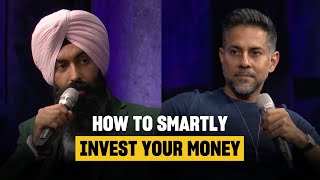
This content was created by Vishen Lakhiani. This content was uploaded by Vishen Lakhiani. This is a YouTube video titled "Ep #026 | 5 Investments to Become Financially Free | Jaspreet Singh" featuring a conversation between Vishen Lakhiani and Jaspreet Singh. The discussion, recorded on September 26, 2023, focuses on financial education, investment strategies, and personal anecdotes about their financial journeys. They explore topics such as real estate, stock investments, and the importance of financial literacy.
Chapters
If one had $100,000 just for simple math, $100,000. And you want to put this away for 10 years and have the greatest odds of seeing this money multiply, where would you put this $100,000 in savings? That's the question. And that's what we're going to be talking about in this episode of the Mindvalley Podcast.
Wealthy people are doing something completely different. Unless you have the basic level of financial education, you don't even know what questions to ask. And if you don't learn that in your home, if you don't learn that in school, where are you going to learn it?
I'm sitting here live in Tallinn, Estonia, with Jaspreet Singh of Minority Mindset, the hit financial advice YouTube channel with 1.65 million subscribers. So Jaspreet is an incredible soul. We just had him speak at Mindvalley University, and he shared so many important practical tools and advice on how to maximize your investment. So welcome our special guest today, Jaspreet Singh.
Well, first off, thank you for having me. Thank you for the beautiful introduction.
Now, you grew up in an Indian family, right?
Correct.
Which means becoming a YouTube star was not something your parents were pushing you to do. They were probably disappointed with you.
Disappointed, I would say, is a little bit. Little bit of an understatement. We could put it this way. When my mom found out that her son was not going to be a doctor, she was on the border of going to the hospital. It took my mom a year and a half to believe that her son was not going to be a doctor. My dad was so angry, because when you grow up in a traditional Indian house and your parents tell you you need to be a doctor, this isn't like a recommendation. This is like either you become a doctor or you're no longer a part of our family. It's a really hard kind of line that gets created. And so from the day that I was probably one years old, everybody in my family's friend circle, in our family circle, knew that Jaspreet Singh was going to grow up and become an ophthalmologist or a dermatologist.
Like it was at one year old.
At one year old. Yeah.
I don't know. What is it with Indian parents? My Indian parents are in the audience. Mom, dad, what's up with you guys? My mom is waving a finger at me. Does that mean you're disappointed that I'm not a doctor? So what happened?
So what happened was I started learning. Well, I knew I wanted to become Successful because I saw how hard my parents were working. My dad was working around the clock, six or seven days a week consistently. And I wanted to then buy my dad's time back because I wanted to spend more time with him. And so that made me realize I wanted to become financially successful. Now, I couldn't say I wanted to be rich, because that was a very bad thing. But my intention for wanting to become financially successful wasn't to hoard a whole bunch of money and material things. It was, I want to spend more time with my dad. And I think it was that understanding of, how does money play a part in your life? And. And why do so many people put a smokescreen around this topic of money that really got me intrigued about learning about money? And by learning about money, that was for me, when I was in middle school. There's an Indian drum called. And I went to India when I was in middle school, and I really was intrigued by this drum. And I bought it from Punjab and I brought it back to America, and I started learning how to play it in my bedroom. And. And I played it for my uncle's wedding. I was 12 years old. The DJ at that wedding said, hey, do you want to make a little bit of money playing this drum at other people's weddings? I said, heck, yeah. So I was 12, 13 years old, and he started paying me like $50 at a wedding to play this drum at other people's weddings. That got me to meet a lot of the other local Indian DJs, who then, when I was in high school, proposed the idea to start hosting teen parties for kids in my high school. I said, okay, that works. So then we kind of created this teen party business. When I was in high school, we started hosting teen parties, making a little bit of money. Actually, the first party that we did, we made $4 of profit. The DJ made $2. I made $2 at the end of the night. So it was like a. It wasn't really about the money. It was more about the experience.
Was a decent stop.
Yeah. And we were having a great time, too. And I was learning. And so that was my experience into the entrepreneurial world. I took that education and knowledge to the same university you went to, the University of Michigan. But interestingly, I didn't know that people go to college to party. I didn't know that people drank alcohol in college.
And that's funny, because we both went to the same university, the University of Michigan. I graduated in 99. You graduated in 2007.
2013.
Yes, 2013.
And so I got to U of M. And it's kind of funny because the day that I left for college, my mom was in the kitchen. I said, bye, mom. She said, where are you going? So I'm going to college. She said, oh, when are you coming back? I said, I don't know. And I got a call later that evening from my dad. He said, where are you? I said, oh, I'm at college. He said, when are you coming home? I'm not sure yet. I had no idea what to expect in college. That's how oblivious I was. I only applied to one college, which was the college that I got into. Fortunately, I had no idea what to expect. My parents didn't go to university here. I didn't know people that went to university. I didn't know people partied in college. I didn't know people drank in college. I also didn't know where people got the money to drink in college. So I got to the University of Michigan, I parked my car, I brought him a microwave in my sleeping bag because I thought he slept in a sleeping bag in college. And now I see people partying, drinking and blowing money that they don't have. And now I'm like, wait, hold on. I thought everybody was here trying to achieve some level of success in college. Why are you guys partying? Shouldn't you be in the chemistry lab doing some like, important stuff? And that was when I was like, okay, how about I take this teen party business that I had in high school, bring it to college? Because I don't drink. I'm not really into the party scene. And so that was kind of my now into college, I started hosting parties. And that was when I started making more money. And when I realized, oh, you can make money without a degree, that's interesting. Well, what can I do with this money? And that's when I started learning about investing, I started learning about financial education. And that's when I also get very upset and angry because I realized how somebody in that traditional household where you learn, go to school, get good grades, get a good high paying job, you miss out on a lot of financial education opportunities. There's nothing wrong with being a doctor, nothing wrong with getting a good profession or career. But there is something wrong when you don't learn a thing about financial education because, well, a lot of doctors end up broke. And you might not think so because you think, oh, they're making a lot of money and overworked and many times overworked, but just because you make a lot of Money doesn't mean you're going to make a lot of wealth. And that was the key thing that I realized that there's a difference between financial education and the school education that we're taught now, like what you do here at Mindvalley, you guys are really going outside of the school education because there's a huge lack there. I focused just on the financial side. That's all that I saw because I realized there was such a lack of what is investing, what is dividends, what is cash flow, what is wealth? I've never heard of these things before. And in a traditional Indian house, I had never heard of the concept of entrepreneurship or investing. I had no. Nobody in my family was an investor or a real estate investor. I had never heard. I didn't even know you could do that. And if you don't learn that in your home, if you don't learn that in school, where are you going to learn it? And that was the thing that, you know, if you grew up in with rich parents, your parents are going to tell you how to stay rich, hopefully. But if you don't, then where do you learn that? And that's where this.
And where do you learn it?
Well, I started learning with books. The first time I read a book cover to cover was on my flight to India. Because this is back in the day before they used to have those nice TVs on planes. If you remember those days, you used to have the one little TV in the aisle of planes and you'd be on a plane for 20 hours. And when you're sitting on a plane in economy class like this for 20 hours with nothing to do, it gets very boring, very stressful and very difficult. And so I would take books with me, which I'd never read, but I happened to bring a financial book. And that was the first time I read a book cover to cover because it actually intrigued me.
Now can I ask what book that was?
It was called Rich Dad, Poor dad by Robert Kiyosaki.
How crazy is that? We have a lot in common. That was the first financial book I read too.
Really? Yeah.
Rich dad, Poor dad by Kiyosaki. He had a follow up book, the Cash Flow Quadrant. And both those books were among the books that helped inspired me to become an entrepreneur. The other was the guy that Kiyosaki actually learned from, which was Robert Allen, who wrote Multiple Streams of Income.
Yes. So I read his book first and that was the first time I learned about money and investing. And I was like, holy moly, you're telling me there's a whole world of things outside of science and math, because in my house, my English grades didn't matter. My history grades didn't matter. The only grades that mattered were math and science. And then I read this book and I was like, whoa, there's a whole world of things that I had no idea about. And then I started reading more books. I started reading more books, I started reading more books. And that was when I realized I need to start doing some of these things that I'm learning because wealthy people are doing something completely different. And it's not just your grades, it's not just your job. It's what you do with the money that you make. And that was that missing piece of education that I never received.
And so you started minority mindset, the YouTube channel, and it's blown up over a million subscribers. Congratulations.
Thank you very much. Yeah. So fast forward a decade and that's what happened.
What sparked you to start that channel?
So I was an entrepreneur. So when I started learning about money, the game became for me. Make money, buy real estate. Make money, buy more real estate. And so the way I made money just was wherever I could find opportunity. I started off in the event planning companies where I was hosting parties that grew to concerts, shows. Then I got into real estate wholesaling. I got my real estate salesperson's license. I started an e commerce store. I mean, I did anything that you can imagine because this was how I learned. And I was running now an athletic sock company created a way to create athletic socks that were water resistant. And during the launch of this company, I got scammed by a fake marketing company. They approached me and they said, you know what, Jaspreet, we can help you blow up your sales. We can get you all these orders, etc, etc. And they said, we also have a 100% money back guarantee. If you are not 100% satisfied, you can have all your money back. I said, that sounds like a good deal. So I gave them the bulk of our marketing budget. And the next day, and I remember this so clearly because I was in the gym, I was doing chest flies, and I had this weird feeling in my stomach. Like you just feel like something is wrong, something's not right. And so I called up the marketing company and I said, hey, you know what, I know it's only been a day, but I'm a marketer. I. I think I would do better with that money myself. Let's just refund it before you guys spend any money and let's Just cancel the deal right now. He said, okay, no problem. Just give me a minute. He puts me on hold. And now I'm getting really frustrated because my whole workout's getting messed up because of how long I'm on hold. And eventually it just goes beep, beep, beep. And I was like, oh, something's wrong. And so I call back now, it says, this number cannot be found. I called the other number that I have. No one's picking up. And that's when I found out that I got scammed. So they took my money and I never saw it again. Now, the launch of that company still did very well. I think we sold like $21,000 worth of socks in the first 30 days. But I was so frustrated because every time I started a new venture, I got screwed over in some way. And by this time, I'm finally starting to see some success. I was like, you know, I want to do something. So other entrepreneurs, other people who think different, like me, have some sort of guidance so you don't keep getting screwed over. So I went onto a platform called Udemy. This is a long time ago now. And I launched a class on how to launch a business without getting screwed over, as simple as it could get. And I charged like $7 for it, not knowing anything about the Internet and education world. And I did it under the alias Minority Mindset and thinking that you have to think different than the majority of people if you want to become successful in any way. So I launched this class and the people that were enrolling on the class really liked it. And they said, hey, can you start a social media page? An Instagram page? I said, okay. So I started an Instagram page called Minority Mindset with the same content. And then I would get DMs or messages, comments from people saying, can you start a blog with more in depth content? Because there's only so much you can write on Instagram.
Wow. Now what year was this?
This is probably 2015.
2015. How much were you making from Udemy?
Oh, I don't. Barely anything. Like this was like.
But it was something. But it was something.
I mean, it was, it was probably, I don't know, let's say I had a few hundred students at seven dollars each. I mean, it's. We're talking about not a significant amount of money. This was really just something that I was wanted to do because I was so frustrated. So I got these messages asking me to start a blog with more in depth content. And my response was, you don't want Me to start a blog. English is my second language. My parents never cared about my English grades, which meant my writing is very bad. So no, I can't start a blog, but I can kind of talk. So I'll start a YouTube channel. So I kind of like started a YouTube channel in 2015. In 2016, I decided to make more videos. And at some point we had grown to like 10,000 or so subscribers. And this was before YouTube had any sort of monetization requirements. So anybody could monetize any channel, any video with any amount of views or videos. And my friend, good friend of mine came up to me and said, how much money are you making on YouTube? I was like, what are you talking about? He's like, you know, from your videos on YouTube, like, how much money are you making from advertisements? And my response was, again, what are you talking about? So he goes with me onto the back end of my YouTube channel and he's like, you know, Jaspreet, if you click this button right here, your videos can start showing advertisements and you can start making money from your YouTube videos. I was like, are you serious? So I said, okay, let's click that button. I didn't know what that was gonna do. I was like, is it gonna mess up the channel? He's like, I don't think so. So let's push it. The channel was still there. I was, all right, cool. And now the channel started to make a little bit of money. Now I should also premise that a little bit of money is a little bit of money, because now I don't know if I was in law school still or I'm an attorney, but I'm not working as an attorney because my sock business was my full time business. This was like my hobby. And I think the, the first check that I got was 18 months into YouTube and I don't remember the exact number, but I think it was like $254 was my first YouTube check. So it was not a lot of money considering the amount of work it takes to put out, let's say three videos a week every week for 18 months. But I really enjoyed it. That was why I did it, because I had that real like frustration.
And now flash forward, I'm curious at a million subscribers, how much can you.
Make on YouTube just from advertisements? If you're making a million million views? Let's talk about views because it's easier to calculate. If you're making a million views, you can comfortably make 8 to 15 to $20,000 off of that 1 million views. Wow.
8 to $15,000 off a million views.
8 to 15 to 20,000 off of 1 million views, just off of the advertisements. And then if you have a sponsor on top of that. So let's say you. You show a video that gets a million views, you might get $10,000 in advertising revenue. Then if you have a sponsorship now, you might be able to charge, say, $10,000 or $20,000 for a sponsorship to put a sponsor in.
So you could make easily 25 grand, $25,000.
And then if you have your own business on the back end, let's say you have some product that you can sell and you can show it to a million customers, viewers, then now you can just double what you just made off of there for that one video. But this is the tricky part, because now when I think, people hear that, you think, oh, wow, I'm gonna load up my video with sponsorships and ads and sell a whole bunch of things on my videos. Well, if you do that, no one's gonna watch your videos. Right, because nobody wants to be careful about it. Exactly. You have to. In order to get someone to watch your content, there has to be value. And that value is not you selling stuff. The value is educating, entertaining, providing some sort of real value to somebody, making them want to watch you. And then the art, which is very. This is the difficult part, the art is, now, how can you monetize without turning people away? How can you promote your own brand, products or sponsorships without turning people away? People hate advertisements. People hate advertisements so much that they will pay money to YouTube to not see advertisements. And so now if you're advertising all over your videos, you're not going to get anybody to come back. And so this is where now your job, or at least from my perspective, is not to maximize revenue per video, is to maximize value per video. In fact, what we do is it's value per minute. How can we maximize the value in each piece of content per minute of watching? Because if you're going to watch my video, that means you're not watching somebody else's video, right?
So you want to keep people engaged. And that's why Minority Mindset is such a great channel. So if you guys want to check out Jaspreet's channel, go to YouTube. Minority mindset. But wait, before you go there, we're about to answer that big question. If you had $100,000, how would you take this 100k? Where would you put it to get the greatest return over 10 years? And Jaspreet now that we know your origin story, sort of your Superman story, I want you to now go into addressing this question.
And that's a very good question. And I'm going to answer that with something probably a little bit longer than what you were hoping for. And I'm also going to premise it with this. I don't recommend what I do to anybody else. So if it was me, I had the $100,000. The best return for me is going to be back into my own business. And by business, I mean Briefs Media, the company that I run. Because now if I invest money back into my own business, there's really no limit of the type of returns that I can get. If you invest money, if you are an entrepreneur, you have a business you can grow. If you have $100,000 and you throw it into the business in advertising, in softwares, and new people that you hire in new infrastructures, you can turn the $100,000 into a million dollars, maybe more, maybe less, just depending on where that opportunity is. If you don't have a business, you don't have the same opportunity, then you're going to be looking at what I call more of like the passive type of investments. And for me, the first place that I would look is in real estate. So I invest my money in five places. Number one, I invest my money into my own business startups. Number two, I invest my money into physical real estate. Number three, I invest my money into stocks. Number four, I invest my money into cryptocurrency. And number five, I invest a little bit of money, about 2% of my total portfolio, into physical gold. So 2% of my portfolio is physical gold. 18% of my portfolio is what I call speculative. That's my cryptocurrency, that's my startups. And then I have stocks and then real estate from there. So if I had now $100,000, I'm looking for the best return possible, the best financial return possible, the most impact possible. I'm going to put it back into my own business because that's where I can work to grow that money.
Right? And this is common sense advice. If you have a business, you want to take a portion of the profits of your business and put it back into the business to scale it. That's how. With no, with no bank loans, with no investors. I took Mindvalley from our first year. We did well our first year, we lost $300. And then almost two decades later, we are doing 110 million in sales a year. Right. Just from Reinvesting money in that business. And so that's really practical advice. If you have your own business now, of course you want to be smart about it, but if you don't have your own business and you have 100k, you have a regular job that you love, you're earning money and you've saved up 100k. Again, this is just easy math. You can apply the same formula if you have 10k. What you're saying is, number one is real estate, number two is stocks, and then the rest is basically crypto followed by physical gold. Physical gold.
So the physical gold I don't consider an investment. I look at gold as an alternative way of saving money. The way I can best phrase it is If I had $10,000 with the cash and $10,000 with the gold, and I took both of these things and in my backyard, I buried them today, and then 10 years from now, I went and dug them up. My theory is that the gold is going to have more buying power than the cash. So it's like doomsday insurance. It's a little bit of a hedge against inflation, and it's an alternative way to save money. It's not a huge piece of my portfolio. Gold doesn't do anything. It doesn't provide me any cash flow. It's just a hedge, and it's an alternative way to save. I love real estate, and the reason why I love real estate is because of three things. Number one, you own a tangible asset, something you can see, feel, and touch. When I invest in a stock, I don't actually own any machinery. I don't own any buildings. I own a piece of paper that says I own a piece of the company. I love that too. But I love even more the fact that I can own the building.
So for this 100k, let's say your business generates 100k.
Yep.
Or what percentage do you allocate back in your business? And what percentage do you put in these four investments?
Oh, that's a great question. So what I do personally is I pay myself a salary of 20% of revenue that I generate. So if I were to generate $100,000, let's say from advertisements or whatever it might be, I'm going to pay myself a salary of $20,000 out of the $20,000 that I get. Obviously have to pay your now your income taxes out of whatever's left. I then passively invest the bulk of this money. And passive investing means now I have an automatic system where money gets pulled out of my checkings account. And it gets invested through these brokerages. So the first place where it gets passively invested is into a portfolio of ETFs. ETF stands for exchange traded fund. And these are funds on the stock market. So instead of investing it as like the Amazon company, you can invest into a fund that gives you exposure to 500 different companies.
Wait, and this is from the 20% that you're paying yourself?
From the 20% that I pay myself. So this happens now automatically when I pay myself this 20%. The bulk of it is going to get invested now into the stock market. And I have different types of ETFs. I have what I call dividend ETFs, because I like cash flow. Dividends mean you're getting paid.
Okay, just before we go into ETFs. Yeah, before we go there. So let's take a big picture view. What about that remaining 80%? That 80% is going back in the business.
80% is going back into the business. Got it, Got it.
So if you were generating 100k in your business, 80% you put back in the business, 20% you pay yourself. And from this 20%, I'm guessing you also cover your rent, your travel, these fancy clothes that you wear.
You would think so, but not really. So now what I. So my business is making, let's just say it makes $100,000. $20,000 comes to me, 80,000 goes back into the business. Out of the 20,000 I pay taxes, the bulk of that gets invested. There's a little bit that gets left over. But I also have now my cash flow producing assets, things like my real estate. And that's the money that I want to use to live off of because my rental properties will continue to pay me even after I stop working. And so in order to do that, that means my lifestyle has to stay lower. Because, you know, you were asking me a little bit earlier about cars. You know, the car that I drove to my office right before I came here is worth about $500. It's, it doesn't have a bumper on it right now. Actually, I'll tell you a funny story. I was coming home from the office, I was going to play basketball with some of my friends and there was a cop that was standing right in front of like where I was turning. And I just, there's something, I looked at him, he looked at me. I knew something was off. I turned and he immediately came behind me. And I was like, oh man. And so I was, you know, I was very careful driving, slowly following the limits he turns on his lights, and he pulls me over, and I'm getting late for basketball now. And at this time, I got, like, all my lights on in my car. My gas is low, the tire pressure is low. My oil needs to be changed. And he comes up, he looks at the back of my car. He can't see my bumper, the license plate, because it's on my back window, because I don't have a bumper right now, and my back window is tinted. So I'm also an attorney, so I know some of the rules, but I didn't tell him that. Anyway, so I have my license plate on my back window. And he comes up to me and he says, you don't have a license plate? I said, oh, sorry, Officer. It's actually right here. Let me get that for you. Let me show you. The registration tags are all set. And so he's going through my stuff. He's just like. He looks at my dashboard, and he says, you know, you really need to get your life in order. I know times have been tough. The economy has been tough, but you got to get your life in order. And I said, I know, Officer. It's just been busy. I'm trying to get to basketball. Right. I'm saying, I know, Officer. It's just been hard. And so he goes and runs my stuff. I got a clean record. He's like, you know what? I'm gonna let you go today. I'm not gonna give you a ticket. I'm just gonna give you a verbal warning. Get that bumper taken care of. I said, I will do, Officer. I haven't taken care of that bumper yet. But if you're listening, I will. So, you know, it's. For me, it's like, where do I want to put my money?
So I love that. I love that. So 80% going back in the business, 20% going into ETFs. And what you are living your life on is the cash flow from the rental properties and other investments.
Yeah, I mean, majority that and then a little bit of whatever's left over from the 20%. I don't want to be, you know, completely, like. Right. Most of the money gets invested primarily into etf. Some of it goes into cryptocurrency, some of it goes into gold, but then some of that gets left over. That's kind of the extra.
Okay, so we want to come to. I want to park ETFs aside for a while, and we're going to come back to ETFs. Okay, but now to that question, you have 100K. So let's say there's someone in the audience right now who has saved up 100 grand and it's sitting in a bank account because they don't know what to do with it. And I've been in that position, right. I didn't know what to do with the first hundred K I had saved up. How would you advise this person to park that money?
Well, the first thing that I would say is If I have $100,000 sitting in a bank, look into a high interest savings account. Because now there are high interest savings accounts, banks that are FDIC insured in the United States, that will pay you 3, 4, even up to 5% in interest just on your savings for sitting there doing nothing. So first thing, take the $100,000, start earning a little bit of interest, if it's not already. Then the next thing you have to ask yourself, how involved do you want to be as an investor? Do you want to be an active investor or what I call a passive investor? An active investor is somebody who now is going to manage their investments, not be a trader, not be a flipper. That's not investing, but rather actually manage their investments. Like if you go out and you buy a rental property, that's an active investment. Because now you have to look for the deal, you have to find the tenants, you have to find the property manager, you have to find the contractor. It takes time. That's active. If you want to go out and invest in say, individual companies, Amazon or Apple, you got to research the companies, look at their financials, do all that work. That takes time. And you want to listen to the earnings calls. That's what I call active investing. Passive investing is now instead of investing into an individual company, you invest into a fund. Instead of investing into an individual real estate deal, you invest into a syndicate deal or a crowdfunded deal, which means you have another investor or developer who's going to manage the deal for you. They're going to do all the headache, all the hard work. You just got to give them your money and if it goes well, you're going to get your piece of the return. So that's active versus passive investing. And so now the next question you have to ask is how involved do you want to be? And if you say, yes, I want to be involved, then you ask, would you rather be involved in something like stocks or something like real estate? I don't recommend going into something more speculative, especially if you're just starting off. Look for something like stocks or real estate. As a beginner, if you say, I don't care about managing my investments, I don't. Financial spreadsheets intimidate me. Researching investments intimidates me. I don't want to take on a lot of risk. I want something that's lower risk, that's less time and work on my end. Okay, this is where you can look into things like index funds. You can look into ETFs, you can look into mutual funds. These are now funds.
Now, what percentage should we be putting into these funds?
So there's two things you need to understand. Number one, a lot of people say diversification is the key. Diversify, diversify, diversify. Second, the wealthiest of the wealthy people say diversification is for people who have no idea what they're doing. So if you want to be now an active investor, right, you want to manage your investments and you want to get the best returns, forget about diversifying. Figure out where you want to be. Right? For me, when I started off, it was 100% real estate.
You chose real estate. But if you actually look at the data, the stock market's been growing by around 11% on average. The real estate economy in America, around 3.5%, if I remember those numbers right. So why real estate?
Well, real estate is more than just appreciation of properties, because in real estate, you get the physical asset, number one, you get cash flow, which is many times not included in that number. Because now when I go out and invest in rental properties, I'm looking for a 7% cash on cash return on my money. So if I invest 100 grand, I want $7,000 worth of profit. And then the third factor, which is one of the most difficult to calculate factors, is the tax breaks. As an attorney who is not your attorney, I can tell you that real estate has some of the biggest and best tax breaks that our tax code has to offer, which means if, let's just say you made $7,000 in profit from that rental property, there are ways, strategically, legally, that that will allow you to tell the IRS, hey, I made $7,000 worth of profit, but I'm only going to pay taxes on $2,000, maybe even $0. Because there are a lot of tax breaks, such as, number one, the depreciation deduction, which says, hey, my property is one year older, even if it's worth more money, my property is one year older, so I deserve a write off on my taxes. Or you get to say, hey, I need this truck or car for my rental property business because I have to drive to and from my Property. I deserve a write off for that. I had to have dinner with my realtors and my brokers and my property managers. I deserve a write off for that. I had to go to Hawaii to look at some real estate. I need a write off for that. So these are things that the tax code says which you need a good tax advisor to do this. Don't go out and try. The IRS tax code is over 2,000 pages long and I have read a lot of it. It is extremely confusing.
I love that you're a lawyer and you went into this and found these loopholes.
Well, I didn't find them myself. I don't have the patience or the brain capacity to read all those words and find them. I've been fortunate enough to find good advisors, good accountants.
And you have enough of a background to know which loophole you should be paying attention to.
Yes. So you know that's where now, right, an active investor, you figure out what's.
The best book other than your channel on YouTube, Minority Mindset, what's the best book you'd recommend on investing in real estate?
So I would say the first thing is you don't have to like me, you don't have to watch my content. I rather somebody be financially educated. If you don't like, that's the beauty of YouTube is if you don't like it, hit the X button, go to somebody else. I'd rather somebody be financially educated. Now where do you learn real estate? There are, I think my favorite book, I don't have any books, but my favorite book is Real Estate Investing by Gary Eldred. He's got a few different versions of them. Just read the latest one. That's an amazing book. There's a book by Robert Kiyosaki's team actually called like the Big Book of Real Estate, which was really interesting because it explains all the different types of real estate. Because when I think real estate, oftentimes I'm thinking residential, single family homes, apartment complexes. But that's not what a lot of people think. Some people are thinking hotels, some people are thinking medical office, some people are thinking regular office, Some people are thinking storage, some people are thinking like retail buildings. So there's a lot of different types of real estate and there's a lot of different ways you can do it. Just understanding what are the different opportunities.
Now the book I recommend is Nothing down by Robert Allen. A new version came out, Nothing down for the 2000s by Robert Allen. Robert Allen was the original guy who popularized buying and flipping houses really quickly he was all over the news. He was on Fox. And his challenge was, drop me in any city, give me $100 in my pocket, and within 72 hours, I will own two or more properties. Right? So he is the guy that Robert Kiyosaki learned from. Kiyosaki told his wife, do what this guy is doing. And Today Kiyosaki has 6,000 properties. He owns 6,000 pieces of real estate. Robert Allen suggested that you buy two homes. And he says, look at, look at homes that are slightly below the median price of the market that you're looking at, but two homes a year. And he turns it into a machine.
And the cool thing about now your home is, now, how can you house hack your own home? Because a lot of times we grew up being told that the home that you live in is the biggest investment you'll ever make. But let's think about that for a second, because who does that home really benefit? And I'm going to tell you the kind of the long answer, because I'm also a Realtor. And when you're a realtor, you learn how to sell homes. Because the bigger home you sell, the more commission you get. Now, this does not mean realtors are bad. They're in the business of trying to help you find your dream home. But if you can't make the payments on your home, the Realtor doesn't care. They got their commission check when they sold you the home. Your banker also doesn't care. They get their check when you sign the paperwork and you get the mortgage. The bigger mortgage you get, the, the more money they make. Your home that you live in ends up becoming a money pit until you ultimately sell it. And then you have to hope that you can sell it for a profit. We've seen times when real estate goes down, and we've seen times when real estate goes up. So when you go in thinking that your home is an asset, you're going to buy bigger because it's a home that you'll be able to build generational wealth in. But when you ask any wealthy person ever, anywhere in the world, how did you become wealthy? They never say, oh, because I paid down my home. That's not how it works. And so your home. There's nothing wrong with owning a home, but you have to understand that your home treats your home like a liability. However, there are ways that you can house hack, especially in the United States, because when you go out and get a mortgage, you're getting a mortgage for what it's not your home. You're getting a mortgage for your primary residence. The question is, what does primary residence mean? Legally, primary residence can mean a one unit, a two unit, a three unit or a four unit. So now let's play this out. If I can go out and get a mortgage for a primary residence like a four unit property, I can buy a four unit building, live in one unit myself and rent out the three other units. Now these three other units, my neighbors are paying my mortgage and you get to live essentially rent and mortgage free.
I love that. So many real estate advisors I know, like Alfio Bardola, who is a famous Italian real estate advisor who works with Robert Allen. I remember him telling me once, it is stupid to own a home. He says in his company, when someone is saving up to buy a home, they don't get celebrated. He says you should only buy property that can generate income stream and then the home you're living in, he says rent, don't buy. What are your thoughts on this?
You know, I look at buying a home like buying a shirt or buying a suit. If you want to buy it, fine, but you have to make sure you can afford it. And by affording, I mean afford the down payment, afford the monthly payment and afford the move in costs. Because what happens when you go and move into a home? Number one, movers are expensive. Then your spouse is going to say, oh, we need new furniture to match the blinds. Wait, how old is this dishwasher? We need a new. And now all of a sudden you thought you had the money to move in and now you have to upgrade everything, upgrade the bed. So make sure you have the cost to move in as well. If you can comfortably afford the home and you want to own it, fine. Nothing wrong with that. But if you're sacrificing your ability to invest and build real wealth so you can own your home, that's when something is wrong.
I see. So in your case, now we're going to go off property for a moment because we've delivered a lot on property. So you said you have 20%, 18% in crypto, 2% in gold. Okay, so that one I think is self explanatory.
Yeah, crypto and startups, that's the 18.
Crypto and startups. Now that 80% I'm guessing is between real estate and stocks. Right. How does that break down for you? What percentage in real estate? What percentage in the stock market?
There's more in real estate than stocks. If it's 80, maybe 50, 30, I haven't really calculated it out.
So 50 in real estate and then 30 in stocks. Now what are your advice on what is your cut? What is your advice on buying stocks?
Well, I said my advice would be for the majority of people, 95% of people should not buy individual companies because when you buy an individual company, that means you need to keep up with the company, study the earnings calls, study what the company is doing. Study, study how the company's actually making money and if they're growing. And when most people go out and think, I'm going to go invest in stocks, we think I'm going to go find the next Google. And when you do that, many times you're just speculating and you're gambling because you don't know what you're really buying. And that level of financial education takes a lot of time and work. And if you're not willing to go through that time and work, that's okay. Use funds, index funds, ETFs, mutual funds. Because now you're getting more diversification, right? Diversification is very useful. If you're not going to be a full time investor, if you want to be much more involved, then you don't need as much diversification. So I would say for me, I have both. I invest in real estate, I invest in individual companies and invest in ETFs. I'm what I call a hybrid. I do the passive investing. I also do the active investing. And what I advocate is not that you have to be a real estate investor or that you have to be a stock market investor. It's that you have to get financially educated because what works for you isn't going to work for me. Your risk tolerance is different than mine. Your goals are different than mine. The way you want to get paid is different than me. I like cash flow. That's the way that I like investing my money. You might say, you know what, I don't need the cash flow. I don't want to pay taxes on that income. I want to just build appreciation. So, based off your goals, based off of your needs, based off your desires, based off of your risk tolerance, the way you use your money is going to be different. And so what I'm saying is just get financially educated so you can make the smart decisions for yourself. And do not just blindly rely on a financial advisor. Financial advisors, for some reason don't like me. I'm not saying don't use a financial advisor, but the reason why they don't like me is because I say understand what they're doing and make sure their best interests are aligned. With you because sometimes, not every time, but sometimes a financial advisor is going to have the interest of making you be less financially educated because that means they can charge you higher fees. And that's where it pays to be financially educated. Because now you can make sure that your advisor is doing things that are in line with what you are looking for. And it's just like going into a doctor for a visit. If you know the basics of health and you know I don't want to be on pills or I don't want to go through this regimen, you can ask the doctor follow up questions and if they keep prescribing you medication that you don't want to be on, maybe you get a second opinion or a third opinion. And it's the same thing here. Unless you have the basic level of financial education, you don't even know what questions to ask.
What about blue chip stocks like the sure bets like Apple?
Well, every company has a lifespan. Sears was the category killer. Bed Bath and Beyond was a category killer. These were the companies that were revolutionizing the game, selling technology businesses. They were the top of the top. Where are they now? They're gone bankrupt. And so this is where everything has a lifespan, even blue chip stocks. And yes, they're safer investments. But again, if you want to invest in individual companies, understand that if you want to see the best returns, you got to be willing to put in the work. Otherwise you're taking on all the risk.
Beautifully said. I remember when I first graduated, I put my money in what I thought was a blue chip company, Walmart. Right. And there was this other upstart called Amazon and I thought, no way they're going to survive. This was 1999. Now 10 years later, Amazon stock had grown by a crazy amount. Walmart barely grew at all. But I was placing a bet in what I thought was blue chip. I wasn't very educated in investing back then.
But you know what's interesting about that is you're talking about 1999 to the year 2000 was when the dot com bubble blew up. Amazon stock fell by over 90%. True. And what happened was people that bought Amazon Then in 1998, 1999 saw the crash happen and they sold because now you panic just like everybody else.
Right?
Sentiment drives a lot of movement in the markets. And so when you don't understand what you're buying, even if you do understand what you're buying, that psychology of how you hold a stock is very difficult. And if you sold out, well, you didn't get to get any of the benefit of Amazon's massive growth after there. Which is why again, investing individual companies has the most upside. But also if you want to see that upside, you got to be willing to put in that work.
Love that response. Thank you. So Jaspreet, thanks for breaking it down. Can you give us a rough summary of everything you've said so far in terms of where to put that 100k? So it's locked into people's mind, at least in terms of how they should think about this question?
Yeah. So the first thing you have to ask yourself is, number one, would you rather be an active investor or a passive investor? Active investor, meaning you want to be involved with your investments. Passive, meaning you want to not be so involved with the time and risk with your investments. If you want to be an active investor now, you have the ability to invest in something like real estate or you can invest in individual companies. When you're making this decision, what you have to ask yourself is how do you want to get paid? Do you want to get paid with cash flow, with cash flow producing real estate or dividend paying stocks, or would you rather get paid with appreciation? As you ask that, then you have to ask how involved do you want to be? Do you want to be involved in a physical asset like real estate or something like stocks and paper asset? The next question on the other side is if I'm a passive investor, I don't want to sit here and manage, find investments and research my investments and spend all my time doing that with investments as a passive investor. Now where can I invest my money? Well, okay, I can invest in stocks and real estate. Again with real estate. This would be something called syndicate deals. If you don't know what that is, there are real estate investor conferences all over the world. There's always investors and developers looking for money. You can give them some money, then they will give you percentage ownership in a deal with stocks. They this is where you can look into things like index funds, ETFs and mutual funds as a way for you to get more diversification. More diversification for somebody who wants to be more passive, less diversification for somebody who wants to be more active. Once you start to build that foundation, you build the foundational part of your portfolio, then you can start looking at things like speculative investments. You can look at more hedges and things like that. But don't go and just start dumping your money into speculative investments until you build at least some sort of foundation for you. But the key, the key before all of this is in order for you to really achieve any wealth or any sort of success financially is you have to use your money as a tool to make yourself rich first before you go out and spend all of your money to make everybody else rich. So before you go out and buy all the nice stuff, buy the assets for yourself first because it is your duty to make yourself rich and no one else is going to teach you how to do that.
I love that. Now, before we wrap up, you did mention ETFs. Help help address that for a moment. What is an ETF and why should we be paying attention to it?
Sure. So an ETF, ETF stands for exchange traded fund. And ETFs, we can think of it like a group of companies. So for example, there's an ETF for the largest 500 companies on the stock market. The largest 500 companies on the stock market is called the s and P500. And there are funds that will give you exposure to the S&P 500. So instead of going out and investing in all 500 companies, you invest in this one thing, and that will give you exposure to the top 500 companies. One example is Spy. Again, I'm not telling you what to invest in, but Spy is an ETF that will give you exposure to the top 500 companies in the stock market. So there's ETFs for literally anything. The biggest 500 companies, there's ETFs. They'll give you exposure to the total stock market. There's ETFs for real estate companies, ETFs for healthcare companies, ETFs for technology companies, ETFs for international companies, emerging markets. You name it, there's an ETF for it. And it's a way for you to invest into something without having to find the perfect company to invest in.
Right. And one of my best investments ever, some five years back was in. Was putting my money into. In an AI etf. An ETF that focused solely on AI powered companies like Tesla.
Amazing. And you got in before the AI boom?
I did. I did. Right. So that was one of the smartest investment decisions I made. But thank you so much for having this conversation. I admit I made a mistake as an entrepreneur. Now, I understood that the best investment was my business, but that's all I did. I mean, I was maybe 40 years old before I started truly investing in the stock market. And I regret that. I wish I had an advisor like you when I was fresh out of College at 21 or 22 to figure this stuff out. So I'm so glad and honored that we could bring you on the mindvalley show and share this wisdom with our listeners. So I hope you guys appreciated what you learned from Jaspreet Singh and follow him on Minority Mindset. Go to that YouTube channel, hit subscribe. And I also want to share some news with you because mindvalley is all about creating better humans. We know that in today's world, one of the role one of the aspects of being a better human is being financially literate. So we're launching a new series of seminars around the world. The first is going to be taking place in London this year. And this seminar is going to be focused completely on investing in stocks and investing in real estate. But you can get on the wait list to hear about this by going to mindvalley.com wealth w e a L T H Just go to that website, put in your email address, you will learn about the event and you can attend live if you happen to be in London or you can attend on Zoom. It's incredibly affordable. Tickets are going to be around 400 bucks. It's three days and you're going to go we're going to go deep into teaching you real estate investing as well as investing in stocks. So hopefully I will see you there. Thank you so much, Jaspreet Singh.
Sam.
More from Vishen






Brown Noise for Deep Focus and Concentration (Best with Headphones) | Gabriel Loynaz



Your Appointment With the Eternal | Guided Meditation with Michael Bernard Beckwith