From Wellness to Personality: The Power of Supplements Explained | The Mindvalley Podcast | Ep #51
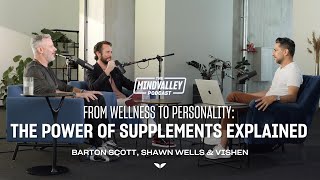
Vishen Lakhiani and guests explore how specific supplements shape mood, energy, and focus. They discuss magnesium, lithium, zinc balance, and compounds like PQQ and spermidine, emphasizing that what works depends on your individual biology and mitochondrial health.
Chapters
So antidepressants.
Antidepressants. This whole idea of just serotonin being the only one that matters is deeply flawed.
Unbelievable. Guys.
Nutritionist and dietitian, John Wells.
Sean Wells.
Sean Wells.
He's formulated over 1,000 supplements, foods and.
Beverages and patented over 25 novel ingredients.
I'm excited about this one.
I'm blown away.
They found that in the US the areas that had the lowest levels of lithium in the groundwater had the highest rates of both depression and, and unfortunately suicide as well.
Barton Scott, Biochemist, inventor, behavioral nutritionist and.
International speaker, founder and CEO of Upgraded Formulas. What you're saying is that probably want to test ourselves like every three months or so.
It's a lot like us going on a road trip together. How many times do we look at navigation to get to our destination?
Once mito is the next keto. So if we can increase the number of mitochondria, that's going to have a profound effect on disease, aging and day to day energy.
So we're actually seeing a 390 day improvement, which is huge for working out and certainly for sex.
By what I'm discovering. So let's talk about my two brilliant guests today. These two incredibly stunningly smart, handsome gentlemen. Barton Scott. In 2015, Barton developed a unique industrial process using his background in chemical engineering to produce a new category of minerals called stabilized nano minerals using a nanoparticle technology that causes these minerals to absorb much more easily into your body. Barton's magnesium supplement. Upgraded magnesium is what I personally choose. Now the second person over here is the brilliant Sean Wells. He has formulated and patented 25 novel ingredients including paraxanthine, tiacrine, dynamine, dleucine and dihydroberberine. His book the Energy Formula has been recognized as a bestseller in multiple categories. And Sean, you were right here in Tallinn, Estonia last year for Mindvalley University giving an incredible talk and got a massive standing ovation. And I'm so proud to have both of you wonderful people on the mindvalley show today.
Thank you. I'm excited to be here. We're all friends. This is amazing.
Sean, what, what are your thoughts on this idea of supplements and personality? So what, what was going on with me when I noticed my personality changing with 5 HTP and GABA?
It's a great point, Vishen. Neurotransmitters are affecting exactly what you were talking about before. So 5 HTP is in that tryptophan melatonin serotonin pathway and GABA is a neurotransmitter as well. GABA is associated with relaxation, serotonin, with mood, appetite, these kind things. But what's interesting is with depression we see all the neurotransmitters go down. So that's acetylcholine, norepinephrine, histamine, gaba, serotonin, dopamine. And this whole idea of just serotonin being the only one that matters is deeply flawed. And we've seen two meta analyses, one in 2017 and one in 2022, that looked at all the studies on SSRIs, the selective serotonin reuptake inhibitors that are most of the mechanisms for how antidepressants work as far as big Pharma. And they found that they largely do not work and may actually cause more harm than good. So antidepressants, antidepressants, because they're looking at this one pathway on this one neurotransmitter. And while that may work short term, there's a cascade that happens just like with hormones. Like when you, when you take one hormone and you boost that, well, it has a downstream effect on all of that.
What's going on with me when I notice my personality changing with 5 HTP and GABA?
Well, you certainly can have a serotonin deficiency. So it's going to help with that and it's also going to help with melatonin and your sleep. And for you, maybe that does cascade wise fix everything. Maybe it is purely a serotonin deficiency. For you that is possible. But it's also in depression, the body is smartly trying to say, hey, too much is coming in. We don't want to feel this much, we're sensing too much. And you know, psychedelics go the opposite direction where they bring everything online and you feel everything. Your senses are super heightened in depression. They're trying to turn everything down and dampen it because you're traumatized. Now again, that works short term, long term you're experiencing less life and you're going into this depression circle going downward. And so that can be highly ineffective. So obviously it's ideal to do the things that improve all the neurotransmitters and it's great to do the stack.
What would you suggest? What would be things to look at if one was feeling sad?
So I do love magnesium. That is a nerve tonic that. Absolutely. And it's involved in hundreds of pathways. I do like your idea of GABA of 5 HTP of a way to boost acetylcholine, which is another key neurotransmitter for focus and deep thinking would be taking an acetylcholine esterase inhibitor called Huperzine A, and also taking acetyl L carnitine and, and something like Alpha gpc, which I know you love. So that boosts acetylcholine. And then for dopamine you can take L dopa, you can take paraxanthine, which. Yeah, exactly. Tyrosine helps boost dopamine.
And so you're saying taking these seven or so supplements that you mentioned can dramatically change our mood and pull us out of sadness or depression.
Exactly. But I do think it's important to do what you did and, and take one, assess how it works. This is the scientific method. Right. And then, you know, maybe a week or two later, take something else.
So for someone who's feeling sad, tell us the first, second, third and fourth that they should try in terms of supplements.
Magnesium 5 HTP. I think you're, you're right on the money. Magnesium 5 HTP, I think the GABA fourth and a fifth, parazanthine does boost serotonin and if your energy is low, that's really important. And Barton and I were discussing earlier that that ATP is critical for mitochondrial output. Right? So the cellular powerhouse. Right. We were taught in biology and we're also taught that there's one of these little organelles in the cell, but that's not true. In the brain there's many. In the heart, there's up to 5,000 energy dependent cells need more ATP and therefore have more mitochondria. So when we're energy depleted, when we don't have enough mitochondria or when they're not functioning well, we're not making enough energy, we're not feeling good, we're feeling tired, depression leads into that. So obviously looking at the mitochondria and boosting their function is going to be important.
And what supplement that does that? Well, so Many start with magnesium 5 HTP, GABA paroxentine test and you're going to see like with the first three, at least I saw a massive improvement in my mood. Now Parazen is really, really, really cool. And it's something that I now take when I'm doing long drives. Could you quickly explain what is paraxanthine? Because you help pioneer its popularity.
Exactly. So we have about 40 patents right now. We've done about 14 studies. This is the metabolite of caffeine. But quite frankly, I'm starting to think that caffeine is the precursor to paraxanthine because we're seeing Paraxanthine be the actual efficacious, active. It's the thing that's doing something. What we actually see with caffeine is it's the toxin, it's actually in plants to be toxic to insects. And paraxanthine is the thing that boosts dopamine, that boosts serotonin. The ones we were just talking about.
Is a component of the caffeine molecule with the bad stuff cut off.
Exactly. And it's also avoiding some of the metabolites that are toxic too, including theophylline and theobromine.
And what does that do?
So we're avoiding all of this toxicity and 60% of us are slow metabolizers of caffeine. So we have trouble metabolizing caffeine and we're stuck with it for days, potentially. While some people are fast metabolizers and they say, oh, I can have caffeine and go right to sleep, other people experience it 10 times longer than those people. And literally three days later you could have caffeine in your system and you're wondering why you're agitated, why you're tired, why you're not getting sleep. But everyone else is like, I'll have my third coffee today. And so for you, you're dealing with all this brain fog and fatigue and agitation and not knowing why. And of course, what are you going to do when you're dealing with that? I'll have a caffeine product, I'll have a coffee, a Red Bull, you know, whatever. So that is a downward spiral. And people, once they use paraxanthine, never go back.
You're right. So, so this is really interesting. So caffeine, which caffeine is the, is the second most shipped commodity in the world. The first is oil. Caffeine is highly addictive. I mean, think about second most shipped commodity in the world. But caffeine has some really bad side effects. Right. One of it is it's going to completely disrupt your sleep. It can make you agitated, it can make you more stressed out. And what Sean said is really fascinating. 60% of you do not metabolize caffeine. Effectively only 40% of the world population can actually metabolize caffeine. Caffeine has a half life of six hours. So if you take a cup of coffee at noon, at 6pm, half of that coffee is still in you. And at midnight, a quarter of that cup is still in you. No wonder you have difficulty sleeping. Now, parazantine is the caffeine molecule with the bad stuff removed, right? And Sean helped patent it. And so it is all the goodness of caffeine. But Sean, you can take it at 11pm and still go to bed.
I wouldn't do that. There is some stimulatory properties to it, but we have actually seen like I wouldn't take it maybe later than 7pm, but it is in pre workouts and people that work out in the evenings that couldn't deal with these caffeinated products are now working out in the evening and loving it and getting sleep. What's interesting is we're seeing HRV heart rate variability, which is a marker of resilience, actually improve not only, only over when people use caffeine, but over baseline with no caffeine. So paraxanthine is actually healing your brain. It actually increases bdnf, which is neuroplasticity, meaning like the resilience and malleability of your brain to take on new tasks. It's increasing blood flow to the brain. Nitric oxide, it's increasing like we talked about, serotonin and dopamine. So you feel better, you feel more confident, you're more productive. And it's increasing glutathione and catalase, which are the key antioxidants. So it's reducing oxidative stress. And if I was to look at how the brain ages, lack of blood flow, dopamine is highly correlated to like neurodegenerative diseases like Parkinson's, oxidative stress. You know, this is like. And lack of neuroplasticity. So what's fascinating is we're doing an E gaming study right now and we actually saw a continued improvement, a time effect the longer you use it. And caffeine, we saw a declination.
Okay, that's incredible.
Yeah.
So test these out and see how it affects your mood. And what you would likely find is that there's a massive shift in your personality. How would you describe that shift?
I mean for some people it's like literally turning the lights on and you know, it's there, there's no going back from. Because again, these neurotransmitters can be depressed because again, it's not just the neurotransmitters, but blood flow can actually be shunted from the brain. If we look at brain scans of people that are depressed, these insults in the brain look like a physical traumatic brain injury. Right. So now we're improving blood flow, we're improving the neurotransmitters. People are, of course there's like adenosine inhibition, which is Just wakefulness, which is what people know from caffeine. But there's all this other stuff.
Amazing. Now, button, I want to. I want to hear your viewpoints.
Yeah, well. Well, one thing I would ask to. What's your general view with, say, HT5 HTP and taking that daily? What's your take on that?
I mean, I think it's, you know, it depends from person to person. This is where bio individuality comes in, because we're talking about, you know, messing with neurotransmitters. So this is where I love the idea of you. And of course, dose matters, right? There's a dose response. So, you know, for one person, it might be 50 milligrams, another person, it might be 200 milligrams. One person, it may be great in the morning, one person, it may be in the evening. But certainly we know that these impact the neurotransmitters. And then if you're taking other ones, it's going to certainly play in. And obviously, if you're taking an SSRI could have a huge impact.
So, yeah, on the SSRI thing, that's interesting. Yeah. And my personal belief is with elements, you're getting those from food, you have to have them some way, shape or form in your diet. That's just a fact of sort of like E equals MC squared is a fact of physics. And we have facts of chemistry, like the periodic table. I coined this phrase, periodic law to really exemplify the importance of elements like you're, you know, that we can for sure take daily. Everyone's biochemistry is going to for sure adapt to that.
And you said that this is what mineral deficiency feels like. Poor sleep and early death, lack of energy, feeling nauseous. And for those of you who are watching or listening, if you say yes, if you're feeling any of this, this could be a sign of mineral deficiency. Tingling in hands and feet, irregular heartbeats, moodiness, high blood pressure, Brit nails, heart attacks, feeling confused or spacey, flabby or loose skin, cold hands and feet, thyroid issues, hair thinning, bone fractures, impaired vision, headaches and migraines and fertility issues. A lot of this signal that you have a mineral deficiency. And again, the good news here is that it's not you. Your body is not broken. Your body is simply lacking something that it needs, and it's easy to get this thing. Barton, tell us about this research from upgraded formulas, and let's go a little bit deeper into some of these.
Sure, I'd love to. One of the things you're talking about There moodiness, which is exactly what Sean was touching on with SSRIs as well. And serotonin, like you were talking about earlier, is lithium. And there was an amazing study that's so interesting as a groundwater study, and they found that in the U.S. and this is true for any country, that the areas that had the lowest levels of lithium in the groundwater had what, the highest rates of both depression and unfortunately, suicide as well.
Wow.
One of the products that I put out, an early batch to tell a brief story, was from an ex girlfriend who was taking it. And I didn't know this at the time, but she was taking an ssri and she actually stopped taking it without telling me. She was on it without telling, without anything. But she found that she didn't really need it, so she'd stopped. That was her choice. It's not. This is not advice. And what happened was that she did feel a lot better. Her personal story, she. This had lithium in. It was early batch, those pilot batch, so we ran out, had lithium, it had some of our magnesium, had some blood sugar balancing things like chromium and fulvic acid and trace minerals, and she didn't need it, and she felt brighter. She felt like herself again, which was amazing. And she actually absorbed it because of our process.
That's really interesting. So this groundwater study on lithium. So how do you get lithium in your body? And is lithium one of the primary supplements that we should be looking at it?
It's certainly a very important one now, people, you know, it's a trace element, but we, you know, trace doesn't mean you don't need any of it. Trace just means you need a smaller amount of it. It's not a macro thing. Like you need a lot of magnesium every day to be fully energized. Because there's explosions as we're talking sitting here. There are just trillions of explosions happening in all of our mitochondria, like you're talking about. So, you know, to make energy, you have to have magnesium, you have to have oxygen. You actually have to have copper, too, which a lot of people don't know about. And yeah, so you, you. It's. It's essential. It's one of the things. It's one of the things we look at in hair as well.
Wow. So you're saying magnesium is important. Lithium is important. And lithium, how do you get that Lithium?
I mean, you can find it, you know, in. In your water supply. You can find in certain food, certain nuts will have lithium. But really, I think it's we come back to a phrase that we trademarked, which is test on gas and test. I mean, because of bio, individuality being a thing. And also, not only are you individual and we all have different levels here, but also you right now versus you, when you have even more energy than you, you start some other venture or you start, you go, you start training for a marathon. Your needs, whether you have high energy, low energy, you start to feel better, you take on more. So it's. We look at testing quarterly for that reason, because the example I always give is it's a lot like us going on a road trip together. You know, how many times do we look at navigation to get to our destination? Once. Many times.
I like that analogy. So what you're saying is that what supplements we need is something that we, we probably want to test ourselves, like every three months or so and modify our supplement stack.
Yeah.
Certain points in our life we may be low on testosterone. And you may take supplements like ashwagandha and pine pollen that increase testosterone. Yeah. Certain points in our life we may be higher than normal on testosterone. And so your supplement stack changes. You're not taking the same thing for the rest of your life.
Right. And there's, I mean, there's baseline nutrients that you'll always need. But something we see a lot is, you know, people are ultra high in calcium and they're taking. Not only are they maybe taking calcium, but they, they're often taking vitamin, which if they have a magnesium deficiency, could actually hinder, depending. Again, we want to look at everything all together, but if your calcium is so high that it's actually at a cellular level, impeding your ability to absorb other nutrients into the cell, it's a bad idea. So you should go and get sun. You should take magnesium. You should take cofactors like B6 to get it in boron as well, to drive it in.
So speaking of moodiness, I know you have a formulated stack that you sell for moods. Tell us about that.
Yeah, yeah, called it Upgraded Mood because it really is profound. A lot of people talk about feeling their anxiety, calm. You know, it just, just gives them more emotional bandwidth, essentially is the, the felt sensation of what's happening.
And what's an upgraded mood?
Upgraded Mood has lithium, which is actually an element. You know, people think of it as something besides that, but it's, it's an element now. Sometimes it's prescribed higher doses, but, you know, lithium's in there, chromium's in there. Chromium's great for balancing blood sugar. It's really truly essential. Like, I mean, and it. We absorb such little chromium, and anytime we. We eat something sweet, chromium goes out in. In our urine. So there's some magnesium in there to, again, calm. Not as much as in something like upgraded magnesium that you're taking. But, you know, there's. And then there's trace minerals.
So it's a complete mood stat that actually alters your mood. I love that. Now, Sean, you and I developing a supplement for moods as well. But what would be going inside this supplement?
So for mood, it just depends. But in the case of some of the things we're looking at, we can look at adaptogens. And this to me is core, because, yes, we can take things that can push the limits for a short period of time. Think of, like, how most pharmaceuticals work. They inhibit an enzyme, they block a receptor. And this works for a short period of time, but it doesn't work long term because the body loves homeostasis. It loves to find a way over, around and through. But these things that make you more centered, more resilient, instead of like, these come at a cost. Ingredients like a caffeine are the most legendary in all the cultures. So ashwagandha in India, rhodiola in Russia, ginseng in Asia, maca in South America. These are the most storied herbs because they center you and make you more resilient. It actually increases something called your allostatic capacity, your capacity for stress. So this is why they can. Like this is called bimodal. When it improves your sleep and your energy and concentration, it gives you both. And so that's what's so potent about adaptogens and what I love about them also, I think critical to mood and most of us deal with is varying levels of anxiety, you know, and as entrepreneurs, imposter syndrome, right. Or when we get on stage, I don't know if you feel it anymore, but I do is, you know, anxiety, right? Or what about with sex? You know, like all these kinds of things like that are so deeply personal. All of our traumas, like anxiety does play out and is draining. So things like hanukhiol from magnolia bark is incredible. Theanine is another herb that's really amazing from green tea. Again, magnesium, you know, some of these things are really potent. But hanukchjol, I would encourage people to explore with that magnolia bark. And there's even a metabolite called dihydranakia beta. And this is so potent, literally making you just feel so Zen and Relaxed. And that can. In that you can get to bliss, you can get to euphoria, you can get to better sleep.
I like what you said. Bimodal. They help you sleep better, but they also give you more energy.
Yes.
Is magnesium one of those things? That's bimodal.
Absolutely.
Right. So that's incredible. Right. So again, with magnesium, I personally use upgraded formulas. Magnesium. And you mentioned that you guys sell a all in one mood supplement called Upgraded Moods. I admit I haven't tried upgraded moods yet, but I do use upgraded magnesium and I use upgraded tea, which is an energy supplement. We'll talk about that later. Now what Sean mentioned is adaptogenic mushrooms and herbs. Sean, you gave us a long list and I think that's beautiful. But if you had to recommend the top three for someone to experiment with in terms of helping sleep and helping moods, what would be your top three?
Ashwagandha, Rhodiola and this? Magnolia bark.
Ashwagandha, rhodiola and magnolia bark. And we can get this as individual supplements?
Yes. And of course we talked about magnesium, but that's another stacks that we already touched on.
Right?
Yeah.
What brands would you recommend for these supplements?
I mean, across the board, like I love designs for health. Thorn, Zymogen, those are like very high end, but on a kind of more modest level of cost. But great quality control would be brands like Now Jaro. Those are very solid. Solgar, those are great brands.
Now let's talk about Ashwagandha and Radiola. So I'm an investor in Shroomwell and Shroomwell is an Estonian company that does adaptogenic mushrooms. So obviously I'm going to recommend Shroomwell because I've been taking their products. You can find them at S H R O O M W E L L Are there any brands you recommend for Radiola and Ashwagandha?
Again, I would use Thorn. Now those are probably two of my favorites.
Yeah, so we've discussed moodiness, but there are other things that we can impact with, with supplements. And I learned this recently from, from you, Barton. Supplements that actually boost creativity and supplements that boost cognition, mental processing. Primarily zinc and copper.
Right.
Tell us about those.
Well, this is really interesting too because for the first time ever, zinc was. A lot of people got the advice during COVID during the pandemic to take what? Zinc. And that's, that's really dangerous if you're not looking at your copper levels. And you're also high in iron. So we need copper to process iron. And a lot of people are already high in iron, believe it or not. And that leads to going gray faster, that leads to aging faster, that leads to a lot of different issues. It's literally like damaging your arteries. Zinc and copper, specifically, I really teach people to think of zinc as a masculine and copper as a feminine. Now, we both have. All of us have both, right? And we need both. But when you have too much zinc, imagine if you're in a relationship, which is really interesting, and you come together, you have this polarity, this attraction, and then zinc and copper get dysregulated because one of you start taking too much zinc or too much copper, you start drinking cacao every single night and. And polarity changes because of the chemistry. It actually can happen. And also, interestingly enough, during sex ejaculation, you're losing zinc a lot as a guy, which can also change its level. So. And there's a lot more to go into there that we could go into. But think of zinc.
Fascinating. I had no idea this even existed. Yeah, Sean, I saw you nodding as Martin was speaking about this. Tell us your take.
Well, zinc is critical, as Barton was alluding to, for, like, reproductive function and healthy spermatozoa, sperm cells and just testosterone in general and a number of those hormones in that pathway, dhea, dihydrotestosterone, all those kinds of things. And then immunity, as Barton was alluding to as well. Critical. Critical to immune function. I do like the idea of sometimes, if you're immunocompromised, boosting zinc, but for a very short period due to what you're saying, like maybe like two weeks. But then. He's right. Like, you can deplete. They have similar valences, so they can deplete copper and then you can end up anemic.
Copper, anemic, which no one talks about ever.
Exactly. And iron, as he was talking about, is the most fascinating mineral there is, period, because it's so critical for life. Like the most critical mineral for life, I mean, literally carrying oxygen, right. But also the most toxic and the most damaging. So what is like oxidation? Like, I mean, think about, like that rust, right? That's. That's like, that's what's happening in your body. And there's so many points in your body that if all these checks and balances aren't there to handle iron, the transport of it, the storage of it, you can have terrible consequences. So iron's super fascinating.
So I personally give blood at least every two months for this reason, and it's helped and it can actually help reverse going gray because giving blood can.
Okay, whoa. It just blew my mind here. So giving blood can help reverse going.
Gray, giving blood and also supplementing copper. So one of the other products we have is upgrade copper. We have it in peak thyroid, which people take a lot.
Taking copper can reverse going gray.
Yes.
How does that work?
Yes. Well, there's a lot of different enzymes there, but when you have too much zinc, that. That relationship's off. And again, copper is needed to metabolize iron.
Right.
So as Sean's saying, you know, you have to have iron. We would die without it, and too much of it is toxic. It'll kill us. So this is why I love. You know, don't get me wrong. I like other tests, too, but if it's just so essential to look at the elements, and the best way to look at the elements collectively is with hair is what I found. And that's where we see all these things, where you see personality exhibiting itself, and then that ultimately becomes destiny if you don't do anything about it. So zinc, really, you can think of as is overly analytical at the far end of the spectrum of too much zinc. And copper is overly feminine in that, you know, that what that looks like is creativity to the point of starting a million projects and following through very. On almost nine.
Okay. My God, you guys just blew my mind. Okay, so what you're saying is that supplementing zinc and copper can boost our creativity and boost our analytical skills, but there's a subtle balance between zinc and copper. Right. And then you also mentioned iron, and that many of us can have too much iron in our system, and you eliminate iron by donating your blood every two months. And you're saying that this cool side effect reverses graying. Now, by the way, you don't have a single gray hair.
Yeah.
And every time I have a couple. But yeah, but when I've introduced you to people, people have often looked at you and go, my God, your skin is so good, so you must be doing something right. And, Sean, you've got amazing skin as well.
But a lot of my love, my gray. I've had it since I was 20.
So, yes, sometimes just genetic things.
So.
So that's crazy. But. But where do we start? Where do we start? Should we be taking copper and sync daily? Yeah. Is there a risk of over supplementing?
Testing. Really? Test on guess. Going back to that phrase we trademarked.
Is like, so what type of test would you recommend to understand our copper, zinc, and iron levels?
Yeah, our HTMA ships throughout the world. So our HTMA Yeah, our HTMA IT upgrade formulas. In other words, ships.
That's a half hat test. You snip out a certain amount of your hair, you ship it to Barton's company and we get back results that show us our zinc, iron and copper status.
And by the way, what Barton was alluding to, we were talking about last night, this donating blood, giving blood is correlated to living two and a half years longer. This is a stunning statistic that almost there's nothing else you can do that has data like that, and that's with men, that if you donate twice a year, and Barton's doing it more than that, but if you donate twice a year, it has to do with the buildup of iron from men. We don't have the menstruation process that women have. And there's even some biohackers that literally cut themselves to do bloodletting or use leeches to get rid of blood.
Great grace.
You can go having more growth factors, also more stem cells as well. So this is like an anti aging process.
By what I'm discovering from speaking to the both of you.
One of the other really interesting things is that. And a lot of people get this wrong. So we have a nutritionist here actually during Mindvalley University who goes, and actually she has a script from her doctor to be able to give blood twice a month because her levels are high. Now, not every woman is that true. But she's, you know, she's still having regular periods. Right. She's still menstruating. And a lot of the advice that you hear, well, doctors will just write it off because they don't actually understand that we have something in our body that is an iron recycling system. And this actually recycles over 95% of the iron that we take in is recycled. Because as Sean saying, it's, it is, it's mission critical. It really is mission critical. But we have too much of it often. So our body will store it into tissues and then we check blood and we see that we're visioning you're low, you need to supplement iron, by the way. I mean, we have an iron supplement, but I always want people to test before and then if they need it, then they use it. So it's absolutely critical to understand too much of that will rust us from the inside out because it's stored in our tissues and it gives us something called oxidative stress, which is the hallmark of aging.
That is crazy. So what you.
So your dad actually came up to me last night and said, hey, how can. How can I. I went to your talk yesterday. Loved it. How do I age? I want to age 10 years in reverse. I was like, this is a great question.
Amazing.
And I looked at his eyes and I was like, you actually, I can tell from your eyes. You actually. And this is common, especially for men, especially of his age, have. You have iron overload. And I could just tell by looking.
Wow. And. And I want. We. We're going to explore that. And thank you so much for supporting my. My dad, who is in his mid-70s now. Now, what you just said is test for copper, zinc and iron and then know the right action to take. Now, in terms of copper and zinc, should we, should we be taking daily zinc and copper supplements?
I think so, but it's my opinion, at least it's based on your levels. You know, again, looking at your test, I, I personally. But again, this is my level, so maybe someone has been supplementing zinc for quite a while. They need to be very cognizant of that. Like Sean was saying too, like for a sprint, a lot of, you know, some of these things outside of elements. But even as you're seeing now you might be low in copper, if you're supplementing zinc, that could, that could really be problematic. It could make you too analytical. Like you talked about earlier, you know, where you come into the office and you're like, let's get it done. And you don't. And you're not. You're actually missing some of the creativity because you're missing copper.
Copper helps. That's. This is wild, guys.
And then, and then too much copper. Also bad.
Now let's go on to energy. Yeah. So we spoke about moods. We spoke about analytical moods and create creative moods, overcoming sadness and happiness. And what I'm learning here, much of this stuff I'm learning for the first time and I'm, I'm blown away. And I can't wait to put some of these in practice. And I hope if you're listening, you're feeling the same way. But let's go on now to energy.
Yeah.
How do we overcome those days when we just feel so low in energy?
God.
And we have so much to do.
Right? I. I mean, one of the things that, that, that I've put together is this stat called upgraded T, which does a couple different things. And this is important, by the way, for both women and men. Women after about 25 also have low testosterone. And, you know, a lot of people are not aware of this fact, but women, a healthy woman has over at least 10 times more testosterone than estrogen and sometimes up to, I've seen stats as high as 30x. So it's very, very important. And it's one of the things that, you know, causes low sex drive and poor concentration. And, you know, with that comes the create, you know, inability to finish tasks for both men and women. So there's a lot of, I mean, there's purified shilajit, which I always recommend. Which I recommend. And it's a certain form we use in that blend that's studied, actually studied and also has low levels of heavy metals. So and that's known, that's been known through literally millennia as a fatigue destroyer. And that's one of five ingredients in that stack. And it's called Upgraded T. Upgraded T.
So I take this, I take this on days when I know I'm going to need a certain jolt of energy, like when I'm organizing a conference or an event. But you mentioned something to me. You said don't take it after 5pm because it might disrupt your sleep.
Yeah. It has something it called S7. That's that I know Sean knows a lot about as well. I'm sure the, the S7, you know, has some green coffee bean. So a really small amount. So yeah, unless you're having a late night, then you wouldn't want to. And that's the case for most of these things are going to give you energy. You're going to, for most of them, not all, you're going to want to stop them after a certain point in the day, like 3pm or so, like, no, no coffee because of people being slow metabolizers. So.
And so you can get upgraded magnesium, upgraded moods and Upgraded tea from upgradeformulas.com Please use promo code Vishen V I S H E N. If you appreciate this podcast, want to support our work and have us continue bringing amazing guests like Barton and Sean, use promo code VISHEN V I S H e n on upgradedformulas.com and I use upgraded magnesium daily. I use upgraded tea when I need to. I'm yet to try upgraded moods, but I trust I cannot wait to try it. I trust it's going to be incredible. Now, Sean, what is your advice on boosting energy with supplementation?
I'm excited about this one. This is all the anti aging stuff right here. What I love about anti aging, right, like what it takes to reverse aging, reduce aging, is also if you're not elderly, is going to optimize you. Now, I often found when I was formulating in sports nutrition that I would take ingredients from anti aging and they had profound effects in sports nutrition performance and vice versa. I took sports nutrition ingredients and gave them to the elderly and they had anti aging effects. And so we need to shift our thoughts on this. But core to everything mito is the next keto. The mitochondria are so key. Every metabolic disease, which by the way 99% of disease is metabolic in nature, only 1% maybe is genetic. Everything metabolic is mitochondrial. And the mitochondria are again key for energy and is key for biological versus chronological aging. So how well you're aging, not your number of years on the planet, but how well your cells are aging. And so if we can increase the number of mitochondria and we can increase their function with certain ingredients, then that's going to have a profound effect on disease, on aging and day to day energy. So some of those ingredients would be cofactors for what's called the electron transport chain, which is PQQ and CoQ10. I do like Shilajit. There's actually data on increasing ATP with that NAD you've probably heard about. Right. Because that's a co factor in making ATP in the mitochondria. So if we can boost nad, that's going to give us more energy. The problem is as we age, NAD production goes down and the enzyme that breaks it down goes up. So we're making less and we're breaking it down faster. So that's a double whammy. That sucks. So find ways to increase nad, which would be things like nmn, which is probably my favorite way. And then even niacin, the full flesh niacin I'm a big fan of. But some, some people like really don't like. It's called paresthesis where you get the, the tingling. It kind of looks like a sunburn, but you can kind of work your.
Way up to it as a vasodilator.
Exactly. And really cool side thought there is if you go into like a red light sauna or you use like a joov light or any one of those things, it would be intensified by using that niacin. Right. So that you could get extra effect. Also on the inhibiting NADASE or CD38 side of the equation would be the polyphenols, which when you look at like the blue zones where people live the longest, like we were in Sardinia together, that's where you see diets high in polyphenols. So what are those? Those are things like quercetin and Onions and apples. EGCG and green tea. Catechins and chocolate. Chlorogenic acid in coffee. Resveratrol in red wine. Blueberries have terrastilbene. But probably my two favorites right now in terms of how efficacious they are, is fisetin and strawberries. But you can get the supplement. And then apigenin, which comes from parsley. It's a little bit sedative, so that one would be great at night. And these will inhibit that enzyme that breaks it down. So you're doing things to boost NAD and also inhibiting the breakdown of it. Another important aspect of the mitochondria would be protecting the mitochondria. So ergothioneine is an antioxidant that we're now discovering could be the next new vitamin. So it actually comes from mushrooms, organ meats, beans. But we don't get enough of it in the diet, like a lot of these things. And what's crazy here is, again, we don't make it ourselves. We've shown that there's a deficiency. You have cognitive decline when you don't have it. Therefore, it meets the definition of a vitamin that there's a unique transporter system for it in your body. And again, this I can only think of, like, iron. And there's a unique storage system. So clearly you've evolved to need ergothioneine. And it protects the mitochondria. When we take other antioxidants, there's actually equivocal data that antioxidants can kind of impair the disease process or aging in the wrong way. Or like when you take them around working out, for example, you know, it can impair the adaptation of a workout. It can actually protect cancer cells. So, like, when we take too much antioxidants, it can actually be counterproductive. But it's been shown that this mitochondrial antioxidant is where you want to hone in on. So ergothioneine. Very incredible. And then lastly, spermidine. I know it sounds weird. Everyone laughs when I bring it up. But it's an autophagy mimetic. So there's a really important process that happens when you're fasting in particular, which is why intermittent fasting, extended fasting is so great that there's these detox pathways that are enabled when you're not eating, when you're not trying to assimilate and digest and absorb and. And secrete and excrete, that you have this amazing process that's going on that's clearing out the bad stuff out of the cell that's actually detoxing a number of pathways and healing your organelles, making your cells function better. And so it's very anti aging.
And so I love what you're talking about. So firstly, what you're saying is energy and anti aging are very related, very similar. Would the term be bimodal? Yeah, we're seeing the same recurrence of that term. I also noticed that the. The way both of you teach, and which is why it's so great to have both these gentlemen on, is because you have your company upgraded formulas and you have complete stacks. So people who want to buy premium supplements and you. Premium supplements that overall improve mood, you might just go to upgraded formulas and get that mood supplement. People who want to buy more commoditized supplements and then mix them together, test them, and customize it for your body. You could take Sean. Well, spa. But it's also harmless. If we take the six that you describe for energy and we still take upgraded moods. Right. Or is there a risk of over supplementation?
No, not with elements.
Unbelievable, guys. So you've learned how to overcome sadness, how to increase creativity or analytical skills, how to boost energy. Now, let's go on to another thing which is really curious. Confidence. Confidence is one of those things that is incredible how, how supplementation, as well as hypnotherapy, can impact it. Now, Barton, firstly, do you have any stacks that improve confidence, swagger, or one's belief in themselves?
Absolutely. Really? Our overall process of understanding what you're deficient in is a direct yes to that question.
Because your moods change. And when you are. When you know you can control your moods and you have mastery over that, your confidence goes up.
That and Absolutely. And also just your resilience, your energy, you know, when you're not anxious, you're what you're more. You're likely to be more confident. So upgraded mood, Upgraded t. Peak thyroid for your thyroid. And what does peak thyroid do?
That's a new supplement you just mentioned.
Yeah. So peak thyroid is a blend of four different minerals that also are necessary as raw ingredients to build hormones that, you know, really the, the job of that gland and all glands are to produce hormones. So with adrenals, you have certain hormones. With thyroids, you want to produce certain hormones. So that's the thing. And, and with adrenals, you know, you need magnesium, which we talked about, potassium, sodium, to produce from an elemental standpoint, the hormones that you need. Without that, you don't have the energy. So that. That's essential. And then upgraded teas are really a broad spectrum of five different nutrients that are great for a lot of things. It boosts fertility for people. I mean, there's one in four couples right now that are trying to conceive that can't. And we're about to do a clinical trial on that product as well to show the, the, you know, the benefit there, the boost. But it's also confidence, too, because your testosterone goes up just from the clinical, clinically studied ingredients in that on their own without even the synergistic effect. There is about a 30% improvement in 90 days in studies in those amounts and those ingredients, if that makes sense.
Improvement in what?
In Testosterone, specifically, in 90 days.
That's incredible. And the testosterone and 3 act. A man's confidence.
Absolutely. And a woman's.
Yeah, yeah. Certainly for the reasons we already mentioned.
Right.
Phenomenal. Now, Sean, what are your views? What, what can we do to elevate our levels of confidence?
So I would be addressing, as mentioned, testosterone. Also. Dopamine is probably the highest, the most important one when it comes to kind of confidence and swagger. Serotonin related to mood and then anxiety. Right. So when we're anxious, we're not going to be, you know, feeling ourselves as much, obviously. Maybe even I could throw in oxytocin. So interestingly, with oxytocin, I'll mention that, like, that's that, that love, you know, it's like when we give someone a hug, oxytocin is released. Also, this is never mentioned. It also makes us tribal. It's found in hops. So when we drink beer, think about how people, like, fall in love but also get tribal. And like, I'm going to beat this guy up because he's looking at my girl. So that's really interesting. But there are aspects of hops. There's actually a compound called xanthohumol that increases oxytocin when it comes to dopamine. L. Dopa, as we talked about, you can get naturally. Tyrosine is going to boost dopamine production and then, yeah, magnesium and then paraxanthine, again boost dopamine pretty considerably. Serotonin, we mentioned five htp, but I also, like, only occasionally because I don't like this reuptake inhibitor kind of way of inhibiting something like a lot of meds that we talked about do. It only works short term, but when you're depleted, it's a great way to replete, meaning increase the levels, but just don't do it long term. That goes the same for that acetylcholinesterase inhibitor called Huperzine A that I mentioned earlier. Only use that on occasion. You don't want to take that every day or else your levels get too high. So in this case here, we want to take Kanna. Kanna is an herb that's a natural ssri, so selective serotonin reuptake inhibitor. And remember I said I don't like using those things indefinitely.
Right.
But it makes sense before a big experience to lift your levels and also potentially after an experience that was expansive, where you're kind of, you know, feeling contracted. Right. So it can reduce that level of contraction. So Kanna is K A N N A. And the herb is also known as skeletium tortuosum. But it is a potent SSRI that occurs naturally herbally. So you could combine that with 5 HTP. And there's also other things that help with serotonin, like D3 saffron, which, you know, is popular and in many Indian dishes. It's amazing as well.
That's incredible.
So actually that this brings up a really interesting point that I wanted to bring up, is that, that a lot of us are hyper vigilant, especially type A entrepreneurs. We're in sympathetic nervous system way too much. And we're, you know, people may have heard this, that there's sympathetic and parasympathetic. Sympathetic is fight, flight, or freeze. Parasympathetic is rest and digest. But what's interesting is when we're hyper vigilant, we're always in sympathetic nervous system. We are resistant to taking in nutrients. We are resistant to utilizing those nutrients because we're literally like hitting the gas like, you know, like in a car, just depressing the accelerator like full blast all the time. And we need that time to heal. Remember those pathways that I was talking about, like the autophagy pathways and, and that healing. We're not taking in those nutrients. So that's really important to think about at the. As finding ways to relax so that you can use these nutrients that we're talking about.
So interesting. So we're actually absorbing these nutrients more if we are in a relaxed state, if we're in meditation even, I guess if we are just chilling at home and watching Netflix.
Exactly.
Recovering from a crazy busy day.
Exactly. There's actually Dr. Matt Cook has the ketamine reset. And so he'll. He'll administer ketamine by IV and you'll be in this relaxed state. And then he'll administer CoQ10 and NAD and potentially exosomes so that you can have that full reset, not just of your mind, but of your body, so that you can be receptive.
And that brings us to the next question. Okay, what are the supplements for relaxation?
Controversial one right off the bat is the hormone melatonin. So this is hrt, hormone replacement therapy. Highly bio individual. As we age, it goes down. But obviously the more we're looking at blue light during the day, devices, you know, around TVs, iPads, phones, especially when we're in dark rooms looking at these. And what really scares me is the Apple device that's like on your eyes, this is gonna blow out like blue light and you will make zero melatonin.
Wow.
And for those of us like you and I that travel a lot, I think it's really important to do a circadian rhythm reset with a high dose melatonin. So melatonin's highly variable. It could be anywhere from 0.3 milligrams to 10 milligrams. You just have to experiment with it. But I encourage you to. I also love cannabinoids. The endocannabinoid system is a critical system. And these cannabinoids are massive for our health. They're important for mood, for immunity, for pain, for depression. All these things it's critical for. And yet we don't have doctors of the ecs. It's called the master regulator system. We have doctors for, you know, the kidneys, doctors for the lungs. We don't have doctors for the ecs. So again, this is highly variable because we don't know which cannabinoids you're deficient in. So people experiment with these. And I would encourage you to try cbd, cbn, cbc, CBG in different doses. But for people that it works for, it often works profoundly.
CBD has been. Has been incredible. I buy it for my mother. I've provided it to people in my family who are going through terminal cancer and in just so much pain. And CBD has been a huge alleviator of that pain.
And you mentioned gaba, a really important neurotransmitter that's critical to sleep. And certainly if you're depleted and you don't have enough serotonin, it depends. Like, serotonin can make you sleep less or it can help you sleep better.
And what about L Theanine? I've heard you mentioned that.
Amazing. So that's a great relaxant. Anxiolytic. Again, like a mild anxiolytic, of course, Magnesium. This is, this is like the one where magnesium is a Huge one.
Melatonin a few times a week. I. I put you say don't take melatonin every day, but a few times a week when you really need these.
Same with, same with Gaba, I believe.
It'S like 20 cups of green tea.
GABA. GABA 5 HTP. Like not, not every night on GABA, 5 HTP. Or melatonin from my perspective, really. But everything's. I agree with everything Sean's saying. Yeah.
Okay. And here's.
And there's. Sorry, there's some great herbs. I mean, going back to the classic sleepy time. Like, it's a, it's a great tea. Like, there's chamomile, valerian. Like, some of these are great herbs that are just very relaxing tonic in nature, meaning that it just kind of gives you more ease.
Ashwagandha, as you mentioned earlier.
Now, let's talk about focus. What are some of the supplements that you'd recommend for focus? Barton, let's start with you.
Yeah, I mean, the stack I put together is not so much a nootropic quick. It's a, it's a five ingredient blend of again, elements that we, we see are often missing from hair analysis. So people, most people are deficient in these and without them, you literally can't make memories like the actual. So, yeah, it's, it's really essential that that blend is called upgraded memory.
I see.
And it's one of like I. In my slide yesterday, Dave Asprey, I used one of his texts which says, you know, upgraded memory is legit. He. That's his favorite, I think, from, from what we do. And, you know, it's. It's a blend of different elements that, that you absolutely need and that support everything we're talking about. Like when, when Sean's, you know, talking about paraxanthine and things like, it's just in support of. Right. So we need these elements just like we need magnesium to feel safe. Otherwise you won't. You guarantee that someone from, from a personality standpoint will be anxious if they're low in magnesium. They will feel low, a low mood for sure. Just like with lithium, they will feel a low mood as well. So really looking at the flip side of that coin and kind of going, you know, here you go with that. But, you know, other things for focus. I mean, we talked about alpha gpc, which is huge. Tyrosine, which is huge. I like acetyl. In acetyl thyroxine. That form seems to work best for me. You know, you'll see L. Tyrosine in a lot of things, which is okay, it's, it's more ubiquitous. I mean there's a lot. You mentioned rhodiola, you mentioned ginseng. Maca is in our upgraded tea blend and we use one from Peru. The interesting thing about taking maca, for example, if it's not grown in some of these ways, you know, maca that's grown at sea level is just a plant really. If you take that plant now, now when it's struggling and it's up at 10,000ft in Peru, that's a. And it's the clinically studied version and they're extracting it a certain way, that's a totally different outcome. So you know, when this is the only downside, when you kind of go on and you search just, you know, broad maca on Amazon or something and you're not getting a certain form like Sean's patented certain forms of, of these nutrients that he's talking about. And then with upgraded T, I'm using certain patented forms that have been clinically researched. So I'm not just saying shilajit, by the way, again, heavy metals don't just do regular shilajit. Avoid those heavy metals. There's great consequences to accumulating heavy metals. They're very difficult to remove from the body once they're in.
Amazing. So the, the customized high end supplement that you'd recommend for that would be upgraded Memory. Memory Amazing.
Yeah.
As just like baseline support. Yeah.
So Sean, what about your recommendations? What supplements would you recommend for focus, clarity of thinking, being able to crush it at work.
Okay, so obviously again, paraxanthine is tremendous. I don't know anything like it. But going on from there, there's a really unique one. So we talked about bdnf, brain derived neurotrophic factor. That protein in particular is associated with neuroplasticity, which means the protection of neurons, your brain cells as well as increasing the, the creation of new nerve cells. So neurogenesis. So there's a really interesting plant derived compound called 7,8 dihydroxyflavone that increases BDNF and that is really potent I have found for increasing focus memory resilience of the brain. So I love that one. He mentioned Alpha gpc, that's probably my favorite form because again, acetylcholine, when you're talking about like deep thinking, processing, working through problems that's going to be really important is acetylcholine. So that goes back to like the alpha gpc, the huperzine, a potentially Acetyl L, carnitine, those are going to be really important there. I think that's like my, my most important ones I would say.
I mean GPC comes up again. That's something that's really powerful.
Another, another really interesting one for me has been this kind of came from out of nowhere and it was formulated in with my parazantine into a pre workout and then I was just blown away because I found that when I started stacking these two nutrients like I was getting a lot of work done is improving blood flow to the brain, which paraxanthine does, but it's this special form of arginine, a branded form called, it's in kind of the gaming world, it's called new level but it's also called, gosh, what's the name in sports nutrition? Nitrosigene. So it's called nitrosigene in sports nutrition it's called New level. N O O L V L in gaming, but it's the same compound and it's a special stabilized form of arginine and it's a lot more bioavailable and it really enhances blood flow to the brain. So it's going to like basically supercharge a lot of these nutrients and it's been amazing for cognitive focus.
Amazing. So what I want you guys to do to download this entire list is to go to mindvalley.comstacks, i repeat, mindvalley.comstacks and you can download a PDF with all of these stacks that we've been sharing today. So just a quick recap. We've covered moods, we've gone specifically into creativity and analytical thinking, improvement. We've looked at improving energy, we've looked at confidence, we've looked at relaxation and we've looked at focus. And we're about to go into the final stack, which is libido. Right, so seven different areas and you're going to get the full list from two of the most brilliant minds in the field. And what I love about this conversation is that both of you actually are competitors in some way. You're friends, we're all friends. We have companies that compete. But this is why it's so good to have a Barton here as well, because we get to challenge each other, you get to hear two different viewpoints and you can decide which procedure is right for you. Whether you want to go with high end supplements which are put together in a unique pill such as from upgraded formulas, or you want to go with Sean's approach, which is getting the individual ingredients and then testing. So I hope you appreciate the beauty of having two competitors sitting here with me who also happen to be great friends with a high degree of respect for each other. Now, that said, let's go to the final stack. This is a fun one. Libido. When our libido goes down, it could affect our relationship, it could affect our self confidence, could affect our energy and how we see ourselves. And love and relationships is such an important aspect of life. Why not, you know, why not be in that state where you want to ravish your partner in a beautiful way because you are so madly in love? How do we increase libido with the right supplementation?
Okay, for me, this is going to like, you know, breaking this down. There's going to be some overlap here. Again, libido is going to revolve around testosterone, anxiety, oxytocin and blood flow. Those are going to be like the things that I would kind of attack. And the women listening may not know this, but Viagra, which is a PDE5 inhibitor, phosphodiesterase, was actually invented for women. And blood flow is just as important for a woman as it is a man that is the same. A clitoris is the same as a penis. It's a phallus. And blood flow has everything to do with sensation. And for a woman, wetness. And so that clitoris needs to be engorged or erect, if you will, just like a man's penis needs to be. If your penis isn't erect, you're not going to have as much sensation and certainly enough performance. And so this is going to do everything for your confidence, how much you feel, the enjoyment you get out of it. So blood flow is really critical. So again, going back to that nitrosigene, that special form of arginine, I think would be amazing. There's things like ginkgo biloba, which are great potentially as well. Vinpocetine is another ingredient, if you can get it. That one's harder to find now, but those are great for blood flow, I think. Anxiety, we already mentioned, like the magnolia bark, the theanine, the magnesium, of course, Testosterone, we talked about about zinc, we've talked about magnesium, we've talked about the adaptogens like ashwagandha and rhodiola in particular, and aramaca. Those are all great. Boron, There is data with boron exactly as well. So these are great ways. And then lastly, I mentioned the oxytocin one, which potentially this xantho humal extract from ham could be really interesting. Again, I wouldn't overuse a lot of these things. I would just use them as needed. Because here's the thing, too. Like, some people think that if you're taking all these things all the time, that that now becomes your new baseline. And I actually believe there's, you know, truth to that. But at the same time, taking these things can be the training wheels to show your body how to feel, and then your epigenetics change, your body changes on a genetic level. It's just like when on my first psychedelic journey, I realized how I can love and I can be loved. Did I need the psychedelics to do that? You know, possibly not, but it was the training wheels that showed me how to feel and then anchor that, and then I was permanently changed. So, you know, those things can happen when you're taking these nutrients, these supplements, and you gain the confidence. And now, because you gained confidence, you know, now that comes into your performance. Right. So that's. That's important to. To think about as well.
Beautiful. So, Barton, what would be your advice? Anything that Upgraded formulas offers?
Yeah, absolutely. So there's one compound we haven't talked about yet in upgraded tea, which is LJ100. LJ100 is like the most studied thing for increasing testosterone, which is going to really help. We also have French.
And again, for men and women.
Yeah, for men and women. Exactly what you said earlier. Long Jack. Yeah, exactly. Yeah, Long Jack. So an LJ100 again, is the one that they're doing the clinical studies on. So when we hear about a certain herb and we hear this name where it's, you know, for example, we use maca extract, etc, and, you know, it really does make a huge difference how these plants are grown and how they're, you know, utilized in the formulation. It's huge. I mean, it's. There's a real craftsmanship and that they. They've actually done the studies on these ingredients and there's certain amounts of them, too. So, you know, we're using the right amounts from clinical studies in these. So we're actually seeing a, from a blood flow perspective with that blend. Overall, actually, just one of the ingredients in the blend were 300% and 90 day improvement in nitric oxide.
Wow.
Which is huge for working out, you know, even if you're celibate for some, you know, right now. So. So yeah. And certainly for sex. Certainly for sex. And just the vascularity.
Upgraded tea, right? Is that specific type of upgraded tea?
Well, well, yeah. Upgraded tea is. Is just our flagship product right now for that blend and it has five different nutrients and that are all clinically studied individually. And we're doing a clinical study on the effect of that product holistically right now for both fertility and yes, testosterone. So for fertility, for men and women, we're going to do a separate trial.
Amazing. Amazing.
One thing I would love to mention that this doesn't get brought up enough with libido. And this is a huge problem for men and women when it comes to libido is elevated blood sugar, that's chronically elevated. Insulin is too high. This has all kinds of issues with decreasing blood flow, decreasing testosterone. So a number of the things we talked about. So if your blood sugar is not regulated, you will have terrible libido, which.
Is why Sean's talking about fasting and autophagy and things like that, which I'm also a huge fan of. I've done an 11 day fast. I mean that I started fasting as soon as I had. I pulled my hamstring from sprinting, immediately stopped eating and it healed at by day eight from stem cells endogenously. So from produced within to heal that normally with stem cells it would have been $20,000 or so. And yeah, nitric oxide is just so, so essential with that, that group as well. I mean, yeah, this is, this is a great lesson.
Amazing gentlemen. This, this was a super productive podcast. And so again, again, you can get the detail notes and your supplement stack with recommendations in all seven categories by going to mindvalley.com stacks and put in your email address. Join the MindValley newsletter. Thank you, Barton. Thank you, Sean. Thanks for being speakers here at mindvalley University. Their talks are going to be available on the mindvalley Talks channel. And it was so great to have you guys on the show.
Thank you.
Thank you, Vision. This was great.
So fun.
I'll see you guys again. Short properly.
All right.
Sam.
More from Vishen






Brown Noise for Deep Focus and Concentration (Best with Headphones) | Gabriel Loynaz



Your Appointment With the Eternal | Guided Meditation with Michael Bernard Beckwith