Gwyneth Paltrow: The Goop 'Vagina' Candle That Broke the Internet (And Why It Worked)
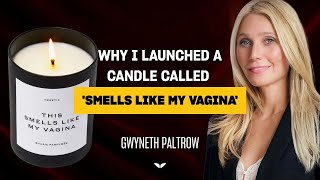
Live on-stage interview (Mindvalley) where Gwyneth Paltrow discusses Goop's origins, early content strategy, and provocative product decisions (notably the ‘Smells Like My Vagina’ candle). She reflects on conscious uncoupling, entrepreneurship lessons (learning on the job, blending intuition with data), brand values, interest in longevity/personalized medicine, and personal transitions including empty-nesting and aging. The tone is candid, practical, and reflective.
Chapters
If you are living in integrity, you can honestly bring anything into the world. And that to me is manifestation.
Please welcome the lovely and talented Academy.
Award winning actress, actor and entrepreneur, Gwyneth Paltrow. Gwyneth Paltrow. Gwyneth Paltrow.
She's founder and CEO of the lifestyle brand Goop. You have so many fans here.
Oh my goodness. Thank you so much. What a sweet, warm welcome. Thank you. Nice to be here.
So I have, I have a son who's 17 and I have a daughter who's 11 and they are big fans of the Marvel Cinematic Universe. So they are so excited to know that their dad today is interviewing Pepper Potts. But Gwyneth, welcome to Mindvalley.
Thank you.
First thing I wanted to ask you is this. You know, in interviews that I read about you, you spoke about connecting to divine energy, right? For inspiration for the source of all of your accomplishments. What does that feel like to you? What does it feel like when you're connected?
Well, I think that creative people are connected to something bigger than themselves. I mean, I think everybody is connected, has the capacity to be connected to something bigger than themselves. But I think for many, many years, when I was an actress, it's really the way that I was able to transform into playing other people. You know, I felt like I was channeling something from somewhere else or it's like, you know, my, my baby daddy, my ex husband always talks about songs sort of arriving to him from somewhere else. And I think there's something that.
Because Goop. Goop is an incredible brand as, as Mindvalley. We are so in awe with what you're doing with Goop.
Thank you.
Because you're making chakras and crystals cool again. Right? But it started out at your kitchen table. Take us through that journey.
Well, I was living in London at the time and it probably around the time I had my daughter in 2004, I started to wonder if there was, you know, the Internet was sort of relatively new and I, I didn't really think that there was a place on the Internet where I could go to find the kind of content that I was interested in. There wasn't a lot on wellness. There wasn't a lot on. You know, I was pretty early in talking about many of these subjects, which I got a lot of flack for at the time. But I really felt, I really felt called forward for reasons that I don't even totally understand, but I think I felt called forward to be a connector and to share information. I had this amazing life. I was Meeting all of these incredible thinkers. And so I started to aggregate the information in one place. And it started very small and just with a lot of heart. And then very slowly it started, you know, become the business that it is today. And we still have a long way to go, don't get me wrong, but it's been an incredible journey for me.
So when I landed in LA this time, the first thing I did is order goop pizza. I wanted to see what does goop taste like. That was part of my research for this interview. And I gotta say, the pizza is amazing. Really, really, really good. I'm not paid to say that. Gwyneth, what was the first product idea you came up with that took off that made Goop memorable?
I mean, I think it was really the content in the early days before we made any product or any pizza, which is gluten free, by the way. Our whole menu is gluten free, just so you know. So I think it was really the content. You know, I'm very passionate about travel and about food and about wellness and many other things. So I think that was really, really. I had so much engagement, I had so many people signing up for my newsletter early on, which felt very gratifying. And that was sort of the first signal that what I was thinking about was resonating with other people.
And I think there's something about the way your mind works that's really interesting. So many people don't know this about me, but I was married for 19 years and my former wife Christina, she's a dear friend, we co parent, she's in the audience. That's Christina right over there. So after 19 years, Gwyneth, Kristina and I decided to go through a divorce and we did conscious uncoupling, which you popularized. Gwyneth popularized this concept of conscious uncoupling. And it was just so beautiful, such a conscious way to bring something so special to an end. I wanted to personally thank you for that.
Thank you.
Because you gave us a new way of moving forward in life.
Thank you. Thank you so much. I, you know, it's funny, I just, I really thought that when my marriage was. It was clear that it was going to come to an end. I really thought about, you know, I was actually, it was very me the way that I was sort of doing a lot of research and interviewing people around when their parents had gotten divorced. What was the hardest thing for them, you know, hoping that I could, we could avoid the worst part of it. And every, everybody said the same thing, which was it wasn't so much that they got divorced or there were different houses, but it's that my. My mother hated my father, and she spoke terribly about him or my father, you know, used to drop us at the end of the driveway and refused to come in. And, you know, they couldn't be at holidays together. And I just thought, I would really love to try to do this a different way and genuinely try to put the children first. Which meant, you know, to really keep loving my ex and indexing into the amazing things about him and to try to stay a family, even though we weren't a couple anymore. And. And, you know, I have to say, it's funny because, again, like, we broke the Internet and people thought it was insane, and people were mad and making fun of us. And so it's really nice to hear you say that because sometimes when, you know, you go first, right? You get all the scratches from hacking through the bush. And that was an instance where, you know, at the time, it was very painful to feel so misunderstood, you know, when we were trying to do something in order for the kids to be less hurt. And now I'm so happy to see that it's become kind of more of an accepted thing and that it did help people in the end. So thank you for sharing that.
It. Thank you. You don't know how much of an impact that had on my life and the life of my former wife, Christina, and my kids. But here's the really interesting thing. The word conscious uncoupling. There was a book about it by Katherine Woodward Thomas. We went to Katherine Woodward Thomas. We got the rights for that. We created a course with her. We put it on Mindvalley. And now we have helped about 10,000 people go through conscious uncoupling. But it started with you and Chr.
Thank you. Wow. That's incredible. Amazing.
So one of the things that I'm really curious about is your brilliant business mind. Not only are you an incredible actress, I mean, an Oscar in your 20s that. Wow. But I read an interview about you in Vanity Fair. You spoke about Goop. You spoke about Ibita. You spoke about how you are optimizing your team. Where did that business savviness come from?
Gosh, I think I've really learned on the job, and therefore, I've made a ton of mistakes. But, you know, to be an entrepreneur is. I don't know how many entrepreneurs are in the audience. I imagine quite a few. So you all will know that there's really. I mean, you can go to business school, of course. You can work your way up through corporate American ladder, but when you start a business, it's one of one and you have to learn how to run that business while you're in the business. It's like you're building the plane while you're flying the plane. And it can be incredibly overwhelming and terrifying. I think I've always had a very deep curiosity. I love to learn and, and I also think business is fascinating. Like I just like the strategy piece is so interesting to me and it's a way of expressing creativity that you know, you can, you're putting something into the world for other people to use or think about or enjoy or whatever. So for me it's like this great intersection between a constant education, constantly learning about my business and you know, it changes in every iteration as those of you who are entrepreneurs know and just maintaining that agility and the focus and, and the open mindedness to know when you're making mistakes like how quickly you can learn from them and pivot. So it's been so, I mean I, I can't believe I've been doing this for 17 years already and it's been the most rewarding and the most difficult thing that I've ever done.
And you have a brilliant marketing mind. So many of the products that GOOP has launched have just been edgy, exciting. The press can't stop talking about them. Question. Before you launched a candle called Smells Like My Vagina, was there, was there a part of you that thought, you know, maybe I should start with lavender room spray?
You know that product is so fascinating because, So we made non toxic. Of course we make everything non toxic on the non toxic fragrance and candles with this amazing guy named Douglas Little and he's a friend and that's very my sense of humor, which apparently now the world knows my sense of humor. But we were messing around with different sense one day and I smelled something and I was like, oh, that smells like, you know, I was joking. And then he was like, oh, we should make that a candle and put it on the site. And I thought he was kidding. And I was like, yeah, definitely, that sounds like a winner right there. And then all of a sudden it was literally on the website. And then we broke the Internet again. And then it took us a long time to live that one down. But the reason that once it was on the site I kept it on the site is because, you know, there is an aspect to women's sexuality that I think we're socialized to feel a lot of shame about ourselves. Our bodies, how we look, what's wrong with us, what's right with us. And I sort of loved this kind of punk rock idea of like, we are beautiful and we are awesome and go fuck yourself.
I'm curious. Cause what did you think I was gonna ask? Jesus? I swear. I swear your minds. I was gonna ask something about kids. I mean, that makes sense.
Vagina kids. I follow the logic.
Yeah. Your kids are now off to college. And, you know, I find that no matter what I do, my kids are just never impressed. Are your kids ever impressed by what their mother has accomplished?
You know, I don't know. We actually don't really talk about that that much. I think they don't like to see me in movies. I think it's weird, you know, they. So they haven't really seen me in anything. I don't know. I think they just like me as mom, like at home making dinner and just being. You know what I mean? I don't think they like. I think the public part of my life and therefore their lives is like, weird and hard and probably not the best part. No, it's. It's given us an amazing life and there are incredible upsides to it, but I don't think it's their favorite thing.
So if they weren't impressed, were they ever embarrassed by you? Like the candle decision?
One time my daughter must have been like, I don't know, 11 or 12 around the time that the candle came out and she was pretending to be me and making a to do list and she was like, make more vagina candles. I think they were. I think it was probably embarrassing at the time, but then I think I explained also the sentiment behind it. And I think they think I'm pretty cool, but I don't know if they're impressed.
I think we all think you're pretty cool. So since we are here talking about soul spirit manifesting, I'm curious. Has the universe ever given you something that you really wanted but say in an unexpected way?
Wow. I think my life is probably a series of those things, you know? And I think that. I mean, I'm really of the belief that we're always exactly where we're supposed to be. And so that can be when good things happen and when bad things happen. And especially when bad things happen. I always say to myself, I'm exactly where I'm supposed to be. And I don't need to understand it, I don't need to be comfortable with it, but I'm just gonna embrace the fact that I believe in a divine plan. And I know that this is where I'm supposed to be. And so sometimes those messages come in really hard ways, really challenging things. But I do always believe that I am on a path that, you know, I think we have the ability to manifest things as well. But, I don't know, I feel like there's this sort of blueprint, you know, and there are things that are supposed to happen to us or people that we're supposed to meet that further us on our journey and kind of are a really important part of our soul curriculum.
So I love that idea. I share that belief. I think you're absolutely right on that one.
Yeah. So a lot. A lot of things have transpired in my life that I, you know, I look back and I think, especially the hard things. Like, those are the things that I really thank God for the most, that have given me the most strength and. Or made me, you know, get much closer to myself. I think for a long time, I was trying to please a lot of people and be who I was supposed to be for my parents or my teachers or, you know, boyfriends or whatever. And the day that I decided to be really true to myself, that's when things really opened up for me.
What does that look like, being really true to yourself?
I think that's an important question because we are covered in so many layers of, like, all of the shoulds and the supposed tos. And I think especially women in our culture, you know, we are supposed to be all of these things, and people don't like us to threaten the status quo. People don't like us to shift our shapes, step outside the lines. And I think we really hurt ourselves when we don't really listen to the very essence of the truth of who we are. And we don't act from that place. I certainly am guilty of doing that for many years. You know, like, the voices in my head about what I was supposed to do or be were so strong and drowned out everything else. And I think when I. About the time I turned 40, it was like that knock, you know, that call to listen to myself and be true to myself just started to get so loud. It was. I couldn't ignore it anymore. And I think we all have that ability to go inward and really listen to who we are. It's just a question of, are we brave enough? Are we really brave enough to listen and to really accept every aspect of ourselves and all of who we are and then be that unapologetically?
How do you listen? Thank you.
Thank you. To the one lady that started that. Love you.
The lady who started that clap. What is your process? How do you listen?
You know, it's interesting. It's not that straightforward, I think, because I was conditioned for so many years to not listen. But I, you know, meditation is an important, very important practice for me. I listen, then I listen. When I'm out in nature, when I'm in nature, as corny as it sounds, it's like that's when I'm the most connected. And that's where I feel like most of the layers kind of come off. And I challenge myself, you know, I'm like, I really ask myself, like, okay, you said yes to that, but it doesn't feel like a yes, you know, like, what's going on? Like sometimes I really talk to myself out loud like a crazy person, and I'll be like, yeah, you said yes there, but it didn't really feel like you wanted to say yes. So, you know, and then I like get in dialogue with myself and try to understand and then try to say to myself, you know, next time I'll try to, I'll try to listen more closely to what I actually want, you.
Know, in this, in this audience, the, the audience is about 70% women. And more than half of them are, and more than half of them are, are entrepreneurs. Now, you said something once in an interview. You said it took any. It took a naive amount of self belief to build goop. What did you mean by that? And what would be your message to the woman entrepreneurs in this audience?
Yeah, I mean, I think, you know, it's so crazy to try to build a business. Like, it's so nuts. If I knew what I know now, I would still do it because I had to do it. Like I, and I always say that to other entrepreneurs. Like, is it going to kill you not to do it? Because if it's not going to kill you not to do it, then really think it through, because it is so hard. But in my case, I feel like it would have killed me not to do it. And so I take all of the incredible ups and downs and failures and successes and everything that I've been through because I felt so compelled, like it was in every cell of my body. So I really think that if you are building a business and it's in every cell of your body and you know that you're on earth to do it and to manifest it and to bring it into fruition, then you just can't give up. You know, you just, you just keep getting up every day, no matter what disaster awaits, you know, and there are many of them along the path, but there's also something so beautiful in the effort, you know, in trying to build something and put something into the world. And I admire that so much. I admire entrepreneurs who have that kind of resilience and stick to it. Iveness, because it's very difficult.
Beautifully said. What I love about what you've done with GOOP is you've taken so many things that people consider woo woo or weird. You've normalized them. And so when we do these same things in mindvalley, it's okay. Thanks for breaking the glass ceiling for us.
You're welcome. You're welcome.
What's the. So you've taken so many ancient practices, brought them into, help make them mainstream, and we're all so grateful for that because there's so much wisdom from these practices, from these spiritual ideas that I think the world needs to know. But what is the boldest decision you've had to make so far as the founder of goop?
Oh, my gosh. I mean, I feel like there have been so many decisions that at the time have felt incredibly bold and scary. You know, we've been through so much. Two years ago, our bank collapsed and, you know, I've thought a few times over the course of the area we're going to go under. I think really the boldest decisions that I make are. I mean, the worst decisions I make are when I do something that feels out of integrity or that doesn't totally have authenticity because I'm trying to solve another problem. And the best and boldest decisions I make are when I'm being incredibly true to the brand, even if there's an unintended, you know, negative consequence to revenue or, you know, I think brand is so important. I think having values as a brand is the way that people find you and connect to you and how you resonate. So I think it's so important to uphold that. And I think I've made decisions in effort to protect the brand or strengthen the brand that probably weren't the best business decisions at the time, but. But those are the best decisions.
What are those guiding values for you?
I never want to, you know, basically at the core of everything that we do, it's like we want to be able to offer, you know, agency and life and inspiration. And we do that through content, and we do that through product. And everything that we make, we care so much about. We make the best quality things. And on the content side, you Know, we want to be, we want to be moving the ball forward. You know, we want to be, we want to be moving culture forward. We, we, we. It means a lot to me when you say, you know, I remember back in the day when I started doing yoga in the early 90s and the new York Post called me a witch. Oh my gosh.
For stretching.
For stretching. And so it's so fun, you know, to see like a yoga studio on every corner now, you know, So I have a lot of, A lot of examples of that. And I, and I would never shy away from that. It comes from that place. Like, I think yoga is an incredible practice. It's so good for the mind, the body and the soul. So we, you know, I did it, we talked about it. And if I do something or if I discover something that I believe is going to be impactful, then we talk about it, come what may.
Is there something that you are seeing right now that only a tiny group of people are aware of that, you know, is going to blow up, up. If you can share.
No, I mean, I, I'm really interested in this, this field of longevity medicine and how personalized medicine is becoming. And I think it's going to be the way forward. You know, we, we have, we live in a world where there's sort of unfettered toxins in the environment. And we've all paid a price in this generation. And I think this consciousness around making sure that to the best of our abilities, we are, you know, there's a lot of people don't want to be exposed to toxins. And then for some, you know, people, it's forever in the body. And I think there are really interesting practices coming for detoxification. It's there, you know, 80,000, I think, chemicals that are in our. Everything that are untested. We don't even know how they impact us. So I think there are going to be really interesting technologies that solve a lot of these wellness and longevity problems and maybe even climate problems.
I'm seeing you light up as you speak about that. I can't wait to see what Gwynedd is going to launch next. So as we, while we're speaking about longevity, as you're stepping into your 50s right now and you're going into this new phase of your life, what are some of the lessons and insights that you're stepping into right now and embodying?
Yeah, so I became an empty nester in September. All the kids went off to college, and it's been a very interesting year of transition. You know, so much of my identity was as, is as a mother, but was around that quotidian thing of like, what are the kids doing today and what time is soccer and what am I making for dinner? And you know, so hyper oriented around them. So it's been really interesting. There's been a lot of grief around, you know, us not all being under one roof, which hurts. But at the same time it's been kind of amazing to remember that I have an inner life and to have time free up to ponder, you know, I don't know, what I might want to do or. It's been interesting, like we've been able to say yes to more things. And so I'm trying to. I guess right now I'm sort of going back and forth between this idea of, you know, the sad part of having an empty nest, but being also a free bird and getting to experience what that's like again. You know, there is like a sweetness around being of the age that like, you don't have little kids and you kind of, I don't know, I feel like you can feel yourself more, which has been really beautiful. But a big change. A big change.
You know, I gotta say, I love your vulnerability and how real you are.
Thank you.
It's just so beautiful to witness. Gwyneth, if you could go back 20 years, let's say 2005, you've won the Oscar, you're about to step into this role as an entrepreneur. What advice would you Give Gwyneth of 2005?
I think my advice would be, you know, I got talked in and out of a lot of stuff. If we're talking about my goop, my career at goop, I think that because I don't have domain expertise in certain areas at certain verticals, and I had incredible insecurity, you know, I used to, when I was learning about E commerce, I used to Google acronyms under the table, you know, to not appear dumb. And. And I think I first of all would give myself, I would tell myself to give myself more grace. Like there's nothing wrong with learning. And not that I shouldn't be embarrassed to ask questions because it took me a while until I got comfortable with that. And that goes back to the first thing I said. You know, people talking you in and out of, oh, you know, you can't be on this E commerce platform now because of this, this and this. And I would say like, okay. And then, you know, you need 50 engineers to do that. I'm like, okay, you know, just like, I didn't trust my instincts enough. I always assumed in the beginning that other people knew better, and so. And then I was embarrassed to ask questions or challenge. So that's kind of the one thing I would do differently. I'm totally fine with having made all of the mistakes, but. But I wish I had been a little bit more aligned with my instincts and had been less nervous to challenge.
Thank you. How do you balance that? Because on one hand, you seem. And you. You, I'm convinced you are a deeply intuitive, connected soul. On the other hand, you're an American businesswoman. How do you balance logic and instinct?
So I think at the intersection of data and intuition is a very interesting Venn diagram. It's a very interesting place to. To live. Sometimes I've had a strong instinct about something and had, you know, that impulsive things like, no, no, no, this is the right thing to do. We're going to do it, and then present or get presented with data, and then that says, no, this is not the right thing to do. And I think, you know, like, it's funny, so there, I mean, just take like an area like inventory management, which is so boring, but there's a real science to it, but there's also a real art to it. And you have to sort of feel like, I think this thing's going to sell, but there's no historical data to say it's going to sell. And, you know, I think you have to. You have to use data and you have to use intuition. I think one of my gifts is that I can kind of see around corners a little bit, but I'm not always right, you know. So I think it's really important to absolutely listen to yourself and your instincts, but also be very educated about the size of the market, what worked before, like, what price points have worked. Like, you have to gather as much of the empirical data as you can and then trust yourself and not always get it right, of course. But I think I sort of try to toggle back and forth between those two things.
What was a book that really resonated with you, that helped you become the person you are today?
Wow. You know, I am a. I love novels, and I think, for me, more than, you know, because I've also read a lot of books around, you know, how to do this and how to better yourself in this way. And I think the books that have, like, had the biggest impact on me are the novels that I've really fallen in love with. You know, whether it's, you know, Bronte Sisters or whether I Just read this beautiful book called the Latitudes of Longing. You know, these books that, like, make my soul feel filled up again and feel like I can trust myself, but also, you know, like, there are. I really do like books that are instructive and edifying, too. So. But I think if you're asking me the books that have had the most power over the way that I view myself and go forward, I think they would. It's novels.
That's beautiful to hear. What are you most curious about right now in terms of the Gwynedd that you're becoming?
Hmm, good question. I think I'm really curious about. You know, it's quite intense to age, and. And I think that, again, we women are socialized and inculcated with this idea that we have to look a certain way and that our value is tied to that. And so I'm finding it really interesting to be in this post reproductive era where society kind of has less use for us. And I'm very interested in, like, what would happen if I chose to deepen into that and to see it as, like, all my power lay there instead of in my sexual viability. Like, what might it be like to know this beautiful secret that on the other side is where we have all our strength and all our wisdom? So I'm excited for that phase while I wrestle, you know, with my falling apart everything and what that does to the ego, which is also a great lesson. But I'm most interested in that, like, who is the Gwyneth that is not this young, pretty thing and none of her power is there. Like, it's all in this other sort of secret realm of older women who come together. And.
So although there are 1,400 people in this room, they are 13,000 people who bought tickets to watch online.
Oh, my gosh.
And these people come from a hundred.
Different countries and everything. I thought we were just, like, in the room. Sorry.
You probably only turned off, like, two or three of the hundred countries that are tuned in right now. Now, As I said, 70 or so of the people watching are women. Women from all around the world, 100 countries. What would be your message to them? If you could just share anything from the heart.
I mean, I think that, you know, having gotten to this place in my life, I really know that we are at our strongest when we have totally befriended ourselves and can kind of get out of that judgment that we're not enough or we didn't do enough or we don't add up to enough. And I think the way we do that you know, I talk about this a lot, but I sort of. After 40, I started, like, really befriending myself. Like, and the way that I did that was, like, by catching myself saying something mean to myself and changing the narrative and to kind of, like, be more at play with myself and delight in the relationship that I have with myself, like, and to know that I could be my own best friend. And I think when we start to open that door to ourselves as women, it's incredible the impact that it has, at least for me. It's incredible the impact that that has had on my life. Like, the more that I like myself, accept myself and befriend myself, the more ease there is in my life. You know, the more, like, people fall away that weren't meant to be there, the more the beautiful relationships in my life strengthen. And it just feels like, you know, you. When you orient towards that relationship with yourself, like, life really opens up.
Be your own best friend.
Yeah.
I love it. Thank you, Gwynette.
Thank you. Thank you so much.
More from Vishen






Brown Noise for Deep Focus and Concentration (Best with Headphones) | Gabriel Loynaz



Your Appointment With the Eternal | Guided Meditation with Michael Bernard Beckwith