How millionaires are made | Jaspreet Singh
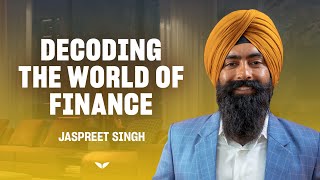
Jaspreet Singh explains how recessions create wealth-building opportunities for the prepared. He breaks down three reasons to save, the difference between passive and active investing, and asset allocation across business, real estate, stocks, crypto, and gold.
Questions this video answers
August 23, 2012.
He took the MCAT on August 22, 2012 (the day before the closing).
$8,000 (total price paid to the bank).
1.38 million subscribers.
Six times per week: Monday through Friday and Sunday.
Chapters
You have to be financially educated and you have to be prepared. If you look around you, we're facing one of the most unique challenges our economy has seen in the last century. Our economy has been slowing. At the same time, we're facing very high inflation. When you see these types of economic downturn, these volatile markets, this is where it becomes extremely important for you to be able to take care of yourself, because this is when more millionaires are created than any other time.
Hi, everyone, and welcome to the mindvalley podcast today. Our guest today is the CEO of Market Briefs and the host of the Minority Mindset YouTube channel, which has changed the lives of over 1 million subscribers with over 120 million views. His name is Jasper, and he's on a mission to make financial education fun and accessible. Now, this is such an important topic right now because the world has been going through so much change, and so many of the people who are here listening to this podcast as part of the mindvalley community tend to be entrepreneurs. And often not just entrepreneurs, but people who may be working for a company but have a side business that's generating some money. We call this passive income. And whether you are an entrepreneur or you are employed by a company, passive income is a powerful tool to bring into your life. And that is going to be the topic today. Now, Jaspreet's brand has helped countless people get out of debt, start investing, and creating a plan towards building wealth. And I'm excited to have him join us today to talk about the secrets to creating wealth and passive income. Jaspreet, welcome to mindvalley.
Wow. Well, thank you so much for the introduction. I'm excited to be here. And what a fun topic at a very interesting time in the economy.
It is. It is. Now, let's hear your thoughts. Why an interesting time in the economy?
So, I mean, if you look around you, we're facing one of the most unique challenges that our economy has seen in the last century, where we have an economy that is slowing down. We have seen the last six months our economy has been slowing. The GDP reports show us this. At the same time, we're facing very high inflation. We're a little bit off of our peak, but still extremely high. And at the same time, we have asset prices which mean things like stocks, real estate, cryptocurrencies, which, yes, they have fallen off the highs, but still extremely high. And so we have all these factors coming together and to see how things are going to play out over the next 12 to 18 months is going to be Interesting, because we have entities like the Federal Reserve bank, which is our central bank, who are working to bring inflation down, which has consequences, including a slowdown in the economy. And then we have what is going to happen in the economy. We're already seeing layoffs, we already seeing an economic slowdown. We're already seeing people get hurt economically. And so how are these different factors going to come together? What is that going to look like? Which is what makes it so interesting and which is what makes it so important for us to be financially educated and financially independent. Because if you are not, and you're relying on somebody else, like maybe the government or any other entity, that it puts you in their hands. And this is where you know, when you see these types of economic downturns, these volatile markets, this is where it becomes extremely important for you to be able to take care of yourself. Because this is when more millionaires are created than any other time. Recessions and market crashes are scary and they can be painful for the majority of people, but they also create the most opportunities, if you know where to look. And this is where I call it, the minority mindset is the whole idea of thinking differently than the majority of people has nothing to do with the way you look, ethnicity, or your skin color. But it's about looking for the opportunity instead of just worrying about all the problems. Because now when you know where the opportunity is, you can capitalize on it. And, and this is where more millionaires are made than any other time.
You are right, you're right. It is during times of the economic recession that some of the most interesting opportunities arise. I mean, I think about 2008, right? 2008 was that last big crazy recession. And that was when Uber came out. That was when Travis Kalanick launched Uber. It was when Airbnb became a thing, Right. It was all about the, the, the disruptive timing led to so many, so many creative ideas emerging.
Exactly. And you know, if you look at some of the biggest companies in the world, like you said, Uber, Airbnb, Microsoft, I believe Apple as well, all of these were created during down economies recessions. And this is where they create so many more millionaires because it creates so much opportunity. And even on a smaller scale, it creates opportunity for regular people. Because when you have these types of downturns, it's like Black Friday shopping for investors. When we think of Black Friday shopping, you think of going to Macy's, you think of going to JCPenney or Bloomingdale's to buy some sweaters at 50% off. Well, for investors, it's the same concept, but now instead of buying sweaters, you're buying the sweater company. You're buying assets. And this could be real estate, it could be stocks. After the 2008 crash, stocks were hit very hard. Real estate prices were hit extremely hard. But it also created opportunity for people to come in and purchase. That was when I got started investing my money, particularly in real estate. It was after the 2008 crash when real estate prices got hit very hard. I'm based in Detroit. I'm in Manhattan right now, but our office is in Detroit. I'm from the metro Detroit area. And our Michigan economy, especially before the 2008 crash, was heavily dependent on automotive companies. So Ford, GM and Chrysler. And when the 2008 crash happened, GM filed for bankruptcy, Chrysler filed for bankruptcy, and Ford was on the verge of bankruptcy. So our economy was hit extremely hard. And that trickled down into the real estate market, which meant that foreclosures were everywhere in Michigan. And I was young. I didn't really know what was good, what was bad. I was 19 in 2012 when I bought my first real estate rental property. So I had no experience to finance. I had no experience to entrepreneurship. I didn't know any investors. I didn't know what real estate investing was. I didn't know any real estate investors. It was just something that I read in books. And the business books that I read said that wealthy people invest in real estate. I had no idea what that meant, but I figured if wealthy people do this, and I want to be wealthy, maybe I should go try it out myself. Now, I was very fortunate with the timing because I didn't know anything else. I just knew I wanted to invest in real estate. And it happened to be the time when real estate prices were extremely depressed. And so I was actually studying to be a doctor because my parents are immigrants from a state in India called Punjab, and they really, really, really wanted me to be a doctor. So I was studying to be a doctor. And during that time, I started looking for real estate deals. And the first deal that I bought, I closed on August 23rd in 2012. And the day before, on August 22nd, I took my MCAT, which is the test that you take to get into medical school. And the investment property that I bought, I had purchased for $8,000. That wasn't the down payment. That was the total price of the condo. And the reason why I was able to purchase it that cheap was because of the real estate crash a few years prior to me purchasing that condo. For eight grand. The same condo was selling for about $150,000. Wow. So you're talking about more than a 90% drop in price. And I bought it from the bank for eight grand, and it was a great opportunity for me. But this is where it's just understanding the opportunity and being prepared. And these are the two things that I say to be able to capitalize on opportunities are you have to be financially educated, and you have to be prepared. Financially educated means know how do you analyze an investment and know what you want to buy? And second, being prepared means having capital, cash or access to cash to be able to actually take advantage of these opportunities. And how do you do that? Well, when times are okay, start putting cash aside. That way you have the resources to capitalize on the opportunities that might come your way.
That's amazing. And it's so important right now because if you just have cash sitting in a bank, inflation is going to eat away at the value of your company. And. And inflation is something that is shocking me right now. So I just came into the United States after being away for about 10 months, and I am shocked at the pricing I'm seeing. I was buying a bag of pistachios and a drink for the plane as I was flying here to Hawaii. 20 bucks. It was nice. And yesterday I had lunch in the food court of a mall here in Hawaii. And I was surprised when lunch cost me 25 bucks just for, like, a little takeaway lunch in a styrofoam plate. So inflation has been shocking, but with our money, but with the capital that we have right now, the people, the average person listening over here, what are some opportunities we should be looking at to park our money in a safe way, where it can grow, where we can invest, and where we can minimize risk.
So there's a few things that you want to be doing. One is understanding the reasons why you save money. And there are three reasons why you want to be saving money. Number one is save money for emergencies. Number two, save money for a big purchase. And number three is save money for an investment. If you're not saving your money for one of these three reasons, and you're just saving your money to save it, your savings are making you poorer. You're making each and every day because the interest rate on your savings are less than inflation, which means that the value of your savings are literally becoming less every single day. So now, when we talk about these three reasons, saving money for an emergency, the reality is life happens. You might lose a job, someone might get hurt, someone might get sick, something might break. You need cash for that. How much? Somewhere between three months and 12 months worth of expenses saved up in a savings account that's very easy to access, meaning liquid that you can get anytime you want. Now you might say, but just my savings account is going to lose value to inflation. Yes, but the purpose of these savings are not to make you wealthy. It's there to protect you. And so you know, how much money do you save? Well, it's going to depend on your risk tolerance and it's going to depend on where you are in your Life. If you're 22 years old, you just graduated college, you don't have a spouse, you don't have kids, you don't got, you know, major financial responsibilities, you probably don't need a year's worth of expenses saved up. But if you have kids, you have a spouse, and you have a very low risk tolerance, then you might want to save 6, 9, 12 months worth of savings. And this is where it's going to depend on your lifestyle. Second, we talk about saving money for a purchase. You want to buy a car, you want to buy a house. All these things require cash. And this is where you want to be saving money, putting it aside into a savings account that we have cash to make your purchase. And number three, save money for investments. This is what we're talking about. This is where now you can put money aside in order to capitalize on opportunities that might come your way. Now, this is where things get a little bit deeper, because now the question is, where do you put this cash? Because you're right, if you put this cash in a savings account, it is going to lose value to inflation. Well, the first thing that you can do now is you can at least look for a high interest savings account. There's a bunch of these online that are not physical banks, but like digital banks. These will pay you somewhere around 2% a year in interest. Still significantly less than inflation, but probably a lot more than what you're getting at your traditional bank where they're paying you 0.2%. Then the second thing is understanding your investment strategy. Because what I say is there's two different strategies when it comes to investing. One is a passive strategy, one is an active strategy. A passive strategy is now where anytime you get paid, some of the money is automatically going to be invested into assets like, say, the stock market. There's also ways to do this into the real estate market using crowdfunding sites. But now every time you get paid a portion of a paycheck will automatically get invested. And this will happen regardless of what's going on in the markets, whether the market is up or down. This will continue to happen. For me, this happens every Wednesday where some money leaves my checking account and is automatically invested into a portfolio of different ETFs, which are exchange traded funds that give me exposure to different areas in the market. Then on the active side, this is where now I'm looking for good opportunities, good investments. So what does that mean? So now let's just say you want to invest your money in stocks and you make a list of five companies that you want to own. Well, now all you're looking for is a good price, a good buying point. And this is where now when you see a crash, you see something go down. This is where now you can come in and purchase more of that asset at a discounted price, because now the price is lower. So a crash just creates an opportunity for you to come in and buy even more because now the price is lower. But this is where it requires more research on your end because now you have to actually be doing that research of keeping up with the company. That what I would say is the difference between a passive strategy versus an active strategy. And now for 90 to 95% of people, I would say a passive strategy is probably better because an active strategy requires now that more of that financial education of how do you research and analyze an investment and also how do you actually manage your emotions? Because where so many people get messed up when it comes to investing their money is you try investing your money and then what happens? You six months down the line, you see the market go down, you see your stock go down and you're looking at the stock price and now you panic, you get scared, and then you sell. These types of emotional trades kill more investors than anything else. Because now you're trying to time the market as opposed to actually investing your money for the long term. And this is where now understanding how do you put your money to work in a way that aligns with your goals? For me, you know, right now I have pulled back on my active investing. Now you might say, why? Is it because of the markets? No, it's actually because of my personal goals. And this is where I don't like to tell people you need to invest in real estate or you have to invest in ETFs or you have to invest in individual companies. The reason why is because your goals are different than mine, your lifestyle is different than mine, your risk tolerance is different. Than mine. And your interests are different than mine. And based off of these things, you're going to want to adjust your investment strategy. So what does that mean? So when you actively invest your money, you're looking for opportunities to put your cash to work. Right. And I am an entrepreneur, I have always been an entrepreneur. And so when I look for opportunities, as I've been growing my businesses now I look at the different opportunities. I love investing in real estate. I like investing in stocks, I like investing in startups. But now in this economic cycle, I have a couple options. I can go and look for more real estate deals, more stock deals, more startup deals, or I can look for opportunities to invest back into my own company, something like Market Briefs, something like Commonwealth Connect, which is a tax firm that I'm building. And so when I compare these opportunities, I say, you know what? Right now I see more opportunity, more potential upside for me to invest in myself into my own companies. Now, again, is it risky? Absolutely. There's a chance that when I take this money and I put it back into my own company, that it will not go up, that it will get hurt, that it will go down, that the company can fail. But I believe in myself, I trust myself. So I'm willing to make that investment. And I see more potential opportunity there right now than maybe going into the real estate market or the stock market. And so, you know, I. It depends on the person. If you are not an entrepreneur, if you know that about yourself, then don't go out and invest in yourself to go build a business, because you don't want to build a business. Look for opportunities in the stock market or the real estate market, potentially the crypto market. But this is where you have to know yourself. If you hate crypto, don't invest in crypto. If you hate real estate, don't invest in real estate. If you hate the stock market, don't invest in stocks. We all have our own interests and depending on where we are in our lives, you have to figure out what aligns with the lifestyle, your goals and your risk tolerance. And this is where you got to make that decision for yourself. That way you can make smart investment decisions.
So. So first, let me, for people who are enjoying this podcast right now, and we're about to get to some really, really interesting topics. I just want to give websites for people who to want to check you out further. So firstly, the YouTube channel is Minority Mindset. So Minority Mindset on YouTube, it's a really popular channel with 1.38 million subscribers. You can Also follow Jaspreet on Instagram. Again, it is at Minority Mindset. One word. And the blog is the Minority mindset dot com. So just remember Minority Mindset. And that is where you can learn more about Jaspreet, his work and his investment strategies. So, Jaspreet, I'm looking at your YouTube channel right now and the last video which you posted 3 hours ago says a global recession is coming. I'd love to get your thoughts on this. Where some people have said it is a good time now to buy stocks, they've fallen quite a bit. Your last video says a global recession is yet to come. And yesterday you created a video saying this is the worst time to buy a home. So seems to be a lot of bad news out there. I'm curious to know your honest thoughts. What would be your advice in terms of is it the right time to get back in crypto, to get back in property, to get back in stocks, or should we still be waiting?
So there's two parts to that and let me answer both. The first thing regarding where do you. Or let me start with this regarding titles. Because the thing with YouTube, as unfortunate as it is, is titles matter. And why do they matter? Because they get people to click. Now I hate this. I fought my team for a very, very, very long time because I hated making titles like this. But we had this heart to heart conversation where essentially they said, just put it. Listen, because you're making, let's say there's two titles that I can make. Either the market has fallen by 3%. Here are things that you need to know. Or markets crashing. Sell now or markets crashing. What you need to do, it might be the exact same topic. Which one is going to get people to click? Just the one that says market crash.
You're right, you have to be overly dramatic.
And as unfortunate as it is, this is the way the YouTube algorithm works. And for me, the conversation with my team went, look, Jaspreet. And this is from their perspective. I don't want to sound like a super narcissistic person, but what I was saying was your content is really good and it's better than what a lot of people are putting out there. If you have to make a clickbaity title to get someone to click it, at least people will watch it and they will learn. And so for me, I was like, all right, you know, if that's what it takes to get someone to watch and learn, I'd rather get someone to watch the video and learn something. Even if that means you have to make a clicky title. Now, second, diving into what's going on again, it's going to depend on your strategy because I am investing my money into the stock market every week. I'm investing my money into cryptocurrency every single day. Right. That's my passive strategy. Now on the active strategy, you want to be looking for good opportunities where the prices of things go down and you know, to answer your question regarding what's happening on the global economy, well, we kind of hinted at things that are happening here in the United States. Well, if you look overseas, it's even worse. Europe is facing one of the worst cost of living crises ever. Goldman Sachs just came out and said that the UK should prepare for 22% inflation in 2023.
Wow.
They are facing a severe energy crisis because Russia essentially cut off energy supplies to Europe. They shut down something called the Nord Stream one, which sends a lot of gas from Russia to Europe. And so now with winter around the corner, energy Prices are up 600% from one year ago in Europe. Electricity prices are up 300% from one year ago. In today's video, when I talked about the European energy crisis, we had so many comments from people in the uk in Europe talking about their own experiences with energy costs significantly higher. I believe it was in Poland where people have been waiting days in their car lined up. That way they can just get fuel. So we have this Europe energy crisis inflation issue going on. At the same time, China is facing a very severe economic slowdown. Why? Because of their real estate market. Now I have a video coming out on this very soon, so I don't want to go too deep into it because it's a very complex topic. Topic, but essentially two things. The Chinese government is very controlling and they don't like to release information. And just recently it became known that their economy was shrinking when everyone thought their economy was growing. And not only that, their central banks started inflating, AKA stimulating their economy because it has been slowing so bad. Why is it slowing so much? Because of the real estate market. Without giving a full half an hour explanation of it. Essentially, the way that the Chinese real estate market works is very different than the American real estate market. It is a third of their gdp, meaning a third of their economy. And the majority of people in China save their money, not in CDs or stocks like we do in America. They save their money in real estate. So 70% of people's savings, their wealth is saved in real estate. And now the whole $7 trillion real estate bubble is bursting in China because the way it was built was kind of like a Ponzi scheme where you would go put down money to buy a home and you would pay the whole price of a home before the home is even built. The developers would then take that money and start a new project and then pre sell this new project to new buyers, and they would take that money and then go and start the development of another project. And this would go on and on and on, which created this whole real estate bubble. It was a whole boom in the last decade, but now this bubble is bursting and it is hurting a lot of people. People in China are protesting, people are not paying their mortgages. So there's a big mess happening over there. So if you look at what's happening in China, which is the second largest economy in the world, you look at what's happening in Europe, which is one of the largest trading partners with the United States, you look at what's happening here in the United States. And so there's a lot of concern with regard to that. But again, it creates opportunity. Now, one thing I do want to mention is there's no way to perfectly time the market. So when we talk about using your cash and actually going out and investing it on the active side, the best thing is not to try to pick the bottom and buy the bottom. Instead, what I call is drip investing is what I say. Drip investing is now when you find a good investment that you like, you buy it in phases on the way down. So what does that mean? Let's say you find a good investment you want to own and you see the price drop by 15%, then you'd come in and buy some. If it drops by another 10 to 15%, then you buy some more. If it drops by another 10 to 15%, then you buy some more. So you buy in phases on the way down. And the more down it goes, the more aggressively that you come in and buy, because there's no way to perfectly time the market. No one knows how low things will go. But this is where it's just being aware of what's happening. This is what we cover at Market Briefs, which is my free financial newsletter that I was talking about, because I didn't grow up with any sort of financial education and trying to understand what's going on in the markets and actually being able to analyze this is so extremely difficult because if we turn on the traditional financial news, it's headlines and headlines and headlines which are scary, which are confusing, and they use all these big Complex terms, which for me was so difficult to understand. Somebody who didn't have any sort of this financial background. And so when I started teaching financial education on YouTube, because I think the reason why people liked my channel is because I break it down in words that I can understand somebody who does not have a finance degree, somebody who couldn't get into business school, somebody who doesn't have the basic financial, you know, traditional education. So I break it down in regular words. That's when I realized that there's a lot of people that want to be up to date on what's happening in a simple solution. So that's why I created Market Briefs as a free newsletter that you can read in five minutes every morning, where my team breaks down what's happening in the markets, from the stock market to the real estate market to crypto to the global economy to inflation. And so that's what Market Briefs tries to sell. That's.
That's amazing. So Market Briefs, very, very useful. And it's daily.
It's Monday through Friday and Sunday, So six times a week.
Okay. And this will be on your YouTube channel.
It's on my YouTube channel. Or you can go to Market Briefs. Com.
Okay. Market Briefs.com. that is super, super, super useful. Love that. Okay, so for those of you who are in the audience, there you have it. That is going to be an amazing research tool. Market Briefs.com. great. I'm signing up right now. Continue, Jaspreet.
So we talk about what's going on in the global economy. That's where it's just kind of being aware with all of that stuff that's going on. And now when you talk about when should you invest, how do you invest? You know, it's just a matter of finding the right opportunity for you. And at the end of the day, time in the market beats timing the market many, many, many times over. Meaning if you hold your investments for long enough, that will the majority of the time, if you have a good, strong, fundamental investment, win over the long term. Like, even if you look back at the 2008 crash, which was a very deep recession, I mean, it was one of the worst recessions since the Great Depression. If you bought at the peak of the stock market and you. You bought your stocks then, before the crash happened, at the highest point, well, if you just held on to your investment, chances are you'd be way better today. I mean, if you just bought an index that gave you exposure to the general stock market, the Dow Jones or, you know, the S&P 500, you'd be significantly higher today than you were then. Now, 12 months into the recession, you would have felt very scared because you saw your stock market portfolio get cut in half. And that's scary and that's bad. But again, time in the market beats timing the market where now if you just hold onto your investment for long enough, if it's a good investment, you just got to ride out the pain in the economy. And these are the things where the psychology of investing is just as important as the education of investing because people beat themselves. We are our own worst enemy when it comes to investing because we want to get rich quick. And that is the enemy of building real long term wealth.
So Market Briefs is one very, very useful report to keep us aware. And I love the example of drip investing. And it that, that was very eye opening for me. I was, I've been trying to figure out what to do with cash and I've just been hoarding cash right now. But as you said, that isn't a very good strategy. So I live in Estonia. Estonia, of all the countries in Europe, had the highest inflation in the last one year. Prices went up 20 to 21% overnight in the course of one year. And it's been crazy tough. And at the same time we're on the border with Russia and so it's, there's that bit of uncertainty there. It is costing me when I share these numbers. It's going to freaking blow your mind. But heating my home in April when it wasn't even that cold, this was past winter, costs €800amonth. I've never seen prices like that. €800amonth and my home is 200 square meters. It's not even a massively big home. It's just 200 square meters. Right around 2,000 square feet. €800amonth. So it has been nuts. Absolutely freaking nuts. And so I'm so glad we're having this conversation. That tip that you just gave on drip Investing, very, very, very useful. I'm going to start diving into market brief. I just signed up for it. I also want to share another recommendation. Investors.com investors business daily. It's a really useful website for doing research on stocks. I would recommend getting a subscription on Investors Business Daily as well. For people who really want to research stocks and get a bit of a recommendation, they do all the research for you. So if you're thinking about buying Tesla, well, you'd want to go to Investors Business Daily where you can read about Tesla and get their, their assessment of how Tesla is doing in terms of earnings per share, in terms of how it compares with other stocks and so on. So, Jaspreet, let's talk about crypto.
Now.
I'm curious to know your thoughts on crypto. Is it the time to start putting our money in Bitcoin, Ethereum and other cryptocurrencies? They have fallen quite a bit. Or do you think that it is still risky?
It is 100% still risky. Now let's start with this. If you're not willing to hold on to your cryptocurrency investment for 10 years, you probably shouldn't even own it for 10 minutes. I think this is Michael Saylor that said that. And so this is where understanding your cryptocurrency investment is so important. Now I'm going to give my personal disclaimer. Where I do own cryptocurrency, I invest my money into Bitcoin and Ethereum and a couple other coins. But I don't invest in the meme coins. I don't invest in the, you know, the get rich quick type of coins. I invest in the things that I believe in that have real fundamental value. What does fundamental value mean? Well, two things. It means it has use and it has a network. What does the use mean? Because the argument against cryptocurrency is it's just, it's made up money now. Sure. But if you dig a little bit deeper, what you'll see is that cryptocurrency has more of a software technology than just trying to be in individual, like coin with a dog on it. I guess, for lack of a better explanation. Right. So for example, the Ethereum blockchain allows people to build something called smart contracts on top of it. So it's a software that allows you to do something called smart contracts. What do these contracts do? Well, it can be anything that you want. You're building a digital contract. So it could be as simple as every month you must pay me $1,000. If you pay me a thousand dollars, you get X. If you don't pay me a thousand dollars, you don't get X. So it's, it's, you know, it can create a lot of different things. Now, you know, if we just bring this back to real estate, what does that look like? You must pay me a thousand dollars a month in rent. If you don't pay me a thousand dollars, then the locks will automatically lock and you won't be able to enter the property. One just simple basic example of things that you can do with it. And then now when you look at all the different possibilities that you have with the blockchain, this is where, okay, there is a potential use case. But in order for the use case to be valuable, there must be a network. What does a network mean? It means it has to be users of this blockchain. So an easy example of this is something like Facebook. Facebook. The app by itself is more valuable when there are more users. Like if there was only one user of Facebook and it's you, it doesn't do anything because you're not going to see anything. When you go to your Facebook page or your Timeline because no one's posting there, you're the only user of Facebook. But when more of your friends use Facebook, the network grows, and now there's more use. And you can use Instagram or really any social media for this purpose because now more of your friends are on it and they're posting their content, and it's something that you want to see and maybe something that you want to share. So now this use case becomes valuable because people are using it. So the reason why these social medias are valuable is because of their use. There's a lot of people using it. So now if we compare that to cryptocurrency, it's the same concept where the bigger the network, the more users there are. The use also becomes more valuable because now you can monetize or create more uses out of it. So this is where understanding now what is the purpose of your investing in it? If you're trying to get rich quick, I don't recommend you go in and invest in cryptocurrency because it's going to be very volatile.
But let's talk about Bitcoin as a store of value, right? So bitcoin prices are in the $19,000 range right now. At one point, they were well over. Well over 50,000. If we are prepared to invest long term, would you say that this is a good time to buy bitcoin? If we're looking at holding for four.
To five years, I buy bitcoin every day. Now, again, if. If I was going to be investing in bitcoin actively, which I do do, I look for big downturn swings, and that's when I come in and purchase. And I do it the same drip strategy that I would do in the stock market. When I see bitcoin fall by a big amount, then I'll come in and buy. When it falls by another big amount, I'll buy even more. So like when it fell from 60,000 down to 20,000, I bought it at every 10,000. When it went to 40, I bought more. When it went to 30, I bought even more. When it fell below 20, I bought even more. If it falls to 10, I'll buy even more. And this is where, you know, it's very difficult to time the market. And if we just look at the economic factors where right now, the Federal Reserve bank, for example, wants to raise interest rates. When you raise interest rates, what does that do? It pulls money out of the economy. When you do that, who or what gets hurt? Well, the valuation of assets, particularly speculative investments. Speculative assets, because as you pull money out, that's when one people want to flee to something that's safer and more established, more stable. So cryptocurrency is a very speculative asset. So I invest my money in five places. My own business and startups, real estate, stocks, cryptocurrency, and physical gold, in this order. So my own business startups, real estate stocks, and then crypto. Crypto is my second smallest investment, just after physical gold. So I understand it's a risky investment. I understand that it's speculative. If Bitcoin went to zero and crypto went to zero, I'm still going to be okay. But I believe in it because that's why I'm investing in it. But I also understand the risk, which is why it's allocated a certain way in our portfolio. So this is where people run into trouble, is because they want to invest in cryptocurrency without understanding what it is. But second, they blindly throw all their money into crypto hoping that it's going to make them rich. There's a story of a lady who put a million dollars, which was her entire life savings and her children's college fund into Voyager to get whatever return on her money because it was offering certain amount of interest. Well, then Voyager filed for bankruptcy and her cryptocurrency was tied up in that brokerage. So she lost her life savings and her children's college fund like that. And so this is where, you know, it's education is so important. And you know, the basic fundamental rule of thumb when it comes to investing, never invest more than you're willing to lose.
Right.
It is such a fundamental tool. And start with that. Now, if you want to get more involved, there are ways for you to get more involved, but just understand that it comes with more risk. And if you can't handle that risk, you know, don't take that risk. It's just being that level of financial astuteness where if you Want to take risk, it's fine. But just understand the risk that's associated with it and don't take on more risk that you're willing to handle.
Right? Why? Why gold? Let's talk about gold for a second. Gold is your fifth investment.
So gold is kind of like financial insurance. It's my doomsday scenario investment. I buy gold every month. It's passive for me as well. And for me it's an alternative way to save money. So I look at it this way. If I have $10,000 worth of cash and I buried this $10,000 in my backyard and I also buried $10,000 worth of gold in my backyard today, and then 10 years from now I go and I dig up this cash and dig up this gold, what's going to have more value? I think my physical gold is going to have more value in 10 years than this $10,000 worth of cash. Why? Because of inflation. Inflation devalues our paper money or currency, and gold is a limited supply asset. It takes time, effort and labor to mine physical gold. And this time, effort and labor is then seen through the physical gold itself. So gold is a store of value. It's a much better store of value than our dollars are. So money has two aspects. It can be a store of value or it can be a means of exchange. This is what the definition of money is.
So my final question for you, Jasper, is do you have advice on how to. I love the five that you mentioned. Do you have ratios on how you divide your investments? Is there a percentage that you allocate to gold, to crypto, to real estate, to stocks and to investing in your. How do your ratios look?
I don't think I can give much very beneficial advice in terms of ratios because mine changes a lot before. Before meaning when I was, I don't know, less than, not 10 years ago, but a little bit less than 10 years ago, I was 100 in real estate because I was very fascinated by it and the opportunity was there. In real estate, I saw so much opportunity. So I put everything in real estate and that's all I was doing. I had my own businesses, but they weren't worth much then. As real estate prices went up, it was harder for me to acquire more distressed real estate at the prices that I was getting. And so that's when I started also started buying stocks, but I also wanted to really invest in my business. So then slowly I started putting a little bit of money into my business. I didn't really start my businesses with a lot of Upfront capital. So it was just sweat equity. And so those two grew. Then my business started to grow, market brief started to grow. And you know, now I'm investing more money into my business. I see the most opportunity there. So, you know, my business has the most valuation and it's getting the most attention because it's the most time. So I'd rather put my capital into that as opposed to stocks or real estate. And then when cryptocurrency became interesting to me, I don't remember what year, maybe 2018 or so, that's when I started putting a little bit of money into cryptocurrency and I've been slowly buying it since then. And then startups is a relatively new investment, maybe for the last year or two that I started investing in startups because there's a lot of crowdfunding platforms out there that allow you to invest in startups for as little as like $100. Republic is one platform. For example, like you go to republic.com and there's a ton of different startups there that are looking for investors and you can invest as little As, I believe, $100 and you can get equity in the companies. Now, is it risky? 100%. I mean, when you invest in a startup, it will most likely fail. However, if you find a startup that wins, meaning it goes public or it gets acquired, you can see a very big return. So it's high risk, high potential reward. So again, being able to manage your risk, your reward and understand where it falls within your goals, your lifestyle and your risk tolerance, this is where you can then create your own investment portfolio for yourself.
That is a great tip. Republic.com Fantastic. And with that, let's. We've come to the end of this podcast interview. So once again, if you want to learn more about Jaspreet and Minority Mindset, these are the links to check out on Instagram. It's at Minority Mindset. The blog is the minoritymindset.com and the hyper popular YouTube channel is simply Minority Space Mindset. Go check it out on YouTube, the number one channel for financial education. So thank you so much, Jaspreet Singh. This has been such a beautiful conversation. Thank you. I got my key. My, my key takeaways over here were as soon as this is done, I'm going to start looking into the drip investing strategy and I'm going to pick a couple of stocks, companies that I'm going to attempt to apply drip investing to. The second thing is drip investing is applied to crypto. I love the comment you made. I buy bitcoin every day and seeing that the price is so low compared to where it was, I'm going to start putting money in bitcoin every day. And third, I'm going to be looking into republic.com to look at the possibility of investing in startups and up and coming companies. So thank you so much Jeff and I hope all of you listening got a great deal out of this as well. For those of you who are looking at other ways of working on on your abundance on your money, if you're a Mindvalley member, I strongly recommend Ken Hondas program on mindvalley which is called Money eq. It is a program that works on shifting your your beliefs about money that might be holding you back from improving your business, improving your wealth and improving your investment strategy. Again, it's Ken Hondas Money you It's available as part of Mindvalley membership. Thank you so much Jaspreet. And for all of you here, I'll see you on the next Mindvalley podcast.
Thank you so much for having me. I appreciate it.
Thanks guys.
More from Vishen






Brown Noise for Deep Focus and Concentration (Best with Headphones) | Gabriel Loynaz



Your Appointment With the Eternal | Guided Meditation with Michael Bernard Beckwith