John Paul DeJoria Shares His Secrets To A Billionaire Mindset With Psalm Isadora
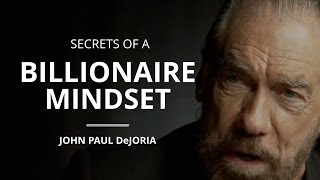
A recorded interview (YouTube) in which John Paul DeJoria discusses his journey from homelessness to billionaire entrepreneur, emphasizing mindset, persistence, work ethic, short daily meditation, philanthropy, and personal challenges (including climbing Mount Kilimanjaro). The conversation links practical survival anecdotes and business lessons with mind–body practices as tools for resilience and success.
Questions this video answers
February 17, 2016.
Paul Mitchell Hair Care and Patron Tequila.
Over $2.5 billion.
Five minutes in the morning.
They reached about 19,400 ft (summit), with base camp referenced at ~16,000 ft.
Chapters
Hi, I'm Salma Zadora and I'm super excited about today's show. We're going to be talking about how to build a billionaire mindset and how to overcome the obstacles to creating a successful life of your dreams. And, you know, I'm super passionate about how yoga and meditation can help people with personal development and empowerment. And today I have a very special guest, one of my personal heroes, John Paul DeJoria. And he's best known as the co founder of Paul Mitchell Hair Care and Patron Tequila. And John Paul is worth over $2.5 billion. So we're going to talk about how he overcame his obstacles to create this amazing life.
Good.
Thank you, John Paul.
You bet you. My pleasure's home.
Yes. And actually, I wanted to say on a personal note, you. You are. You were always so kind to me. I knew you growing up as a little girl and you were always one of the nicest people and most positive people. So I wanted. I wanted you to share about how you kind of kept up that kind of positive energy and attitude and how that has been related to your success.
Yeah, I think it's all about a mindset. Not how you grow up, but what your mindset is. So many times when we grow up, we see people around us that maybe don't do the right things or tell us we're not doing the right things or we can't do this or we can't do that. Well, maybe I was just too naive for a kid. None of it paid attention. It went in one ear and out the other. I think the best example to give, and hopefully it's good for your audience out there. In fact, I know it would be, is when I was in high school, in the 11th grade, my business teacher, Mr. Wex, was a teacher and Michelle Gillian was a friend of mine. And we would pass little notes back and forth. She sat behind me, like, for example, I'll see you at Winchell's after school. Darlene and Ronnie are going study. Okay. See, at Winchell's, right? And I would fold it up and I'd pass it to her like that so no one would see. And then we were busted by Mr. Wax. Mr. Wex catches us, reads a note to the whole class, has Michelle and I stand up and says, see these two? Michelle Gilliam and Johnny digoria. They're going to amount to absolutely nothing. Don't hang out with these guys. Guys, right? Look what they're doing in business class anyways, after high school, went into the Navy. Get out of the Navy. And a friend says, how about that Michelle Gillian? Pretty cool. I said, well, what do you mean? He said, you don't know? I said, no mamas and papas. She's part of Ms. Michelle Phillips now. Interesting, huh? And we listened to him. She found him on my 50th birthday, brought him to my 50th birthday. Yeah, it was a surprise for him, a shock for him. And we reminded her of the situation.
And what did he tell them? He still acted like a teacher.
But anyways, in life you have choices. And when you're down and out, which a lot of people are, if you're down and out, you're not getting any lower. So you're already one quarter on your way to being full on a glass. It's just not what your attitude is. When you're down and out, and it's difficult, you can feel sorry for yourself. Or when you're down and out or things aren't going well, you can say, well, things to are going be better, and just have that attitude. It's something that someone can develop, and I'm a firm believer in that beyond any question of doubt. I tell people a lot, and I think it has to do some with your question, that in life, for example, if you're starting a business or want to do something different or you're in a new relationship with somebody, okay. Or you're practicing something new, whether it's yoga, God knows what, okay. New. Always be prepared for a lot of rejection. For example, we're doing yoga. I can't quite do that. Stretch. It's okay if you're prepared for rejection from your own body or people's mouths or your own mind, it doesn't hit you as hard. You're prepared for it. So in life, if people realize along the way, you're gonna get a lot of rejection, whether it's you personally rejecting yourself physically or mentally, or people rejecting you. And you can take it with a grain of salt, being prepared for it. You know, it's gonna happen anyways and it affect you.
Yeah. And I mean, I know you came from, you know, from really rags to riches. And a lot of people see someone with tremendous wealth or success and they think, oh, they had a head start, you know, they had it easier than I did. And I know that there were two times you were homeless, you slept in your car.
That's right.
And I've had to sleep in my car. I know what that's like. And I wanted to ask, you know, those are the kind of Moments that a lot of people, it just crushes them and they don't kind of recover.
Correct.
And I wanted to, I wanted to ask you what was. If you could share with people, what was the lowest point for you?
Sure. There's a couple occasions. I was married at a very young age, like 20 years old, and had a child. Things weren't going quite right with my wife and I at the time. Anyways, I'd come home one day and all of a sudden she walked out. I was walking in the house, she said, well, I got to take the car keys for a ride. We had one car, right. So got off of work, came her, gave her the keys, she left. I walked upstairs to our apartment and there's a two and a half year old kid sitting in the middle of the living room with all kinds of clothes torn up around him. My clothes and a note. I can't handle being a mom anymore. Do the best you can. By the way, there's nothing in the bank account. What little we had, she took. She took the car. What I didn't know was that she hadn't paid the rent or electric bills for three months. They're gonna be cut off within a week. All pre planned. I wasn't. I didn't have a check coming in for another month. I'm sorry, another week. Right. You talk about being down and out. I have a two and a half year old kid, the car is gone, the lights are going to be shut off. Which I didn't know until the next day. The landlord was there the next day saying, you got to leave. Really down and out like nothing. So I called her mother up, who was one of the sweetest human beings on the planet. And she had a 1952 Cadillac that did not run at a broken water pump. I said, can I use your car? She said, of course. She was the sweetest lady on the planet. I'd have to put water in it every three hours, but at least I had a car transportation.
I've done that.
So we were kicked out two days later. We had to leave the house.
Like we were kind of with your two and a half year old.
Yeah, exactly. Now we have no money, no check at that time. Coming in for another five days, no money anywhere. Okay. I mean, just like we were down and out. So instead of just saying, oh God, poor us. I try to use my imagination. What can I do to exist? The first thing you want to do is exist. Food, shelter. So I went around picking up Coke bottles. 2 cents for a little one or any soda pop bottle, 2 cents for a little one, 5 cents for a big one. In those days, all grocery stores, all liquor stores had to take them. They would give me money. That's how we exist. A short time later, dear friend of mine who was a real biker, Lee Meyer, found me, set up an extra room in my house. Johnny, you're very welcome to use it with your son. There's our rent is $47 a month. If you pay half of it, you're my friend. Staying in it, it was very, very nice, you know, so it was a way to kind of get going again. But when I was down and out, what I looked at was not, oh, poor me, I'm down and out, I'd starve to death. It was a matter of here's where I am, here's my resources. What do I do to get to the next level? Not what do I do to buy a house, but what do I do to eat and have a place to stay. So when you're down and out, you look at the next level you can go at and how best you can go at it but not be stuck there. Be ready to move to the next level.
At that point. Did you even have these big dreams? I mean, you said you were just trying to get to the next level. I was a single parent and there were times when my son, when he was younger and I really struggled, like, how am I going to take care of him?
Sure.
And, and I think a lot of single parents.
Yeah, I'm very similar to where I was at. Yes.
Yeah. But I mean, what, what, how big were your children dreams then?
And then there was survival. I need a place to eat, food. I need gas in the car. I need a car or I gotta fix this, you know, this water pump that's leaking. It was total survival, total survival in those days.
That's amazing. And it's amazing that you didn't get stuck like I said, in that day.
Which would have been easy. Didn't go on welfare, didn't ask for assistance, just wanted to do it. And I was too proud to tell my mom. Mom, you're not gonna believe what happened to me. Can I move back in my room? And by the way, John, little Johnny's coming with me. John junior. It wasn't anything like that. It was a matter if I wanted to do it on my own. I was just too proud. I was embarrassed.
Yeah, it is embarrassing. I think that's. People get stuck with that embarrassment. But how did you take that super low point and make it A motivation or like a fuel.
Beautiful. The fuel was I've got to eat and have a place to stay once it was there. How do I get another job other than the one I just left here, that could have a regular income and get my son in school in the morning, he's two and a half years old, preschool, pick him up at night. Whereas how do we go to the next level? When I established that level, it was now, is this the right job for me or should I be another job? Well, over a period of, gosh, almost 10 years, I went through a lot of jobs trying to find out what it is, where my niche was. Did I have any idea I'd be where I am today? No. The second time is when I started John Paul Mitchell Systems in 1980. I'd left a situation that wasn't the best. Left all my money, everything behind. And it was quite a bit in those times, a house, nice cars, everything else. And I'm going to do it on my own. Went down there, the money never came in. So once again I had to learn how to survive, which I did on a few hundred dollars. But it was a little easier sleeping in the backseat of a 20, 20 year old rolls Royce than it was.
No, I've heard this story before. I didn't know it was Rolls Royce.
Yeah, but it was 20 years old. It wasn't, it was no one. It was, no, I gave the newer car to, you know, my, my, my wife at the time.
Right. And, and, and that's, Is that funny though?
Out of two marriages, I ended up homeless two times as they were ending.
So trouble with women?
No, I think I have a good time. I'm okay. Let's say maybe I, I had challenges on. They were the prettiest. My first wife was the prettiest girl in the world. Okay. And when you're 20 years old, you don't see gorgeous. You don't see. There was other challenges she had, but I didn't see.
So I wanted to ask you about, you know, what still is exciting to you. You've achieved so much and you recently climbed Mount Kilimanjohara.
Yes.
What was the thing that drove you to want to do something so difficult and challenging.
Well, my son talked about it a couple years ago that he was set up about seven, six or seven months ago to do it with my executive assistant for the Peace, Love and Happiness foundation that we have. She's young, she goes all over the world, you know, just really a climber, a swimmer, real athlete. Then I decided three Months before that. No, I'm gonna do it with you. It's gonna be you and me. You're just graduating from high school. We're gonna live in a tent together for a week to climb this mountain. And we're gonna actually get to the top. Now the interesting thing is, and we did, by the way, we actually started and took a second seven days to climb up to the top. And of course, we had porters carrying our. You got to carry everything out there. Your tents, your food, your water. Everything must go up your sewage. You must come down again. And the great thing about it was we were so positive. Every day got a little harder and harder every day as we climbed that we didn't know until we already made it to the top and found a lot of people trying to make it but kind of by the side with their guides. Couldn't figure that out. We got back down to the base camp. We were at 19,400ft. Got back down to 16,000ft where the base camp was. And then our guy told us, you know the reason I was asking you each day, are you guys sure you want to go to the top? I said, nope, I guess you want to make sure we felt good. He said, I just don't want to tell you we're too positive. An average of 10 people a year die trying to climb Mount Kilimanjaro. And thousands are evacuated. And because your computer littered by choice, you never looked it up on the Web. Okay, but you guys made. And now everything is okay. I thought, whoa. I'm glad you didn't tell me before because we had a positive mental attitude we were going to make it up there. And we did.
That's amazing. And a great bonding moment.
Oh, the bonding. Unbelievable. To be with my son, actually. We were together for two weeks. We went on a safari for a while, but always stayed in the same lodge or the same tent when we climbed the mountain. Good bonding with my son. I was just ecstatic that we were able to be that close together and accomplish something so major. He turned 18 years old at 6:30 in the morning. When we reached the summit of Mount Kilimanjar, the very, very top, it was 15 or 20 degrees below freezing and a wind chill factory. It was cold at 6:30 in the morning even with the sun coming up. But we did it. So we felt good.
Yeah, you know, I think that and then that sort of the physical thing, you're surmounted. I think a lot of people were talking about, how do you overcome obstacles? It's like how do you climb the mountain?
That's right.
You know, and sometimes sounds like one.
Step at a time.
A little stupidity could be helpful.
That's what I'd like to be very. Just be positive. One step at a time.
Just with your goals too. So I say, like, people ask me, oh, Tom, you're so courageous. I'm like, I'm just too stubborn and a little too stupid to know in.
Life you can make your dreams, your fantasies come true. You just gotta work at them and be willing to take the step in that direction, no matter what anybody says. One step at a time. Yeah.
That was amazing. And I wanted to ask. So I wanted to ask you about your charity work. And I think a lot of people have actual guilt sometimes about, I think, wealth. You know, we talk about their blueprint or people judge you when you start making money or you start being successful. And that actually holds a lot of people back. They don't want the disapproval of their family or their friends. And so they call crabs in the bucket. You know, you don't have to put a lid on a bucket of crabs because they'll pull each other down. And people get held back by other people's expectations or judging them for actually being successful.
Yeah, that's true.
And to actually be successful is a form of service because then you can actually have enough to give back to them.
Oh, yeah. I've always felt all along, and started when I was six years old, that success unshared is failure, even if you don't have any money. A lot of people say, I don't have any money. How can I give and be a philanthropist? And it don't take money. I'll give you an example. At 6 years old, my mother took my brother and I to downtown la. We didn't have any money. They had all the Christmas lights, little trains going around in circles, you know, puppets. It was just. It was really cool to be there. And my mom gave my brother and I a dime. I said, each of you hold half this dime. Give it to that guy with the red bucket. So we went up there, gave the guy the red bucket, ringing a bell. We said, mom, that's two soda pops. Why would give that guy a dime? She said, that's the Salvation army, boys. And they take care of people, have absolutely nothing. Even though we have very, very little, we're happy. We have food, we have a place to live. Remember in life that there's always someone worse off than you are. We can only afford a dime this year, but we're giving Something that kind of stuck with me throughout my life. And yeah, I'm a big giver, obviously. You know, it's no secret, but I'm very proud of that. I have no second thoughts about what I've achieved for the American dream because I share it. Success and share it is failure. Now I must get at least 10 requests a month that we can't fulfill. We just have too many charities going on right now, but I know we do enough to give back. The person that benefits the most when you feel that way is yourself. Because you're giving to something, asking nothing in return. Very important. Not even, hey, thank you. Just give it to him because you know someone has to do it, and that's a great reward. Success insured is failure. You could give of your time. You could stand in Lila like I did. God, when I was younger, had no money. Thanksgiving and Christmas with the mission, feeding people, being light, helping feed people that have nothing. People donated food, and we help people feed them.
Yeah, it is saddest. There were a few Thanksgivings I took my son and we'd like, feed Thanksgiving, Yeah. And it gave us a sense of purpose, you know. So when I started doing yoga, I had had a rock bottom myself, and I'd been on medication for depression and anxiety. And I hit a rock bottom, and I was in an emergency room. And I just knew that if I didn't change, you know, change being sort of a victim and stuck in this. In this role, that I was gonna end up, like, dead. And some voice in my head said, go do yoga. And I remember saying, how good direction. But I was like, why would I do yoga? I'm on real medication. I have real problems. How's yoga gonna help? And the voice like, go do yoga. And I went and did yoga. And from the first moment I did it, I went to class and I'd like just breathing, I'd inhale, and I'd feel like, the world is good. There's something here that will support me. Whereas before, I always felt I was being sort of crushed by life. And I think that it's so important for people to know that instead of being on medication or instead of being stuck in these patterns, there's things like meditation, like yoga that is correct and that that can change the them.
And.
And a lot of people know you're a successful businessman, but they don't know you meditate and that you have, you know, spiritual practices, mind body practices. So I want you to talk a little bit. When did you first find yourself?
First of all, the power of finding yourself. Yeah. Is very, very powerful. Most people let the outside world affect them, so they're not coming forth with themselves. They're a reaction to somebody else's action. When you can things like meditation a little bit or into yoga, you're more into yourself. It's so powerful. I had a partner of mine that was in bad shape. He had a heart problem. One of his kidneys was missing already, and he could not qualify for the heart transplant list. He could not qualify. He was too bad. If you're too bad, you don't qualify. If you're too good. It's like right in the middle there, right? He couldn't qualify, but he was too bad for him. His body was really mature. I called a friend of mine, Dr. Dean Ornish, and Dr. Dean Ornish is a brilliant man. He has found out how to reverse heart disease, different forms of cancer, different forms of diabetes, through diet and meditation. His thing is, you must have diet, you must have meditation, and you must have exercise combined together within three months. This fellow not only got qualified for the list, but got off it at the top that fast in three months. But it was diet, meditation, and, of course, exercise. Well, when you're into yoga, I believe it's a combination of exercise and meditation. You're, like, trying to be there with the one, and it's something that really works. What I do in the morning is I don't sit around for an hour meditating, but every morning I'll get up and I'll take at least five minutes and just be. Look around the room, the ceiling, whatever's in front of me, and just be in the present. Not think about my problems, not think about. My goodness, not think about anything good or bad during the day. What I'm gonna do next, just try and be in the here and now, which is difficult to do. And then I've just a small mantra that I do, and it's just one sentence, you know, and that is, creator of souls, thank you for the life you've given me. Help. Let me see the truth and share what I have and make the world better off because. Very short. Very, very short. Repeat it one time. That's it. And try and be in the here and now. And I probably do that 90% of the time.
You know, it's funny. So I have a mantra. When I was saying. When I went from the emergency room to going to yoga the first day I was there, I took this inhale. After years of being depressed and on medication and having no hope and I did this inhale, exhale a few times, and this mantra came into my head. And I said, thank you, God, creator of the world, creator of me. I'm grateful to be alive. And I had not been grateful to be alive for so long. And I think it's like. It's a similar thank you for the world. Thank you for. Yeah, I think. I think it's like you said, just to let go of everything and breathe.
And be present and be present in the present time. That's right.
So can you, for people watching this, can you kind of also say the. The correlation you feel between that, your meditation and your business success?
Well, I think by being clear in the morning when you wake up, regardless of what happens during the day, it's a fresh, new day. You're not compounding thoughts and starting the day with a head full of all kinds of things to do. You're starting with a clear mind. And I think when you do that, you can think a little more clear. You don't have three things running through your mind, maybe one or two at a time. And it contributes to being much more of a business person. Or also, when you talk about success, we have to put success in relation to what is success. Many people associate success when you just have a lot of money. Forget about your health, your success with your health, success with your exercise, success with your meditation. They consider it money. But that's not true. When I was in. I've always had a job, all my life, since I was 11 years old. But in high school, I worked for Stewart's Cleaners and I was the job janitor. I was the guy that put the little drape on the hanger or the little sleeve with the pants on. It was a good job. Made a dollar and a quarter an hour. After school one day, Stuart came to me and says, johnny, I gotta talk to you. I said, oh, boy, what did I do? Stuart was very tight. So tight, this guy squeaked. He says, last night I worked late. I went up the little mezzanine and put my watch on the table so I can lay down for a few minutes, and it dropped on the floor. I went to pick it up and I noticed under the cot there was no dust. So I moved it. There was no dust there. I looked behind the cabinet next to. There was no dust. You move things. You do stuff that no one's even going to look at. My God. And then I walked around and looked at different things in there. Well, did he move that? Did he do this? What's under the Rug, you did the most incredible job as a janitor. I said, because I like the job I wanted. Stuart gave me a quarter raise from a dollar and a quarter to $50 an hour. I was probably the highest paid kid in my high school. It was because I did what I was supposed to do, as if someone's watching me every single minute. So success is not how much you have, it's how well you do what you do when nobody is looking one way or another. It'll catch up with you with karma or with somebody noticing something good you did and comes back at you. So these things are very important.
So, work ethic. I meet a lot of people and they say they want to be entrepreneurs. We call it wantrepreneur because they actually don't have the work ethic. They think, oh, if I start my own business, then I'll have all this free time, my boss is a jerk, and I'll get to do whatever I want. And really, I tell people you have to be passionate because that work ethic, like you said, it comes from, I think it has to come from a passion believing in what you do.
Yes. Successful people do all the things unsuccessful people don't want to do. It'd be like yoga or meditation. You've got to show up and do it. Yeah, same with work ethics. You've got to show up, you've got to do it. And if things don't go right for you, you got to keep on doing it until it goes right. If 50 doors are slammed in your face, you have to be just as enthusiastic on door number 51 as you are on the fist for 50 doors and happy and excited. That's a big difference. You can't give up. You've got to always be there. Do the things unsuccessful people don't want to do. Something's wrong, change them.
Right? No. And I know two things about you. When you were younger and you sold encyclopedia door to door. Okay, so all yours is that you always had a nice suit and that you always drove a car that looked, looked good, even if it wasn't run.
That's correct.
So is that, is an appearance important too?
Like I think appearance is important, but the benefit appearances, it's not having a thousand dollar suit, it's having a clean outfit on when you're clean and you're well groomed and you give a good appearance.
Right. And people respect that.
Sure.
All right, so I, I wanted to ask, what are your daily rituals for meditation and like you said, connecting into yourself or your spirit.
So Five minutes in the morning. That's. That's it. That's. You have one.
I think you've managed to compress it all.
Exactly true.
Okay. I love that.
All right.
Well, thank you.
You're very welcome.
And I wanted to ask you about. What is the story about the Supreme Court and the oyster and the eagle?
Oh, you heard about that? Okay. America should know this. The only award ever given to the Supreme Court of the United States is the Horatio Alger Award. Horatio Alger book was written by Horatio Algeria. He started with nothing, shining shoes, whatever to become successful. It's a book about the American dream where someone can start with nothing and achieve a whole bunch. So they call the Horatio Elgin Award and they choose so many people a year to receive that award. When I received the Supreme Court in the United States a few years ago, they have a special dinner put together for you where you give what you think is significant and was the story of how people should really think. And now a lot of Americans don't think they want something for nothing. And the oyster and the eagles show it best. When God created the planet Earth, he created an oyster. He said, oyster, here's a hard shell to live in. You have free clothes and free rent. Hard shell to live it right. Doesn't cost you anything. I'm going to put you at the bottom of the ocean and protect you from your enemies. So you have security. You have a house. Do you want free food? Open your mouth and food rushes in. Close it when you're full. Want some more food? Open your mouth. You got food, clothing, shelter and care and protection, right? It costs you nothing. It's all given to you. But always you're just going to sit there. You're not going to go very far at all. You're not going to sit there. Then God created the eagle. And he said, eagle, you're a whole different type of species. If you want a house, go build one. God, where I built a house at, the eagle said. And God said, I don't know, maybe the top of the tree, maybe the side of a hill. You figure that one out. Okay, do it on your own. And the eagle many times has to fly through miles of wind, snow, rain, sleet to feed its young in itself. And a lot of people don't know. The eagle fails 95% of the time. It's so powerful and big that when it comes upon its prey, many of them shoot away. They're so fast. They're wild animals. Succeeds 5% of the time getting it sprayed, but yet maintains Strength, Strongest bird in the sky. Don't mess with it. It's one badass. Right. The eagle flies into hurricanes to ride the thermals, it's so powerful. And get out again. But the eagle can go any place it wants. Now, the eagle, not the oyster, is the home of America. Today many people think, well, what can you give me free? How do I survive? It's like tiptoeing slowly through life to get safely to death. I don't want to do that. I won't get a house. I won't get food. They'll give me free food. I don't have to do anything good. That's what I want. There's the big difference. Those that really have a life are those that take a chance. Those that have a life are those that say, no matter what I'm going to do, whether I fail or not, I'm going to do it. I don't want someone else to take care of me. I'm going to take care of myself. But those people go any where they want to go, can do anything they want to do. All they do is go for it and expose it and talk about it or actually do something to do it. That's therefore the eagle wants to get. Not the oysters, not just the emblem of America, but emblem of really successful people. They do what others don't want to do and succeed there. I love that.
And I think it's also the eagle, like creates its own path.
Of course. Anywhere it wants to go.
Yeah. And I think you're a greatest example of creating your own path and changing the game.
Thank you. America still works. Yes. All right.
Well, thank you, John.
You're very welcome. Thank you.
More from Vishen






Brown Noise for Deep Focus and Concentration (Best with Headphones) | Gabriel Loynaz



Your Appointment With the Eternal | Guided Meditation with Michael Bernard Beckwith