Karate Kid actor Sean Kanan Teaches the Way of the COBRA | The Mindvalley Podcast
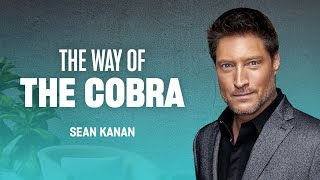
Sean Kanan, who played Johnny Lawrence in Karate Kid, discusses his book Way of the Cobra and what martial arts taught him about life. He breaks down the C.O.B.R.A. framework, explains why he believes the universe wants you to win, and shares how a morning ritual called carpe mane changed his life.
Chapters
You know, a lot of people think, well, maybe I'm too old to start martial arts. And the physical aspect of martial arts is very important. But there's numerous different lessons and values that you can take away from martial arts at any age.
Hi, everyone. Welcome to the mindvalley Podcast. Today's topic is going to be so interesting. Have you ever seen that hit Netflix show Cobra Kai? I know. I'm in love with that show, and it has become a tradition for me and my kids. Now, if you haven't heard of that show, basically it is a TV series that started to follow up from the 1985, the mid-1980s Karate Kid movies. And so if you remember the Karate Kid movies with Ralph Macchio and his sensei, Mr. Miyagi, played by Pat Morita, these movies were some of the biggest movies of the 80s. I grew up with those movies. I think it was perhaps because of those movies that When I turned 11, my father put me into Korean karate class. Korean karate is called Taekwondo. But these movies influenced me so massively. And there was Movie One, Movie Two, and Movie Three. And today's guest, Sean Kanan, is the villain from Movie three. Sean is also an accomplished actor. You will recognize his handsome face from the bold and the beautiful Shawn. You certainly are bold and beautiful. And we're going to be talking about Shawn's new book, Way of the Cobra. Now, for those of you who are Cobra Kai fans, here's. And for those of you who haven't heard of Cobra Kai, let me tell you what happened. So these movies, the Karate Kid movies, were so popular that around 35 years after the movie. So we're talking around 2016. Right. Someone decided to create a YouTube show based on the supposed idea of what if the villain and the hero from the movie came together and decided as adults to launch competing karate schools. And so Cobra kai became a YouTube series. It was so popular, it got picked up by Netflix, and it became the number one TV show on Netflix. And I think it's about to be renewed into season four. My children and I are hooked on it because it teaches so many life lessons, but it's one of those shows where you absolutely fall in love with the character. So today we're going to be talking to Sean Kanan, whose new book, Way of the Cobra, is really about some of the lessons that you might learn if you were one of the kids enrolled in the karate schools represented in this massive universe of film. So, Sean, welcome to the Mindvalley Podcast.
Vishen, it is such an honor to be here with you. I have been a fan of yours and Mindvalley for a long time. I've really looked forward to today. So thank you so much.
Pleasure to have you here, Sean. And Sean did me a really nice favor recently. I asked him to send a threatening video to my 14 year old son challenging him to a death match. And my kids got a big kick out of that because since watching Cobra Kai, I made them watch Karate Kid 1, 2, 3. And we are so into that entire universe of characters and so they were so stunned. So here's what we're going to be talking about today. Sean's going to be talking about ideas from his new book, Way of the Cobra. You can check out the book@wayofthecobra.com you can also search for it on Amazon and it'll come up. And we're going to be talking about ideas along the topic of the universe wants you to win, Defining your success, self discipline versus discipline. A concept called carpe main and the concept of finding peace within your inner child. So, Sean, are you ready to get started?
I'm ready.
So first, and Bianca is with me. Bianca is a community manager at Mindvalley. She also, incidentally, happens to be the women's World Karate champion. And Bianca, it's amazing, right? And so I wanted a woman's perspective on this as well. So Bianca, you're going to be interviewing Sean with me. I'd love, I'd love to see the questions you come up with. And Bianca is also a coach at Mindvalley. She trains people on fitness and nutrition and basically just getting into the best shape of your life. Sean, let's get started. How did you get involved in this incredible universe of the Karate Kid?
Well, I started training in Shotokan Karate when I was about 14 years old. And the head sensei of my school was a gentleman named Master Fumio Demira. And Master Demira was also Pat Morita's stunt double. And as I got older and I started to pursue my career in acting, I moved to Los Angeles in 1987 to finish my degree in political science. Ostensibly I did finish it, but it was really to start my career in acting. And Sensei Demira told me that there was going to be a casting call for the new villain for the Karate Kid 3. And it's kind of funny looking back on it, they described the villain as a 17 year old white Mike Tyson, which I never thought of myself as that. But I'll tell you, I really had this incredible sense of destiny that I was Going to get this part, which is pretty arrogant for, you know, a young kid from a small town in western Pennsylvania. And I went to an open call, which basically means that anybody on the planet who wants to show up and kind of throw their hat in the ring has the opportunity to do it. And I showed up at the studio and there must have been 1500 people in line. And John. Yeah, right. Intimidating. And so John Abildson, who had directed the first two Karate Kid films and who had won the Oscar for a film about another pretty famous underdog, Rocky Balboa, was making his way up the line and he was occasionally stopping to, to talk to one of the hopefuls. And I knew I had, you know, maybe five seconds to get this guy's attention. And, you know, it's funny, most of the time, success unfolds through the process of a lot of hard work, and it doesn't happen very quickly, but there' other times in life where the opportunity to achieve success happens in an instant. And that was one of those times. I knew that I had to get this guy's attention. And so he stopped in front of me and he asked me to do a quick improv with him. And he, he said, okay, I believe that. And he sent me inside to the soundstage. And it was like a three ring circus. Entertainment Tonight was there, Access Hollywood was there. And there were, I think, nine other guys that I counted that he had asked to come in. And there was Ralph Macchio on a set that they had created. And they asked me to go do a improv on the set with Ralph Macchio. And they basically asked me to intimidate him. And I guess I did. And, you know, I thought I did a really great job at the audition. And I later found out that they hired somebody else. And the guy they hired worked for about a week. It didn't work out. And they remembered me and called me back and it completely changed the trajectory both of my career and my life.
That's amazing. Well, congratulations, Right? You had a legendary role. Like everyone, everyone I know, at least among my friend's circle, watched the Karate Kid, grew up with that movie. And you had that legendary role. Like, it was so amazing. You were the villain like we were all trained to. Ha. Look at you now. So. So, Mike, let's go to one of the key ideas from your book. The universe wants you to win. You are not a victim. Let's talk about that idea.
Well, you know, the book is set up with a construct that I'm the sensei. You were A student in my dojo. The dojo of life. Of Cobra life. Cobra is an acronym formed from the words character optimization, balance, respect and abundance. And in the introduction of the book, I say, look, I've got good news and I've got bad news. And if you're like me and Don Corleone from the Godfather, you insist on getting the bad news first. So here it is. I don't have the answer. I don't have a magic elixir or a silver bullet that is going to instantly transform you into this uber successful beast that we all want to become and what I in the book call a cobra. But here's the good news. Everything you need already exists within you. It's like the Zen riddle, how did the ship get in the bottle? It was already there. And I go on to say that if you want to be, if you want to become successful, there's two things you have to do. The first thing you have to do is you have to accept that the universe wants you to win. You know, so many people find themselves in a state where they begin to feel that the universe is literally against them. And this perpetuates victimhood. And victimhood does not exist in my dojo. Okay, so how do I know that the universe wants you to win? Well, it's ingrained and encoded in our DNA. How does a baby know not to breathe when you put its head underwater? It knows intuitively. You know, for 200,000 years, Homo sapiens were not the apex predators. We were running around in loincloths trying not to get eaten by saber toothed tigers. And where are those ferocious felines now? They're a notation in an anthropology book. And we are now the dominant species on the planet. It's because we learned to work together. So the universe wants you to win. It wants you to survive. And survival is the baseline for success. You can't succeed if you're not around to do it. The second thing is that you have to accept that where you are is who you are. Basically, your life is your fault. Where you are in your life is the sum total of all the decisions that you've made, both the good ones and the questionable ones. And you have to accept responsibility for it. And once you can do those two things, now you're ready to learn the way of the cobra.
Oh, I love that. Now, this key idea, right, the universe wants you to win. It's actually one of the most important mental models one can have. So it's interesting you touched upon that, because in my many Conversations with the great MBA professor Sri Kumar Rao, who started Columbia and Kellogg. He's a teacher on mindvalley and a dear friend. He coined the phrase called mental models. And he says, all our success in life is dependent on our mental models understanding or perceived understanding of how the world works. And I asked him, what is the most important mental model? And you want to know what he said?
Please.
He said, the most important mental model is the idea that the universe has my back. Yeah, right. Same as what you said. The universe wants you to win. He said, if you have this mental model that the universe is square, the universe is loving, the universe has your back and wants you to succeed, life is going to be so much easier for you.
It's. It's so true. And, you know, here's the thing I say in my book that I'm definitely going to teach you some things you might not have heard before, but you're going to. You're going to hear a lot of things that you have heard before. And the reason is that there are certain truths in the universe, Whether it's Jesus saying that which you reap, social you sow, or the Buddha talking about karma, the law of cause and effect. There are just certain things that are true. So you start to see common denominators that are said by many different people from many different backgrounds that have all used some of the same philosophy, strategies and thought process to achieve their success. And when you start seeing these common denominators, hopefully you start thinking, huh, maybe there's something to it and it starts to resonate with you.
Absolutely. Absolutely. Now, let's segue. Let's segue to the next question, which is it's less about your book, but more about you. And I'd like to ask this question to Bianca as well, just for a woman's perspective. I've been thinking about enrolling my kid in martial arts class. We recently moved to Thailand about two years ago, and he's been trying to decide between jiu jitsu or kendo. Right. I'm curious to know. Let's start with you, Bianca, and then I want to pose the same question to Mike. Bianca, what did martial arts give you as a woman?
I think it's a win for both women and men. Speaking about the present moment that you start doing martial arts. But what is most important is that you want to start doing martial arts with your kid. And I think this builds up more than anything else. Your kids, it teaches your kids how to act in the real world. It teaches your kids how not to react in a bad way. It teaches them balance. And I think it's a great way to start with. It has taught me what it means not to get into fights when you don't really have to, that there's other ways also. And of course, if we're speaking about the physical stuff, it's amazing training your body in a way that maybe other sports are not doing it, like doing flexibility at the same time with speed training and all the techniques that you're doing. This is building your body in the most profound and beautiful way, both inside and out. The best thing and the best takeaway from my ears of martial arts is actually how I feel as a woman. More confident and actually applying all of the principles that I've learned there. And the balance in special. It's making me have a new view of life. And when I forget about the view that I'm supposed to have, I remember about martial arts. I go into a training of strictly martial arts, and then I go back and I feel more balanced. This is how I feel it. This is my biggest takeaway. And I'm very curious about Sean also.
Yeah, and, and, and, and Sean, I want to now post a question to you. The reason I'm asking this question is because martial arts is actually one of the most beautiful forms of personal growth. But so many people hesitate going into it because they think, oh, I'm signing up for like seven or eight or nine years of training and I got to, like, work really hard and get a black belt. But no, even if you do it for like six months and stay a white belt or a yellow belt, you're still going to gain from it. Right? I'm curious. What did you gain from martial arts? How did it shape you as a man?
When I was growing up, I was an awkward and insecure young child growing up in a hardscrabbled western Pennsylvania steel town, and I frequently found myself the target of bullies. And martial arts, for me, gave me so much that I needed it gave me a sense of discipline, it gave me a sense of confidence. It did teach me how to defend myself. You know, there's so many wonderful qualities that are at the essence of any martial art which are invaluable for anyone at any age, especially kids, because, you know, they're so formative when they're younger. You learn compassion and empathy and teamwork and the ability to compete against yourself. You learn humility. And, you know, a lot of people think, well, maybe I'm too old to start martial arts. And the physical aspect of martial arts is very important, but there's numerous different lessons and values that you can take away from martial arts at any age. And you know what?
You may not.
You know, if you. If you start martial arts at 50 years old, you may not be able to do what the young kid who's 18 or 20 can do. But that doesn't mean that you can't also learn the very best qualities of what martial arts is all about and apply them to all different aspects of your life. Like Bianca said, I do the same thing. I apply much of what I've learned in martial arts to almost everything that I do on one level or another. And so with your children, I mean, I think it's amazing, Vishen, because, you know, first of all, bullying has become. It really has become a pandemic. And now with, you know, kids being on the Internet, cyberbullying takes it to a new level. You know, when I was a kid, you got bullied. You got bullied, you know, before school, after school, on your way home. But now, with the stroke of one key, kids are getting bullied to the entire school using video. I mean, it's really horrendous. Things are being put in the Internet, which we know lasts forever. And unfortunately, teen suicide is the fourth leading cause of death among adolescents, and bullying is a major contributing factor to that.
Shannon, I'm very curious. Made you choose martial arts because there was a spark at some point that you didn't go and choose, I don't know, maybe swimming or football. What made you choose this?
Well, I'll be honest. In 1976, Rocky came out, and like everyone, I was swept up in the mania of Rocky. And I started boxing on the south side of Youngstown, Ohio. And it became very apparent very quickly to my parents that the people that were boxing at this gym were doing it to get out of a really bad socioeconomic situation, and they thought that might not be the best choice for their young son. And so a couple guys that worked for my father had been training at a local martial arts dojo, and they kind of turned me onto it. And I initially didn't really want to go. I really was interested in boxing. But once I stepped foot in the dojo, I was bitten by the bug. And, you know, the more I learned about it, the more I found out about it, the more I loved it.
I love that. And by the way, Sean, I realized that earlier I called you Mike. Mike Barnes was your character in Karate Kickstarter. Sorry, it's just that I'm So into the movie. So forgive me for that, Mike. Sean. So the next question I have is it kind of relates to what we spoke about and what I'm seeing. People who are here in our live audience commenting in terms of bullying. Jamie Connell, for example, says bullying is a pandemic that no injection can cure. I'm a huge advocate for ending bullying. Thank you for your comments, folks. Stacey said. Yeah, and Stacy here is writing. I was bullied growing up as a child. Yeah, I was bullied as well. In fact, that's why my dad enrolled me in martial arts class. But I want to ask you a philosophical question. So recently I put up a post celebrating the fact that America had committed to providing billions in arms to Ukraine, billions in arms to Ukraine to help them fight off the Russian invasion. And immediately people started like attacking me for that post on Instagram. And they said, I can no longer believe you're a spiritual leader because you're supporting money going to arms, you're supporting prolonging this war, you're supporting giving people weapons. So I did a little Instagram live and I responded and I shared my view. And I'm curious to know your view, Sean. When is fighting back prolonging the fight? And let's actually talk about this in form of geopolitics. Right? How do you view what's going on in Ukraine in terms of what's happening geopolitically with America providing billions in arms to Ukraine, is that fighting against bullying? Is that healthy? What do you think is the most conscious way geopolitically to approach this situation based on everything you've learned so far?
Well, I like that you asked me that because I am a self proclaimed political junkie and I am a political science major and I've been following this very close closely. Look, in 2022, to have an independent and sovereign nation invaded by another country under a felonious claim that it's being done to rid that country of Nazism and causing the death not only of the brave Ukrainian people, women, children, but in many cases also the death of Russian soldiers who didn't really understand what they were being sent in to do is absolutely a crime against humanity. And, you know, look, I believe that physical violence should be a last result, but I do believe that there are times that it's necessary and that is the only thing that's respected by somebody else who's an aggressor. There are times in life when you got to take a side and there are times in life when you have to take action and It's a tricky question because the Ukraine is not a member of NATO and as such, we are not obligated or able to go in and defend them directly with our military. But I am in full support of arming the Ukrainians and sending the Russians out of the country. And I think it's an abomination what's being done. I think it is a violation of international law. And I am not in favor of a no fly zone because that would imminently put NATO and American planes in dangerous proximity to Russian planes, and it would be only a matter of time before it became a kinetic conflict and it would absolutely result in World War Three. But that being said, I think it's imperative that we, as Americans and as the free world, stand up and say, this will not be tolerated.
I like that. Thank you. And I had no idea you had a political science background. So let me ask another philosophical question to layer on that. Jesus spoke about turning the other cheek. When you are faced with an aggressor, when do you turn the other cheek and when do you fight back? How do we make that distinction?
That's a tough one. You know, Jesus was a much better individual than I look. You know, as I said, I think that violence should always be a last resort resort. I think that when you are protecting yourself from physical violence or your loved ones, and if you have to resort to it, you better be able to do it. I think that words, for the most part, should not elicit any kind of physical violence. I think it's always best to walk away if you can. I think situational awareness, which is one of the things I talk about in the book, is an excellent tool for avoiding conflict. And, you know, there's a really good story that I tell in the book. It's a story about an aging samurai who was a sensei who had three sons. And he knew that he was coming to the end of his days, and he had to choose one of his sons to succeed him for teaching at his school. And so he said, I'm going to test each one of you. And he asked each of them to line up with their katanas, with their swords outside of the front door of the house. And he went inside the house, and just above the door, he put a small pillow. And so the youngest son, the first son, he defiantly walks up to the front door. He opens the door and the pillow smacks him on the head. Samurai goes in, he resets the pillow. He asked the second son to go in. The second son walks in, he opens the door. And as the pillow is falling with almost imperceptible speed, he draws his katana and he cuts the pillow in half. Samurai walks back in, he takes one half of the pillow, he puts it back on top of the door. And now his oldest son, who's trained the longest with him, approaches the door and almost without even being able to see it, he cracks the slightest smile and he turns away and walks away from the door, knowing that there was a pillow up there that would hit him. And the point is, if you have the ability to sense danger, to sense conflict, and have the ability to walk away from it, that is the highest form that you can achieve. And ultimately the old chosen to become the sensei of his father's school.
I love that, I love that that story is so powerful, Sean.
And also if you react back to know your, your limits, like killing or not killing, like taking a point. If we're speaking about, you know, professional martial arts, when you're doing it for points rather than killing someone or breaking up their legs or something, it's about the intentions, I guess, also.
Yeah, and I think, I think also, you know, there's something that I learned which is, you know, applies in martial arts and it applies in self defense situations, which is, you know, check before hurt, hurt before maim, maim before kill. And so, you know, you have to apply, you know, unfortunately in a physical confrontation, you have to apply overwhelming force, but force that is appropriate and adequate without being overkill, so to speak.
I love that. There was a video on social media recently that, that I showed to my son. It was the sensei of a karate school and he was advising his students. These students were well trained, they were black belts, they knew how to defend themselves in the fight. But he was telling them, you know, the most important lesson I want you to learn, and I'm paraphrasing here, is he said, the most important lesson I want you to learn is all this. De escalate. Don't try to pick a fight. Always try to avoid the fight. He says if you're in a bar and you happen to just be, you know, just like your eyes are lazy and you're just gazing in a direction and you accidentally gaze upon a brute who turns to you and go, hey, what are you looking at? Don't turn to him and say, none of your business.
You know, you know what you do? You turn to him and say, I'm sorry, I'm sorry. You look just like a friend of mine.
Exactly. That was the advice he gave you Know, that was the advice he gave, right?
You know, if you're on a bus, you know, and a couple guys look at you and they say, you know, what are you doing? Hey, man, I'm just trying to get back to my family after a hard day of work. That's all. You know, de escalating is. I can't tell you how many times I have been able to de escalate a situation by just asking a guy, hey, listen, can I buy you beer? And, you know, maybe we can talk about this now. Listen, that's not always the case. There are. There are times that there are people that cannot be rationalized with. And there are times, unfortunately, in life when you can't always walk away from a situation. But if you use your head and you keep your emotions in check, most of the time, most of the time you can and you know.
Well said.
One of the things I talk about in the book Vision is I talk about how control is an illusion, okay? If you want to think that you're in control, all you have to do is walk outside your front door, take a look at the sun, which is a dying star, and realize that it is someday going to go supernova and swallow up our Earth. And if you still think you're in control, that'll probably let you know that you're not. And the reason I bring that up is the only thing that we have control over is how we choose to react emotionally to external stimuli. You know, that's the only thing we can do, is how we react to any given situation.
Well said, Sean. So, Sean, let's go on to another idea from your book. Okay? Way of the cobra. And that is the concept of carpe main m a n e. Tell us about that.
So carpe mane. So it's Latin, and it means dominate the morning. So we've all heard the Latin phrase carpe diem, which is seize the day. So let me take you back for a second. The genesis of how I wrote Way of the Cobra was that I found myself in a place a few years ago that I think a lot of people can relate to. I had had some significant success in my life. I had had some epic failures, some of which had been rather well publicized. I was 35 pounds overweight. I had no prospects for acting work. And I was looking at the mirror and I was saying to myself, what is my second act here? What am I going to do? And I realized that I needed to change some things very quickly. And no more of this waiting for my ship to come in going crap, I had to learn how to build the damn ship. I just had to figure out how to do it. And I started doing a couple things very differently, very quickly. And one of them was employing my concept of carpe money, which is seize the morning. And by instituting a morning ritual, if you will, I started achieving some success very quickly. And my morning ritual, ritual is the first thing I started doing was getting up about 90 minutes to two hours earlier than I usually get up. And it is a fantastic way to become more productive. You know, the world hasn't started yet. Maybe if you are married, your significant other hasn't gotten up yet, and you have your space to yourself. I start every day in gratitude. Now, this is not a discussion about theology, but for me, I get on my knees every morning and I thank God for all the things that I am grateful for. And what that does is it puts me in the present. You know, I am living in the present, being thankful for the good things in my life. If you find yourself depressed, other than being clinically depressed, what it means most likely is that you are dwelling on the past. And if you find yourself being anxious, it means that you're most likely projecting a future, that you're not aware of the results yet, but you're anticipating them most likely negatively, and it's creating anxiety. So that's the first thing I do in my morning ritual. The second thing I do is I meditate. And a lot of people are intimidated by meditating. It doesn't have to be difficult, and it doesn't have to be something that you have to do for an hour, you know, with your legs folded in the lotus position. I have a mantra, which for me is a passage from the Bhagavad Gita, which I memorized. And that's what I meditate on. But it can be something as simple as you saying over and over again, I'm going to be better today in every single way. Better today than every single way, or just concentrating on your breath. And meditation is so important because what it does is it shuts out that bombastic monkey chatter which clouds our brain. And in the beginning, it's difficult, you know, you'll find that your thoughts are your. Your ability to try and create silence is consistently interrupted by that monkey chatter. But with practice, you get better at it. The next thing I do is I do some visualization. If I have an audition, if I have a meeting, I will put myself into a mental state where I'm envisioning myself going through whatever it is I have lined up seeing myself accomplishing it successfully, seeing myself connecting authentically and positively with whoever it is that I have to interact with. I did it before my, you know, you know, before this podcast with you, Vishen, you know, you know, one of the things that I think is the most important, important thing to ensure the success in any kind of thing like this is to try and make a legitimate connection with the person you're talking to. If you can do that, you're 50% home free. The next thing that I do is, and I don't do it always, but I'll do some journaling and you know, look, I promise you, especially the guys out there, if you do some journaling, it is not going to immediately transform you into a sixth grade school girl.
Okay?
So what I do is I'll just write stream of conscience for maybe two minutes. Sometimes I write, I don't want to journal in the morning, I need more coffee, this sucks, blah, blah, blah. And then I take it and I throw it away. And the point is that again, you're clearing up your mind. You're freeing your mind of all the extraneous thoughts which can distract you. The next thing that I do is I do some reading. Reading is the great equalizer. It doesn't matter what your socioeconomic situation is. It doesn't even matter if you're incarcerated. Every one of us has the ability to travel to places that we might not otherwise have the ability to see and to learn the thoughts of great men and women across the expanse of time. And if you commit to reading even 10 pages a day, that's 3650 pages year, which is the equivalent of probably 15 books. Putting good knowledge into your mind. If you can do those things, it really sets the trajectory for your day. Also, I'm a big fan of making lists, knowing exactly what my schedule is and what my goals are, my micro goals for each of those things. So carpe. Emmanue for me has made an enormous difference in my life. You know, as an actor, I spend. I'm fortunate that I'm on a television series now, but most actors spend the majority of their life looking for work. And as such, their schedule often lends itself to not having to get up early. And I found myself in that trap for a long time. When I wasn't working, I would be able to sleep in. And, you know, getting up early in the morning is critical to success. Now look, it takes more than getting up early in the morning, because if that's all it took, every kid Waking up early Saturday morning and having a bowl of sugary cereal and watching four hours of cartoons would be a captain of industry. You have to have a plan in place. But when you exercise the self discipline to have a plan like Carpe Monet in place, you are stacking the deck in your favor and setting yourself up for success for the day.
I love that. I love that. So repeat the steps for me again. You start by literally getting, expressing gratitude.
I left one critical thing out. One of the things that I really urge everyone to do. Drink a big glass of water, hydrate in the morning. You've been sleeping for eight hours. Your brain runs on electricity and synapse and you want those to be firing. It hydrates you. It's a great way of satiating you. I don't know if you're like me. And in the morning you are ready to tame the beast in the refrigerator. It's a great way of tamping down your appetite and waking you up. So that's the first thing. The second thing is I start the morning in gratitude. Look, if you're somebody that is not religiously inclined, that's fine. Just think of five things that you're grateful for. And if you're going through a rough time and you can't think of it, be grateful for the fact that you woke up, you have another day, you got another shot to turn it around. So that's living in gratitude. The next thing is, is meditation. And you know, start slowly, start with three minutes. And technology is a great thing. To help you with this, I have to spell her name or they're all going to start talking. I use A L, E, X, A all the time. And I'll say, give me five minutes on the timer and it will time me. And I'll know that for those five minutes I don't have to worry about it. I don't have to concentrate on the time going by and I meditate. I get that monkey chatter silenced in my head. Then sometimes I'll do a little journaling. If I'm anxious about something, if I've got something that I've been carrying around which is serving as kind of mental baggage, I'll write it out and I'll look at it for a second and I'll throw it away and I'm done with it. After that, I'll do some visualization for whatever I've got going on that day, how I want the day to unfold. Look, of course we get thrown curveballs daily. That's life, right? And it's also true what Mike Tyson said, that everyone's got a plan till they get punched in the mouth. And it's amazing how life can punch you in the mouth. But at least starting from a point of this is how I anticipate my day to go. And, you know, you think about the potential pitfalls and obstacles you might encounter during the day, the goals that you want to achieve, the people you want to connect with. And after I do some visualization, I do some reading. And look, it doesn't have to be reading a book. You can listen to audible if you want. You can watch a documentary on YouTube. The concept is putting something good and something new in your mind to expand your wheelhouse. And then the last thing, which I left out, and I left it out because I don't do it in the morning. I'm working of an afternoon guy, is exercise. Exercise is mandatory for so many reasons. And I don't need to give everybody a big spiel about why exercise is important, but it's incredibly important. And there's tons of studies linking it to how successful people exercise. And I can't recommend it enough.
I love that. I love that.
I wanted to ask you, what do you think about exercising in the morning, especially on an empty stomach? I've been doing that in the morning and I've seen incremental changes in my body. I actually achieved vision. The thing that I was telling you before, a week ago or two ago, I achieved the way that I'm feeling right now and how my body has shaped itself with training in the morning. What's your view on this, Sean?
Well, there is a lot of. There is a lot of science to back up that doing especially cardio in the morning on an empty stomach increases the rate that you burn carbohydrates and eventually fat. So it's a great thing if you can do it. It disciplines you self, disciplines you, actually. And I completely am on board with it being very positive. For me, I like to do it during the afternoon because it serves as a break for me. It's a way for me to take a timeout during the busy day and sort of take, you know, an hour, sometimes 90 minutes for myself. And, you know, I don't always lift weights. Sometimes. Frequently my exercise comes in the form of walking to the studio where I film. It winds up being about 90 minutes round trip. And it's amazing how much good work you can do mentally when you're walking. You know, I constantly am. I'm in the process right now of outlining my Follow up book to Way of the Cobra. And I'm able to get all sorts of wonderful ideas. And when I'm not doing that, I am always listening to something, frequently vishen, you know, listening, putting, putting something that's good head food in. And the combination of combining physical activity with hearing something and learning something, for me, I find that it has a greater propensity to stick. Now, I don't know what the science is that backs it up, but for some reason, combining those two things together, at least for me, works really well.
Beautiful, Sean, thank you for. Thank you for sharing that. So the next question I wanted to ask you is you went through this period in your life that was really dramatic. You dropped 35 pounds and then you ended up winning a daytime Emmy award all in the span of one year, right? Yeah. What caused that massive shift? You were 35 pounds overweight. Something shifted in your life. You shed the weight and then you went on to gain that huge accomplishment, the Daytime Emmy.
It was a pretty incredible year. We got my show that I created Studio City on the air. We were nominated for 19 Emmys. We won three. My second book, Success Factor X, became an Amazon new release bestseller. And I lost the weight. And I don't say that to impress people. I say it to impress upon you what is possible. So I think really what happened was I had had enough pain. You know, I realized that I was not living up to my potential, that I had a lot to share with the world and I wasn't going to have the opportunity to do do it if I didn't start to get my own house in order. And also, I finally began writing Way of the Cobra and I realized that I can't put this book out about motivation and self help and position myself as a quote unquote expert and not walk it like I talk it. I mean, you know, I really dislike hypocrisy in others and I wasn't going to stand it any longer in myself. And I think writing the book largely kept me accountable. I think one thing that really helped was I thought about the times when I was really successful. I thought about the moments when I felt that I absolutely could not lose. And one of those moments was when I was at the open call for Karate Kid 3 and I had this preternatural sense of destiny that I was going to get this role and nothing could stop me. And so I got really clear on what my success was. And let me talk for a minute about success. Here is the thing. Success is a great common denominator we all want to be successful. We all want success for our family and for our children. Now, Vishen, there are certain things that you would say you need to be successful that I would agree with. We want to have loving relationships. We want to have meaningful work. We want to feel that we're making a difference. But there's things in my life that I need to be successful that you probably don't need, and vice versa. So getting clear on what your specific success is, one of the most important, important things, and what I urge people to do in the book is to write down bullet points of what you need in your life to be successful. Take a picture of it, and congratulations, you now have your new screensaver. Carry that around with you. Look at it. Look at it 10 times a day and allow it to motivate you. So it's also important to understand what success isn't. Success is not the bloated Instagram feed of celebrities parading their conspicuous consumption of toys and trips. I've worked in Hollywood for 35 years. I can tell you that so much of that is not even real. It's created to cultivate an image. My uncle has this great saying, which I love. He said, things aren't always what they seem. Skim milk masquerades as cream. And just keep in mind that what other people show you in the world as their success many times is not success, is not the airbrushed covers of fitness magazines and fashion magazines that tell people that we have to have this impossible bar set for what we have to look like. And it's also not the 247 bombardment of commercials from advertising companies telling us what you have to own to be successful. Because here's the thing. If monetary accomplishment and material gain were the only benchmarks for success, then a spectacular amount of the human population would be deemed unsuccessful. And so I started thinking about the things I needed to be successful that were outside the realm of money. And basically, basically toys. And going back to that whole idea about money not being, you know, the sole arbiter of success. Think about a guy who is an immigrant. Maybe he's 70 years old, he's worked as a janitor all his life. Maybe he doesn't speak English very well. Probably not the first guy on the top of your list that you're going to say is uber successful. But what if I told you that that same guy saved all of his money? He put his only daughter through college, the first person in the family to go to college. He eventually went to medical school and became A brilliant research scientist and went on to save tens of thousands of lives. I would say that that gentleman was extremely successful. So I think it's one of the. Getting back to what I did was I got clear with what I needed in my life to be successful. And one of them was if I was going to have the ability to inspire people and communicate through my acting, I wasn't going to do it, you know, looking like the Stay Puft Marshmallow Man. And so I needed to get myself in shape. And it's had an enormous difference on my career. You know, I also needed to stop talking about wanting to have my own TV series and, you know, lamenting the fact that I was always waiting for someone to hire me. I needed to, you know, go out and build the infrastructure and the project that was going to allow me to have my own project. And, you know, I. I had a lot of help doing it, not the least of whom was my amazing wife, Michelle, who was also an Emmy winning producer and writer on the show. But I created my own vessel. And so getting clear is one of the things that really helped me.
You did some amazing things, some amazing things in life. And I just want to give a shout out to this book again, because I'm looking at the Amazon reviews and this review is by a guy called JLH and he says, this is the best book I've ever read and it speaks more than volumes. Another review says, this is by Don Johnson. That's the name. This is such a great story from the amazing person who achieved so much in his life. The structure of the book takes you step by step of things that hold us back and how to improve your life. Get a copy today. So, Sean, congratulations on writing an amazing book. I've been looking for a personal growth book that I can read chapter by chapter to my kids because I'm trying to introduce them to a personal growth book. And I think this may be the book I'm going to be today. Yeah, just, you know, because they are. They are such big Cobra Kai fans. So our final question is, are we going to see you in the next season of Cobra Kai? Are you allowed to confess that I.
Get asked that question probably 100 times a day. And, you know, I gotta say, first of all, I'm so flattered that a role that I played in 1989 still has relevance and still has interest from everybody. All I can say about whether or not we're going to see Mike Barnes in Cobra Kai is keep watching.
I know what that means. I know what that means. I'm so excited about that. All right, thank you so much, Sean. And go check out the book Way of the Cobra, Unleash youh Inner Badass by Sean Kanan. You can find it on Amazon or Way of the Cobra. Thank you, Bianca, for joining in this interview. Thank you, everyone, for being here today. We had over 100 people live here with us.
More from Vishen






Brown Noise for Deep Focus and Concentration (Best with Headphones) | Gabriel Loynaz



Your Appointment With the Eternal | Guided Meditation with Michael Bernard Beckwith