Lisa Bilyeu on Radical Confidence and Becoming the Hero of Your Own Life | The Mindvalley Podcast
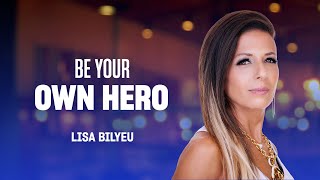
This content was created by Vishen Lakhiani. This content was uploaded by Vishen Lakhiani. This is a YouTube video titled "Lisa Bilyeu on Radical Confidence and Becoming the Hero of Your Own Life | The Mindvalley Podcast" created on June 23, 2022. It features a conversation between Vishen Lakhiani and Lisa Bilyeu discussing her book "Radical Confidence" and the concept of becoming the hero of one's own life. They explore topics such as overcoming the need for external validation, embracing hard questions, and the importance of self-reliance and personal growth.
Chapters
Every time I thought I needed the confidence to speak up, to say I was unhappy, the gratitude kept me stuck. I kept saying to myself, how ungrateful are you to want more, to want something else in life when you have a husband that loves you, using that thing that at the beginning was actually a great way to pivot from a negative mindset to a positive mindset, it now kept me stuck. I am my own hero gets the F up off that floor, Lisa, and save yourself. That I am my own hero and no one is coming to save me except me. How can I validate myself? It is about shifting your identity into being something that can be malleable, that allows you to make shifts, that allows you to fail, that allows you to make challenges. Because if you want to shift your identity, there are going to be so many, so many times that you're going to fail. How do you keep sustaining that momentum without the loss of enthusiasm?
Welcome back everyone to the mindvalley podcast. It is so wonderful that the world is opening up again post pandemic. People are starting to commute again. Podcasts are becoming such a useful thing to have on those commutes for those of you who are still returning back to the office. And I love doing this job because every time I bring on a guest for this podcast, not only do I know that I'm helping serve up more incredible wisdom for your commute or your run or your treadmill session, but I learn a ton and it helps me refine my practices and the way I show up in the world. Today's guest is a remarkable, remarkable woman, Lisa Bilyeux. She's the author of the new book Radical Confidence. 10 no BS Lessons on Becoming the hero of your own life. And we're going to be discussing key ideas from this book, but first, a little bit about Lisa Bilyeu. Now they are authors and podcast guests and then they are legendary authors and podcast guests. I don't just toss out the word legendary, but Lisa is sort of legendary because she's the co founder of a billion dollar company. How many people do you know who actually practice, put in practice everything they teach and have used it to build a billion dollar company. And that company, of course, is Quest Nutrition with her wonderful husband Tom Bilyeu and co founder and president of Impact Theory. Tom is also the creator of that popular YouTube channel, Impact Theory. I've been a guest on Impact Theory twice and it is such a pleasure to be on that show. Lisa is also, in addition to being co founder of Quest Nutrition, she's Also the host of Woman of Impact, a show featur women who have overcome incredible hardships to achieve massive success. Many, many, many Mindvalley authors have been on that show. So her mission is to empower all women to build the kind of confidence it takes to live the life of your dreams. I'm excited to have a joiner today to talk about ideas from her new book Radical Confidence. And by the way, if you are a guy, this is also for you because all of us could use a dose of radical confidence. All of those all of us could figure out could use some wisdom on how to hero of your own life. Lisa Bilyeu, welcome to Mindvalley.
Wow, Vishen, what an introduction. Thank you so much. So great to be here and to see you again. It's been a while.
You know what's funny, Lisa? I'm looking at the. I'm looking at you on camera and we have something wildly in common. You love superhero iconography.
I do.
And in fact, I'm looking, I'm looking around. I have that same Catwoman statue. I have that same Wonder Woman statue.
Do you really? That's amazing. My entire office is full of superheroes and I have a big sign that says over there, always be yourself. Unless you can be Wonder Woman. If you can be Wonder Woman, be Wonder Woman.
I love that. I love that. Now I wonder, was any of that inspired? I know your husband Tom is close friends with Jim Quick. Was any of that inspired by that friendship?
For their sake? Maybe I'll say yes, but no, not really. The things that you see behind and even just like I wear a Wonder Woman necklace, things like this are really my way of motivating myself. It's a way of me always being able to show up, even when I don't feel it. It's like I look at these bad asses behind me and these like these women who just are unstoppable and it inspires me. And so whenever I'm getting in front of the camera, whenever I'm challenging myself, I need to be inspired. And so this, my out my, my background and this Wonder Woman are all very deliberate ways of enticing myself to, you know, get motivated and be a superhero. I love her of my own life.
I love that. Do you know every Mindvalley office? Oh, you have the Wonder Woman mug as well. And I saw your Instagram post today. You've got Wonder Woman's logo carved in the back of your head. Do you know, Lisa, every Mindvalley office has a statue of Wonder Woman.
I didn't know that.
We have several stats offices around the world. And in our office in Estonia, there's a statue of Wonder Woman. In my home, there's a little figurine of Wonder Woman. In our office in Malaysia, we have a six foot tall statue of Wonder Woman. And the reason is the same reason she inspires you. When I started this company, we primarily were attracting a female audience. And so way back in 2011, 2012, our management team was 70% women. And so it just ended up being a female superhero, not a male superhero hero. But Wonder Woman has always been an icon of mine that way.
I love that. I mean, she really does. Like, even with this necklace. This necklace actually started because I was petrified to get on stage and do public speaking. And over time, my husband, being very honest with me, he just said, look, you know, our goal is to impact people. And yet you're saying no to all these speaking gigs. You know why? You just need to really assess that you're, you know, you're not aligned with what you say that you want in life. And we're very honest like that with each other. And so I really just looked at the situation. I was like, why do I keep saying no to get on on stage? And the reason why vision is I was just petrified. I was so scared I would see people like yourself, see people like my husband, just be so amazing at it. And I never thought that I had the confidence, which is, you know, partly why I wrote the book. I never thought I had the confidence to get on stage. And so what I realized was it isn't all about having the confidence. It's about aligning yourself with your goal and then taking those actions in that direction. And so I started to use this gearing up to getting on stage as a way to motivate myself where I'd look in the mirror. You know, we all know that, you know, repetition is what creates habit. And so I needed to create a habit in me that I thought of myself as Wonder Woman enough to get on stage, you know, like Beyonce with such a fierce. So I was like, okay, what's my Sasha face? And so for a month, I was putting this cheap little thing that I found on Amazon, and I was putting it on, and every day I was reminding myself, I'm. I'm. Can I say badass? I like, I. Sorry, I don't know if I could swear on it, girl.
My book is called the Buddha.
Okay, just. But I would put it on and be like, you're a badass. Like one You're a badass. Like Woman, Wonder Woman. And I very purposely cultivated that mindset so that I could connect an empowerment symbol to how I wanted to feel. And so I did it. You know, like my. One of my favorite movies, Vishen is the Karate Kid. Wax on, wax off. Keep practicing until you get in the ring. And so this was definitely part of my mindset in building myself up and building myself so that I can get in front of the camera so I can get on stage and not be totally petrified.
And you know what's beautiful about your story? I was just interviewing Gabby Bernstein. Right. And authors who have figured it out were often the opposite of what they figured out. Right. You are writing a book about radical confidence. But the fact that you came with without that confidence and you had to figure it out and then you took it to the level you did, that makes you so relatable and it makes you be able to understand the confidence issues that I guess many other people might be going through. Likewise, I went through the same thing. I went from stress and burnout to mastering meditation. Now tell us about radical confidence. What exactly does that word represent? How is radical confidence different from just confidence?
Yeah, I love this question because before we started Quest Nutrition, people may not know that I was a stay at home wife for eight years. And I was brought up Greek Orthodox in a very traditional family. I had big goals, big dreams, met the husband, my husband. We were going to dream about making movies. So we had a plan. He was going to go out and make enough money so that we can make our own movies because both of us actually had very bad experiences on movie sets. So we said, great, let's just actually make the money ourselves. And now we can control the resources, we can control the situation. So I said, as a very traditional Greek wife, I was like, oh, you know what? I can say how I make all decisions for you. So I don't know if you know Steve Jobs. The reason why he always wore black shirt was because he never wanted to waste even an ounce of decision making on what he was going to wear. So we came up with a very, what I thought at the time was a very smart plan. Babe, you're going to go out, make enough money. I'm going to take care of everything else. Everything from what you're going to eat to what you're going to wear. You don't have to make one other decision. We're going to do that for about a year, a year and a half, and then we're going to make our Movies that seemed like the great goal. Same like a great strategy. Strategy. One year turns into 2, 2 into 3, 3 into 4. And I don't know about anyone listening right now, but how many people do you know, Vishen, that have sacrificed? Just going to sacrifice for a bit, it's just going to be for a year and then something happens, you know, we're just going to sacrifice a bit more because you become a people pleaser. You become maybe your identity gets wrapped up into being a person that provides for other people. So over time, what ended up happening was I was started to dismiss completely my unhappiness on a daily basis. I was using gratitude as a way to repay. Like in that first year, be grateful for what you have, Lisa. You don't love being a housewife. This isn't what you dreamt of. But don't worry, you're doing it for the greater good. Second year comes. Well, Lisa, you're really grateful. You're so grateful for having a roof over your head. You're grateful for having a husband that loves you. Don't worry, keep going, keep going. But come year six, year seven, Vishen, I was using that gratitude as a means to dismiss how unhappy I was. And every time I thought I needed the confidence, this is where the confidence. Every time I thought I needed the confidence to speak up, to say I was unhappy, the gratitude kept me stuck. I kept saying to myself, how ungrateful are you to want more, to want something else in life? When you have a husband that loves you, how ungrateful are you? And so using that thing that at the beginning was actually a great way to pivot from a negative mindset to a positive mindset? It now kept me stuck. And so now people ask me all the time, vishen, where did I get the confidence to go from being stuck for eight years, being profoundly unhappy, to now living the life that I have? They're like, where do you get your confidence from? And I was like, they are not talking to me, Vishen, because if I look behind me, it's like, surely they're not talking to me. Because if you heard how insecure I was, if you heard how negative the voice in my head is even to this day on saying, lisa, are you going to be able to get in front of Vishen? And on his podcast, are you confident enough? And the mind keeps telling me no. And so what I started to realize was people want what they thought they saw was confidence, but really it was radical confidence. It meant that I didn't feel great about myself. It means that I had insecurities. It means that sometimes I was completely inadequate for actually tackling a challenge, but I had the fear and did it anyway. Now, I'm not talking about blind belief and just being scared and jumping in. I'm not talking about that. Because when you've got anxiety or depression or you're so caught up in your mindset of imposter syndrome, telling someone just to do it anyway doesn't help. So what I call radical confidence, it means you need a tool belt, you need a strategy, a game plan so that when you move towards this thing that you want in life, you have a way to keep momentum going. So when you're fearful, you have a toolbox to go to. When you're fearful to get on stage, you have cultivated the meaning of a necklace. When you're fearful of getting on a podcast, you have a list of things that you can do. You can grab your phone, you've got your hypes, your hypes on you. Hit an obstacle when you're starting a new startup company with Quest Nutrition, where I had zero idea what I was doing. And literally we're growing at 57,000%. I go from being a stay at home wife, supporting my husband, shipping bars off the living room floor to within three months shipping from a garage three months again, shipping out from a facility three months again. I've got 10,000 square feet and all the while vision. I had no idea what I was doing. And I had the guy, the UPS guy came to me going, you know what? I can probably pick up a lot more boxes if you put them all on a pallet. I didn't know what the hell I was doing because I still saw myself as a stay at home wife that was supporting a husband. So now I'm like, what on earth is a palette? I run back to my computer, I quickly type in Google, what is a pallet? And it shows me an image. I'm like, oh yeah, I know what one of those are. How do I get one? Where do I get a palette from? Tells me how I get it. I get it delivered. Next thing I know, I put all my boxes on a palette and the UPS guy's like, well done. You took so many boxes. That is the situation that I went through time and time again where I faced these obstacles. I didn't know what I was doing. I had utter insecurity. I didn't have the skill set, but I saw the problem. I faced it head on and I figured it out. That is radical confidence.
So Let me try to paraphrase what you're saying to make sure I understand right. You're saying that there's this idea that to be confident means if you're about to do that sale, if you're about to get on stage, if you're about to appear on a podcast, you feel amazing, you feel completely at bliss. But what you're really saying is that, no, you're going to, there's going to be a bit of nervousness, there's going to be that, oh shit, am I, am I an imposter? There's going to be that, gosh, I what have I messed this up? But you do it anyway. You recognize that that negative feeling is just part and parcel of what you call life, that you're going to grow from it, and you do it anyway. Is that what you mean?
Yes, absolutely. And it doesn't mean having the blind belief in yourself. It doesn't mean that you're going to always succeed. It doesn't mean that everything's going to go amazing. And here's the thing, you actually pinpointed it. Confidence is a feeling. We want to feel great about ourselves. So it's kind of like someone coming to you vision saying, I want to be happy, what would you say? What, what does happiness look like to you? So when someone comes to me say, hey, I want to be confident, the thing that I say is to do what in you want confidence in order to fill in the blank. It's usually to tell my parents, I no longer want to study biochemistry and I want to be a stand up comedian. It's to tell my partner that I may not no longer be happy in this relationship. It's to tell my boss I want to pay rise. People want to feel great about something in order to do something with it. And so what I say is instead of focusing on the feeling good about it, focus on the end goal. So, okay, you want to public speak, great, now you know the end goal. Now you can actually put in a strategy and a stepping stone on how on earth you're going to get on stage. Because here's what I'm not saying. I'm not saying, oh, you want to be, feel great to get on stage. I'm just saying the first step is you want to get on stage. That's it. You may not even do a great job. Just number one, you want to get on stage, how do you get on stage? Then it becomes the how do you get good on stage? Because over time, just like with a Karate kid where you Wax on, wax off. You have to practice. And in that practice is where you get good. And once you get good, once you get competent, the confidence will eventually come. But the confidence is the byproduct. It's the end goal. It's the thing that, sorry, it's the thing that comes after you've actually reached the goal. But we want it at the beginning. We want to feel great about ourselves. And what I'm trying to say in everything that I say in the book is that will come at the end. Let's not focus on that.
Love it. Love it. That's amazing. And I like what you said. Right. It's, it's. We must recognize that we can be better, that we need to get good. Blind confidence, blind self assuredness is often dangerous because you think you're better than you really are. And it shuts you down to the possibility that you can grow, that you can learn, that you can be better. I remember reading a statistic that asked Americans, do you believe you're a better than average driver or below average driver? And 70% of Americans believe that they an above average driver. We all so, so say what you want about people. People tend to believe they're better than who they really are, that they're better than, than what they really are. But this can be dangerous because then you don't end up improving your skills or, or, or, or teaching yourself how to be better. So I, I like what you're saying. Now just for the people who are listening, I want to give you a quick shortcut to learn about Lisa's book. She has an incredible website and it's called radicalconfidence.com so go to radicalconfidence.com you of the book and I want to give you a couple of highlights. Okay, so this is what the book covers for those of you who want to go deeper in Lisa's work. How to quit holding yourself back in life in a simple superpower that can make you unstoppable. You're also going to learn the truth about overcoming insecurity, doubt, self limiting beliefs and low self esteem. You're going to learn something called the NBS WWIT strategy to achieve huge goals fast. Even if you are, you're starting from nothing. Like how Lisa and Tom started from nothing, building Quest nutrition. You're going to learn how to create success habits, how to shut up the negative voice in your mind. And you're going to learn the concept of no holds bar honesty with lots of hilarity and fun. So go to radicalconfidence.com you can order that book. And then when you order the book through Amazon, so you go to radicalconfidence.com, you'll see there's a three step process. You order the book through Amazon or Target or audible advance at Noble, you upload your receipt and you're going to get a free free bonus which is Lisa's nine part coaching session on confidence, relationships and being the hero of your own life. So go check it out. Radicalconfidence.com Lisa so I see a question coming in. It's an interesting question. Why do you use the phrase hero of your own life? What does that mean to you?
Yeah, vision. This came from actually one of the most heartbreaking stories of my life. And it's interesting how we can use stories to empower us or to hold us back. We can use stories to cripple us or we could use stories as utter motivation. And so I'm always trying to see how can the worst thing that's ever happened to me be the best thing that's ever happened. And so let me take you back. It was about six years ago. I've had the most crippling gut issues you can possibly imagine. We can go down that path if you want, but I'll just blank it to say the height of our success was literally the day that my stomach, it felt like it explained, exploded. It's the best way I can explain it. For about a year after that I could barely eat anything. I was about 20 pounds lighter than you see me now. My hair was falling out, my nails were brittle. Just utter gut disarray, leaky gut, sibo, candida parasite. I mean you just name it, I had the issues. And so there was one day, of course being a female, being someone that was trying to always appear to be the epitome of great health, I would didn't tell anybody because I was so embarrassed and so ashamed that I had gotten myself into this situation where I couldn't even eat our own product of Quest. So I was totally embarrassed. I didn't tell anybody. And so there's one day, there's a film shoot and I'm on set and I all of a sudden get the most crippling worst gut issues you can possibly imagine. Now just to give you perspective at this point Quest was already had already reached as a billion dollar company and we were like the second fastest growing company in North America. So you can imagine we were like the fastest growing like Nutri company. So I was completely embarrassed. I didn't tell anybody on this photo shoot, I get the worst stomach ever. So I just excuse myself and I go upstairs because we're in my house. I go upstairs, and I fall to the floor to my knees, and I start taking these really excruciating, excruciating deep breaths. Now, me and my husband, because we're business partners and partners in life, we have rules of our relationship and rules of our business. If I'm as his wife, I need him. I can call him three times. On the third ring, he might, and vice versa. So that way, if I'm even interviewing Oprah Winfrey and my phone rings three times, I know that's his signal to say, hey, you need to drop everything. And I've got to say, sorry, Oprah. I got to take this. My husband needs me. We have very clear communication in our relationship. So I'm on the floor. I'm taking a breath. I don't know what I'm about to do. I said, I can't move. I need my husband. So I call him once. He doesn't answer. I call him a second time. He doesn't answer. And I'm like, I need my husband. I need my husband to help me get up. The third time I call him, he doesn't answer. Vision. And so right now, I'm like, oh, God, I don't know what I'm going to do. I've, like, I'm literally stuck on the floor now. What? I need him. I need him. And in that moment, I processed it, and I was like, oh, I don't need him. I want him, but I don't need him. I am my own hero. Get the f up off that floor, Lisa, and save yourself. And in that moment, Vision. I got up, I took some deep breaths. I went and finished the photo shoot. And I realized in that moment, I have been for my entire life looking outside of myself to be saved. And in that moment, I realized, this is me. My life is my life, and I am my own hero. I don't need my husband. I want him. And that was the biggest pivot in everything. I stopped waiting for the doctors to fix my stomach. I took action. I said that this is my ownership. It is my responsibility. In that, taking action was actually what led me to stop listening blindly to doctors, actually start listening to my body start to heal my body. It also helped me. That ownership piece helped me in my relationship. It helped me in my business. And now when I talk about the fundamental mind shift that I've had in my entire life, it was Taking ownership in everything, that I am my own hero and no one is coming to save me except me.
I love that. I absolutely, absolutely, absolutely love that. And congratulations to you guys for having such a powerful and healthy relationship with such clear rules for communication. That was the second idea that I really got from. From what you were saying. What you're saying reminds me of a conversation I had with the Indian mystic Sri Sri Ravi Shankar. I was interviewing him just before the pandemic at a women's conference in India, and somebody in the audience asked, what is the best type of relationship? Right. Like, how do we really make our relationship solid? And he said something. He said, both partners. He held up his fingers like this. So if you guys are listening to this in an audio podcast, I'm holding up both my fingers parallel to each other, Right. He said in many relationships, as both partners grow, they come together. And then his fingers start coming together, and he says, no, this is wrong. You do not want to do this. He says both fingers should always stay parallel. As you grow, you can watch out for each other. You can, he said, observe each other, but you're both growing as individuals and you're supporting each other's individual growth. It reminds me of what you said. Be your own hero. Don't lose yourself. And I love that analogy. You didn't need your partner. You wanted him, you desired him, but you were your own hero.
Yeah. And isn't that actually more beautiful that you're with someone because you choose to? Not out of necessity. And, you know, but even in everything that we're saying, Vishen, in our communication, even now, this story absolutely upsets my husband. And when he read it in the book, he burst into tears. And the reason is that his identity, the person he wants to be, is to be the person that is always, always there for his wife, is the person he wants to be so that when his wife falls to her knees, he's there to pick me up? And so we've had a very open communication in that as well. For me to say, look, I understand that we need to work through that together. But to be honest, this is the identity that I have, and I'm proud of it. I'm proud that I didn't need you. And so if your identity is to be the husband, that saves me. We need to talk about that. And I don't want to dismiss that because that you're your individual and that's the identity you need, you know, so we have to work through it because we can never have contentment. And you know, over time, that is the story that ends up being the fracture. If you don't have that conversation right, I don't realize it actually stings him. I keep telling the story 15 years down the line. He all of a sudden breaks and is like, you no longer want me. You don't need me. And, you know, he feels like he's not a part of the relationship that we. He thought we had. So it's like all these little nuances when it comes to even relationships that you have to even discuss the things that you don't want to discuss. And so I've even said to him, babe, I love you so much, but I will keep telling the story because this is the story that reminds me what I'm made of.
Love this. You guys have such an exemplary relationship. I've seen you guys together. I mean, kudos to both of you. It's amazing. And seeing how both you and Tom are continuing to grow. I heard about Tom's recent Web3 game launch with the NFTs and how successful it was. You guys are inspirational. Now I want to ask you a couple of questions about the book. So the book has some really interesting topics, right? And I love the fact that it's 10 no BS lessons. So some of the. So I'm going to read out some of the titles of these lessons and I want to ask you about two of them. So the first. So one of the titles is your dreams are a gamble, Bet on yourself. Another one is how to make up your mindset. The third is embrace the heart, Question supporters, be the hero of your own life. And the fifth, I want to ask you about this one, how to rid yourself from feeling validation. I know, I know it's in the book. I know it's a whole chapter on itself, but I'd love to know because so many people need validation. And in my book I call the concept of ridding yourself of validation becoming unfuck withable.
I love that.
I'm curious about your approach. How do you rid yourself of needing validation?
What's interesting is I actually haven't rid myself of it. I have just cultivated the me to validate myself and not use external validation. So I absolutely do use ways to validate myself, to give myself the pound the back. And I actually find that important for myself to grow. But I have worked on not needing external validation and I think it's the external validation part that keeps a lot of us stuck. And so the chapter called validation is for parking. And I realized in so many moments of My life that I was holding on to the validation to make a change, to make a move. So it's like validation, I think, coincides with your identity. So for me, I was so I hated, and I'm going to use that word deliberately, and this is just me, I hated being a stay at home wife. I didn't like putting clothes out for my husband, I didn't like cooking and cleaning for him. But I was getting us so many pats on the back for it by my parents, by Tom. Everyone was giving me a great validation of what a great job I was doing. And so I started to hold to the validation. I call them the velvet handcuffs, where I absolutely was handcuffed to being a stay at home wife because of the validation I was getting. I had the identity of being this great traditional stay at home wife because everyone was telling me what a great job I was doing. And so the validation piece, even though I hated it, is exactly what becomes the velvet handcuffs in our lives. Whereas we don't know who we are without it. And look, I don't have children, so I can't very much, I can't speak from my perspective, but I can just say from my parents and other women that I know who have been mothers is they get so much joy and validation out of being a mother or out of being a parent that they struggle when the child leaves home because now they don't know where they're going to get the validation from. I'm the person that takes care of my kid. I'm the person and that, you know, when my kid needs me, I'm there for me. Now what happens when they leave? Where do you get your, your validation from? Because your identity has shifted and so it all becomes what is your identity right now? Write that down and then on the next, right next to it, ask yourself, does that fulfill you? Because if your identity is of being something, of being a, and it doesn't even have to be right, like I use the stay at home wife because that was my life. But I'm the identity of being the CEO. I'm the identity of being the people pleaser. I'm the, I have the identity of being a school teacher, whatever that is. I think we have to divide the identity with what we actually want in life and we marry those as if it is a given. And the only way to break it is to identify what your identity is and then see if that serves you. Because if it doesn't, then you have to ask yourself why you keep doing it. Where do you get the validation from. And that's really the foundation to then making the shift in saying how can I validate myself? And that becomes a whole different mindset, that becomes a whole different way of showing up, a whole different way of thinking and a whole different way of acting. That doesn't mean you validate yourself for always doing something right or doing something amazingly well. It is about shifting your identity into being something that can be malleable, that allows you to make shifts, that allows you to fail, that allows you to make new, try new challenges. Because if you want to shift your identity, there are going to be so many times that you're going to fail. So how do you keep sustaining, sustaining that momentum without the loss of enthusiasm?
What are some of the best approaches you found for identity shifting?
The biggest thing which I just totally stole from my husband is be the learner in any situation. So for instance, vishen I got on, someone reached out to me and offered me a book deal. I didn't. Being an author was never something that I actually had in my head. Someone offered it to me and the very first words like, I was just like, oh, that's lovely. And Tom was like, babe, why aren't you taking this seriously? And I was like, oh, it's just, it's a great compliment. And he's like, but are you gonna do it? The first was out of my mouth. This is after we built a billion dollar, built and sold a billion dollar company. After we built Impact theory that has over 500 million views in our ecosystem. The very first words out of my mouth was who would buy a book from me? So I realized the insecurity is still there. The, the fear, the worry of failing, it's all still there. I call it the 14 year old Lisa. And so I just give myself the grace that the 14 year old Lisa is always with me. But how do I make sure? Because I used to get bullied and teased. So that's why the 14 year old Lisa that never had guts to actually do anything in life. So how do I not let that 14 year old Lisa hold me back? Because she doesn't want to be teased, which means she doesn't want to start anything new. Because if I try anything new and fail now, it's just an excuse to get bullied and teased again. So I've still got that fear inside me. But how do you prevent it from stopping you? For me it was always going back to your question. The identity, the validation is I'm the learner now as the learner, if I fail. What does my identity do? It's like, oh my God, this is great, I failed. What can I learn from it? If I have, if I have to walk into a room where, let's say there's 10 people, let me just put a real fear of mine. It used to be walk into a room with 10 guys with 10 years worth of business experience more than me. And that actually happened. The imposter syndrome sunk in. The negative voice, who do you think you are, Lisa? You're never going to be able to, you know, compete. The fear all came in. But with the identity of the learner, what do you think? I thought, oh, I can learn in this room. Oh my God, there's people with so much more experience. Teach me, teach me. So now the alert, literally there's nothing you can throw at me vishen where the learner doesn't actually help me get back up. There's nothing. And so now with the identity of the learner, that identity serves me because now I can give myself the validation by being, oh my God, I went into that room, I learned something from all these 10 guys that know more than me. I can validate, give myself the pat on the back because I was the person that walked into the room and learned. So now what I've done is I've created an identity that I can validate myself. No one else can touch my validation. So even with this book, the book might tan, but you better believe I gave it a shot. I thought I was someone that couldn't do it. I went in as the learner. I gave myself the grace to be like, Lisa, why on earth would you think that you would be amazing at writing a book when you've never written a book before? That's just blind confidence. Going back to that, it's like, no, I give myself the grace that just like in college, it's my day one, I'm going to learn how to write a book. And if the book fails, I'm going to learn how or why it failed. And, and now every step of the way, I'm giving myself the pat on the back.
Love it. I love that. I love that concept of the learner identity. One of the concepts that we teach in mindValley is a concept called identity shape shifting. And for those of you who are familiar with the lofty questions technique, here's a question, a lofty question I put in my head every morning. And the lofty question is basically, why am I learning and growing every day? And by implanting that lofty question, you Start taking on the learner identity. So for those of you who are familiar with that, you can apply a question like that. It is definitely one of the more important identities to help you truly navigate life in a healthy way. Now Lisa, let's go on to the second, a second key idea from the book which I'd love to ask you about. But before I get there, just a quick reminder to everyone listening. The book website is radicalconfidence.com go check it out and on the website for buying the book. And you can, it's super simple because you can just click on the Amazon logo and get the book directly from Amazon with one click, right? But then you upload the receipt to the website and you're going to get Lisa's nine part coaching session on confidence, relationships and being the hero of your own life. Okay, Lisa, here's the next question, the next question and then we're going to come to audience questions shortly. But there's a concept in your book called embrace the hard questions. Define that for me. What is a hard question?
So the question that I've had a couple in my life that I ran from asking myself and I don't know about you vision or people listening, but if you ever have those moments where you've, you're like whispering to yourself and sometimes you like an idea or a thought and you're whispering it to yourself, but you almost try not to address it, you try not to actually even ask yourself the question because if you do, you're so fearful of what the answer may be, you can't even bring yourself to acknowledge that there's a question you have to ask yourself. So for me, the two hard questions that I was ignoring for years, vishen years that kept me stuck was am I happy as a stay at home wife and do I want children? Those were the two questions that I found so difficult to ask myself. So when we were starting Quest and it was growing so quickly, I was, I had at that point I was the stay at home wife, the supportive wife. Babe, what do you need? Oh, you need me to ship bars from the living room floor? Sure, I can do that. Oh, you need me to, you know, figure out the shipping software system? Oh, I can do that. Because I thought of myself as the good, supportive wife. So as Quest grew at 57,000%, I found myself in a position now where I was running our shipping department and still trying to be an amazing wife and cook and clean and do everything at once. And we all know that when you try and do multiple things Amazingly well. You end up not doing really anything perfectly well at all. So as we were doing that, I had to start asking myself I was loving what I was doing at work. And in that moment, I had to ask myself, which one do I want? Do I want to be an entrepreneur? Do I want to stay at home and take care of my husband? And in that moment, the reason why I didn't want to ask myself is I was like, I didn't know how Tom was going to respond. I found myself vision. I loved the challenges of every day building a business. But now if I said to my husband, I don't want to cook for you anymore. I don't want to clean for you, this is making me profoundly unhappy. I don't know what he's going to say. He could turn around and say, well, hang on a minute. You said that you were going to be a stay at home wife. You said you were going to have four children. So what I did for years, for the first like year or two, is I just didn't ask myself the question because I was so fearful of the answer. And so over time, I realized I just had to communicate that with Tom. And so I sat him down and I knew that I had to ask the question and I had to talk to him about it. And so I had to give him the grace to let him know I was the one changing. That was step one. Step two. I had to be honest with him about the fact that I was profoundly unhappy because I hadn't told him I was the one that was grinning and bearing it for years. I was just saying, I'm fine. Every time someone would ask me, lisa, how are you doing? I'm fine. Oh, how are you? I'm okay. How's America? It's great. It's okay. How's life? Fine. It was me. So I had to own that. I had to own my truth. I had to own that I wasn't saying I was fine and I had to own the person I wanted to be. And I just had to articulate it to him. So eventually I asked myself the question, do I want to be a stay at home wife and do I want children? And the answer was no. So the reason why, and the chapter is, open up the can of worms and embrace the ick is because the can of worms is the hard questions and the ick is all the messiness that comes with asking that question.
Amazing, Lisa. Thank you. Thank you for, for, for all of that wisdom. For those of you who are listening to this, check out the book radicalconfidence.com go to radicalconfidence.com to get the free course. And thank you so much, Lisa, for joining us on the mindvalley podcast.
Thanks so much for having me, Vishen.
So this wraps up this episode. I'll see you guys on the next episode. And once again, that URL is radicalconfidence.com thank you guys.
More from Vishen






Brown Noise for Deep Focus and Concentration (Best with Headphones) | Gabriel Loynaz



Your Appointment With the Eternal | Guided Meditation with Michael Bernard Beckwith