🛑 LIVE Workshop: Science of Great Sex by Amy Killen
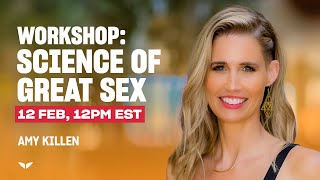
Live Mindvalley workshop (YouTube) where Dr. Amy Killen, a sexual medicine physician, presents an evidence-informed overview of sexual health and previews her 11-day program (the "Science of Great Sex" Quest). Key points: sexual activity correlates with longevity in observational studies (one US cohort: ≥52 sexual acts/year associated with ~50% lower all-cause mortality over ~11 years; a separate Welsh study linked higher orgasm frequency in men to lower mortality), sex impacts stress and neurohormones (oxytocin, dopamine), and sexual health depends on hormonal, vascular, neurological, and psychosocial factors. Dr. Killen explains female external and internal anatomy (emphasizing the largely internal clitoris — ~90% hidden; full anatomy published in 2005), presents orgasm-gap statistics (men ~95% orgasm rate per encounter; women: new partners ~38%, long-term ~65%, female–female ~85–90%; ~25% of women orgasm from penetration alone), and reviews common medication/lifestyle effects (mouthwash/chlorhexidine and nitric oxide, SSRIs causing sexual side effects in ~80% of users, alcohol, opioids, decongestants, etc.). The session includes audience exercises, Q&A about the Quest content, and practical takeaways (Dr. Killen’s 100 orgasms/year recommendation).
Questions this video answers
An 11-day Quest (program) called "The Science of Great Sex".
Having sex at least 52 times per year (about once per week) was associated with a ~50% lower all-cause mortality rate over ~11 years.
2005.
About 10% is externally visible; roughly 90% is internal.
Men: ~95% orgasm rate per sexual encounter. Women: with new partners ~38%; with longer-term male partners ~65%; women with women ~85–90%. Additionally, about 25% of women can orgasm from penetrative sex alone.
Chapters
And I'm the head of community at mindvalley, and I will be your host today for this beautiful workshop with Dr. Amy Killen, who is joining us all the way from Utah in her beautiful home on a nice. Where I hope it is a nice Sunday over there, Amy.
It's lovely. It's a lovely snowy Sunday.
And I'm very, very excited to have Amy here for this conversation because, you know, there aren't many doctors out there who are so informed about sex and how to actually optimize our sex life and why sex is so important for our health. I know this is one of the topics that we will probably touch upon today. Why is it that on science we don't speak that much about the importance of sex? And I'm very, very happy that we have Amy with us, who is also the author of one of our quests on the science of great sex. Amy is a medical doctor. She is a physician as well, and she is a leading sexual medicine practitioner. So you guys are not just hearing from someone who has studied beautiful relationships and how to have great sex in life. You are learning from a doctor who has a lot of specializations when it comes to really making sure that you have the best sexual life you can possibly have. So I'm seeing the chat. Martha, thank you for opening it. Welcome to you from Croatia. I see. And let us know where you're from. We always love to see where you guys are tuning in from. And amazing. Hi, Jo, thank you for joining us. From New Zealand. Oh, wow. We have Sweden, Belgium, Latvia, Austria, Holland, Denver. All right. Hi, Nicholas from Italy. I'm Italian. Oh, nice. I would love to see. Oh, I'd love to see, guys. Okay. Maybe, Amy, we can already start inquiring about the expectations for today. What made you say yes to this conversation here today with Dr. Amy? Would love to read in the chat. Chat is blowing up with all of you.
Yeah, you guys are from all over the place. It's so nice to see all of you. I love it.
And if you feel inspired to share your motivation for being with us today, other than the plain one, which I believe we are all very excited on how we can improve our sex lives. If there's anything specific you're hoping to discover today, let us know. But in the meantime, Amy, I was hoping that we could explore a bit the quest. And who would you say the quest is for?
So this quest is for any adult who is interested in learning about sex from a scientific medical standpoint. So learning how to have great sex. Learning how to have, you know, how to maintain sexual function and sexual health as you change and as you age or just, you know, whether you're actually sexually active or not doesn't really matter. Whether you have a partner or not doesn't really matter. It's more about you and your sexual health and kind of what's involved in maintaining excellent sexual health.
Amazing, guys. So it's an 11 day program, right, Amy?
Yes, it's 11 days and we start out with just kind of some intro and, you know, myth busting and, and anatomy review, some things like that. And we'll go in a little bit deep into some of the sections where we talk more about specific things about neurotransmitters and hormones and how to, how to get the most out of those about, you know, sex, sleep and stress and some of the other things that modify how we, how we kind of approach sex. And then we'll learn just kind of a lot of ins and outs of sexual health, you know, from the head all the way down to the feet. Not the feet really, but head to toe. But.
I love it. And in the meantime, I'm also seeing, we are getting some shares on the chat. So Kimberly saying she's clinical sex coach, so she's looking forward to learning more on this topic from you. Brenda is saying that she works with a lot of clients and couples who have challenges with their sex intimate life. We have also Lisa, who is interested in sex with multiple sclerosis. So maybe we'll be able to touch on that as well. Amy and, and Jodi, I love your answer. I'm here because I love science and I love sex. So I figured he could.
Yay. Yeah. And the orgasm gap. Someone asked about the orgasm gap. I will be talking about that in the quest for. Sure. That's, that's definitely a part of it. Diving into what that is. And I'll have, if I have time today, I'll mention that as well and kind of talk about what. What my thoughts on that are.
Wonderful, Amy. So with these expectations and motivations for our audience to be here with us today, I would love to let you take over the stage and let's start this conversation. Looking forward to learning from you.
Awesome. Wonderful. Well, welcome all of you. If you don't have a pen and paper handy, I would go grab that. A pen or pencil and paper. I'm going to be doing some exercises that are going to require you to do some drawing at some point. So just kind of grab that and have it handy. I have two kind of goals for today, my first goal is to just get you to think maybe a little bit differently about sex and sexual health and what kind of what that is and what that entails. And then my second goal is, is to maybe pique your curios so you start asking some of the more difficult questions or questions that maybe your doctor's not asking you, or your friends aren't asking you, your partner's not asking you. That might be important as far as maintaining your health and your sexual health as you get older. So think differently and pique your curiosity. Those are my two kind of main goals. I'll start off with a couple of interesting statistics that I found fascinating. And we can dive into what they mean here in a minute. But they are around longevity and sex. And the reason I got into this field specifically, just so you know, is I was actually an ER doctor first for 10 years. I worked in the emergency department. I did the ER thing for 10 years. And then about 10 years ago I left and started looking into longevity medicine and human optimization medicine and kind of this idea of how can we be the very best versions of ourselves, you know, how can we live our best lives and how can we live as long as possible? And as I have been learning about that field, what came up for me that I wasn't expecting at all was that sexual health was one of these main pillars that kind of support people in their quest for, for optimal health. But very few people in the science community are actually talking about it, you know, unless you're a urologist that's focused on that. Most scientists aren't talking about it, even though it's so, so important. And so I became fascinated by this particular area of health, mostly for that reason, kind of looking at longevity, looking at optimal health. So there was a study in 2020 that was published in the Journal of Sexual Medicine and you can look this up and they basically followed more than 12,000 adults in the United States over, over about 11 years. And what they found was that adults who had sex at least 52 times a year had a 50% of lower all cause mortality rate compared to the adults who weren't having sex. So said another way, adults who had sex at least once a week had a 50% reduced mortality rate. And that was including dying from things like cancer and cardiovascular disease as well as many, many other causes. And their conclusion from that was that that sexual activity is an indicator of overall health and of mortality rate and mortality risk. And I found this fascinating because most people, when you go to the doctor, they ask you all kinds of questions about your exercise habits and your eating habits and they do your blood pressure and your weight and all of this. But many doctors, not all, but many doctors don't even ask about, you know, how's your sex life, how often are you having sex, Is it enjoyable, Are you having any problems? Which I think is really fascinating because we're checking your blood pressure and your heart rate and your, your, you know, all these things and we're not actually checking whether or not you're having sex. Someone has asked if masturbation is sex. That's a great question. So there's kind of two different types of studies and most of these are only observational, which means that no one is saying, hey, you have to have sex this amount of time for this long and we'll follow you and you can't have sex, you know, and we'll follow you. Those are more trials, those are more where we're actually having them do something versus observational where we're looking at a group of people and we're saying what did you do over the last 10 years and how has that changed things? So most of the sex research is actually observational, but there was a study of, a big study of Welsh men, men in Welsh era, the Welsh era, Welsh countries. And they found that again thousands of men over a 10 year period that men who had orgasms, and it wasn't specified whether it was with a partner or solo men who had orgasms, had also a decreased mortality rate and that the higher the number of orgasms, the lower the all cause mortality rate in that group and such that the goal my go, what I tell people is I want you to have 100 orgasms a year. 100 orgasms a year. So at least twice a week if you can, is my goal for you. Because. And that's based on that Welsh data and what was most effective in lowering all cause mortality risk or being associated with it in men. Now when I talk about these studies, say thank you. Well, well, gosh, I could not think about what is Welsh. Oh goodness. But thank you guys. Well, it was in Wales and that study has been online. It's, it's a very prominent study. So when we talk, you know, the relationship between sex and longevity, it's not necessarily that you can go out and have a lot of sex and you'll definitely live longer. Right. It's more that there's an association between people who are having sex alone or with a partner and they're living longer. And that's because we know that people who are healthy, who have, you know, strong physical health, have strong mental and emotional health, they have strong social health, so strong relationships and someone to have sex with, they're spiritually healthy and they have environmental health. All of those, those things go into creating a person who is sexually healthy and able to have sex. Right? And so all of those things are also obviously going to be helpful in keeping you alive longer. So it's not necessarily that sex is going to make you live longer. It's that the things that keep you sexually healthy are also the things that are going to keep you healthy. Healthy. Right. Now, there are some indications that having sex and having orgasms are healthy in specific ways. And we can, you know, I'll run through a few of those that you might have seen. So one of the strongest relationships is between sex and stress because some of the hormones that are released during sex, like oxytocin, for instance, are really good at reducing stress. So oxytocin, which is, you know, the love hormone or the bonding hormone, you can get that from other things also. So for people who don't want to have sex or asexual or just not their thing, certainly you can still be healthy. But I'm just talking about some of the benefits of oxytocin. It could come from hugging, it could come from kissing, it could come from dancing or playing music. But it also comes in pretty high dose doses from having sex. And when you have high oxytocin, it actually reduces or decreases the way the gene expression that the genes that actually make cortisol. So in the brain, in the hypothalamus, it tells a different part of your brain, hey, we're not going to make cortisol right now because we got a lot of oxytocin on board. So you're reducing the stress hormone cortisol just by having higher oxytocin. Isn't that kind of crazy? The other thing that happens when you have high dosing is you also are protecting various areas of your brain from the cortisol that's already out there. So if you are a stressed out person and you have a healthy sexual relationship, and I'm talking always about today, about people who are in healthy relationships. So this is not about, you know, obviously there's a lot of ways to have sex that are not healthy. And if it doesn't feel good and it doesn't make sense to you, and it's not consensual, then that's not healthy. And that's not what I'm talking about. But if it is healthy and you have this big oxytocin rush in, maybe you were stressed out from your work or from your job, that oxytocin is actually going to protect different areas of your brain from the harms of the cortisol that were previously in your body or that maybe are still in your body. Which I think is just crazy. I mean, you, it's, you know, I tell my kids every day, I want you to give me 12 hugs every day. And it's, that's part of the whole thing is we want to increase oxytocin, but sex is a great way of doing that. It also increases dopamine, which is that kind of expecting feel good hormone and has a lot of other sort of positive benefits from a hormonal neurotransmitter standpoint. So anyway, so back to the study. So these, the longevity studies show this really high correlation between having sex and being sexually active and living a long time and being healthy. Now what's interesting, and I haven't seen this question asked yet, but I can't, I haven't read all of them, is there was another study, this was a couple of decades ago in the, in the Gerontologist, but it's kind of fascinating. So they looked at 22 lifestyle factors that were most associated with lifespan. So, you know, exercise, diet and close relationships and all these things. And what they found was that in men, quantity of sex was highly correlated to lifespan. So men who had more sex had a longer lifespan. In women, it was the quality of sex that was associated with lifespan. So you had to actually enjoy was about, are you, is it pleasurable? Is it enjoyable? And if that, if it was women who were having more enjoyable sex, then those people tended to have a longer lifespan. So, so women, it's more about quality. Men, it's more about quantity. That was in that one study. There's kind of different, different types of information out there. But I think that that's really important because a lot of people, a lot of women haven't been given this information and a lot of men as well, like, it's not that, just that you can't, it's not just having sex. Are you enjoying it? Is it pleasurable? And of course that's kind of where the orgasm gap comes in, which we'll talk about here in a little bit. So that is that, that's that bit. You know, one thing I think I was, I was thinking about this as, you know, how to talk about this and I know how Many of you just buy like you can type it in just a yes or no. How many of you schedule like activities in your life, like exercise, like going to the gym, like, you know, your yoga classes or what things are on your schedule? These are, you know, you have them in there. Monday, yoga at 9am Whatever. You schedule things that are important. Okay. And then. Yes. So someone says they schedule sex. So that's my next question. How many of you schedule sex on your, on your calendar because you know it's important, you know it's enjoyable, you know it's good for your relationship? You know, I got a lot of no's, right? And I'm not saying that you necessarily have to do that. Some people think that's a bad idea because it takes the, you know, the spontaneity out of it. But I definitely think that, that if it's something worth thinking about. But with sex, you know, it's not like, you know, it's not like you could just go to the gym and see the benefits. Especially if you're a woman, you have to go to the gym and lift the weights and enjoy yourself. Right. So it's, it's like you have to go there and have a good time. So it's a little bit higher bar for women than I think it is for men. Yeah. So, yeah, I think that there's different opinions about whether you should schedule sex. And I think it's different for every person. Right. Some people think it's a great idea. It may partially depend on what type of desire and arousal sort of person you are. If you are more spontaneous or if you're more responsive. Those are the two types of desire that you're at that are out there. So some people are, they have spontaneous desire, like just, they're, they're ready all the time. They're ready to go and just you say the word, you put it on the calendar, they're ready to go. And then some people are more responsive. Like they're not really into it as an idea until it's actually starting. Starting. They're starting to have like, you know, a little touching, a little feeling, a little massage, things like that. So maybe if you're more of a responsive, putting on the calendar may just make you like, stressed out because you have one more thing to do. So maybe instead of putting sex on the calendar, you put something else that is sort of almost, you know, almost sex or could lead to sex or could not. Like maybe it's a massage or maybe it's just sitting down and Having a meal together or maybe it's just, you know, kind of a cuddle session or something else that maybe isn't, doesn't make you feel like you have to do something that maybe you're not quite ready for, but that if, if it feels right in the moment, then you can have sex. And if not, you're still having some bonding with your partner instead. So yes, weekend sex is a given. I think that that's true of a lot of people. A lot of people who work during the week and have, especially if you have kids and you're up at 6am and you've got all these things that the stress is definitely going to put a damper on, on your brain. And we know that that happens, right? Like stress is one of the key things. And this is a whole, this is a whole sort of part of my quest is how does stress affect sex? And we know that it affects it in a lot of ways. It affects it in the moment in that when you're stressed, your brain is not thinking about anything else. And I think that, you know, you think about like, why would this be? And I think it makes total sense. You know, you're in parasympathetic. You're parasympathetic is rest and relax and. Or what I call rest and receive. That's where you want to be to really have a good sexual relationship versus if you're in sympathetic all the time, if you're in this fight or flight all the time, then your body is really just trying to survive and you have high cortisol and your hormones are not working. They're kind of out of whack. And so that's not the optimal state for having sex, right? You really want to be able to shift your mind and your nervous system into this, what I call rest and receive. And so instead of like going and doing and giving and thinking that's sympathetic, you want to be able to shift over to breathing and being and receiving. And that could be receiving, you know, compliments and adoration, which I think is really hard for, for women especially to kind of get into that space of receiving versus giving all the time. But that's where you want to be, right? Because if you can't receive, if you can't receive like compliments and a little doting and a little bit of like, oh, you deserve this, then how are you going to receive, like the pleasure part? How are you going to, how are you going to get into that part where you're able to have enough pleasure? You're able to orgasm and all of that. So think about that sort of simple mindset. All right? I'm gonna do it for an exercise with you guys, and I wish I could see you all. Maybe not for this one, but the next one, because I can't see you, and I wish I could. So you have to type in your answers. So the first exercise that I'm going to do is just have you go back. If you have paper, you can write down or you can just put it in the chat if you want to. Just go back to when you first learned about sex. Like, take your little brain back. Like, where were you? Not. Not like your first structured lesson, but where were you? And like, how old? Ish. Where you. When you first learned about sex? And in that same little, little, little sentence, write the feeling that you remember from that. Like, were you. You know, for me, for instance, it was. I was on the school bus. I think it was like third grade. And I remember people talking about boners, and I didn't know what a boner was. I had to go look it up later in the school dictionary, which, by the way, it's not in the school dictionary. It wasn't in there. So I remember looking it up and not having any idea what it was and then being told by my mates and just being like, yeah, kind of scared, kind of grossed out, and kind of like, what the hell? Like, how is this possible? All right, so write some of this down again. If you don't feel like sharing, don't share. But if you do, just share, like, kind of how old you are, where and what your feeling was about that. I'm just going to read your answers for a minute. I'm getting a lot of fear. I'm getting a lot of scared. Being scared. Curious. Yeah. School age. Grossed out. You're watching your hamsters, mate. Nice. Yes. The underwear thing. I have a funny story for you guys. I'll tell you while you're. While you're typing these in. So when I was. Gosh, I don't even know how probably like, you know, eight or nine, I had this best boyfriend, like a friend who was a boy, and our parents were friends, and it was the whole thing. And so one day we were. We were just hanging out at home, and we decided, for some reason, I think probably it's his idea that we should. That we should show. We should show each other. No, we should take off our underwear. This was a bad call. Take off our underwear and show each other. Just. That was the plan, somehow. And I Don't know how it happened. All I remember is that when it came to be his turn, he had put on, like, 10 pairs of underwear. And so he kept taking off underwear, but, like, he never actually took off the underwear because he had many pairs on. So I feel like he cheated. But anyway. 13. 9. Yeah, so it sounds super. It's. I feel like those first experiences are super weird for a lot of people. And, you know, I'm not a sex therapist. I'm a medical doctor. But I do think it's important when we talk about sex to reflect on, you know, those first experiences, thinking about it. The first experience is learning about it, and then kind of how those things have. Have continued in your brain as you've gotten older. Like, what were the lessons that you learned when you were a kid that may have made you, you know, feel bad about it or weird about it, or it made you feel shameful or guilt? Certainly if you had sexual trauma, that's a whole other ball game. And it's going to, you know, obviously cause a lot of. A lot of feelings. Okay, next question for you. You guys are doing so good. I love it. Is when did you learn. What was your first structured lesson about sex? Like, sex ed in high school, for instance. And then what was your main takeaway from that lesson? Like, was it that you should not have sex, that you should abstain from sex forever? Is it that you should wear condoms and not get anyone pregnant? Is it. Was it about, you know, preventing gonorrhea? So just think about the first lesson that you had, the first sort of structured lesson, and what the teaching was in that lesson. Seventh grade. Yep. Yeah, it's mostly STDs. That's. I think mine was basically about STDs and pregnancy. And then I grew up in a small town in Texas, so it was definitely abstinence, abstinence only kind of curriculum. Your mom told you it was dirty. Yeah, yeah. My mom was a really big believer in. In no sex until marriage. In fact, one time I asked her what a virgin was, and she told me that it was someone who'd never been married. And I. That's what I thought it was for years. Yeah. No sex till marriage. A lot of people got that. Got that one. Which, you know, obviously it changes how, you know, even if you get past that and you change your mind later and you're like, oh, I think I'm going to have sex. I. There's a lot of guilt that gets. That's stuck in there in your brain because of how you were thought about how you thought about it. Yeah, the teachers are shy. It's funny. My, my kids, I have kids that are. My daughters are 14, my son is 13. And my son came home from school recently and he said that his teacher, you know, he's in health and his teacher was talking to him about the sex ed and the teacher was like, you know, but we're not going to talk about, like, we're only going to talk about, you know, these. A couple of things. We're not going to branch out at all. We're not going to, we're not going to talk about too much about sex. It's just we're going to keep it super simple. And I told my son, I was like, hey, what if, you know what, I come to talk to your classmates about sex? And he was like, no, mom. But yeah, I think it's really, I think it's really sad. Okay. And then the last thing I have for you on this is if you've had. And some of you guys are, you know, some of you are sex coaches, your sex that, your, your clinicians. I'm sure that you've done other training tantrum classes and you know, spiritual sex things and this and that. But since that initial lesson, what have you done or you know, what we've taken on yourself as far as education around sex and, and if it's been beneficial, like what's the most beneficial things that you've learned, the best ways of learning about sex that, that have kind of shaped who you are and what you believe about it to now? Yeah. Is it books? Is it online, just reading stuff, Internet articles? Is it tantra education? You know, do you have a sex coach that you've worked with, maybe a therapist you've gone to? I love this community specifically because I knew when I came on here that you were going to have all of you just excelled at this subject and gone all out and learned about all of these things. Yeah, I mean, certainly I think that that's important. Working on releasing shame and guilt. I think that that's super, super important. I grew up in a pretty religious household, like I said, and certainly sex was not something that we talked about. I mean, even my mom, even now, I mean, she knows what I do, but I think that I still get a little bit like nervous talking to her about it. And you know, I'm 40 something years old. I love that that you and your husband read books together. I think that's really, that's really awesome. Oh, yeah. So someone grew up in Utah. Yeah, I live in Utah now. Totally understand that one. I grew up in Texas, but Utah is. It's. It's definitely similar in some ways. Learn the hard way. Just practice. Awesome. All right, well, thank you guys so much for sharing all that. I love all of that. And I think that that's really important is just knowing that what we learned, the first things we learned about this. There's not. There's so much more to learn. And a lot of you have. Have gone in and you've, you know, you've done other training. The part of the things that I focus on that I think are really important for. For. For me is. And for my patients is not. It's not so much the. The mental emotional part, which obviously is super important, but it's like, what else is going on and what else can we do? It's how are your hormones affecting your sexual function? And I've had people on here already ask, you know, what about sex and menopause? What about sex and perimenopause? What about sex in andropause in men, where you lose test levels? Like, what can we do about those things? Which is definitely something that I focus on a lot in my practice. And how do we keep the blood flow going, where we need, where we know from, from head to toe, and how do we keep the blood vessels opened up? You know, all of the sort of logistical stuff. But that mental part is obviously the first part. Okay, so the next thing. Let's talk about the orgasm gap. You guys want to raise your hand? I wish I could see your hands. See, I hate it when it's just. There's no interaction, but okay. All right, so let's. I'm gonna have you type in that. I'm gonna have you guess. Maybe some of you already know the numbers. If you do, that's fine. You can guess. How many. What percent of men do you think have an orgasm every time they have sex? So what percent of men are orgasm during sex? Whoever their partner is. Which. What percent? Yep. Lot. A lot of 90s. A lot of every time. Yep, yep, yep, yep. Okay, so the. The. There's a couple of different numbers out there, but the one that I've seen the Most is that 95% of men tend to have an orgasm during sex. So 95% of the time they're having orgasms, and that is whether they're having. Who doesn't matter who they're having sex with. Men. Women. 95%. So men are, you know, seem to be pretty. Seems pretty Easy for that to happen. Now what let's say we're going to break the women down into a few categories. Women who are in early relationships, early kind of new partners. What percent of the time are women having orgasms with a new partner? Put your guesses in there. Someone said 2%. Oh gosh, that's horrible. 0.01% is what someone's guess. Sorry, I just spit all over the camera too. I was laughing so hard and also that's horrible. Okay. Yes. So the, the answer from the study that I saw was about 38% which I think could be high. Honestly I think you know, just talking to friends and patients, it's, that's especially with a new, a new encounter. It's, that's even lower than that. But obviously a part of it depends on, on the partner and the woman. So. 38%. Yeah, that someone says too high. 38% of women, they orgasm during sex. Now what about with a, with a longer term partner? So if you've been with someone that you have that you, that knows you pretty well, that knows your body pretty well now what percent of the time do you think that she's orgasming from a. This is a male partner we're talking about on this one. Male partner, but a longer term partner. You guys are good at this game. Lots of good numbers here. Yeah. So the definitely goes up, right? You get someone who knows you better, hopefully you're communicating with that person better and they've. You've told them what you like and don't like. So that number is about 65% from what I've seen. So 65% of the time, longer term partner, she's having an orgasm with him. What do you think that number is? If it's, if it's a woman with a woman. So how many times, how, what percent of the time is, are the women having orgasms? If it's two women to get them. This is a fun one. Got lots of hundred percent. Yeah. So that one is about 85 or so percent. So it's 85 to 90%. So it's similar to what men have all the time. So just to recap, women in new relationships only orgasm about 38% of the time. Women with in longer term relationships about 65% of the time. Which I agree with the person who says that they need to have at least to happen more. And then women with women about 85% of the time. And then men, no matter who they're with seems to be about 95% of the time. So this is just. Yes, great question. So someone asked, is it normal to orgasm strictly by oral sex and not penetration? Let's ask you guys, when I'm at a quiz, because you're killing it at this one. What percent, which, what percent of women. Women are able to orgasm from penetrative sex alone? Penetrative sex alone. What percentage of women are able to orgasm? Throw your numbers up. These are all over the map. I love it. 85. Oh, that's pretty high. So that number is actually about 25%. So only about 25% of women are able to orgasm from just penetrative sex alone. So I think that this is important because, you know, if. If your image, if you learn about sex from watching porn or, you know, even just movies or things like that, all you may all be seeing is just like the sort of pumping, pumping, pumping stuff. And that's actually not going to be what results in a lot of pleasure and orgasm for. For, you know, 75% of women. Not that it's not pleasurable, but it's not going to be the thing that puts her over the top. Right? So most women need at least some interaction with what. What do we need an interaction with which part of our bodies just. Yay. Bonus points for putting it all in caps. So the clitoris, right? We. Most of us need some interaction with that. And it's. It's a. Actually pretty large organ. So. All right, so now this part. I can't. I wish I wanted to have you do it because I could have. So I could have you. I could show you your drawings. I really wanted you to draw these things, but here's what I want you to do. Do you have some paper? You can you do this on your own? Okay. So get your paper out and a pen. And I want you to. I want you to try to do this, even if you think it's silly. Okay? Just pretend like I'm. Like, it's. It's part of the job here. What I want you to do is I want you to draw a picture of the outside. Well, draw a picture of the outside. Like the vulva. The outside of female. The pussy. Yes. Thank you. All of these things. Draw the vulva from the outside. Just make it quick. You don't have to do any shading or anything, but draw a picture of it and see if you know where everything is. And by everything, I mean where's the vagina, where's the urethra, where's the clitoris? Those are the main things I want you to See if you know where they are. So draw those things. And if you don't know the difference between the vulva and the vagina, then you. This is important to know. The vulva is on the outside. The vagina is on the inside, right? Did any of you guys watch the show Severance? That with. And there's like the innies and the outies, the people that use the Audis. And so the Audis is the. That's the vulva. It's the part you can see from the outside. The vagina is on the inside. And people, you know, not everyone knows that. So it's important to know. So draw your picture, okay? And in a minute, I'm going to ask you a question about it, and I'll show you. I actually did these drawings myself right before here, so I could see. To see how to see if I could do it. Okay, in your picture, where is the vagina? Is it on the top, in the middle, or on the bottom? Of those three things, you have. You have the clitoris, you have the urethra, you have the vagina. Where is the vag? I love this. Okay, so the vagina is on the bottom, and then it's the urethra. And then up here is the clitoris. So here's my drawing. You guys see that? So this black one here, this little opening is the vagina. This little dot is the urethra where the urine comes out. This little nut tub right here is the clitoris. And then, of course, like this all around here, you have the vestibule. You have the labia minora, the labia majora. So this is important, right? You got to know where this stuff is. The clitoris is oftentimes hiding. There's like a little hood right here. And one thing that happens during arousal is that the clitoris actually retracts and it hides underneath the skin here, this hood. And so it's like it becomes so sensitive because it has, you know, they used to say 8,000. Now it's 10,000 nerve endings. So this is. This is important to know. And, you know, there's a lot of jokes about people not being able to find the clitoris, but this is where it is, right there. It's up above things. Now, this is another drawing for you. And this is. I want you to. Now, again, just do your best. Do a quick drawing. I want you to draw the. Draw the clitoris while you're doing it. I'm going to give you a little fast factor fact. And I. And I'm going To be very happy if you're actually drawing it. So here's a fast fact. What year do you think that the full anatomy of the clitoris was published? What year? So we. I mean, imagine that we've known the full anatomy of the penis for hundreds of years. What year was the full anatomy of the clitoris published? So Helen o' Connell did a bunch of dissections on humans and also did a bunch of MRI studies. And it wasn't until 2005, 2005, that the full anatomy of the clitoris was published. There were partial anatomies before that. But 2005, so you can imagine it's only been 18 years that we've understood that the full anatomy of this thing. How much do you think? So you have the little nub, right. Which, by the way, this is interesting. Back when it was first discovered in the 1500s, the little nub, the clitoris was called in French, it was translated to mean the shameful member. So the clitoris has been called. That's kind of what. What it's been looked. It's been thought of as a shameful member for hundreds of years, which is definitely not helping you. Women have orgasms, Right? Right. All right, so what percentage of the clitoris do you think is outside the body? So you have, you know, what percentage versus the whole. How much is outside versus how much is inside. It's like. It's like an iceberg effect. Right? It's. We're only seeing the little tip of it. Yeah, you guys are good. You got a lot of these right answers, the whole thing. So the. So it's about 10% depending on the person. About 10% is what you see on the outside, and the other 90% is on the inside. The clitoris can range in size. It can be between. Between about 8 and even like 13 centimeters. So, you know, if my finger is about 10 centimeters, it can be a little bit bigger or shorter than my finger. So it's actually pretty big. So if you tried to draw the clitoris. Good job. You are a star student. I'm going to show you my drawing. So this is my drawing. All right. So you can kind of see the little nub hands. This is a super sensitive part here in green. That's the part that's hiding under that hood wood. And it is 10,000 nerve endings right there. This is what we see. This is what we don't see. Okay, so you have the rest of the. The sort of the glands of the clitoris. I'm sorry, the glands is here the shaft is here. And then it. What happens is under the skin goes down deep and it splits. And how we call the legs or the crura. This little guy, this individual crus or crura. So, and then in between here are what call the vestibules. Now here's something fun. If you were to poke a hole right in between here. This is your vagina. So your vagina sits right here, kind of goes through like this. And so the clitoris is actually literally hugging your vagina. Isn't that amazing? So when you. So the vagina is kind of coming through here. So when you are looking for like the G spot, for instance, which is more of a zone than a spot, you're basically hit the back of this structure here with the vestibules and these guys. And that's what. That's why it's sensitive. The back of the clitoris is also the Skene's glands, which are also interesting. Yeah, like little praying mantis. This is the clitoris. Now I'm going to show you what I call a bigger version of the clitoris, which is. What is this? It is kind of a joke because people are like, oh, the clitoris is like a small penis, but I say the penis is like a large clitoris. So, yes, basically very, very similar. Right, but which percentage of the penis is under the skin? So in the Clitoris, it was 90% was hidden. What percentage of the penis is under the skin? It is about 40%. So it depends on the person, but about 40%. So this is this. I have this as being kind of the skin right here. So the penis hangs out. You have the same structures. You got the glands, you have the. The shaft and still have these little legs. The legs are right up against your. If you were to. This is for men and women. But if you feel where your pelvic bones are, like back behind your scrotum, that's where these little legs are, like kind of stuck to those pelvic bones. And then this right here is what is the same kind of. It's like the vestibule is a spongy tiss that surrounds the urethra up here. This is important. Is this new information to anyone? Have you guys seen these drawings before? It's new. So why is this important? A, it's super cool to know about your body. B, because this tissue in here and the same tissue in women, those crus, those little legs, they're actually erectile tissue, just like the part on the outside side. So these are all areas that you can also Explore that are also sensitive, that are just deeper. You just can't see them. So learning about the. That is. Is. It's good to know. All right, we're gonna do one more. A little bit more anatomy than all we can move on. We're doing. You guys are playing so, so helpful. I love it. All right, I'm going to show you. If we were to take the penis and we were to cut it. Sorry, I'm making you cringe a little bit. Credit right here. We're going to look at it. What happens if it's in cross section and there's a point to this, besides just learning which. Which is a point of its own. So this is what you do. What. What your penis looks like in cross section. Okay, so here's what we have. We have those two. Those two. This is called the corpora cavernosa. These are two, like, tubes that eventually become those legs that split, right. They're like the eyes. And this little monster thing inside there are the. The arteries. They're going to fill this thing up with blood. Down here you have the sponges. Sponge tissue. So the. The corpus spongiosum. And that little yellow stuff in the middle there. What's that yellow thing, do you think that is? The urethra. So that's where the urine comes out. So urine comes out this guy. And then this is what fill these guys are what fill with. The whole thing fills with blood, but especially these tubes here, the corpora cavernosum. And then way up here is. Is a vein. There's some other veins around as well. So imagine this. Imagine that these two tubes get filled with blood, and they get bigger and bigger and bigger. So these eyeballs get really big. And when that happens, there's kind of a fiber around the outside that doesn't expand too much. Expands a little bit, but then it gets kind of hard, right? It stops expanding. So these two tubes expand with blood. They get bigger and bigger and bigger. What's going to happen to this vein, do you think? Think if that happens. So the vein is where the blood is going to be coming out of the penis. Normally, if it gets. If this gets really big, these guys get big. This vein gets compressed. Good. Whoever said that compressed. So if these guys get big with. They get filled with blood, the vein gets compressed. And that's. That's what keeps blood in your penis because the vein otherwise would drain the blood back out of it. So when you have a full erection, then the vein is compressed, the blood doesn't leave the penis. And everything Is happy. Everything is great. Great. What is the most common cause of erectile dysfunction? The most common cause is something called cvod, but it's also basically called venous leak. And what's happening is these tubes don't fill completely with blood. They still fill. You can still get an erection, but instead of filling completely, they fill kind of partially and the vein stays open. And when that happens, the blood goes in, you can get an erection, but then the blood comes right back out again. Again, because this wasn't. Was not compressed. So that's called Venus leak. Now, things that will help these guys to stay open, Obviously you need blood flow, so you have to have good arteries that are full with or that are. Don't have any plaque in them. There's no atherosclerosis. And that's, you know, so you want to have clean blood vessels. To get the blood in, you have to have nitric oxide, which is one of my favorite things and I have a whole bunch of information about this in the quest. But nitric oxide is a messenger that tells these blood vessels to stay open and tells these tiss, these smooth muscle cells to stay open. Open as well. Here's an. Here's a fun fact. So these are like sinuses. It's erectile tissue. Any, Any idea where else in the body you might have similar erectile tissue to these little guys? Right here. Type it in if you know. Yes, Damien. Donna. I can't read my things. That person knows. It's the nose. So you have erectile tissue similar to this. And by the way, this is the. This is the clit. Clitoris, women. This is the same kind of tissue in the clitoris, same kind of vein, just know urethra. So there's the penis, there's the clitoris. So in the nose you have a reptile tissue too. So some. Sometimes things that you do for your nose will affect your penis. So for example, if you're taking a decongestant because you have like a stuffy nose, what that's doing is it's causing your blood vessels to constrict. So the swelling in your nose goes down. So you don't have as much blood flow and it helps with that congestion. What do you think is going to happen to your penis when you're taking that medicine? Type it in. Type it in. What's happening to your penis? Exactly the same exact thing. So the blood. You can't. It's not. You're essentially constricting the blood flow to your penis. So you might notice that if you were on decongestants for very long that you are having problems with erections. And this of course also affects, so all the things that affect the penis can also affect the clitoris. It's just not that we just can't see it as much in the clitoris. Right. Because we all have erections, right? Both of us, we all do. And so we just can't see them as much in the clitoris. But yeah, you could be on Sudafed or whatever, decongestant. And you know, maybe you're sick and you don't feel like having sex, but if you do try to have sex, you may not be able to because of that. And there are a lot of other medications, of course, that can affect, affect the penis. One of my favorite ones to talk about if you got, if you've ever heard me speak, you've probably heard about this. But what is something that many people, 60% of people in the world do every single day as part of their routine, that is, that could potentially decrease your ability to have an erection because of the way it affects nitric oxide and blood flow to these guys? Yeah, you guys are nailed. Nailing it, nailing it. So the answer that I'm going for is mouthwash. So, and this is, I'll talk a lot about this in the quest, but mouthwash is important in that kills the good bacteria in your mouth that are needed to make nitric oxide from food. So when you eat nitrate rich foods like, like green leafy vegetables, spinach, arugula, beets, pomegranate, all of these things are high in nitrates which are, this is a good kind of nitrates. And you need these really healthy bacteria in your mouth to be able to make nitric oxide from those. Nitric oxide is the chemical again that opens up your blood vessels and lets the blood get into all parts of your body, but including, including these, these corpus cavernosum in your, in your penis and in your clitoris. So when you're using mouthwash, you can actually cause problems with that. Someone else said, said, I think that they said acid blocking medication. So if you're taking something for stomach acid, I don't know why I'm holding my chest. It's more like down here. If you're, if you're taking something for. Oh, sorry, non bacterial mouthwash. If you're, if it's like a do it yourself mouthwash, this doesn't have alcohol or chlorhexidine or any of that stuff in it. That's fine. It's, it's more that sort of really strong astringent kind of mouthwashes. And honestly, just doing it occasionally is also fine. Probably it's people who are doing it multiple times a day. Mouthwash, that's a problem. It can affect your blood pressure. It can affect. It can increase your risk for diabetes. Listen to this while we're on the subject. There's a big observational study that was published, and it looked at multiple different ICU data. So people who were in ICUs, and they looked at the use of chlorhexidine, which is like a really strong mouthwash. So chlorhexidine mouthwash in ICU patients. Because a part of the mouth routine in these patients is the nurses would clean their mouths, you know, with this really strong antibacterial solution. And what they found was that the mortality rate in the patients who were using this chlorhexidine mouthwash, this really strong mouthwash, was significantly higher than the patients that were not using this particular type of mouthwash. And the reason that was thought of is that it's because it's actually reducing their ability to make nitric oxide. So this is important for not just your health of your penis, your health of your clitoris. It's important for the health of your body. Very important. Other things like acid blocking medication. So if you're taking something because you have a lot of, like a heartburn all the time, especially the proton pump inhibitors are. It's really bad for nitric oxide production. Other acid blockers, not quite as bad, but yes. All right. Other things. Let's talk about other things while we're on the subject, because you guys have already put a lot of them out here. Oh, toothpaste is fine. Yes, please brush your teeth. People always ask, do I have to stop brushing my teeth? No, please don't stop refreshing your teeth. Absolutely. Brush your teeth. What are some other things that you can think of? Whether it's medications or drugs or, you know, just things that you're exposed to that maybe you people don't know are. Could be bad for your sex life. Type them in. I want to see what you got. Alcohol, 100%. And by the way, is like, is there, like, is alcohol ever really healthy? There was this whole thing about, like, like, we should drink wine because of resveratrol. And resveratrol is good for living a long time and. Right. I mean, I drink alcohol, so I'm not. I am a little judgy, but I do drink it. But, yeah, alcohol is not actually ever good for You. And there's not really a good reason to drink it unless you just. Unless it's just that you like it, which I do, but I don't drink that much of it. Okay. Other things. Yeah. A new study. Yeah. Alcohol isn't good for you. It increases your risk of cancer, heart disease. I mean, it's. And in fact. And I don't know how you got. If you were how you are, but with me, the older I get, the more sensitive I am to it. So if I have like half a glass of alcohol, a glass of wine or something before bed, I will wake up at like three in the morning and my body's like, you shouldn't have done that. And it's really bad. Okay. Antidepressants. So lots of people mentioned that. Let's talk about how that affects sex life, your sex life. Look at this, guys. I actually have a picture of your brain. So some things that make your. That activate your brain and make your brain want to have sex are testosterone in men and women. Estrogen, especially in women, but also important for men. Dopamine, which is the kind of the neurotransmitter of pleasure seeking, motivation towards something that's pleasurable. Those are some of the things that are positively affecting your brain and helping your brain say yes to increased desire, increase arousal, increase org. Orgasm. What's. One of the things that tells your brain to not be interested in sex is serotonin. So serotonin is another neurotransmitter which is important for making you feel content and like your life is going pretty well and you're happy with things. However, too much serotonin actually blunts the. The, the effect of. It blunts your brain and makes your brain not really interested in having sex. So medications like antidepressants like the ssri, so that. Which are the serotonin reuptake inhibitors, they prevent serotonin from being taken back in. So ostensibly, you're increasing the total serotonin in the brain when you take those medications. And what that does is it actually has a negative effect on desire to some degree, but especially arousal and orgasm, which are all. These are all different things. Right. There's arousal and we'll talk about this in the Quest too. I kind of go over the sexual response curve. There's arousal, there's. There's desire, which is different. There's orgasm, of course, and then there's the refractory period. But so, yeah, so, yeah, so antidepressants have a pretty profound effect. They actually have about 80% of people who take antidepressants, the SSRIs will notice sexual side effects. Is that surprising to anyone? 80% of people who take these could have sexual side effects. Marijuana, that's actually an interesting question. So in the studies that I've seen, seen too much cannabis or regular cannabis use can certainly cause erectile dysfunction in men. It's associated with increased erectile dysfunction in men. It is not so much the case for women. It doesn't seem, it seems actually that cannabis in women either has no effect on sexual function or it may actually help because it relaxes people a little bit and makes them be like, oh, it's, you know, I'm feeling pretty chill. So I think that, you know, just going to, with, with men especially, be a little careful, you know, with anyone, don't go crazy with it. I think that in women it definitely can. Yeah. And I think a lot of you are saying the same thing. Like in women, it seems like it's, it's, it seems more helpful than not. Ooh, opioids. Opioids are very, very negative on your brain, at the level of your brain for sex. Opioids, opiate medications. So this is all of your, your pain medications, you know, everything from fentanyl to Vicodin to hydrocodone, oxycodone, oxycontin. Like I was an ER doctor. I know all of my opiates. But opiates really bad for sex. They are going to make you not interested. They're going to make you not able to get aroused as much if you're on chronically. You know, if it's occasional use here and there, maybe not anything with alcohol. You know, occasional use is not a problem, but chronic use is going to cause problems in general. Psychedelics, which I, and I do talk about all these in the quest do Psychedelics are kind of interesting in some, in the, in that some of them certainly are associated with, you know, sort of increased sexual responsiveness and arousal, MDMA being one of them. But in sort of longer term studies and especially in a lot of use, then they can become negative and can become harmful. Oh, yeah. Oh, yeah. If you guys haven't signed up for my quest, please do Viagra for women. Good question. If Viagra, if women take Viagra, what happens, do you think, to the clitoris? It actually is the same thing that happens with men. So Viagra has the same, the same effect on women as the men. The difference is that in men, what's happening in the genitalia is more concordant with what's happening in the brain. So in men, when you get, you know, if you have an easier time getting an erection, your brain is on board and it's like, yep, we should have sex. Let's go. We're, we're excited, we're aroused, let's do it. In women, there's less concordance. So even if you have blood flow in the, in the clitoris because you took Viagra, your brain may not be on board. It may be like, no, no, we're actually not interested in having sex. And so taking Viagra can be helpful for some women. If the problem is lack of blood flow, if the problem is like from here up, then, then the Viagra is not going to do much because your, the brain is not on board. And that actually, that lack of concordance is actually one big difference between men and women. We tend to be less concordant. Our bodies and our brains versus men tend to be more concordant. Important. All right, we have just a couple more minutes left. So any last minute, like we've got five minutes last minute talk topics that you want to hear. I think I'm out of drawings, guys. I think I didn't, I don't have any more. So I, I have to, I'll just talk to you now. I don't have any published books out yet. You know, it's on my list of things to do and I have not done it yet. There are some antibiotics that can definitely cause sexual dysfunction. A lot of the antifungals can. And you know, I would just say if you're going to take a medication, just of course they all have long side effects. But you know, look up what are their sexual side effects with this because it's very, it's very, very common that they will be. And some of them you don't have to, you know, the medications, you take them for a short period of time and you're fine. But, but some of them can cause longer problems for sure if you, you know, menopause, hormones, all of that. I do talk about the quest. I also talk about a lot of that on my Instagram channel. I'm, I talk, you know, I'm very, I'm very pro hormones and hormone replacement therapy for women and very pro talking about delaying, you know, trying to delay menopause, although we don't know how yet, but just being very aggressive in treating menopause. I think that's one of the most under discussed areas of health that we have out there. So. Oh, Dr. Amy B. Killen. Dr. Amy B. Killen. That's also my rapper name, by the way, but that's my Instagram. It's Dr. Amy B. Killen. Yeah, so. Yeah, well, so the orgasm gap. Oh, thank you. Thank you. I think you rock as well. I cover it for. In More in the Quest, but kind of why. Why we think that is. You know, part of it is probably because people just aren't educated. Part of it's because of the history of the clitoris. Part of it's because of our lack of education about the importance of masturbation for women and the need to explore yourself and to know what is what helps and what doesn't help. Part of it's about sort of social norms and what people consider to be normal sex and not normal. There's a whole lot of reasons that we have this orgasm gap, but none of them are acceptable at this day and age, so. Oh, thank you, guys. You guys have been the mo. The best. I hope that. I hope that you guys have your little drawings. Oh, if you guys did drawings. I don't. You probably didn't. It's probably just me. If you did take a picture of your drawing and send it to me on Instagram, I would love it. Be so fun. Thank you so much, everyone. I hope to see you in the Quest.
Thank you, Amy. Before. Before I let you go, I just want to check with you real quick. I have five questions in the Q and A box, and if you can simply tell me whether these are addressed in Quest or not. So the first one is about sex and medical conditions and hormonal change like menopause and period.
Yeah, I don't go into specific medical conditions because I'm not talking, you know, about specific things. But I do talk about menopause. Definitely talk about hormones, estrogen, testosterone, progesterone, men, women, different ages, what affects them, other. Other things outside of menopause that could affect your hormones. We talk about those. I definitely cover them to some degree. And then again, I do a lot of this on my Instagram channel too.
And someone just asked in the chat, what's the Quest? So I'm referring to the Quest, the program that Mindvalley has published with Dr. Amy. It's called the Great.
The science.
Sorry, the Science of Great Sex. And you can already find it inside of our membership. For those of you who are members, that's, as I said, already part of all the programs that you have access to. For those of you who are not members, my colleague Uzair has just posted a link on the chat to enjoy a $100 discount if you choose to sign up and discover more of Amy's program inside of the quest. Now, next, Amy, do you cover how can women achieve full body and multiple orgasms? Is that in the quest?
I mean, it's. I talk about multiple orgasms. It's not, it's not a big focus in this quest. I talk about the refractory period in women and how it's different from men. But I don't go. This is not so much a how to quest. Like, it's not so much like how the specific techniques to do things. So that's not one of the main areas in this. I do talk about perimenopause. I do talk about semen retention. Actually, that's in my myth section. What we know about it and you know what's true as far as we know and what's not true. I do talk about that sperm count. I don't talk about sperm count. I would made it. I made an effort to, to differentiate reproductive health from sexual health. So I don't talk about fertility or sperm count or things that are more about reproductive on purpose because I want you to think about sexual health as being more about mind, body, you know, kind of all the things together that have to do with sex, but not about reproduction because they actually are different things.
And.
Let'S see here. I don't know. Is this, is this, is this webinar going to be archived? Someone was asking you. Asking. I don't know about that.
This is a good question. If, if you. Okay, yes. So, yes, it's going to be, it's going. The replay is going to be available. Yeah, I can confirm that. So this will be sent to you guys and you can send it to your friends if they want to check it out. All right, so, Amy, thanks again. I definitely had a few takeaway, but the most Important one was 100 orgasms a year and at least two a week. Notes of that as my home homework. And I want to thank you for being here with us today and making yourself available on a Sunday and giving so much knowledge, making it fun and entertaining for everyone. And thank you so much for sharing so generously everything that you've learned throughout your decades of experience in this. I also want to remind everyone this is the first workshop that we have on the series that we have created for some Valentine. We have more workshops coming up. One is going to be on integrity dating. One is going to be be on body language and dating and how you can make yourself more attractive, working on how you communicate through your body. And we're also going to have a beautiful workshop on self love, all of the details. And the authors of these workshops, you can find them on our Instagram. We've been publishing quite a lot about these. They're all incredible women. We went for a female strong, you know, worship series and incredible authors that you can learn from inside of Mind mindvalley. If you're a member, all of them already have Quest published with us. If you're not. This is such a great opportunity to get to know more of the work that our authors do and who knows, maybe get intrigued about the membership. So last, last reminder, if you guys do want to find out more about Amy's Quest, but you're not a member yet, Uzair has once again posted the discount in the chat. So I do hope to see more of you guys in the coming days. Don't miss out on all of the other workshops that we have prepared. They will be just as engaging, just as deep, powerful and funny because this is what our mindvalley authors are all about. Death and fun and wisdom. But at the same time, you know, we're having a great time while we're doing this. So thank you everyone for your presence today. Amy, once again, thank you. And I wish you a great Sunday over there in Utah with your home in your home with your family. And I will be seeing everyone in the coming days for the next workshops. Enjoy your Sundays wherever you guys are. Bye. Bye.
Bye.
More from Vishen






Brown Noise for Deep Focus and Concentration (Best with Headphones) | Gabriel Loynaz



Your Appointment With the Eternal | Guided Meditation with Michael Bernard Beckwith