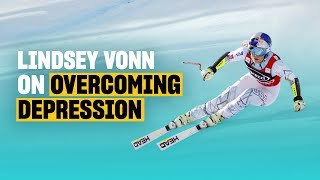
Olympic skier Lindsay Vonn talks about the crash after reaching the top: feeling confident on the mountain but insecure off it, using skiing as a crutch to avoid depression, and finding her way back through therapy, journaling, and writing her memoir.
Questions this video answers
82 World Cup victories.
Three Olympic gold medals.
12 career wins at Cortina d'Ampezzo (six downhill, six Super-G).
Strong is the New Beautiful (bestseller) and the memoir Rise.
December 2, 2022.
Chapters
Lindsay von Next to racing, Cortina d'. Ampezzo. She's won here 12 times in her career. Six downhill wins, six Super G wins.
She's not only an entrepreneur and investor, she is the most decorated American ski racer in history. Widely regarded as one of the greatest of all time. Holding the women's record of 82 World cup victories and three Olympic gold medals. She's the best selling author of Strong is the New Beautiful. And recently her memoir Rise, where she opens up about her struggles with mental health and the emotional toll that hard fought success has had on her life.
I was very confident when I was on the mountain my whole life. And I was the most self conscious person when I was off the hill. You know, I was a lot of the times really timid and shy and I developed kind of a Persona almost. When I gave interviews and I was at events, it was kind of a chee and I used that to my advantage. And it kind of to me was a part of the skier that was my outer layer. But I wasn't confident in who I was as a person. My personal life, I didn't stand up for myself. I was kind of a people pleaser and was not able to make the right decisions in a lot of different aspects of my life.
How do you stay focused on your goals and show up in life when these conditions of poor mental health might strike?
I think I found different coping mechanisms in my life. I really struggled with depression when I moved away from home. Working towards the Olympics, a really isolating time period for me and really became quite depressed. I went to a doctor and I got medication and that really helped. I also tried to find different ways of coping and what to focus on. And skiing was a really great outlet for me in a lot of ways it was a major crutch for me. And so I used skiing over time in different ways to help me get through things.
And now has dropped back. Vaughn over the top and she is down heavily.
It was good at the time. I think when I retired it was not so good because I didn't have a crutch anymore and I had to figure it out on my own. That became quite a bit harder. But yeah, I found different ways to manage it. I also used journaling a lot. Retirement forced me to really again get rid of the crutch that was ski racing, to get rid of that shell and figure out how do I become a confident person or who am I as a person. Once I was able to reflect and it took quite a while, it took about a year and a half and good therapy. And I think writing my book actually helped me tremendously in that journey. Now I'm confident as a person, and it's a completely different experience. And I make decisions every day that are smart ones and not ones that benefit others more than they benefit me. And that's hard. You know, knowing yourself and what you need is actually a really difficult thing. And that's why I think therapy is so important. Self reflection, internalizing, and looking within yourself is something that's oftentimes very difficult to do, but the best thing to do.
I love the fact that you're openly talking about seeking therapy. I think it's so important. It used to be such a taboo topic, and right now, all the best people I know in the world, incredible CEOs, all the best people I know the in the world, are working with a therapist.