The Female Biohacker's Guide to Living to 150 | The Mindvalley Podcast | Ep #73
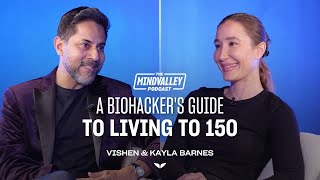
Interview (Mindvalley Podcast) with longevity/biohacking expert Kayla Barnes discussing strategies to slow/reverse biological aging, biological age testing (methylation/TrueAge), sex-specific biohacking for women, daily routines (sleep, exercise, PEMF, red light, hyperbaric oxygen), toxic burden reduction (microplastics, EWG Skin Deep), use of AI for health, and relationship/partner-health screening. Emphasis on minimum-effective interventions for women (sleep, movement, diet) while experimenting with advanced therapies (rapamycin, plasmapheresis, hyperbaric, NAD, ozone).
Chapters
So you want to live to be 150?
I do.
Why?
Well, I think it's possible.
Kayla is one of the foremost female biohacking and longevity experts in the world today. She's the founder of Live the Wellness space and she has her own biohacking podcast called the Longevity Optimization Podcast.
Your biological age, like the age of your internal speed, doesn't have to match that. It can be older. We or it can actually be younger. The goal here is to try to slow the biological aging process as much as possible. We know that even four sauna sessions or more per week can reduce the risk of all cause mortality. It can dramatically reduce the risk of cardiovascular disease.
Aren't you afraid of being frail?
For me, one of my biggest personal values was, is this person going to want to live to 150 with me?
Foreign welcome to the Mindvalley Podcast. So I'm Vishen Lakhiani. I know you haven't seen me host a show in a while. That's because I've been busy doing many other things behind the scenes. Megan Palmer, our other host, is taking a break today. Actually, I'm kidding. She's right there behind the camera. But I'm filling in for her on this special interview with Kayla Barnes. And if you know anything about Kayla, you know that this is going to be a treat. So Kayla is one of the foremost female biohacking and longevity experts in the world today. She's the founder of Live the Wellness space and she has her own biohacking podcast called the Longevity Optimization Podcast. So today's conversation is all about how to live longer, how to reverse aging or at least slow down aging, how to ensure that as you get older, you're still going to have the best years of your life. And we're going to have a really fascinating discussion on a wide range of topics, some of which are based on cutting edge medical science that even I'm just learning about for the first time today. So, Kayla Barnes, welcome to the mindvalley podcast.
Thank you so much for having me.
So first, I know you recently did a test and you are 34.
Your biological age, 34 in November, is now 34. So my chronological age is 34, but I'm about 10 years younger on biological age tests. It's getting really fun, though, because now we're starting to be able to parse out different organ ages. So we have a new cardiovascular age. So it's really interesting. So there's the general biological age test, which I'm about 10 years younger. And then now we're starting to learn all of these individual organ ages. So I'm excited.
So let's talk about that. For people in the audience who may not be aware, what is a biological age test?
Yeah, so there are a few different biological age tests in the market. Some are looking at just blood biomarkers. The one that we're referring to is a methylation test. So it's essentially we have our chronological age, which is the number on the calendar, but your biological age, like the age of your internal speed, doesn't have to match that. It can be older or it can actually be younger. So there's these new tests on the market that are, you know, still. Still coming under research. We're really excited about them because they're giving us a number, and we can try to slow that number, which is ideal. Right. Because I think the goal here is to try to slow the biological aging process as much as possible until we get to what we kind of call in our industry, the longevity escape velocity. So that's when the treatments and therapies can actually reverse your biological age faster than you're incurring the age. So when we get to this kind of longevity escape velocity, which I think AI is going to have a huge role in, then we'll actually be able to really reverse, you know, the biological aging process.
Yeah, let's talk about this, this longevity escape velocity problem, because this is really fascinating. I heard Peter Diamandis, the futurist, talk about it, and what he essentially said is, if you're under 60 and alive today, there's a good chance you may live to be a thousand.
Yeah, that's. That's what we're anticipating for. You know, I think it's really important to focus also on the tools that we have now. Right. Be as healthy as possible. So slow down that biological age as much as possible, because we know that this is like the birth of a new super intelligence. Right. You were before the podcast, using some deep, deep research. And we're able to do things now that we weren't able to do before. And even with AI, you know, it's able to identify things that the human eye can't necessarily catch. I'm super excited to see how can we incorporate AI into, for example, my longevity medicine practice. So, you know, at the end of the day, yes, doctors reviewing everything, but AI does a pretty good job. It's fun because you can actually upload your data into ChatGPT if you're comfortable doing that, of course, and you can ask it for a biological Age as well. So it can look at, like, these biomarkers and give you a biological age.
So the test of test data, do.
You upload the last few for a bunch of different. Just lab biomarkers. So looking at cardiovascular health, looking at inflammation markers, looking at a variety of different lipids and hormones, you can just.
Upload your data and you just ask it, based on this data, what is my biological.
Exactly. And then it'll ask you for a few other things, too. I have a ton of information to put in, so I put in, like, body composition and grip strength and VO2 max, all of these different numbers. So it can really round it out. But it'll encourage you to input more data, which is so fun because I think the big thing in the longevity industry is it can be really expensive. Right. Those are some of the main headlines that we see when it comes to biohacking. But I'm excited to get into practical ways that you can also, you know, improve health and work on longevity. But with ChatGPT, I think it's really going to help democratize this longevity medicine thing because it's super expensive to have a longevity medicine doctor. You know, we employ one. I have one on my team. I can reach out anytime. We're constantly looking at labs, but that's expensive. So I'm excited to see what the AI and new tools are going to do.
So. So going back to the biological age test, is there a particular test that you recommend?
Yeah, I like the True Age biological age test. So they have the two tests you can get combined. So it'll give you your biological age, and then it'll also give you your pace of aging, which is fun.
I see, I see. And I think top biohackers like Brian Johnson, their pace of aging is around 0.65.
Yeah, I think he even dropped it down to like, 0.59. Yeah. So, I mean, it's. It's exciting as to what can be done, you know, And I think it really starts with the basics. And then some of these alternative therapies, like things like plasmapheresis, is really interesting, that showing to reverse the biology.
So how did you get into all of this?
You know, I started. I was an entrepreneur. I started my first company when I was 17. I didn't come from a lot, but I knew I wanted to create a really incredible life. And in order to do that, I knew I was gonna have to have incredible focus, drive, stamina. I was gonna have to work long hours, and trust me, I did for a really long time. I was just kind of like, you know, head down for over a decade, almost 15 years now. And I knew that I had to essentially upgrade my biology. So started studying nutrition in college. That was like the little fire that started things. I was like, oh, wow, I can change how I eat and I can feel a little bit better. And then just super got really interested in human optimization. Started doing things like hyperbarics and traveling kind of to different little clinics and got super excited. And then about five years ago, I got really deep into it. So in preparation for opening my clinic, I started ordering all these labs. I was talking to different clinicians, and I'm not a medical doctor, but I was talking to a lot of them. And I was ordering labs like on nutrient status testing and gut health and these advanced, like, lipid panels that my doctor had never recommended. I had never heard, you know, what is your vitamin C level? I mean, we just didn't know that information. It's not part of Western medicine. I started doing like, total toxic burden testing, which looks at environmental toxins like parabens and phthalates and things like molds and mycotoxins, also heavy metals.
And when was all of this getting you?
What's that?
What were you getting from all of this?
I mean, it was okay. It was decent data, right? I was, you know, I'm relatively young, so things were looking okay, but I was getting some tox burns back, and I'm like, oh, I didn't realize that I had phthalates or these parabens. And so being kind of a little bit of a type A person, I was like, I want to optimize this. I think it can be way better. So worked with some of the doctors, you know, that we had eventually brought onto the team. And at the same point, I was investigating therapies. Right, so what are we going to offer in this clinic? So I dove deep into hyperbaric. So I got in calls with all the different hyperbaric manufacturers, hyperbaric physicians, and read over their data, and I'm like, this is incredible. You know, not only what can hyperbaric do for brain health, but also the potential to lengthen telomeres, which we know shrink as we age. That's a biological age marker as well. So just got deep into all these different therapies. Now, you know, we've been offering nad, of course, and we do ebu, which is really high dose IV ozone. We do a ton of lab testing. So looking at your nutrient status and then because the best way to do this is with your own data. So we can give a lot of tips and generalizations, but ideally, if you want to super dial in your longevity protocol, you got to know your data. So I start with my genes and then I look at nutrient statuses, my hormones, couple hundred advanced biomarkers.
Honestly, that sounds so overwhelming.
Yeah, for me it's so exciting. I mean, it could be overwhelming, I suppose, but for me, my mindset is that I'm so excited that we have these preventative diagnostics. Right. I do all this imaging and stuff every year too. So we know that the current system of health is in here. In here in America is absolutely a disaster. Right. I mean, I think 60% of Americans have at least one chronic disease, 40% have two. This is absolutely wild. People are getting cancer at younger rates than ever. Children are developing diabetes. So for me, we have to say why. We can obviously hypothesize why. I have a lot of ideas and.
I think the most recent study shows that Americans die two to three years earlier than their European counterparts.
Yeah, I mean, it's interesting because we're already fairly low on the overall lifespan, but it's estimated by 2050 that that's even intended to drop precipitously and even more so for women. So it's like we have to figure out what's going on and we have to see the data. If you're only looking at data that says, and your doctor saying everything looks like it's fine. Right. Because these standard ranges in medicine, traditional medicine, are incredibly wide. So as long as you're within that standard range, then you are told that everything is okay most, most of the time. So it makes it very difficult for you to optimize because you don't know ex what's going wrong. So when you have the data and you're looking at it in a very small optimization window in terms of your values, then you know exactly how to feel better. And for me, I feel better now at 34 than I did when I was 18 years old.
So that's incredible. So that, that's your, why you're, you're feeling amazing as you're getting older. Two decades later, what you're finding is that you still have the cognition, the health that you had when you were 18. And I think that's a pretty good reason.
I just hit my highest grip strength ever. I just hit 100 pounds, which is, you know, the top 1% of like 18 year old women and how you.
Train your grip strength.
You know, it's actually mostly, it's A proxy to overall strength. So you don't necessarily want to just train grip strength, because then you're not going to get the full benefits. So I do a lot of, like, deadlifting and compound lifts, which are great for bones, specifically for women. We know that when women hit menopause, osteoporosis can really set in. So we want to build those bones. But that also helps with my grip strength. So we want to build a lot of strength for longevity. But I'm hitting 100 pounds the other day, and I'm 34. They say you're supposed to be declining as you age, but I just don't believe that's true.
So there's an interesting thing I want to ask you. Before we sat down to do this interview, you were offered a number of different drinks.
Yes.
From tea to Celsius to Juni.
Yes.
And for each of those drinks, you made a very rapid call. Nope, not going to do it because of this. Not going to do it because of this. And then you settled on Juni. And by the way, for people watching, that is not a sponsor. Juni did not pay to get their cans on a set. What made you settle for Juni?
Well, I also brought my own water in glass, so it's just spring water in glass, so that's my preference. But I. This one's all organic. I looked at the ingredients. Things look pretty good. I will be honest. Things in cans are not my favorite because it's actually lined with a little bit of plastic. So love, like, trying new things. And plus, I think, you know, there's a great woman behind this brand, so wanted to also try it out and support it in that way. But I always travel with my own water. Like some women travel with handbag. I travel with a glass bottle of water.
But one thing that's really interesting is you were offered a cup of tea.
Yes.
And you said no, because they use tea bags.
Yeah.
Explain that.
Yes. The tea bags, the standard traditional tea bags that we're used to seeing, they're actually filled with microplastics. And then you pour hot water over the teabag, and then the microplastics release into the water. You also have the hot cup, which usually it's a plastic paper cup lined with plastic, also releasing microplastic. So we're in a really, I believe, scary place at this time with the microplastic nanoplastic exposure. Because we now know that microplastics have been found in every organ, including the ovaries, the placenta, the testes. We know that they're also accumulating faster in the brain. So I think that this is a huge problem that we need to think about because these plastics can also for women, mimic estrogen. And we see, you know, young girls going into menstruation earlier, we see women going into menopause earlier. So it's one of these endocrine disruptors that I think we really need to be thinking about. So I do, for the most part, everything that I can to reduce my microplastic and nanoplastic exposure from, you know, of course, putting everything in glass or metal. I usually always bring around water bottle. I don't get those cups at the airport because again, they're lined. Even though they look like paper, they're actually lined with these microplastics. Even clothing, I mean, as much as possible, I try to use natural fibers, organic cottons because like they can also be loaded with microplastics. And when you sweat and then you have these compression garments on, you're kind of absorbing those transdermally, so avoiding them. Step one. And then obviously detoxing. I think detoxing is a absolutely critical part of longevity now. You know, I do these tests, the total toxic burden tests. And I have, I had one of the best total toxic burns that we've ever seen. And then the LA fires happened. And it was incredible how much just breathing in these toxic substances that were burning made a shift in your total toxic burden. But most people have no idea what they're exposed to.
How do you do a total toxic burden test?
So it's a urine test and it looks for again, molds, mycotoxins, heavy metals, all things that are really important to longevity. You know, I'll tell you a kind of funny story. So my husband, I do all these labs on him as well. And I purchased him all of these, you know, really non toxic healthy products to take in his gym bag, take to the gym. So we do our total toxic burn test and I see that his parabens have like, you know, snuck up. I'm like, what happened here? And I'm like, are you using some sort of products that I'm not aware of? And he's like, yeah, well, you know, I was super busy. I just used the products at the gym. And it's so funny because I could literally see in his data that he had made that one change, you know, and he's all on board for this stuff. So he was excited. He's like, no, okay, I'm gonna start using the ones you sent. But imagine how many people are using the lotions at the gym? A lotion that you just pick up at a CVS or something of that nature, you know, that's more.
Is there a way to figure out what, what is a healthy product? Are there websites or apps that can point you to it?
Yeah, I love the Environmental Working Group. So it's the ewg. They have something called the Skin Deep Database. You can type in your product and it'll give it a score.
And how does one find this?
The EWG.org I believe is a website. It's called the Environmental Working Group. Or you can Google the Skin Deep database by Environmental Working Group and you plug in your product and it'll give you a score. It's like 1 to 10. You want to stay in the green zone. But it also start to teach you just what to look for. You know, fragrances are some of the worst offenders because they can kind of put anything in that product under a trade secret. And then you're spraying it on like the thyroid and your lymph nodes and, you know, so it's a little bit of extra work. But I don't want people to feel overwhelmed. Just start swapping out products like as you refill, you know, and choose a little bit of a better option.
Okay, Kayla, so your biohacking routine, pretty hardcore from what I've read. You take something along the lines of 20 plus supplements. You have to be in bed by 8:30pm you have a strict time to wake up. There are certain foods which are completely banned in your household. And even your husband had to do a barrage of lab tests before you would date him. So, so let, let's talk about that because I'm really curious, what is that routine like?
Yeah, I mean, I want to say I enjoy all of this. I really do. You know, I know that it might be way too much for some. And I also want to say that you, you can certainly be extremely healthy and not do all this, but let's, I mean, let's just get into the routine. So I actually wake up naturally though, so I don't set an alarm. So I go to bed every single day at 8:30. I get, you know, about 97ish sleep scores on the Oura ring, which Oura Ring doesn't allow you to have 100 as far as I'm aware. I've never known anyone to get 100. So really high sleep scores. But first thing I do when I get up is I really like to start my day with setting my mindset. So well, first actually I do my oral care routine. So I do oil pulling, I do tongue scraping, I do my flossing. We know that there's a big correlation between the oral microbiome, brain health, cardiovascular health. So really focusing on that. Have a little red light therapy device too that I pop in the mouth. Just good for reducing inflammation in the mouth. And then I go and I get my big glass of water with some minerals and electrolytes. And then I sit down on something called a PEMF mat. It's called a pulse electromagnetic Field mat. I actually have like a clinical device in the house. So it's a pulse xl. I sit on that, which, you know, helps to. There's some research showing it helps to reduce inflammation, but we actually have a cellular energy. So I've done actual lab testing to measure my body's voltage. And we want to keep our voltage higher for more energy. You can also do something like this with grounding, making contact with the earth, it just takes a lot longer. So sit on the PEMF mat. I do my breath work, my meditation, my prayer. I say that I like to set my mind before the day sets it for me. So I go into the day with a very strong positive.
Beautiful. And how long does that morning routine take?
I spent about 25 minutes on the PEMF. The oral is about 10 minutes, so we're about 35 minutes or so. Then I get some morning sun. So, you know, 20 to 25 minutes. Living here in LA, it's pretty easy. So I take a little walk around my neighborhood, get some morning sun. That helps to set my circadian rhythm for the day. Really tell your brain and body it's time to wake up. But it's also going to help my sleep later. Our circadian rhythms are really dysregulated from constant blue light, staying up super late, so improving my circadian rhythm, super important sunlight. Then I head to the gym. So I work out about five to six days a week. And I'm hitting very particular longevity metrics. So I'm working on strength, of course, and bone density with things like compound lifting. I do VO2 max training twice a week. Very cool story. So I actually took my cardiovascular age from negative 6 to negative 11.5 years in the course of six months by incorporating this new VO2 max training.
What, what does that look like?
So one day a week, it is four by. It's normally four by four training. So for men, they do great on four by four. So four minutes of all out by four minutes of recovery of like a light walk four times. So it's called Norwegian 4x4.
I see.
But for women, four, four minutes exactly. Row bike, whatever. It pretty much like almost all out heart rate like eight, you know, in 90% heart rate, max heart rate for four minutes and then recovery for four, four times. But after interviewing a ton of incredible experts, actually Dr. Stacey Sims, she told me that for women, it's better to do all out for four, but recovery for six, four times. So that's what I'm doing once per week. The second VO2 max training per week that I'm doing, it's on a carol bike. So it's an AI powered fitness bike and it's called the rehit session. So again, it's like all out followed by recovery. But that's been incredible for improving my cardiovascular health and in particular my cardiovascular age.
So I see. And you're only doing that, that 4x4, 4x6 for women, 4 by 4 for men. You're saying you only need to do that once a week?
Once a week, yeah, once a week. Once a week.
You could work up to 32 minutes.
But I mean, just starting with once a week is a game changer because I'm doing that once a week and then the carol bike once a week. And I've taken again my cardiovascular age from negative six to a negative.
Sorry, you said what bike?
Carol? AI powered fitness bike.
What is that bike?
It's. It looks kind of like a peloton, but it's powered by AI, so it actually increases the resistance based on your own performance. I see.
How much time do you spend on the bike?
It's only seven minutes. It's a seven minute workout.
That's incredible.
It's amazing. Yeah. So excited to see where AI plays a role in fitness too. Because the thing is, is if you can get the maximum results from the least amount of time, I'm super interested in that. So do my workout and then I come home, I do my biometrics, so I look at things like my aura ring. I look at a body composition on a scale, like a bioimpedance scale, looking at bone density, fat mass, muscle mass. Then I do my lung health. So I do a spirometer look, measuring my lung strength. I do my blood pressure and I do my grip strength. So I do all those once a week. Then I usually do my breakfast, just. So have a nice healthy breakfast. It's usually a mix of like protein, fermented foods, some organic greens, a little bit of olive oil, a little bit of avocado, really avoiding all processed foods completely. And really whole foods, whole foods based. Then I take my supplements, which is my first set is around 15. And then I'll do my midday supplements, my evening supplements. So I kind of break it up throughout the day, and then I typically get do my shower. So sometimes I end on cold. For women, really important finding that I've learned is doing cold therapy. I used to do cold therapy all throughout the cycle. And I started to watch, I was doing all intense fasting. This is what a lot of male protocols show, right? Intense fasting, lots of cold therapy. But for women, I was watching my thyroid decline. I was watching my hormones become dysregulated. So now I do cold therapy only in my follicular phase. So that stays about 1 through 14. And then I really start to ease off or increase the temperature in my luteal phase. So post ovulation, luteal phase, your end of your cycle. So if I'm doing cold therapy at that time, I'll do a cold plunge or end on a cold shower, one of those two. But it really increases my dopamine, my energy and my focus. And then I get into my work day, but I really build health optimization biohacking throughout my entire workday. So at my desk, I have again, the PEMF machine. So it's on my chair. I have a chair that was designed by doctors of physical therapy that is customized for my posture to optimize posture throughout my working day. I have a red light. Two different types of red light therapy. So one is for hair growth, which is exciting. I'm trying a new protocol just to see how thick I can get my hair. The other.
What does that look like? Is that the capillas hat that Brian Johnson wears?
It's not the capitalist. This one's actually from Dr. Bauman and it is the turbo laser cap as well. Okay, great. So I use that for about 10 minutes per day for the hair protocol. And then I have intranasal red light therapy. So this is, you know, literally just through the nose up to the brain, red light therapy. So I have that as well. And I do all this stuff while it helps to improve your mitochondrial health.
We know, in your brain.
In your brain, yeah. So trying to incorporate these things throughout the day as much as possible because I am running a company and, you know, quite busy, so do that. And I also have another device called a nanov at my desk. So this is helping to improve protein folding. Have you seen the nanov?
No. What is that?
They're all Dave's compasses. And you know, there, it's like a little, it's a little German device and it's creating a frequency that is giving you easy or exclusion zone water. And it's actually helping to improve protein folding. There's some research on DNA repair. There's even new research from them on.
What does the mice look like?
It's like a little square box. It has a nasal cannula. It has like a little arm and then a nasal cannula that you.
Oh, okay, okay. I think I've seen that. Yeah, I've seen that at Dave's events.
Right, exactly. So use that throughout the day then. I do hyperbaric oxygen chamber session. I actually did one right before I came here. So my protocol, you know, you usually do a loading dose of hyperbaric oxygen therapy. So I already did my 40 sessions. So I have a 2.0 ATA chamber at the House. So I was, was doing one session per day, five times per week until I hit 40 and now I'm doing maintenance sessions. So I'm doing them about two to three times per week. Later this year I'm going to do a brain protocol which will be at 1.5 ATA, so slightly lower pressure and I'll do repeat the same one hour session.
All of that sounds really a lot like how, how long does that take?
Well, I mean the morning routine is probably about two to two and a half hours, but then I'm building a lot of it in during my workday. Right. So trying to incorporate as much as possible. Also I have like a walking pad and I get a lot of steps throughout the day. I mean, yes, my entire day does incorporate some sort of longevity optimization.
So you're spending about three hours a day on longevity optimization?
Yeah, I think three, three and a half probably.
And, but my question is, doesn't that in some way suck the joy out of life? I mean, I can't imagine going to bed every day at 8:30. I love staying up late, watching movies, reading, enjoying a glass of wine.
Yeah, I think it's all. How do you define joy? I feel like we've really culturally conditioned to find alcohol or nightclubs or like, you know, staying up super late as the fun things. Maybe it's because like you don't get to do them as kids and then as adults you're allowed to. So that's what we deem as fun. But for me, I mean there's nothing better than waking up like bursting with energy, feeling incredible. I'm naturally Tired because like I structure my day in such a way and have a wind down routine. My body, I can tell you like clockwork when it's 8 o' clock because I know I'm starting to get into wind down phase like, but I think it's, I think we need to change the narrative. You know, harming our bodies to me is not joyful. So when I look at something like alcohol or I look at something like a Snickers bar or a processed food, it. That to me doesn't sound like fun, it doesn't feel like enjoyment. Maybe I've now conditioned myself to just believe like eating a very healthy meal early and going to bed, that feels like an ultimate life to me.
I see. And I know in some interviews you've said that rather than seem obsessive, this routine actually gives you meaning.
Absolutely, yeah. I mean, I think you're not even going to be doing this without a strong purpose. Right. I mean I am so excited to be able to feel better also now with the community that I built around me, like of women. I'm so excited to share what I'm doing, share the results, see if they can potentially, you know, implement a few of these things in their life.
And in this case, I think you're a little bit like Brian Johnson. Right, but the female version. You are not implying that everyone needs to follow this rigorous protocol that you're doing. I mean Brian's protocol is insane. I read that he is only allowed to have sex with his girlfriend between 6pm and 6.15pm Right. It's regulated, it's okay.
So that one, my husband and I have more leeway with that one. I mean, again, it's not past 8:30.
But my point is, you and Brian are in nowhere saying everybody has to follow your routine. Rather you're experimenting, you are leading the path forward and you're saying, okay, this is what we found you can do in this little time as possible that creates the biggest impact. Minimum dose, maximum impact.
Absolutely.
So if we look at that, if we approach that question, what are the key things that one should look for? And we add a second layer to it as a woman, because so much of biohacking advice right now comes from the biohacking Bros, which is Dave Asprey. He's on mindvalley. His program Smarter, not Hardest on mindvalley. Brian, sorry, Ben Greenfield. His program, the Longevity Blueprint is also on mindvalley. Then you have Brian Johnson. The Biohacking Bros are setting the trend. But some might say that a lot of what they're advising are great for men, but women need a slightly different approach.
Yeah.
If you have to paint a picture for what women could do, minimum effective dose, what would that look like?
I think that, you know, foundation of longevity is high quality sleep. So but the differences between male and females is that women actually need a bit more sleep. So if a woman is trying to keep up with her male counterpart, that also may be biohacking. I think that the results are not going to be anywhere near where she needs them to be. So. So the literature says somewhere between 11 to 20 minutes extra of sleep. But from my end of one data that I've just allowed myself to go to bed 8:30 and wake up naturally, I think it's more so about an hour. And I think there's several different reasons that women do need more sleep. We detox a little bit slower. We're also exposed to more toxins while we're sleeping is when most of that detoxification is ongoing. Also the hormonal changes right through not only different days of the month, but also different phases of life. As an example, as a woman it seems as though I need even more sleep in my late luteal phase up through menstruation. So sleep is definitely the foundation of health for both sexes. But as I mentioned there's nuance and women need more sleep. So I would say women should aim for about eight hours of sleep per night instead of the standard recommendations of a minimum of about seven. Where as a man might thrive. Nutrition is also really a foundational principle of longevity. Right. And whereas the types of food are great for both men and women for the most part, you know, things like wild caught fish mostly the Mediterranean diet is backed for longevity. You know, I know Brian doesn't eat, he's vegan. But I do consume red meat in, in small quantities, organic produce and lots of veggies, lots of fiber. But women can actually take it a step further. And as you're thinking about your cycle, when you are menstruating and you are losing blood, I actually add in a little bit more red meat during that time to replenish some of the iron stores. We also know that we are a little bit more insulin sensitive in the follicular phase. We also recover faster when we talk about exercise. So if we think about the follicular phase as being a great time to potentially introduce a little bit more iron rich foods, that's a way we can really optimize our longevity protocol. We know that we're less insulin sensitive in the luteal phase. So that's the second half. But interestingly enough, we crave more carbs. So. So I think a lot of these standard ideas out there are that women should really, really like increase their carb intake in the second half because we're craving it, which is somewhat true. So the way I manage that is because we're less insulin sensitive, but we also want to consume carbs because we're craving them, but also helps to build progesterone. I think about it in just increasing smart carbs. So it's super nuanced in this, in this part. So I want to make sure I get it right. So you can increase your carb take a little bit, but you want to really be focused on smart carbs. So things that are slow digesting like vegetables, maybe some purple potatoes, it's not the time to really just consume a lot of rapidly broken down and massive glucose spiking carbs. So that's another way, just in terms of nutrition, that women can think about a longevity protocol when it comes to other things like exercise. Again, we have really hitting some of those top PRs in the follicular phase when our estrogen is higher and we're recovering faster and then potentially laying off some of those really intense hormetic stressors like cold therapy. So someone like Dave or Ben, I mean, or you, you know, you guys, it's a little bit like Groundhog day. So like the, the hormones are the same every single day. It's on a 24 hour cycle, whereas women have this 28 day to 30 day cycle. So you could be doing cold therapy every single day and feel great. But as a woman we might want to load that more in the follicular phase and even increase the temp. I don't think for me, I'm not no longer doing super freezing temps. I'm not doing the 30, 40 degrees. I'm actually keeping my cold plunge at about 52 degrees Fahrenheit. Because women are also more sensitive to hormetic stressors. We have a larger cortisol spike. And in general, women also have a baseline higher level of stress. That doesn't necessarily mean that women are having more stressful days, but we're perceiving it as more stressful. So another huge pillar in our longevity optimization protocol would be stress reduction. Really intentional stress reduction. So I do breath work throughout the day. I talked about the prayer and the breath work and the meditation in the morning. We didn't talk about my evening routine yet. But really being intentional, getting My resting heart rate as low as possible for high quality sleep in the evening. That's another really great thing, I think, for longevity. One other major thing I think is the environmental toxins. Right. So if you're looking at something like a total tox burner, even if you're not, as a woman, we are estimated to be exposed to about double the amount of environmental toxins that men are in the form of personal care products, fragrances, cleaning products, you know, shampoos, lotion, all the things that women love to kind of layer on. But we have to be aware that we're exposed to more of these toxins. So something like a detox protocol for a woman. It can be really simple things like lymphatic drainage and lymphatic support. Rebounding is really great. I do a vibration plate for this. Just dry brushing is incredible. But also sauna therapy I think is really, really helpful. We know that even four sauna sessions or more per week can reduce the risk of all cause mortality. It can dramatically reduce the risk of cardiovascular disease. And we know that cardiovascular disease is, you know, the number one killer. So.
But if you could, let's say for someone who is really new to this, a woman who's really new to this, and you have to give her three things to do to get started.
Yeah.
What would you say? What should she focus on?
I would say go to bed before 10.
Okay.
Also going to be great for your hormones as a woman. I would say aim for about 10,000 steps so you don't have to jump into really vigorous exercise. But just moving your body is going to be again, great for your hormones, great for your sleep later that day. And reduce all. Eliminate all processed foods if possible.
Beautiful.
That would be my first.
Thank you. Eliminate all processed foods. 10,000 steps and going to bed before 10. And how many hours of sleep should one get?
I think women should aim for about eight hours, sometimes more, depending on the phase that they're in of their.
So if you're going to bed around 10, you'd be waking up around 6:00am yeah.
Yeah.
Beautiful. I like that. Thank you.
Of course.
So let's talk about fasting. When it comes to fasting, and this is a really hot topic on Mindvalley, I practice intermittent fasting around four to five times a week. And I fast for about 14 to 16 hours. And I know from what I've read from the literature that the rules for women are different than for men. How do you suggest women practice fasting?
Yeah, I do love fasting in general for Women, I think that it can be incredibly helpful. But when used in the right dose and timing, so going back to the follicular phase of the cycle, that is definitely the best time to do your longer fasts. So then you can do you know, a 12 to 14, maybe even pushing 16 hour fast. If you are ever considering doing a full, full day fast, then that would be the time to do it. I don't think that multi day fasts are the best for women because we do know that we experience stressors differently than men so we're more sensitive to them, they have a bigger impact on the body. And then once we get into the luteal phase that's when I think we should definitely be pulling back a bit on the fasting. So not getting into those necessarily 14 or 16 hour fast, it's okay still to do time restricted feeding, you know, keeping a window. So for me I'm always stopping eating by at least four hours prior to bed. Three to four hours prior to bed is ideal for most people because we don't want to be eating really close to bed because unfortunately it will then, you know, disrupt our sleep quality and we won't get into those deeper stages of sleep. But as a woman fasting in the follicular phase, you know, do what's comfortable of course, but anywhere from the 10 to 14, 15 hours, if you really want to push to 16, listen to your body because we all are also bio individual. But then easing up on that in the luteal phases, how do you bring.
Intermittent fasting into your life?
So yes, I definitely do time restricted eating. I'm eating about three times per day. The biggest thing for me is hitting my protein requirements. So I'm getting about 100 grams of protein. I think that women for a long time the narrative is changing but we've really been focused on all of these salads which are great. But I'm getting 100 grams of protein which is about, I want to aim, Women should probably aim for about 0.8 to 1 gram of protein per pound of body weight. So I'm getting that throughout the course of three different eatings. And I'm done eating, honestly, I'm done eating now by about 4:30pm I see, I see now.
You know, I'm, I'm wondering about this as you're talking to Kayla. Where do friends come into play? You know, for example, right from the blue zone studies community has one of the highest coral, the highest correlation with longevity. But when I think about these routines that, that you're Espousing. And Brian Johnson espousing. Especially going to bed so early.
Yeah.
Where do you find time to actually connect with friends to create community other than your significant other?
Yeah, I mean, we know it's incredibly important. There's some new research saying that loneliness can be as dangerous as smoking.
Yeah.
So for me, I incorporate it all throughout the day. All my friends at this point are super interested in health as well. So, you know, you're interviewing a good friend of mine later this week. I mean, she comes over, I like, test her grip strength. She's on the bioimpedance scale. I'm putting it in the hyperbaric oxygen chamber. We do things that we both enjoy, and I think that carving out that time is very important.
So your friends also go to bed at 8:30?
My friends don't all go to bed at 8:30, but they're all down to do like PEMF with me and hyperbaric and labs and IV therapies, like all sorts of stuff. So I suppose it's just. It's a little bit of a different hangout session than some others might. Might do.
Yeah. You know, it's really interesting. I have a guy's group, like a men's group that I hang out with every couple of months, and it's around 12 of us. And over the years, I've noticed that the behavior patterns in this group has started changing. The last time we hung out, I remember 11 of us showed up for dinner and only three ordered wine, and everyone else just drank water. And I was curious because three years back, everyone would be drinking one or two glasses of wine. And I asked these guys, like, why? What's going on, guys? I mean, I know why I'm not drinking, but why aren't you drinking? And everyone said it's going to disrupt our sleep. Just worked out in the gym, drinking alcohol was going to reduce muscle protein synthesis by 25%. They watched an Andrew Huberman podcast episode that he talks about how damaging alcohol is to testosterone. Times have changed, and we are still hanging out, but we're hanging out consciously. The other interesting thing about these groups of guys that I hang out with is there's another interesting behavior change. We used to hang out in the bar, having a drink together after 10. Now we don't do that. We want to be in bed at least by 11. We meet at 8am and go to the gym together.
Yes, exactly.
Then have a cup of coffee together. And I've noticed that this behavior has started becoming more prevalent in the last two Years.
Absolutely. I mean, I think that it's changing. Our definition of fun is changing, and I think it should, because the way that we perceive fun right now is simply destructive behaviors.
Right, Right. I now have more social interactions with my male friends over exercise, gym, and morning coffee than in the evenings. In fact, I hardly ever go out with friends in the evenings anymore.
And I mean, you all wake up feeling much better, you get a much better sleep score, and you're still having that really high quality bonding time, you know, and in fact, you're pushing each other to be better. I think that that is even a more beautiful thing than necessarily having a drink at the end.
Yeah. I mean, I'm glad this change is happening in society. I wish it could happen in other ways. For example, I hate the fact I go through periods where I'm just completely of alcohol and I hate the fact that. But if it's in the evening and you want to go out to, to, to hang out with friends or even take your family out, and every single place offers alcohol, but it's so hard to get good tea.
Yeah.
You know, and like you, I hate tea bags in my apartment. All my tea is in glass jars. It's all loose leaf.
Yeah.
And I can't wait for our culture to change so we have more. Well, I guess tea shops around the world open till late at night.
Well, I really think that the, the noise around microplastics is really, you know, increasing. And so I think that we will see more of that. You could also maybe bring your own. See if they'll let you. I do that sometimes.
You bring your own tea?
Yeah, I'll bring my own items.
Restaurants must hate you.
Yeah, I mean, usually I just, I'll eat like, example, like if there's a.
Dinner or something, just carry a pocket full of like, tea leaves. How do you do that? How do you carry your tea?
I'll have like a little backpack with some items that I have.
Right, okay. That, that's. That's cool. That, that's, that's less weird like that.
Yeah.
So you want to live to be 150?
I do.
Why?
Well, I think it's possible. I think it's very achievable. So to me, that's on the low end. I think that we'll be able to do better than that. But I think life is such a gift. It truly is. I mean, I wake up every day so grateful and feeling so blessed that I get to live in this time and have this life that I want to extend that for as long as I can, you know, and hopefully make. Make an impact of some. So, you know, helping other people is such a big part of why I'm doing all of this. I hope to do that for many more years to come. And I got married a little late, so I got married at 32, so I would like to spend a lot more time with my husband as well.
That's beautiful. But that, that really is. But 150, aren't you afraid of being frail, being. Not having the mobility that you have right now? Because one can live to be 150, but the quality of life is what really matters.
Well, that is. Yeah, that's the most important thing. Right. I don't want to just live to 150. To live to 150. I want to live to 150 and be vibrant and have energy. So, no, I certainly don't want to live longer just for the sake of living longer. I want to live longer in good health and I want to do that by, you know, doing what I can right now. So all of the longevity basics, really mastering those, having the discipline to master those basics as we wait for these incredible new therapies to come down the line. I mean, I was speaking at a conference in Switzerland, and they are taking young mitochondria and actually able to integrate them into older mitochondria. We know so many individuals suffer with mitochondrial dysfunction. Like, that's one of the things that is going to eventually be coming down the line in terms of reversing biological aging, which I'm incredibly excited about.
And I noticed that one of the things that you are a big proponent of. Okay. To extend your lifespan is sleeping in a Faraday cage. So there were a couple of articles about this. There was one very controversial article that speaks about women who wants to live to be 150 sleeps in a cage. And I know that's completely. That's yellow press, right?
Yes.
But tell us about this Faraday cage thing.
Yeah. So something that. But I'm not going to say that we have a ton of data on. Right. But I'm also exercising a little bit of, like, common sense here. And we do have some data on it, but EMFs are electromagnetic frequencies. That's things coming from your cell phone, from your WI fi, router frequencies, from your microwave. These are all new. Right. I don't think we can argue that. We've never, in other. Any other time had earbuds emitting bluetooth through the brain all times of the day. It's never happened. So because there is such exposure, I'm living in Los Angeles, I have my WI fi set to turn off at 8pm but that doesn't mean my neighbors do. Right. So there are so many different frequencies that I believe are harmful to overall health. So I sleep in this Faraday cage, which essentially it's lined with silver, so it actually blocks out the EMFs. And I have tested it. So I have an EMF reader at the house and I test things all the time. But outside of the cage there's a visible frequency of emf. Inside the cage it drops to nearly almost nothing. So I know it's a very controversial topic, but I'm always going to lean on the side of caution when it comes to these things. And it's also cost.
Any additional time?
Yeah, it's no additional time. It's. It's sleeping in a little cage and I'm getting to have a incredibly restful night's sleep with no EMFs.
Right. And again, like the, the impact of EMFS is so long term, we don't know what is going to happen 20, 30, 40 years from now. It's only been what, two decades, less than two decades since the invention of the iPhone. And now we carry these devices with us everywhere.
And you know, I haven't actually fact checked this and I should, but I've heard that even on the iPhone's own instructions it says not to keep it up to your head.
Yeah, See I. So here's an interesting thing. You remember Tim Ferriss book, the Four Hour Body? Okay. So there was this interesting article in the book where Tim Ferriss spoke about how he was measuring the quality of his sperm. Right. So most men, we carry our iPhones directly in our front pocket. So Tim was measuring the quality of his sperm and he found that the quality was really bad. It was, I think I remember the number 15 to 20% good sperm, which means majority bad sperm. So he did an experiment for 30 days. He took his iPhone and strapped it to his shoulder. You can buy these little like goofy shoulder straps for rhinos, right? And he said in 30 days his sperm quality went from under 20% to 80%. Now here's the crazy thing. So back then I was married to my then wife and we were trying to conceive for five years. No luck. And the problem was me, when I read this article in 4 Hour Body, I decided to do that 30 day experiment. Took my cell phone out of my pocket and I didn't walk around with it. And when I needed it, I would strap it to my shoulder, but one of the Nike shoulder straps. In 30 days, we conceived. My daughter Eve is now 11. Like the most amazing thing in my life, but it took 30 days, five years, no results.
Wow, that's amazing.
And in fact, my then wife did get pregnant, but we had a miscarriage. And it was one of the hardest moments in my life, one of the darkest months of my life. But in 30 days, taking the cell phone out of my pocket, we delivered like the most beautiful child. And it was beautiful. And I think this is important information for people to know.
Yeah, I mean, there is, you know, some data and reports of, you know, people in professions using a cell phone to their ear having higher incidence of brain cancer or brain tumors. So we also, you know, when I make a post. So I also use wired headphones, so I don't use the Bluetooth headphones. And at the gym I have this little Faraday bag that I can put my cell phone in. So I usually keep it wrapped up in that. But every time I make a post about it, I have, you know, tons and tons of comments saying, oh, I use the Bluetooth headphones. I have headaches all the time. And, you know, I mean, it's. Again, I'm excited to see the full literature, but some of the experts I've interviewed, you know, really have just pushed me to.
Right.
Decide not to eliminate and reduce EMFs as much as possible.
Now let's talk about bed. Have you heard of Samina bed?
I have. I've heard they're like the best.
Right. So I've been sleeping in a Samina bed right now for about two and a half years. And I can say it's really, really good stuff. It's a bed. It's inclined at about 30 degrees. So your body, you're sleeping with your head elevated. It's plugged into the wall socket, so it has a grounding pad. And then it's made with no artificial chemicals at all. It's basically all natural wood. No springs even. All natural wood. They've created this, like, wooden structures. Springs.
Yeah.
And so you are sleeping on. On something so beautifully pure. The average mattress has so much chemistry in it. And that seeps into your body.
Yeah, voc. So, yeah, most mattresses, I mean, some of them may have formaldehydes in them, but these volatile organic compounds. So that's one of the things that the lab tests that I'm doing. The total toxic burden is measuring. So I also sleep on an organic mattress. Actually, Samina's on. On my list. Do you enjoy how it feels sleeping on it.
So comfortable.
Okay, good, right?
Yeah.
Do you have to flip it because it's wool?
Not really.
Not really. From time to time. So I have an all organic mattress as well, organic bedding. So ideally you want to make your sleep environment as best for optimal sleep as possible. So my room is completely blackout. You can't see your hand in front of your face. Super important to reduce any light exposure in the room because even if it's hitting your skin, it can still disrupt your melatonin a bit. Then you have the Faraday cage. So reducing the EMFs. You have the all organic sheets, sheets, bedding, blankets. So you're reducing your VOCs. I also have two really high quality air purifiers in my room because again, the air quality and what you're breathing is incredibly important to not only the quality of your sleep, but also your health because we breathe more than we do.
Is that a specific air purifier you recommend?
I really love the Jasper. So it's carbon and HEPA and it looks very nice too.
And what does it do?
It's just an air purifier. So it has a carbon filter and HEPA filters so it can monitor the air it kicks up. You know, I was getting hair and makeup done the other day and they sprayed a little hairspray and it just immediately went off. So and that's a one time exposure. You know, most time I'm not using, you know, hairspray. So just imagine that day over day and women are exposed to these things and might not be aware of it at all. I mean, 80% of autoimmune conditions are women. And this is something we need to get to the bottom the of. You know, I spoke to you guys about the lack of research in women's health. I mean it is 20, 25 and we still don't know why the ovaries age at double the speed of every other organ.
Is that so.
That's true, yeah. I've interviewed some of the top researchers in the world on this topic.
Is this a modern phenomenon or has this been happening throughout history?
No, I mean it's been happening throughout history. Right. So women have menopause at a certain age, usually like late 40s, early 50s. And then once you hit menopause, actually your risk of all cause mortality increases significantly. Right. Increases the risk of all sorts of things from cardiovascular disease, dementia. So my thought and what I'm super interested in doing and I'm just trying these experiments on myself because we don't have the data right now. How can we prolong ovarian longevity? So I'm doing a few things. I'm really excited to help not only invest in this type of research this year, but just using first principles thinking, a couple things I'm trying is I am doing rapamycin because in they haven't been peer reviewed yet, but in new research, it's showing that rapamycin can delay ovarian aging by about five years, which, that's amazing. And then going back to the first principle's thinking, we know that there's this entire inflammatory cascade that happens while women are menstruating. So we are building the lining and shedding the lining. It's a ton of inflammation going on. We also know we have some of the highest mitochondrial densities in the ovaries. So this is super interesting. So I'm using a lot of red light therapy and low level laser therapy directly on the ovaries to see one can we reduce some of that inflammation? I'm also doing hyperbaric oxygen, you know, during the shedding to see if that can help to reduce the inflammation. Again, these are, I'm guessing here and using first principles thinking, but I'm excited to see if it yields any results. So I think the red light therapy and the hyperbaric could be really helpful in reducing some of that inflammation throughout the cycle to potentially, you know, prolong ovarian health. That's, that's a few of the things I'm doing. And one area that I'm so excited to see research just blossom in, because amazing.
I'm so glad that people like you, female biohackers are going deep in that area.
Yeah. I mean, because if we can push out menopause and that gives so many more, you know, healthy, vibrant years. I mean, we of course have hrt, which can help to replace some of those hormones for women. But if we can figure out a way to push that off a bit and I can extend, you know, the premenopausal years. I'm so excited.
Amazing.
Yeah.
So one of my final questions you've. This has been in a lot of different press about you, but it is the way you run your relationship. You famously told your husband to go through a, a whole barrage of, of health checks before you would date him.
I think this should be the standard for women, truthfully. I mean, when you're thinking about a lifelong partnership. Right. And you're thinking about your own personal values, what matters most to you? For me, one of my biggest personal Values was, is this person going to want to live to 150 with me? Right. So of course, you know, I sent over a variety of labs, everything from genetics to gut tests to, you know, a couple hundred lab biomarkers. And he was that not only did he do it, he was excited about it. Right? So that gave me a huge indication that he was interested in the lifestyle that I was living. Right. It's my personal life, it's my professional life, But I don't think, I think that women should be okay with setting the standard. I always say that you'll only rise to your highest standard. And if you don't have that kind of fleshed out in your mind what you're looking for in a partner. Right. And also for me, marriage is incredibly serious. So I was 32 when I got married. I waited and finding the perfect match for me was incredibly important. So for us, it's not unromantic at all. We love. Our first date was in a hyperbaric oxygen chamber, a multi person chamber. I knew he was either going to be all in or probably run away really quickly because I put him in an ozone sauna after that. So, you know, I think I was.
How did you guys meet?
You know, we met on a dating app actually called Raya. And we were very intentional. We met up pretty quickly. And yeah, our first date was in an H pot chamber. And he was stuck with me in there for an hour. So I informed him, I said, this is going to be an hour session. Once we close the door, it's a little bit difficult to open. So are you okay with being in here for an hour? And he's like, yeah, absolutely. And then I put him in ozone sauna. So it was an interesting first date, but he was all in. He called it health robots. He's like, you don't have any furniture, you just have health robots. And so he thought my apartment was pretty interesting. But yeah, I think who you're with for even from like a intimate standpoint too, right, is it's important to know the person that you're going to be with. And so, so if you even people that you're going to be intimate with that you see yourself with for the rest of your life, it's completely socially acceptable to have some sort of checklist. Right. For women, maybe it's like height and weight or profession, you know, looking for. But I think for me, health is really the foundation of something great. And so ensuring that your partner is on the same page with you. If you are passionate about health is incredibly important.
Now, in some of these articles about you, it also accused you of bringing this regimented protocol to love. Doesn't that take away some of the romance, though?
What's more romantic than hanging out in hyperbaric oxygen chamber? I mean, we do any div races. I mean, it's so romantic. I mean, no, I mean, truthfully, we. It's. It is my love. Language. Right. So for me, the best, the most love that I can show to my husband is helping him feel his best, but also live longer. I want him to be here for longer.
I think it's so beautiful that you guys are actually nurturing each other's health. That is amazing.
It's. It's the best. And you know, I make all organic meals for us and ensure that his supplements are packed. And you know, he's a big acts of service guy, so he loves that. And he loves that. I'm just taking. I'm in our house, my title is the chief Health officer, so that's my duties. And what's his title? He's the CEO of all the other things. But yeah, I'm the Chief Health officer, so I'm the one spending all the time doing the research and having these conversations. Anyway, so for him, it's like a big weight off of his plate, you.
Know, I love that. That's such a beautiful way to run a relationship.
Yeah. I mean, we've definitely seen the comments. I kind of stopped reading some of the comments. But, yeah, people do think it's unromantic. But personally, I think that, like, sitting down, eating a bunch of junk food and watching Netflix is unromantic. I mean, that sounds like a complete nightmare to me. So.
So I'm curious. Before you started dating Warren, what exact test did you ask him to do? I think this is going to be really interesting for a lot of women who are watching.
Yeah. So if you're looking for a list, ladies, I had him do a genetic test. I had him do a gut test. We looked at his total toxic burden as well. And I looked at about 100 other biomarkers, so in depth, lipid panel, hormones, inflammation markers. So that was my intention.
Was there anything that you were looking for that would be a red flag in general?
If the labs came back very poor, then what he was telling me wouldn't have matched up with what the data said. Right. So it's a little way to like, also fact check and make sure that you're on the same page. There was nothing, you know, for me, there Wasn't one biomarker that if it was not good, we were not going to pursue, you know, getting to know each other. Right. That was not the case. It's my work life and my profession. So again, it was an act of service. Like, how can I help you optimize these? And are you willing to do this? Because if you're not, then I don't know that we're going to be the best fit moving forward.
And what were the green flags?
So many green flags. Overall, testosterone levels were great. Inflammation was low. Gut health was pretty good. There were a few areas of optimum optimization that we, we helped him with. But actually, fun story. Warren was originally on a little bit of testosterone and we want to have babies, so I asked him to get off of that and we were able to. I helped him with all of the biohacking and he actually got his testosterone up naturally to about 9, 16 now. And he's 37, so.
Wow.
I'm very excited about that. And that was another time he was like, all in. He's like, okay, this is wild. Like, we're super high T levels and we're not on T anymore. And this, this woman knows what she's doing.
I love that. So if Warren was here with us today, what would he say about dating you? What do you think he'd say?
You know, well, I've gotten the pleasure to listen to him and on a few interviews that we do, co interviews, and he, he said he was very excited. You know, he did have to give up Diet Coke. That was like one vice that he, he has. He still comments it on my, my Instagram post, like, oh, this is the day I gave up Diet Coke. But he tells everyone that he feels incredibly fulfilled, incredibly loved by the fact that I do care so much about his health.
You know, I think that's beautiful. I think this is, this is so romantic. Love it.
Yeah. I mean, it's. We've done a lot of things differently now.
I'm curious, what do you have against Diet Coke? Because people are going to want to know.
I mean, Diet Coke is like, I see foods and like beverages in, in two separate categories. There's good and there's not acceptable. That's how I see things. It's not really a gray zone for me. So, like, anything that's processed, anything with these added refined sugars, that's in the no go zone. And you know, single ingredient foods, water, bone, broth, things like that are in, in, you know, the, the optimal.
Well, Kayla, thank you. Any final words? For the audience that's watching today.
I am so excited for women to just take control of their health. You know we don't have to. Just because things are common doesn't mean it's normal. Right? Fatigue, low energy, constantly stressed. These things are common but they don't have to be normal. So I am so excited just for women to take the first step today and really take control over their health optimization and their longevity journey.
That's amazing Kayla. Thank you.
Of course.
Where can people find out more about you?
My website, Kayla Barnes.com it's K A Y L A B A r n e s.com and then my Instagram I post content there daily. Lots of videos. Also I'm on YouTube. I think I'm one of the only women posting long form longevity content so so you can find that all under Kayla Barnes.
Amazing, Amazing. It's a pleasure to have you Kayla. Thank you.
Thank you so much for having me.
More from Vishen






Brown Noise for Deep Focus and Concentration (Best with Headphones) | Gabriel Loynaz



Your Appointment With the Eternal | Guided Meditation with Michael Bernard Beckwith