The Lifebook Story: Jon & Missy Butcher
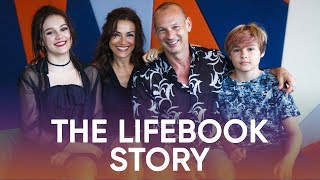
This is a live Facebook/YouTube interview (May 30, 2017) with Jon and Missy Butcher at Mindvalley HQ in Kuala Lumpur discussing the origin and practice of Lifebook and their personal lifestyle. They describe Lifebook as a private notebook-turned-program developed over roughly 22–23 years that organizes life goals across 12 categories, later offered as a Mindvalley quest and bootcamp. The Butchers explain their family lifestyle: deep-travel with their children (about five months per year, a practice begun ~10 years ago), a flexible, self-directed curriculum (kids cited as Justin, age 12, and Jade, age 16), and a shift from public schooling to parent-led/online learning. Practical advice includes high-leverage health habits (daily exercise, understanding a healthy plate, green smoothies, occasional fasting, interval training, sweating/sauna, hydration, sleep), relationship practices (put partner first, weekly date nights, quarterly trips, evening connection rituals), and productivity/parenting tips (integrate children into tasks, multitask family activities). They also recommend influential books (Atlas Shrugged; Cosmos) and mentors (Nathaniel Branden), and promote the Lifebook 30-day quest and bootcamp for goal-setting and strategic planning.
Questions this video answers
May 30, 2017
About 22–23 years ago
About 10 years (spending ~five months per year traveling)
Justin: 12 years old; Jade: 16 years old
Chapters
And your life. You going? Yes. Hi everybody. This is John and Missy Butcher, founders of Lifebook, coming to you from beautiful Kuala Lumpur, Malaysia at the mindvalley headquarters, doing our first ever Facebook Live. Now, Vishen was supposed to be here with us, CEO and founder of LifeBook. I mean MindValley. But he, he wrote an email to us a couple days ago that he was flying to Turkey trying to get here from Estonia and I guess that Istanbul got hit with the biggest snowstorm in the history of the city or something, so they had to divert the plane to some little town on the Black Sea. And he's been slowly trying to make his way back to Kuala Lumpur. He's like in Ankara, Turkey right now. So hopefully he'll get here tonight and we'll see him. But unfortunately he can't be with us today. So here we are. What are we doing?
Please post your questions below and let us know where you're from too, so we can reach out.
Why don't you tell us a little bit about your Lifebook story and how you got involved in Lifebook and why you created it.
How we started Lifebook.
Yeah, it's a long term ago, so.
About probably 22, 23 years ago, we were doing a lot of personal development work, listening to the greats, Tony Robbins, Brian Tracy, you know those guys.
Wayne Dyer.
Wayne Dyer, yeah. All the, all the classics of our, of our industry. And I recall that we were learning a lot, we were taking a lot of notes, but we weren't particularly happy with our, with the speed and efficiency with which we were able to integrate these amazing concepts that we were learning. It's like they'd go into our head, we'd write them down, but they didn't make it into our life in as meaningful a way as we wish they would. So we started this little book where we're keeping our notes. We started organizing our notes around certain categories of life and also certain buckets within those categories. And over a few years, this notebook we had that had all our personal development notes in it, so started to really take shape and take form. It was organized around the 12 categories. And inside of each of those 12 categories of life, we started to really get clear on what we wanted out of that particular category of our life, why we wanted it, and what we would need to do to get it if we wanted to achieve that. So LifeBook was our tool that we used as our own private little resource for probably at least a decade before we ever showed it to anybody. And it just kind of evolved from There.
That's great. That's wonderful, guys. So we're gonna go through some of the top questions that people have already asked. And so one of the main questions is, you know, you mentioned before that you travel with your kids for five months out of the year. Many people are wondering, how do you accomplish that?
Well, what's going on? Okay, so. Yeah, you want to talk about that?
Well, that'll. Okay, hold on. This is our partner, Joe Polish. He couldn't be here with us today, but we take Joe everywhere that we go.
We don't go anywhere without Joe.
So Joe's a partner in Lifebook.
Thank you, Joe.
He also introduced us to vision. So, you know, our wonderful program that we created with Mindvalley wouldn't be possible without Joe. So we just wanted to have a little shout out to Joe. Shout out to Joe.
Okay, back to the kids.
So. Well, we started traveling deep with our kids about 10 years ago, spending almost half the year out of the country, taking them out of public school where they went. And we'd go on some major adventure to Southeast Asia and just travel with them for five months and kind of homeschool them. Back then.
This is a hybrid. We put them in school where we were going.
They went to school in Bali one year. We'd take a two tutor with us a couple times. We lived in Africa, South America, Southeast Asia, Europe, all over the world. We go to a different place every year. And during those early years, Missy was just a master at working with the public school system to get their curriculum and set all that stuff up. And it was a lot of work. But it's evolved since then to where now we've just completed, completely changed the DNA of our education system with our kids. We.
We're teaching them ourselves now.
Yeah, we're teaching them. We're not even doing homeschooling. We're literally there. Jada, come here. We're drag our daughter on camera right now. Where's our son?
Okay, this is Justin, our 12 year old.
This is Justin.
This is Jade, our 16 year old. And this is Jade living in Bali this winter.
So we're living in Bali this winter. And here's the fundamental concept of what we're doing with our kids now is we don't even believe that we know what our children need to learn in the future to thrive in the 21st century. We don't believe that anybody knows that. Certainly not school. The way school is set up right now, it's just so antiquated and fairly irrelevant to what we think the future is going to bring. So we have put together a curriculum with our kids. Very loose, where they're learning what they're interested in. Like, Jade, what are you studying right now?
Like, I'm interested in dance or singing and, like, makeup and fashion and stuff like that. So I kind of just look up YouTube videos.
She's learning on YouTube. She's learning on Ted Talks. Khan Academy. Jade is Mindvalley Academy. Mindvalley Academy is another big resource. So. And Justin, what are you learning?
History, history, editing, video editing, and video creating.
We feel like there's more value in kids knowing how to create and edit videos and post them on YouTube than there is in them learning about cumulus clouds and igneous rocks right now. That's a more, you know, that's a more relevant skill to have in the 21st century. So, literally, we're letting them create their own curriculum. Certain things are mandatory.
Yeah. But I also think that it's really important for them to learn how to self learn how to sell.
Exactly.
Direct their own learning, and that's what they're doing. And plus, we've been able to spend so much more time with them.
Yeah.
They're not going to school. They're not gone eight hours a day. We're all together, us, and we're learning together.
We were in. We were in Europe on a couple lifebook trips this last summer, in September. And during that trip, Justin learned the history of the area that we were in, and he taught it to us at dinner. So he'd go on YouTube and he'd do all the research he needed the History Channel, figure out what the history of that region was. And then we didn't have to do anything at dinner. He gave us lectures. So what's he doing? He's researching, he's learning, he's retaining, organizing information, and then he's presenting it. That's all good stuff. So we've literally reinvented education. We'll let you know in 20 years.
How did it turn out?
Whether that worked or not, that is truly. Justin, what country was that?
Croatia.
Croatia.
Croatia, yeah.
Serbia. Wow.
Thanks, Jazz.
Teach us here at mindvalley about Croatia later today. Another question that is on everyone's minds is that, you know, Vishen's been posting this picture of you at 29 and at 49, and you can see very clearly that you guys are in great physical condition. Health, happy, very energetic, and lots of vitality. So what are your highest leverage, health, and fitness strategies that you can share with our community?
Okay. Going back 25 or 30 years. The single most important thing that we did early on was that we figured out what a healthy plate of food looks like for us, for our body types. And we made a commitment to exercise every day. And if you just did those two things, if you just understood, because 90% of the game is meal planning and exercise. 90% of the game, Everything else is details and sticking to it, well, you've got to be, yes, you got to.
Do it every day.
And it's not just about nose to the grindstone discipline every day. You can actually end up enjoying it, and you should. So learning what a healthy plate of food looks like and then making a commitment to exercise every day, Those were the two highest leverage points over 20 years. But just everyone knows that kind of of stuff. To go a little bit deeper in the last five or so years, the big breakthroughs we have had are green smoothies and green drinks. So basically, Missy will make what amounts to a liquid salad for us every breakfast and lunch. And just those two drinks alone, we've got all of our nutrition for the day. So we can have a friggin corn dog or whatever it is, or some nice hot ramen, it doesn't matter. You know, we've gotten our nutrition and so that's a big thing.
That was a big one. We got that from Lifebook members Jason and Nandi.
Yeah, Jason and Nandi hooked us up. The Lifebook community has so much brilliance when it comes to health and fitness.
You know, that's where we've learned, that's where we've learned most of our health and fitness stuff recently is from the thought leaders in our own community. And just, you know what they do. And now that we're getting a little older, we're starting to fast occasionally. So like maybe twice, we'll skip dinner.
A couple nights a week. And that's been a big deal for us too.
Yeah, big deal.
One other thing that we really believe in you guys, that's, that's, I think, critical is you've got to sweat. Sweat is the way that you clean the largest organ in your body, which is your skin. And I mean, sweat does so much for you. And a lot of people, they work out and they go through the motions, but they don't really like to go, go far enough that they really sweat. You can cheat, you can go sit in a sauna, but you've got to clean your skin and to clean the toxins out of your body through sweating. So those are, those are some of.
Our lots and lots of Water.
Those are some of our. That's all probably pretty obvious. Yeah, it's good stuff.
That's wonderful. So we had one question coming. A couple questions coming in from the. The feed. Here we have. Sorry if I'm not saying the name correctly, but Liuba wanted you'd best recipe for smoothies.
Oh, wow. Okay. What I use is a big bag of spinach. I stuff it in my Vitamix. I use at least one, maybe two avocados. I sweeten it with either mango or carrot, depending what I've got, or apple. You can sweeten it with anything you want, even melon. I put a cucumber in and then I put chia seed, macaroot and hemp seeds, I think, and a little bit of coconut oil.
So that's a vegetable smoothie, that's not a fruit smoothie. And you can literally, you drink that, you can feel it in your body.
You can use any greens you like. You can use kale, spinach, even lettuce. It doesn't really matter. If you want to start a smoothie and you're not really used to the taste of like a pungent vegetable smoothie, start with like, like just lettuce and cucumber. Just start it off. That's how I'm trying to get my kids back.
So I just wanted back to the last question. Truthfully, the two highest leverage points in the last few years, green smoothies from a meal plan perspective are magic. And then interval training from an exercise perspective is the biggest breakthrough in exercise physiology for probably the last 20 years.
And yoga. Yoga and water and sleep. That's the other side of that too.
That's fantastic. Just want to let you guys know that we have about 2, 220, 30 people live comments. So keep it coming.
Fantastic.
And it's the middle of the night in America.
Great.
Yeah, it's like nine or ten at night, so.
Yeah, exactly.
Thanks everybody.
We. And they're coming from all over the world. We've got from Hawaii, from California, from Toronto, Ireland, Hawaii.
We're going to be moving there soon.
India.
All over the place. This is great. Excellent. Thanks for in Australia, New Zealand. Wow.
Very cool.
We have one question from AJ and he has a relationship question. So he is being in a romantic relationship makes him vulnerable to too many distractions. And he always feels that he. Let's see, he loses his workplace party balance and hence he always prefers to stay single and has developed a phobia relationship. He feels that he can only see himself with someone once he's Achieved his professional goals. Do you have any tips for him?
What do you think about that?
Well, you know, Miss and I have been together for so long, you know, we can only talk about our area of expertise. And we grew together, we achieved success together. So the idea of I've got to achieve success before I can find my mate was never something that was part of our sort of DNA.
And we work together now. We do everything together.
I mean, that strikes me as a limiting belief. But I don't want to sit here and judge. I think that if you found the right person, you could achieve the kind of success you're after a lot faster. With all that support and all that love and all that positivity, if you could create a great relationship. But I would just check that premise and ask yourself if that might be a limiting belief. That's what comes to mind.
That's a good suggestion.
That's a great suggestion, guys. And speaking of a relationship, you've said before time and again that love is the foundation of your life. What does that mean to you guys? And if you have any tips you can share with the audience about building strong love relationships.
Well, I would say that the first thing you have to do is spend time together. I mean, you have to commit the time, and you have to be patient. You have to be, you know, tolerant. You have to be open, and you have to be. You have to really come at it as one. As, like. Like John is first in my life. He is.
That's what it means. What she's saying right now is what it means. Yeah. Love is the foundation of our life. What that means is we put each other first.
Yeah.
So we can handle anything. If our relationship is solid, strong. I mean, there's nothing that we can't overcome together. If we're going through a hard patch or if, you know, if our relationship was jacked up, I don't think we could do anything right. So what that means is as long as our love is strong and solid, our family life is awesome. We're gonna feel good. We're going to be able to perform well. Missy's needs must be attended to. First is my highest priority, and she feels the same way. And since we have that mindset, we tend to stay in a very, very strong place from a love relationship perspective. And then together, we feel like we can achieve anything we set our minds to.
We're so much stronger.
It's the foundation.
It is the foundation. I feel like it's my job to care for John. It's my job to care for John and our family. So I come from that perspective and John does the same thing. He cares for me first and then the family. And we're just so much stronger together as one instead of, you know, separated. So that's, that's how we, that's how we do it. Awesome.
Thanks so much for sharing that. Guys. We have one more. Another question coming in from Sue. She wants to know, in relation to child care, she wants to know how she can optimize her life around a teenager who constantly demands her time. She organizes timeouts for her, but these usually are interrupted by work or other issues. What's the best way around this? Or how to factor that in?
Can you say that again?
Sure. Basically the question center is how can she optimize her life?
Or what with having teenagers who are.
Demanding of her time as well as work and other priorities.
Well, I mean, that's a hard one if you have to work outside the home. For us, we work in, in our home, our kids are with us, they work with us. I'll be on conference calls in my office and Jade will be on the floor painting or drawing or Justin will be hanging out in the same room playing video games. So it's hard. It's hard to be a mom and work outside the home. That's the number one that we found at Lifebook. That's really the number.
It's the greatest challenge in America. Yeah, probably 50 million women deal with this. It comes down to math, you guys. There's not enough hours in the days to be a fantastic career woman and a stellar mother and an amazing wife and have time for yourself. It's a friggin math problem.
Especially if you're a single mom and there's no.
You know, this is not something that many personal development people would sit on camera and say, but there's no easy answer to this. It comes down to value judgments. It comes down to time, time prioritization. And it comes down to something's got to give.
I would say one thing you could do, sue, is you could maybe work out with your, I think you said son, your teenage son. You could do grocery shopping, you could do some of the things that you need to do in addition, just like your work and everything else. But home tasks you do with him, that's a good way. It makes it more fun and it's a way to spend time together.
So that's a great suggestion. Multitasking could be a key if you've got to work out. Like I wrestle with Justin for my Workout or I will sword fight with Justin for my workout. I'm killing two birds with one stone. You can cook with your kids. You can do a lot of things that you've got to do anyway and try to make them family activities. Get your kids as involved in your personal life as you can and in.
Your work life, get them involved. Even if you work outside the home, if you have to bring your work home, get them involved. Kids are so unbelievably plugged in and they know what's going on, and they have solutions that we can't even think of.
And one more piece of advice is that this too shall pass. And you've got to be very, very cognizant and conscious of the fact that you're going to have a career for a lot of years, probably decades. You're not going to have a teenager for very much longer. So you might want to take that into consideration when you're setting your program priorities.
Good suggestion.
It's a tough one.
Yeah.
There's no easy answer.
And really good question.
I'm not going to sugarcoat it. That's a tough challenge. It's going to take a lot of consciousness to overcome.
Yeah. Thank you.
Wow, that was really awesome. Thank you so much for answering that, guys. And I understand that sentiment as well. And I think part of the reason why we created this quest and LifeBook here with Mindvalley is to help people kind of organize what they want and how to go out and get that. Have it all. We have a couple more questions here.
Let me see.
From.
Barbara.
She has a question on goal setting.
Okay.
So Barbara's asking, how do you begin planning your goals if you do not know where to start? She has an idea of what she would like to do, but she doesn't know exactly where to start, particularly in terms of profession.
So she's having trouble knowing. She understands some of the things that she wants, but she's having a hard time knowing where to start when it comes to goal planning.
Yeah, she has a hard time understanding what to zone in on and exactly what to do.
Okay, well, I'm just gonna. I'm gonna go ahead and plug the quest and plug lifebook here, because that's what we do at Lifebook. We help you think down what you want in every important area of your life and help you start the process of setting goals, getting crystal clear on some of the objectives you'd like to achieve and prioritizing those objectives and then helping you with strategies to achieve those things. So best practices are Known. I mean, goal setting is not a new thing. People have been studying it for a long time. The information you want is out there. You don't have to feel like you have to reinvent the wheel here. Did she sign up for the 30 day quest?
Barbara, let us know.
Barbara, did you sign up for the quest?
Did you sign up for the quest, Barbara? If not, you should.
If not, you should do that.
Yeah, absolutely.
And by the end of that program, you will be so clear on some of the things, the most important things that you can want in life and what the next steps to getting them will be that I think you'll be on your way. Short of signing up for the quest, if you don't want to do that, there's plenty of information online that can help walk you through a very simple process. You don't have to feel like you got to figure it out on your own.
No. But if you do sign up for the quest, which I would highly recommend, the great thing about the quest is that you have a built in accountability. There's a community. And that is like, I think that that's one of the keys to doing anything, getting anything really done is having that accountability. Because if you say it to a group of people or even one person, you are going to do it. So I would say, Barbara, sign up for the quest.
Today I'm going to throw one more thing. I'm going to give you the 32nd overview of what Lifebook and our associated boot camp does. Lifebook takes you through the 12 most important areas of your life and helps you get creative, crystal clear on what you want in each of those areas and develop strategies to help you get that. Then, after you're done with Lifebook and have figured out your entire life, you move into the boot camp program where we help you turn your vision into a strategic plan and literally take you through a goal setting process and a goal prioritization process. So you come out of that program with a crystal clear plan of action to get what you want out of life. So it just depends on how hardcore you want to go. There are awesome programs out there and you should be doing them if you're concerned with setting and accomplishing worthy goals. Wow.
Awesome.
And Barbara chimed in. She says thank you. And she's definitely thinking of doing.
You won't be sorry, I promise you that.
No, it's great. We're doing it. We're going through.
All right, one more. Another question from Joy. She is asking a really great question. Actually, I'm curious of this. Of Myself. Who inspires you? Do you have any favorite books or resources that you can share?
Oh, that's a great question, Joy.
Okay, so here are the big ones in our lives, you guys. The first. The first book that I have to cite is Ayn Rand's Atlas Shrugged. It's a book that transformed both of us at a cellular level. I've read it nine times. I read it every three or four years in my life since I was 21 years old. It's not without its problems, but it is an amazing philosophical treatise through fiction on the universe and man's place in it. It's an amazing philosophical book. The second book that blew our heads off when we were young was Cosmos by Carl Sagan, which gave us a crystal clear picture of the universe that we live in, how the universe works. We were both raised in religious homes, and we don't have beefs with religion. But our first deep encounter with science really allowed us to understand that the universe was a knowable place that operates under certain laws that you can understand. And once you understand the way the universe works, you can navigate through more effectively. And then Atlas Shrugged gave us a sense of what man and woman's role was in that universe.
The combination was very good for us at the time. We were in our late teens, early 20s.
Yeah. So from a philosophical perspective, those were the two game changers for us.
And then you layer on top of that our dear friend and mentor who's gone now, Nathaniel Brandon. He just made it all beautiful with emotion and understanding.
He was a psychologist. Yeah, he wrote 20 books mainly focused on the subject of self esteem. Nathaniel Brandon, a couple of his best books. The Six Pillars of Self Esteem, the Art of Living, Consciously Honoring the Self, Taking Responsibility. He was a big, big influence on us. And then, of course, all the personal development greats, you guys, we've done, you know, we've done everything there is to do. Tony Robbins, Deepak Chopra, Wayne Dyer, Ziglar, all the greats. So lots of. Lots of personal development study, lots of sort of philosophy, lots of psychology.
Lots of people like, I have personal mentors like Devers Brandon, who was Nathaniel's wife. My parents, my kids, my husband. That's all I'm surrounded by inspiration. The entire Lifebook community. I'm inspired by. Inspired by the mindvalley community. So it's everywhere.
That's beautiful. So I'm just gonna repeat, the name of the first book was mentioned. There's a couple people are asking, is Atlas Shrugged by Ayn Rand.
Atlas Shrugged by Ayn Rand. Yes.
Another question from Athena. What do you do for a powerful morning routine?
Hi, Athena. What do you want to say about that?
Well, we have our. We have our little. We have our morning affirmations, which we go through phases, I think, with our morning.
We travel a lot and it gets. It gets upset sometimes.
We have our physiological morning rituals, our exercise and so on.
You know, I would say we have more. We have more of an evening ritual that we do now. Our morning ritual has kind of switched to our nighttime ritual. We'll say goodnight to our kids like around seven, sometimes about three or four times a week. And we will have hours and hours of date time in our room where we have amazing connection. We have deep conversation, energy, work, massage.
Making, love, talking, and we've developed a really super strong nighttime ritual. One more thing in the morning, though, that is a fantastic way to start your morning, is with a little bit of gratitude, meditation. That sounds like the whole day in an amazing way. There's a book called Miracle Morning that is the best book in the world that outlines killer morning rituals that you can get.
Great.
So a question from John. What are some of the things you guys struggle with?
Finances. Neither one of us are good with numbers, so we're always.
We have to have a good team around us for finances.
We can't hold numbers in our heads.
Yeah.
So we have a good team.
We. We struggle with being surrounded by so much opportunity and we both grew up poor, that it's difficult for us to say no to a really, really good idea. And so the biggest struggle that we have in our lives is getting sucked into too much opportunity and losing freedom of the hours of our days. We love achievements, we love accomplishment, we love. We love creating things, we love starting companies, and we love doing new things. So what we have to watch always in our lives is that we don't take on too much, that we don't say yes to too many things, and that we protect our free time. That's probably our biggest challenge.
And we're actually working that out right now. We're getting ready to completely reinvent our lives this year. So super excited about that.
When I get frustrated, when I. I get frustrated is when I love all the work I do. Literally right now, we're actively running four companies, and I love every single one of them. I love all of the business I do, but sometimes the volume gets too much. And then I got pissed off because I got into the same situation that I get into a lot where I've just got too much on my plate. So that's what we're trying to really, really focus on. Dialing that back a little bit in the next few years.
Great question.
Great. Wow. And finances. I think it sounds like it's an.
Issue for everyone, especially for creatives. It's just like you guys. You know, I'm dyslexic, mildly dyslexic. Our whole family, I come from a long lines of dyslexics. A lot of creative people just have the easiest time in the world holding huge amounts of information in our heads, if is the right kind of information. But when it comes to spreadsheets, I'm like, I'd rather go to the dentist for, like, two hours than.
Yeah, exactly. And one of the biggest things that we've also struggled with is investment. Like, we don't really know what to invest in except ourselves, our businesses, and one of our very dear friends, Garrett Gunderson. Hi, Garrett, if you're watching. Told us years ago when we went.
To Utah, he fixed that problem. He helped us understand that we've made a lot of money in our lives and we've started a lot of awesome companies, and we've made a lot of investments that have just tanked because we're just not good at it. We could never understand it. We lost so much money in the stock market, we've lost money in real estate. And finally, I was having this meeting with Garrett, and he said, john, you should never, ever invest in anything in which you're not an expert. You are an expert in contemporary art. That's what you know. And I've always looked at my contemporary art collection as a hobby. He said, john, this is not a hobby. This is the core thing that you do. And so that was about eight or nine years ago. And literally from that point forward, we've never bought another stock. We've never bought that whole world. We don't do any of that. We invest in our own companies, we invest in contemporary art. We invest in our homes, our experiences, the things we know. So we solve that problem.
And a really awesome financial team, which we have finally got. That's something that we need. If you're not good at it, like, we suck at it. It's so important to find the right people to surround yourself with. So. Great question.
That's so amazing. I've seen your art collection, and it is stellar.
Amazing.
Thank you. And you guys in Mindvalley can definitely see some of the videos that we have of John and Missy with Vishen at their places Spectacular.
Thanks, Elise.
Yeah, thank you. For having me there. We have a question from Jim Price. You two seem so well suited to each other. How did you meet? Was it love at first sight or did your relationship develop over time?
It was love at first sight, actually, for me. Not for him, but for me, it was. I was 17.
Yeah, go ahead. We have a. We have an interesting.
This is the crazy thing. I was 17 years old, and I was in a small town in Missouri and working in a grocery store as the bag girl. And he came through the line. He had just moved there from wherever you came from at that point. He's a nomadic person anyway. And I'm like, small hometown, grew up on a farm. Never really went anywhere except to St. Louis, big city. And when he came through, I talked to the girl that was working with me, and I said, after he went out, I was like, that is the kind of man I'm gonna marry. I mean, I didn't know him. I couldn't believe I was saying these words. And then within, like, three weeks, I auditioned to be in a band, and he is. He's the guy. He's the leader of the band. And I was like.
So I moved there with my brother, and we were in the music business at the time, and. And anyway, we needed a backup singer and interviewed a bunch of people, and Miss got the job. So she basically became part of our family for the next year, for sure. So it took me a little bit longer than it did.
Well, I was only 17. I was such a little girl.
I was, like, 22, and I had.
A massive crush on him. And I was just so not mature. Still not.
But then when it happened, when I fell for her, it was all over. So we. You know, I'm afraid that our story isn't very helpful because it was. It was crazy and magical, and once we really became lovers, it was just.
But we were friends for five years, which I think was really great. Really close friends. Like, I was friends with his sister.
Almost like brother and sister.
Yeah, really close. And I think that. That, if anything, I think that was a really good base because we got to know each other on a very different sort of level. Level. And that was great, I think.
But when our love affair started, it was just all over. And. Yeah, I mean, we. We're incredibly. It was a gift. Our relationship is a gift.
So we feel that way for sure.
Again, that story is not very helpful.
Sorry.
But it is what it is.
Great question. I hope that's helpful.
Well, in that same vein, and maybe you guys can share some of the tips that have made your relationship thrive over the the years. And I cultivated such a wonderful relationship and maintained that spark from the beginning.
Yeah, we sit down every Saturday evening and go over a list of Missy's shortcomings and you know, oh, see, this.
Is what I'm dealing with. But see, really, truthfully, I'm the most patient human being on the planet.
All right, so here are the big tips, you guys. So having a great relationship. Relationship is all about communication and connection, period. That's what it's about.
You have to spend time well.
That's how you get the great communication and connection. So having a weekly date night overnight, no matter where we are in the world, has been something we've done for over 25 years. Having an evening connection ritual, whether it's walking around our garden or having a cocktail overlooking wherever the heck we happen to be and catching up on the activities of the day. We take an alone trip once a quarter together. We just make sure to protect our intimacy and to protect our communication and to just connect at a deep level. That's what it's about. That's what a relationship is about. So the best way to achieve that is through repetitive rituals that you just did. Just become part of your lifestyle.
Yeah. And I would also say that we're just really interested. I like, I'm super interested in John. Always have been. I can't get enough of him. He's super deep. He's so creative. I just want to know more and more about him. And so starting out in our relationship, I would eavesdrop on all of his business calls. This was when I was just an artist and not I was a stay at home mom. And I would listen in on all of his business call. So I knew what was going on in his work world. And then we started working together on a few projects. We made a couple records together back in the day. And then we really worked closely together on Lifebook. And I think that just being interested in each other all the time is a really important thing. And really spend that time together. You have to spend the time together. So that's why I was awesome, guys. Thank you.
This is not a question, but I. I really have to say it because I know Christian's a huge fan of Star wars and I'm. Von is saying Elise, thank you. Is the force. And John trained with Master Yoda and Missy is an intergalactic princess.
Well, there you go.
That's awesome. Who was that? Who was that?
That's Mvon.
Thank you. M. Von. You are awesome. Shout out to you guys.
That's awesome.
Thank you. That's sweet.
I want to start closing up here and I basically want to tell everyone that I know there's a lot of questions that come in and do, do the quest. I've taken it. I've been working with John and Missy. If you have any fear around it, the hardest part, in my opinion, is just doing it.
And we're actually. We're going through, we're signing up and we're doing it and our life.
We'll see you guys there and we'll take good care of you. If you're. If you're nervous or worried, we'll nurture you through this.
Just reach out to us.
There's a tribe, there's community. We all have each other's back in support of this. And I just wanted to ask one last question to you guys. If there's anything else you want to add about the quest, about lifebook seminars in general and anything you would want.
To share on that, I would just say I'm just really grateful to be working with Mindvalley. We have known Vishen for almost nine years now, and we've talked about working together and just never has been the right time for either one of us or either one of our companies. And I'm just really. I feel very blessed and really excited about this.
It's a match made in heaven. I knew it would be from the first time. Literally the first conversation Bishin and I ever had. I'll never forget it. I was in Bali, he was in kl. He talked about his company, I talked about our company, and I knew that we were gonna have a big future together. We love what mindvalley's doing, and I know that you guys love what we're doing at lifebooks and now we're doing it together. And that just. It's so good.
Yeah.
And we're really looking forward to amazing 2017.
Right on.
Thanks, everybody so much, everyone.
Thanks for joining us and all the great questions.
More from Vishen






Brown Noise for Deep Focus and Concentration (Best with Headphones) | Gabriel Loynaz



Your Appointment With the Eternal | Guided Meditation with Michael Bernard Beckwith