The Love You Deserve: Neil Strauss on Trauma & Attachment | The Mindvalley Podcast | Ep #56
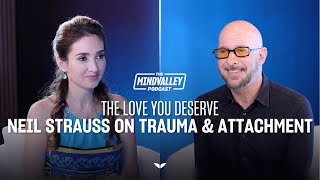
Neil Strauss explores how childhood trauma shapes adult relationships, explaining attachment styles like abandonment, enmeshment, and love-addiction. He shares practical tools for boundary-setting and nonviolent communication, and reflects on his own journey from pickup-artist culture to seeking authentic partnership.
Chapters
There's a gift of all our trauma. We can really be grateful for those things that happened that weren't ideal growing up. Maybe keep the gift and remove the part that holds us back.
My guest today is Neil Strauss, famous writer for the Rolling Stone magazine and author of multiple best selling books.
Unspoken expectations are premeditated resentments. You can tell a trauma is at work or just something you need to heal if you have the exact opposite result. Intention.
What does that mean?
Meaning that my intention is to make sure I don't get abandoned. My behavior is getting me abandoned. Well, there's something to look at. If I'm feeling really, really sad and disconnected and I'm making it your job to make those parts of me feel better, that's bad. Boundaries.
Today we're talking about love, fidelity and that search for authentic connections.
And I know people who are Olympic athletes who won the gold medal, who literally in private conversation are like, I'm going to fail. I can't do this. It's okay to doubt yourself, but you're going to doubt yourself and do it anyway.
Welcome to today's episode of the Mindvalley Show. I'm your host, Megan Pormer. And today we have a special guest who's not only a New York Times bestselling author, but also a master storyteller. My guest today is Neil Strauss, famous writer for the Rolling Stone magazine and author of multiple best selling books. Today we're talking about his most famous book called the Truth, which is an uncomfortable book about relationships. This was a raw and revealing exploration of love, fidelity and that search for authentic connection. So I'm very excited to have Neil in the studio today. Please welcome Neil Strauss. Obviously I read your first book, the Game. That book is my biggest nightmare. For the reason I don't understand, since I remember myself as an adult, I've been trying to not believe that all men think about is to how to be a better pickup artist. Right. I want to think that there are some sacred men out there, that they have tamed their ego. I'm not saying they don't have certain biological, like, you know, characteristics, but they've tamed it enough to really be devoted to one woman. And then when I read the Game, I'm like, I don't want to think that there's a world out there because that makes me feel like every time I see a man, he might be like a pickup artist. And I'm scared of those men because they can destroy me emotionally, spiritually, mentally. And I am never going to be that strong. To survive, you know, any kind of like interaction like that. Because I am as a woman someone that if I'm physical, like if I'm involved on it in the physical body, I'm involved on the spiritual, mental and like emotional bodies.
Alright.
They're not separate. Right. And then Sushan comes to me and he's like, I need you to read this book called the Truth. I said, oh, so what is it about? He says, it's about, it's a difficult book about relationships. I'm like, perfect. I'm definitely not reading that. And apparently by new not happening, like he tried to burst my bubble once I had enough, right. He's like, no, you gotta read it. And I didn't want to read it because I wasn't comfortable to face my own shadows in relationship yet right at the time. But then I read the book and I think it's been the most liberating phase of my life ever since I've read it. I feel like I no longer am going to replay my household that I grew up in in my relationships.
Right.
I and I know that you went through your personal relationship and you feel like you sabotaged it and that was the inspiration to write the book. But how did you go from pickup artistry to monogamy?
Yeah. And let me, you said at the beginning, before we started this, I want to hear your heart. So can I give you my heart reaction to what you're saying versus answering the question? Yeah. So I'm noticing two things, right? Like when what you're saying, one is like I notice a lot of like fear around men and their intentions. Right. For example, for me it literally even says in the book, again, the book's got all its problems and certainly I've done a lot of work myself since, but to me, I just didn't want to end up as somebody who wasn't married and didn't have a child. Like my intention even in going in wasn't like, oh, I want to be with a different person every night. My intention was like you said, we're going to talk about loneliness later. Right. My intention was like I was lonely and I wanted to make like I felt like one of my life purposes to be a, to be in partnership, to be an amazing father, to have a child. And I felt like I wouldn't fulfill my life purpose because I'm so uncomfortable around women. So I think like, but what I hear, but the book is interesting because the lightning rod people project whatever it may be onto the book. So I hear like a lot of fear. And I'll control stuff in what you're saying because the truth is whether we're falling in love with someone or just being physically vulnerable with someone and sleeping with them, it's such an unknown and it's such a vulnerability. And of course we hope that it's going to end up a certain way, but we have no idea what it's going to be. And maybe courage is taking that risk and no longer going to be okay no matter what. There's a great line. I think people's fears around dating and the people that they date or the people they're attracted to like often become self fulfilling prophecies and you're projecting that onto someone or something like. Cause what I'm hearing you saying is a lot of people, I don't want to think that guys are like that and people are like that. But some guys are like that, some guys are not like that. Like.
And a lot of projecting my fears onto them.
Yeah.
Do you think deep down it's just because I'm not just speaking on behalf of me, I'm speaking on behalf of over a million women that I have in my community.
Right.
So this is how deep down a lot of us. I'm not saying all women but a lot of us perceive men.
Right. And a lot of people don't. I think you want to be careful about making a generalization at all about anybody.
Exactly. No, I'm talking on behalf of me here. And any woman who's listening to this that it's in this phase of her life and feels this way. Right. I can only speak on behalf of me and people who have the feels this way.
And what's. What's this way?
Being fearful of men emotionally.
Is love possible with fear? No. And who's responsible? Whose responsibility is your emotional safety?
Myself.
And like. And I think that's what it is. If there's a real so. So like walking into a love situation with fear making irresponsibility, what shall say someone else's responsibility is always already setting something up up to fail. I'm not saying we should just trust everyone 100% but come in and just meet you where you're at and then if I'm seeing the signs that this is not what I hoped it would be, by the way, it's never what we hoped it would be ever. But can I still live with who you are? And if I can't then I get to move on. So I think that kind of waiting for the other shoe to drop or walk into Someone with fear in a situation with fear sets up a situation where it becomes a self fulfilling prophecy.
Wow.
Right.
So you think we're projecting like that we have personal fears which we project onto the relationship and therefore we set it up for failure.
Yes. Okay. 100%. Think about this. There's the person who says who has afraid of being abandoned. Right. And so consequently they're like, who are we at with? What were you doing? I just checked your phone and I saw this text. Why are you talking to your like ex from 10 years ago? Were you really out at work, you know, two hours later? And then that creates their own abandonment. Right. So a lot of people are really scared of being abandoned and then treat someone with a lot of fear and distrust, then that person starts to withdraw from them and they end up recreating their abandonment.
Yes. They basically manifest what they put their energy into. That's like another way of saying it. I speak in the language of energy. That's the easiest language for me. Basically whatever energy you put out comes back to you. If you put the intention and the energy of abandonment, you receive abandonment.
That's one way to say it, however. But I don't, I mean, by the way, I'm a big believer in the power of negative thinking. So let's get back to that.
Okay.
And what I mean by that is there are certainly things that I thought I could never do and would never be possible, yet I still did them. I put all the negative energy. And I know people who are Olympic athletes who won the gold medal, who literally in private conversation are like, I'm going to fail, I can't do this. I think we put too much pressure on people by saying you need to think positively all the time. You need to say affirmations in the mirror every day. It's okay. We all doubt ourselves sometimes. We're all insecure. We all sometimes think we can't do it and then maybe we can prove ourselves wrong. So I think it's almost too much pressure on people to say you have to put only positive I can do it energy out there. If you don't, you're going to fail.
Affirmations are becoming like a mental pressure. Like saying your affirmation is suppressing your emotions.
Right. And I have to believe in myself at all times. It's okay to doubt yourself, but you're going to doubt yourself and do it anyway.
Yeah.
You know, Are you going to not be sure and try it anyway?
Yeah.
So, but back to what we're saying about, about these self fulfilling Prophecies, really what I'm saying is you can tell a trauma is at work or there's something you need to heal if you have the exact opposite result of your intention. Meaning that my intention is to make sure I don't get abandoned. My behavior is getting me abandoned. Well, there's something to look at.
Let me repeat that. Yes, you can say there is trauma at work if what you're getting is different than what you're setting your intention to.
Right.
So let's go back.
Like, even myself, I can see I might be anxious about having something go right. So I try to like, super control it, right? And then people maybe around me, they get nervous, they want to please me, and it kind of goes wrong. And so my goal is for everything to go perfectly, but my anxiety that things will go wrong makes them go imperfectly. So then I realize that's something I need to work on. Right. So we all have that example. So if you look at where you're like, you're getting the exact opposite result of your intention, and it also doesn't feel good. That's probably what your work is to do right now.
So being in your marriage and not basically, and the marriage not surviving made you dig deeper into what made you sabotage the relationship or like what created the disharmony. Am I correct?
Yeah, I think, like. Yeah, I think in my case, what happened. There was something I was going to say about yours, but we'll get back to there. In my case, yeah, I think what happened was I.
By the way, can I acknowledge something? I think you can help to first, like, really giving me a therapy session and helping me out.
Well, I'm worse than you, than me, because I already know me, you know, I know. I can see that.
I can say and feel free.
Please do.
Because people that are listening to this are mainly like women. They're women and they. Most of them, they think like me. That's why Vision picked me for this interview. So go for it. Because whatever you think is healing for me is probably healing for anybody.
And to step back, like, I feel like we're in a massive culture of fear right now. And we're just creating whole ideas, groups of people and enemy. And I think it's a dangerous thing when you create enemies that consist of like hundreds of thousands or millions of people. And so it's interesting, when I wrote the Game, and I really mean this, and again, I'm sure the book has tons of horrible stuff in it. It's been many years. But my intention was that it Was a book about male insecurity. It was never about like. And it begins with a guy who was the greatest pickup artist in the world about to kill himself. So it wasn't like this works being a. It was really a lot about toxic masculinity. Male insecur. I literally thought women were read and feel empowered when they saw how sort of sad and pathetic and needy the men were. And most of the guys I met in that quote unquote pickup artist world, I think the media's turned into something else. Were really like neurodivergent people trying to figure out how to socially interact. There were for sure some like super toxic sociopaths in that world, 100%. But the most of these guys trying to learn it. Even for me personally, you know, we're on a journey. So to me that opened up the door to self improvement for me. And all the stuff we'll be talking about later about everything I know about trauma and everything else was cause I was lonely and trying to solve it and went with this flawed, you know, messed up group of guys. But that put me on the path to really learning I can change myself and I can look at myself and I'm not stuck with, you know, who I am at age, whatever it is, 23, feeling insecure, lonely, uncomfortable with myself, like low self worth and all the other things.
So basically the messaging of the game was that being a pickup artist stems from a lot of trauma and a lot of unhappiness and it doesn't end in a happy place.
I mean, I think the message is like putting on a false mask instead of behaviors to meet other people is not going to result in great intimacy. Like, you know, I think. And also trying to be a fake alpha male. And the book ends like Lord of the flies with all these pickup artists fighting each other. It was really like a exploration of it versus advocacy of it. But. But, but the point being it's not more about the book, it's more about. I read a news story on this book. I'm afraid there are pickup artists out there. It makes me sad when I hear things create more fear. We already have too much fear as an example. We just don't know what's going to happen when we meet someone. There was one guy in the book who was quote, unquote, pickup artist. And I don't want to get stuck in that whole book. It's a long time ago, but he went to a bar within 15 minutes, hooked up with someone in the bathroom and now they're married. Like you don't know what's going to happen, you know? And I think that whether you're looking for a partner, you're looking for something to happen in your career. Be a musician, be an artist, be an entrepreneur. If you don't open yourself up to others and take the risk, then some of those people are not going to be great others to deal with. Those things aren't going to happen. Here's the last comment I was going to make, which is our goal is to be whole people meeting whole people. So to go to the other side of what you said about that emotional. I'm afraid about my emotional safety. Right. There's a great quote that a therapist in that book, the Truth told me, and she was like, no one can abandon you unless you're a dependent child or a dependent elder or someone who. Nobody can abandon you except yourself. So if you meet someone again, it is horrible. I know very few people in relationships who have not had some relationship that's incredibly toxic. Incredibly, you know, that's horrible. Sometimes emotionally and physically dangerous. They're really. I want to do a project about this, but there really are scary people out there that hook into our psychological wounds and start to control us. For sure, that happens. But instead of maybe our goal is to make ourselves whole so that as soon as we see those things going on, we get out. Right. And we close all contact. We go to the resources that we need. There are plenty of resources, you know, amazing free resources online. But we want to make ourselves whole so that. So that we don't have fear.
We don't have fears that those unhealthy personality types can basically pretend as if they're filling.
Right.
Because when we have holes, sometimes we fill it with toxin.
Right.
Because we just. We're so desperate to fill it with something, we can fill it with toxin. Right?
Right.
Two things came to mind.
Yeah. Because I do think. I do think, like, and again, none of this. I mean, I think there's two types of, let's say, relationships that go bad. The relationships, we have a lot of expectations and excitement and the partnership doesn't work out, or the person's just bad and we're really hurt and we're abandoned. We're in pain. And then there are people who really have a pathological need to control, to harm, to hurt. To those kinds of people who really are toxic and dangerous. Start cutting. Taking away your car, taking away your job, taking away your friends, so you're completely dependent. And then the cycle of abuse starts. Those are. There are People out there like that 100%.
And those are psychopaths and sociopaths, I guess.
I mean they have different personality disorders. Right. Some are narcissists. You know, there's. But there's some, you know, whatever with narcissist or like extreme borderline or psychopaths. But for sure.
Would you say people psychopaths and sociopaths and narcissists and all those per. Unhealthy personality types that are going around really hurting people? Do you think these are the people that in the past were actual killers and you know, people that were would actually kill people but in the past there was like no, like no judgment against it. There was no legal prosecution. Now those people because they were scared of their own image, so they don't want to end up behind bars, they kill people psychologically?
No, I think that these personality disorders always existed. I think these personalities or disorders manifest in different ways. Right. So for those people, the issues are around their mother wounds and their holes around there. And as an example, Robert Hare, who is the person who really wrote, did some of the best research on psychopathy. I can't believe we're talking. We've definitely ranging going places I didn't expect. But he did a book called. So his first book was about psychopaths who like you say murder. The second book was called Snakes in Suits and it's about people who rise to the top often in politics and business, who are also sociopaths. Right. And for sure they're definitely people who.
Sorry, sorry.
It's called Snakes in Suits, which means.
People that are people who are also.
Sociopaths, psychopaths and who rise to the top in politics and in business. And he studied people who rise at the top of that and often they're sociopaths. But for sure it's not because they.
Seek power and control. If their intention is to seek power and control over people. 100% right. If you're becoming a politician because you seek power and control over people, do you think that's a healthy personality?
I mean, I think seeking power, control.
Is not healthy, let alone wanting to get over a large group of people.
But some people want to be politicians because they really like want to help.
Yeah, yeah.
So I think it's. I think we want to be careful about saying all psychopaths kill. All politicians want power like a whole, like whatever.
I think we should talk about intentions. It really depends on the intention. It's not so much about the behaviors, the intention. Somebody becomes a politician because they want to serve they serve.
Again, I don't mean to contradict everything, but someone. Their intention might be their own emotional safety, but they might not care about the other person's emotional safety as long as they have theirs. So maybe it's not about intention. Maybe it's about something else. I'm just thinking out loud.
But again, intention can be emotional safety. Again, that's an intention emotional safety, which is still negative and can emotionally hurt the other person. Not as much as the other category, though.
I really do. I think a lot of people who did the most evil things in the world in their minds and to other people, had good intentions. Nobody who has evil thinks they have bad intentions. There are very few people who do that. I was doing a project with a person who really is. Who actually is a sociopathic killer. He literally has murdered people. I should not have done the project, but. But he really feels. Literally said to me, I was with him one day, and he's like, you know, it's okay. You're with me. God is on my side. And if he ever harms someone, he doesn't just harm someone for fun. He thinks of a really good reason why they deserve it and that he's doing the right thing.
Got it.
So I think we need to be careful. I think it's more about questioning our intentions. We have to really look at ourselves all the time and think, what are my intentions? Are they good in my life? Are they the good in other people's lives? Because I think everyone. We're in a world where everyone, a lot of people really think they're right and they're righteous about being right and who's bad and who's wrong. And there's a saying which you probably know, like, all perpetrators perpetrate from the position of victim, right? So it's like people never think they're wrong when they're doing things that are wrong. Most of the atrocities that happen in the world happen because of fear. And if we look at anything now, I'm afraid of those people in the country next to us are going to take over our country. We're afraid of fear. There's nothing good comes of, like, fear. And I studied. Like, I really studied this. I went to actually a lot. I went to, like, meet with the person who discovered, like, the amygdala and what it does. Like, I've really, like, I've actually really studied fear. And fear creates a lot of horrible behavior and decisions in people. And. And he made a great distinction between fear and anxiety. So fear, to him, fear is like fear is the actual amygdala response. The amygdala is not the emotional center. And he feels like it's been misunderstood about what he said. Joseph LeDoux is his name. So the amygdala is just a response. There's a rattlesnake or something that fears to an immediate threat. Right now we have no immediate threat. Right. So anything that you and I worry about is anxiety. That happens in a different part of the brain. So anxiety is about what's going to happen in the future. Fear is about this immediate threat here. So if we can separate fear, which is a healthy survival thing, from anxiety, which is future projection of things that could go wrong and then try to solve for them.
So fear is healthy. Anxiety is not. Fear can be healthy.
Yeah. And there's a healthy anxiety. I think every emotion has a purpose. There's a healthy side to it, and then there's a unhealthy side. And it's extremes. People might say sadness is great. Sometimes it's hard. If it's depression or suicidal ideation, it's bad. But just being deactivated and going inside yourself and shutting down is sometimes a nice thing to do. Anger is nice when it's assertiveness, you know, and your needs mattering. And when it's rage, it's horrible. So. So, you know, so I think every emotion is. Has a. Is good within a functional range.
Back to your book.
Go ahead. Back to my book. Okay.
The truth.
Yes.
You talked about attachment styles.
Right.
Which, as you can imagine, I. I read about it all the time. But when you first started talking about attachment styles, like this is back in 2015, not many people were talking about this subject and how attachment styles are the core of most of this harmonies, relationships. And you talked about something called enmeshment, which I'm still trying to understand. Can you give our audience a brief summary of attachment styles in your language?
Yeah, it's interesting. I do feel like it's almost become trendy now. And thank you for noticing that no one was talking about at the time. And so it's really exciting. And now I feel like there's a danger to a. It being trendy and people dismissing it because I don't think it's a trend. Like, it's good to understand our psychological wiring. And then, baby, I think a lot of people misunderstand it. So I'll start with a misunderstanding now, which is not how I've explained in the past. I think the misunderstanding is someone thinks I'm a love addict. I Want to be in love. I'm a love avoidant because, like, I'm avoiding love. But a lot of people who are love addicts actually avoid that because it makes them vulnerable and it's scary. So they might not have a relationship. So. So just because I'm avoiding relationships because I'm scared of them or I don't want to for whatever reason, doesn't actually that's not how it works. I think in my way of thinking about or seeing it from what I've studied and experienced myself, I think generally, like, generally the pattern is set up by the parent of whatever sex you're attracted to, right? So it's generally set up. That's generally the template. So in other words, if you're attracted to men and dad wasn't there for you physically either, dad, anything could happen. You can. Your dad can always be there, but just emotionally disconnected, that's going to show up as abandonment. Dad. Your dad can pass away when you're three, nothing to do with you, but that's still going to feel like abandonment when you're that young and your brain's that young. So the basic template being is everyone knows about abandonment, and that generally leads to making your partner your kind of higher power. And that would be the love addiction. And a lot of that is when we're in a fantasy. Love addict can create that fantasy about who someone is when they're not that person. And giving away your emotional safety and your power to that person. It's a little bit what you're describing.
I have. And this is a conversation I have in my head every single day. I don't think any man is ever gonna want me for my emotions. Like, I feel like my emotions are something that I would always have to downplay because no man is gonna want to deal with my emotions.
And which emotions is that?
I have a lot. I feel. I'm a deep feeler.
Right.
And it's just so hard. I need a lot of reassurance, affirmations.
So let me give you a. Sorry, I'm going to cut you off. Go ahead. You need a lot of reassurance.
And I've already, like, made it an active decision because for many, many years I was just looking for that, you know, that connection where you feel fully safe and loved for who you are. Right. And your emotions aren't too much. And then you don't have to worry that, okay, maybe with this level of emotion, no man is ever going to want to be with me.
So here's a reframe on that. Can I give this to you?
Yes.
Okay. I think men have and will love you for your emotions. Because I think what you're describing is someone who really is capable of connecting very deeply and powerfully. I think that. So men will and do love you for emotions. The challenge is you finding the boundaries around your emotions. Right?
Yeah.
Like how much do you make. How much is how. It's just finding the healthy containment around that, around our emotions.
What does that mean?
Meaning that if I'm feeling really, really sad and I'm going to make this up, I don't know if it's true, but I'm feeling really, really sad and disconnected and insecure and uncomfortable. And I'm making it your job to make that those parts of me feel better. That's bad. Boundaries. Because another way to do it. And we can. So we can still feel all those things. Those feelings are common, you know, and so love exists. Love totally exists.
That deep connection exists.
Yeah. So instead being. Taking that time to really self soothe, to just kind of correct the reality, to look at what's really going on, saying, okay, this happened and I felt sad. Later you can talk to them and say in a way, you know, when you said you were gonna be home for the weekend, but then you made plans to go like to Vegas with your friends, Like, I felt really like sad and hurt about that.
And although if that happens, I'm probably, I'm not gonna even be there to have that conversation.
But sure, it's worth having the conversation. It's worth.
So after I leave.
Yeah, obviously, I think, I think there's a great saying which is it's credited to me, but I did not say this. It's credited to me everywhere online, but I didn't say it. I just want to clarify. Someone else told it to me and I think it even came from a. Now I just want to say that because I see all these quotes on some quotes from different. The saying is unspoken expectations are premeditated resentments.
Unspoken expectations are premeditated resentment.
Meaning in this case of going to Vegas for the weekend when you guys had plans, if you. They come back and you'd say so in other words, sometimes someone did that, so I'm leaving them. But do we ever say that that was one of our boundaries or something that was important to us? Do we ever say all the time we give people tests, but we don't tell them what test they're taking and they always fail it. Right. So you really have to be in great communication, by the way. Nonviolent communication, which has a horrible name, but is a great. It is the best relationship tool I've ever found. And I'm kind of saying it, and it's a simplest version is it's facts, feelings, needs, requests. So every communication is that four steps. So this is what I mean about boundaries. If you just sort of spill out all the. Without containment, everything you're thinking and feeling, that's a lot of energy. Right? And one thing about human beings is that when they hear accusations, right and wrong, punishment, reward criticisms, they just start to defend themselves and you can't connect. But we can communicate our feeling, reality without making accusations and criticisms. So you see, let's say your partner did that. Instead of leaving, you might say, hey, we had made plans for this weekend. You went to Vegas with your friends. Facts, feelings are. You know, when that happened, I feel really sad and hurt. Feelings. Needs are. I feel like I need, like trust and connection and safety. Right. And then request. And right now there's nothing. They can't really get mad about any. No one can. No one's going to have a. You've said nothing that made the world. It's just the fact. We had a discussion. You did this. I don't think it's right or wrong, but this is my feeling about it. Then the request is, in the future, if we make a plan, can you just discuss it with me before making another plan? And they'll say they're free to say yes or no. They say no. Then you're like, okay, maybe I get that this may not be right for what I'm looking for. Yes, great. That means a lot. Thanks for listening. Let's see what happens. Wow, right?
Art of communication, I guess.
Yeah, it comes down to that.
Art of communication.
And so when we talk about those boundaries is if you can take all that chaos that is sometimes going on inside and all that and just break it down into facts that a movie camera would see. Feelings. And by the way, Marshall Rosenberg created this makes a great distinction. So if someone's. If you're sad, is that a feeling? Sad. Sad. That's a feeling. If you're like betrayed feeling betrayed, is that a feeling?
Yeah.
No, it's a thought. Yes. And it's an accusation. So he makes this nice difference that our feelings are just really the feelings we feel. But sometimes we think I felt, like, disrespected. Right, That's a thought.
So sadness and accusations are thoughts, not feelings.
Sorry. Sadness is a feeling. Sadness, pain, anger, hurt, love, all those things are feelings. But A thought would be betrayed. Like, what is the feeling of being betrayed when you're betrayed? When you imagine. When you make up that you're betrayed, you feel sad. So you want to be careful not to make accusations as feelings like betrayed and disrespected. A lot of times someone might feel disrespected, but the person didn't attend disrespect. Going back to intentions.
Wow.
And then the needs are. We all have these basic needs, you know, and then request is someone's free to say yes or no to the request. So the boundary around it is. I think that emotional depth you have is, like, probably like a superpower, you know? And I imagine it makes, like, whoever is with you is, like, super fortunate to be with someone who's super connected emotionally and really, really caring and, like, really present for them. They can probably get to a level of depth they can't. People who don't have that.
Do you think my emotional power is. My emotional depth is my superpower and not my weakness?
No. And. But then. Then. But it's like anyone with a superpower, right, it's like, it can be too much, right? You. You have to go. They get trained, right. They have a laser vision, but they're, like, blowing. There's like, you know, walls are falling apart and buildings are being destroyed because they can't control their superpower. Right?
Yeah.
So then it's. That's it. Exactly. So you just have to go through the training so you can learn to control the superpower.
Got it.
Otherwise, it's superpower. Otherwise you're destroying things.
Yeah.
Yeah.
I love this. Okay, so back to attachment.
Back to attachment. Okay.
Okay.
So back to it. Going back to you.
So first of all, this is what I'm trying to understand. Do we recreate the attack in our relationships? The same attachment styles we experienced with our parents?
We love what's familiar, right? So, like, and when we're talking about some of these really toxic people in these really, really toxic situations, often they grew up in a. People talk about trauma bonding a lot. Trauma bonding is. Well, we love our parents, but our parents can be emotionally or physically abusive, and we have this love, and it's kind of confusing. And then later, we trauma bond, we fall in love, or we're loyal to people who are physically or emotionally abusive because it's familiar. There's a great test you can take online by Patrick Carnes. C A R N E S called the ptsi. Side note, don't take the PTSI R. It's his revised Version, do his original ptsi, he asks you a bunch of questions, and it'll tell you how your trauma shows up in your life today. In other words, you and I can experience the same trauma, but for some people, it might manifest as trauma, abstinence, meaning I just avoid everything. And some other. It could manifest a trauma, repetition. I just keep recreating my trauma over and over again. So it'll tell you what your kind of biggest patterns are. I highly recommend it. It's the ptsi. It's free online.
So empath women attracted to narcissistic men. Let's just go there.
Okay. So. So, yeah, I think. I think. I definitely think they're, like, narcissistic. I think there are many reasons why, like, people might be attracted to narcissists, but for sure, I think. I don't think it's about being empathic. Right.
But they love empath. Yeah, like, narcissists love empathy.
Yeah, yeah, because we love people who are like, oh, what's wrong with me? I got to look at myself more. I got to work in this relationship more while they just go around, like, terrorizing. But for sure, I think it's that there's a hole where someone's not complete, and they hook up into that and become, you know, they slowly. It's like. It's like a cult. Right. Cult finds the weakness and then takes away anything that's a threat to them and then has, like, the total kind of control. And that often comes from, like, from an abandoned abandonment wound. Wound, and then just looking for that someone to fill that hole. Right. Often it does come from having narcissistic parents, and then you're attracted to, you know, a narcissistic partner, for sure. But there are many different. There are many different reasons and things that narcissists hook into.
So a narcissistic parent can make his or her child attracted to a narcissistic partner.
It can, but. But more commonly, I think more commonly, it tends to be more somebody who's got abandoned by the partner. That tends to go for the narcissistic. That goes for the narcissistic partner. I think just to, like, get back to the enmeshment side for a second. So we talked about abandonment. I'm just going to kind of shift a little bit because I don't think that's true about the narcissistic parent to narcissistic partner. What happens more often is the avoidant has the narcissistic parent. So the idea of the narcissistic parent to some degree. There's different levels of it is the parents needs are more important than your needs as a child. So we talked about measurement. Measurement Is the parent healthy parenting is the child's needs come first. Narcissistic parent or meshing parent is my emotional needs are more important than your needs. So it shows up in many ways. Like could be just a. Could sometimes just be a depressed parent. And there's an emotional narcissism there where the child is around to make them feel better. An anxious parent who's always over controlling. Where are you? But it's not for your safety, it's for their safety. Right. And so when we have an enmeshing parent who makes their needs more important than our needs, we then go get into relationships and start to feel smothered. Or usually we get relationships with someone we can save or help or support like we did for the enmeshing parent. And then after a while we start to resent them and feel suffocated by them and we start to act out. That's kind of the love avoidance enmeshment piece, if that makes sense.
Oh, wow. So enmeshment in fact is when you are really attached to the person, but not because you are. You really like them just because you think it's their job to provide your needs or they have to provide your needs.
Are you talking about in a parent relationship, parent child relationship or a love partnership? Like a relationship.
What's the difference? Enmeshment in parenthood versus in partnership?
Yeah, I mean the difference is I'm thinking of enmeshment as a parenting style. Abandonment and measurement, functional parenting. So I'm thinking of as a partnership, as a parenting style.
Oh, you're saying enmeshment parenting style can cause the child to have the attach. Avoidant attachments style.
Right. And then the adult child thinks I get my worth and value by taking care of needy people. Thus I choose a needy partner. Then I resent the needy partner for being too needy. And then I start to break out of the relationship and the pattern, you know, or act out and distance myself and withdraw. They have abandonment issues. So they start to withdraw and it creates a whole cycle.
Oh my God.
Wow. Yeah. So I mean I think the thing to learn, like here's a way just to pull, pull back. Because I feel like we're jumping all over the place. Here's just like an overall way to think about it. We're born and we have all our brain cells, but the wiring hasn't happened. Yet. Right. So in childhood, at an alarmingly fast rate, that wiring happens really quickly. And then as adults, we're acting out of the way. We were programmed growing up. So once we recognize the programs and there are all these different programs we're running on, then we can start to free ourselves from, like, run a virus scan on ourselves and free ourselves from the programming. That's why I think that even though that trauma attachment style stuff feels overused and cliched on Instagram now, but that's why I think really, really deeply understanding what your parenting was, what behaviors it led to, allows you to change and also not identify with it. Probably things that we had to be to survive growing up. Like, what do you say? Like you've said you're very emotional. What do you think was the survival reason growing up? What was important to be emotional?
As far as I remember myself, I was always feeling things others weren't. Like I would go to a happy place with school with a bunch of kids, and I would sense some heaviness.
Right. But so my question is, and I'm just. I'm just throwing a fish glass to tell me if it resonates or not, I feel like there may have been something in your family that you had to be highly attuned to in order to survive.
I don't know what that is.
Yeah, yeah. I mean, as an example, like someone. Someone who had. Someone who had a parent who was a very strong figure who. That their moods maybe control the entire household or something for that, that person can become very empathic and emotionally attuned because they have to kind of read that parent to survive that situation. Maybe.
What I feel, I not only feel a lot, I like to share it and be understood. I think my thing came from the fact that I felt like my emotions weren't heard or understood as a child.
Right.
I was feeling some. This is my story. My subconscious, obviously, is only. I can only see to a certain level into my subconscious at the moment. Maybe you can help me dig deeper. What I remember is having a certain, like, yearning in my heart. And this is me, age 2.
Right.
That there is this real, like, oneness love. It's just this yummy, like, divine kind of sacred love that I'm looking for. Right, Right. And I'm feeling it. And I'm trying to describe to my mother, to my father, I wouldn't even bother describing to or my grandparents to people about this. And nobody gets it.
Right?
Right. And not only they don't get it, they start to even tell me that I'm wrong to feel this way, right? So then I'm like, but I need to share this. Someone's gonna get this. Someone's gonna understand what I'm saying. And for 30 years, I looked for that person, right? I looked for that person in every stranger I met, right? And didn't feel it. Didn't get it. Maybe here and there, like breadcrumbs, but didn't really feel that they get me. And so I started sharing it on social media. Social media by wearing, like, really expressive, strange outfits on red carpets. Media, media, media. Sharing emotions. Some people started to come forward and I'm like, so it's not all in my head. There are some other people who think the way I think. Then last year in May, I felt like, I just don't want to go through life anymore like this. It's just. I just. I just don't want it. If this is what I am, this is how life is going to be. I just don't want to go through it anymore. So I left my job, my work, I left everything. I left la. And thanks to my amazing mentor, Punacha Machaya and Deepak Chopra at Chopra foundation, they sent. They advised me to go to India. And I went to the southern temples, temples of India with another mentor which Punacha referred me to. His name is shiva. He's a PhD scientist in energy healing and quantum physics and psychology and bunches and astrology. I went to that temple, it was in the morning, and a bunch of people, which I can't. I don't know how they survived because there was no food there. There's like, the weather is horrible, they have no money. It's just they were mantra, right? And I didn't know what mantra chanting is. Do you know what mantra chanting?
Yeah, a little bit, but you can explain it if you want.
Yeah, it was like.
Yeah, they kind of repeat the.
Yeah, same thing, right? And I'm like, oh, my God, what am I doing here? Okay, maybe I, you know. So I was nervous. Suddenly something lifted me off the ground. This happened. I experienced it. I don't have enough scientific, like, knowledge to tell you, but I'm just going to tell you what happened to me. I went on my tiptoe. Somebody, something lifted me off on my tiptoes. And I started, like, going like this, like, whirling, right? It wasn't me. It was something like as if from above and beyond, something was just moving me. And I went somewhere, it was outside of my body. And I felt that love, right? That Love that I could not explain. People were not understanding. And my mom didn't understand it. And my dad would like, I wouldn't even bother telling him about it. I felt it and it was real. And there I was like, it exists. I'm not crazy. And then many other things happen. I remember, like seeing everything, as if I got on a helicopter, saw myself outside of my body, why I came to this body, what my soul's purpose is. At the time, I was suffering from an immune autoimmune disorder. I understood why I had done that to myself and fixed it, healed it right there and then.
Right. I think the part of this is always looking at the return to exactly that place of connection. I won't say in the womb or in the spiritual part of the universe. I think that's amazing.
So you tell me.
But the point being, but I think what's amazing is the universe gave that experience to you, not a man. And by the way, you gave me the clue that I was looking for. So there's a point, even if you watch the video, there's a point where I said, my hook is you said it and you said it twice. And it's interesting how you say that. You bounce off it. So when I say we're doing a virus scan on ourselves, like a virus maybe at a computer or something like that is the part of the program that's not, let's say in your case, maybe isn't divine or it's imperfect, or it's not coded perfectly. And twice you said and where your whole attitude changed from glowing when you're describing this to like, I wouldn't even bother to explain it to him. My dad, he dinner twice he said this. So I think the thing for you to sort of work on is your journey relationally, if you haven't already, is that meeting men who have elements of your dad and saying, if this partner can understand me, see me, understand me, meet me there, then it heals the wound that I have for my father that I still carry with me. So if I can pick someone who's seems available, but they're really not emotionally available for me and that I can get them to be emotionally available for me, I can heal like little Megan or the little girl who like still adult person who still explains and says, I had this amazing experience, I can't fucking tell my own dad because he is not going to understand me, so why bother? If we go back to the beginning of the conversation, be like, oh shoot, it's not about men. It's not even about me. It's about. There's this thing that happened, and now I can be conscious of it, and now I can start working on just changing that pattern.
And you're saying if someone has elements of my dad, it'll make me choose them. Yeah, Just to make them. To give that emotional support.
Yeah. And to heal that through getting it. Often, by the way, another thing that people will do is you might seem to meet someone who actually is giving you what you lacked from the parent as a child, then somehow will turn them into that parent if they're not already that parent. So it's just being really conscious that very little. We were talking about projection earlier. Like, so much stuff is project just recognizing your patterns and then doing the healing around them. I think consciousness is the first step. Then having those transcendent experiences like you did, going somewhere or out of context, and you're really purging and getting to a higher, connected place. And I think. And it's funny too, like, just. It's interesting. Like, I'm really just listening. And the other way we can hurt trauma is when we hear contradictions. So you're saying, like, I really want to be understood. Right. By your partner and by your father and by your partner. At the same time, I'm scared to show myself here because someone sees me. They may not like me. Do you know? Do you hear what I'm saying? Right. So you're saying, here's what I want. But then my behavior is something different.
Because I always felt like the only part of me my dad didn't like was the fact that I had, like, emotions that he couldn't understand.
Boom. And that's why you don't like them, because it's your dad's voice.
The book. We're only loved when we're dead.
Oh, everyone loves you when you're dead.
Sorry, what was the book?
I did a book called everyone loves you when you're dead.
Everyone loves you? Yes. Did I say you were loved when you're dead?
Yeah. Yes.
No, no, no.
Which is kind of true. Like, we're just nicer people who aren't. Aren't around anymore because we don't fear them and don't compete with them.
That's why we love them when they're dead.
Right.
So your book, was it about your experience? It was about your experiences with a lot of people. Observing a lot of people. Correct. What was the ins. What made you write that?
Yeah, I just did. I feel like most of my life, a lot of people like to Talk about the game. Because obviously, like, dating is one of our biggest pain points in the culture, or just as human beings, just our personal pain points. But I spent most of my life interviewing people, interviewing musicians, artists, film stars. And just like you're doing, I really. The authentic moments were what I treasured. And so I try to put a book together of like, the most authentic moments of someone really showing their vulnerability or their insecurity. Because I think we put these people up on pedestals and. And they're just wrestling with the same stuff we are. Wow. You know, this person was in the book because they were. Died a long time before. But I was reading for a project I'm doing about. About Abraham Lincoln, right. He's maybe seen as one of the most important historical figures, but he was deeply depressed. He carried around a pen, a knife in his pocket. His friends wouldn't let him. His friends would always take it away because they're afraid he was going to kill himself. And he talked about, if I have enough sadness in my heart to fill the whole country. But we look at him as this great figure and we think, if only I can be as great as that. And not recognizing that everybody's kind of human and struggling and dealing with the same fears. So when I interviewed. For me, when I interviewed all those people, I felt like, oh, whatever problems I have, maybe whoever it is, Tom Cruise or Mick Jagger, Lady Gaga or whoever it is, I'm interviewing Bruce Springsteen, whatever it is, I'm like, whatever I'm dealing with, you're dealing with on at times 100 level. So I want to learn about how they navigate their problems. So that was. That book was about. Interesting.
What was your top moment or one of your best moments that you felt truly connected with one. Like some of the people you've interviewed.
My favorite, like, my favorite person ever. There's Chuck Berry. Do you know who that is? So this. He's amazing. So Chuck Berry literally invented rock and roll. Like, he literally, like invented rock and roll and was kind of. And then was put away in prison over something or other and watched the Beatles, Rolling Stones, all these big, big bands become successful without him. And so they were like, chuck Berry, he's like literally the icon, you know, he literally invented, like. So. So they're like, he doesn't do interviews. Like, he probably won't like you. Like, he hasn't done interview longer than 15 minutes in like 30 years. And I came and we got along so great. I really got to see his heart. I got to understand how rock and Roll is really developed, not what I've read about. And we became like for the last years of his life, like had a great connection. So I loved him and he really, he just wanted to make me laugh. He wasn't trying to talk about himself. Like his connection was just making jokes and saying funny stuff. And then we just started laughing and it was the greatest ever. So check out, I mean, if you look up Chuck Berry or look up his music for everyone listening, you'll hear it just in everything.
Oh, for sure. I want to check him out tonight. How about. Who's the most spiritual celebrity you've ever interviewed or came across?
Yeah, I would say a guy named Gilberto Gil, who is a Brazilian artist. I met him and I always remember he just had this aura that just kind of glowed and I just felt warm in it. So I guess that would be that. Like he just had that.
And what kind of artist was he?
I think a lot of like kind of bossa nova and Brazilian style.
Got it.
Music, but just beautiful. You can hear his soul through his music. So check out Jabirto Gilbert.
Back to again, attachment style.
Right.
A lot of us women are dealing with the fact that a lot of men don't want to commit. Right. At least we think men don't want to commit. I don't know if it's true or not. And then women tried to trap them different ways of trapping a man to make him to commit, which I think is a very inauthentic way of getting someone to commit to a relationship. Because if you're trapping someone to commit to you, obviously they're doing it out of fear and not out of authenticity. Because if they were doing it out of authenticity, you wouldn't have to manipulate them. Why do you think women do that?
Yeah, I mean, I think again, I'm hearing like a lot of sort of generalization, generalizations. That's okay to point out. So. So I think a lot of men want to commit. I bet every one of these women has met, met men who wanted to commit. They just probably don't want to commit to those guys. But. But meaning that. And it doesn't mean that they should. Meaning that. A couple thoughts. One is, I think everyone wants to commit at some point. Like, let's just face it, if you're just serial dating non stop in your 20s, 30s, 40s, 50s, 60s, 70s, something's really, really like. And you never commit. There's really some issues you really have to look at. And you're probably an outlier. Right. Most people I Think really do want to commit. But I think a. I think chasing commitment could be as bad as chasing sex, you know, in the idea that I'm objectifying you to meet my need and separate from men and women. Some people, you know, I don't want to make say that women do this or men do this, but some people, if you're. What if I just meet you where you're at, right. And we let whatever develops, kind of develops and give it time to work out. I mean, certainly there's situations where people meet and within the first week they're like, this is it. This is the one. And there are other situations that happen really, really organically over many, many months and a year into it, or a year and a half, or maybe in two years into it. Like, I don't even. I don't know if nothing's happened. But yes, you're the one. And I think just so much you're talking about spiritual work, right? And so much is about being present with what is right. And why don't we just be present with what is with someone and choose them in each moment? And if it comes to a time, there's a long series of many moments where we don't want to choose them or we don't choose them, then we sort of move on. But I think, like, people future project themselves out of relationship. I bet those people who sometimes also people. One great thing about nonviolent communication is it's about bringing forth what's alive in someone. Right? And if what's alive in someone is not thinking about commitment or not being ready for commitment, then we're not being attuned, respecting kind of who they are. Right.
Maybe if we were all pickup artists, all marriages would have lasted because we would keep being pickup artists for each other and date each other forever and make an effort. And then that would be a way to get out of this whole rat race of just dating and dating and then struggling with commitment. Maybe we should all be pickup artists.
I think I hear what you're saying, which is like, I think it is true not to take someone for granted that you're with and you've done a lot of studies and continually learning more about the other person and being surprised by the person helps the kind of love last and continue for sure. And absolutely. I think it's important to, like, Helen Fisher, the evolution biologist, has done like, some studies, scientific studies on this. And I. I can't remember exactly because I read them a long time ago, but really that element of surprise and doing Novel things together and all those things really help.
I want to actually share a message for. There are a lot of women.
But the overall point is, I think going back to what we want and we create the opposite, if we keep looking for commitment and not getting it. I would guess that the moment you throw out the idea of looking for commitment and just meet amazing people, the right thing's gonna happen. I think maybe it was a lot of trust. Trust the universe and trust the connection. Like if you're with someone and it's mismatched in terms of where you're both at, then maybe you need to find. Keep finding someone you're matched with. And maybe that one year trying to get someone to commit, close the door and finding someone incredible in that year. But I think. I think. I'm sure on a spiritual level that letting go of outcomes allows what's supposed to happen for you to happen more readily and availablely. Don't you think?
Absolutely.
Right.
So if a woman is trying to get commitment out of a man who doesn't want to commit, she has some trauma in play.
Or what if we take it to a more spiritual level that maybe try to get something out of anybody is not meeting them on a human level.
Any manifestation or any psychic work that involves a decision that involves another person, Meaning if you're manifesting for your partner to marry you, if you're manifesting for a particular person to work with you or sign a contract with you, you are sending energy to affect their decision making without their approval. And that's the manipulation energy, which is a dark energy. It doesn't come from the divine source.
And you were saying. So what we're trying to manifest should be about us and our relationship with the universe and not involve the will of other people.
Yes.
Yeah, I totally agree. And I think that's. I think you would love. I really. I really think that's true. I think the. The idea of knowing what's right for other people, what they should be doing, that their will doesn't matter, they should be meeting your needs. All these things are, like, spiritually toxic.
My God. I wish I could speak in your words because not only you hear me then. Because English is not my first language, it's my third language. Right.
And.
And sometimes I want to say something, but I don't know how exactly put it into words. And you do that perfectly. Nobody had ever done that.
Okay, thank. I'll take three language learning three languages would be great to know. Thank you.
But this was fantastic. Thank you so much.
Thank you. Thank you.
This meant the world to me. I appreciate it. It was wonderful.
Thank you. That means a lot. And by the way, I'll just share this note since you've been so vulnerable, which is so there's a gift of all our trauma. So my ability to listen to you and hopefully hear what you're saying and really came from a highly enmeshing mom. Like we talked earlier. So I was highly mom enmeshed when I was like seven. When I was a kid, she talked about all her problems with my dad and I'd have to listen, understand things that I couldn't listen. And so all these things maybe that we also try to heal, also help us in great ways and give us gifts. So maybe to end with like, we can really be grateful for those things that happened that weren't ideal growing up and maybe keep the gift and remove the part that holds us back.
I love to end on that note. Thank you so much.
Yeah, thank you. That's a really wonderful, wonderful.
Thank you so much. Thank you.
Yeah, thanks. Welcome to the mindvalley podcast. If you enjoyed this episode, subscribe and leave a comment. This is so motivating for us and it inspires us to help creating more incredible free content with the world's best authors.
More from Vishen






Brown Noise for Deep Focus and Concentration (Best with Headphones) | Gabriel Loynaz



Your Appointment With the Eternal | Guided Meditation with Michael Bernard Beckwith