The Science of Biohacking: Unlocking Energy, Health, and Longevity | The Mindvalley Podcast | Ep #61
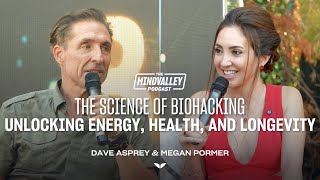
This is a podcast-style YouTube interview (Mindvalley) featuring Dave Asprey discussing biohacking: its definition, applications for longevity, emotional healing, and performance. Key themes include Asprey’s definition of biohacking (changing the environment around and inside you to control biology), practical interventions (neurofeedback, hormone replacement, gene therapy, stem cells), a five-day neurofeedback-based program called 40 Years of Zen for rapid meditation-like brain states, and clinical/technical approaches for conditions such as long COVID (mast cell activation) and autism. The episode mixes scientific-sounding claims, personal anecdotes, audience Q&A, and guided practices (a forgiveness meditation).
Chapters
Can I do a real quick masterclass in like two minutes or less on what's going on? Because this affects like 100 million people in the country.
Dave Vasbrief, the father of biohacking. Can biohacking heal of emotional trauma?
100%. It's possible with biohacking to go in and remove the things that trigger you. And maybe the most profound report I've heard was a woman who was in a concentration camp as a very young child. And she said, my entire life I've been searching for peace and I've never been able to find it. I finally found it and it was just five days of just showing the brain what it's capable of doing. All the bad behaviors you've ever done was your body trying to survive? You cannot forgive without having gratitude. There's always something to be grateful for.
Dave has truly transformed the way all of us think about the diet, performance, longevity, and really anti aging.
There's at least seven pillars of aging. If you want to maintain your car, you just change the windshield wiper fluid and that's all you do. My advice for younger men, can I be a little bit offensive?
Today's a very exciting day for me personally. Happy World Biohacking Day. And we are here with the father of biohacking and human potential. Dave Asprey has spent the last two decades of his life experimenting with different health and wellness strategies. And Dave has truly transformed the way all of us think about diet, performance, longevity, and really anti aging. And thank you so much for being with us today, Dave.
I'm so happy to be here. There are 102 World Biohacking Day meetups happening right now around the world, which is incredible. And analysts say it's a $63 billion industry that started with a blog post and a biohacking conference 13 years ago. And to see how far it's come. It's incredible. And it's only getting bigger.
Well, I think biohacking is a very trendy word where all of us at one point, we just wanted to get on the trend without knowing much about it. For anyone in the audience who's new to this, how would you describe biohacking?
When I was coming up with a word to describe what happens when you take control of your biology, I wanted something that wasn't just for longevity because old people care about longevity. When you're young, it's a good idea, but it's not as important as Tinder. And when you're middle aged, it's important, but not as important. As taking care of your family. And so how do I get young people and middle aged people and old people excited about what can you do? And the definition for biohacking is the art and science of changing the environment around you and inside of you so you have full control of your biology. That means if you're a kombucha mom, or you want to be like the strongest bodybuilder in the world, or you want to be a CEO or a creative songwriter, or you want to learn fast, it doesn't matter. What we share in common is I want control over my biology. Or maybe, like me, I just want to lose £100 and have a brain that works. That's kind of important too. So that means we can come together and talk and that Navy seals and neuroscientists and monks can all talk about this common desire. But ultimately, we just want to be happy and full of energy. And biohacking will get you there.
So having full control over our biology, knowing that getting older is a part of being in earth school, can we really stop aging?
Why not?
Good question. Because. Why not? Because all of us, I think one of the biggest fears that we all suffer from is the fear of aging. Women, as speaking from on behalf of a lot of women in their 30s, we think about aging every single time we look at ourselves in the mirror. Men, I think for them, it starts later, around 40s, and everybody wants to see if there is a way to stop aging. And if there is, what is that?
It's probably not just one thing. In fact, in my big book on longevity, there's at least seven pillars of aging. If you want to maintain your car, do you just change the windshield wiper fluid? And that's all you do. You might want to change all the things when they need changing. And in the last few years, I've had gene therapy that makes you on average nine years younger than you were before you did it. I just reset my central aging clock in my hypothalamus with stem cells with just profound results. I've lost 100 pounds, 4.8% body fat. My brain runs with a response time of an 18 year old. My vascular system is 26. And I could go on and on and sound like I'm bragging. I'm just saying, how old am I? My lab test might say I'm about 35. The calendar says I'm 51. And when I fill out those forms and they're like, you know, what's your gender? And there's like all these different things. But then when it comes to age, they just have like, I don't identify with my calendar age anymore, but they're not honoring my actual age, my identity of age. I'm very triggered.
So aging is not normal.
I don't know, do you like the Bible or do you like the Bhagavad Gita? Like, which of these are you from?
I don't want aging to be normal.
Both of them have people who live 800 years in them. Methuselah lived 969 years. Were they just making all that shit up or are we just doing a really bad job at aging lately?
Do we age because we're taking bad care of our organs?
I would say that there's a little bit more pollution in the world than there used to be. There's a little bit more stress than there used to be. We're living in a world where we still think we should get all of our nutrients from food, even though the food is grown in soil that has no minerals. So we're lacking minerals and we wonder why we age. I don't know. Could that be part of it? The amount of lead and mercury in the air. And it turns out each of those affects a different system in the body. So if you have a happy liver, you have enough high quality animal protein, you have the right kinds of fats that humans are supposed to eat, and canola oil wasn't on the list of things that Ayurveda would recommend or that you would find in any lineage of people anywhere on the planet. So. So we're eating fake foods full of chemicals. We're staying up late at night with a broken circadian rhythm from bright lighting. LED light is much worse than that. And we're wondering, I wonder why it's not working. Like, well, look around. The definition of biohacking. Change the environment around you and inside you'd have full control of your biology. So we have the ability to change the environment around us. You can choose what to eat. You just need to know what works. And you could say, well, I'm going to follow this raw vegan influencer. By the way, I was a devout raw vegan until I shattered three teeth and gave myself autoimmune immune conditions. That was a bad experiment, don't recommend it. But you could follow the vegan influencer, but measure your results. When your testosterone drops and your cycle is off and you can't sleep, then maybe you should eat a steak and that's okay. You did an experiment, it didn't work. And maybe you go carnivore, right? And then you get leaky gut because you never ate any carbs. And you go, that was an experiment. It didn't work for each person. The path to living the longest and being as young and as energetic as possible, it's not the same. If you did what I did, you'd probably get disaster pants and maybe vice versa. Because the supplements I take are tuned for my biology. And when we find the diet that works for you, it might not be the same. But I promise you, both of them don't have fake flavors and artificial colors and a lot of artificial oils in them. So it's about avoiding those things and understanding your body listens to the world around you. And if you mess up the world around you, you mess up your body and it messes up your consciousness.
So it sounds like aging is a self inflicted pain, that everything we're doing, from the environment we are living in to the food we're eating, we are causing for our bodies to age.
I believe we do. And it's a little bit more nefarious than that too, obviously. You're friends with Vishen Lakhyauni from Mindvalley, right? Vishen and I run an entrepreneur mentorship group called the Apollo Group where people get together with us twice a year for three days and we go really deep. Manifesting is a real thing. Mindvalley has course on manifesting. If you think of aging as wheelchairs, diapers, tubes in various places, and not remembering your name, welcome to manifesting. That's probably a bad strategy. You could also look at the vision of aging as, wow, I have the energy of youth and I have wisdom and I have power and I have the ability to give back. You can do either one. You get to pick. And I'm picking that one just because it sounds like more fun than the tubes and diapers thing. Unless you're into that. So why don't you envision aging as becoming wiser, more focused and able to give back in a much bigger way? Because that's what the elders in our tribes are supposed to do. And right now most of our elders have Alzheimer's disease and they're too tired and they just can't do it even though they're supposed to be doing it. So be that and manifest that right now and tell the cells in your body what I do. I don't celebrate birthdays. I celebrate 28% birthday just happened because that's my minimum effective life is 180 years. So I'm telling the Cells in my body. You're not middle aged. Fuck you, you're 28%. And they listen because they're dominal cells.
I. Every time I think about aging, I have the same dilemma you just talked about, which is one, the image of this lonely woman who can't even move and there is no nurse to look after me. And the other one is like, maybe if I manage to somehow maintain this level of energy, I'll be a lot wiser and a lot I can give back and all that. But then I listened to one of your interviews where you said, if us women want to raise funding or get a raise or give a killer speech, we should do it during the five day fertility period. Why is that?
Well, it just so happens that if you are ovulating and during that five day fertility window, you have a mystical, magical power over men. Everything you do is magically interesting and will do almost anything you say. And we don't know why we do it. Does anyone here know what I'm talking about? I see a few heads nodding. Right, right. So I said in an interview, I'm like, well, if you could just line up that big talk on stage or that fundraising window with your ovulation window, your chances of success go through the roof. And guys don't get to do that. We don't have an ovulation window. We have superpowers. So just a little hint for female entrepreneurs, like, use what you got.
Men like younger women because men are more attracted to fertility and that puts a lot of pressure on us women to stay young. How can we buy. Can we biohack men to change?
I'm hearing some stories on that.
Please help me.
My advice for younger men, can I be a little bit offensive?
Yes.
Like date a milf. Like, if you want to really learn how to be a great lover, maybe you should be with someone who has experience. Just saying. And every man I've ever known who's taking that advice is like, thank God I did that, because now I know what's possible, both for myself and for my lovers. Right. So those men seem to not mind older women.
I love that. Thank you for just saying that. Just because, like, we do have this preconceived notion that the younger we are, the more we are attractive to men. And that puts a lot of pressure on women wanting to, you know, just mess with their faces and do a lot of plastic surgery to stay young. And you're telling me that that is.
Not necessarily a lot of the time women are doing this for other women not for men. If you have great energy and you show up and you have a feminine presence, we're not going to spend that much time judging whether your makeup is the right angle and whatever all that weird stuff is that you guys are paying so much attention to. We're like, are you interesting? Do you have good energy? And things like that? So playing the physical game and saying, I'm just going to look younger and trick people. If you spent as much time meditating and connecting with yourself as you did on the makeup and external stuff, you wouldn't have to worry about the makeup. Because I've seen women who are profoundly able to attract men who you wouldn't think are physically super attractive. It's because they did the inner work that allows them to connect. So it's not as much about the external factor as you think it is.
I really loved hearing that. That was very empowering to me personally. I want to talk about women and testosterone. Can lack of testosterone affect women's empowerment?
Yeah, if you want anxiety and depression, just have low testosterone. Do you have more estrogen or testosterone? Do you know?
I assume estrogen.
You have four times more testosterone than estrogen. Testosterone is in men and women. Estrogen is just very potent at low doses. Testosterone affects motivation. Not all women have the same natural levels of testosterone. So it's great. If you're 25 and you're healthy and you get your hormone levels tested, you may find that you feel really good when your testosterone levels are at the high end of the range or at the low end of the range and then you know your levels. And if you don't know and say you're 40 and you started to say, my hormones are off, I'm going to measure it. You kind of play around when you have this much testosterone. I don't have any of the effects of too much testosterone. You have to worry about that, you know, growing a mustache or something. You need a lot what you're going to do. Those take enough that you're like, wow, I like my life. I have energy, I have libido, and I want to get things done, and I get joy from it. Because in men and women, adequate testosterone raises dopamine. And dopamine is not the pleasure. Neurochemical or neurotransmitter. Dopamine gives you pleasure from pursuing something, like something meaningful. So sadly, though, once you get it, you don't get much pleasure from it. It's like, I really want the BMW. Get the BMW. It's great for two days and you're like, God, no, I want the Ferrari. So it's the pursuit that does it. And testosterone in men and women makes you want to do shit that matters.
Do you recommend testosterone replacement for women?
If your lab tests show that you do not have the testosterone levels of a healthy 25 year old woman and you'd like to feel like a healthy 25 year old woman, then yes, you should do testosterone, estrogen, progesterone, and all the other sex hormones until you feel the way you want to feel. It's profoundly anti aging and protective against depression, Alzheimer's, cancer and cardiovascular disease. So you'll live longer, but more importantly, you'll like your life and you'll even like your partner better. It's pretty straightforward that way.
A lot of women struggle from lack of motivation or lack of. They don't want to pursue any passions they have. And do you think hormone replacement can help with that?
I feel like you're judging a lot of women there. I mean, I'm triggered right now. Did you guys hear that? Like judginess? Yeah. So you're saying all women are lazy? Is that what I heard?
I'm saying all women.
Should we cancel her right now?
I'm just, I'm saying a lot of women deal with lack of motivation and lack of passion.
A lot of humans do. Men and women and.
Yes, but I can only speak on behalf of women.
Why not? Don't you know any men?
Because I've never experienced being a man. So you don't believe in this lifetime. Oh, I said it. At least in this lifetime.
Are you a woman or a man right now?
I identify as a female.
I'm so, so messing with you right now. It's fun. Here's the thing. Men and women both can suffer lack of motivation, and it can come from several things. One is lack of testosterone or other sex hormones. But a bigger cause of this, it's a lack of energy. If your cells do a crappy job of turning air and food into electricity and into hormones and into heat, you'll have less motivation because you have less energy. So we can tackle the energy production problem. And the body may fix its ability to make sex hormones, but it probably won't. So then you get those fixed and now you're like, wow, I feel really good. I often recommend men and women look at thyroid hormone. Thyroid controls energy and the sex hormones control motivation and libido and desire. So if you get those two fixed and it's still not working, maybe having a mission, having a purpose, having something you care about is part of it. And sometimes having a community like this is a big part of it. If you're feeling lonely or you're feeling a lack of love in your life, love and even sexual intimacy, those are nourishment for adults, and so is food, and so is safety, and so is community. And we get all those handled, then you want to do stuff.
And I am here speaking on behalf of a community that I have called soul sisters. And my community of soul sisters do suffer from lack of motivation, lack of purpose. And most of the work I do is for that group of women to figure out what is missing that is making them suffer. That's why a lot of times when I say we, it's on behalf of me and my soul sisters community.
So that's really helpful. Is it a lack of something that makes you suffer, or is it suffering that makes you suffer? Because there are people who lack things who don't suffer, and there are people who lack things and do suffer.
Well, that was where I was going next. So, discussing the physical body, now let's talk about the emotional body. Firstly, can biohacking heal emotional trauma?
100%. A lot of the work in biohacking is around, let's figure out what you want to improve. And things like breath work, things like certain psychedelics, especially neurofeedback, is a big part of it. Even some of the shamanic training that I've had or shamanic work that I've done, it's around healing trauma. And sometimes that lack of motivation, it's old trauma. And the thing about trauma that biohacking really helps with is this deep understanding that your body has an automated system inside it that creates reality and shows it to you. It doesn't actually create real reality. It just shows you a map of reality to help you get around in it. Because your brain couldn't process everything that's really there. And it runs on a system designed to be invisible and to manipulate you. And this is the system where if you put out a couch and a cheesecake or a chance to go to the gym, that's going to make the gym look really hard, and the couch and the cheesecake look really sexy. And we know we should want to go to the gym, and we know we don't want to go to the gym. And that's because our invisible system has made one of them feel better than it is to change what we do. Well, that system gets programmed by trauma. So if something bad or even not that bad happened to you when you were young, or just the way you learned to see the world when you were young. It'll tell you to believe things like getting old means getting weak and getting tired and things like that. That is your reality, and you'll make it happen. It's possible with biohacking to go in and remove the things that trigger you and to edit your. Your beliefs on reality. And it lets you see and experience different things. And that's been a huge part of my path, has been through 40 years of Zen, through neurofeedback, and through meditating in Nepal and Tibet and South America, and studying with gurus and masters. It's to understand how do we actually make ourselves better at perceiving a more real reality so that we have control of our emotional states.
Speaking of 40 years of Zen, I'd love to know more about it.
About 25 years ago, when I was trying to fix my brain, I weighed 300 pounds, or I had weighed about that much. I'd probably lost some of it. My brain was failing. I have a challenging career in Silicon Valley, and I can't remember anything. At the end of the day, I am exhausted all the time. And I've gone around, I've said, what can I do? Well, I started taking smart drugs, and then I found out about neurofeedback, where they hook a computer up to your brain and then they show you your brain waves so that you can make them better. I went to this chiropractor's office. There's beads and fish. And I go in there. This is a little outside my comfort zone. And this little kid runs up and just starts screaming like. And runs in a circle around me dozens of times. I'm kind of freaked out. So I go in and do my training, come back six weeks later. Same little kid's in the office. I'm trying to hide. He comes up, hi, my name's Bobby. Like, what just happened? And I talked to his mom, and she said, oh, yeah, this neurofeedback has changed him entirely. He has autism. I'm like, oh, my God, this thing can work. And I felt calmer after I did it. So I bought a machine, and I've been doing computer assisted meditation for 25 years. Eleven years ago, I opened a clinic called 40 Years of Zen in Seattle. And people come and they spend five days. At the end of five days, they have the same brain state as someone who's meditated daily for 40 years. So advanced Zen master brain states in five days. It's because I'm super lazy. Like, I didn't have time to meditate for 40 years. If I could just do it sooner, that would be really cool. And you learn a lot from meditating in an ashram or in a monastery. You don't necessarily learn all that stuff, but you can go through and edit the triggers in your body and reach states of peace and connectedness that are really, really hard to do otherwise. So we've had 1500 entrepreneurs and celebrities come through, and I've spent six months with electrodes on my head, and so I can write books and do podcasts, and I've done a lot of stuff, and I actually have a great life, and I'm not stressed all the time because I did that much work on my own operating system.
Can you intentionally switch from one brainwave to another?
Yeah, most people can do that. You guys want to know how? All right, close your eyes and focus on your third eye. There you go. You tripled your alpha brainwaves. Wasn't that special? Like, literally, that will put you in an alpha state reliably. It's pretty magical. Or maybe different parts of the brain have to be in a specific range of alpha at certain times for you to experience that magical feeling, because you probably didn't get that much from closing your eyes and focusing on your third eye. And if you did, awesome, it turns out just like with food, like, oh, there's protein and there's fat and there's carbs, but those don't matter much. And with brainwaves, there's this range of things called alpha. But which part of the range and which part of the brain, it's like a dance or a symphony. And when you have the right math and the right feedback on the brain, you can be sitting there breathing deeply and imagining something and running through a visualization, and then suddenly you're somewhere else and your brain snapped into a state. And one of our recent attendees said, this is like the best plant medicine ceremony I ever did, but without the plants, because people are leaving their bodies and they're having spiritual experiences just from paying attention to their own brain waves. And recently we turned on psychedelic assisted neurofeedback, which is the first in the world to do that with a physician administering ketamine, which makes the brain more neuroplastic. So people are having these profound experiences that are really about healing. And maybe the most profound report I've heard of so many was a woman who came through recently who was in a concentration camp as a very young child, and she came through, and after five days, she Said my entire life I've been searching for peace and I've never been able to find it. I finally found it like she was 90 something. And it was just five days of just showing the brain what it's capable of doing. And it's frustrating to me that we tell people you have to meditate for two hours a day. And if you just do this forever, you'll get there. You will in that tours. I wanted to be with me my teenagers. I had a book to write. I had stuff to do. I write books about what works better and faster using the wisdom of the ancients from different lineages or technology that's based that. And 40 years is in is that its core is something called the reset process. And you can do this and you can find something that triggers you. And just a psa. If something triggers you, it means you're carrying a loaded gun. And that would be kind of rude. So you might want to set the gun down. Anytime someone says I trigger them, that's what I tell them. I say get a therapist and then they get even more triggered. And it's very confusing. But what you want to do is understand if anyone on earth can trigger you, you can be programmed. And I don't like being programmable. It's kind of uncomfortable if someone tries to program me. So if you feel that same way, it's your job to notice every single time you get triggered by anything and go, isn't that interesting? Let me be curious about it. I wonder if there's a way to write that down on a list of shit that I'm going to heal. And if you keep that list, you can actually go through it. And there are quick and easy things like EMDR that will help you to do that. This is a technique you do at a therapist's office. It's kind of like a surgical thing to let you go in and edit those triggers. 40 years is in. We teach a very deep forgiveness, open hearted process. And we can measure with your brainwaves. Does it go through all the way into true divine forgiveness?
Yeah. Speaking of forgiveness, can we guide the audience through a forgiveness meditation?
Sure you guys want to do that? All right. I was going to do the soundtrack that we use at 40 years in that's designed for this. First thing to understand is forgiveness has nothing to do with what your mother told you. It means like tell your little brother you forgive them. Right. Telling someone that you forgive them doesn't mean anything. If you want to forgive a person or a thing, it doesn't mean you ever have to talk to the person again. It just means that you will have no more grudge and no more wasted thoughts ever again about that person. It's you setting down the grudge. So the definition of forgiveness itself can be triggering. So don't worry about that. And I've seen people forgive people who tortured them, people who killed their family, like the person in the Holocaust. It's not that anything is condoned. It's just that I'm not going to be reactive to this anymore. What we're going to do is we're going to pick something relatively recent and relatively easy. Because we're in a group, we don't have a lot of time here. Maybe someone who cut you off in traffic, you know, the barista at that Mean Green Coffee logo place, who you know spelled your name wrong and spitting your drink or whatever, you know. So find something relatively easy. So take just a minute here, see if you can find someone who just like you felt it, right, they flipped you off in traffic, you know, they were snarky. What I want you to do now is just close your eyes. Now we're going to do three box breaths just to drop into your body. Box breath means we're going to breathe in for four seconds. Hold for four, out for four. Breathe out three times. Ready? Breathe in. One, two, three, four. Hold. One, two, three, Four. Breathe out. One, two, three, 4. Breathe in. One, two million three, four. Hold. Breathe out. One, 2, 3, 4. Hold. Last one, we're going to breathe in. One, two, three thousand four. Hold. Breathe out slowly. One, two, three, FOUR. Now I want you to picture the person who wronged you sitting in front of you. They can look the way they did when they wronged you or however else you want. And up above them, to the right hand side, I want you to pick a deity, not anyone who's ever lived. Buddha, Jesus, God, whatever works for you. This is going to be your little referee. To make sure you did this right, you're going to say to this person sitting across from you and you say it just in your mind. You did X as to be an actual thing they did. And it made me feel this way. And it had this impact. You cut me off in traffic and made me feel angry or less than or like you didn't care. Now I want you to feel. This is the hard part, the hardest part. You have to actually feel angry. You are to feel it in your body or it doesn't work. Your nervous system is easy to trick this way. So get a little angry, like what did it feel like when they did that thing? Like, what did your stomach feel like? Did it make you sweat? Grit your teeth? Hairs in the back of your neck come up. You gotta really connect with the physical sensation. It's not pleasant, but you have to feel it. You can't let it go because you can play back any feeling you've ever experienced. You're gonna play back when you don't like just feeling it shouldn't feel great. We're not gonna go there for very long. But really, whatever it was, wasn't what you wanted. Now you gotta find one good thing that came about. Cuz gratitude is the spark that life's forgiveness. You cannot forgive without having gratitude. It doesn't matter how big the gratitude is, it just has to be something you're grateful for. As a result of this, you might say to yourself, but there's nothing good that happened. You're thinking too big or too small, you lost your leg. I can be grateful I have the other one. There's always something to be grateful for. When you connect into gratitude, the part of your body that was feeling all that pain cannot simultaneously feel pain and gratitude. Gratitude shakes you loose and now look the other person sitting across from you. You ask yourself, what happened to that person to make him act this way? See him as a little kid, what did their parents do to them? What happened? Maybe that guy who cut you off, maybe he was on his way to see his mom dying at the hospital and it wasn't about you. Or maybe he'd been beaten as a child and he was drunk. Y' all know it was all a story you told yourself. You start seeing that person as a fallible person who's also running a program that they probably didn't choose. And you look at your heart and you feel your heart opening just a little bit. There's two layers in your heart. The outer layer might even crack open. If you know how to do it, you can do that. Sort of shine it at the other person. You look into their eyes and realize just another person, another flawed human being. It wasn't about you, it was about them. You keep doing this forgiveness process till you forgive through to love. And you realize we're all doing our best and most of us aren't even in control of ourselves. Most of the time when you feel like you've, you've really done it, you look up to the right where you put your little referee you, and you ask them, did I truly forgive this person? And if Jesus gives you a thumbs up or Whoever you chose, you did it. And if there's any hesitation at all, it's a sign you got to do it again. So you go back and you feel the pain, you find the gratitude, and you really look at the other person for what they are. They're not a devil, they're not a demon, they're not a horrible person. They're just a human being. And you can feel compassion for that person. When you do this process deeply, you find that the next time that person or someone does something similar, instead of reacting, it doesn't hurt at all. There's nothing there. There's no button to push. What we've been doing our whole life, we've been learning that if someone pushes that button that we put on our big girl pants and we smile and we do the right thing, that's what we do in boardrooms. That's what we do all the time. Problem with this, everyone knows when your buttons have been pushed and you're acting nice because we can all feel it. So in this forgiveness process, as you work through it, you realize now I can be authentic. Because instead of acting calm, I can actually be calm. I want you to take. Let's take 30 seconds and just turn towards the person next to you and say what you forgave. If you feel called just, we'll do that. Just a few seconds for each one. And there's a reason I'm asking you to do this that comes out of 40 years end. And I'll tell you the reason after you just share it with people next to you. If you only have three people, just all three, just do a quick share. What did you forget? Do you guys feel that? Isn't it kind of weird that your body told you a story about this other person that was complete bullshit and you believed it? Is there anything else your body might be telling you about reality that's complete bullshit that you believe? Yes. How did your body come to believe that? Because you were raised as a small child without much of a brain trying to figure out how to survive in the world. So you just accept a bunch of things at face value? Well, we're all programmed that way. It doesn't matter how good or bad of a person you think you are. This is just the human condition. And part of biohacking is what do we do? How do we actually gain more control over those systems? And this reset process is the subject of my book that comes out next year, and it's something I'm working at teach. It works better with a computer showing you and guiding you into this very precise state. But you can get a sense of it from what we just did here. And the reason that you shared with someone is guess what else your body is really good at doing? Making you forget stuff it doesn't want you to know. Your powers of self deception are legion, and so are mine. Because you ride around in a human body. So when you tell another person there's a witness, and your body knows that if it tries to make you forget it, that it can't because there's a witness. This is why group facilitation, or sharing something with another person or writing it down is so powerful, because it makes it so it's hard for you to forget it. And when you forget it, it's actually your body saying, don't remember that. Because it might give you more control over your body. And your body does not want you to be in control. It's firmly convinced that if you're in charge of yourself, you might not run away from tigers and then they'll eat you. You might forget to eat, then you'll starve, and you might forget to have sex, and then there'd be no more babies. That's what your body's worried about. And it will do everything on earth to trick you. By the way, I just explained all the bad behaviors you've ever done. Was your body trying to survive every bad day you went on, every time you were afraid of something, and every time you ate all the tacos? Boom. Ego. If you're Interested in this 40 years of Zen.com, it's five days, it's very intense program, neuroscientist, executive chef and all that. It's a big deal. Now, I think we wanted to do some.
Yes, let's go to the audience for some questions and answers.
Thank you so much. In today's technology, what's your concern or what's the most excited about? I'm really excited about AI. One of the goals when I started biohacking is I know damn well that the stuff I learned in Tibet and in the Andes, a good portion of it is real and some of it's probably bs And a lot of the ancient ayurvedic and traditional Chinese medicine and the indigenous knowledge that we've been trying to suppress, that stuff works. But it was really hard to prove against this skeptical Big Pharma kind of environment. But now we have sleep data from millions of people that shows. Oh, that's so weird. We do sleep differently when there's a full moon. Just like they've been saying forever, like your grandmother used to say. So we're able to now use big data and AI to just really understand the human condition in a major way. That's what I'm excited about. What I'm not excited about has to do with why I named it biohacking. I was a computer hacker in my early career and the goal of hackers is to find holes in systems and control them. And when people do stupid shit, hackers will break it. So we're biohackers because when big pharma tries to use this knowledge against us, it's our job to know how to break it. So I am deeply concerned that big companies are going to use our data against us instead of helping us use it for us. Things like brain implants. I'd like to take full advantage of the hardware I have before I decide to upgrade it. I'm not opposed to brain upgrades and implants. I just would like to own the source code and not allow Facebook to put ads in my brain without my consent because they changed the user license on stuff I can't pull out of my nervous system. So there's a little bit of work to be done on that front. So my concern there is just misuse of data and cracking the code on human aging is something we are doing right now very, very rapidly. The number of available high power treatments like this central aging clock reset like the gene therapy, in addition to the lifestyle things where we actually have AI that shows it works. One of my companies, Upgrade Labs, has a division called Upgrade Health that's doing that. We'll send a phlebotomist to your house for a few hundred dollars and they'll draw your blood and we'll tell you how old are you and we'll tell you a bunch of the markers of aging and health and performance. And we're using AI to help interpret those for you, not to diagnose or treat anything because that's what you do when you're sick. We're just telling you what kind of ass did you want to kick and what should your lab values be to do that. And here's the lifestyle or supplement things that might get you there. That stuff I'm so excited about. It's so much easier to biohack now than it was 20 years ago.
You mentioned something about neurofeedback and autism during your speech. I actually have a five year old autistic son and he has a genetic component to it. So what do you know about with.
Regard to biohacking that could potentially help.
In Ursula management situations.
I used to have Asperger's syndrome. I grew up in a family. My grandparents have it, especially my grandmother. So I had autism. The first step is you teach the mitochondria how to make energy at full power. If there's a genetic thing, you have to look at what that is and overcome it. You turn up the energy. A brain with autism evolves where there's static on all the lines, so you can't feel things right, you can't see things right, you can't hear things right. You're just trying to get enough information from the world to make sense of it. And your brain doesn't have enough energy anyway. So when you turn the power back on and you clean up the signal on all the lines, you have a brain that is hyper efficient. Einstein didn't have a bigger brain or more powerful brain. He had a more efficient brain. Efficiency drives ability to solve problems. One of the reasons I could do the weird stuff that I do is I had Asperger's syndrome. I just fixed my mitochondria and I fixed my nervous system as best as I could. I had to relearn how to see, had to relearn how to move, had to relearn how to hear. And in order to even relearn how to move my tongue, which was very weird, but it's possible. And it may come down to looking at the specific genetics there. I've donated to various autism causes, I've spoken at the autism one conference. And the reality there is neurofeedback is what you do to train the brain to sense reality in a beneficial way. And it works much better when you teach the cells how to make enough energy. And sometimes it's removing toxins, sometimes it's adding nutrients because of genetic deficiencies. In my case, I had high levels of metals, high levels of of toxic mold, and probably a bunch of other stuff going on too. But I will tell you, if you gave me a diet of American wheat, macaroni and cheese, and all that kind of stuff for a month or two, I don't know if I'd be autistic, but I'd be fat and tired and I'd probably be quite an asshole. So I eat for my biology. No Mac and cheese for me.
And I'm wondering if you have some ideas for help with how Covid specifically things like getting rid of the spike protein that's in my body, the vaccine, and extreme fatigue.
And it's been years long Haul Covid is easy. Does that make you mad?
No, it makes me happy. I want someone to fix it.
You just have chronic fatigue syndrome. I had that in the 90s. Like, we've already hacked this. Do you know what mast cell activation is? Can I do a real quick masterclass in like two minutes or less on what's going on? Because this affects like 100 million people in the country. There's cells in your body called mast cells, M A S T. They're like landmines. And their job is to sit there and wait till there's a threat and then they explode. And when they explode, they're supposed to kill the threat. And they release about 100 different inflammatory molecules, including histamine and a bunch of other ones. And when you're exposed to very heavy emotional stress, a viral infection, a man made bioweapon of some sort. I wouldn't name one in particular here. Or some things like toxic mold, Epstein Barr virus, things like that. Chronic mold exposure, all these things. This system gets oversensitized. So now instead of blowing up, say when a tank drives over it, a puff of air blows it up. So the air puffs and then it goes boom. And it releases all of its inflammatory things. And since all the other ones are also sensitized, they all blow up. And you get things like hives and rashes and brain fog, and you get really low blood pressure, which you have, right? How did I know? I used to have that too. In fact, I still do. I just manage it. So what do you do to get rid of this? For a large number of people, the simplest and easiest way is to address mast cell activation disorder, which is what long Covid and chronic fatigue syndrome ultimately are. We'll remove the offending agent as much as you can, move out of the toxic mold, treat whatever viral infection you have. If you have some spike protein on board, take some serrapeptase to deal with that. Serrapeptase is an enzyme that helps to break that up, but then you gotta retrain the cells. So for six months, you take Claritin, which blocks H1, histamine, and Pepcid AC, which blocks H2, histamine. Take them in the morning, take them at night. You'll need digestive enzymes because you have no more stomach acid. When you do this, do that, for six months, all the mast cells in your body time out. They die. They get replaced with new mast cells that aren't so sensitive anymore. And then the symptoms tend to go away. This is the easiest way to do it. In the meantime, you don't want to feel like shit, right? So what you do is you might want to have some coffee in the morning to get your cortisol up, because that's what coffee is for. Telling people chronic fatigue to not drink coffee is cruel and unusual. I've tried it with and without. So have a cup of clean coffee. I kind of like the danger brand electrolytes in all the water you drink ever. So you keep your blood pressure up and look at cortisol replacement therapy. Bioidentical cortisol is the same as bioidentical thyroid. It's something. If you don't have it, you need it. Do whatever takes your blood pressure up enough that you feel good. When you do that, you feel good. As you're healing, you handle your symptoms. And if you start feeling like you're just about to, like, really feel like crap. A little bit of Benadryl to turn off the histamine response. And if you still feel like crap, take the world's best smart drug that I've been on for 20 years that got me through Wharton. It's called modafinil. It's for narcolepsy. Pop 100 milligrams in the morning, get it from your doctor, and who cares if you have long Covid, you feel like, amazing and you can still get shit done while you heal it. Sound like a plan? There's no excuse for feeling like crap when you have long Covid. It's just a lack of knowledge.
What kind of neurofeedback do you recommend.
Or you use in Your practice?
At 40 years of Zen? We use a clinical grade QEEG system to get a standardized measure of what's going on in there. And we do this at the beginning to be able to show the person, well, here's what your brain says your behaviors are like. And they're like, oh, my God. Really? How did you know? Your brain told us. And towards the end, after you've done the reset process, we work with you to help you reprogram the networks in the brain. And that's a relatively complex whole cap. It's a 3D printed cap. The reset process itself uses hardware and software that we developed in house. So it's proprietary. And what we're doing there is a certain type of math based on your brain waves to give you a feedback signal with certain crossovers of brain states that we look for. We also use things like a custom alpha state. Not everyone's alpha state's the same. And we have the Ability to compare your brainwaves not to a set of 1970s muggles, which is what everyone compares their brainwaves to, but to our own set of data on high performing human brains. So it's not how do you compare to a bunch of dead people, but how do you compare to a bunch of people who are doing the same kinds of things as you? A big critical factor of this is set setting and facilitation. About half the time is not in the chamber during neurofeedback. It's talking it through, understanding how to structure next session and learning the meditation techniques that the computer helps to guide you through.
What's your opinion on mold avoidance but extreme molding vortices.
When people get exposed to toxic mold like I did growing up, your mast cells actually are the same cells. Something called a cell danger response happens. And then you get one whiff of mold in place and your body goes haywire and you can actually get a full PTSD response. I've been there. You have that. You're like, I can't be around this. In fact, for me, my blood pressure would drop. I'm to going like I'm gonna. It's horrible. It's possible to learn how to not have that nervous system response. There's a forgiveness, a reset piece. You can actually run the reset process against mold. You can do EMDR on that and you want to get the mold out of your body. I don't think it's possible to extremely avoid mold for very long. You do your best and it helps when you're healing. There's a documentary I did, it's free. It's@moldymovie.com I've interviewed a dozen doctors and a dozen high performing people who were just turned into zombies by mold, all with different symptoms. And if you think it's not real, just watch the thing, show it to your doctor. That's what it's for. So doctors can't gaslight mold patients because there's at least 100 million structures with mold. I went from the guy who had one hour in a moldy place, six weeks of brain fog, to living in a house with 42 active leaks. Until I figured it out. I lived for four months without getting sick in it. That's how resilient you can be after toxic mold. You might want to look at something called amygdala retraining, which is about teaching your fight or flight response to not be reactive to toxic mold. It's not good for you, but there's lots of stuff that's not good for you. The body's trying to keep you safe. That's what that response is. It's just not very good at identifying the mold and it's not very good at keeping you safe. That's your job, not your body's job. So you got to teach it to calm down so you don't need to do it. But it might be helpful for a little while.
Hi. I had stage three cancer last year, and it was in the lower part of my body. So after 30 rounds of radiation, it killed my ability to make hormones like estrogen, progesterone naturally. So thank you for bringing that up. What's the. I'm on hrt, but what's the best way to incorporate testosterone? Do you believe in dhua and how do you balance them? Because I love. Once you're in zone.
Well, congratulations on doing what it took to survive. It takes a lot of fun work. There's two hormones that we consider the mother hormones. It's pregnenolone and dhea. And these are converted into lots of other hormones, including estrogen and testosterone, but they don't convert evenly in everyone. There's a lot of genetics, environmental factors there. So one person can take DHEA and it does really good things for them, and the other person takes DHEA and they grow man boobs. That's happened to me. So you want to. If you try DHEA for women, seven keto, DHEA works better. But you want to get your labs and then you want to for a couple weeks or a month, you want to take an appropriate amount of DHEA or pregnant alone, or I would recommend both. And then look at how they're converting and how you feel. And testosterone absolutely should be a part of any hormone replacement therapy. I think it's cruel and unusual for women to say, oh, we're just going to look at the estrogen and progesterone and just ignore the other sex hormone that there is more of than estrogen. Like, that seems like sexism.
I'd like to ask you about the elixir of life and humans, obsession with eternal life, antiaging and the fear of death. I mean, even death has a gift that is left behind. Where does obsession with the self and immortality cross? The inability to stay in touch with consciousness even after death.
There are those in the longevity movement who are terrified of dying. Right. And I think it's absurd. In fact, I remember 25 years ago at the Life Extension foundation telling one of those guys, well, we're all going to die. He goes no, we're not. I'm like, dude, the universe will collapse in on itself. Trust me. We're all going to die. You might want to get comfortable with that. If you were born, you're going to die. We all have a life threatening condition. It's called being alive. That's how it works. And I look at death as exactly the same as being born. And I just want to die at a time and by a method of my choosing. Do I think you can choose when and how you die? Absolutely. I know people have done it. The places where I studied in Tibet. Oh yeah, the master said he's going to die, you know, in six months. Gather all the people around. He sits there for three days, walks out of his body, and his body sits there and doesn't rot for 30 days. So then they burn him and his jawbone is still spitting out pearls to this day. I don't explain all this stuff happens, but I believe them, right? So it's possible. I know people who know how to do that. So it's just an advanced spiritual power to be able to say, I'm going to die, right? I'm going to do this. In fact, it's written about in so many different histories, that's just something we don't really talk about in the West. So if you're afraid of dying, you might want to stop that because it's turning you into a coward and making you programmable. It's just another trigger, like you're going to do it. So having a fear of it is just useless. That's not why I'm interested in longevity. I'm curious about the world. I want to see what happens. And I think there's a bunch of shit that needs fixing. And I hate dumb things and I want to break them and make them smart. Like there's all this opportunity to just do cool stuff and to like, help people. But when I'm done, I'm done. I have no problem dying. I just don't want to be a zombie because I had the gift of having the diseases of aging before I was 30. Like, oh, you have pre diabetes. You have high risk of stroke and heart attack. You have brain fog. You can't remember anything. I've had arthritis since I was 14. I was on antibiotics for 15 years. My gut's all shredded. Knowing all of that, I don't want to go back to that. And most people think that's on the path to aging and the path to longevity. It's not. I learned from people in their 80s who weren't doing that, who were running the Longevity nonprofit group where I was mentored. And I learned all this. So if someone can be 80, 88 years old and calling me at 11:30 at night with more energy than me, then I could do that too, right? Maybe we can all do that. And that's what I want. And I want to do that until I'm done. And when I'm done, I have no problems walking out the door. So there are those who are just like, I'm terrified of dying, Go fast in a cave, go do a vipassana, go eat, you know, five or ten grams of mushrooms and just deal with that shit. It's not that hard.
Should we get one more? One more? Yeah. Okay.
Hi, Dave, thank you for everything you've been doing. I've been watching you for about past two years. My father in Ukraine been treating cancer for last 30 years. And I mean, probably not going to talk about that because Big Pharma obviously doesn't help him in this way. But during that they developed a test that can basically tell you where the cancer can be by blood. And also another benefit of it, it can tell you if the person is pregnant the next day. And I'm wondering if you're doing some kind of work with blood. And the way this test work, it's basically they take a drop from the finger drop on the vein, then they can compare the nodes and create the graphics and basically they can show you what the cancer would be before it even starts. And also the pregnancy.
That's really, really cool. There are an unimaginable number of technologies coming online right now. You can do a whole body MRI that'll detect 500 or so kinds of cancer. It runs 2,500 bucks. It's called Prenuvo. There's one here in LA. And when I did a podcast with them, they called me a month or two later and said, Dave, that podcast saved 25 lives. Because of all the people who came in, there were 13 people who had life threatening aneurysms. Like, go to the hospital right now, your brain's about to blow a gasket. And they fixed them. And then another 12 people with life threatening things they needed to go to the doctor for but weren't going to kill them in the next week. And none of these people had any symptoms at all. And then on the blood side of things, you can do incredible analytics because of AI on blood right now where you can do. There's two or three different companies, I'm aware of that are doing liquid biopsies. One of them, probably the inferior of them is called Grail, has about 40. There's another one that has 100. I think it's called liquid biopsy. They were actually at the biohacking conference. So there's more and more of these coming online. There's viome, which can detect stage one oral and throat cancer with spit. And it's like $299 and includes a bunch of other tests. So the cost is plummeting and that means early detection can be a big thing. I'm not familiar with the test your father works with, but blood based testing to find cancer throughout the body is easy since cancer is one of the big four killers that you want to avoid if you're going to live a long time. The first step is don't die. Then you might want to make sure you don't get cancer, heart disease, diabetes and Alzheimer's, because those are the four things that take most of us out. And diabetes is a precursor to all of those. So fix your metabolism first and you have lower risk and make sure that if cancer is a problem that you catch it early. Now cancer is a problem because there's this weird thing that happened about three or four years ago. And ever since then, soft tissue cancers in young people are just through the roof. Like through the roof, through the roof. You guys can probably imagine what I'm talking about, but I wouldn't actually name it because it'd be wrong. So you want to do more cancer screening as a young person than I would have had to do as a young person because the risks are much higher now, especially if anyone forcibly stuck anything in yet make sense.
Wow. Thank you very much for all the knowledge, all the wisdom and for saving all the lives you've been saving.
In May of next year year, in Austin, Texas, where I live, we're doing the 13th biohacking conference. And if this kind of stuff is your jam, this community, go to biohackingconference.com and check it out. Tickets are very affordable. This far out. It is going to be an incredible event. 4,000 people, all the tools and technologies, all the founders in biohacking, me teaching, and Ryan holiday on stage, Alberto Viodo, the shaman. So I would love to see you there in Austin in May. Biohackingconference.com we'll be there.
More from Vishen






Brown Noise for Deep Focus and Concentration (Best with Headphones) | Gabriel Loynaz



Your Appointment With the Eternal | Guided Meditation with Michael Bernard Beckwith