Why You Don't Need To Cut All Your Favorite Foods To Improve Your Health | Ronan Oliveira
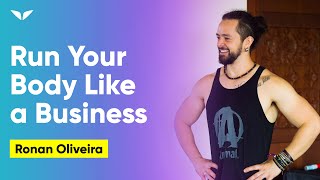
Ronan Oliveira argues you can improve your health without cutting out favorite foods. Instead, use incremental steps: time-restricted eating to reduce intake, remove liquid calories and processed foods, add vegetables to crowd out less healthy items, then track macros if needed. Intuitive eating comes last, once the basics stick.
Chapters
What if I told you that you don't need to cut carbs to improve your diet? I'll get less excited. You know, you don't need to make radical changes. There are other simpler improvements that you can do. And that's what I want to show you in this video. I was talking to a friend the other day, and she was a little nervous because she promised herself that she would improve her eating habits as soon as the lockdown finished and the time's coming. And I asked her, so what is the issue? She said, I don't feel ready to remove carbs from my nutrition. And that's a problem. You know, you don't need to remove carbs or remove all meat or remove all anything to improve your diet. And if you think this way, it's very unlikely that you make an improvement at all because it's too much of a big jump. So there are a couple of other smaller steps that I call rules of control that you can apply to implement to improve your current eating habits. And to think of that, let's start from the worst possible scenario. If you tell everyone in the Western world to eat whatever is tastier, whatever is cheaper, and whatever is more, more convenient, odds are that the majority of people will end with something that we call the Standard American Diet. The acronym is sad. And this is by design, this type of, this diet is designed to be the cheapest, the tastier and the most convenient thing, and is also the origin of all the health issues that we have later on. You know, if you want to feel sick and tired and age faster and die younger, that's the best way to go from there. Any improvement will be a better step in terms of eating nutrition. So now I want you to imagine that your body is like a big corporation, a multinational company, and all the foods that you eat are like people that work for it. And you want to get this company in shape and we need to work with less resources. And eventually some people will need to go, some food will need to go as well. But there are a couple of options that you can think of. First thing, one of the easiest rules of control is that you don't let anyone go. You don't fire anyone, but you just ask all your employees to work part time. And this will be more or less what intermittent fast fasting does. Instead of having food throughout the day, you just have part of the day while you have all your meals. And the interesting thing that we see from studies on intermittent fasting is that you don't need to Change the composition of foods. You know, if there are foods that you eat that are very nutritious and some others that are not so helpful. But if you only condense them in a small window of, you know, feeding window, we see weight loss, we see better blood glucose and insulin in the long term. And that is a whole guide. If you want to start on intermittent fasting that I've made before, I will leave the link right here so you can check it out, more details. But that's the first rule of control. That is something like I will only eat from 12pm to 8pm, let's say another approach that could also be a second step is to remove what is excess in terms of calories that don't really give you nutrition. You know, those foods that, you know that they are recurring things, they are not adding value to you and you know, they cause you not to feel good. There are a couple of excess calories that we know that they don't need to belong. In the company analogy, you know, imagine that you have some really toxic people. You know, they don't work, they don't like their job, they gossip and they sometimes are dishonest, but you know, they make you laugh, they are your friends, you don't want to let them go, you enjoy their company. The second step is to remove those things that are more obvious and this is what I'm talking about. You know, most of the times they are liquid calories that don't fill you up, don't give you any nutrition, but give you a lot of calories. And others are like hyper palatable types of foods that you have them recurrently and you know that they are not adding any value and more like damaging than being good to you. So these are the things that they are easy wins and we remove them first. The third step, the third rule of control will make the second one even easier. So this is the time that you don't let anyone else go, but you start hiring some people to the company, but you hire those fresh graduates, those people that are really motivated and their salary is also a little lower, but they generate a lot of results. And what I'm talking about are things like a lot of different vegetables and some fruit because they will not bring as much calories to your body, they will make you feel satiated for longer and they give you a lot of micronutrients that end up different cravings. So the more you start hiring these guys, the less space that will be left for some other less processed food that could also be advantageous to having lesser quantity in your diet. So this is a very interesting swap that you make. With these three rules of control, you can improve dramatically the quality of your eating habits. And then there are other rules that are a bit tougher but also can give you great benefits. And one of them is what we call macro tracking. You know, when people talk about calorie counting, it's like the next level when you divide calories into protein, carbohydrates and fat and you have goals for each one of them and you quantify your foods based on this. And this is more or less if you had that company and now you hire some consultants and you have a long term vision and you have goals and KPIs and you're measuring everyone's salaries and everyone the value that they add and you make decisions, decisions based on that. If you do this, you can have some really great food swaps, you know, because now you're quantifying everything and you can see, hey, maybe if I remove those nuts and seeds that are or decrease nuts and seeds, even though are very healthy, but they're also very costly and I bring some other fruits and vegetables, I am making further improvements in my diet. But this approach can also make you paranoid if you rely on it. So it's not something that is for everyone, it's something that gets easier once you apply the previous easier rules. And then finally there is a fifth one that we called intuitive eating. And it's a very funny thing because it's also the most natural way of eating. And that means getting cues, getting signals from your body to make wiser decisions in terms of eating only when you're hungry, not going past the point of satiation and prioritizing foods that are nurturing your body. And for some people this is very easy and very natural. But for some others, and for the majority of people, this is something that is very complicated. And this is the reason why we have epidemics around the world that are based on nutrition. Because most people, people try to listen to their bodies and everything that they hear is potato chips and java chip frappuccino. And so this is why I put this rule as the last one. Because it gets easier once you apply other previous ones. They're getting more in tune with the cues that your body offers you. Now I want to ask you what are the rules that you apply to your nutrition to make it better and which is the one that you think is the next level level for you at the moment? And if you like this Share this video with a friend that is also trying to improve their eating habits. And if you want a whole program that takes you by the hand into three months of developing a complete process of redesigning your nutrition for better quality of life, there is a program that is seriously amazing that I've done before, my whole family has done before, that we have in mindvalley that I want to leave a link for you in the description we call wildfit and I will leave the description for a master class so you can get some ideas for a one hour class on how to improve your nutrition right off the bat. But what if you want to cut carbohydrates, go low carb, or to cut all animal foods? These are things that you can do. It can be good for your health as well. But you need to think them through. It's not as easy as that. And this is why I want to take a little more time to talk about them. So in the next couple of videos I'm gonna talk about specific diets. There will be an upcoming video about the keto diet. What are the things that you need to think about if you want to give it a try? And also upcoming video about the vegan diet. What are the things that you need to plan in advance if you're cutting animal foods? And if you like videos like this, subscribe for this video. Hit the the bell button and you will know when the next video is released. I see you there.
More from Vishen






Brown Noise for Deep Focus and Concentration (Best with Headphones) | Gabriel Loynaz



Your Appointment With the Eternal | Guided Meditation with Michael Bernard Beckwith