44-Unit Majestic Apartments In Houston, TX With Wayne Courreges III, Apartment Syndication Expert
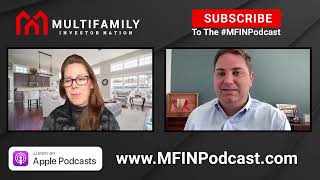
Podcast interview (Multifamily Investor Nation) with Wayne Courreges III discussing acquisition and business plan for Majestic Apartments (44 units) in the Galleria area of Houston. Closed October 2023; Wayne describes sourcing (brokered lead originally seen Jan 2023, re-engaged mid‑2023), due diligence (two-week inspection period, lease audit, city habitability check), seller financing (fixed seller note with negotiated requirement to invest $200,000 in capital improvements over first two years), capital raise and economics (75% LP / 25% GP equity split; LP preferred return 8%; cash waterfalls: 0–8% to LPs, 9–18% split 75/25 LP/GP, >18% split 50/50), GP fee schedule (acquisition fee 3% for this deal, asset management 3% for this deal, construction management fee 5%, KPI/loan-signing fee ~1%), and operational value‑adds (courtyard turf, gazebo/grill, bike rack, new washers/dryers, stairwell rehab). Wayne also summarizes his background (ex‑Marine, long tenure at CBRE, started investing 2019, went full‑time July 2023) and points listeners to CRPartners.com for passive-investor resources and investing.
Questions this video answers
October 2023
44 units
Galleria area, Houston, Texas
January 2023 (initial look), re‑engaged mid‑2023; offer around July/August 2023
1960s construction (noted in-discussion after initial '70s' comment)
Chapters
Foreign. Welcome to the Multifamily Investor Nation podcast. I'm your host, Whitney Elkins Hutton, director of investor education here@ passiveinvesting.com and I'm so excited to be joined today by Wayne Curry, just the third. Wayne, welcome to the show.
Hey, thanks for having me, Whitney.
Yes, yes, yes. But before we dive in, we are going to talk about Today Majestic Apartments, 44 units in Houston, Texas, specifically the Galleria area. But before we talk about that property, tell us a little bit about yourself, how you got into multi family and where you're at today.
Yeah, so I've been in the industry be 17 years in June. So just high level one in the Marine Corps 2003 to 2007 got out, was given the opportunity to work with Fortune 125 company CBRE where I was there with them for 16 years. I was in Washington D.C. houston, Austin, then back to Houston. But I started our real estate investment company in 2019, focused on multifamily. So for a couple years there, a few years I was working, you know, focusing on taking care of our clients with CBRE and doing that and then working as well on, on our real estate investments. Mostly weekends and nights and stuff. You know, I always say that the 9 to 5 paid for the 5 to 9, but it were was getting to a point where our portfolio was getting sizable where it was hard to do both. And so in July of 2023 went all in. So I know your show talks with a lot of operators and happy to go if you know if there's any time to talk about working the W2 and also doing your syndication business because it is a lot of work but it can be done and it can be scaled at a point where at some point you can have that smooth transition. So it's a little bit about what we're doing.
Awesome, awesome. Well, I'm so excited to tap into your knowledge and expertise here today. So let's dive in. Majestic Apartments, 44 units in Houston, Texas. Let's start off. When did you close this property and what was the purchase price?
Yeah, so we closed in October of 2023 with the purchase price. Because it's a Texas non disclosure state. I won't say exactly what the purchase price was, but it was about a million less than the tax appraised value. And I would say if you're ranging from 0 to 5, 5 to 10 million, you know, 5 million, it would be under that 5 million spot. So we, we bought this property. Typically we buy 100 units plus. That's More of our portfolio and our go to. But we have a property about a mile away that's 101 units. And so when we were approached about Majestic, that was an opportunity to have some efficiency of scales and really, you know, provide our investors and ourselves an opportunity to get at a good price but also have that operational efficiencies between properties.
Excellent. Well, I mean it kind of seems like a no brainer. Right. Like we already have the systems which I'm sure is part of the, you know, how you were able to scale. Right. Like your multi family, you know, while still working. But before we tackle that question, let's you know, kind of back up the time clock a little bit. So you closed in October. When did you find this deal and how did, how did you find it?
Yeah, so we approach finding deals two ways. One is going to the blue ocean route, finding off market opportunities through, you know, Secretary of state websites, appraisal district, you know, finding true owners, finding their numbers, you know, texting. And we've that 101 units I told you about in the gallery that we just, that we manage along with Majestic. That one was bought strictly from a text to a seller. That we grew that relationship over two years and they eventually sold it with us. This one was more of the broker relationship. And you know, as time initially when you, when people get into this space, you know, brokers send deals to people that really sometimes you just need a question like why is it coming to me? Like why am I getting this deal? Um, and you know, you sort of talking yourself out of like why this deal just may not work. But as time goes on when you show that you can close deals and that you're good to work with, that you take care of the broker. There's, you know, there's, I don't say collaboration, teamwork, et cetera, but those relationships are built. Then you start getting into deals that come your way and you don't have to be as pessimistic like why are they sending me this deal? Why didn't they send it to, you know, these other people that they have worked with previously? So that's sort of where we're coming at with this deal is it was not on market though it probably was distributed out to many buyers or potential buyers through this broker. But it came to us I think in January of 23 when we first looked at it. The property management company was the same management company that was doing our other property. And the price that they were looking for at that point didn't really fit our model or fit our underwriting. And then it came back like six months later, seven months later, that we started really looking at it again and seeing, okay, what efficiencies of scale can we use to find an opportunity? It was, you know, the, the property itself was in good shape. It was, you know, really well leased, had great Google reviews. And so even though it was smaller, I was becoming more open minded to being like, okay, well this could be a really good opportunity.
So what was the vintage of the property?
So, great question. It is a 70s property.
Okay, and then what's your overarching business plan thought process with this? Like a value add?
Yeah, so it was already cash flow. Like we've already sent our, like we bought in October, we sent our first distribution February. And so we'll continue doing the distributions. This was, this is one that the prior owner, you know, took really good care of. I think the prior management company did, you know, an overall good job as well, bringing in the right tenants or residents and you know, keeping with good residents that are good paying and such. So it's more for us, it's turning, you know, I always like to think of properties sort of like ships and so you just turn in the ship direction slowly. So maybe over two to three years we're trying to get those rents that were way below market rents to, to market. Right. But we want to save the community. There are some properties that I have bought that like, man, I don't want to save this community because this is not a good place for children and people to be living in. So that's a different business plan. This one was, there's already a great community here. There's already, you know, they, they know each other. It almost has like that Melrose Place feel to it. Right. And so, you know, they're paying rent on time and they're taking care of the property and they're just overall good citizens, good people. Then it's like, you know, let's move the needle more slowly so we're not having a higher vacancy, having that turn, etc. So, so the business plan is just to continue the operational aspect of, you know, as renewals happen. You know, there will obviously be some rental increases, but there will be, when there's turns, we'll do some renovations. But I'm not one of those owners who's like, hey, let's just raise rents. You know, even if we're way below market, like, let's just raise rents. I mean that, that's doable and it's possible, but There's a perception aspect, and the perception aspect is that you're going in and you're adding value to the property as the new owner and adding amenities or doing things that the property needs. So for us, you know, when you walk in, you think of it's like four buildings sort of in a square and then you have a courtyard in the middle. It was pretty barren. Like it was a lot of weeds, like grass. There was no. There was some charcoal grills. There was nothing to really excite you about the amenities. So what we did is there was a lot of areas that had like rocks and stuff. We put in some green turf. We want to make it low cost operationally in the future. So we spent money up front on the turf to add some greenery. But then we also added a bike rack. We did a nice gazebo and the gazebo's from Costco and we put the, you know, gazebo up and then did a grill area. One of the complaints too was like the washer and dryers, you know, they were having issues with the maintenance. So we bought that contract out and put our own washer and dryers in and really try to just bring up the property from an amenity standpoint. The stairwells were all rusted. Like the railings was pretty rough. So we made that as like a focal point where, you know, cleaned them up, painted them black. And so now it's just a lot cleaner and nicer. It has more amenities then when we can start pushing rents over that, you know, two year period or so. It's like they can something's tangible, they're paying a little bit more, but they now have a nice seating area and a grill area. They don't have to worry about is the washer not going to be working today because, you know, of just poor quality washer and dryers that were there.
So I hear you well. So at what point in time did you walk this property? So it sounded like you saw you found it in January. That was the first introduction to it. And then six months later you had second. Kind of like you, you know, hey, are you sure you don't want this property? When did you decided to walk the property and put in an offer?
I think it's probably like July, August time frame. We put in the offer, we negotiated, you know, good terms. It, it was nice that the seller was really, you know, like we got on a call with the seller and the broker and it was a very good cordial relationship from the beginning. They were a large REIT and we're looking to offload this property because their concentration in Houston, they only had this one property in 44 units. And those that have like smaller properties, it's hard to maintain and you know, from, and really cash flow, that type of property, when you have, you don't have the efficiencies. So when they sold it, we did negotiation of seller financing. So there was a piece to this that was unique in that this property was free and clear on cash. So we were able to negotiate a fixed seller financing deal. And so when that started happening like July, August, we started looking at that. And again, I'm always trying to find ways for reasons not to buy a property. You know, it just, I, I really try, like I'll even underwrite properties and I'm like, okay, well maybe I need to be more conservative and stuff. And at some point you gotta, can't stay on the sidelines forever. You gotta jump in right there's, there is that piece. But as I was going through this, I was like, man, this really is a great asset. Good bones. And I said it was a 70s properties, but it's actually a 60s property. And typically I wouldn't buy a 60s property. But the piping was PVC. Normally in 60s you have cast iron piping like PVC piping. The roofs are in great shape. H Vacs were in good shape. They were all sub metered or electrical boxes, no stablock breakers or Federal Pacific. So there were a lot of things that were like, yes, it's a 60s product, but it has 70s 80s type, mechanical, electrical, plumbing, type equipment. So.
Well, so let's talk about the offer and thank you for you know, touching on the due diligence and we'll kind of, you know, wrap that up. But I want to make sure that we understand. How did you get to the offer? You know, were you the only group looking at it? If you were, how did you structure your deal? You know, how many, how many days for due diligence closing? Any extensions here?
Yeah, sure. So typically our, I mean it's, it's pretty cookie cutter for us. I mean we have like a two page letter of intent and you know we, a lot of people go in with this and I, when I first got started like 5 years looking at properties, I sent you know, letter of intents that were multiple pages and really that just, that's, there's a time and place for that. That's during the contract purchase, selling agreement. But for the loi, it's just high level, you know, not to scare anybody away. Or anything, you know, let's just get to the deal points. So the deal points obviously was purchase price, seller financing. Those are things that were already worked out before we even did the letter of intent. Because I was talking with the broker and I told you we had a call with the seller, which is very unique normally. And I don't always recommend going having those conversations with the seller. Let the broker be that middle person because sometimes emotions and you know, it just let the broker do their job. Right. But in this case, that's how we did it. So we just did the offer. You know, of course there's earnest money. This is a deposit. There's usually two weeks of due diligence before the money became hard. Once the money becomes hard, you know, it's. Unless they, the seller runs the property in the ground or doesn't do what they're supposed to, there's environmental or something, then we could get that money back. But when it's hard, it's risk. You know, it's just part of this business. And you know, we did our due diligence for two weeks. The extensions on the LOI, I believe, were negotiated at 10,000 each extension. So we would have like a.
What was the original earnest money then?
Yeah, so usually we look for like 1% of the, the purchase price is usually a good rule of thumb. And then of that 1% that gets you, you know, 60 days to close. And then, you know, every deal is going to be a little different. But on this one, I recall I did 10,000, I think I initially offered, did 5,000 per extension. I think it went up to 10,000. Pretty sure I went to 10,000 per extension. We did use those extensions, you know, last year. Raising capital was extremely tough. And what I find too is like some of the times with these smaller properties, it's even harder to raise capital for because they're not, you know, they're not the 100, 200 plus units, you know, with all these great, fantastic amenities. So we did use those extensions. We, we closed and everything was fine. But anyway, so that's that on the, the letter of intent, it's just, you know, purchase price sort of earnest money. That's always important. Putting your best foot forward, usually 1% of purchase price and then, and then your inspection period and you know, everything overall, I mean, knock on wood, it went really smooth. I mean, going back to our due diligence during our period, we, we have, you know, property management review the underwriting, make sure that they're comfortable with executing, you know, they're they're in this process early on. But then we pay electrical, plumbing, roof H Vac, you know, we do all the, the due diligence, run the cameras through all the, the, the plumbing lines, etc. So that's all part of it. So that's in that two week period. And then you also have your lease audits as well. So a lot, a lot happens once you get that deal signed from a letter of intent and then that contract that gets you into due diligence and.
Then anything pop up on the financial due diligence like the lease audits, you know, where, where all the rents in line, where all the tenants paying.
Yeah. So one really nice thing, you know, not all deals are like this. Right. But you know, all the tenants were paying online. Um, and so that was super nice because it was easy to see and track that like one, there wasn't an on site manager and that manager previously had trained or gotten their residents to fully utilize the online system. So that was nice. They also had everything in a digital format. So a lot of times, you know, you got your physical paper leases, they didn't, they had everything online. So we went through it again. It was, I. From a transparency standpoint, I think the, the seller did a really great job of, you know, being transparent with, with everything. And then I think the management company, you know, from an organization standpoint, they made, they made it easier. Now we do have a huge checklist of all the things that we need to see. Typically in the last three years. We'll want to see all the financials, we'll want to see, you know, delinquency reports, obviously the T12, but we'll want to see utility billings and obviously the leases and really just don't. And it's nothing like personal. You know, it's not like we, we're trying to say they're liars, but you got to trust and verify and because you don't want any surprises. And one other thing too, and it wasn't at this property, it was another property is checking with the city of Houston to ensure there's no habit, habitability concerns. Like there wasn't a previous inspection that was done that they haven't completed or fulfilled. So that's another item. During due diligence, it's just important to make sure there's nothing outstanding because those can definitely eat into your capital that you didn't plan for. If you didn't check to see if the city, you know, has a outstanding code violation.
And you know, that's Something that's not brought up often enough here. But I, I'm curious, whenever you say habitability, did you have, you know, tenants that were on some sort of affordable housing program or something like that? Is that why they were involved?
No. So in the city of Houston, most cities, they'll have, they won't have annual inspections, but usually like every three to five years they'll have an inspection and.
Got it.
Yep. And that inspection that happens isn't really more so about like deficiencies today. Like maybe your stairwell, for example, is in, you know, overall good condition, but they start seeing rust spots and they're like, okay, well this over the next five years can accelerate and cause us. Cause you, you know, cause issues or safety concerns. So we're going to cite it and we want it fixed now because over the next five years they may not come back. So, you know, so that's another thing too, to just be considerate of. Usually the bigger ticket items, what I've been noticing is like the landings of the stairwell and then if you see the little pinpoint holes in and the stairwell metal framing, you know, those are type of things that, you know, you just do. It's the right thing to do to address it so it doesn't become a long term, more expensive issue down the road. But those repairs, especially if you got to get a structural engineer involved, you know, those are things that, you know, the city may require. And if that inspection was done, one, they should have disclosed that to you. But if they didn't, again, don't assume and don't expect that they're always going to do the right thing. Call the city, go to the website, just make sure there's nothing outstanding on that piece.
Great point, great point. Now I want to make sure we have plenty of time to get through the, you know, few other questions that I have here. So let's dive into the financing. You said you did seller financing on the deal and the seller had the, it was 100% paid off property. So I'm curious, how did you structure this? Yeah.
So first off, deals happen in any markets anytime, right? So if you have the mindset of like, hey, there's no good deals out there, then there's not going to be any good deals. There's not going to be able creative thinking, etc. So that's where this, you know, creative thinking, creative financing, like, obviously the seller would have preferred to do free and clear, you know, and just had a new loan. And, you know, they, they don't have to worry about the property any, any further. But with the, the hike in interest rates and because they're wanting to close and we wanted to buy, you know, it, you, you make those creative opportunities when you have the mindset like, hey, there's good deals, we can make this work. So with that said, that was not initially on the table with seller financing, but we, we brought it up, we had those conversations and we got it to really, it, it makes sense for them too because they, even though we bought it less than what they purchased it for, and then you know, substantially off the tax appraised value, they're still getting, you know, six figure interest payments for the next five years. So when you collectively look at that, they're still making a return on their investment. Right. And so talking with the seller and be like, hey, you know, there's, I mean, I didn't have to do that. They were very sophisticated and they got it. But for some people who maybe are dealing with more mom and pop, maybe they own the property, but there's, there won't be the tax hit they won for one piece. You know, they still have the earnest money and you know, the property, you know, continuing to do rents, there's still a physical asset. So if the loan defaulted, there's still an asset that protects them, you know, that they could protect their investment or their, their loan. The other thing too is we did one of the deal points on that loan was that we needed to put at least $200,000 into capital improvements over the first two years. And so that was a little negotiation because I believe they wanted like 250 upfront or maybe it was like 280, but we got it down to 200,000 and so, but we've done 80,000 of that so far. We've done, I mentioned the gazebo and the bike area, laundry done a lot of the painting and now it's just like really the interior unit renovations. But anyway, from their standpoint, I don't think they were, what they were trying to do by making that negotiation point, and I think it was really smart of them is to ensure that we as the new owners are improving the asset. That, you know, even if we were to default and we don't have any plans to, the DSER is very healthy, et cetera. But they don't know us. They don't know if we're good operators, bad, you know, they have no idea. So they're protecting their asset and their, you know, their collateral for the, the loan. Right.
So, well, if you did default, you've already Pushed the value of the property for them. Yeah, right.
Yeah.
And that seems like it could be a good negotiation point for people that are listening that are trying to figure out, hey, how do I get somebody right now in this market to entertain a seller financ. Right. You've got, you know, that clause you could put in there that they're automatically pushing value. There's even the. I want to bring up the point that, you know, by the seller taking a payment distributed over a period of time can help them reduce their taxes. Right. So, you know, because they're not getting one lump sum, especially if they have the property paid off in full.
Absolutely. Yeah. So I think all really worked out well for them and worked out well for us. It was a win. Win. It is hard. I like, I, I don't see a lot of like the larger multi family where they own it free and clear. That's one of the, you know, benefits of multifamily is you can refinance. You get cat. You know, like there's they're. But they are out there. But what I do see more in this market, Whitney, is more loan assumptions. So we're looking at a deal right now that, you know, has, you know, below 4% rate with five years left. And that's a loan assumption. So, you know, again, you're just looking at. Yeah, the interest rates are high, but how do you, you know, if it. Well, when I say high, historically they're not that high. It's just we were so used and spoiled with such low, low rates that, you know, you know, we'll see if it ever what happens in the future. But going back to, if you have the mindset that you can find deals and you can be creative and you can get deals that are cash flowing to your investors, make them happy to, to continue growing altogether. You know, there, there are those opportunities in any market.
Awesome. Well, I want to move on to the capital raise, you know, as we wrap up here. How did you structure this deal with your limited partners and then also with the other general partners? Because we were talking before the show, there was a couple other general partners in this deal.
Yeah, for sure. So we do. Majority of our deals are 75% limited partners, 25% US and how we structured is the first 8%. Every deal is going to be a little different potentially. But for this deal, what's been consistent is for the first 8%, it's 100% our limited partners. So the first 8% that the property produces in cash after net operating income goes to Our investors and then anything from 9 to 18% is split 75% limited partners, 25% US and then anything over 18% is split 50, 50. So from a limited partner sort of how it's structured, it really, in my opinion, aligns it really well because my goal is to make our limited partners as much money so that they can feel confident telling their friends, etc. And reinvest in other deals. So that's that piece. It also makes the carrot. So I make you as much money as I can through the property, then I'll benefit from that after I'm hitting those, those returns. Right. So that's how it sort of, that is how it's structured on our limited partner piece on the general partner side. So it's really split being on what, you know, if you think of the pie, so say it's 25 of the general partnership and of that 25, you think of it as a 100 pie. So we're just looking at 100 of the pie of that. Typically what I would see is, you know, if you're signing on the loan, one, if you're finding the deal, signing on the loan, you know, that could be 10 each. So you find the deal, maybe that's 10% of the deal from a GP stack, maybe another 10 to 15% for the liquidity net worth. You know, that takes care of, you know, that'd be 25% of the deal, right? There's finding the deal, underwriting, getting under contract and then you got your net worth, liquidity, possibly your earnest, you know, somebody, if you don't have the earnest money, bringing in someone for that, then we typically see about 30% allocated towards, you know, raising capital. The biggest thing on this and where I think people just need to be very careful of is that you're not able to pay capital raisers and just have the capital raisers go off in the sunset. So we have weekly asset management calls and our GP members are on those calls weekly. So they are. And you know, we do a. The management company keeps roll know, so that way there's proper paperwork and stuff. But usually about 30% of that GP is allocated to capital raisers. Then you have the asset management piece as well, which is 20, 25%. When you're first starting out with me though, like your piece, you may have found a deal and your piece at the end of the day may, you may have found this great deal, but you only own like 8 to 10% of the GP for that, right? Because you had to bring in Other people, you're the quarterback, you had to bring in other people to get you to close that deal. Over time though, we are owning more of that pie and I think that's the goal. You know, I love the team approach. I think I welcome those code GP members out there that are wanting to partner with a, an experienced operator and a group like us, like would love to welcome those calls and passive investors, etc. But over time too, like we will have the net worth to sign on the loan. Like for this particular deal we had the net worth, liquidity to sign on the loan. We didn't have to bring in outside people. Right. For that piece, you know, we paid the earnest deposit. I didn't have to pay someone else to bring in their earnest deposit money so we can get the deal under contract. You know, we found the deal as well, so we owned a little bit more of that where we were looking more for the help. And we're very active asset managers. We don't raise capital for other people's deals that we're not involved with on the asset management and just heavy boots on the ground. We don't do fun to fund models or anything. Like we, we're active, active operators. So when it comes to like the capital investor or capital partners instead of them joining, but then they get to participate on the asset management side is, is pretty key, you know, for them and us. And then as we grow, you know, we'll continue to, you know, try to own more of that GP split from a CR partner standpoint.
All right, just a couple more questions here. You know what on the GP side of things, what fees did you charge the deal?
Yeah, so for the acquisition fee for this one was 3% because of the purchase price. Typically it's, we range it from 2 to 2.25% of the purchase price and then we'll have typically a KP fee of 1% for whoever's willing to, you know, sign on the loan and have that liquidity or that exposure. Asset management ongoing is 3% as well. For this deal, again it's just because the, it's a small, you know, 44 unit property. So we did that, but typically we do 2%. Anything over 100 units will typically do 2%. Construction management fee, just us managing the renovations, interior tracking expenses, insurance lien waivers, payments, etc is 5% of the construction management side of that. And that's it. So you know, it, it's really, there's a lot of time. So I do this full time. I don't have Any other side job anymore. Like, this is, this is full time. So there are months where I won't go without salary or anything until we find that property. And in fact, like, I'm about to put a hundred thousand into earnest money that is completely risk, completely at risk if we decide not to close that. A hundred thousand. Mind you, I'm not getting any money, you know, unless I close a deal and I'm paying out a hundred thousand for the opportunity to have a property that may get to the close line. Like, there's a lot of risk there. So I'm of the believer, you know, when you hear the 2, 3% acquisition fee, and it's like, oh, that's a lot of money. Really, it's not a whole lot of money. Because if they are, if they have an operation like we do, where you have employees, you have lights, I'm in an office, you have a professional investor portal, you have the money. That's risk that we're putting up before we go to our passive investors. You know, we are paying for the due diligence costs. We pay for the due diligence costs. And if we decide to walk away because there's plumbing issues or roof issues, that's potentially 15,000 for all the inspections to be done correctly. Phase one, environmental. So there's a lot of expenses that goes on for that opportunity to get to the clothesline. And then you get to the clothesline. Yes. It's like, oh, that's a nice payday. It reimburses me for like the last four months or five months of like, searching and having that risk of that income to survive to the next six, seven months. My mindset coach says don't say survive, thrive for the next five to six months. So I'm, I'm shifting from survive to thrive on that mind. So.
Well, Wayne, I just want to wrap us up here. What did you find easy during this process that you thought was going to be harder, and then what did you find harder that actually you thought was going to be a little bit easier?
Yeah. So great question. It gets easier every time we do it. Like the systems in place, the contractors, the vendors, especially if you're focusing on a city or an msa, you know, for us, we're heavily focused on the Texas triangle. So Dallas, Austin, Houston, San Antonio, and then even on that Texas triangle, we really focus a lot on Houston. I love Houston. And so. But in Houston, you know, we have a lot of our vendor partners. We've got our solid management team. We have people a lot of our investors are there. So it gets easier when you are focused on an area and you've done multiple deals, the broker relationships come easier, the lenders, etc. So that, that does help and does become easier on this. I mean by that point I think, I mean, oh, I think this play our fourth or fifth property, maybe not all multi family, we've done RV storage and some retail and a builder rent community. But your systems are in place by the time you're, you know, your third, fourth, fifth, sixth property. On the hard part, I would say, you know, the seller has a responsibility to, you know, take care of their investors and you know, whatever their returns or whatever they need to get out of the deal. Right. And we have ours. And sometimes when sellers and buyers are communicating directly, it can get tense. Start off really nice and sweet in the beginning, but as the deal moves forward there's some, maybe not disagreement like there was no like major disagreements, but there are things that like hey, things come up, right. And you have those conversations. Unfortunately for us, you know, it went smooth. But I could see the point where that relationship can sour which impacts the deal to get closing. That's why if you have a broker and they are the ones bringing the deal, let them be the voice between the seller and the buyer. So that would be one of my lessons learned is I didn't really, if I'm doing it again, I think it would be better for me to just continue going through the broker, not initially getting on that call. I mean the seller wanted that initial call to make sure I was legit, understand my background, liquidity, net worth and all. I respect that. But as time goes on after that, once the sale agreement, let the broker professional who can handle different personalities be that person. Right. So anyway, I didn't really think about the question before you asked it, but as a double mind, let the broker do their job. That's what they're being paid for and really what they, what they're good at. Right. They're, they're good at being the therapist on both sides.
Wayne, thank you so much for sharing your knowledge and expertise with us here. People want to hear more about you and find you. Where can they do so?
Yeah. So I'm extremely passionate about educating passive investors. So go to creipartners.com we have an investor passive investor coaching program, a lot of free blogs and podcasts etc but you can also invest with us by going to CR partners.com click invest with us and, and have a conversation with our team. If you are a co sponsor looking to partner. I mean, it's a team sport. You know, definitely, you know, go to that website, CR partners.com that will have our contact information. And let's stay in touch. But, Winnie, thank you so much for your time. It's an honor to be on this podcast and sharing our experience. It was a hard year to get any transactions done. And so, you know, just thinking outside the box, creative and, you know, working with multiple people to get to closing, you know, it's fun, but it can be hard work. And I'm really proud of what we did last year.
Awesome. Well, Wayne, thank you so much for your time here today. And we look forward to hearing about your future deals.
Absolutely. Winning. Thank you so much.
More from Wayne

September 2026 Meetup: Investing Ahead of Growth: The Bryan–College Station Opportunity





May 2026 Meetup - Apartment Complexes & Passive Investors: Opportunities & Risks


March 2026 Meetup - Reading the Market: Economic Indicators Every Investor Should Know


February 2026 Meetup - Syndication 101: How CREI Partners Structures Deals for Investors

Build-to-Rent (BTR) Communities Explained: Why Investors Are Paying Attention