Andrew Lucas - The Untold Untold Stories of Real Estate Investing - Raising Capital during Covid 19
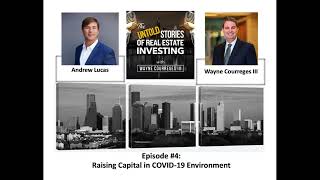
Podcast interview (host Wayne Courreges III) with Andrew Lucas, Director of Capital Markets at Tryon Properties. Lucas describes his career (brokerage → Wilshire → Tryon), Tryon’s capital-raising platform and investor mix (about 450 mostly high-net-worth investors plus some family offices), and that Tryon is on its second fund which pools investor capital into value-add multifamily acquisitions. He explains fund mechanics (early investors take a slightly higher preferred return; first closers are more ‘blind’ but after one year the fund already held five properties and had three more under contract), target markets (East Bay/greater San Francisco suburbs, western suburbs of Portland; previously active in San Diego and L.A.; entering Colorado), typical asset profile (50–300 units, value-add renovation play: exterior/interior renovations, vinyl “wood” floors, stainless appliances, in‑unit washers, repurposed amenity spaces like a “cardio lab” with Peloton), underwriting and performance (recent underwriting targets in the mid-teens IRR; historical average IRR cited over 30% driven by earlier vintages), COVID-era capital strategy (increased communication, more frequent reporting, engaging seven‑figure check writers and family offices, continued buying opportunistically), operating metrics (collections ~90%, occupancies held near pre‑COVID levels), and advice for passive investors (ask for references, third‑party fund accounting/audits, track record, responsiveness). Contact: Tryon Properties website and LinkedIn.
Chapters
Welcome to the Untold Stories of Real Estate Investing hosted by Wayne Courageous iii. A place where active and passive investors come to hear the good, bad and ugly of real estate investing. Our guests consist of experienced operators and investors who want others to succeed by sharing their stories. If you're looking to syndicate deals or grow your wealth passively in real estate, you've come to the right show. It's now time to sit back, take mental notes and enjoy next episode of the Untold Stories of Real Estate Investing.
Welcome to the Untold Stories of Real Estate Investing. This is your host, Wayne Courageous. For our next episode, I'm excited to have Andrew Lucas with Trion Properties. Based out of Los Angeles, Tryon Properties has closed over $400 million with an average internal rate of return to investors at over 30% through increasing net operating income by hands on property management and and renovating properties to achieve aggressive lease ups. Andrew is the director of capital markets with Tryon, responsible for sourcing new investors and maintaining relationships with current investors. He has an extensive background in finance, investor relations and both commercial and residential real estate. Welcome to the show. Andrew. How are you doing?
Well, thank you. Wayne. You're down in, is it in Dallas or Houston?
So I'm in Austin. I'm in the capital city of Texas. Yeah. So I know we met in Dallas back in March, but I grew up here in Austin and been, I was in Washington D.C. for a while, Houston and now back in my hometown. So it's been been pretty nice. But I appreciate your time. I'm excited. I feel like this will add a lot of value, especially with your experience in the capital markets and you know, you've got a lot of experience with residential and commercial and you know, we also share alma mater with Chapel Hill unc, so go Tar Heels. So I know we've talked about that.
Yeah. Matt Brown's bringing the football team back. We have a top five recruiting class apparently.
Yeah. And then with me bleeding or University of Texas here in Austin, I'm excited to have Mack Brown there in Chapel Hill. So. But Andrew, tell us more about yourself. And so your real estate journey. You've done, you've done a lot in your career and just give the listeners a little bit more background on yourself.
Sure. So I graduated from North Carolina in 2004 and did some sports. I did some traveling right after college but then went to work for a large national home builder and Ryan Holmes. They're one of the largest home builders in the US Primarily focused in the mid Atlantic and they had their own in House mortgage company. So I was originating purchase mortgages for single family homes in kind of the eastern, the Mid Atlantic and Lower Delaware and Ocean City, Maryland area. So it's a great first job. I got to live in a little beach town but had got to have a corporate career, was there for about three and a half years and went back to bed. University of Baltimore and got an MBA, finished that in 2010 and went to moved out to Los Angeles. It wasn't the most well thought out decision but my brother was out here. I had kind of a bit of a network out here already. He moved out to LA in 2010 and got linked up with Colliers International. I joined one of the highest producing multifamily brokerage teams in the LA market and that's really how I got the move into commercial real estate. It took me going back to school and getting an MBA to realize I'm really just a salesman so probably could have better allocated that time and money but fortunately it all worked out. So yeah, I was at Colliers from 2010 for about two and a half years, had a good experience, was able to close some decent sized deals and kind of got to the point I was working within a team structure and I was kind of at the point where I needed to really branch out on my own or I needed to make a move and create more upside for myself, get out from the team environment I was in. At that point I was actually sourcing a bridge loan for a client and that led me to speak with a company, Wilshire Finance Partners. They were a private money bridge lender. They had historically basically originated loans and sold them off as first trustee and they were in the process of launching and then ultimately trying to grow to real estate debt funds. So they were looking for somebody with, you know, real estate experience help start raising money for them through, you know, high net worth individuals, registered investment advisors. So that's how I made the move from the brokerage side of the business to the capital capital raising side of the business. And that was ended up being a great move. You know, it's funny how things work out. I really enjoy, you know, not ultimately it's sales, but really the education process, understand asking the questions as to what are you looking for in investment and then ultimately if you know what you're offering is what they're seeking, really trying to find that need and that's the fun process of finding a solution for somebody's investment need. So I was in Wilshire for 2013 till August 2016 and had a great Experience there was a very well run company but it was more of a slow growth company. Don't make a mistake. And then actually I got reached out to by a recruiter for this position at Tryon Properties. And back when I was a broker I was familiar with Tryon, I had never transacted with them but I felt like I was in a unique position to kind of vet them as a company. And I knew many people that were friends with Max and Mitch and two co founders and you know, I'd also toyed with the idea of you know, potentially trying to start my own shop and I had a young daughter at the time so kind of made the decision I wasn't ready to take on the risk. And you know my, my conclusion was if I'm not going to do it myself, I would have link up with entrepreneur guys. They're high growth, you know, looking to conquer the world. And you know Max and Max Sharkansky and Mitch Pasco are the two partners or during the early 40s. They started try on when they were in their mid-20s and really demonstrated that progressive growth. It had been to the point where I joined really an organic growth. It started off when they launched the company in 2006. Friends and family, money friends began to have family, family began to have introduced their friends and that's really how the investor network built out. And then when I joined in 2016 we really started trying to make a robust investor relations and capital raising platform. And we've been able to almost double our investor base in the last couple of years. Right now we have about 450 investors and they're primarily made up of your high net worth individuals. We have a lot of your dentists, your doctors, lawyers, accountants, got a big footprint in the Bay area of people that work in tech. They're your individuals that want to allocate a couple hundred thousand dollars to commercial real estate but they don't have really the time or the expertise to go out and buy a building and manage it themselves. And through our fortunately we've had a pretty strong track record. So we've also been able to establish relationships with a handful of family offices and institutions. So oftentimes the way we capitalize our deals is we are on our second fund now and really our fund is our vehicle. We try to steer our high net worth individuals into. So if you're, you know, you're just somebody that wants to allocate a few hundred thousand dollars to high growth commercial real estate, in our opinion our funds are really strong option because it gives you diversification. You know, it spreads your risk over a pool of assets, but offers the same, really the same upside. And then so oftentimes when we buy deals, we allocate money from them and then we'll raise money directly into the deal from one or two family offices.
Or hitting on that point, the fund. So when investors put in money into a fund, they don't know exactly what property is going to be bought. Correct with that.
So the answer to that is yes and no. So we raise and allocate. So if you're one of the first investors into the fund, it will be blind. You will not. You know, we have a very narrow definition of what we can buy. So we can only buy value add multifamily in a handful of markets. But now we're about a year into our fund. So we do have investments in five properties and we're under contract on three more. So you can actually, you have the ability to look at what is currently in the fund and what will be going into the fund with the next three acquisitions. So yeah, the way we try to compensate for that is we try to incentivize earlier investors with a slightly higher preferred return. So, you know, create an incentive to come in early because when you do come in later, there is that benefit of looking under the hood of what you're investing in. But again, a lot of our fund investors are investors that have been with us for years and years and years. So they have a comfort level. They've had investments come full circle. They've seen the way we report kind of the narrow scope of the deal that conducive to that company.
Yeah, there's that trust and that experience, especially if you are averaging 30% IRR over the, over the term of investment. So it makes people want to get back.
So historically, if you look at our tracker, when we have exceeded 30% currently in the last couple years, we have not been underwriting to those returns. That would be a bit excessive. So in the current environment, we typically are underwriting to a mid teens return. If you look at our chart here, we had a very active downturn in 2009, 2003, 2012. We hit some pretty big numbers that weight that average return up.
Are you all primarily focused in California? Since being based out of Los Angeles? What are your target markets and how do you come up with.
Yeah, so our markets historically have been San Diego, Louisiana, the Bay Area and Greater Portland, Oregon. And we are about to enter the Colorado market. So in the past couple years we have been most active in the East Bay and the western suburbs of Portland, Oregon. San Diego has been tough, Louisiana's been tough, but we've actually been the largest buyer on a transaction basis in the greater Portland Oregon market over the past three or four years. We like the kind of this first spring suburbs. So we've been most active in the western burbs of Portland to the Tiger Beaverton submarket and then the East Bay. So not San Francisco, not San Jose, but really that quarter between Oakland and Oakland and San Jose that has historically been, you know, a bit more blue collar. But there's been a craziness of rents in the Bay Area. There's been a lot of high quality residents playing your traditional markets, your San Francisco's and your San Jose, your Silicon Valleys. And that's put a lot of upward pressure on rents in, in the East Bay there's more working class suburbs. And then what we try to do is we try to identify properties that have not participated in the rental increases in the submarket. So oftentimes that's your owners that have owned the property 15 plus years, in some cases maybe a parent had passed away. Now their children are managing the property. They may not live locally or be a professional real estate operator. So they also own the property at a very low basis. So you know, in a lot of cases they really haven't had the need or the want or really reason to go in and renovate it and really optimize the property. So when we look for value add attributes like that, when we buy assets, we typically want 50 to about 300 units. We look to increase the value through pretty significant renovations. Typically we'll do full exterior renovations. We'll try to a lot of times these 70s properties, kind of like a mud brown exterior to them. So if you're driving past the property, it won't really catch your eye. So we try to do a two tone paint color, improve the signage, oftentimes with the neon sign that with a cool shape design. Then we'll renovate the interiors, put in a vinyl floor that looks like hardwood, stainless steel appliances, redo the bathrooms, we'll redo the common areas in some of the properties. We'll put in unit washer dryers, which will then enable us to repurpose the laundry facilities and try some of them. You can't put in a full gym, but we'll put in what we call like a cardio lab, where we'll have a peloton, elliptical, a treadmill to really try to maximize the, you know, the resident experience. And, you know, we're not competing with those brand new class A properties, but we're really creating the middle ground where you may not want to pay $3,000 for that new class A property, but you're willing to pay a couple hundred dollars more a month. Or a renovated kitchen, a renovated bathroom, and the ability to run a power plant.
Yeah, I like the peloton idea. Definitely getting people to get engaged with the property and feeling like they have a lot of the amenities and the nicer properties. Yeah.
In one of our properties in San Leandro, we actually had a single file line in the mornings waiting for the peloton. So we bought another peloton. So, yeah, you know, there's weird things. You know, when we bought it, you just, you know, is this a waste of money? Will anyone use it? Kind of one of those things. You see how people react and if it works yet.
So what have you seen as some of the biggest hurdles to continue raising capital from investors and securing debt from lenders during this COVID 19 time?
Yeah, you know, I think initially, what was it like? March, I may not be wrong, March 9th or 12th, whatever. It was like the NBA shut down, the stock market tanked, and I mean, we all thought we were losing our jobs. So that was pretty scary. And I think initially, you know, whenever there's anything that significant that occurs, you know, everyone's first reaction is fear. And, you know, for the first week or so, I would say that kind of took over and, you know, we weren't generating a ton of new investment leads. But then, you know, I think one of the things we focused on as a company and I think, you know, a lot of some of the other real estate companies out there that have strong communication, you know, we. The last thing we wanted to do is go into a hole and alienate our investors. And not just our investors, but our residents, our network. So I think what it made us do is really double down on our communication, explain to our investors and our residents that we're here to work with them. The last thing we wanted to do is be adversarial, try to put our investors versus our residents, because that doesn't help anyone. We increased our communication. We're very active in relaying what our collections are and our occupancies are at our properties. Historically, we reported quarterly, and we still will moving forward, but in this unique time, we've been reporting much more regularly than that, just because it's a fast moving dynamic. Ultimately, we communicated to our investors that we actually think this is the best buying opportunity since 2012. The last couple years, it's no secret, it's been pretty competitive out there and we, as soon as the markets got shook up, we what we do. So we have relationships with, you know, maybe 20 or 30 family offices or institutions that we've done deals with and, or look at deals with. So we immediately wanted to get on the phone with them, see how they were seeing the world and then, you know, so we were of the mind that there would be buying opportunities. So we wanted to get in touch with our seven figure check writers to see what they were thinking. So if we did see an opportunity, we knew who to show it to. And we've been fortunate. We have, we've since COVID hit, we've been able to tie up three deals. A large deal in Colorado, East Bay deal in San Leandro, and then a new construction property that we're buying at CFO in the greater Portland market. And we're very happy with all three acquisitions. We think we're getting strong buying opportunity and I think it's in the market in general. There's kind of a bid ask spread. No one's really selling right now because they think the timing is excellent for selling the property. It's really, no one's selling out of want, they're selling out of need. So. And there's because there's a bit ask spread on a lot of the passively marketed properties. So it's really. Our acquisitions team has done a really strong job being able to identify opportunities and finding those. There's people that already that have the need to sell or as opposed to, oh, I'll look at an offer, if it meets my criteria, then maybe I'll accept it. And I think we've been able to communicate that to our investors that yeah, there's a lot going on right now. The country's going through a lot in many different aspects. But it's kind of one of those old cliches. You know, I watch CNBC every morning, you hear the old heads spouting off their lines. And one of the ones that I think is applicable is when the market is greedy, it's time to be fearful. And when the market's fearful, that's the time to be opportunistic and be greedy. Not that we're being greedy.
Yeah, I've been on your investor email list and one thing I have noticed about try on and what you're doing, doing a great job at it is definitely communicating and letting people know that, hey, this is a good time to look and get educated about the opportunities. So that way when those opportunities do come, you know, you're able to pop on. Now are you seeing. We're seeing it here in Texas, you know, is the rents have been fairly stable, 90% plus on collections. So really, if you were struggling before COVID then you're definitely looking to potentially get out of your investment. But in California, Oregon, are you seeing more distressed properties or have the, have the rents been pretty steady and, and making it harder to buy?
Fortunately, been pretty steady?
Yeah.
We're kind of similar as to probably what you're hearing in Texas. We're, you know, about 90 collections. We haven't, you know, initially when, when covert hit, we pulled back rents a bit. But you know, we're pretty much at pre code. We're ranking units at pre Covid levels. And fortunately to this point, you know, who knows what the next month toll is. But at this point, our portfolio has held up pretty strong. And you know, I think what this has also done is I think solidified some of our institutional company philosophies. You know, I wasn't with Tron during the Great Recession, but they have. We have an institutional philosophy that we only invest in markets that do well when times are bad, not markets that do well when times are good. So we've tried to maintain presence in the coastal cities that have supply constraints, that have diverse economies. Not to say that people have not done extremely well in certain markets. But if you look at the unemployment rate in Los Angeles or the Bay Area versus Vegas, you understand why Vegas tends to be more of a boom or bust market. I believe it's over 30% right now. I'm sure there's a lot of people struggling, so I'm not trying to glorify that. I'm just saying it from a real estate perspective. We may be getting up some upside when the waves riding up, but we think we better protect ourselves from downside risk by staying in more gateway city markets, not going out to the areas that tend to have less supply constraints with more boomer bust.
So what has been some of your biggest struggles or difficulties in your career with raising capital and acquiring properties? Do you mind giving some examples and how you navigated?
Yeah, sure. One of this goes back to my days at Wilshire and then also here as well. Specifically at Wilshire. It was, we always had money and no loans or loans and no money and not, you know, it wasn't that drastic. But it did always seem, you know, you in an ideal world you'll always raise money and be able to deploy it. Raise money and be able to deploy it. But I think kind of one of the natural, it's kind of one of the natural obstacles in capital raising and allocating money is having that equilibrium, equilibrium of raising capital and being able to allocate capital at the same level. You know, that's something that's always going to be an issue, you know, but I think we've done a good job here. We have Farhan Moods, our managing director of acquisitions. So he oversees the acquisitions team. And then we recently promoted our analyst to a director. So he is now sourcing deals as well. So David McGobbam is sourcing. We do a little ground up just in Los Angeles and so he sourced some ground up deals in LA and then also spearheaded our entrance into the Colorado market. And then we also have an analyst who works with them, Lauren Feder. So I think we've, you know, we've really been able to, number one, we have really a really talented team. You know, they were able to find deals when despite it being competitive in over the last couple of years and then now there's not a lot of trading been able to find stuff that's got a bit of an opportunistic profile. And then on the capital raising side, it's really a, you know, I kind of, this is the channel I focus solely on the capital raising and investor relations. But then our managing partners are also always working as well. And the good team effort we've to this point been able to pretty efficiently raise and allocate capital.
So how come do you, do you think that the debt and the equity never in some cases didn't fit that equilibrium? Sometimes you said that there were more loans, more debt available than capital from an equity side.
Oh, so when I was, so when I was six, so when I was at Wilshire, we were the, so we would raise capital and then lend it out. So we would have, you know, I may have a couple investors that wanted to allocate three or four million dollars out and lend it to, and lend it on properties and there may be, you know, we wouldn't see any good loans that would fit their criteria. And then a couple months later we have four or five really good loans and we weren't able to raise the capital to fill those loans. Yeah, I was speaking more on the debt fund side as opposed to trying properties. But fortunately here when we find, when we've been able to have good deals, we haven't had much issue raising the money for it. I think a lot of that goes to, number one, having a track record, number two, being able to find good deals, and then also us really focusing on educating our investor base, building our investor base. We do a lot of engaging our investor base, you know, to really try to have a robust.
Well, I remember back in March, I remember you saying you were about to travel. I think it was San Francisco. You're about to do some big event, dinner event. So I mean, obviously that has changed dramatically since, you know, a few months ago. So what are you doing to keep your investors engaged? And then are you getting back out there in the near future and doing some road shows?
We don't have any road shows planned, so we're based in Los Angeles. If you had to take a cross section of our investor base, I think we have about 450 investors and, you know, probably 200 are in LA, a hundred are in the Bay Area, and then 100 are scattered across the country. So every year we have an investor dinner at the last couple years we've had at the Beverly Hills Hotel. It'll be tricky. Bring everybody out, we'll give them a presentation. But, you know, it's not a formal presentation. It's more than just getting for us to meet our investors and for our investors to meet each other. And it's been kind of cool to see because you've actually seen some of them build relationships and they'll like, if we send a deal out, they'll talk to each other about it. So we do our annual LA investor dinner. We do this year. So when I saw you in Dallas, I was flying, so I was speaking at the conference in Dallas and immediately getting on a plane to go to San Francisco to host an investor dinner there. So we try not rocket science, you know, you try to meet great people, educate them, let them know what you're doing, be transparent and then keep them engaged at the end of the day, make them money as well. The two partners, the guys that own our firm, Max and Mitch, have done a pretty good job of being available. You know, if somebody's, if a family office is going to invest $50 million with us, obviously we'll get on a plane and go and meet them. But we'll also, those guys also get on a call or accompany me at a meeting with somebody that may be investing 50,000. So it's, I think it's that, you know, being available, providing solid communication, being transparent, being, you know, being honest. You know, we have a system of checks and balances that we put in place that we're very transparent about. We have a third party administrator. All of our properties and fund are audited. So, you know, it's kind of that combination of trying to run a solid business that's ethical, then being available to your investors, being transparent, providing solid communication.
Yeah, all those are great tidbits for both, you know, people starting and people that are experience that investment transparency and that trust and that communication, the things that you're done well. And one thing I like about Tryon is you're that dedicated person. You know, a lot of real estate investment companies, they don't have that right. They don't have the ability yet. They haven't grown to that scale. So it's nice to have that. So one of the questions I have for you, you know, what are some of the most overlooked aspects to real estate investing that can cause investment mistakes from your perspective?
I think so. It kind of goes back to what I was saying. I think you'd rather be an inch wide and a mile deep than a mile wide and an inch deep. The last three or four years, we've gone pretty deep in the East Bay and greater Portland, Oregon, and we had a lot of success there because if a deal is coming to market, the brokerage community, so we write a lot of offers on market deals and occasionally we'll win one. But the way it usually shakes out is we'll be investing final, but we may not win the bidding process. But what that does, that gives the brokerage community the ability to see how we underwrite. They look at our loi, they're on calls with our acquisitions team. So oftentimes when, you know, specifically in the East Bay, in Portland, where we used to be calling many deals and we've written offers on many more. When the brokerage community sees hears of a deal coming to market, oftentimes we'll be able to get to look at it, get a look at it before it goes on the market so we can tie it up without the bidding for ourselves. We really like going live first. I'm sorry, going deep versus going live. And I think a good example of that is also we've been trying to break into the Denver market for about two years. It's been, it's been frustrating for the acquisitions team just because, you know, they've been on a plane out there looking at driving the markets, driving the comps. We bring offers on probably 30 deals. And finally with, you know, with kind of the COVID adjustment, we were able to tie a deal up. And I Think it's one of those lessons where the last two years has been pretty. Pretty frustrating. But I think remaining disciplined, not being too aggressive, it's really worked out for us because, you know, we're getting a great deal on an asset and we think we may be in position.
Yeah. When you're talking there, the big. The one word that was going through my mind is disciplined. Like y' all were staying disciplined. Because if you wanted to get into Denver, you could have gotten into Denver, you just would have probably overpaid. Right. There's deals and so there's a lot of investors that want to own that tangible asset. You know, whether they don't understand the underwriting or they're taking the broker's, you know, underwriting at its word, they're not digging into it. So, I mean, that's a. Definitely a big one for mistakes. When people are just yet they're not patient enough or they're not underwriting the deal to make a, you know, a strong loi. That. And if they come back and it's overpriced, it is what it is. You know, it's not emotional. It is, you know, it either hits the returns that you're looking for with your investors or it doesn't. So, you know, definitely a good point on that, for sure. With trying on success. I mean, y' all have had a lot of a success, but I'm sure there's been some times where everybody's scratching their head, getting everybody in the conference room talking how we're going to get through it. Do you mind sharing any of those just for our listeners to help learn from mistakes? I mean, obviously y' all have you rebounded, recovered, but any. Any actual property due diligence or underwriting mistakes that have y' all gone through?
Yeah, I think kind of going. Going back to my last point, we. So we've been very active in Denver, but when we entered the Denver market for the first time, there was definitely a learning curve in terms of, number one, I'm sorry, not Denver, Portland. When we entered the Portland market, there was a big learning curve. Number one, Portland's very wet. So the first deal we bought had a mold issue, and fortunately we were able to remediate it. And the deal ended up doing very well, but something that we probably could have identified in hindsight and had a better grasp on prior to closing on the asset. And then along those lines as well. In California, we have our own construction crew that goes out and actually does the renovations. And importantly, we hadn't. We did not have that. We didn't have our own crew up there. So I think there was an adjustment in terms of the labor. You know, the people move a little slower up there. There's not. It wasn't as an abundant, as much of an abundance of labor, labor availability. So initially our unit terms weren't going as fast as expected. And again, we were able to sort that stuff out. But that's something I would say that experience of entering a new market is something that we definitely take with us. And it's probably one of the reasons why it's taken us so long to break into Denver, just because we understand, you know, real estate's local and, you know, hopefully I think we've done our due diligence and our homework that we won't experience the same thing in Denver. But it's definitely. Anytime you enter a new market, there's.
Yeah. So shifting gears on passive investors. So you're dealing with passive investors or investors daily. So what are some things that they need to know to make the right decisions with their investments? Obviously the trust and that transparency that you are providing. But what other tangible things they need to go through? What type of questions should they ask? Any advice as if you were talking to one of your family members. If they're interested in getting started with another investor outside, try on. What would you tell them?
Yeah, I would say nothing out of the usual, you know, ask for references, look at the track record, ask if there's any checks and balances. So I think one of when I'm speaking to somebody that doesn't have a familiarity with our company, and I tell them that if I'm talking about investing in our fund, and I tell them that we outsource the fund accounting to a third party so we're not the ones calculating the distributions. The preferred return, we outsource that to a third party. So we purposely are not the judge, jury and executioner. We want to create that system of checks and balances. So I would say, really, when you invest in real estate passively, obviously you're investing in real estate, but even equally or to a greater extent, you're investing in the sponsor. You could have a prime piece of real estate on Rodeo Drive in Beverly Hills, and if you have a bad manager, it's not going to perform well. So ask for references. Look at the track record. I mean, even this is, you know, it's kind of, you know, for people starting out, it's not great, but like, you know, look at the documents. Does the sponsor have the ability to have professional legal documents that are, you know, written well, things like that. So, like, if. Are they dotting their I's and crossing their t's, and even responsiveness, like, one of the things. Obviously, at any point somebody misses an email, but, you know, if you're inquiring about potentially investing and somebody's not responding to you, then chances are when you're actually invested, they probably won't respond to you as well. So that's. I mean, it is tough because if you're. If you're an entrepreneur, like, I know, Wade, you're in the process of starting your company, you're gonna be wearing a lot of hats. So it is difficult for those of its smaller enterprises to try on to manage all of that. But as an investor, something that you would want to look for.
Yeah, that's all good advice. And especially with the people that are starting out that are carrying or wearing multiple hats, what are some good routine habits that you do daily? Stay focused on raising the capital, having your team look through, you know, on the acquisition side, but just trying to keep yourself motivated during these times. Is there any advice you have for those?
Yeah, I think, you know, obviously, try to have. My dad was a military guy, so he was always about structure and attention to detail, and he used to wake me up to tell me I had to be up in a half hour. So I think, fortunately, that I wasn't a military guy, but I played sports in high school and college. So I, you know, I try to structure my day, make sure if I need to finish this, you know, block off the calendar, do that we don't have an overabundance of meetings, which I think is. Is beneficial. You know, one of the things that. I think one of our real advantages at this company is our corporate culture. No, you know, there's not a lot of employee turnover, and there's also not a lot of micromanagement. So, you know, I. I pretty much run this vertical. And, you know, Max and Mitch are there as a resource for me. You know, I work with them daily, but they're not, you know, they. They let me run with it. And I think that, you know, empowers me to, number one, want to do well, and, you know, number two, you know, I know what's effective because I'm the guy doing it every day. And I think they. They've done that with. With all the different channels in the company, property management, acquisitions.
And so, you know, I always like to ask these last few questions sort of at the end of the show. But what are some of your proudest moments? Investing in real estate with Tryon?
And what I enjoy is talking to somebody that has an interest in learning more about not even just investing with us, but real estate investing. And a lot of our investors are successful people. You know, it's a lot of people that have had success in different fields, but they may not be, you know, have a tremendous knowledge about real estate investing. So I really enjoy speaking with them, talking to them, understanding, you know, do you need cash flow out of the gates? If they do, then, hey, our investment's probably not for you because we're value add. It takes you 18, you know, 18 months or so to receive a distribution. But like, asking those probing questions, finding, you know, and then understanding that what we offer actually is a really good fit for them, and then explaining what our program is, how it's structured, and then ultimately them choosing to invest with us and then seeing them have a successful investment. I'm not a real estate guy. I'm a relationship guy. So I think one of the things that I think I have the ability to do because I'm not, you know, I'm not the acquisitions guy that's in the weeds with the models, is like, I feel like I can explain our investments at a high level so that those without that technical real estate knowledge have the ability to understand. So I really get a kick out of, number one, finding what their investment goals are, and then number two, if our investment is a fit, being able to explain that and demonstrate that to them. And then hopefully, if they invest, seeing them have a successful investment.
No, that's good because, I mean, especially with people that are getting in and expecting that cash flow to come pretty quickly, it's not a good for value add. It may not be the best investment, as you said, you know, once we get the property stabilized, then the returns, and then at the end, when you see that 30% IRR, a lot of that's coming from the sale at the end. Right. So that's good. I mean, it's all good information. Proud moments of walking through, helping others see the investment strategy and making sure it's a good fit. And then, you know, like I've done, you know, gentleman reached out a few weeks ago. You know, I sent him your way. He was looking, you know, in Southern California. And also, you know, it's. It's. It's about the abundance of just helping others. Right. Whether it's investing with you or investing with others just to help fit their investment strategy.
Yeah, absolutely. Absolutely.
So what Are some any other items you want to share on the show about you or your company and then how can listeners find you?
Yeah, yeah. I mean if you are, you know, I know we're not the only group out there, but if you are, if any listener is interested in passive real estate investments, you do some ground up in the LA market, primarily value add and supply constraint, high growth west coast markets then feel free to to reach out. Obviously I'm on LinkedIn. My name is Andrew Lucas. Try on Properties. It's tryon hyphen properties.com you can find some educational information. There's the contact us form if you do want to reach out to us. But if you do, I enjoy the opportunity to speak with you.
Well, thank you Andrew. Highly recommend Tryon Properties and talking to you. Appreciate it. You're a good guy. Appreciate your time today and if I can do anything for you, just let me know.
Yeah, absolutely. If I we ever get on this conference circuit again, I look forward to seeing you on the road.
Yeah, sounds good. Thanks, Andrew.
All right, that's all for this episode. We hope you subscribe, share and leave a review of the show. For more information about passively investing in multifamily apartments, check out Wayne's free ebook by going to creipartners.com ebook also follow us on Facebook by searching CREI partners.
More from Wayne

September 2026 Meetup: Investing Ahead of Growth: The Bryan–College Station Opportunity





May 2026 Meetup - Apartment Complexes & Passive Investors: Opportunities & Risks


March 2026 Meetup - Reading the Market: Economic Indicators Every Investor Should Know


February 2026 Meetup - Syndication 101: How CREI Partners Structures Deals for Investors

Build-to-Rent (BTR) Communities Explained: Why Investors Are Paying Attention