Bethany Finch - The Untold Stories Of Real Estate Investing - Creating Christ Centered Workforce
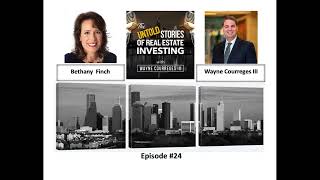
Interview with Bethany Finch (American Made Home Solutions) about 25+ years of real-estate experience transitioning from teaching to investing. She describes a mission-focused approach to workforce housing across single-family and multifamily, remote/off-market sourcing (handwritten mailers, door-knocking), financing/business structuring (LLCs, local bank relationships, using family HELOCs as private capital), JV/Co-GP partner vetting (motivation, stress/finance tests, boots-on-ground), and post-COVID shifts into build-to-rent, modular/manufactured home parks and RV parking. She emphasizes Christ-centered, community-focused property operations and gives five concrete tips for passive investors (expect no year-one return; establish reporting cadence; know distribution frequency; clarify voting rights; be willing to lose the investment).
Questions this video answers
Over 25 years.
As old as 1898.
Sent 325 letters and received over 100 callbacks.
Over 5,000 doors (assets under management).
A limit of 10 properties in one individual's name (pre-Trump-era guideline).
Chapters
Welcome to the Untold Stories of Real Estate Investing, hosted by Wayne Courageous iii, a place where active and passive investors come to hear the good, bad and ugly of real estate investing. Our guests consist of experienced operators and investors who want others to succeed by sharing their stories. If you're looking to syndicate deals or grow your wealth passively in real estate, you've come to the right show. It's now time to sit back, take mental notes and enjoy next episode of the Untold Stories of Real Estate Investing.
Welcome to the Untold Stories of Real Estate Investing. I'm your host, Wayne Courageous. For our next episode, we're going to connect with Bethany Finch with American Made Home Solutions. Bethany transitioned to real estate several years ago from being a teacher and a coach, having taught various courses in K through 12 grades. Her passion in real estate is creating change that is beautiful and sustainable. Since the inception of American Made Home Solutions, Bethany and her team have rejuvenated neighborhoods and increased the standards of housing for residents. Welcome to our show, Bethany.
Hey, Wayne, thanks for having me. I keep forgetting to tell you I love your name. Every time I hear Courageous, I'm like, that is the perfect name for an investor.
Well, you know who else enjoyed my name was the drill. Were the drill instructors in boot camp, Marine Corps. It's like, oh, you want to be courageous? Good, good. Come with me. So, well, thank you for that. So before we go on, is there anything you want to do to introduce yourself or do you want to just dive right into it?
Nah, they'll figure it out as we go. Right.
I love it. All right, so what led you to real estate investing so years ago?
I know it's your listeners won't get to hear this because of it not being video, but I'm actually older. I'm not young. And years ago, when my family was young and my kids were little, I needed to figure out a way to provide a second income but still have flexibility because I was homeschooling my kids. So I was always looking for alternative options of means. I didn't want to be tied down to a specific job, so I needed a lot of flexibility. So that's when I actually started over 25 years ago, was solely for the purpose of creating flexible, still steady income, but that also had. It didn't always need me to be involved.
Yeah, well, I want to dive into what we were talking about before the show about passive income syndications and the larger assets, but you have so much experience on the single family side. And we were talking a little bit about credit Hacks. So this go many different directions, but want to start there. What is your strategy currently? I saw online on your website, it's, it seems that y', all, you know, buy cash, buy houses in cash that, you know, for any distressed owners out there. But is the strategy to renovate and sell? Are y' all long term holders finding, you know, these rent renters an opportunity for further cash flow for your team? You know, sort of what is, what's been the strategy all along with single family?
So our vision and our mission for our company is to create sustainable growth. So part of the biggest challenge of any community is to create that sustainable growth. And as a business, if you don't create sustainable growth, you're going to be dead in less than five years. The government already predicts it. Right. So with that single family, we have been in multifamily all these years, 25 years. We've been in multifamily the whole time. Earlier on, my husband thought, oh no, we should do single family. We should do single family. And so his mindset was, in his mind it was going to be less risky to do single family. And I either did a fantastic job showing him how much more work single family was by doing it all wrong, or he just realized finally that one day the light bulb went off. And wait, my wife might be right, this might be way more work than it should be. And so our whole goal with single family was yes, to keep some and yes, to actually, finally sell some, flip some. But it was also to create more workforce housing in our communities. So many of our communities struggle with that area. So we focused solely on that market, that asset class and just went after it and just tried to get, get more of these really, really old houses that are heavily dated. We're not talking cosmetic, we're talking full electrical, you know, big heavy lifts and then renovate them and get them back out there so that our market, I mean, they would just gobble them up. We just couldn't get them out there fast enough.
Yeah, well, and the conditions and the, and the location. So y' all chose areas near your, near where y' all live. And then conditions that of a property that were worn down, like what were the different attributes of the conditions that made sense for you all to buy the single family?
So they weren't always necessarily right here where we are. We've been remote investing for years. So it just, it always, the numbers had to make sense right at the end of it, when we put in all of our renovations, when we factored in Our holding time and when we sold it based upon where it was in the market at that time, whatever, we had to make a minimum amount of money, otherwise it wasn't going to be worth our time. And so not because we're some snobs or anything like that, some people would be happy to make $10,000, but because there's only so much time in your day and if you're spending all your time only to make X amount of money, then you're really actually not necessarily being the most productive. So in those situations, for years we didn't have homes newer than 1940. We had some as old as 1898. We obviously kept a lot of electricians and plumbers employed, which again part of our creating sustainable growth, we were able to bring home contractors. So instead of having to commute for an hour, they would have to go 10 minutes to our properties. And so we created that by really going to these older neighborhoods and looking at them and going, okay, which ones can we get? Which ones can we help? And working with people who many times the kids had moved on and there was a death in the family. The kids don't want the house, but they know it needs way too much work. They can't just sell it. So oftentimes they would sell it to an investor like ourselves, then we would do all that heavy lift and now we can get it back into the hands of a family who it's still affordable. Right? They can still actually qualify, but it's also available in a quality up to code, you know, house that we can get it done faster than a new build and it's going to usually be higher quality oftentimes.
Yeah, I like that. And so with the shortage of housing, I was on a webinar earlier this week and just hearing more and more about institutional capital going after the single family homes. And I know that they're not buying all the single family homes, but it is, they're definitely going and finding yield in this asset class and making it a little harder for the average Joe to find their house. So, you know, what ways can single family investors go about or do to outwork and find creative ways to actually close on these properties in some sense who may not even have the cash to do it because we always talk about leverage in real estate and how you grow wealth through other people's money and other lenders money. But it seems to me harder to do that when there's all this cash flowing around and people are buying these properties in cash. So I'd love to you know, get your insight on what could help, you know, the starting investor on out working and being creative, get these opportunities.
So some of the things that we did early on that a lot of people were unwilling to do, but it made all the difference. And you have to learn your market because different things will work in different markets. So a couple of our markets, the things that were the number one was still mailing letters, but I wasn't going to a, you know, yellow letters.com or whatever like this. I actually paid my 13 year old neighbor to hand write our letters, but they were like two sentences and it was on yellow paper and it was in a funky shaped envelope, you know, nothing, just something creative and different, but nothing hard. And she got paid 25 cents each. She thought it was great, right? And it was better than babysitting in her world. But then on the other markets, the best thing and number one thing we did was door knocking. Not enough people do the door knocking. And with this day and age, because there is so many institutional buyers, sellers get calls and thousands of letters. So when you're door knocking, you're a real. Wait, you're real. Wait, you're, you're here, right? It's like, okay, let me. And they almost latch onto you like yes, please buy my house, you're real. I, they, they feel like all the other stuff is too good to be true. And not to say that those things don't work because it's a numbers game, right? Eventually they will always keep working. But I didn't have to send out thousands and thousands of letters. I did two mailing campaigns, I sent a whole 325 letters out and I had over 100 callbacks. You don't get those kind of returns, right? And if I didn't when they called back, I didn't always necessarily get the deal. But what I got was new contractors, other folks who were investors who wanted to join my mailing list right now I had someone I could wholesale my properties to. I also got contractors who would love to stay and work closer to home. So I found better contractors. They couldn't afford to be advertised and so I wouldn't have found them otherwise.
Yeah, I love the idea. You know, the idea of the yellow layers is a great strategy even in the multifamily side. And handwritten's even better. So great tip on the 13 year old. You know, people out there, your neighbors look for your neighbors, people.
That's what I'm saying. Just have, have some relationships with folks and you'll be surprised One of the things we did was we hired our youth group a lot. And what we did with the youth group kids is anytime we had demo work to do, we would pay the youth group. Right. The youth group had to earn their way to some trip or event and whatnot. So they would come and they'd help do demo, or they'd help do landscaping or anything, and then they would help fund their trip. So it was rewarding on both sides. It was fantastic. But in regards to your question about the using other people's money and financing, that part of it, many people get in trouble because they don't know their numbers. They only know finances from a consumer standpoint. So, for instance, on the personal side, the banks want to see that you have access to thousands of dollars and you're using none of it. That's the way they want to look at it. That's the way they build out their algorithms. That's how that whole thing goes. On the business side, they want to see as much money coming and going and flowing activity as possible. So when you're first getting started, when you still have that consumer mindset instead of a business mindset, you're constantly almost like counting every penny, so to speak, trying, oh, I can't do that. I can't do that. No, I can't. Oh, I can only do this. But you're actually hurting your business because now your money's not flowing. And what people, what you don't know, can hurt you. So the things that I wished I would have known early on in my business that took me several years to figure out would have saved me so much time, headache and stress, just personal stress. Because the financial side of it is very, very stressful for a business owner. Yeah.
But digging in on that a little further, when someone's buying a single family investment so they're planning to rent, they're typically this. When I started, I was doing it in my personal name. So that money in the bank credit score, that was all extremely important. Did you do something different? Buying these properties more in an llc, more business purchases, where they were looking at it from a different lens?
Yes. So again, if your whole. If your whole goal. Because you always want to work from the out in. If my goal is to create sustainable financial growth. Right. I wanted to build a business that created passive income that was going to take care of my family so I could have the flexibility. Right. That was my goal. So if that, if your goal is to do that, you always want to be thinking through that lens. So for me If I go out and I get a loan in my personal name, first off, I'm going to be limited to how many I can do in a year, right? I'm going to be limited to how much cash I have access to. And then the well before President Trump, we could only have 10 in our personal name, right? So eventually we'd have to do something else. So if I'm looking at it from the business standpoint of I want to create sustainable growth, I want to reduce risk, I want to have scalability, I actually went and sought out and figured out I'd been running business for a long time, so I already knew I needed to have an llc. I already knew all of that information, but I went and sought out counsel and leadership and training from those who have done it and showed me exactly, look, this is what you want to do and this is how you do it. And there's different schools of thoughts about that. But if I'm creating a long term relationship, I'm going to those banks that are local and I'm building my business accounts with them. So they're seeing my business grow. So then when I need loans for things, guess who always gets her loans, right? And I'm the big fish in their little pond. So when they're seeing, you know, 40, 50, $60,000 every single month from one account, you know, and that's just one, you know, and then you have 10 different accounts with, you know, I mean, it's, you become pretty quickly, you, you have a lot more sway than, than just going to Chase or Wells Fargo or something. So we establish those relationships early on and then you build everything out through the llc. So it's more about the movement of your money. And then instead of where you probably maybe used a home equity line of credit or maybe some retirement monies of yours, something of that, what we encourage everybody to do is step outside of that. Because the capital that you have, you really want to try to keep working in your business. And what you, what we tell everybody to do is you actually want to train others. So, for instance, say your mom has a ton of equity in her house. We would teach you how to have her go get a home equity line of credit. I just saw one. Now they're advertising it at 3%. 3% she can go get this home equity line of credit. Okay, so let's use this as an example. She gets a home equity line of credit for 3%. She lends the money to you on a single family flip that you're doing. It's Backed by real estate. She's going to be on the insurance policy and it's recorded with the county, so she's triple protected. And now you're not going to pay her 3%. I mean, I know she's mom, but she's mom, so she ain't going to let you get away with that. So you're going to probably pay her something like 6, 7, 8%, maybe even more if she's a real wise mom, right? And then when she does, she makes that difference. So let's say you're really a good son and you pay her 10%. Well, mom just pocketed 7% with one deal with you on her money that was sitting there doing nothing in her house, right? And she can rinse and repeat and keep doing that over and over. Now I'm really going to blow your mind because now you've shown her and you've created some passive income for your mom, right? She knows, likes and trusts you. So now as you grow and a lot of real estate investors do, they don't just stay in single family, they come over to the multifamily world like our side. And now in our multifamily, that same money that she was putting in with you that she was clearing, say 7%, well, now she has the potential to clear like 14, 15, 16, 17%. That's exponential. Right now she's really creating some momentum and leverage. She can use that to either one, build out a retirement, pay off debt, so many things, and that's even more passive. And so someone else is doing all the work and she just gets her mailbox money.
Yeah. All right, so that four or five minutes, however, that long, that was so much great knowledge about, you know, structuring your single family as a business for scalability, relationships with banks. And then this whole mom trick. Now my mom would say, no way. She's very, very.
Oh, you're not the good side.
Oh, my goodness. She doesn't trust me now. I'm just kidding. She, you know, their house is paid off and you know, they've got a lot of equity and all, but no, she's very conservative. So I love you, mom, if you're listening, but a good thing. But I think they're going to be okay during their retirement. But okay, so a lot of great talk on single family. Thank you for that. But I want to save the bulk of our time talking about multifamily and passive investing. So let's shift there. And one of the questions I had is, what led you to multifamily it sounds like you already have been doing this. What you said 25 years, you were getting your husband on board.
Believe it or not, it did actually start somewhere. There was a starting point.
Okay, well, let's start there and then we'll go further.
Yeah. So interestingly enough, years ago, we moved from one side of Washington state over to the other side and my husband had to find new work and he was an industrial mechanic before he had to reinvent himself, so to speak. He knew he didn't want to go back to being an industrial mechanic, so he decided to start working for the apartments that we lived in. He started as a groundskeeper and he literally worked his way all the way up to ownership all those years building out, working through. I mean, so at one point, at the peak of my husband's career, he had over 5,000 doors, assets under management, over 20 some properties that he was in full renovations with. And every single one of them, you know, had exponential, you know, million dollar capex budgets and things. And so he had to learn how to project manage, he had to learn how to build teams because he knew he wasn't going to be staying on them. He went through the buy and sell, he went through the new builds, Several of those were brand new builds, different things. And so it did start there, right, as a groundskeeper all those years ago. And then me with all my business sense and savvy, right. Mine was always on the other side. Mine was always on the contracts and the HR and the personnel and leases and all of that part of it.
Yeah, man, it's a great, great, great story, history. And one thing I love about you, and we'll talk about different asset classes is just the vast experience and how y' all just dived in and just really grown through real estate over the years and such. So want to talk a little bit more about the business aspect and then switch over to the passive side though. So you got into multifamily with post Covid and things getting a little bit more frothy and a little more harder to find good opportunities. How are y' all finding these value opportunities in Washington and these other markets that you're investing in?
Well, we quickly learned to forget Washington. We Washington is not a landlord friendly state. We saw legislation coming through that we said, whoa, we're out. So we already were starting to liquidate many of our properties here in Washington and we were already in other markets, so we recognized those other markets were better. We liked them in those other markets. When you go, you know, absolutely nothing about this market, first you determine is it a good market to be in? Is there growth? Right. I actually evaluated markets that they were negative growth. People don't believe it, but it's true. But all the people who live in there are like, no, that's not true. But it was, people were, more people were leaving than were coming to that market. Right. So you find out if it's a good market or not and if it's strong, then it's okay. What asset class am I going after? We have always focused on workforce housing. So we're not looking at that A grade property. That's not our, our wheelhouse. We don't like that particular asset class at all. And so we focus on that workforce housing with that workforce housing. Many times when you go to a brand new market, especially with our skill set with both the single family and the multifamily, you'll find a landlord who may own two or three single family homes. He'll actually just sell all three of them to you. Right? You get a portfolio from him. Next thing you know, that transaction was so smooth and easy. He just loves you. And you come to find out, hey, do you have any more you'd like to sell? Well, yeah, next thing you know, he's got a 16 unit and oh, by the way, my buddy over here has a 40 unit he wants to sell. And that's, that's how it starts working in those other markets. It's reaching out to everybody is always like, oh, it's all about the brokers, this is that. And there is truth to that. But it's only about the brokers. When you can stay in front of them constantly because they're humans like everybody else and they get busy and they forget. So what happens is you don't get to stay top of mind all the time. So we're going directly after the actual product. What it is that we like, where is it? And let's go after that. So we treated it just like we do with our single families. How do we reach these folks? How do we let them know? And just like before, remember those retiring parents, they know their kids don't want it. So the kids are just trying to sell it and be done with it. They don't care.
So off market strategy is huge, direct to owner. And I would say even with the brokers there, you do definitely, definitely get deals, potential deals from them. But it's what I've experienced is they've got their A list, their B list, their C list. So you know, by the time it gets to me. Several others have looked at it and passed on it, you know, for whatever reason. So those break relationships, it takes time, and it's. They want to see that you're over and over, that you're closing these deals. So I love the strategy on this off market, going direct. Are y' all code GP and JV on these opportunities in some of these other markets that you're getting into?
Oh, yeah. Oh, definitely. Because you need to have boots on the ground. So certain markets and keys. Right. Abel's right there in. In San Antonio. Right. Makes sense why I don't need to focus any more than that. Abel, come on. We're going to team up. We're going to take this deal down. Right. Some of our other markets, we've got other folks that. Are there anything that we do in California? Right. You know, I don't do anything in California, just FYI. But if I did, I would let Andy and them run with it. Right. I'm not. I don't need to be in that area. And so when I'm doing our asset management piece, we focus every single property on who do we already have, what position do we need to fill? And that's the benefit of our experience. Right. We can be the asset management piece or we can be the capital raise side of it. Those different pieces come into play. So, yeah, we cogp and jv, but we're very picky about our team because at the end of the day, you're kind of married to them. And I always push two buttons, and those two buttons are stress and finances. If I can find out how you're going to respond in a stressful situation, I can determine if I can work with you through a deal, which can be very stressful at times. And the same thing with finances, how you handle your finances. Like, if everything were to blow up and you were to lose everything. Yes, it's painful. Yes, it's. But what could you do to mitigate that? Are you teachable? Can we come together? Can we bootstrap it and figure it out? Are you the kind that's got the grit, or are you the kind that's just gonna melt into a puddle and do nothing? Right? That's. That's who we're looking at, is, okay, what's this team gonna have? We. Because you got to have that comp. That whole. That whole team's got to have some grit. They got to know. They got to have some experience, work around. They need to have been sucker punched a few times and learned, you know.
Yeah, well, and from a vetting standpoint, I mean, boots on the ground experience, what other aspects are you looking for when you decide to partner with somebody for the first time?
Flat out motivation.
Yeah.
End of day, because all the newbies, people think, oh, well, I don't have experience yet. You don't need the experience. You need to be willing to get off your death and do something. Right. So if that means you're underwriting all their deals for a year for free, you're working, right. Your time and resources, you're gaining experience and you're working, but you're willing to do that. If you're willing to turn around and go door knock a neighborhood. Right. And start. Everybody in my neighborhood that has a single family or a multifamily property, I'm going to go to and I'm going to reach out and you just start calling, cold calling and reaching out or connecting with local landlords at the local landlords association. You could potentially be the one bringing the deal. You may have no other experience, but you bring them a deal and then our team evaluates it. Oh, yeah, this is perfect. Here's what you need to offer and then you're part of the deal just because you were flat out motivated to do something.
Yeah, absolutely. And they have something to prove too, you know, and they've heard time and time again or you know, that it's going to be very difficult to get in. You've got to have all this experience. It's like getting your first job in a way. It's like, well, how can I get all this experience without getting that opportunity? So love that answer. Motivation is key. So you've made it very clear that workforce housing is the focus. Are there other asset classes within workforce housing we've talked about single family, multifamily. Are there others that you are looking at or have purchased previously and you know, what is what has changed on your strategy, if anything, with. With those asset classes?
So two things. One of my buddies convinced me to focus more on the build to rent. And it took him some time, some serious time, because I could always figure out a way it was cheaper to not build it. Right. It was so much cheaper to just renovate it. But the product is absolutely diminishing. So you have to get more product out there. So that build to rent model makes a hundred percent of sense. And it just, like I said, it just took time for me to. Okay, yes, I get it, I get it, I get it. Right. And, and find a way that you can keep your costs down and control, especially through Covid. Right. The other aspect that we've been doing is manufactured home modular home parks. We are building those out with RV parking in there as well. Yeah. So those are our two that are definitely shifted due to Covid and everything that we saw. Because even with the stick build. Right. You saw those lumber prices just go through the roof. Right. But on a modular home that doesn't necessarily need any of those products, it's a lot faster, smoother, easier, and they can keep the costs down. So again, just being flexible and okay, what can we do here? And you saw RVs flying off the shelves. They can't. And there's no place to park them or there's no place to go to that has spaces left because they're always full.
Yeah, that's. That's an asset class we're definitely looking at as well as being an RVer, like our recreational RVer. You know, it was just a challenge in the Austin area to find a place to park the rv. We bought some land now that where we store it. But it's hard to store those RVs and it's hard to find like, like, hey, I go camp this weekend. Well, hopefully you've planned in advance. So that's definitely an asset class for sure. And then the build to rent for our listeners, since it's a new asset class, can you describe more what that is and you know how quickly it's setting on fire as far as growth, both on the. And really getting on the institutional radar as well. It's pretty massive.
Yeah. So people don't realize over in Europe and some of the Asian markets, they're making like 1% on their money. It's so minuscule. And some of them are actually negative. They're actually negative in those markets or anticipating to go negative this year. So anything above 1% is a gain for them. Obviously in our markets that's like, oh, right. So that's why they're trying to grab up anything and everything and they don't even care because it's a deal for them. So if you want something to go away. For instance, if we want our institutional buyers to stop scooping up all the single family, we need to give them something else to divert their money to. Right. We've got to find things and put something out there to get their funds moving. If you want to determine what your market looks like, you have to be a part of the market. So the build to rent model is building specifically single family on a. Basically like a horizontal multi family. So Instead of building one giant building that has 25 units in it, you're building 25 single family homes all in like a community. You see a lot. Del Webb did a bunch of them for like senior living and things. They're all single family homes and a build to rent. You actually are setting them up to be 100% rentals. But you have, if worst case scenario happened and you wanted to sell off a couple, you could still do that because you have them individually parceled. So if you needed to, you could. But ideally you're going to have that whole property sold to that institutional buyer who wants that many houses and, and wants to pay that. And it's a solid stable asset, but it's also brand new.
Yeah, I love the, the illustration of a horizontal multifamily, you know, decoupling the stack on each other apartment side and have it now that it's postage stamp yards, it's smaller units, similar size to what you would have in apartments, but all that and I think post Covid especially, you know, people want that space and feeling like they have, you know, their yard and you know, just not being on top of somebody else. So definitely huge. And then also the, the turnover as I'm learning is a lot less. You know, the average renter and a multifamily is about 20 months where the groups that are going into these build to rent. You know, it could be upwards to three years. It's pretty. Right, pretty massive from a time standpoint. And then you have different sectors of population, you know, the, you know, senior house, senior house, but who don't want to be in a senior say community, but want to be in a smaller environment, but also have that community in the same amenities that you would have in a multi family complex. So a lot more to come on that. I'm gonna keep digging in on it, but love that you're looking at that and it aligns really well with your workforce housing. So I want to ask one more question and then dive into more the passive side. And I think, you know, if I didn't ask this question I would be wrong because I love your passion towards being a Christ centered business. So when we first connected and this was a few weeks ago, you were very passionate about having a Christ centered business and you know, bringing that into building up your communities and, and then that's giving you opportunities to give back to more charities. So how do you go about having that Christ centered business? And then do your residents, are they part of that process? Do they push back on it? I Guess that was one of the things I, you know, a few weeks ago that I really wanted to dive in more is sort of how. How have the residents drank the Kool Aid or such to feel right? You know, say the spirit, but more so just the. The love of Christ in these communities.
Well, and honestly, Wayne, that's a great question, because so many. If we would just step back so many times in life, we're going a thousand miles an hour, and if we just step back, slow down and reprocess before we start up again, it would make 110% difference in not just our businesses, but in our families. And so, first and foremost, as a Christian, even Christ himself said, there's only two things you need to follow. Love thy neighbor as thyself. Love the Lord your God. Right? So when we stop and ask ourselves, what would my neighbor want? How can I help them? What can I do? How can I meet a need, Right? So when you actually go outside and get to know your neighbors and you actually take the time and you have a new one in the. People used to do this all the time. But our society has gotten away from this and it's become very, very isolated. And as Christians, God calls us not to do that. He actually calls us to go out to our communities and to be a light. And you can't be a light if you're shut up in some closet somewhere. So you have to be out in your community. And so what we do is we really put that focus back on the community. Who's having new babies, who's new to the community. Let's have gatherings and get togethers where we can get to know each other, right? Back in the day, our kids used to go out and play with everybody. And I remember my mom used to have to ring a bell to get us to come inside. It's like, if those street lights come on and you're not in that house, you're busted, you know? But we would be like, everywhere. And because all the neighbors watched out for all the kids and every, you know, it was a community feel, it's not like that nowadays. It's become very scary for parents and very stressful. And for kids, it's really robbed them a whole generation of benefits that we gained as individuals that they didn't. And so we're just trying to put that back into a model that's digestible for today. It works, but it also. People realize, look, I don't have to be a hermit. I can have relationships with people. And honestly, people don't even know how to have relationships anymore. I mean, we watch this younger generation. They're sitting on the couch texting each other, and they're right next to each other. I'm like, dude, put away your phone. Right. But so because of that, they don't know how to. So we need to still teach people how to have that relationship. So we step out and do it first ourselves. We're out in the communities. We're talking with the residents, we're meeting the neighbors, we're welcoming the new babies and the new families. And when someone has a loss, we're there to help them. When we know our senior citizens of the community just had hip surgery, we're making sure she's getting her Christmas lights up because no one's going to be able to do that. Right. It's being there to meet that need first. And in doing so, they see the love of Christ. They see that, you know, my selfish nature wouldn't necessarily go do that. I would love to say I'm so great and sweet and kind and that, but that's not me. I'm human. I'm a wicked sinner like everybody else. And my sins are just different than yours. Right. So we just want to remember to try to show that love. And honestly, that just gets returned so many ways. And in doing so, Christ gets the chance to work. And that's what. That's all we're trying to do is just keep those doorways open.
Yeah, it's. It's doing, I guess, the work action.
You know, and love in action.
Yeah. And, you know, there's. There's the faith of it, but without the action part of it, you know, it's. It's not all about faith. You know, there's got to be some works in there as well. So love that. Appreciate you sharing that piece. And I'm sure your residents are much more feeling at home and that they have a true community at your community, so. All right, well, let's switch over to passive investing. We're going to close with passive investing. And then I also ask. I'm going to give you a heads up because sometimes it stumps people. But at the end, I asked them, what's your proudest moment? So be prepared for that question. But for now, though, any tips, strategies and such that you have for passive investors that are listening?
Yes. So in regards to passive investors, I would probably say there's five things. First off, always assume that there is not going to be any return that first year. If you make that assumption that you're not going to, especially in the multifamily. Right. It's a long term investment, five to seven years. If you make the assumption that there's going to be no return that first year. If you get something, great bonus. But then you haven't set yourself up for failure because that first year, especially if it's a value add, there's so many moving parts and pieces that the more money they can keep in the deal, the safer the investment is. So if you've already told yourself I'm not going to get a return this year and they've already mitigated that risk so that they don't have to worry about it, then what happens is everybody feels safer and you get even better returns those second, third, fourth, fifth years. So when you want to make sure that you just make that assumption right out of the gate, the second thing is you want to be able to ask them and you want to know this up front, how often are they going to be reporting into you? Monthly, quarterly, weekly. So you have an idea and expectation. If you expect to hear from them weekly and you don't hear from them for three weeks, right. Hey, what's going on? You're going to start panicking. But if they've told you you're only going to hear from them once a quarter in a newsletter, you're not going to panic for four months, right? And by then you'll have heard from them. And if you haven't, then you're so you don't want to set yourself up for stress with that. So ask that question. The other question you want to be asking is how often are you going to get paid? Different deals, different differentiate. So for instance, on our single family deals, you get paid once at the end. Those ones turn over usually within a year. So you're getting a big lump sum check once a year. On our multifamily deals, some of those get paid quarterly or monthly. Our executive rentals, those get paid monthly. Right. So you want to ask how often am I getting paid? The other part you want to ask is do I have any voting rights or do I have any say? Because each different scenario is different. And it's always, it's not necessarily that, it's always negotiable. But for instance, if you go in on a single family or a multi family investment as a passive investor, if you have no voting rights and they're trying to decide if they want to sell the property or not, well, you just know the decision is up to them and they'll decide and they'll figure it out. If you know that they have, that you have the right to vote on it. Well, now you're going to be paying attention a little bit more when they start sending out that information. Because you want to be the best informed voter that you can be to make the best decision because it impacts you. But if you don't have a say in it, it doesn't impact you. Right. So then the last one would probably be be willing to lose it all. If you look at it from the mindset that at the end of the day, if I lost all of this, is it going to detrimentally hurt my family? Is it gonna not to say that it doesn't hurt to lose money? I'm not saying that. Trust me, I'm not saying that. But what I am saying is if you're willing to lose every bit of it and you remove that pressure, you're going to be more relaxed and you're going to be, you're going to, you're going to have less. What I would say are wandering thoughts. So many times when money is involved, people become more controlling than they were before. So if in the back of your mind, some people have said this when they, instead of giving a loan to a family member, it's a gift, because in their mind, they're planning, it's a gift. I'm never getting it back. If they get it back, great. But it doesn't ruin their relationship. So if you're willing to lose it, all, right, your husband or wife, whoever made the decision, you're not going to blame them for it, right? If everything gets lost and everything goes sideways, worst case scenario, you're going to hope for the best, but the worst is you lose it all. You're still going to have your husband, you're still going to have your kids, you're still going to have your house, you just don't have the savings account or you just don't have wherever those funds came from, that much money in your retirement, whatever it is. So if you plan on and expect to, then when you get that return, it's even more exciting and so much more rewarding.
Yeah, I love the questions to ask. And then also really more so the mindset of, hey, this is an investment, there's risk in the investment. Now, historically, especially in real estate, you know, everybody does pretty well. And if you don't do well, at least you know it's a tangible asset, there's value there, get your money. But the mindset going in that, hey, you're not going to get it year one, then you're not disappointed, right? It's like top people in the Marine Corps, I know the military, but you go in the Marine Corps to serve. If you are going into the Marine Corps to get your education, to go travel the world, world, they're going to be disappointed. So go in with the right mindset, right? So similar to real estate is going with the right mindset. And so really love that as we close here. What. What are some of the proudest moments that you've had in your real estate career? And. And then how can people reach out to you to learn more?
So we've had so many moments, and I think many times we don't take the time to reflect on the positive because we're always trying to improve or make better or. Or work on this or do this. And we forget to celebrate those wins, right? So we actually have it assured. It literally says caw. You know, celebrate all wins. It's because we have to constantly try to remind ourselves of that. But I remember we've had so many good times, and I remember being able to hand over the keys to a young family who was their very first home. And they worked hand in hand with us. So we worked to create this path to home ownership for them and just seeing the tears flowing on everybody's faces because this was going to be an opportunity that they never would have had, you know, and how rewarding that was to us. But I also remember the day that it finally hit my husband that we were debt free, you know, as business owners and even on the personal side, you know, you have debt, right? You have a mortgage, you have a car payment, you have all these things. And I remember him driving down the road and him calling me and he said, oh, my word. And he was just crying. You can't believe how much better this truck feels to drive right now. And I'm like, what are you talking about? It just dawned on him that we were debt free, that if he got in an accident that day and he didn't show up to work, it was okay because we owned everything. So for us to set those goals and figure out a way to make it happen, and we weren't able to do the Dave Ramsey situation because we were building a business. And Dave Ramsey's plan doesn't really work in that perspective, you know, and so we had to learn and figure all that out. And we were willing to do what others were unwilling to do. And in doing so, it gave us the personal freedom to have that debt Free. And like you, Wayne, we are now remote RV investors and we get to travel around and we get to see way more of our family than we ever did before. We get to see some amazing places and markets and I forced my husband to let me bring my fishing poles this time. So I'm gonna catch some good fish this time. But so we, we just love sharing that opportunity with others and sharing and teaching them. So I actually have two things that I can give you and you can put it in the show notes or however you do it. We have our free passive income checklist. So they can literally download this list and it literally walks you through every question and things that you should think about or when you're looking at should I invest with them? Passively, it breaks it all down. And then the other thing is one of our websites, that's how to be debt free as a business. When you're looking at the surmounting debt and you're just buried and trying to figure out how to breathe and you're trying to figure out how to pay your team and your contractors and I need to bring home more people, but I can't afford it. And how and what that looks like. This tool that we have developed is absolutely amazing. And I remember the day that we realized it was going to take like 30 some years or whatever to be 100% out of debt for the business and we could get it done in three. That was like, oh my word, this is amazing. And we'll own all of our properties and we'll do. And it was literally transforming for our mindset. So being able to still run in business and make plans but be debt free and create that less stress, great relationships, those are the tools. So we've got our website there. I'll share that with you as well. So you can just put that in the notes and then feel free to reach out to us there. And we're on LinkedIn so feel free to connect with us on LinkedIn. We're excited about it because we're going to build an RV park.
Well, Bethany, thank you so much for your time today and love learning from you. So look forward to continuing building the relationship and hopefully partnering soon.
That's all for this episode. We hope you subscribe, share and leave a comment review of the show. For more information about passively investing in multifamily apartments, check out Wayne's free ebook by going to creipartners.com ebook also follow us on Facebook by searching CREI partners. This was the untold.
More from Wayne

September 2026 Meetup: Investing Ahead of Growth: The Bryan–College Station Opportunity





May 2026 Meetup - Apartment Complexes & Passive Investors: Opportunities & Risks


March 2026 Meetup - Reading the Market: Economic Indicators Every Investor Should Know


February 2026 Meetup - Syndication 101: How CREI Partners Structures Deals for Investors

Build-to-Rent (BTR) Communities Explained: Why Investors Are Paying Attention