Bruce Peterson - The Untold Stories of Real Estate Investing What It Takes to Syndicate Multi-Family
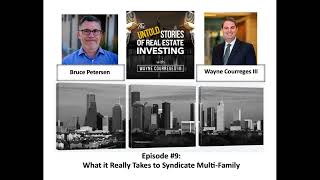
Bruce Peterson (the "Apartment Guy") joins host Wayne Courreges III to discuss syndicating multifamily properties. Peterson explains why he wrote his book—to present an unvarnished view of syndication—describes his transition from retail, mentorship that led to his first deal (2012), and early parameters (started with a 48‑unit in Austin, prefers 40–75 units to afford staff). He outlines underwriting and capital needs (raised $575k on first deal, invested $115k personally; recommends raising more soft commitments than required), explains differences between third‑party and in‑house management, details expected owner reporting (rent roll, T12/P&L, general ledger, bank statements, monthly owner packet), and gives guidance for passive investors (projections vs guarantees, liquidity and risk tolerance). He also describes a nonprofit idea to provide affordable, safe housing for adults with intellectual/developmental disabilities and invites listeners to get his book at apartment‑guy.com.
Chapters
Welcome to the Untold Stories of Real Estate Investing hosted by Wayne Courageous iii, a place where active and passive investors come to hear the good, bad and ugly of real estate investing. Our guests consist of experienced operators and investors who want others to succeed by sharing their stories. If you're looking to syndicate deals or grow your wealth passively in real estate, you've come to the right show. It's now time to sit back, take mental notes and enjoy next episode of the Untold Stories of Real Estate Investing.
Welcome to the Untold Stories of Real Estate Investing. I'm your host, Wayne Courageous. For our next episode, we're excited to have Bruce Peterson, also known as the Apartment Guy. Bruce is a serial syndicator of large multifamily properties throughout Central Texas ranging in size from 120 to 292 units worth over $90 million. He was awarded the Austin Apartment Association's Independent Rental owner of the year for 2016 and and the national Apartment Association's Independent Rental owner of the year for 2017. Bruce targets stabilized properties where he can buy a cash flowing asset and drive value through improved operations. He's able to do this by implementing his proven systems and deploying his experienced staff to replicate his business model across the new acquisitions. Bruce is also the author of Syndication is a Bitch and other turns you truths you haven't been told. Welcome to our show, Bruce.
Hey, thanks for having me.
So first off, I want to say thank you for being on the show, but also that I really enjoyed reading your book. You know, I really found it nice that you were able to cut through, as you say, the unicorns and get to the truth on, on syndicating. Whether it's your first deal or several deals in, it's all extremely valuable. So I'd love to hear the why on writing the book and then also just your story coming from retail and what triggered you to pivot into real estate investing.
So we'll start with the why. Basically, I've taught people how to do this for years and I've just seen so many instances and situations where there's a big real estate conference, a big real estate free weekend. You know, it's free, quote, unquote free because, you know, they're trying to sell you something, they're trying to sell you their, you know, 20 to 50. I've seen as high as $100,000 program. You know, they're coaching, they're mentoring their, you know, their secret sauce. Right? So you've got these people on the stage talking to you about how great Everything is how wonderful apartment associate, I mean, apartment investing is and how, you know, lucrative syndicating can be. Everybody can do it. Anybody can do it. You should do it. We can make you rich yesterday. Most of these groups are very, very good groups. They're run by very good people. The people on stage are great people. But the problem I was having is they have an objective on stage. They have, I guess you'd call it an ulterior motive, right? So they're trying to, you know, keep their business in business. They're trying to sell you stuff, and there's nothing wrong with that at all. But in doing that, they're creating a hysteria, an emotion, which that's how they're going to sell, right? So what they're going to do is talk to you about all the wonderful things up on stage, and they're probably going to, you know, parade a couple of their students across the stage telling you true stories, legitimate stories of their journey. But you're only hearing those stories for the most part. You're not going to hear the truth, you know, as it pertains to the struggles, the difficulties and the stress. So everything they're going to tell you legally, they can't lie to you, so they're not going to lie. They're going to tell you the truth, but they're only going to tell you maybe a partial truth that they're not going to tell you about the dead guy in a pool. They're not going to tell you about Ofac, a division of the, I think the Treasury Department that took five plus million dollars of my money and my investor's money. You know, the arson, the carjacking, all this stuff that we deal with because we're owning a business. You know, things are going to come up in a business that you didn't foresee. There's going to be another Hurricane Harvey in our future, I'm sure there will be a fire at somebody's property, an earthquake or tornado. If they tell you these things on stage, it's going to scare quite a few people. They're going to go, oh, I don't think I want to do this. Well, that's undermining their objective. So they're not going to talk about it much. So what I was seeing was people get into this going, okay, this is great. I'm going to make a killing. I'm going to this, I'm going to that. And then when they start realizing how difficult it is and all the stress, the liability, they're like, oh, my Lord, well, they've already given somebody a lot of money. So I wanted to be the guy that wrote a book that said, look, this is what it is, it is legit, it's real, it can make a big difference for you and your family. But please understand how hard it is, all the work that goes into it, again, all the stress involved. So I wrote a book giving you a step by step guide on exactly how the syndication process happened, everybody needed on your team, timelines, everything. But I'm going to tell you stories along the way of some stuff that's gone wrong for me. Again, just so you know, going into it, what exactly to expect, and I expect, you know, probably 60 to 80% of the people that read the book will probably turn around and go, don't want to do this. And that's fine. That's exactly what I'm hoping actually, because I want those that really shouldn't be doing this to not do it, you know, not waste the time, create the stress that they don't need. So that's what that was all about. And then my background, you know, I'm a poor kid. You grew up pretty poor. A couple of high school dropout parents. I dropped out of college, fell into retail, did that for almost 20 years until I just couldn't do it anymore. 42, 43 years old, I decided this is not working for me. I was overweight, I was depressed, I hated my life. I was working 80 to 110 hour weeks. So I just walked away and kind of putz around my yard for about a year by myself. That got really old, really quick. So then I just started thinking, well, what else can I do with my life? You know, I have no family, no dog, nothing. So I just started looking for people to teach me real estate. And I found somebody that taught me how to not only invest in apartment complexes, but do it as a syndication. So I bought my first deal in 2012, syndicated that very first deal. And you know, since me and my wife now have syndicated over 1100 units, six properties, I love everything about it and it's just, it kind of consumes us. It's all we do now. So that's kind of my story.
Yeah. And so coming from the retail you had that year break, did you partner with someone or did you. Was it more of a mentorship? There's probably a lot of people that are in the 30s, 40s, that are maybe 50s and older that are looking at, hey, maybe I need, maybe need something different. So how did you get educated and partner with Someone to help you on your first deal.
All right, so I did find a coach. She was very experienced as first of all, she had worked for management companies and she had been a regional manager for some big management companies. So she had that experience. But she was also a commercial real estate broker that represented the buyer. And that is very rare in this industry, is very common in single family. There's always a buyer's rep and a seller's rep. Well, in commercial that almost doesn't exist. So I was lucky to find somebody that was a buyer's rep and commercial. So I worked with her. I, you know, gave her, I paid her for her time and her knowledge and, you know, I studied for probably, you know, what was it probably 9 to 12 months before I got my first deal under contract with her because again, she was a broker. So she helped me find the deal and she helped me negotiate and get it under contract. So yeah, it wasn't a partnership, it was a true syndication first time out. But I did have a coach or a mentor, whatever you want to call that person. I absolutely had somebody in my back pocket that I again, I did pay for her. But, you know, it was worth it to pay for her to not make all these huge mistakes that I probably would have made on my own. That and I sped up my timeline that, you know, she helped me scale faster and still safely.
Yeah, and we, I mean, part of syndication always recommended to, especially for your first deal, is partner with, or I would say partner, put yourself near or have the ability to contact somebody who's had that experience. So the reason why I asked, I just, you know, you, it sounds like you were very frugal. You saved quite a bit of money while you were working all those hours. And so it afforded you the freedom to take that year off but also have some skin in the game down payment when it came down to your first investment. One of the questions I have for you is, you know, when it's your first investment and you don't have a whole lot of real estate experience at the time when you went your first property, how did you gain the trust of other investors and lenders that they could count, that you could close and perform on the strategy of the property?
So a couple of things with the investors. I started a meetup, you know, and I joke it was before I even knew what meetup was, but I mean, I kind of knew what meetup was. But what I did is I just found another guy that was learning the ropes himself at the same time I was and we just started meeting at Starbucks every Wednesday, and we started spreading the word to other people that we interacted with as we were trying to learn. So we would go to the different real estate club meetings, the different expos, and again, some of these free weekends and things. So we were just comparing notes as we went, talking to other people and just telling other people that, look, we're meeting every Wednesday at Starbucks, and that me and the other guy, we slowly grew that. And, you know, a few years later, that had grown to three or 400 people. Well, all. But I believe it was two of my initial investors came out of that meetup that I started. So they had six to nine months to get to know me on a very personal level to understand that, yes, I have no experience, I have no job. You know, I had kind of, I guess you call it quasi retired. And. But they got to know me. They trusted me. They liked me. They knew that I didn't know necessarily practically what I was doing. They knew I was getting educated working with a coach, and they were willing to take a chance on me because they trusted my character and the fact that if I didn't know the answer, I would own up to that, but go find the answer by reaching out to my coach. So that's really how I found most of my investors. I want to talk about, though. You know, you said that I lived frugally and. Yeah, so back in the day that I was working retail, I was a Dave Ramsey guy, and I saved all my money. I lived way below my means. I paid cash for my house, paid cash for my car, because, you know, that was what he was teaching. And, you know, I didn't know anything better. So I thought, yep, this works. Until I realized this. This doesn't work. My coach taught me that. No, no, no, no. Don't. Don't go about it that way. You know, you pay off your house, that's great. You get to call into his radio show and, you know, do the woohoo thing on the air. But you still got to go to work tomorrow. You still have the same life. Okay, maybe you have a little more safety in your life or security in your life emotionally, because, you know, a lot of your debts have been cleared. But you could still lose your house because if you don't pay your taxes, you're still going to lose the house. You still got to go to work tomorrow. And many people hate their jobs. So she said, look, I want to teach you a way to think like a millionaire or a billionaire. Leave the job that you don't like. Although I had already left my job, but have an abundant life, not a frugal life. That's not a way to live, and I didn't want to live that way, so she taught me how to do that. But another key point to this story, though, if I hadn't found Dave Ramsey and, you know, kind of got me into the mindset of saving, saving, saving, saving, I wouldn't have been in a position to listen to my mentor later and execute on her plan for me, because I wouldn't have had the needed cash. You need to save your money to invest in real estate. All these other people's money. No money, no credit. You can make this work. You can. But I'm here to tell you, it's hard as hell. It's very rare for that to successfully work out consistently. You really need to save money. Come into this deal. My first deal, I had to raise $575,000. I put in 115 of that, and it was important for me on my first deal to be the highest investor. I had two guys in at 100, but I was the only one at 115 because, again, it was my way of showing them that I'm taking more financial risk than you are. And that helped me raise the money. So that's kind of how it all worked, how it all started, without any experience or track record. And my broker, my mentor, my coach, she also was connected with some mortgage brokers, put me in touch with them. They found somebody that could get comfortable with me in my situation, and we got it done. Yeah.
And in the book, you talk about parameters of, you know, where to find the deal. So on your first investment, I believe it was, what, an hour and a half away from where you lived. You live in Austin. I believe it was in San Antonio. Can you talk to us more about, you know, what are those parameters and what made you comfortable in investing slightly outside where you live?
Okay, first of all, no, it was in Austin. It was right down the street from my house. Honestly, I say down the street. You know, it was probably about 15 to 20 minutes away. But, no, it was here in Austin. It was a 48 unit property. But a good coach can help you dial in exactly what it is you're looking for. You know, when I had first started trying to educate myself on multifamily, I found out that, okay, multifamily technically starts at 5 units and above. For those of you listening, that's calling a duplex multifamily. You're wrong. It's not multifamily, it's multi tenant, multi inhabitants maybe, but it is not multifamily. Multifamily starts at five units and above. And the distinction is there because lending changes single family, which is one to four units. You're going to go through the regular lending process that you would to buy your own house to live in. Once you get the five units that above, it turns into commercial and the lending gets completely different. And in a lot of ways it gets a lot easier. So I knew, okay, it starts at 5 units. So logically, well, then I want to start with a 5 to 10, maybe a 12 unit property, something really small to get started on and learn. She goes, don't do that. Like what the hell do you want me to do? She goes, do you want to work this job? Do you want to be the property manager? Meaning you have to show all the property, sign all the leases, do all the evictions, schedule all the make ready schedule all of the maintenance, repair stuff. I was like, no, I don't have a job now. I'm not trying to do this and create a job or buy a job for me. That makes no sense. She goes, exactly. Get out of those smaller ones, you have the money and the wherewithal to do something slightly larger. She talked me into going at least 40 units because that's when you can, by rules of thumb there are exceptions, but the rule of thumb is 40 units and above, you can afford at least part time staff. So now I didn't have to be the one sitting on site all day running the property. I could oversee the manager. I said, yeah, that's what I want. So she helped me dial in those parameters you're talking about. I knew I wanted 40 units or above, probably nothing more than a 75 because I just didn't want to try to get too big first time out that the bank wouldn't let me go too big either. So I wanted a 40 unit or above. I wanted something built in the 80s because it's got a little age on it so it'll help my price. But it's not so old that I'm dealing with lead paint, asbestos, all that weird stuff. I knew I wanted pitched roofs, you know, angled roofs instead of flat just because there's less issue with them usually. I didn't want boilers or chillers. So I had the parameters that I was looking for. I wanted to be close to my house because I knew being brand new at this, I'm going to want to be on site quite A bit at the beginning to kind of get a feel for it, make sure I knew exactly what my manager was doing, working with her side by side and just keeping an eye on the property. And then the last thing I knew, kind of a price range that I was looking for because I knew what I thought I could, I could raise from other people, how much money I could raise from other people. So that kind of backed me into the purchase price that I needed to be looking for. So those are the parameters I was looking for. My, my coach, being a broker, she knew that, she goes, oh, this is one you might be interested in. Seems to check most of your boxes. We went and looked at it, I was like, yep, that's exactly what I want. You know, it was in a rougher part of town, it was older, it needed some repair work. Not a whole lot, but it had some obvious deferred maintenance. So. But I wasn't scared. I was like, I know this is what I want to do. I have somebody to lean on if things get weird because I don't know what I'm doing. But I've been successful, you know, professionally at everything I've tried. So this will be no different. It's a little nerve wracking, a little scary because I've never done it, but I have a team with me that to help me do it. And so we jumped in, bought a 48 unit and it worked out really, really well.
Yeah, that broker mentor, I mean that was huge because I was wondering how you found like the first property that you under wrote sounded like, you know, was the first property you put an offer on and were able to get. But now makes sense because you had somebody who really understood you and what you're looking for, those parameters to make it easier. So when somebody's looking for a property, I mean, my experience is, to your point earlier that a lot of seller brokers are out there. What other avenues do people have to find those opportunities when they have those parameters dialed in? I guess they can still reach out to those seller brokers, right?
Well, yeah, they have to develop a relationship. So if you don't have a buyer's agent or a buyer's broker, which you're probably not going to have, you just got to get out and start meeting all the listing agents and brokers. You've got to put your face in their face, do it respectfully, do it in a way that you're not taking advantage of their time. They're very, very, very busy. These are very highly paid, highly compensated human beings and they're busy as hell. So you've got to be very respectful, be very professional, let them know what the deal is. Look, this is my first deal, you know, give them a little bit of your backstory because if you don't, they're not going to trust you. They're going to think, oh, you're going to get scared, you're just curious, you're not really going to do anything with it. So they're going to tune you out. So, you know, try to go on as many tours with these guys as you can. Because even though you're going to go tour a 40 unit property with, you know, John the broker, you might not want that deal when you get done with it. But at least now you've started creating a human connection with that broker. And now maybe three to six to nine months down the road, broker John will go, you know what, we showed one to Bruce, he didn't like it. But you know what, here's another one. This seems to check everything. He was telling me he's looking for a property. So let me reach out to Bruce. So now he has me in his thoughts. So that's the best way to do it without a buyer's broker. You just got to get out and meet people again. The key there is be very respectful. I've seen some people think, you know, they've actually tried to act like people they weren't. I've seen people try to big shot the brokers because, oh, I'm the, I'm the buyer. You're just a broker, dude. I promise you, they make a lot more than you, they have a lot more experience than you. So please do not try to big shot anybody. You're going to look like a moron. So that's the big thing, is just develop those relationships and be professional and mindful of their time.
Yeah, I mean, you mentioned the word relationships being anything but nice. Respectful, professional does you no good in the long run for sure. So in your book you talked about finding a deal that works. One of the examples that you had mentioned was when you were underwriting, your pro forma was different than the brokers, largely due to taxes. It killed the deal. But one point that I thought was interesting, that I think our listeners should know, especially as we're talking about brokers, is that commercial real estate is a nondisclosure industry. So we as the investor or the syndicator, have to be the ones that discover it and not always trust on the information given to us. So my question is what other examples or tips do you have for investors who are relying on brokers and sellers to provide that adequate information? Maybe they don't have that mentor someone to double check everything that they're doing. Are there any other common tips or examples you have for them to look out for?
See, that's where it gets really tough and extremely risky and dangerous to do this without a coach. Right. If you don't have a buyer's broker, doing this without a coach is just insane. It's crazy. Well, I bought a house before, it's totally different. Like you said, it's a non disclosure industry now. They can't lie, they can't mislead you, they can't be fraudulent and anything, but they don't have to tell you, hey, how old is the boiler? Screw you. Go figure it out on your own. What did you paint last time? I'm not telling you, are there? You know, they don't have to tell you anything. You have, you're a sophisticated business person now in the eyes of the law. So now you've got to go out and figure it out on your own. So I just don't, I don't recommend anybody doing it without a coach because you can get good contractors that can walk the physical asset for you and give you their feedback and give you a scope of work, a proposal, a bid for the work to be done. But that's only for the physical asset. You know, are the balconies falling down? Does it need a new roof, does it need paint, does it need repair of the site, sidewalk or the foundation? That'll whack. They can give you all that, right? So always lean on professionals. But if you don't have a coach or a mentor, the best you're going to have is a real estate attorney. Well, their job is to protect you legally in the contract and help you with negotiating the prices and all that stuff. But they don't know necessarily the process from the owner side. So there's lots of things they're not going to understand. They don't understand what a lease file audit is probably, you know, they don't know how to tell you to do it. There's lots of things, there's lots of holes in their knowledge. I mean, for what they do, they're great at what they do. But it's not their job to know everything that a coach or a mentor would know. So if you try to do it again without those people, you're just asking to fall flat on your face and get your ass handed to you, so please don't do it.
Yeah. And your book talks a lot about building that team and networking and so anybody out there that's wondering, you know, how, how do you find that mentor? You know, we talked about meetups, these conferences. These are the things that allow you to be in the circle of other types, indicators, investors, where you can build those relationships and you can ask questions, you know, who has helped you and you know, who would be a good company to come underwrite or who's a good real estate attorney, a securities attorney, et cetera. So really good advice. Bruce, I appreciate you going into that, shifting gears a little bit into the bad and ugly of real estate investing, which, you know, a lot is covered obviously in the book. But you've raised 30 million, but when I say raised 30 million. So you raised 30 million of equity to buy your 90 million plus properties value. So what are some of the most not talked about aspects of syndicating multifamily? And then we're going to shift over into operating. But for now, as far as the syndicating process, you know, where some things that are just not talked about.
So you talked about, you know, I've raised $30 million to buy roughly $90 million in assets. Right. And first of all, let's start there that, you know, everybody thinks, you know, I'm on, you know, a lot of the online forums and oh yeah, so I need the down payment to go buy a property. No, no, no, no, no. You need the down payment plus a whole lot more. You know, people think, oh, I need 20%. No, you don't. You need the down payment, which in today's market it's usually going to be closer to 30%, not 20%. So don't fall into that. You can get 20% down payments, but it's not as common as it used to be. But you're going to need the down payment. You're going to need closing costs which can run depending on the size of the property. It can run anywhere from 2 to 10% and very broad there, but it's what it is. You likely are going to have to fund the rehab that you need to do to the property out of your cash rates because the bank won't lend you the money to do the rehab. There are some situations and circumstances where they will, but especially a first timer, they're probably not going to give you money to do rehab. So you're going to go have to go raise that and then you need to have operating capital and operating capital is basically the money that's going to be sitting in your account the day you close. So if anything comes up, until you get like a full month's worth of rent collections in, you have money sitting there to be able to operate your business. And then even after that first month, I always keep that minimum amount in my reserve account to make sure that, look, if a rainy day comes, if some unforeseen big expense pops up, I've always got, you know, kind of like your personal family's emergency fund. It's the same exact thing. I'm trying to make sure that I have enough money to weather a storm if it comes up. So all those things together, you need to be sure and raise all that money up front. But one of the biggest things, first time syndicators, they're just so desperate to make a deal work, they'll go, oh, I need, you know, $500,000 to get this deal. Okay, so I'm going to go out and get soft commits for $500,000, and then I'll drop all the documents, send it all out to them, and I'll wait for the $500,000 to come flowing in. Well, guess what? Only 200,000 of it's going to show up, I promise you. Because as you're meeting people, networking with people, getting to know each other very personally, developing strong relationships where they trust you, they're going to say, maybe, you know, Bruce, when the time comes, you know, let me know. I'm probably good for 50,000. Oh, great. So you line up 10 people, 50,000 each. Oh, this property, I need 500. I'm ready to go. No, you're not. You. Because again, now that you finally find a property, you circle back to your list and go, okay, I found one. Now let's go. Oh, well, you know, Freddy down the street came to me with a deal before you came to me with a deal. So I gave him all my money. Or maybe there's been a family emergency, or maybe they just don't want to invest in real estate anymore. Who knows? I promise you, you're going to have probably at least half of those people not show up at the end, right? They might say, please keep me on your list, but it's not the right timing for me. So you get caught there by not getting soft commits for enough money, right? So my rule of thumb is double or triple. If you think the property that I'm going to try to find first time out is going to be, you know, let's say $1.5 million, and I need to raise about $500,000 to buy that property. That's your goal property. Well, $500,000 cash raise. You better get soft commits for at least 1 million. I, I think you should get soft commits for 1.5 if you've got soft commits for more than you need. Well, how is that a problem? It's not, it's not an issue. It's great to be there. If you have soft commits for just that 500,000 and all these people say no at the last minute, you're stuck. You have no way to close that deal because you can't just show up at a meetup tomorrow and say, hey, I got a deal. Would you like to invest in it? You're likely depending on how you file your offering with the sec. We're not going to go into a lot of that unless you ask. But they're very often on your first deal, it's against the law to meet somebody at a meetup and then the next day send them a prospective deal. Can't do it. You have to have a pre existing and substantial relationship with these people or you can't send them a deal. So again, I can't stress strongly enough, get way more money than you think you need on a soft commit basis because that's it. It's a soft commit. They may back out at the end, but then one step further. You think with closing costs, operating capital and down payment, you need about 500,000. And let's say you think, well, you know, I, I probably need about 200,000 for rehab, but I don't know if I can raise that much more money. So let me just, I'll just do rehab at fifty or I'll do rehab at a hundred. Huge mistake. People don't raise enough money. Not only did they not get enough and soft commits to make sure they can raise the money. Well, I don't even think they're raising enough money very often because they're trying to squeak by and just barely get enough to close. Well, now you don't have any reserves. Maybe now you don't have the operating capital that you need. Now you might not have enough money to execute all the rehab to get the higher rents that you thought you could get. Well, you didn't raise enough money, so now you can't do the rehabs and you know, the unit upgrade. So now you can't get that extra money. It's just a bad cycle and you're going to have to reach out to your investors and go, I didn't get enough Money, I need another couple hundred thousand dollars. They're going to be pissed, you know, if they decide to give it to you because depending on how you structure your deal again, they can say no, then you're stuck. And even if they say yes, okay, you're fixed, they'll never invest with you again. They invested with you, giving you 50,000 or $100,000. Thinking okay, now this is the projection of what I'm going to get in cash flow off that 50 to $100,000 investment. Oh, but now Bruce shows up, says I need another 50. Well that just screws my whole investment thesis to hell. So if you have to go out and do a cash call, I would almost guarantee you'll never raise money from those people again. So just be very careful. Again, this is why you need a coach. There's so much involved, there's so many things to think about and somebody needs to be there to give you an agnostic reality check along the way. Because it's very common to see syndicators try to rationalize and talk themselves into or out of bad situations and say.
You make it to closing, you've raised enough capital and then you go on to the operations. Many lenders are gonna require third party property management, somebody a group that's experienced in managing these multifamily properties. What are some of the pros and cons challenges with third party management companies versus now your in house management services that you have now?
So for me the there's two big things that it's not a bad situation, right? Most people will hire a third party management company, they don't want any part of it. Day to day operations is the hardest thing we do. I have my own management company and I love it. But most people don't want to deal with it and they don't like it and that's totally fine. But so if you hire a management company, first of all you got to hope you found a good one. You're going to interview them. But it's like any interview interviewing for a job, you know, let's call a blind date or you know, that courtship. You know, people are going to put their, their best face on and put their best foot forward and you may end up hiring somebody that's not really great and then you're going to have to go through two or three more other two or three others to find the one that really fits. But when you do outsource your management, I don't feel you're as nimble as I am. I am the asset Manager making business decisions. But if I have a third party management company now, I have to reach out to them and say, okay, this is my thought. What do you think? Can you implement this? How do we implement this? I've got to sell it to them. You know, that's not as nimble as me just going boom, this is what we're going to do. I want to solicit feedback from my staff, always. I'm not a dictator. I will never do anything just because I say so. I want to hear from my staff, for my property managers, from my regional managers, from my cfo. I want to hear from everybody. But once we have that powwow, we move and we implement. So I think I'm more nimble. But then secondly, and this is probably the biggest thing, I'm a big people person. I believe in culture, I believe in empathy, I believe in a certain way to conduct business for any business, period. If I have a third party management company, the staff that is working on my property, they are not my employee. They are the employees of the management company. I might not agree with who they put there and technically I have no say. Now I can fire the management company. Yes. I don't want to do that. That's very disruptive and it takes a long time to find another one and kind of get on the same page with them. So again, it's their employee, not mine. I could go say, hey, look, I don't think, you know, Freddie is a good leasing agent or leasing professional for this property. Do you have a problem? You know, get me somebody different. Again, it's their employee, they don't have to do it if they don't want to. But again, you can fire them, you can go get another one, but you just don't have as much control. And I'm not a control freak by any means. Big on delegation, empowerment, all that, but at the same time I have more control over the quality of my asset and the quality of the way the residents interactions go, the cleanliness of the property. So I like it doing it this way because I have more control. But you can make it work with a third party management company? Definitely.
And when you're looking for that third party management company, are you interviewing the on site property manager at least having a chance to say yes or no and what type of reporting should you be expecting and sort of the structure of that third party? I guess, you know, someone getting into this, what do they need to be looking for and asking to feel comfortable.
With that third party so, you know, can you go interview the property manager. Probably not, because very often you're going to hire somebody and you don't have a property ready yet. So you don't even know who they've got to work with. They don't know who they're going to deploy. You're just trying to interview the property management company itself and trusting that they will make the right staffing decisions for you. So, yeah, you're not really going to be involved there. Now, once you get in there and you think, oh, okay, I like to use a management company, but none of us are happy with the property manager. You can ask, would you mind, since it is my property, can I sit in on the interview? Many of them will tell you, no, that is our job. You're hiring us to do a job. Some will be open to it, but I would think it would be very rare. You know, I don't want a client sitting in there with me to hire my employees. Again, it's not the owner's employees. So, yeah, that gets a little weird. But yeah, I'm definitely going to interview the management company themselves. And you know, I want to ask, I, you know, I don't have the bullet pointed question sheet. Okay, ask this question. What was their answer? Ask that question. What's their answer? Bullet point, Just go down the list robotically. No, I just want to have a conversation. I, I want to figure out who you are as a human being, what the culture of your company is. So I want to ask probing questions. You know, what do you do for residents? What happens when this happens to a resident? You know, I want to figure out, do they have their heart where I think their heart should be? Are they really going to take care of the residents properly for me? So again, I just want to know their character and how they plan on handling my property. Not just managing my property, but handling my property in my residence. Because now they are my residents because I own the place, but it's their staff that's running it for me. And you ask what kind of things you could expect from them. You know, monthly you should get reports monthly, you're not going to get reports mid month, so don't ask. If you're a control freak, you're going to want them all the time. You're going to drive your management company apeshit. They don't have time to be sending you in mid month reports because they're not going to be accurate anyways. You know, you're not going to get accurate reports until about a week or two after the close of the month because there's last minute bills that are coming in, there's some collections maybe that are pending, so don't ask them for that. By the end of the month though, usually within 10 to 15 days, you're going to get an owner's packet. You'll have to decide what date you expect that and they'll tell you when they can get it to you. Basics, right, you're going to have a T12, which is a trailing twelve month profit and loss statement, or some people will call it an income statement. I would expect to see a rent roll. I want to know what units are occupied, which are not, how much everybody's paying, when they moved in, when their lease expires. I want to see a general ledger and that's just a detailed accounting of every transaction that was run through the property management system for your property. I want to see bank statements. There's all kinds of other things I want to see delinquency. How bad are we on delinquency? How many move ins do we have? How many move outs do we have? So you're just going to sit down with your management company that you're interviewing, find out what they typically send. If there's specific things that you really want to see, let them know, they could probably send that to you. Now that's where, you know, we all have our own KPIs, our key performance indicators that we want to see. What I just talked about, those are kind of the real basic things. You'll probably also get a balance sheet, so the basic financials. But again, this is where working with a mentor or a coach, they can explain these things in great detail for you and say, okay, this is what all these different things are. These are the things I like to see from my management company. But you have to make your own decision. So, you know, at the very minimum though, you should get the three, the three financials, which I would call the rent roll, the income statement, or also called the profit and loss and a balance sheet. Now sometimes you'll get a cash flow statement as well and many people will insist upon it. So those are the four basics. But everything else outside of that, it's just what do you want? But they'll usually provide a high level accounting information for you and they should give you a monthly recap, a narrative. You know, this is what happened on your property. Not just, you know, some sterile reports. Bruce, this is what happened in June at your property. You know, we had, we had a fire here, we had a death here. You know, whatever's going on. They should also be kind of explaining the day to day business to you too. Not a day to day accounting of the business, but just a recap at the end of the month of exactly what happened that month.
Yeah, that's really great information for anybody, including myself, that we're looking out for these third party property management companies. So shifting gears, we've talked a lot about active investing, syndication. Let's talk about the passive investors. You know, what are the passive investors need to hear more of in your opinion, when they're analyzing making the right decisions on their 50, 100,000 or more with the deal sponsor?
I'm sorry, I just got cut off a little bit there. So you were asking what the passive should be looking for and.
Yeah, yeah, I'm just looking, you know, for all those. Say they read the book or they listen to this podcast and realize, man, this is just not, this is not the right, I'm not going to be a syndicator, it's too much work. But I am open to real estate investing and I want to passively invest. Or you're a doctor, a lawyer, you know, high net worth individual who diversify investments. What do you think they need to know or hear about when they're analyzing their investment opportunity for them to make a right decision?
So to me, the biggest thing they need to know or hear, and not everybody does, no matter how many times you tell them, it still doesn't click, doesn't sink in everything. We're going to approach this two ways. Everything that a syndicator, a deal sponsor like myself should be communicating to you should. All the projections they should be sending to you are just that they're projections. If any syndicator, any sponsor says, oh yeah, so you have a 6% guarantee. No, if the word guarantee comes out of anybody's mouth, I would walk away very, very quickly. Right. We can't guarantee anything. First of all, it's illegal. You're not allowed to guarantee because you can't. It's impossible. I don't know what's going to happen tomorrow, much less five or ten years down the road. Now I have a lot of experience doing this, so I know what will likely happen. I have a very high degree of certainty about my projections, but there's still projections. And that's all any syndicator or deal sponsor can do is give you their best projections. So understand, they may not hit them. They may have said, we project to get, you know, in year three, let's say an 8% return and you get a 7.9% return. Don't lose your mind. Don't do that. A lot of people are going to, but if you think about it, I missed by 0.1 points. 10 basis points. It's not the end of the world. You're still solidly profitable. Oh, but he told me eight. He probably told you it was a projection. It's his best. His best educated. I don't want to say guess because that sounds a little rough, but again, just understand, when you buy into these things, you're buying into an actual operating business. Real estate is no different. Well, it's real estate, so everything. No, real estate is the same. Things are going to happen beyond my control. I couldn't have helped. I will do the best I can to mitigate risk as a sponsor, but I can't mitigate every risk. I can't help that. Hurricane Harvey took. You know, a friend of mine owning Corpus Christi, he lost one or two built entire buildings to Hurricane Harvey. You don't project that. There's just no way to do that. So they went probably 6 to 12 months without any cash flow distributions to the limited partners, the passive investors, because they were waiting on the insurance claim to come through. So things happen. That, to me, is the biggest thing. If you can't handle ups and downs on the way to higher profit, and I guess you call it property appreciation, then don't do this. You know, the trajectory will be up and to the right. You know, it'll be. We will. We will grow profitability and value over time. But there might be a time or two when something doesn't go exactly as it's supposed to. So be prepared for that. Because no matter how good the sponsor is, things are going to come up, smack them in the ass. They didn't know about. They couldn't have known about. So just be understanding. And if you can't afford. You know, it's that whole thing. If you need the money within the next five to 10 years, you probably don't want to invest because it's not liquid almost at all. It's really hard to get your money out before the property sells. But secondly, if you. If your whole existence depends on the income that that thing is going to produce. And if you don't get a distribution this quarter, you're going to be living under a bridge or on the streets. Do not invest in these things. We saw what happened with Coronavirus. Again, no way anybody could have projected that. There's no way possible. That's why. Why it's called a black swan event. If you get into a situation where your deal sponsor says, look, because of the uncertainty in the markets, I cannot safely send out a distribution for the next two or three quarters. If you have a meltdown because, oh no, that's how I feed myself. Well, then you should never have invested, period. You should not have invested. So, and I know that's harsh for people to hear sometimes. Well, you know, I live on a fixed income and this. Well, you better have emergency funds outside of the money you invested. Right. So that's the biggest thing. Kind of know what you're getting into. Understand it's truly a business. These are projections. And if you can't afford to go a quarter or two or three without a distribution, don't invest.
Yeah, it's great, great advice. So as we're closing, you know, one of the things that I was enjoyed seeing a little vulnerability. But you just opening up about your why. And you know, some of those whys are common to other investors. You know, wealth of the freedom of time. You also talked about your daughter and how she has autism and that you're trying to create an independent, safe and supported life for her through properties and such. So I'd love to hear your story and you know, what you're planning on doing and if there's anything I can do or the audience can do to help you with that, I think it's a, it's a great why and it definitely is something I'd love to talk more about.
So what you're talking about there. Yes, we have an autistic adult child. She's 24 years old and she lives on her own. And what's really sad to see is, you know, we all get bullied. Well, not all, but many people get bullied in middle school and high school and that's kind of the norm. It sucks. It's not right, but it happens. It's just the way it goes. But even as adults, people bully each other. If you don't agree with somebody or somebody's not like you, it might not be overt bullying, but you, you know, you ostracize them, you snicker at them, you laugh at them. And that's, to me, that's a form of bullying. And it's disgusting that human beings, grown ups, are still doing that. So what we want to do is we want to create a nonprofit. The idea is to go out and buy a 24 or maybe even build, but have a 24 to 36 unit apartment complex where adults that Are that have learning deficiencies, intellectual disabilities, they can live there and live there comfortably and safely around people just like them, where they're not going to get bullied. They feel safe. They have a tribe, if you will, they have a community to be part of. The plan is to have, you know, two or three shifts of eight hours so there's somebody there with them all day, every day. They will help cook their meals for them. They will, you know, have outings, you know, multiple times a week to, you know, maybe go to the library, go to the bookstore, you know, there are still a few bookstores left and get them to the grocery store to buy their own groceries, you know, so just again, to have a safe place for people to be and feel safe and for the parents to feel safe to have their children live there. The big picture of it though, we want it to be something that everybody can afford. I don't like the fact that because I do well for myself and my family, I can get all kinds of support from my, for my daughter, somebody that works at 7:11 or McDonald's or, you know, something. Well, they just can't. So what we want to do is do it as an affordability proposition that if you do work at McDonald's, which, that's very admirable, it's respectable, there's nothing wrong with it. But you probably can't afford to have your child live outside of the house, first of all, much less pay much in rent. So somebody like that, you might not pay anything and your child gets to live there. Now if you, if you're a six figure wager, let's say you make $200,000 a year, okay, you're going to pay market rent, but again, it's going to be on a sliding affordability scale as a nonprofit. And the idea is to create a safe place for these people to live and develop community.
Where are you on finding land or the property? Is this still in the early stages? And you know, what can our listeners do to help?
That's a goal, right? That's an aspiration. We're going to do it. We don't have the bandwidth right now, unfortunately. Our daughter's in a good sit situation. She lives in a good place basically down the street from us from our house. She lives in a newer apartment complex. So she's got it pretty good. But there are a lot of people that don't. So that's why there's not an immediate panic that, oh, we got to do this right now. You know, sad to say our daughter is doing fine, but again, we just don't have the professional bandwidth to devote to it right now or hoping in the next three to six years we can turn our attention to that and really go all in and get it set up. But when the time comes, we don't know the first thing about it. Right. So going back to the mentor, the coach, hopefully there's some kind of a mentor or a coach we can lean on that's done a nonprofit and then also somebody that's done maybe something similar within maybe the down syndrome and the autism space. So we're going to be looking for people at some point, but right now it's still a little early.
Love it. Well, as we close, I always ask this question, but what are some of your proudest moments investing in real estate?
My absolute, without any question, no hesitation, proudest Moment was the second property we bought. It was 120 unit property in North Austin. My wife came up with a great idea that is very working class. These are, you know, some people great people, but they, you know, they struggle to make ends meet. It's that thing. So what we did is in August, I think it was like the third week in August or whatever it was, and we reached out to the residents and said, look, give us everybody, tell us the information about your child. Where do they go to school? What grade are they in? And so we reached out to those schools for each individual grade and we got a list of all the school supplies needed. So what we did is we invited all the residents to bring their children and their families to an event that we held on site. We had a vacant unit that we set up in and we invited them in. And as soon as they walk in the door, the kitchen's on the right. So they go to the kitchen, they get some pizza. We have, we have food for them. And one of my daughters is in there giving out pizza. They leave there the kitchen, they walk into the dining area, living area, and we have a table set up with the property manager and my wife. And they are giving out backpacks to the little kids and little boys, little girls. They get to choose whatever backpack back they want. They walk into the one, it's a one bedroom apartment. So they walk into the bedroom where my autistic daughter is standing with a big smile on her face. And what grade are you in? What school are you going to? They tell her she gets the right bag for them, full of their school supplies, hands it to the child. The child now has a backpack, a little bit of food in their Stomach. And they have. Sorry, they have. This is dumb. They have their school supplies that they get to walk out of the. Out of the unit with now. And they're all smiles. And now they get to go to school prepared. They don't fall behind day one because they don't have what they need. We were able to help the parents with a $20 to $30 bill they just couldn't afford. So that was without question the most rewarding thing. It's great working with investors, with my staff, but when you can make a real difference in somebody's life, treat somebody with respect and dignity and give them a leg up. Oh, my God. I'm telling you, it's. You hear me now? I'm emotional. It's. That's the good stuff. That's why we really do it.
Yeah. Just. I can't imagine those kids and the parents are so grateful. I mean, just when we get that spy list and we're. We're having to go buy everything. I mean, you. You bless their lives for sure. Giving them that opportunity to have all their other supplies day one. So hopefully others that have properties. I mean, such a great idea. So thank you for sharing that. Is there anything else you would like to share on the show about yourself or your company and how can our listeners find you?
I don't know. There's a whole lot more to share. I'm a completely open book. And, yeah, it's weird. I got very. I'm a very emotional guy. I wear my heart on my sleeve. I love what I do. I don't apologize to anybody for what I do because I treat everybody very well. We treat everybody with, again, dignity, respect, empathy. Treat everybody like a human being. So I am who I am, you know, as far as how to get in touch with me or whatever you asked. I'm sorry. So the best thing to do, really, you know, we've talked a little bit about the book and what we're doing. I've got a. You know, we're offering a promotion right now, and if you just want a free copy of the book, we'll give it to you again, I'm trying to help people understand what it is. You might read a book. Go, I want a part of that. Totally fine. I'm not looking for clients. I'm not looking for investors. I'm just trying to help people understand what this really is about, what syndication really means. Everybody hears about it, but I'm trying to explain it very plainly with some goofy stories along the way. But if you're interested in getting a free book, go to apartment-guy.com so it's a p. T. And we'll give you a free book. And it's that simple. So that's the best thing that while you're on the website, you can kick around, see what we're up to, see the investments that we're doing. You know, we've got some educational resources there if people are interested. But the big thing is, again, no strings attached. I just want to give you a free book if you're interested. That's it.
Yeah, highly recommend the book. I did an Amazon review yesterday, so hopefully others out there will read and then, you know, give you a review, help the book grow. But Bruce, thank you so much for being on our show and sharing your experiences and putting your heart on the sleeve. You're, you're wanting to give back and you found your why. And I just appreciate you sharing that knowledge with others. So if we can do anything for you, just let us know. And for our listeners, you know, please reach out to Bruce if you have questions or would like more information about his investments.
I appreciate you having me on, man, this. I had a lot of fun with it and I'm glad to help any way I can.
Thanks, Bruce.
That's all for this episode. We hope you subscribe, share and leave.
A review of the show.
For more information about passively investing in multi family apartments, check out Wayne's free ebook by going to creipartners.com forward/ebook. Also, follow us on Facebook by searching.
More from Wayne

September 2026 Meetup: Investing Ahead of Growth: The Bryan–College Station Opportunity





May 2026 Meetup - Apartment Complexes & Passive Investors: Opportunities & Risks


March 2026 Meetup - Reading the Market: Economic Indicators Every Investor Should Know


February 2026 Meetup - Syndication 101: How CREI Partners Structures Deals for Investors

Build-to-Rent (BTR) Communities Explained: Why Investors Are Paying Attention