Building Generational Wealth Through Multifamily Syndications With Wayne Courreges III
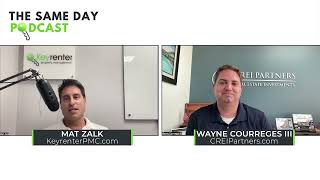
Interview (podcast/YouTube) with Wayne Courreges III, founder/lead sponsor of CREI Partners. Covers CREI’s focus (primarily 100–150+ unit multifamily in the Texas Triangle, plus ~20% development/alternative assets), syndication basics (GP vs LP, investor protections), target investor returns (8–10% cash-on-cash preferred, ~15%+ IRR minimum), asset/portfolio management practices (third‑party property managers, KPIs, hiring investor relations and senior asset managers), financing strategy (bridge → fixed-rate conversion), an example deal (Ivy — 101 units in Houston bought 2022), and how Wayne’s military/scouting background shapes leadership and culture.
Questions this video answers
~80% multifamily (100–150+ unit properties); ~20% development/alternative assets.
100–150 units (1980 or newer preferred).
Preferred cash-on-cash: 8–10% (preferred); IRR minimum: 15% (typical target 18–20% to be excited).
Ivy: 101-unit multifamily in Houston (Galleria submarket), acquired 2022.
Initially a 3-year bridge loan; converted in year two to a fixed-rate permanent loan (6% fixed, interest-only).
Chapters
Foreignay podcast where we discuss driving incremental business growth and other topics related to real estate, property management and entrepreneurship. Now to the show at hand.
Matt Zalk here. I'm the host of the Same Day podcast where I connect with top business experts and real estate leaders. One past guest includes Andy Gerchak of All City Adjusting, talking about his role as a public adjuster fighting for every dollar you deserve on an insurance claim. And he's helped a number of different clients of ours and his podcast dives into the details of how a loss claim works and how he can fight on your behalf as an investor. Today's episode is brought to you by Key Renter Property Management At Key Renter Property Management we are a full service property management company helping our clients buy, renovate and operate real estate assets. We help our clients build wealth while the headache out of property management. Listen Wayne, your asset management team will know undoubtedly how hard it is to line up contractors to get a make ready done in a reasonable amount of time after a tenant leaves a property. Contractors are busy, the work seems to drag on forever and all that leads to lost rental income for companies like crei. At Key Renter we line up our dedicated vendors so that turns can happen super quickly and we get more money back into the pockets of our owners. That's why no matter what rental you have, single family homes, condos, townhomes, we have the property management solutions that you need. Go to key renterpmc.com or email us at info keyrenter pmc.com I'm excited for today's guest. Wayne is the founder and lead sponsor of CREI Partners, which manages over 60 million in commercial real estate assets across Texas, Louisiana and Alabama. Wayne helps busy professionals build generational wealth through passive investments in apartment communities and storage developments. He's a former Marine Corps General and wayne brings over 16 years of experience from a Fortune 125 real estate firm and now focuses full time on creating high yield returns while giving back to local communities. The man's an Eagle Scout, a corporal, was a corporal in the Marines and has lived a few lives in the business world as you're going to hear. Visit Creipartners.com for more information. Wayne Courageous. Welcome to the show.
Thank you. Matt, how are you doing?
I'm great. How are you doing?
I'm good. I'm excited that you look good.
That's what's important. I don't know how many people actually watch this on YouTube, so maybe it's more important to have a have A good voice. I don't know.
Yeah, I think I have like the afternoon shadow pie going on. I have to shave every day.
So if I don't, my kids harass me. They don't let me get close. Get too much, too much prickly. Cool. It's great to have you on the show. I am, I am super curious about the general business model. I mean I understand CREI does. CRI Partners does general syndications of commercial assets. Before we, I want to get into your history, but before we get into your history, tell us, CREI Partners, like, what is the, what's the general asset class that you guys work on? What's, what are the specifics of that commercial asset class that you work on?
Yeah. So 80% of our portfolio proximally is multifamily 100 to 150 plus units. But Y100 and 150 is our strike zone, 1980 or newer, primarily in the Texas Triangle, Houston, San Antonio. If I dived in a little deeper on, on our markets there and then we've got about 20% or so. That's more development. We, we've done A, a RV boat, business storage, all enclosed 20 by 50 space units. We're in the process of developing a multifamily 150 unit. Multifamily. Beautiful class A property here in Brian. We're doing a hotel and an office retail. It's all part of this mixed use, but we're the lead developer on it.
Beautiful.
And yeah, we've done so primarily multifamily with some other alternative asset classes on.
The stuff that you're developing. You don't consider yourself a merchant developer though. You're, you're a build and hold.
It's typically five to seven years. Yeah. On all, on all of our properties.
Yeah.
Yeah.
Excellent. Let's go back now because now I understand a little bit about what's going on. You're an Eagle Scout.
Yes.
You're a Marine Corps corporal.
Not as lean, not as mean, but still Marine. Yeah. Thank you.
And you've lived like three separate lives. You've got three degrees, you've done a stint in commercial real estate with cbre. And then he jumped out and, and went on your own with CREI.
And that stint was 16 years. So I was, it was a big chunk of mine.
That's a whole life. That's a whole life right there. That's a whole life. What's the, what's the biggest difference about being an entrepreneur and, and working doing a 16 year stint at CBRE.
So at CBRE I've really had a great, I mean I would say looking back, I had a, you know, I like the team, I like the atmosphere. I did like that every few years I was able to go to a different city. And so like we started off in Washington D.C. is where out of the Marine Corps. So I won The Marine Corps 2003, 2007. CBRE was hiring Junior military officer type people where they already had the leadership skills. They just needed to teach property management or, you know, commercial estate. So joined CBR in June of 2007 and you know, took on more responsibility there, went to Houston, got some really great opportunities to manage some trophy properties. When I say trophy, like large, you know, 40 to 50 story plus office buildings, which was a highlight of my career. I was in my 20s managing these buildings and, and then I went to Austin, was more of a director role there. So a lot of office retail reported to me. I reported up to a managing director, but I was one of the associate directors there, then went back to Houston. So I did like sort of that I say military type way, but it's like I was able to go different places for promotion. I was able to, I treated it sort of like a duty station in a way, like, hey, I can go here, grow my experience, grow portfolio and, and they took care of me. I always had good leadership. Part of the, the process would work. Cbre and this is any company, even in my company, you have policies and procedures. You want to have systems and processes in place no matter what size of company you're in. So for me going into the corporate world, I had to learn how they cook their hamburgers, do what, you know, like the way they do their systems. Right. McDonald's, wherever. Yeah, well, that entrepreneurial spirit sort of dies because you're following SOP and the procedures. Well, it wasn't until I went back for my MBA that I'm like, oh dang, I have this entrepreneurial. I did. I, I mean I had this huge entrepreneurial passion early in life and so it rejuvenated me through my MBA program. And that's when I started. Part of my MBA was creating CRI Partners and doing the real estate investment aspect. And so I would say the stress is different. You know, with the W2, you're, you're, you're going to have different stresses that are not really related on cash flow because you depend on your employer to make sure you every two weeks. So I wasn't really stressing about my pay every two weeks, but I was stressed as when properties were selling or things were happening, like, hey, does this mean I still have a job or do I need to look at another, you know, company? Yeah, so on. On the entrepreneurial side, it's a different. Now I've got multiple team members, I'm feeding myself and multiple people. And so I've got to be more in tuned and thoughtful about, you know, future properties we purchase. You know, how does it look like, you know, not only from an investment side, but also a cash flow side. So it's just different way of thinking of things.
Is there a way to encourage entrepreneurship within your organization? I mean, I get it. You want, you want SOPs because you don't want people running rogue and making decisions. But essentially what you're trying to do is say to a colleague and employee, make the decision that I would make when I'm not here. I mean, that's what a standard, that's what a procedure is, right? I mean, if it was just you in an organization, you wouldn't need procedures because you would do it right every time, because you're the judge of the right. So what you're trying to do is get them to make your decision. I really hesitate that I really, I. Sorry. I really struggle with that in, in, in our businesses. Like, I want people to make the right decision, but God, I do not want to make a process and a procedure for everything because it just kills, first of all, it kills creativity and outside of the box thinking and a whole, like, there's lots of solutions that don't fit in an sop, but they're the right solution for that moment. And then when you give people, you know, bullet points of how to, how to proceed, they just stop questioning whether this is the right way. And I, you know, you put something on paper in 2020, you don't know if it's the right thing to do. And 2025, what's the right. What's what? What are your thoughts about that?
I think it's a blend. It depends on where you sit. Are you on the property management side? Are you on the ownership side? So for me, on the ownership side, you know, we are definitely very entrepreneurial. Every property we buy is its own business. So when we underwrite a deal, we look at it from a revenue expense side. There, there is gray area in how we interpret and how we can run the business plan. But from an accounting, like, if you're on the accounting side, you need to follow policies, procedures, like there are rules, G, et cetera. You need to Follow.
Yeah.
And, and then we, we always as an owner, you know, majority of our properties are managed by third party management companies. So you know, the reporting certainly want.
Them to have procedures.
Right. Because you know, hey, if a tenant doesn't pay on the first of the month.
Yeah.
You know, there's an eviction process, there's a notice eviction, there's late fees. You know, when I, when I tour a property, you know, I don't want to see a bunch of, you know, barbecue grills on the patios, etc. Like, you know, there's, there's, there's got to be procedures.
Yeah.
Because there's consistency. And I even will say like we, one of our properties that we have under contract right now, I toured that.
Property to sell or to buy.
To buy, yeah, under contract to buy that. But that property is immaculate. I open up a closet, their maintenance closet. I mean it's organized, clean. I'm like, when we, when we close on this deal, which will close in September, like this is the new standard. This is what we get all the property management from other, you know, like, hey, let's come up with this type of standard because you know, it provides that consistency throughout Now.
Yeah.
Standpoint, I think from a property management side or operations, giving them latitude on customer service and the ability to have some type of hospitality.
Yeah.
Mindset is important. So you, when you look at like the Ritz Carlton's and these, you know, other high end hotels, the staff, you know, behind the desk or the, you know, housekeeping, etc. They're trained through customer service trainings to provide an incredible service and experience. And I think in real estate, people forget about the experience. I go to a lot of these conferences. No one's really talking about hospitality or experience. Or in a multifamily conference I could just. So I'm like, okay, well that'll differentiate us because that helps our retention, that helps, you know, bring in, you know, more value with higher occupancy and etc. So it just depends on where you are on the capital stack. I mean our company too is small and nimble, but when you're a massive 150 Fortune 150 company, there's a lot.
Of, yeah, you have a lot of.
Out there that can do some bad stuff and then you're in lawsuits and stuff. So you've got to be just depends on where, what you're the size and what you're actually doing.
Yeah. So 80% of your portfolio is 100 to 150 units in growth markets. A lot of our clients, they've historically loved single family residential units. They, you know, it be common for somebody to say, well people always need a roof over their head and you know, they like, they like residential. You're in that category already. Why would you encourage somebody to jump from a single family portfolio into a multi family portfolio? Whether they're going to buy, the average person is not going to buy 150 units on their own, but whether they buy a small multifamily on their own or jump in as a limited partner in one of CRI's deals.
I think I started in single family when I was in the Marine Corps. I bought my first rental when I was stationed in 29 Palms. I was 19. And you know, when the property is leased with good residents, life is good. You get that check every month. Maybe you have a third party management company, you're paying, but it's, it's when the property gets destroyed or when that person leaves and then it takes three months to release. And so that's negative. You know, you don't have that cash flow. Yeah, H Vac goes out. Even if you have a home warranty. Those home warranty companies, the guy in the white van not marked showing up, you know, it, it's sketchy, they don't do a good job. And then you always have, it's like, yeah, just buy a warranty, you know, plan. And it's like, no, hate those warranty. I'm just, and I've done it time and time again. You know, when I buy my personal residence and I have them over like, God, why did I get the guy that has to drive two hours, you know, from his, like there's a reason.
Why he's driving, he, he's accepting homework, the work.
Yeah, yeah, for, you know, $100, you know, deductible, whatever. So, So those that are in single family, look, being in real estate is fantastic. I think it's, it's good. But what people fail to realize is just the amount of work and really the profit margins in single family. I just didn't see it being there. And the amount of work.
Yeah.
So think about roofs instead of units. So if, if those listening and you, you may have like 10 homes. I'm just throwing a number.
I have no idea.
Say 10 homes. Well, that's 10 roofs. Well, I can have 40 homes or 30 homes. And one building with one roof.
Yeah.
And multiple. So maybe three or four. So you know, if I times that by four buildings at 30 units each, that's 120 units. So I can have four, four roofs at 120 units. I'm just throwing numbers out verse, like 10 roofs for 10 or 120, you know, so it's like different roofs, different H vacs, different, you know, plumbing systems, water heaters. I got one boiler servicing 150 units. If that boiler goes down, well, I've got a lot of cash flow to cover that expense because I got a lot of units. Look at the break even occupancy too, like you know, to pay your debt, you know, and, and this, this, this is me speaking more for like an active investor. When I say active, those who are going to source, find deals, operate deals, you know, they're finding debt potentially, hopefully that will have like a strong cash flow property so that they're, you know, maybe a 75% break even. So 75% of the property has to be.
Yeah.
Occupied to break even. So 25 of the property in essence can be vacant. I can still pay my bills and my mortgage.
Yeah.
So I would say the risk standpoint now I think what I get a lot of my investors from Matt is actually they started with single family. They absolutely hate dealing with tenants. They hate dealing with toilets and they hate dealing with termites. You know, and it's just an example, just the headaches, the 2am calls, whatever, just stupidity. So then they start like, okay, well there's an easier way. And so syndication, you mentioned syndication, but I think some people don't know what syndication is. Sure. So just the basics of it, it's pretty much pulling your money, other people's money together to buy a property or buy an investment or a baseball club. It could be anything. But buying it's pulling money together to buy something you couldn't maybe do on your own or wouldn't want to do because you don't want to have all your money in one basket. So syndication allows you to, you know, pull money, reduce, reduce that exposure. So instead of that one single family home that you now bought, you know, maybe you put a hundred thousand down. Well maybe you can go into two multi family syndications or retail office indication, whatever your comfort is. So there's that diversification as well that I get a lot of single employees, family investors who are like they bought into the dream but then they realize like this dream is another job. And so I'm providing is like not a job, like you're still in real estate, but you don't have to do.
Any work because also the joys of a syndication are that you're you're one of the joys of a syndication is that your exposure is limited to the capital allay that you put in. So you're not on the debt. Nobody's ever going to come back to you if the property fails, project fails you, you've lost your money, but you certainly haven't gone bankrupt from it. Hopefully you're not. Nobody's coming after you for a personal guarantee on the note and hounding you for the next bunch of years. But that raises a good question when you're thinking, when one of our investors is thinking about potentially joining a syndication, being a limited partner in a deal, what do you think they should be looking at in terms of the general partnership? Like, what criteria do you think is important to be reviewing for a general partnership before you bump down 50 or $100,000 in a deal?
Yeah. So there's, there's a lot to that and definitely we'll dive into it. I think first and foremost having some type of relationship with that person or that company prior to the deal coming to you, you know, and that may be joining their email list that may be joining, you know, doing a meetup or whatever. But just seeing like how they are as a person because most of us, especially those that are listening to this podcast because it shows that they're interested in learning, they're probably sophisticated enough to judge good character.
Yeah.
And at least have like the spider senses, like something's not right. Like. Right. And so I would say at first, like if it just doesn't seem like a good fit just off of personality or trust, you know, just as basic as that. Right. Is just making sure. Because in essence, like they're, they're running the property for the next five years while you're sitting on the passive. So you gotta like the person. Right. I mean in essence that's step one. Step two is general partners similar to like when they bring in a bunch. And let's talk about general partners, limited partners. So limited partners is where people sit. If they're passively Investing, they invest 50,000. They're limited to that investment and that exposure of that risk, but they're still owners in that asset. And then you have general partners who are the ones who are signing on the debt run, ones who have found the deal but you know, put the deposit, earnest deposit, running the business plan. So those are two buckets. So typically the general partners, if they're buying an asset, say a large 150 unit, they will be multiple team members within that general partnership because not One person could have a do it all meaning maybe that one person didn't have the net worth, liquidity, the experience, the desire or the time etc. To run the asset. So you want to know as a limited partner, those listening who may get into passively investing is like, who really is the decision maker? Because there's there could be a lot of, you know, dust of like multiple general partners, but who's really that experienced one.
How would you even find that out? I mean there's one guy that has balance sheet strength as you suggest, the liquidity, the net worth. There's one guy that only knows how to manage property managers and make sure that the asset is performing. But how would you actually get to the. The crux of who the real decision maker is in a general partnership?
So I mean they should, you should ask. Right. They should tell you. But when you sign the private placement memorandum, so mind you, like when you passively invest, you're buying a security into a business asset. Right. So it's government security Exchange Commission. So the sec, you know, we do a private place memorandum which has a subscription agreements, company operating agreements. Those documents that are signed typically is signed by one person on the general partner and that person's listed as a manager. That manager is typically the ultimate decision maker. So that's one way to check and balance if. But they should, there shouldn't. There's no, like, it's not bad if this person is not the decision maker but they're part of the general partner. That's normal. Like, that's just part of teamwork. It's like the tight end is not going to be the quarterback because he's a tight end.
Yeah, yeah.
You need your team.
Yeah.
But so they're going to be very transparent, like, hey, this person. But another way to, you know, cross check that is typically you can see who's signing those operating company agreements as the manager. Just one way to look at it.
Yeah. On the, on the asset management side. So you guys, if, if anybody wants to check out creipartners.com you'll see that they are generally targeting, correct me If I'm wrong, 8 to 10% cash on cash returns with a 15% IRR. Is that right?
Yeah, 15% IRS are minimum. We typically would want to see, you know, 18, 20%. But for us to even get excited about a deal, we want to see a 15 IR.
Yeah, but that's a great, I mean a great 8 to 10% cash on cash for a. From an LP perspective, great return doubling your money every seven or eight years. I mean that's a, that's a, that's a solid play. What are you guys doing that's different or how are you managing the asset to create that performance?
Yeah, good question. On the returns though, it's. We typically see so that when we talk about 8 to 10% on the preferred return year, one could be 4% but that other 4% could be accrued. Right. And so when you look at over a five year period in the exit, we on a 2x multiple, we typically would see a 20% average annual return. That's the cash flow and the exit. So one of the things that I have had to do as a company is ensure we bring in right talent to execute on the business plan. So the first few years of having my company, like I was the asset manager, I was the investor relations person, I was the, you know, and that was okay.
Entrepreneur.
Yeah, but. And that was okay, Matt, because I had many years of experience doing that with cbre. So it wasn't like this. Oh, I had to learn this. And like I was already doing it and I was just doing it for my investors and myself, which was good. But once we started building out this portfolio and going back to that hospitality and that experience, for me it was important to hire a full time investor relations person and also someone who could help coordinate my schedule and time and all. And so that was a critical hire for us and more so outside my, you know, emails and stuff like that. The bulk of her job is focusing on investor relations and that investor relations is that experience hospitality. As simple as like you invest with us, Matt, on your birthday we will text you happy birthday, hope you're doing well. Like we have a relationship and it's like so many groups, they just you invest and you don't. You may get that monthly update, but there's no real relationship, long term partnership.
Yeah.
So that was a strategic hire for me is, is hiring that person who can help guide people through our investor portal and the subscription documents and answer questions. Obviously I'm there too and I'm happy to help, but it just provides that extra level of experience. And then as we started growing a little further, I was like, okay, well now it's time to hire a senior portfolio manager, which is also another term for an asset manager. And not someone who is learning, but someone who's already been doing it and who can hit the ground running day one. What I'm saying in all this is that we've invested in the company. Like we, we're not just squeezing all the profits and, and me going to Hawaii and just enjoying a long vacation. It's like, no, we put it back in the business and we're growing in a way that supports the actual growth that, you know, we're, we're going. If we buy all these properties and we can't asset manage because it's all on me, then you know, the, the property is not going to do well. So that's, that's what we'll do. Now once they hit about 10 properties, it's time to hire another asset manager. So and then as I mentioned, you know, everything is third party managed so they're not in the weeds of all those things. So that's how we operate the, the annual budget. Similar to any business that think of all this as businesses. Like each property is a business, we have an annual budget and we check in. That's our North Star. And every quarter I get a report showing, you know, where we're at. Every month we get financial reports and then I also get daily KPI emails about everything. So I'm tapped into where we are financially, what our occupancy is like, what our delinquencies like, you know, what repair funds, what invoices are outstanding. Like all this is, you know, what I look at.
But the asset manager would see, I mean to your point about a boiler for 100 units or whatever, that the boiler is down and you've got 100 upset apartment units. We have to make a decision about whether we're going to repair or replace the boiler. And the asset manager may be involved with the property management company to determine whether this is the first time or fifth time that this boiler has gone down, what's the age of the boiler and whether we're going to, whether we've got the funds right now to actually do the capex required to replace it, or rather just replace it, repair it one more time and see if it holes this time or whatever. Find a second bit, third bid. Is that right?
Spot on. And making the decision. And this is where like H Vac units. The easy answer is like we'll just replace the H Vac units always. Let's repair it.
Hold on.
You know, so we don't need to just replace it.
So yeah, that was an 800 blower motor. I'm not sure we needed a 5000.
Yeah, we don't need a replace. So having answer questions and pushes back and honestly having a management company that thinks like that is hard. Yeah, that is so hard. But if you can find, you know, in your property management key renter. But thinking like an owner and finding talent and people to join the team that think like an owner, that's what separates. Because I don't want to be in the weeds. And property management. Yeah, I'm happy to be Strategic asset management. Yeah. My team and all that. But I will, I will do it. If the property management company can't think like an owner and make the challenge.
I'll tell you the challenge from the property management side of thinking like an owner. And we obviously, we always want to think like an owner, but if we have 1500 owners, there are different types of owners. Some owners are like, if the system. If the. If the dishwasher is more than three years old, I'm not going to mess with repairing it, just replace it. And that's a logical decision because they're going to spend 300 to repair it and they're going to spend 600 to replace it. I'm not going to mess with the 300 bucks. Just do it right and we know for three more years. Yeah. And then the other owner is like, I don't care. It could be. There's a possibility that we send out an appliance repair guy and they only charge US$80 and find something. And there's a possibility that the appliance repair guy is $300 into it before he even tells us that there's another $200 left to repair. And we're like, well, in that situation, if you do, damn, if you don't. It's so it's hard from.
We don't know what's another benefit to being multifamily. If you're doing 200, $300 discussions.
Yeah.
You know, but that management agreement and I'm sure, you know, probably have. It's like, like for us, anything over $5,000 is a call to us.
Yeah. Right.
Now, we do check our financials. So if we're seeing a bunch of stupid expenses, we're going to make a decision to change course. But meeting with the. So for us, you know, we have weekly calls on all of our properties. I don't sit on one of those. That. That's where the senior portfolio manager, he has all those calls typically on Wednesday, and they go through those type questions. Go through if there's anything major. But yeah, if you're. If you are having that many customers or clients question, you know, a 300 charge like that would. I would not. I could not be in that business. I just.
The challenge.
It's not even my hourly worth, like at the end of the day, like at some point, you know. And yeah, and I say that not to be, you know, but everybody listening to this podcast, like your time is valuable and if you're stuck in the weeds on, on a little bit, you know, it's.
You got a question? I mean, we have people that say like, well, you know, there's a repair, it's $400 to change, you know, two filter grills and add new, add new, you know, filters. And we get a, we get a response back from an owner that says, I need three quotes for this. And here's the Amazon links to the things that, you know, it can't be this much. I'm like, man, it took you a while to draft that email and there's no H Vac company that's going to go out for, you know, 200 to do three hours worth of work all in. It just doesn't work. Like, I'm sorry, I don't know how to explain this to you, but H Vac companies don't make any money on these tiny jobs and it's going to cost you. So three bids are going to come in roughly the same because it's expensive and you've wasted now a lot of time on your side. You should probably just go do the work.
Go do the work. Well, and it could, and I'm just thinking about out loud here, it's like the actual cash flow for that property is probably small. I mean, I don't know, I mean, after they paid their debt management fee, whatever else, there may be only 100, 200 profit maybe.
Yeah.
So yeah, that 200, 300, I get it. Like I, I can sure empathize with like, oh, I'm not gonna make.
That's when you have to have a long term perspective, you guys. I hold this real estate for 20 years and over 20 years it's going to triple in value. And some months I'm going to make money and some months I'm not. But every month I'm paying down principal, which is just savings for savings equity in the property. And it just is what it is.
I agree. But they think on multi, if they start going on the multifamily side, you're not as. You're not 100, $200, you know, so.
It sounds to me like you have delegated a significant amount of responsibility to people that you trust in the organization. I'm just curious, like, what portion of that training do you think came from the military? You did Four years. Like, what was the. What leadership lessons you mentioned? Like, when CBRE was hiring, they wanted people that had, you know, junior leadership experience and they were able to train them in their vertical or whatever the actual business unit was, but they wanted people that already had the leadership skills. But, like, what portion of what you do today or your mindset comes from some of your military experience?
I would say from the Marine Corps learning that it could always be worse. Like, anytime you're in a situation where, yeah, it could always be worse. So that just mindset, I mean, there's so many times where I'm like, oh, my gosh, it always be worse. And it just like, just saying that just like, flips me back to like, oh, it's not that bad.
Yeah.
So I think that's good. I think, you know, obviously, I mean, even from my scouting days, like, leading teams and, you know, everybody's got a different want. Not everybody's motivated by the same thing. So, like, understanding what. Like, I've got a team member who really never takes time off. Like, we have a very good PTO program at our company, and she doesn't know, but she's not motivated by the time off. She's motivated by other things. And so that's okay. And what else? I have another team member who takes his time time off. So understanding them as an individual of, you know, what they're motivated about, what's their, you know, what their life chapter, you know, whether they're about to get married or whatever, you know, being there, I think you build that culture and that loyalty and that trust pretty fast. Also allowing them to try something. And I don't like the word fail, but, like, maybe they wouldn't do it the way you would do it or like it. It wasn't the right way, like, empowering them to doing those things. And that goes back to a little about the entrepreneurship. Like, you have to you. If you're micromanaging people, you're not buying back your time. Yeah.
And it's hard.
And every time I make a hire, it's buying back my time to focus on growing the company.
Sure.
And there's a book, you know, buy back your time or buy back your time, I think it is that I read and we implemented, you know, from our email systems to our meeting, like, for me personally. And then I'm in strategic coach. That's another about that very entrepreneurial coaching and focusing my days. So it's not just the Marine Corps. It's continued learning, reading, going to conferences, joining, you know, different groups and just taking like, think about like a toolbox. Like, you're just taking little things here and there, this podcast, you know, taking little things. And over time, you've got your tool chest to do what you feel is best.
I love that. Buy back your time. Dan Martell. I want to read that.
Yeah, it's a great book.
Good, good little. Good little nugget.
And you know who, not how. Dan Sullivan. Like, there's so many good ones. But the difference with delegation. So don't expect what you don't inspect. So there's a reason I get a daily KPI report through our system. I always know what our occupancy is, what our collections. We already went through all that. That's not my job to fix. That's my portfolio manager, asset manager. That's what they're. You know, what this job is focused on. But I'm always in tune with what's going on. I'll check in with key stakeholders, with my investor relations person, whoever, just to make sure. And other investors just make sure that they're getting the service. So when you. When you do delegate it off, it doesn't mean you can't still check in and make sure you got a good pulse of for sure as well.
So, yeah, let's go back in the memory bank. Maybe not to the. To the Boy Scout days, your Eagle Scout days, but to your first deal. Tell us a little bit about your first deal. Maybe some of the. Are you. Are you out of that deal by now? Are you still.
No, we're. We're still. Yeah, we're in the deal. We bought it in 2022. That deal called Ivy and Houston.
We.
I did it more of a text blasting system. So how I found it was straight up off market. Did the, you know, find the recorded owner on the appraisal website? Went to the Secretary of State to find the true owner. Went to Ben verified just to see, like all these different numbers and just do blast text messages, right?
Yeah.
I don't know if it's legal or not, but anyway, that's what I did and so just texted.
So great.
One guy, he did. You know, I got several text messages back, but one. We just built a relationship. It took about, you know, almost a year of just going back and forth and yeah, I bought the property off market from him. We turned it around quite a bit. The property was pretty distressed.
How many units was that?
That was 101 units.
Cool. And it was an individual owner or that you had been. You finally found the GP Interesting question.
Because it was, it was his. Yeah, he was a cardiologist in Los Angeles. He's retired now. He actually has invested a lot into our deals subsequently. And when I go to Los Angeles, I'll have dinner with him. And last time I was with him earlier this year, he's like, I didn't pay anything in taxes. That's awesome.
Thank you. Thank you. Appreciation.
Yeah. So I'll do a plug for him on that. But anyway, so there's that. And yeah, so at this point, you know, I would say, like, where the market cycle is and cap rates, it's not the, really, for me, it's not the time to sell. If we can hold on to the property with the debt we have, you.
Know, what kind of debt did you put on that?
So initially, yeah, so that was a bridge debt, and then we modified that to a fixed rate debt.
Okay. How long was the bridge?
So that was a three year bridge loan.
Great.
And then we modified it to a fixed rate year two. So we were able to work with the lender to get a fixed rate. Because bridge debt with interest rates, you know, those rates went up. So we worked through that process. And, you know, I think with any real estate too, whether it's single family, multifamily, it's just rolling with the punches of like, things are going to come up and it's like, don't put your head. It could be worse. Don't put your head on a pillow. Get, you know, what is that next step? And yeah, maybe it's. You don't want to look at it from like a mile away. Like, oh man, it's pretty. That's far. But it's like one step for the other. Yeah, but it's doing good. We'll eventually sell that property and, you know, part of the cycle. But in today's environment, I wouldn't, I wouldn't sell anything.
What's the nature? So you were able to. To put permanent financing on it in year two?
Yep. We've got a 6% fixed rate interest only on that.
And what was, what was the extent of the renovation that you did and how much, how much were you able to kind of bump rents on the back of that?
Yeah, yeah, on that one. So we went in, bought it when all the roofs were leaking. The H Vacs were in horrible shape. I mean, that's what I would expect.
From a cardiologist living in L. A that owns 101 property.
I mean, it was. But he had owned it for a long time and, you know, he just sucked. He cash flowed. It. I mean, it was just like sucking money. And he didn't put any money back. Yeah, but that's all right. Different investors do different things.
Sure.
So, but we went in, we. We did new H Vacs, new roofs, new paint, put in the car, we did carport, we did the recar ports, resurfaced the pool. And, you know, we did a lot of. A lot of work to the property. Average rents at that time were about 925.
Okay.
We bumped that to about 1050. So we saw, you know, 125 bump there. And then for the two bedrooms, if I recall, there are probably a low thousand, like maybe 1025. We got those to, like, 1300. So that was sort of the peak things were going. And then the market softened. Right. And so rents in. In Houston, in many areas, you know, rents have softened. And so, you know, we've seen it, you know, decline. And that's what really pushed us to, like, have those conversations with the lender of, like, hey, let's, you know, modify this loan, get through it.
Yeah.
But, you know, when you work through that type of, you know, you fight your taxes. Luckily, insurance has been going down. Repairs and maintenance. Wow.
Insurance in Houston's been going down, huh?
It has, yeah. Because it's all about capacity. It's about the. The amount of carriers that are sure willing to take on that risk.
Yeah.
So there's been a more. More supply of. Of that insurance capacity in the market. So we've been seeing some different things going in our favor. We've been starting to push rents. I mean, we've been hovering around 87 to 90% occupancy. So, you know, and. And I say that's, you know, we can push a little further, and we will. But you. When you're competing with other apartments, it just. It's the cycle that we're in. And so.
What part of Houston is that in?
That's in the Galleria submarket.
Oh, wow.
Yeah. So it's a good submarket location. Property looks amazing. But that was the first one now. The first one syndicated. Now. I've done, you know, my single family prior, and then after that, we did our development in Lafayette. And, you know, that one is going really well with the development, L.A. i've learned, just it takes a little longer to get things done, like, just Louisiana.
You don't say.
They tell you it's going to be, you know, this day, just add a couple weeks. So, yeah, I've learned that. Which is fine. Every Every little market's a little different. So. But yeah, that was the first. But the biggest thing on that one is like a lot of people go where there's other sharks going after the same meat. Right. And so that's what spikes these properties. So when a deal goes on the market, we, as in myself, I do not buy. So brokers come to me before it goes on the market, before even offering memorandum really is developed. Yeah, we buy off market.
Yeah.
And it's important because if you, if you go the what I, what I call blue ocean route and that's like finding off market opportunities direct to seller or slash going to broker and building relationships where they come to you when they have an opportunity to the whole, you know, world those is where you really make your cash flow. When you start buying on market, like if you have that sign in your lawn or like you're, you know, there's, in the commercial world, if there's an offering memorandum, to me, you're just the highest bidder.
Yeah. And just for, for explanation, offering offering memorandum is a bunch of beautiful photos of the property as it is. Maybe some renderings of what it could be, some architectural drawings of what it could be if you wanted to go and actually do the work to develop it. That trailing twelve cash flow with some unrealistic expectation of the future. Twelve months where insurance costs are going down and the roof replacement is, you.
Know, taxes are still on the, you know, prior.
And you can come and buy this property and, and hit a home run. So yeah, you're right. Before all that, before all the beauty's going into it, into making the presentation, if you can get it off market, it's a beautiful potential opportunity. I want to ask, on the fourth Monday of every month, you do a virtual meetup where people come together and they learn. And your primary passion, I mean you're obviously an entrepreneur, a business owner, but you're one of your primary passions is education. Just letting people kind of dive deep into your brain to learn something and hopefully make fewer mistakes than, than you have in your career so that they can avoid some of the pain. Tell us about that, that meetup on the fourth Monday of every month. How does it happen? How does, how does somebody get on your list so they can join that. What, what do you discuss?
Yeah, so I started this a few years ago. It's the Texas multifamily Passive and active investors meetup. If someone put in Texas multifamily meetup, my meetup would probably be one of the first, if not the first Every month, the fourth Monday of every month, it's virtual. So no matter where you are, you know, dial in or, you know, join our email list and we can. You'll get it as a recording. But we bring in other, like tax. We bring tax lawyers, talk to syndications, talk to, you know, cost segregation. This month I'm talking about what passive investors should know about underwriting because there's all these different levers within underwriting to make a deal look better than what it really is. And so, like, we will pull up one of our deals and like, we'll go through, you know, underwriting and like, hey, if I did a cap right here or a cap right there or rent, you know, just try to go through it as far as just asking. It's not making it like there's a black curtain and you don't know what's going on behind the scenes. And so that's what the meetup is. And then I have a passive investor coaching program. It's passiveinvestorcoaching.com and it's free. It's over five hours of small videos to go in and just learn about how to look at a deal, how to analyze. So, yeah, the education platform is for me, important because I have spoken to several people who didn't ask the right questions, didn't know what they're doing, and their investment got in hot water. And you can avoid that just through some education.
Sure. If I understand that there are levers, you say, I'm buying this thing at a 10 cap and I'm going to exit in five years at a 5 cap versus a 6 cap. There's a significant differential in the, in the ultimate IRR and exit. Why does a syndicator though, want to paint a rosier picture only to under deliver in the. At the end result? And I guess one answer that I have is because they want to do five deals in the next five years before anybody ever realizes that they're. That their underwriting criteria are bad. But there must be other reasons that people want. I would think if anything you want to over. You want to over deliver and under promise said vice versa and say, look, I'm going to exit at a 6 and then ultimately exit at a 5 because the market conditions are favorable and ever you look great like a hero and people's expectations were gladly met and exceeded. But why, like, why would somebody play with the levers in a way that makes the deal look better and then.
Under deliver, I think it's more. It looks flashier. So they can raise capital easier. I don't know. There were so many. 20, 21, 2022. It was in. It was crazy what people were buying real estate for.
Yeah.
And making these numbers work. And the only way to do it, I guess, is to be really aggressive on some of these levers. And so fortunately for us, like, we didn't do that and we're not losing our seats or, you know, we're able to like, be at the table playing real estate right now because we were conservative. So I'm so grateful in that discipline and what we did there. But, you know, with cap rates, no one knows where cap rates are going to be in five years. Like for us, you know, in Houston, San Antonio, cap rate could be around six and a half. But if you look at like CoStar's report, you know, cap rates in five years could be, you know, 5.75. You know, that's. So the idea is that, you know, as rates decrease, even though we're tied in the treasuries, there's going to be more money and capital being flown into real estate. Sure would reduce, you know, cap rates. So, you know, I, I think.
Just sounds like short term.
Well, how I get away with it, Matt, is I show like a sensitivity analysis because I don't know exactly we're going to be in five years.
So this is what the outcome is.
What if the cap rate's at 6 or 5.7? 5 or 7.
Yeah.
And so when we do a webinar, we present as like, okay, this is our base case. This is what we feel like it is. But then we have a slide dedicated to a sensitivity analysis of showing other returns. If we don't get a 3% rent bump, maybe it's a 2%, you know, so it shows different, you know, ways. And then it's up to the investor be like, okay, I'm comfortable with a 12% IR versus a 15 that Wayne thinks it's going to be. But because he's shown a sensitivity analysis, I can get behind a 12 IR, you know, so that's where, you know, it just. Everyone's going to have their different opinion opinion on the stuff. So you. But that's what I really want to do like this. When we go back to this meetup conversations like, you know, this is the rent world. This is a T12. Like, what is a T12, you know, it's the trailing twelve months of income and expenses.
Yeah.
So that's stuff like I want to share with passive investors so that they can ask those questions and, you know, maybe dig in a little bit more on verifying or validating. Like, okay, I feel good about this business plan.
Yeah. Besides. Besides.
Last question.
Shameless plug. Besides thinking like an owner, what are the most important things that a property management company can do to bolster your value to investors?
Pick up the trash.
And I think like an owner.
And I'm not even. I mean, yeah, I'll go. Okay. I went to a property in San Antonio. I was walking, doing a property visit. I see trash, I pick it up.
Yeah.
And then I'm going to pick it up. I'm like, property manager. I won't say his name. I'm like, if you're not doing the little stuff, you're not big stuff.
Yeah. Right.
If you're over. And so my thing is, like, especially when an owner's there, like, take care of the asset. Like, if you see trash, whatever, and what that is going to do. And I'm being a little as a goosey on this because it's like the trash symbolizes the overall picture. Like, if you don't have the attention to detail, take care of the asset. When the owner's there, then what are the financials look like? What are the relationships? What are the community events? I mean, for us, I think it's really hard for a property manager to think like an owner. And this is why I didn't ever do residential property management. I. I would have a really hard time because you're dealing with people's personal lives. Whereas when I did office and retail, it was very business. You know, it was business. It wasn't personal. It's not your home.
Yeah.
So it's that balance of, like, okay, you have a fiduciary responsibility to the owner, but then you're dealing with other people's stories of why they can't pay rent or whatever their stuff is going on. And so I, I do understand, like, it's hard to take care of your customer or resident and the owner, but ultimately you work for the owner. And if, you know. And for me, like, we empower our managers to make good decisions as far as taking care of a resident, but it just, it's. It's really hard to find somebody who just as simple as pick up the trash.
I mean, yeah, Wayne.
Much more. As with the counting everything else, I don't want to undermine the whole work, but at the end, they pick up the trash, take care of the sauce.
That's a good. It's emblematic of, of the big picture. Pick up the track.
Thank you. Yes, that's what I'm trying to say.
I like it. Wayne Courageous is the founder and lead sponsor of CREI Partners, which manages over $60 million in commercial real estate assets across Texas, Louisiana and Alabama. He helps busy professionals build generational wealth through passive investments in apartment communities and storage developments. He's We've already talked about it. He's a former Marine Corporal. He was an Eagle Scout and wayne brings over 16 years of experience from a Fortune 125 real estate firm and now focuses full time on creating high yield returns while giving back to local communities. Visit his website, Creipartners.com or dial it back a few minutes and let's talk about the the fourth Monday of the month meetup that he does. Wayne, thank you so much for being on the show. We really appreciate it.
I appreciate you Matt. Thanks for listening to the Same Day podcast. Tune in to a new show each week and be sure to subscribe to get future episodes.
More from Wayne

September 2026 Meetup: Investing Ahead of Growth: The Bryan–College Station Opportunity





May 2026 Meetup - Apartment Complexes & Passive Investors: Opportunities & Risks


March 2026 Meetup - Reading the Market: Economic Indicators Every Investor Should Know


February 2026 Meetup - Syndication 101: How CREI Partners Structures Deals for Investors

Build-to-Rent (BTR) Communities Explained: Why Investors Are Paying Attention