Courtney Bhenderu- Open Discussion and Q&A about Investing in Real Estate Syndications
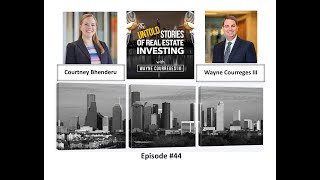
Recording of a Texas Multifamily Passive & Active Investors meetup (May 22, 2023) hosted by Wayne Courreges III with guest Courtney Bhenderu. The session blends personal background and investor-relations context (CREI Partners, passiveinvestorcoaching.com, investor portal) with an open Q&A covering portfolio diversification (multifamily, storage, build-to-rent, medical), underwriting mindset (cash-flow vs. equity focus), advice for beginners (active vs. passive investing; syndications vs. small-scale buys), property management and sponsor communication, and family-focused financial education. Practical takeaways include following deal economics over location, trust in the sponsor (‘jockey’), importance of reserves and conservative underwriting, and encouraged engagement via the investor portal and meetup.
Chapters
Welcome to the Untold Stories of Real Estate Investing hosted by Wayne Courageous iii, a place where active and passive investors come to hear the good, bad and ugly of real estate investing. Our guests consist of experienced operators and investors who want others to succeed by sharing their stories. If you're looking to syndicate deals or grow your wealth passively in real estate, you've come to the right show. It's now time to sit back, take mental notes and enjoy next episode of the Untold Stories of Real Estate Investing.
All right, welcome. This is May 22, 2023. We're going to be talking about passive investing, Q and A and open discussion. Really just have an open dialogue with those that are on the meetup today and then those that submitted questions prior. So huge advocate for just providing education to those that are interested in learning about passive investing. So excited to get this going about our meetup. We meet on the fourth Monday of each month at 7pm Central Time. We bring in a bunch of different syndicators and vendor partners and experts such as consultants, attorneys, etc to come talk to us. We like to, in the very beginning, do like a networking breakout, talk to each other, get to know each other a little bit, sort of break the ice. So that way when we are getting into the subject matter, it's a little easier to, you know, speak up or type in questions so we can definitely provide value because everybody I know is busy. It's that time of the year with kids going, you know, getting end of year school, hectic life. I know our family is running around so but, and then we'll do our guest presentation today. Like I said, it's going to be open discussion, there's some questions and you know, we'll just see where the conversation goes and then at the end, you know, there's more time for networking. So usually it's about an hour long. I updated this slide today. We're at 1,378 investor members in our meetup, the Texas Multifamily Passive and Active Investors Meetup. We are trailing behind Germany at 1,450 members. So to help, you know, share with your friends and family if they are thinking about passively investing in real estate or have any, whether they're wanting to do it now or down the road, you know, I think this is a really solid meetup and for those that can't join every single month, every single month, you know, we share all the recordings and all that. So a little bit about myself. I'm based in Central Texas, started this company in 2019 with CI Partners we are owners of Value Add, Multifamily storage and Build to rent. And we have investments in Texas, Louisiana and Alabama. I've been doing this pretty much my whole life in commercial real estate. So started in single family when I was in the Marine Corps, probably like 19 years old and then been in commercial real estate ever since. And it's been a really great journey and it's something that I really enjoy. So excited just to continue real estate investing for for the foreseeable future. Podcast the Untold Stories of Real Estate Investing. Check that out. We try to post every other week on that and then this meetup recording will be an episode as well. And then our website cripartners.com One thing we launched about a month or two ago, if you haven't checked this out, highly recommend. It's passiveinvestorcoaching.com the students that have joined it have all had really great experience. They have been very complimentary of all the deep dives that we go into on passive investing. I would say it's like a boot camp. It really accelerates the learning curve on passive investing and what to look out for Questions how do you underwrite? How do you determine what deal is right for you? It is a seven day money back guarantee. I'm, I don't make a profit. It's not a profit center on this education. But what we try to do is have, you know, we have these 10 modules. It gets you up to date on what we're, you know, how to passively invest, what to look for, find your why, et cetera. And then we meet monthly as a smaller group. If you have some deals that come up. I can't advise and say, you know, you should invest in this, but I'm happy to look at it and help provide a little direction and answer questions and such. So we have that monthly as well and then we have a Facebook group. So check it out. Passive investor coaching dot com. You have nothing to lose because if you don't like what I say during that then you get your money back in seven days, no questions asked. So check that out if you are interested in passive investing or if you know anybody that's looking to passive invest but just don't know where to get started or how to do it. I say it's a good course because Whitney Courtney and I did a lot of the contents up. But again there's no, I would disagree.
With what you have to say. Of course it's gonna be good.
Yeah, this is good. And like I said seven day. But enough of that. Enough of me. Want to really introduce you to Courtney today. She has been somebody I've known, I don't know, at least seven years. Seven, eight years.
I think it's like 11.
Oh, my gosh. Yeah. Okay, so 11.
This is my 10th year wedding anniversary. And I knew you before.
That's right. Yeah. Should have done pre. Pre. But I guess, wow, 11 years. So we worked together in commercial real estate when we were in Houston, and. And then I went to Austin for a little bit, and she went with another company. And about a, I don't know, couple years ago. Year. Yeah, about a year and a half ago, she stepped away from full time work to be a full time mom. And I was like, can I just have like 10, 15, 20 hours of your time a week and come join me at CRI Partners to handle our brand and investor relations? This is like one of the. This is the most important part of our business is investor relations, and it's somebody that I had to put in the role that I truly trusted and really respect and admire. And, you know, so when Courtney said yes, I was like, it's a slam dunk because I can only do so much as C Partners with underwriting deals, going through acquisitions, et cetera. So wanted to bring Courtney in on this meetup and have her, you know, ask some questions, but also answer questions as well, and so everybody can get to know her a little bit as well. So, Courtney, I don't know. I mean, I'm happy to read all this stuff, but really, I just wanted to introduce you as somebody that, you know, I highly respect and trust, and we've known each other, I guess, 11 years. So with that, I'm gonna stop sharing. I'm gonna turn it over to you.
Okay, well, I'm gonna share for. For just a minute because, you know, I never pass up an opportunity to share my Q family. So thank you. Obviously, I'm Courtney. I'm the director of brand and investor relations for crei, and I just have a couple things that I want to share tonight. So one of the things that we take so seriously about this meetup, regardless of if all 1300 of our, you know, meetup partners are on here, or if we've got 10 or 20 or 50 or whatever, is really the power of collective knowledge and the value of learning from each other and our experiences and how we can use that to our benefit. So we do encourage you to engage. I totally get it. I get intimidated about doing any. Everybody thinks that I'm the most outgoing person ever and truth be told, I'm oddly introverted. So I get it. If you're concerned about saying anything in person, reach out to me individually or in the chat box. It's totally fin. We love to hear what your perspective is. I am passionate about knowing what your investor motivations are and what your goals are and also what you have tried in the past that didn't work for you because we, there's no need in repeating that, right? So let us know.
We'll.
We'll help you Skip that. This is just a great place to learn. I mean, clearly I could go on about that forever, but I will not. So so I have been the voice behind the newsletter, a lot of our blogs and social media posts for about a year and a half now, and I really have have loved it. I definitely look forward to getting to know everybody a little bit more personally, but the amount that I have learned in the past year and a half has just been so inspirational and such a fun journey for me. And apparently I'm not the only one who wants to learn. According to Google Trends, in 2021, the search term passive investing real estate syndication saw a 200% increase compared to 2020. So it's clear that there is a lot of interest in passively investing in real estate syndications and people are very curious about it. But with global instability in the market and financial uncertainty, it's even more important now that when you're investing in something, it doesn't matter if you've invested a ton in or this is your first investment. You want to make sure that you're confident in that investment. And a huge part of that is us gaining your trust. So my goal is to help gain your trust and your confidence in investing. But in order to do that, I feel like you have to know what motivates me. So who am I? Of course, first and foremost, I am a wife and a mom. We are kind of a Tale of Two Cities. I'm from a small town in East Texas. I don't think it's quite as small as Copper's Cove, but very small. And my husband is from Hyderabad, India. We are raising our two little girls in Houston and I am deeply passionate about their education and raising them to be confident, well spoken, curious young ladies. Someone told me recently that they felt like I was raising my kids the way that people did decades ago because we play outside, we cook, we sew, we use our imagination and we have a great time on the financial side of things. My husband and I really consider ourselves to be the transitional generation for our families. He is a first generation immigrant, and when his family first moved here 20 years ago, his dad worked overnight at a gas station. And now their success story includes him working as a QA leadership role in a Fortune 500 company. My husband, I'm like, so nerdy. I'm just so proud of him. He is the vice president of technology for National Power Generation and Redundancy Company. And his brother is knocking us all out of the water. He is finishing his last year of medical school and about to start his journey, his residency journey, to become a neurosurgeon. So we are just, I mean, I just can't even stand it. We're so, so proud of him. My twin sister Nat, which, if you didn't know, Whitney, is actually my twin sister, we were the first people in the history of our family that graduated from college. And we actually debated if I could say that I was the first one that graduated because I graduated like two weeks before she did. So we compromised. We were both the first to graduate from college in our family. I went on to reach my goals that I set for myself, including being a resort director by the time I was 25, which included sleeping on the floor in my office after 27 hour shifts and all kinds of crazy things. So I knew that I had to change, make some kind of change for the next chapter of our life. And that was going into commercial property management, which is where I Met Wayne over 11 years ago. And then last year I made another shift to focus my energy on my family and investing and working and supporting Wayne and our investors. And honestly, it was the best decision ever. Wayne and I talked about this today. When you make decisions that you are confident about, you're prepared, you've planned, you have good communication and with your spouse, and you're. You're ready to do it. There is just the most incredible result of that. So it was really, really great. If you read our last newsletter, which I hope that you are reading our newsletters because I write them, so of course I want you to read them. You know that my biggest tip to couples starting out is to live off of one income if you can. And sometimes it can feel like an unnecessary sacrifice when you see everybody else who suddenly has two incomes buy new cars and houses and all the things. But the reward for living with that discipline is just unmatched. I mean, I feel like we've turned into our next chapter now because we did that for 10 years and it's like all the things along the way that we did, we're starting to see the fruits of that labor and it's really just incredibly exciting. So by doing that for the past 10 years, we were able to invest in a variety of things to kind of build our foundation and really learn about everything and learn what's best for us. So about three years ago, we invested in our first commercial office building just in time for Covid. So whatever, it's fine. We're still going to hold out hope for that. And then since then, we've grown our personal portfolio to include multiple real estate deals and of course, more traditional investments like stocks and our retirement accounts. But one of the things that I love most about all of that is involving my kids in investing in money management. So my kids are 8 and almost 6 in about a month. And we actually took them with us on our first meeting with our attorney for estate planning. And, and he was like, oh, cool, you brought your kids with you to talk about dying. And I was like, well, I didn't tell them that's exactly what it was. But we have had them right there with us for those meetings. They sat in our, they were there for us when we just closed on our house and all of our meetings with our agent. And it's just something that I want to bring them along for and hope that I have the intelligence to answer their questions along the way. But if I don't, I will research it and we'll talk about it later. So it's just been super fun. My 6 year old is desperate to have a lemonade stand and actually wrote a business plan for it. I mean, it's, it's stick figures, but she said it was her business plan for her summer lemonade stand. And then my 8 year old, I found a, a paper in her backpack and she explained to me that she had a whole scheme set up on, on the recess playground where she hired her friends to pick and sell Wildflo to each other before Mother's Day this year. So I think that they've got, they've got that in there with them somewhere. So it's been a lot of fun. I've generated some printouts and some activities for them. If that's something that you're interested in, please send me an email and let me know. I'd be happy to share them with you. I just think it's fun. I mean, they're going to color, they're going to learn things anyway. It might as well be things that are going to help them. So just Send me a message if you're. If you're interested in doing that. I thought about possibly one of our summer internship. Summer. We've got a cousin doing an internship. She's coming tomorrow. That's on my mind. Our summer meetups to include kids of all ages, really. I mean, mine are little, but everybody's, you know, kids stand to learn something. So we could talk about compound interest, we could talk about different types of investing. We don't have to get in the weeds. But I truly believe that if you can imagine where you want your life to end up, you're going to make decisions to help get you there. So if y' all would be interested in doing meetup with a bunch of kids might be a little crazy, but it might also motivate me to actually schedule that. So let me know. Send me an email and let me know. So anyway, the pitch, of course we have to tell you, CREI Partners, again, that's our website. We really encourage you to go to that website that has all of our social media accounts, all of our blogs. You can search. If you're just curious about something, everything is right there and really easy. It would be incredible if you would like and share and comment whatever you're comfortable with. If you listen to our podcast, please leave us a review. We would really, really appreciate that because a lot of time and effort does go into this and it's one of the questions that we talked about later. But you know, there's a lot of syndicators out there that are a little shady and we really work passionately to try and make sure that you have good, solid information available to you. And we would just really appreciate it if you would give us some feedback on social media sometimes and share it with your friends. If you are not already in our investor portal, on our website, you'll see a little gray button like this that says invest with us. Please go in and click on that. You'll see a little form. It's not intimidating and we will not hold you to it forever. But it does let us know if you're a sophisticated investor, if you're an accredited investor, if you're planning on investing sometime in the next year, or if you really are just curious about it and you're not really planning on investing for a little bit, it's totally fine. Just let us know and we will work with you. Once you're in the portal, when we have a deal that's available, that group will get notification of that deal first. They'll get all the details about it, they will have first dibs on signing up for any of the communication that we have for that deal. So again, there's no real commitment on your side, but it's super valuable that you go ahead and put all your information, build your profile in the portal so that you're there. Because as much as we like to hang out, you're here because you want to invest and make money. So that ultimately is how you're going to do that. You got to get in the portal. And then of course, the passive investor coaching. That is passive investor coaching dot com. Wayne did a great job overview giving you an overview of that. So this is my information, my email Whitney is going to put in the chat my calendly link. If you are a sophisticated investor, which I'm happy to send you information on the differentiated differentiation between a sophisticated and an accredited investor. If you are a sophisticated investor, by SEC regulation, you are required to have a conversation with us and establish a relationship with us prior to being able to invest with us. So we will need you to go ahead and sign that up. But now you know me, and I'm not intimidating and I'm fun to talk to. So don't hesitate about signing up and sending me a calendly link if the dates that I have available don't work for you. I'll work around your schedule. Just let me know. But that is that information and I will stop sharing now and we can answer questions.
All right, Courtney, awesome job. Thanks for that overview. Let's start off with one that someone had submitted this past week when we published it.
Yes. So the first question that we got was, let me see, where was it? Oh, have you considered diversifying your passive real estate investment portfolio across different asset classes and geographic locations? Why or why not? So that question actually came in the day that Wayne and I were talking about the pros and cons of other investment classes like storage and, you know, maybe we do have one builder, rent. But if that was going to be another thing that we wanted to explore and really, I think that that's a. It is a great question, but it's also a necessity of the current market that we're in. So in, you know, 2020 and prior to that, we were really focused on the Texas market, San Antonio, Austin, Houston, really set on being built in 1975 or later, minimum of 100 doors. We had the set criteria that we were really looking for. And right now it's just a tough market and you have to be flexible with that. So there's a Lot more emphasis on making the number work and the value in underwriting the deal and than necessarily where the location is itself. And at the end of the day, if it's making you money, then that's what we're. What we're working for. Right. So we absolutely think that there's value in investing in other, you know, asset classes and in geographic locations. And we just say follow the money. If the deal is going to provide you your desired returns, branch out a little bit, try something different and, and see where it goes. It could be the best thing that you ever do, or you're going to learn something from it and have that tool in your toolbox to make a better decision next time a deal comes available.
Yeah, I 100% agree. And one thing that Courtney mentioned is it's been really tough to make numbers work with multifamily recently. Interest rates obviously are high. We've got insurance going crazy, property taxes going crazy. And this is not just Texas. Like, you know, a lot of the, the Southeast markets that depend on, on those property taxes, I mean, there's a lot of, A lot of the increased expenses going on. And then you have a lot of people trying to buy multifamily just like us. I mean, we're. We. We believe in the fundamentals. We believe that, you know, multifamily is one of the better asset classes because at the end of the day, people need a place to live. I'm a big lover on class B and class C properties that we can turn into a class B, because at the end day, you know, people need that supply of housing. You know, even if you're in a class A, if you lose your job, you may have to move into a class B or a class C. Right. So I like that asset class, but the one that I've been really excited about is storage. And not even like, there's a lot of storage out there. Courtney, you know, we see it all over. But one thing that I'm really passionate about, what I'm really seeing is a niche within storage, and that's the larger 20 by 50 or more or around that type of storage. And I'll tell you why. Because we have a property in Huntsville, Alabama that we partnered on. It was our first storage partnership we brought in. I didn't go out to the masses to raise capital. We raised quite a bit of money on it just through a few phone calls with investors who had already invested with us. And part of that was, you know, I believed in the partner, I believed in the location after you know, seeing and understanding the fundamentals like population's huge flood zone, the things that we would look at in multifamily, we were doing the similar on the storage but it cash flowed and we've done two distributions since owning it since December. And so it's really gotten me excited about looking at storage and in particular the storage that has, you know, the larger space, not, not the smaller storage, but stuff that can hold high end boats, RVs. I went there a couple weeks ago, Courtney, and there were a lot of businesses that were leasing the storage space and I just had some huge aha moments. I'm like, you know, at the end of the day they're not as price driven on like hey, if you raise rents 50, 100 bucks, you know, they're likely not to leave because they have to store like their generators or the disaster recovery equipment. So we're looking at that.
That's a huge thing you and I both have experienced in massive lease deals in million square foot plus buildings. Losing the deal because there wasn't enough, you know, rent storage that was available for them. And in any of these areas where with the natural disasters and everything, that makes total sense that they would need to have that and even maybe have it distributed around the city so that they can get to it from other.
Areas 100% and even like I don't know, in Austin when I lived there, we had the service of the guy who came around to clean the trash cans, connect it. They don't have it where I live here. I would definitely subscribe to it. But they, the guy like parks his truck with his trailer in the storage unit, you know, so. And there's just, you know, a lot of these units. So today we went under contract for some land in central Texas that we're going to be developing this and you know, we're going through the land and the entitlement process and going through that process. So we are diversifying and we're going to find ways to you know, have cash flow and opportunities for investors when the traditional method of just going to other multifamily in particular, it just, it's not as I would say, sexy right now. The other thing, build a rent, it's doing extremely well. We have that property in Louisiana. It's a 98 single family homes that are being built on 12 acres that is going really well. We had some delay in getting the infrastructure built out because of the rain and you know, the financing stuff that we had to work through. But that roads are such going in so I'm also a big fan of that. I'm not a huge fan yet of office or probably will never be as an investor. I'm not a huge fan of retail as an investor. I like to go out to eat and such. But it, it doesn't. There's a lot of risk with that. We saw that during COVID We see that with things more go on online with Uber eats and Amazon, etc. So when we talk about diversifying for CR partners, maybe not so much with retail office, I am looking at some medical opportunities that could work out. There's not as many people going after those investments, Courtney. So there's some opportunities that buy cash flow and deals at a higher cap rate where we can do pretty well. One of the questions we got asked was how many storage units. So it's 125 units in Huntsville, Alabama, 20 by 50 in size. So that's our first and only storage. But I like it enough where I'm going to take a huge risk and develop in Central Texas. So anyway, if there's other questions put in the chat box more to come on that. But I want to go through zoning and entitlements and obviously our due diligence before going out to investors on the vertical build. But great question on diversification. What's another question?
Well, let's see. So I know one of the things that you and I share a common one of the things that brought us together is our goal setting and vision boards and all that kind of stuff. So I thought it was interesting. And somebody asks how do you prioritize your investment goals to align with the opportunities presented in different syndications projects? I'll give you my interpretation of that question and then you can tell me if yours is any different. So first I think this is super personal. It depends on what phase of life you're in and I would say probably where your money originates from. If this is hair stuck in my lip gloss, if this is like inheritance that you're getting or if you're going to, you know, redirect your self directed IRA if you're further along in your investment journey, if you're starting out, I just think there's a lot of variables that go along with that. So I can tell you my perspective. I'm in my late 30s, I have a young family. For me, goal setting has been an absolute pivotal part of my life as as long as I can remember. I wrote myself a letter when I was 15 years old that was many pages of how I wanted my life to be and how I wanted to get where I was going to go. So I actually can't imagine not using my goals to decide what I was going to do with my investments. But some examples of that is we're really focused on setting our kids up for success from the in their startup years. So we don't necessarily focus on just college accounts. We really think about what is that sum of money that needs to be available in 10 to 15 years to help them with whatever path their life is going to go on. You unmuted us.
And again, my process of there we.
Go, I'm unmuted now.
Sorry, Cardi.
So an example about that was that I had set a goal to be a millionaire by 40. And to some people that might not be even that big of a deal. But I guarantee you, if you go back and talk to anybody that I was in high school with and ask them if they thought I was going to be a millionaire, you'd probably get a few laughs about that. But it was something that it was a goal to get there. So what are the decisions that I have to make 20 years before that, 10 years before that, five years before that to help get me there? So that's the kind of things that kind of focus for me. One of that, an idea of what that would look like as a syndication deal is our idea, the Galleria deal. So that is a deep value add deal where the returns are going to be seen once we sell. So that would put us in a situation where we can snowball that into another deal after. I'm more interested in that than something that's going to pay me out monthly and quarterly dividends. But if you're more interested in something that's going to pay you out on a consistent basis, or more interested in what your tax benefits are going to be because of that, that would be a driver for what investment you're looking.
Yeah, I love that you said it's personal to you. And at the end of the day, it's personal. One of the things that, like on passiveinvestorcoaching.com that I really talk about, it's, you have to determine if you're a cash flow investor or equity investor or both. The thing I love about multifamily is everybody gets it. Like it's something. We've all lived in an apartment at some point. We get it. It's rent, you know, and, you know, there's expenses. And we know the general idea of how those investments go. Even though we're not Some people are not real estate professionals but they get the apartment living, they also get single family living, right. It gets a little more complicated when think about office and retail or industrial or mixed use, et cetera. But you know people tend to go towards multifamily because they understand it and they get that it's like it is a need. But if you're a cash flow investor, that's more thinking like you're looking to replace your income or supplement your current income to get you out of a situation, good or bad. Maybe you know, you have a goal over next five to eight years, you want to get out of your W2 or retire, etc. And you're wanting to replace income with passive income. So at that, you know, it's somebody to look for opportunities that provide cash flow and you know, depending on the risk of that investment and you know it may be a lower return depending on if it's pretty, if it's a conservative type deal or, or higher risk, higher return. So that's one piece that you have to determine if you're a cash flow. If you're an equity like hey you, you love your job and you love your situation, life is good but you just need to place capital and you're wanting that to double, triple over the years. Then you may be heavily more focused on equity, the development type stuff that's higher risk but there's a hell of a lot higher returns. You know we're talking 3x plus on those development but it's higher risk. You know there's, there's the lease up time and etc that happens between buying raw land, developing. I mean ultimately development according is the ultimate value add. Like there's I can buy an older property and renovate and I'll hit certain things but the biggest value add I can do is buy raw land and develop higher risk, higher return. So to answer that question, you really just have to. It's personal. Are you a cash flow investor, equity investor or are you both and what are you more open to investing in multifamily storage things, you know, things you're learning about. Personally for me I, I'm a very hands on investor Courtney, like I, I typically do and those that are listening or know me over the last couple years since we've started doing this outreach or communication education, I'll typically have maybe three deals a year and honestly that's all I can handle because I'm so hands on in asset management calls going to properties, looking in like there are a lot of capital raisers out there that are just, they're raising capital and placing capital, but when they place capital, Courtney, they are placing capital with people who control the deal. And those syndicators or sponsors don't have any decision making on the day to day asset of that property. I have control issues. That's what I enjoy. I love being the operator. That's a differentiator for us. But we're, we're very selective on the three or four deals we get. We may not have any deals in 2020. We didn't have any deals, you know, and that was okay. We were, you know, setting up shop and also trying to find really good opportunities. So we did get.
Well, we've gotten feedback about that from other investors. At our last meetup, there was a gentleman who had invested exclusively with another syndicator for multiple deals, but felt like they were really churning deals too quickly and he wasn't getting that individual attention about, you know, how closely are you following the business plan? That was discussed whenever the deal was under in the works and really what's going on? He really wasn't getting a lot of communication. You know, I was early in the deal life cycle, so who knows really if the, if the benefit was really gonna, the returns were really gonna be there. But it just made him uncomfortable. He really didn't, didn't care for that. And he was, you know, like, I really would prefer to invest with somebody who is going to give us consistent information about really what's going on with the property. Are we following the business plan? Are there changes to the business plan, that kind of thing. And again, that's part of, once you start investing, you kind of start going through and you're like, oh, I really don't like that. I want to try something else. So it, you know, it takes all kinds.
Yeah, well said. We got a couple questions that were privately chatted to me, so I want to read them and then answer them. This question is, I'm a newbie and have been looking at properties to get started. I'm stuck between going for an eight plus property or starting small with a triple or fourplex. What would you suggest to be a good place to start? Then he says, I now that you are talking about commercial properties, do you suggest I even look out for those opportunities knowing I'm starting out fresh? It's a really, really, really great question. And I'll, and I'll. There's multiple ways I can go with this, but I'll start with this. A lot of people think real estate is a get Rich, quick, and it's easy, and it's just not a lot of the investors. A lot of the investments over the last few years have gone really well because interest rates were so low, the cap rates were so low. And then you had this massive competitive scenario where people had cash and we're looking to buy. So it overinflated a lot of the prices, right? And it made a lot of people really wealthy. A lot of invest a lot of investments. You know, it was a good time for a lot of people. Things are shifting a little bit, right? It's getting a little bit more conservative. It's getting back to normal, which is not bad. You know, real estate has made the most millionaires out of, you know, investors of all the asset classes. So, you know, it's not a bad thing that things are settling down and becoming a little bit more under control. But I would say is you got to determine if you're going to be an active investor or a passive investor. So an active investor, no matter the size of the deal, you're finding the deal, you're negotiating the agreement, you're finding tenants. If you're managing, you're dealing with, you know, you know, toilet issues or roof issues, especially with smaller property. When I own single family, like, that was. It took a lot of time. And then when that family or families would move out or that person would move out, like, it would sit vacant until I fixed it up and I leased it and it went, you know, back. So there was a time of not having cash flow. So you just got to see, like, hey, is that something you even want to do? There are days, Courtney, where I'm like, man, I should just be a passive investor. Like, you know, if I trust it all, you know, if I could just, you know, get a few syndicators that I. But it's just not who I am. Like, people are good doctors or good attorneys or good teachers or good. Whatever they do. Like, that is what they do. Like, this is what I do. This is my. Like, my wife says, you know, one day you should just stop doing what you're doing, and we'll be fine. And I'm like, no, that's not who I am. Like, I'm always going to be looking at real estate deals till the day I die. Like, that's just who I am. So if you have that passion like I'm describing, then active is a great way to go. And I would say a lot of people think they have to start with single family or they have to start with duplex triplex. I will tell you, it is easier for me. This is going to be some weird and crazy, but it's easier for me to buy 100 unit 10 million plus property than it is to buy that aplex or because I can get partners, I can get people excited about it. You know, there's more doors, meaning more money, there's less risk. There's people out there who will lend or offer their balance sheet who just want to be a loan signer. There's capital raisers. You know, I need all those people to close our deals as well. So if you do go the active route, get a mentor. There's plenty of them out there. A lot of mentors I am not a mentor for. My day job is real estate investments. I am not gonna, I can't spend my time heavily focused on education. On the active side, there's plenty of people that do that, do a really great job, reach out to me one on one. Happy to share that with you. Now, if you're looking for passive investments, yeah, I've done modules, digging on those and then I do a monthly call just for those members that are in that passive investor coaching. And I'm happy to help that process as well. So I do offer on the passive investor coaching, not on the active side. So that was one question.
I'm going to add something to that. So we had an investor meetup in Austin and one of the gentlemen that I was talking to, he's like, oh, I'm just really not sure about multifamily. I've not ever done that before. I've done some other investments. I'm not sure. And I said, okay, well talk to me about what you're, what, what, what else you've done. They said, Well, I have 200 single family homes. Holy cow, that sounds like a lot of work. 200 individual rent checks, 200 individual, you know, rooms, toilets, all the things and a lot of churn. And, and really I would say a fourplex, an aplex, any of those things. Like Wayne said, you really just have to decide. Do you want to be talking to your renters on a one on one basis. Do you want to be, you know, dealing with all that? It's kind of interesting since, since my experience was with commercial real estate for a long time I thought people only managed class a high rise, 1 million square foot office buildings. And I was talking to somebody who had a mid rise with one elevator and I was like, oh my gosh, how do you function with only one elevator? And they Said, well, how many do you have? And I said, we have 43. I mean, that's all I know. So it just depends on what your comfort. They could not possibly even fathom having to handle 43 elevators. And it's all I knew. So it really comes down to what is your lifestyle, what are you comfortable with, and where are you at in your investment? If you, you don't have to feel like your money is working for you just because you're talking to the renters every day. You're. You, you absolutely can get that feeling from the investor updates. We invite you to come and tour our properties, walk around. We like looking at them. You can come with us. I'm. We have no problem with that at all. Whatever. You need to be felt. You feel comfortable in that. Don't be intimidated just because it has the word commercial or 100 doors or whatever. And there's a lot of resources on our website, we'd be happy to get with you to help you see what your money would do, you know, in, in trending through the life cycle of that investment, to help you feel comfortable with making that decision. And it still may be to be active. That is totally fine, too. But I do feel like a lot of people feel like they have to start there. To them, starting small is a single family or a multi, you know, quad or whatever. And it's, it's not necessarily the, the absolute starting point for everybody.
Yeah, I'll, I had one more thing, and I'll go to the next question. I also think, like, if you're buying a four plex. A plex, if you're asking that question, you have capital, right? You do a 20, 25% down payment, and maybe these lenders are doing 30%. If you take that same capital and say you invest that over two or three syndications and you're doing 50,000 or 25,000, wherever that sponsor's minimum is, you're diversifying within real estate syndications and not taking the risk. Like, if that duplex triplex, something happens. Like, you're, you're financially responsible for whatever happens. Like, you know, the liability is such on a passive limited partner side, you're still an owner. You are, you are an owner in that entity, but you're a limited partner, so you're limited to that investment and you're limited to the liability. I think that's huge that people don't think about when they're doing some syndications. All right, we're getting closer to the top of the hour, so I know We've got a few more. What's another good question and if anyone has questions.
Yeah, does anybody have any questions before we answer anything else?
Yeah, let's do that or put in the chat box.
So I did get some comments from people to asking us and the kids information. So I'll be happy. Y' all are going to get to do a crossword puzzle about investing in real estate. It's very exciting. I'll send you the information that we had. So wait, I will let you answer this. What are some of the quick key lessons that you or insights that you have gained from some of your past real estate investments and how have they influenced your decision making process?
Like on the active side?
Yes. Well, because you're the one underwriting these deals. So what are, what's something that you have learned that.
Yeah, you know, when a lot of people were. So I would, I would underwrite deals and I would submit offers. Right. It. That's what we do, we submit offers and then you think you're competitive, you think your numbers work and then somebody else comes in at a million or plus more because you ask the broker's efforts like how, how far was I off of, you know, so that way you're sharpening your pencil on stuff and. But at the end of the day, like, you know, when you're off that much, it's sort of scary because that means like that person, everything had to go right or maybe they just had a bunch of investors that were okay with like really low cash flow or no cash flow for the life of it. So you know that one of the things that I've really tried to do is just stay conservative. And sometimes staying conservative, I look back and I'm like, dang, I missed, I missed an opportunity. Sometimes like your biggest regrets or the properties you didn't buy, you know that, that it's like, and it for me sometimes comes up quite a bit, you know, but the day I got to focus on the numbers, I got to focus on my gut and see if it, if it works. Property management is another huge lesson learned. Like it's critical that person that is in that office has to represent our brand. We went through at the Ivy at the Galleria. We're on our third property manager. That manager though has been with us since December and she's done outstanding. Our Google reviews are five star. She's leasing up the property. She's done incredible. But you know, it's something I have to look internally as well. It's like when you build relationships with Existing property managers, when you're built, you know, when you're buying a property, you get to know the existing property manager. Seeing those red flags of like, hey, you know, yeah, making those hard decisions early, I think it's another huge lesson learned for me. And then, you know, I think make, you know, last thing I'll say on it is making sure someone else looks at the deal. And I'll give you a perfect example. I really wanted a deal in first quarter and I really wanted a particular deal, I should say it was in northwest Houston, had all my check boxes, was 152 units. I was being a little more aggressive on the rent than I and some of the expenses than I. I believed we had enough levers, I should say, to overcome some of the aggressiveness on some of my other, you know, levers. We've done underwriting before in this meetup and in my passiveinvestorcoaching.com course is like, I'll show how levers can happen. Well, we've got advisory members, we have people that we trust and support that support us. I send it to them and they had some concerns and I backed out of the deal. Because sometimes we still want deals, we want the opportunity to buy. But if we are doing it in a way that it's like, yeah, we're being conservative here, but not here.
I.
Have to pause and be like, you know what, it's just not our time yet. Let's wait. And you know, that's why you and I talked earlier today. It's like, you know, if we're not finding deals, let's go build our own deals, you know, so it's sort of like that mentality of like, do we shift a little bit? We're always thinking about how do we, how do we shift or how do we find properties that meet our investor criteria and that investor criteria change. I mean, at the end day, we want to have cash flowing deals, but we also are okay with deals that are value add that don't cash flow for two years or so. And because we're doing a devalue ad like that's okay. There's a reason for that. It's not that it's not cash flowing because we overbought and there's not really a true value add.
So that's the, that's what's so important about our investors communicating to us what their goals are too. Because if we're going to do three or four deals a year and we have, you know, 15 or 20 investors that we're solidly committed to doing multi multiple deals with. I mean you're our bread and butter. Like our investors are the ones that we need to take along for the ride. So we are not. If we have from our pool of investors has a different motivation than what we necessarily do. We're going to specifically look for something to serve those investors because we all win. When you actually invest in the deal, I will say quickly from a passive side, I would say a lesson that we learned is, is not necessarily, thankfully, knock on wood, we haven't been burned necessarily. But not investing in something just because your friends and neighbors are. If you don't totally understand it, there are lots of deals out there and if you have the money to invest, you will absolutely find a deal that you can be comfortable with, with people that you're comfortable with, with an open line of communication. Do not feel like you have to invest in something just because people that you know are also investing in it or you're going to like miss the boat. It's, it's really fine. And we take a lot more care consideration in our investments now.
Well said. Yes. If. Well, I mean we had, we had one investor who just always felt like they were losing out because we were over scribing on our deals. But also like, you know, he was having a hard time getting other syndicators to send them deals that were fitness criteria. And I'm like, you're not missing out. Like there's plenty of opportunities. If it's meant to be, it's meant to be. This is the perfect time to get educated. Getting educated doesn't start when that opportunity comes and then you're looking at the offering memorandum and trying to decide if it's something that make sense for you. Right. So this is the time to sort of pre game yourself to be actually in the game and to be in the game. You can't sit on the sidelines. Yeah, that's huge. And that's something like all of us, like at the end of the day, like we all got to make decisions on jumping. There are investors, people on this call that I'm so proud of, like got out of the waiting game or the sideline and actually are investing. You know, so with inflation and everything, like if you just have your money sitting in the bank. Yeah. You may have some security and such knowing you can go there. I'm not like Grant. Was that Grant Cardone where he's like, you should have no money in your bank account. Put all in the investments. Like no, like you should have money in your bank account for a rainy day. You should diversify. That's. Those are all good things.
I think that was like, my husband was like, what kind of storm do you think is coming? Like, this money could be doing something else.
Yeah, yeah, that money. But, you know, in syndication, that money's locked up. So you do, you know, I do encourage you. Don't get anything, you know, absolutely. Have some savings. Don't invest the last $50,000 into a real estate syndication because it's money that's locked up doing what it's supposed to on the real estate side.
So. Yeah.
All right. Do we have time for one question? Let me pause any other questions in the chat box or. Or out again. Courtney and I are very accessible. We want to build a relationship. So happy to answer questions offline as well. But if not, we'll have one more question and then we'll close it up.
Okay. Do you have one, or do you want me to pick one from. From what we have?
Yeah, just pick one. And that would be.
Well, I mean, this is a big topic. I've been, I've been listening in on some other meetups lately, and. And people are always like, what is it that you're looking for in the market? Are there any specific market trends or indicators that you personally pay attention to when evaluating a real estate syndication for a passive investment?
So on a passive. So if I was investing passively, like, what things would I be looking for?
Yeah.
So, I mean, the first thing I'd be looking for is, do I know the syndicator? Do I have trust in the syndicator? I mean, you're investing in a jockey. Like, you're investing with the person who's going to be on the horse and riding the horse 3, 5, 7, 10 years, depending on the life cycle of that property. Like, they actually, it's a long horse ride. But, you know, things don't, you know, that syndication team, the syndicator, like, this has to be their bread and butter. This has to be what they do. Just like you wouldn't go to a cardiologist who last year was, I don't know, an attorney or something. I don't know. At the end day, like, you want somebody who's like, this is what they love to do. They love to do this profession. Right? So that's something you. And how do you do that? You people are on this meetup. Build relationships. Build relationships at conferences, build relationships when at these other meetups. There's plenty of meetups if you're in Austin, Houston, San Francisco, Newark, New Jersey. Like find a local meetup, join, you know, participate in these. So that's, that's number one, you gotta, you gotta believe and trust the deal sponsor. And I can go on and on about that. The other thing is, is you've gotta look at the business plan and not overthink it. This is not rocket science, it's a business. And most people investing in real estate syndications, Courtney, are very smart business people and they're entrepreneurs. Whether they're doctors, attorneys, engineers, you know, teachers, like whatever their profession is, they're educated enough to know if something doesn't look right, it probably isn't right. Like there are red flags. For example, if you have rent projections that are going, you know, 10, 15% year over year, I mean, I'm exaggerating. They're likely not going to happen in today's environment. If the, today's property taxes that they're underwriting is the same as what the last owner under or had in their income statement, probably not going to be good because the city of Austin's going to find out, hey, there's a new owner, let's raise the value of the property. What they think that purchase, because it's a non disclosure state, but they jack it up so high that we fight taxes, then we have to show a purchase sale agreement to, you know, get it down. So just have those projections know the Syndicator look at it as a business plan. It's income minus expenses and a lie, that's it. And if it's negative cash flow for two years or whatever, like is the Syndicator, you know, putting in reserves enough money to get through that time because good opportunities, depending on what type of investor you are in the risk profile. But they're those deep value add ones, those ones that take a little while and are a little harder. There's a little risk, but there's a lot more reward. Right. So having that nest egg, so that's, that's important for me. Reserves, looking at the inputs, insurance, taxes, making sure it just makes sense gives you that gut. Know the Syndicator, you know, communication, you should be able to ask questions, text, call the syndicator. They should get back to you in a reasonable amount of time. Like life happens, you know, there could be camping and stuff. But I mean if it's taken a week, two, three weeks to get back to you, like that's insane. Like there should be a common courtesy of getting back. And then last thing I'll say, Courtney, is like, you really Hit earlier. It's like we want people to go tour our properties. Like it's open book, go tour. We post it on social media. The great thing about real estate syndications is like it's a tangible asset. It's not a stock that fluctuates based off Twitter or whatever's going on in the market.
Like AI generated photos. I don't know if you saw the news today, what happened today There was an AI generated photo of the, the Pentagon being attacked and it caused a tumble. I mean, wow, that's crazy. Yeah, that's my answer to that. I don't necessarily think there's specific market trends or indicate I wouldn't look on those external resources. I think if you look at the deal, if you have the money to invest and you're not spending your last dollar on it and hoping that that's going to be what gets you through the hard times. Take your time, talk to people. Gut instinct is huge. I mean, no, the deals are, are there regardless of what the market trend and indicators are. And everybody's got a different personal preference on that. But you know, I mentioned we bought a house recently and it was really surprising to me because in the news you hear all the doom and gloom about the interest rate and we got a great interest rate and I know that that took a lot of work and effort to lead us up to the point of being able to do that. But you just absolutely have to go through it personally and talk to people and build relationships and do not be embarrassed to back out. If we talk and you get to know us and you know my kids names and we're all friends and at the end of the day you're like, you know what? This deal is just not, I'm, I'm just not feeling it. I'm just, you know what, I'm still going to call you next time there's a deal, I'm still going to bring it to you. It is okay. Personally I will like high five you and say good for going with your gut. You've got to learn to let that lead you and not worry about the news or the market trends or the following the pack. Because the people who don't follow the pack and the people who do what really sits right in their soul and, and it's the right decision for them and their family, they're going to be the ones that are going to get to end up on top at the end.
My dogs are starting to bark in the background. I've got a Great Dane. Hey, that herd mentality is huge. Last thing I'll say, then I'll mute. When people do the 401k, the stocks and it's just going with the herd mentality. At least you're investing. But it's you know, look at from a real estate diversify look at you know, diversifying get out of that herd mentality a little bit. So. All right, I'm going to mute.
Okay. Well, it has been great, you know, spending time with you. We really appreciate you taking the time. I know like we mentioned, it's a busy week, the summer's a little crazy. You all come you know in our next meetup we like like we said, it's the fourth Monday of every month so we're always here. We're happy to have you. If you have any questions outside of that, come when you can send your friends where you know we if you have college students going off to college and you want to help set them up for their future, we'd love to have them. So feel free to reach out to us. I will be sending out probably not tonight because I've got to do bedtime but tomorrow I will reach out to those of you that ask for some of the kids information and anything else that we can share with you as well as my calendly link to schedule a time with me as well.
Courtney, thank you for for joining us tonight and Whitney, thank you as well. And everybody on the call. Hope everybody has a great night and let's connect over the next few weeks. Talk soon.
Awesome. Thank you.
That's all for this episode. We hope you subscribe, share and leave a review of the show. For more information about passively investing in multi phase family apartments, check out Wayne's free ebook by going to forward slash ebook. Also follow us on Facebook by searching CREI Partners this was the untold stories of real estate investing.
More from Wayne

September 2026 Meetup: Investing Ahead of Growth: The Bryan–College Station Opportunity





May 2026 Meetup - Apartment Complexes & Passive Investors: Opportunities & Risks


March 2026 Meetup - Reading the Market: Economic Indicators Every Investor Should Know


February 2026 Meetup - Syndication 101: How CREI Partners Structures Deals for Investors

Build-to-Rent (BTR) Communities Explained: Why Investors Are Paying Attention