Dave Seymour -The Untold Stories Of Real Estate Investing- Insights of ''Flipping Boston''
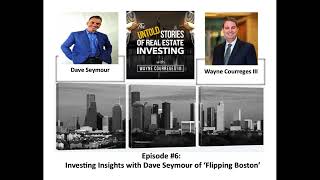
Conversation with Dave Seymour (former firefighter turned TV-backed real estate investor) about his path from single-family flipping (notably the TV series Flipping Boston) into multifamily investing and a private equity fund. Key factual points: a $100M fund focused on Gulf Coast/Florida and similar secondary/tertiary markets; preference for B-class, value-add multifamily assets; targeted investor returns ~8–10% cash-on-cash and ~18–20% IRR over a ~6-year hold; minimums and accreditation requirements discussed (fund accepts accredited investors). The episode covers deal sourcing (multiple channels, data-scraping, broker/banker networks), an approximate underwriting funnel (≈50–60 reviewed → ~10 serious underwrites → ~3 LOIs → 1–2 acquisitions), marketing to passive investors (operator story, transparency, webinars), and lessons learned (importance of education + execution, risk management, diversification). Contact: freedomventure.com and a free ebook coauthored with John Dessauer.
Questions this video answers
$100 million
8–10%
Approximately 18–20%
About six years
Review ~50–60 assets → ~10 serious underwrites → ~3 LOIs → 1–2 acquisitions
Chapters
Welcome to the Untold Stories of Real Estate Investing hosted by Wayne Courageous iii, a place where active and passive investors come to hear the good, bad and ugly of real estate investing. Our guests consist of experienced operators and investors who want others to succeed by sharing their stories. If you're looking to syndicate deals or grow your wealth passively in real estate, you've come to the right show. It's now time to sit back, take mental notes and enjoy next episode of the Untold Stories of Real Estate Investing.
So welcome to the Untold Stories of Real Estate Investing. I'm your host, Wayne Courageous. For our next episode, we are excited to have Dave Seymour with us today. After 16 years as a firefighter and paramedic, Dave Seymour launched his career, rapidly becoming one of the nation's top real estate investors. In his first few years, Dave had transacted millions of dollars of real estate and had become one of the nation's leading experts in both residential and and commercial transactions. His unabridged passion for business and real estate put him on the radar of A and E television network as well as multiple news organizations like cbs, abc, cnbc, Fox News and cnn. New York Times reported that Dave Seymour series Flipping Boston posted the highest ratings ever for the A and E network at the time of airing. Dave has been sought after as a, tell it like it is mentor and motivator in the real estate world. With a track record of unmatched success everywhere he reaches. Dave is well known for doing business alongside investors of all experience levels. He has partnered with investors on their very first deal, as well as guided some of the largest investment firms in the nation through complex transactions. So welcome to our show, Dave.
Thanks, man.
That's a lot. You know, very successful, very successful. And you know, we have a reality TV star with us today, so thank you for your, for your time.
It's so good. Thank you for the opportunity. It's funny, I listened to that kind of like a bio. I don't know, I don't particularly like hearing it and yet there's a little pride button attached to it. It's been a pretty, pretty intense journey to be where I am today from where I started. So thanks for the intro, man, and thank you for spending some time with me today. I'm excited to have a conversation with you.
Absolutely. And there was a lot there. But is there anything I missed or anything you want to add to introduce yourself?
Oh, man, no, let's. You know, I'm. I frequently refer to myself as a blue collar guy in a white collar world. I Wasn't raised in financial intelligence. And, you know, you learn some hard lessons following somebody else's financial plan. You know, some people are okay with that, some aren't. You know, you're not a good little touching of gloves prior to the start of the podcast. You know, I need my job to support. And yeah, I know that it's got a cap, right? If you trade time for money, there's always a financial cap to that ceiling. So some people are okay with that, some aren't. No right or wrong, just left or right. It's not a moral decision. It's just a DNA. Some people get beaten into submission. Some people say, hey, I'm just going to take a different journey. But, yeah, no, nothing to add to it. I've been blessed to be where I am today for sure.
Well, thank you for serving your community as a firefighter and paramedic for 16 years. So how did you get started in real estate investing? And which asset class do you enjoy the most?
Yeah, no great questions. I'm an immigrant. Don't tell anybody. I'm a naturalized citizen of the United States. I came from England originally. I was born in London. And I came to the States because I met my first wife there. She was on a teaching program from Indiana University. And I felt madly in lust. And I decided I was going to emigrate. And at a young age of 20 years, I packed it all in and immigrated. I had my ups and downs along the way. One thing I was always good at was working. I was trained to work hard, to be honest, don't lie, don't cheat, don't steal, show up, be a man among men, worker among workers. That was great. That was ingrained in me. But it didn't lead to any financial intelligence. And at the same time, Wayne, it didn't give me any financial growth. I liked keeping up with the Joneses, even if my incomes didn't match that. And in America, it's a beautiful thing. You're allowed to spend more money than you earn. Which I was doing some research today, and the amount of debt that an American on average carries is absolutely ridiculous. With some financial intelligence, you step out of that and you go, oh, my God. How did I get sucked into that? Anyway, long story short, I was in my career as a firefighter because somebody said, you need a good government job because you get retirement. Takes an act of Congress to lose a job in the fire department. Actually, after 9 11, when we came together as a country, I went to New York and helped out in the Bronx and Right after that, due to politics, they decided to lay off firefighters where I was working. I lost my job as a firefighter for a period of time. So there were these moments in life, if you will, where, you know, what I thought to be normal and okay was taken away from me. Right. Somebody else was always making my decisions anyway. I was in the process through financial illiteracy, I was losing my house. My relationship with my wife at that time was, was not good, it was bad, it wasn't pretty. You know, I didn't, I didn't come skipping down the road with, you know, degrees from Harvard or business degrees from Princeton University. You know, I kind of figured this out the hard way. I guess. I ended up getting some education. I did what I invested in, I followed the process. I learned, you know, single family homes. I my again, my blue collar attitude into a white collar world. And I found that people were responsive to truth, to authenticity, if you will. I didn't need to be anything that I wasn't. And if I said I was going to do something, I did it. And I think that has been a fantastic mantra in my past, present and it carries me into the future. So through the single family stuff. After some education seminar world, of all places. I was the only guy who was actually in the seminar world teaching before he got a TV show. Everybody else gets a TV show, it becomes a guru they call him. You know, we played the single family game for, for a long time. Popped on the TV show, which was fun. But I was in a marketing meeting with, with my, my crew this past week and one of our younger participants in our, In Our Mind think tank, if you will. He said to me, he said, now don't get angry at me because I've been known to get a little elevated once in a while. He said, don't get angry at me. He said, but why should I be interested in your commercial fund when you're the flipping guy from tv, right? You're that house flipping guy. What do you know about commercial and my tough guy attitude? The hairs come up on the back of my neck. But then I realized something. I've been in the commercial world, in the cash flow and asset world from day one. It's been a natural transition from single families and even wholesale transactions in the beginning to immediately start focusing on cash flow because a lot of businesses are propped up without any cash flow. And as we were saying before we started this call, a multifamily asset is a business all on its own. It's got income and expenses. It's got its ups and downs, its challenges. And if you don't have a system, a team, a business plan to execute, then you're going out of business. It's as simple as that. But the thing is this, man, it's not sexy. It's not like reality tv, you know what I'm saying? You know, the camera, the camera pans down and there's Dave Seymour, underwriting 150 unit apartment complex in the Gulf coast of Florida. Dun, dun, dun. People look at a spreadsheet and fall asleep. So, you know, we've, we've always been involved with that. I've had my own portfolio of doors, as many as I think 80 at one point in one particular market. And, you know, we've liquidated a lot of that because it's time to, time to sell. Now we're focused on multifamily assets. I'm not competing with the big boys. We have a real estate investment fund, a private equity fund. Instead of doing the syndicated deals like most people are doing, which is one small group of investors on one asset, if that asset class or that asset is challenged, then there's no diversification in there. I know a lot of investors who spent the last 10 to 12 months of their career focusing heavily on retail. And whoever would have thought Covid would come along? Because what it did is it brutalized the retail market. And as we were talking earlier as well, it's definitely put some blips and challenges in the office space, but people always need somewhere to live. Wayne. So we take the approach of a larger capital access. So the fund is 100 million and now I can spend that on multiple assets multifamily and offer my investors better than average rates of return and at the same time offer the downside hedge because of the amount of doors within the fund, if you will. So that's it in the big picture, man. I went from little single family houses to playing in a big boy sandbox today.
So with your fund, you know, you've scaled. With your fund, are you choosing different markets? Because what I've read online, it was a lot of Florida based. Are there other markets that are part of that to help diversify and reduce the risk?
Yeah, there are, there are. Look, it's kind of a corny delivery, but it's really based in reality. Your network is a correlation of your net worth and vice versa. Anybody who says they're a self made millionaire is a liar. Let's just be honest. I went through a little bit of a blip from January into Covid this year we had some challenges in a lending business that I was involved with. So because Wall street was no longer buying non QM loans, we went out of business. So you know, you take the lumps and bumps in that world. And I was contacted by a very dear friend of mine who's now one of our fund managers. Key piece of the puzzle, gentleman by the name of Walter Novicki. Walt had been investing in multifamily through the Gulf region for the past 10 years. Raised about $125 million in private investors, but he had always been in the syndicated market. His track record had shown north of 8 to 10%, cash on cash paid back to the investors and their internal rate of return was north of 20%. He has a model, it's been proven and it works consistently. So Walter had reached out to me and he said, what's your play man? What do you see going on? And I had to be very direct with him. I said here's what I see. I see stupid money propping up the economy. Forbearances will run their course. The PPP money unfortunately will run out. The lack of just fiscal responsibility and what's happening is going to cause some massive shifts. And I said that's what I see. What are you preparing for Walter? And he said it's time to go big or go home was his exact words. And what he meant by that was is that he can take down multiple assets within his area of expertise, if you will, because of the relationships he's built in the past 12 years to deploy $100 million in the Gulf coast region. Now we have a buy box. We have an expectation of a preferred rate of return to our investors. So when we analyze and underwrite, we only identify B class properties. I think this will be interesting. Watch this. Maybe I said it first, maybe I didn't, but I think a lot of the A class assets will actually end up being in a B class category based on rental incomes. You've got a lot of these smaller assets in the B's, A minus, B plus class multifamily. And what's happening is this like 60 to 120 unit apartment complex. There was a large majority of those, which is actually what we call mom and pop organizations. They're not professional investors like ourselves. They're not systematized, optimized. They don't know how to market properly, how to lease up, how to do a good renovation for a decent amount of money and capital in their capex is they've got no reserves A lot of these guys. So as soon as the true economic impact of COVID makes its stamp, you know, there's going to be an opportunity. And he said to me, you know, nobody has ever really branded a fund before. He said, you've got a little bit of a recognition as the guy from TV and, you know, a pundit on these TV shows and stuff. Plus he said, I know that, you know, commercial real estate. How about you and me, you know, partner up, brother. Let's do a little bit this. You know, we sat. We really, you know, kind of old school, whiteboarded the plan, the process, the marketing to bring accredited investors into the fund and then be honest with what it is that we're doing in the sense of what we buy, how we buy it, where we buy it. So primarily focused in Florida because of the footprint that's already been created. We've already stress tested the market down there, shall we say. We see a huge influx of population into Florida. The age group, the average age has now dropped to the early 40s, whereas we know it used to be, you know, it looked like Q tips were the only type of people driving cars down in Florida. You know what I mean by a Q tip? Like the big bouffant, gray hair. So, you know, we see a demographic shift as well in age and also in financial capabilities. The incomes in Florida are actually going up. College educated families or couples are also going up in that, in that marketplace. You take into consideration that you culminate it with people want to get out of the big cities because of COVID Now, you take into consideration the amount of, I read today, 9% of American mortgages, as we, as we're on this call right now, 9% are in forbearance. 9% of the mortgages are in forbearance. Well, guess what? The banks will get paid one way or another. They're going to get their money or they're going to take the homes. So we'll see, you know, this big push of assets coming into the market, lowering home values. Those that took the mortgages with the kind of familiar to 2008, took the mortgages with the adjustable rates on them. Well, they're gonna get challenged again, man, and there's gonna be an influx of property there. So where do they go? They got to go somewhere. Well, they can't afford the mortgage payment at 2400, but they can afford a really nice, you know, three bedroom apartment in one of our complexes for, you know, 1800, whatever the case may be. So when you bring it down to the fundamentals, then it shows massive opportunity. And if we find those same buying criteria in other markets, I'm very blessed that through the TV show I got a nice national reach if I need somebody to go to work for me. In your market, Austin is a fantastic market. San Antonio, Dallas, tertiary secondary markets, still great markets. Parts of Kentucky, great markets. The Carolinas, fantastic markets. Florida, exceptional market. New York? No. Massachusetts? Boston. No. The compressed cap rates. The compressed cap rates don't work for us. So anyway, it was kind of long winded. But it gives you a big picture of what we're doing and how we're doing it.
Yeah. So you mentioned marketing to your passive investors. You're focused on accredited investors post Covid. And I don't know if we're post Covid or we're still in Covid mode. But what are we or how are you marketing real estate investments? What is the story or the pitch that really passive investors need to hear as well?
Man, look, I've never been a stock market investor and if I started pontificating I'd just be making shit up. That's not what I do. But here's what I do know. There has been a massive amount of capital that has moved since COVID began. And when capital moves in volume in any direction, so a lot of it coming out of the stock market, there's this consistent roller coaster within the stock market which some investors just do not have the palate for. Now their financial advisors are screaming at them, hold on. And yet they don't have a solution to the problem of the, the just the volatility of what they see happening with their capital in the stock market. They also aren't necessarily always fully informed on the fee structure inside there, which is legal. I didn't create the rules. So they begin to look at that retirement plan of capital going to work and high net worth individuals. It's amazing to me that their financial intelligence isn't always up to snuff. And again, it's not a moral judgment, it's just a reality they don't understand so much. So what we see is a massive amount of dry powder on the sidelines looking for an opportunity to go somewhere. And statistically we can show that multifamily and commercial real estate has outperformed the stock market past 20 years. If you look at a T20 trend, it beats it every time. It's in a low risk category and a high return. I didn't create those numbers. Do some intelligent investigation. You'll find the, the Documentation to support that statement. So it's not hard to deliver a message because with a proven footprint with targeted returns of 8 to 10% and an internal rate of return targeted 18 to 20% over a six year hold, it becomes a no brainer as long as they have faith in the operators. So the marketing is really around the story of the operators. Who is Dave Seymour? Who is Walter Nowicki, who is Eric Wilson? At 24 years old, coming from Fidelity Investments, an exceptional young man who can code, data, scrape, create all of the infrastructure that we need to be successful and do it faster than anybody else. You know, the services that this young man brings to our company are, you know, if they were outsourced, if they were a third party service, they would be in the hundreds and hundreds of thousands of dollars of expense to a company. Well, we have that in house. So, you know, we have a team that has succeeded not once, but pretty much every time. I bring the, you know, the notoriety, if you will, from the show when people, you know, they relate to it. Here's what it is. I'll sum it up a lot easier for you. Investors want to feel like they're partners. Investors want to be on the inside looking out instead of on the outside looking in. You know, the younger generation, call it fomo, right? Fear of missing out. And I don't care how old you are, we all want to be hanging out with the cool kids, right? Well, the cool kids are investing $100 million in the Gulf coast of Florida with better than average returns. That's what the cool kids are doing. My job as a marketer and a fund manager is to get that message across with competency with a little bit of showmanship, but not too much because it's not cheesy. I mean, it's a serious world, but at the same time, be available, be accessible. And look, man, for me, it's also transparency. You gotta be transparent with this stuff. None of this look over here because you're gonna not be looking over there. And that exists in this world of investing. I've seen it at all levels in my career. And my partner Walter that I just mentioned, he's, you know, he's an ex military guy and he performed some military feats at a high level. That camaraderie, that commitment to team has just been part of our mantra from the moment we connected. So we're excited to watch this raise grow. I got a couple of big names that are coming in. I think fingers crossed, if they see the value. I don't See why they wouldn't. And if they don't, that's fine too. It's not going to be a challenge raising the capital, but yeah, that's the marketing message. You know, you can do what everybody else is doing or you can come over here with us because we're doing something pretty special. Right. It's the alternative investment opportunity is what it is. Yeah.
And you're not targeting opportunistic or core. I mean, it's true value add to get your numbers at that 18% or more IRR, 8 to 10%, you know, cash on cash. I mean, you're looking true for some value add where day one you're going in and I want to say you're flipping it, but you're adding a lot of value with renovations, looking at the market and as you said earlier, looking at the demographics to make sure it can support the rents and the population growth and all those things that make it successful.
Yeah, I mean, it's data driven. It's absolutely data driven. And I'm not a detail guy. I'm a big picture guy. You know what I mean? I can't be successful without the data components behind me and Walter's footprint in that market. So funny you say, I don't want to say flipping it, but I had a call yesterday morning with, with an attorney. We were just going through our front door. He's a friend of mine, and I wanted his feel on the customer experience. Right. What's your user experience like when you come through our front door@freedomventure.com as we're talking, I could see his eyes lighting up because I naturally do it. I know how powerful it is and how helpful it can be to somebody with capital that's not performing as well as it should. And he's connecting the synapses in his head. He's creating all these little. These little electric, you know, these electrical moments were going on in his legal brain. And he said something pretty profound and at the same time pretty simple. He said, dave, I'm a phenomenal lawyer. He said, but I don't know a damn thing about real estate. And that really summed it up for me because I'm an awful attorney, but you can't beat me when it comes to the real estate game. Right? So his capital and my expertise. And then he turned around, he said to me, I get it. He said, it's kind of like flipping Boston on steroids, huh? I said, look, Kev, I said, if you want to boil it down to that, I guess in Essence. He's right, right. It's more zeros, it's actually less risk than a single family home. You know, if the single family home goes sideways, you're done, son, you're going to eat it. You know, in the commercial world, the way we play with the diversification force, the appreciation, you know, it puts us and obviously our investors in a superior position.
So let's talk about deal finding. As I'm going through and underwriting properties in Austin, San Antonio and Houston. You know, it takes a lot of time. It's getting other brokers, it's finding those off market opportunities. So, you know, I'm genuinely curious, how are you finding your deals? Is there ways to automate, become more efficient? Because as you said earlier, you know, the spreadsheet, you know, behind the scenes, the non sexy portion of real estate investing, how are you all doing it?
Yeah, great question again, man. Look, it comes from multiple sources. If you just rely on one source, one broker, you know that it doesn't work. The amount of deals that you underwrite to maybe put in three, Lois, to take down one asset is pretty substantial. Basically we look at a ratio of about, I would say 50, 60, that we look at. Out of that 50, 60, 10, I'll get through to serious underwriting out of that 10. In serious underwriting, three will get an LOI with the expectation of taking one or two of those down. So it's purely a numbers game again, man. I'm very blessed with the TV show to get national recognition. So when Dave Seymour raises his hand in a LinkedIn format, a social media format, a publicity post. Hey, it's Dave Seymour from Freedom Venture Investments. Very excited to announce the fact that we allocating $100 million to multifamily assets in the Gulf coast region. Right. That perks somebody's interest. If somebody's in that position that they need to sell, then my job is to be there in front of them. So we do that through broker relationships, banking relationships, we do it through data scrape, which is where my third partner Eric is so valuable is he can go in and pull up the criteria that we're looking for on any asset anywhere in the country and give us a list of properties with owners. We can also obviously research what their financing looks like on that asset, whether we can come in and help in that scenario. So, you know, again, it's multiple, it's network, it's many brokers, it's some direct outbound type conversations. But you know, to your point, $100 million really isn't a lot of money. It's really not a lot of money. It's not hard to spend that much capital properly in this market when you know what you're doing. So multiple lead gen coming from brokers, bankers, we use, you know, we use some, well, we got, we got some secret sauce that I'll get into, but multiple, multiple ways of allocating deals.
And I would say all those key ingredients can go for any asset class for any size. So if somebody's listening to this, that's just starting real estate investing, building your network, relationships with brokers, scrubbing analytics of the deals that are in your area, and then obviously that grows. And as you get more experience and such and build the partners around you as you have. Right. It makes it easier to find those deals. So for anybody, I'd really love to hear about, you know, what has been the good, bad and ugly on the single family side and then on the multifamily. So somebody that's getting in started on the single family, you know, what do you know now that you wish you knew when you started? Just because our audience is full spectrum of, you know, people starting single family to others that are in the office, you know, multifamily arena as well. So I just love, love to know, you know, what is, what do you feel is the good, bad and ugly of all of it.
Yeah.
Which we could be here 20 minutes, which is fine. So take your time.
Yeah. No, look, I get it. One of the things I've always done, first of all, I enjoy doing this. In my first chance to do these kinds of calls and podcasts, I've kind of been handcuffed contractually to be able to just go out there and just unload. You know what I mean? So look good, bad and the ugly in the residential space. It's education. There are a lot of people, let's just boil it all down. A lot of people sit there on a Saturday morning or a Tuesday night and they get their little IV dose of HGTV and they see Mr. And Mrs. Silly flopping around a house, picking up a sledgehammer, having an oh, my God moment, and the problem gets solved. Mr. And Mrs. Silly comes sliding in there at the end with two other wannabe buyers who are not real buyers, and they say, oh, my God, this house is gorgeous. I get it. I get it. Right? We all have a honeydew list, right? No matter what our relationship is in our own roof, we get that honeydew list on the weekend. Honeydew this, honey do that. Oh, my God. I want that tile. I want that kitchen. I want this, I want that. I get it. But that's all a show, right? So people get that mainline single family rehab kind of bug thing. I mean, you know, 30 years ago, there was no such thing as, you know, home improvement. You outsourced and you hired the professional to do the job. That's the way it was done. And now, you know, now everybody's a plumber and electrician and a carpenter and a tiler and a drywaller and a landscaper. Like, we're everything now, because I saw it on hgtv. But what that does is it creates a. It creates an unrealistic expectation of success in buying, fixing, and selling assets. So, you know, what's. What's the good, the bad and the ugly? The ugly is don't even attempt this stuff if you don't have a solid foundation in education. If I say to you, you know, what are the numbers on a single family house? You need to tell me what numbers I'm looking for after repair value, minus my carrying cost, cost to buy, cost to sell, minus my. Minus my construction costs, minus my cost of capital, and then minus my profit. I want to make some money on the end of it. So if you don't, if you. Here's the thing. Investors will say, I think it will sell for this. If you think and you don't know, you're done. Your pitch is over. That's your shark tank moment, and you screwed it up, right? So, you know, for a newer investor who doesn't have that skill set, get it, get it any way you can. Because I tell you, you pay for your education in this business one way or another, right? Whether you pay for it in mistakes or whether you pay for it from purchasing somebody else's mistakes. So always, always be educated and then realize to be successful in that single family world once again, you're not doing it on your own, right? Do you have the skill set to really have good contracts for contractors? Do you have the skill set? Do you know how to put a prom note and a mortgage first lien position on a piece of real estate? Do you know what that is? Do you understand your legal commitments to your private lenders? Do you understand your legal commitment to the city? Do you understand the building code? If you're buying and holding, do you understand that in Texas, it's a lot friendlier to tenants than it is up in Texas? It's a lot friendly to landlords. Sorry. Than it is up here in the great, great state of Taxachus, Right. So, you know, incorporate your learning around people who are doing what you want to do. I mean, that's. That. That's just it. And I've made those mistakes for you. You know, I've been. I've been ripped off before I was educated, you know, sheriff's department, serving paperwork to my wife while I'm in the firehouse, because the guy who said he was going to pay the private lender did. So I've experienced that. So educate and then execute. A lot of people will spend a lot of time feeling really good about their analysis. I'm running the numbers. I'm going to analyze and I'm going to analyze some more and I'm going to run some more numbers. Stop it once you know what it is, you know, in 30 seconds, whether it's a deal worth pursuing or not, Right? So analysis paralysis. Pay attention to that. Get it off your radar as soon as possible, and then don't go alone. Don't cross that line on your own. Be responsible for everything that happens. If you're the CEO, cio, the eieio, whatever RO you are of your business, right? But be in action with this stuff and understand that nothing's going to go perfect. So you learn from every lesson along the way and just keep on moving forward. When Covid hit, I watched so much reverse and parallel going on, like people were frozen here in the headlights. You know, that's bad because if we parallel and we go backwards, obviously we're inviting failure, not success, right? So, you know, true entrepreneurs, rather than wantrepreneurs, shall we say, you know, they pivot, they pivot, they recreate. This has been a fantastic opportunity in this crazy downtime to. To rebuild something of value. Knowing what's coming down the pike, those would be my pearly words of wisdom. And in the commercial world, understand that. And this is with respect to anybody who's listening to us, Wayne, but in the commercial world, for some reason, as soon as you start talking larger dollar amounts, it seems to always have a nice sprinkling of pretentiousness attached to it. You understand what I'm saying? Like, the vocabulary is different. We don't talk about GATT funding now. We talk about mezz funding. We don't talk about preferred rates of return. We call it a pref return. It's like it gets its own little cool lingo and language, which I think has honestly been designed to keep people out. Like, it's like, you know, they want to keep the secrets to themselves. Like the banking industry you know, CDOs are BTOs and you know, credit swaps and you know, the average person doesn't know what the, what the heck that is. So in the commercial world, understand that you will need to learn the lingo, you'll need to be proficient and competent in your conversations because people will know if you're full of crap or not. But don't be intimidated by it no matter who you are. Understand that it's all based in fundamentals at the end and just understand your risk aversion. I mean, I've been very blessed since I got educated. I have never lost one dime of mine or an investor's money ever. Ever. Because I'm the most conservative son of a gun under the sun. It's okay to walk away from 50 deals to do one you're supposed to. If you're doing, you know, 20% of the deals that you, you, you underwrite, then that's not good. That's a problem as far as I'm concerned. Some people say I'm wrong and that's fine too. Have I walked away from money when I look back over my shoulder? Yeah, I have. And I'm okay with that as well. So understand your own risk aversion. Understand the risk aversion of your investor partners. Always be prepared for worst case scenarios. If you know that if you've got to go in there and, and absolutely rip apart your management team and put it back together, own it. You know, I have a fiduciary responsibility to succeed and I don't take that lightly today. So that's almost the good side on the good, the bad and the ugly is the way you approach it. I've invested in C class properties in C class neighborhoods, but I think I did it intelligently because I put up the capital and my partner managed everything else. So he was the one getting the crazy phone calls in the middle of the night. He was the one in those, those tenant challenged asset class. We'll just leave it at that, right? Some people might have died in the apartment and nobody knew. Some nice police officers might have had to do a raid every now and again. I've been in that wheelhouse. I've played that game as well. If the property management and the system is strong enough to bear those pressures, then there's an exceptional amount of capital to be made there. And I just said we liquidated. We probably liquidated about 80% of our portfolio in that particular C class neighborhood. But we walked away with north of 100, 110% in returns on our capital, more than doubled the value in like five years. So, you know, bad for him, maybe because he had to deal with it. Good for me because I doubled my money. But good for him because he doubled his money without putting any money in. Right. So being creative at the same time and understand everybody's value. Value add.
Right.
We look for value adds in real estate. Well, I also look for value adds in people. What can you do? What do you have for skills that I don't? If I could sum all of that up, if I'm the smartest person in any one room or environment, I'm in the wrong room. Like, I always look to grow. I want to learn. I want to learn from you. I've never done office space. It's not been in my wheelhouse. What does that look like? It's a conversation we have. We've just built a relationship. That's how I approach everything from a value add component. Understanding that stuff can go sideways. But if you hedge the downside with intelligent investing, then you have the opportunity to accelerate the upside. Cost segregation, tax advantages, all of the other nuts and bolts that we get into in our business.
Yeah, I think educate and execute. I mean, I'm going to remember that, you know, forever. I mean, it's, it's good, good advice. I mean, it's easy. It's easy to remember. And it is about the education. You know, when I talk to our passive investors and, you know, just our network with other investors, it's, you know, it's educating yourself.
They seem to forget. Do you find they forget the execution piece? Have you experienced that? Like, I, like, I've met so many people, highly intelligent, I mean, collegiate degrees coming out of every orifice of their body, and yet they're still sitting there looking for financial opportunities. So it's not intelligence, it's implementation. You understand what I'm saying? And I personally, I guess it's my firefighter background, you know, when it's time to go, we go, baby, go. You know what I mean? You're not there having a. Should we debate it anymore? That building's on fire and somebody's trapped. Should we discuss it? No. You trust your education. You execute, you go. You know.
Well, I think you said it well earlier where I'm a really good, for example, you know, say I'm a really good property manager or attorney and not a very good investor. You know, that could be somebody, you know, that doesn't know a lot about real estate. But they're really good at what they do. And we all go the traditional route, 401k, put money into the stock market. Oh, Amazon's doing well. Can I afford it? No. So I'm going to go to something cheaper. And it's just that routine. And you see returns are good, but it's very volatile. You know, every few years it drops to where we are today. So I would say from a passive side, we're very herd driven where we follow where the masses go. Right. But when I'm talking to potential investors, it's all about educating. And we've doing a lot of webinars. We're doing, you know, I did a passive investor book. It's all about educating. Because a lot of people just don't. One, they don't think that they can own or have equity portion in multifamily or larger, larger assets. Now, as far as the operator side, I mean, I've been very, very fortunate with all my clients and you know, being with cbr, I mean, best of the best institutional type clients who, you know, you mentioned earlier, pivot. I mean, they are good at pivoting, right. But they're also very experienced and this is what they do because they have to pivot to maintain and maximize returns for their investors. But I would say the passive, the people, I mean, everybody's good at what they do. I'm fortunate. And you're fortunate to have a passion in real estate. It's something we love. And so we're, I mean, while people are, I'm watching junk TV while, you know, underwriting a property with my wife or whatever.
Right.
But we need people that are the electricians, the plumbers, the attorneys, the whole gamut. So I don't know if it's about the execution portion. It's just, it's just the knowledge and you only know what you know. Like the only reason why I really knew about real estate investing was from high school. You know, I dated someone whose dad was a successful developer. But if I didn't meet her or know her dad, you know, in development, I don't know if I would have thought about real estate. So I don't know if I would have thought about CBRE, you know, back in 2007, getting out of the Marine Corps, you know, I probably, it would just have been a different path. So you only know what you know. And, and I think what you're doing and marketing and just giving those opportunities to others, you know, it helps them widen their investment options and get away from that herd mindset.
You're talking my Language. So here's the thing, right? Come on, everybody come to the conference room. We got free bagels and cream cheese. We've got 45 minutes out of work out of our cubicle because we're going to get our 401k presentation. Don't we love the boss, right? And the herd mentality says, where are they going? I don't know, but everybody seems to be going there. Let's go. And then up steps, you know, Mr. Slick Willie in his nice three piece suit and his shiny watch and his slick back hair and he does his dog and pony show and basically he's already sold everybody before he walks in the room. Because we're not given choice, right? The United States of America, for all of its independence and freedoms, we forget a couple of choices along the way. And it's to your point, it's perfect. It's hurt mentality, cheap. And we all line up. And I've taught this all across the country and internationally as well. Maybe not so applicable in England and Canada, but that retirement structure, that plan that's sold to everybody, the working classes of our great country, they don't fill in the details. How old are you? Oh, you're 21. You can go in a high risk category. You're 40, 41, 31. You're in the medium risk. Oh, you're in the retirement red zone, granddad. You're 55, you better go in the low risk. And they say okay. And they sign on the line and they never really look at it. Vanguard was the fund that was created by Jack Bogle and it was the lowest fee structured fund that was kind of like traded within these 401s, and they put out a summary every year and you can find it online, just the Vanguard annual report. And in there they start looking at these retirement accounts and on what they've actually done and where are they nationwide. And it's something horrendous that I can't remember the exact numbers. I'd have to pull it out. But I'll paraphrase it, don't quote me. It's something along the lines of the average 55 year old American is sitting on about $161,000 in their, in their 401ks, $161,000 for a life's worth of work. But somebody made a lot of money on that money during the course of the time and it sure as hell wasn't the investor. Right now. It doesn't matter whether it's, you know, the hardcore working class American man or woman or whether it's, you know, a higher earner. Guess what? They have the same financial intelligence when it comes to passive investing as the average person who signed up with the, with the her mentality. I was talking to a doctor's group this week. It's one doctor and four others in a. In their own little doctor's group. That's all they have, is this, like this, this company, 401k plan. And I looked at the returns and I said, I think I could double those for you in the next five years and give you a huge chunk of change on the back end. And you begin to break down the numbers and you show them. You can turn that over, roll it over. You don't have to stay in that program. You got other programs. Do you know what a self directed IR is? Can we talk about a solo 401k? Why don't you. You open up a company because With a Solo 401k, you get checkbook rights and you can actually write a check for your own retirement. And he's like, whoa, whoa, whoa, slow down, slow down. But here's why I hit Wayne. Here's where I get a little aggravated and animated at the same time. And maybe you'll identify and resonate with this. I forget sometimes what I know, and I think everybody knows what I know. And I forgot how long it took me and how much effort and how much of a journey I've been on to be where I am today, to know what I know. So for me, one of my challenges is tolerance because I want to slap some of these people upside the head and I'm like, what are you doing? Because at the end of the day, here you go. Ready? Watch this. Makes no difference to me whether they invest with us or not. It's probably. It could maybe not be a fit for them. That's fine. Somebody's going to succeed, though. And if it's not them, it's going to be somebody else. And you know, when you start looking at that, I got like a connection, man. Like, I feel for the people who invest with us. You know, the ones that don't see the bigger picture. Be honest. We gotta say a little prayer for them. I hope it works out because at the end of the day, they're just still trading time for money and they don't have a powerful retirement plan. If here's the deal. Ready. Bottom line, if real estate in some capacity or another is not part of a retirement plan, then the plan's broken. Period. That's how I Look at it. That's how I look at it. I push for implementation of education. Otherwise you just know a lot, but you don't do much.
Yeah, and that's what tees you up for this other question, which we've talked a lot about. Active investing. Now we're obviously shifting gears to the passive investors. So as we start closing up on these passive investors, what do they need to hear more of or what do they need to look for with syndicators? And just, I mean, for example, you know, if someone's putting in a hundred thousand dollar investment or a $50,000 investment, I mean that, that's a lot of money. Especially when the asset class that you're not very familiar with before. So what other than education, when it comes down to the syndicator, the person, the experienced team that you know, you have with yours, you know, what would you tell the, those passive investors to look at?
Absolutely. I'm, I'm maybe gonna alienate some people because you refer to syndication, I've done syndication, you know, been around that for a long time. You know, one group of investors, one asset. I think what that does, it gives them a sense of kind of like ownership, if you will, because they're syndicating in on the deal, right? They can walk or drive by the asset and say, I own a piece of that. And that gives them a sense of achievement, for want of a better term. But what I say to my passive investors is this, what is your end goal? Do you just want your money to go to work without any headaches? Do you want somebody else to do all of the work and you participate in the reward? Because if you want that, then you can come and apply to participate in the fund. Because the passive investor has to want passive income. They have to. They're so used to just giving it to the money manager and just checking out their, you know, checking out their income statement, you know, every year or a quarter or whatever. And 90% of them have no frickin idea what that, what they're making, what they're spending or what they're making. They've got no idea what their income and expenses looks like. Whereas passive investments inside a real estate private equity fund like ours, you have an online platform, for example. Our investors get to see where their $100,000 minimum commitment is working every single day. Because what they do is they buy shares in the fund and their shares are going to work. So there's the diversification that's offered because it's multiple assets, as we said earlier. But at the same time, it's up to the minute they know exactly what's going on. Very important to read through the prospectus of the fund. Very important to get familiar with the experience of the fund managers. Very important to cross every t dot every I. Are you going to invest individually? Are you going to invest in an entity? Are you going to use your retirement account to invest? Understand the rules and regulations of the fund and the capital inside of it. Our fund, for example, is a six year commitment of capital. Can you pull it out? Yeah, but you got to get some pretty serious permission from the fund managers to take that money out of there. But why would you, right? Why would you choose, say, a fund like ours in comparison to a rate like a publicly traded reit? Because if you buy a piece of a real estate investment trust, you know that you could move that money in and out of there. Well, it's kind of interesting. REITs are. I've always got to be careful, man. I got like, I got my language. A REIT is, it's not necessarily valued on the actual bricks, on the actual sticks and bricks, right? It's a floating evaluation, if you will. And there's nothing within the rules of a reit, a publicly traded REIT that says I can't pay Wayne his returns with another investor's commitment in capital. It has the essence of loose rules and regulations. That's as far as I can go, right? Do your own, do your own intelligent education on there, or you do your due diligence on the fund, you go back and you look at their proven track record and you say, okay, if they did that before, why can't they do it again? I don't see a reason why not. You look at what the targeted rates of return are and then you're taking a piece every single quarter. Every single quarter you receive that distribution. You know, we do bi weekly webinars with our investors to keep them on point as to what we see, what we're doing, what we're buying, what we're selling, and they get to participate without doing any work. I don't know about you, man. If somebody had said to me at the very beginning, invest XYZ and don't do any work. Participate in the upside and learn at the same time. I've seen investors over the years that have learned the game of syndication and then decided to go out because they wanted to do the work and then syndicate on a deal. So you know, that's important. Know who the operators are, know what your targeted returns are, understand why we offer those targeted returns. Understand the business plan, which is the ppm, the private placement memorandum. Find out, first of all, whether you're accredited, because we only accept accredited investors anyway. And the reason we do that is for safety and security. Everybody comes in with a realistic, honest expectation of what the fund is going to do. There's no dog and pony show. It's sticks and bricks, it's statistics, it's data analysis. It's not very sexy until you get paid out six years later and you're participating in 75% of the upside of the liquidation of the asset.
Well, all that's really good. I appreciate you, in your own words, pointing out what passive and active investors should be looking for, for. So, you know, as we close up here, you know what, what are your proudest moments investing in real estate?
There's a couple of them, to be honest with you. I've been able to help people who were victims of predators in real estate. We'll just leave it at that, you know, not every agent is what they appear to be. Not every attorney is what they appear to be. I've kind of like got this knight in shining armor going on inside of me from somewhere and, and when I see a situation where I can bear down some influence and correct what are obvious wrongs, I take a lot of pride in that. There was one particular lady, she was getting murdered by the attorney and the agent on a single family home. And she had some family challenges. It was an abandoned property, but I went in there and just banged some heads, man, Rattled some cages legally, with our attorney and our team. She came out of there with a half a million dollars in liquidity. It's amazing. Like, I wanted to buy the house, but I couldn't pay the prices. It didn't make sense to me to pay the prices that she wanted. But we found her a buyer. We found somebody who was silly enough to pay that amount of money. That was their choice, right? So she walks away with a half a million, got all of her tax liabilities paid off, and then she turns around and invests the money with us, you know what I mean? So, you know, do. Doing good work like that is obviously pretty powerful. And I'm gonna, I'm gonna do a little ego, man. I get a kick out of it when somebody recognizes me from the TV show and one of my little boys is standing there, you know, my 8 year old or my 10 year old, you know, they think, they think that's famous. Dad's on tv, must be famous. Amazon Prime Ladies and gentlemen, flipping Boston. All 29 episodes. But, you know, there's some pride in that. Absolutely, absolutely. I, I like, I like to do great work and make great money. Wayne, really, to simplify it down, when you, you take something ugly, you make it beautiful and a family moves in there and says thank you, and you make 150 grand and a bad day at the office, you know what I mean? Those moments make me proud, bro.
Yeah, you're obviously, you know, you just exude, you know, I would say greatness, but you, you exude like you really want to. I think it's greatness when people just want to help someone else. You know, I think at the end of the day, we need more of that. Right now with everything going on, it's just helping, helping everybody, regardless of what background color, et cetera, just.
I agree, I agree.
So love that about you and appreciate you being a guest on our, on our show. Are there any other items you'd like to share and how can listeners find you?
You could go to freedomventure.com, which is the front door, our front door to our website. If you like the idea of multifamily investing, scroll down on that page and there is a free book on there, an ebook that I wrote with one of my board members, gentleman by the name of John Dessauer. Johnny D. Killer real estate investor, primarily in the Chicago market. Runs a company called Antonio Management. He's a multifamily management company. He's our point guard for all of the assets we take down. But that's a nice read in there. It's not a heavy read, but it gives you why real estate, why multifamily and why invest with a fund? I mean, it answers all of those questions and you can get that book for free on a download there. And then you can always just Google me on Google. Dave Seymour. S E Y M O U R. You can find me on LinkedIn. You can find me on, I think Facebook, Twitter. I don't have a TikTok account. They won't let me. They say I'm too old for that. So if you want to find me bad enough, you can find me for sure.
Hey, Dave, thank you. Wish you continued success and appreciate your time and getting to know you more today.
Yeah, brother. Good luck. All right. Reach out, man. See if we can do a little business. I would love that.
Thank you.
That's all for this episode. We hope you subscribe, share and leave a review of this show show for more information about passively investing in multifamily apartments. Check out Wayne's free ebook by going to creipartners.com eBook. Also, follow us on Facebook by searching.
More from Wayne

September 2026 Meetup: Investing Ahead of Growth: The Bryan–College Station Opportunity





May 2026 Meetup - Apartment Complexes & Passive Investors: Opportunities & Risks


March 2026 Meetup - Reading the Market: Economic Indicators Every Investor Should Know


February 2026 Meetup - Syndication 101: How CREI Partners Structures Deals for Investors

Build-to-Rent (BTR) Communities Explained: Why Investors Are Paying Attention