GI303: Commercial Real Estate Asset Management with Wayne Courreges III
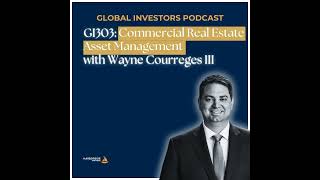
Podcast interview (Global Investors Podcast, GI303) featuring Wayne Courreges III, CPM®. Wayne recounts his path from US Marine Corps service (2003–2007) into a 16‑year career at CBRE (joined June 2007), founding CREI Partners (launched 2019) and going full‑time in June 2023. He describes CREI Partners’ focus (multifamily plus RV/boat/business storage) across Texas, Louisiana and Alabama (~$50M AUM), deal sourcing (mix of off‑market outreach, broker relationships, and loan/CMBS/watchlist software including CoStar), underwriting examples (loan assumption at 3.84% fixed; seller financing at 6% fixed) and operational choices (use of third‑party property managers, typical management fee ~3.5%, KPI reporting, bonuses tied to NOI and leasing). He also discusses a 150‑unit multifamily development in Bryan–College Station and practical advice for brokers, investors and aspiring syndicators.
Questions this video answers
2003 to 2007.
June 2007.
CREI Partners was started in 2019; he left his W‑2 role in June 2023 to go all‑in.
Over $50 million (across Texas, Louisiana, and Alabama).
About 3.5% (range mentioned 3%–3.5%).
Chapters
Welcome to another episode of the Global Investors Podcast. I'm your host, Charles Crillo. Today we have Wayne Courageous iii. He began his real estate journey while serving in the US Marine Corps. And after completing his service in 2007, he transitioned to a career with a large commercial real estate firm, which spanned 16 years, before he focused full time on real estate investments. Today, Wayne focuses primarily on acquiring apartment communities and developing rv, boat and business storage facilities in areas with strong market fundamentals. His company currently manages over $50 million in assets across Texas, Louisiana and Alabama. Wayne, thank you so much for coming on today.
Charles, I'm so excited to be here and hopefully add some value to your audience.
Yeah, no, I definitely think he will. So before getting into real estate and you kind of had a layered approach and can you tell us a little bit about little bit of personally and professionally with the US Marine Corps and then getting into, you know, going into kind of like the W2 route and so what you're doing now for sure.
So I started my journ, really. So you had mentioned U.S. marine Corps. I served 2003 to 2007. So right out of high school, literally two days out of high school, I went into boot camp there in San Diego. For those knowing west coast or east coast Marines, I was a west coast Marine. And so I went to boot camp San Diego. I ended up in 29 palms. After our infantry and school training, ended up in 29 Palms, California with 1st Tank Battalion and, and bought my first single family home. I think I was like 19, 18 or 19, pretty sure I was 19. But yeah, bought our first, my first single family home, rented it out. I mean, this is nothing like sexy like it was a two bed, one bath, you know, in, in the, the desert of 29 palms. But it did start my journey. And I had a, a good buddy Marine and his wife and you know, they had a child, they, they lived in that two bed, one bath while I was stationed in Okinawa, Japan. And anyway, so that started the journey and then when I got out of the Marine Corps in 2007, I really wanted to get in, you know, be in commercial real estate. There was somebody in high school that I really looked up to that was in real estate development. So it's always had the, I always had the bug for it at an early age. And so I joined cbre, had the opportunity to join this great company in June of 2007 and was with them for about 16 years. I started a CREI Partners, our real estate investment company in 2019, grew that to a Point where I wasn't able to do both CBRE and CREI partners. I mean, I was doing good at both, but it just, you know, it wasn't sustainable. And so June of 2023 left the W2 world, which was scary. I mean, it, it was, it paid well, and it's something I really enjoyed and. But went in all, all in on CIA partners. And here we are April 25th and going strong. So you talked a little bit about.
A friend you knew previously that you looked up to that was in real estate. And it's always interesting how people kind of get the initial bug.
Yes.
Can you tell us a little bit about what you were doing at cbre? I mean, let's not, you know, forget about what was happening in 2007. I bought my first multifamily property in 2006, and I bought my second one the end of 2008. So, like, I was coupled right in this. Not I had no idea what was going on or what I was doing, but I was there. And tell us about what you were doing, because when you said you're staying there 16 years, I mean, what were you doing there to assist this large national firm?
Absolutely. So when I was getting out of the Marine Corps, Lucas Group was a military hiring company that helped source military veterans to companies. So CBRE was there. And so I went to this hiring conference that Lucas Group was hosting just to see cbre. So when I, when I got there, I was like, you don't have to interview anymore. I'm your guy. I came here from Austin, Texas. This is where I want to be. This is what I want to do. And generally I did, I wanted to join cbre and they hired me. Right. You know, pretty much the next day I got an offer letter. Um, but what they told me was. Cause I was really looking more in the development side. Trammel Crow company was being acquired, slash merged into CBRE at that time. And so CHAM Crow didn't have opportunities, but cbre, because it's such a big company, they were like, there was this wheel they showed me, and they're like, you can start here in property management and, and go into brokerage or development or whatever, project management. You know, the list goes on. They touch everything in commercial real estate.
So.
And I was looking for, you know, job opportunity with this great company. So I, I, I took a opportunity on their property management side and, you know, essentially because, like, I grew into an associate director like, over the years, and I just really enjoyed operating. I enjoyed the life cycle of commercial Real estate brokerage, you know, they do extremely well financially and stuff, but they, it's a very eat what you kill type mentality. So it's very transactional. They don't really get to see the full life cycle of the property through renovations and value add. And so I got to see all that and over time led teams. I was in Austin for a while leading a lot of the retail and office product that was there on the property management, asset management side and then went to Houston. Anyway, so it was a really great career path, but I wanted to own our own properties. I wanted to provide opportunities to investments for friends, family, other, you know, investors. And you know, my clients were more MetLife, Invesco, JP Morgan's very institutional type groups. So yeah, that was really the journey now at the end of the day, like for me, because I, I did see a lot of the cycles, Charles, and you had mentioned it like it was a pretty rough time in 08 and 09. A lot of the brokers, you know, had to leave their careers. A lot of, I mean it was a lot of turmoil in commercial real estate. I feel very blessed because in property management, our, at the time our salary was reimbursed by the properties and the properties had to be managed because you had tenants and so lights still had to come on, janitorial staff needed to still show up, engineering, maintenance, accounting services, etc. So it was very, in my mind, recession proof type position. But it really set up that foundation, Charles, for like what we do now and that's operate real estate. Like this is not, I'm not coming in from an outside industry learning this as I go. Like this is all I know is operating commercial real estate and you know, definitely give credit to CBRE for building that great foundation all those years.
Yeah, that's awesome. You mentioned a little bit before, but can you kind of explain the transition from being an employee at a large commercial real estate company to really, you know, for, you know, 16 years to starting your own firm? I mean it's, it's, it's quite the jump. I mean, how did that work? How did you kind of manage the stress involved with that and how did you kind of prep yourself for this transition?
Yeah, so I mean, definitely starts with the family support unit. I would say one of the things that I, I think with any big company, the entrepreneurial spirit, especially when you've been there a long time, does decline, at least for me, because there's a lot of standard operating procedures. There's like, hey, we have to be Consistent in Austin, Texas versus how we're managing properties in Shanghai or Sydney, Australia, wherever it is. Like that's, that was one of the things that was important. It's like going to McDonald's. No matter where you go, the burger tastes the same, the fries taste the same. And so not comparing CBRE to McDonald's in that sense, but those consistencies is a very good thing for large commercial companies. And it has to be that way when you have thousands of employees. Right? Those procedures. It really wasn't until I went back from my MBA while going to cbr, working for cbre, went back to North Carolina through their executive program and really started bringing up my entrepreneurial spirit once again. And that's when at the time I did my one of my business plans on this company that I was creating, CR Partners. But you know, through that journey of you know, learning as much as I can through CBRE and then having sort of that mentality of like my nine to five was paying for my five to nine. You know, to me it was a sacrifice, but it was one of those things like I really wanted to do. And I would say like for those that like don't want to be active in commercial real estate because not everybody wants to be active. Nobody, not everybody wants to be dealing with the day to day. I mean this is a gut wrenching industry. Like it's, you've seen the ups and downs, I've seen the ups and downs. Our passive investors don't have to deal with it and, and it's good for them. But if you're not in it because you love commercial real estate, like this is not, like this is not a get rich quick. You know, everything's going to be rosy forever. So you know, it, it, you know I was able to handle a lot of things and, and do what I my passion was and, and that really helped, you know, those a lot of hours of building a business While working a W2 kind of at your previous.
Position, I mean you assets managed large intuition institutional office buildings. Like you were saying before MetLife Investo, these were your, your clients on one end and then you had who they were the tenants they were also managing on another end. You how did you transfer that experience to apartment buildings? Because it's, it's similar but I mean it's commercial real estate but it's a little different. But you still have you know, I mean you're now owning the properties and your tenant is now not as well capitalized individual. It's someone that's working paycheck to paycheck, et cetera.
Yeah, I wouldn't say office and multifamily. The, the similar similarities. There are a lot of, on the accounting side, a general ledger, income statement, aging report, a lot of those things. I mean, that's. No matter what asset class you're in, there's a lot of familiarity with the accounting operations. You know, real estate is a people business. So no matter if it's an attorney, you know, customer that's, you know, your tenant, or you know, somebody who is living in your, your, you know, your multifamily, that customer service mentality and that people first business translates to both sides. Partnerships with the property management. Like, I know what it feels like to be in the property management role, working both, you know, trying to take care of a resident or a tenant and also serve the demands of the owner because both have differing viewpoints. And at the end of the day, the property manager has to have the fiduciary responsibility of the owner. That's their, I mean, their client is the owner, not the tenant. But a good property manager is able to balance both and make it a win win for both. And so having walked in those shoes for many years and seen obviously the ownership mindset and then the resident mindset or the tenant mindset, being able to lead. I was telling one of our team members this week, I'm like, you're really not an asset manager. Like, he is an asset manager. He's a full time asset manager for CRI Partners. But I'm like, really, it should be asset leader. Like the leader piece of it is more important than the manager because you got to lead people. You got to make people feel like there's a bigger cause, a bigger reason why we're doing this. You know, collectively building a better community, building better experience, taking care of our investors. If we do all those things, like we're going to grow together and do really well with everybody, you know, like I said, growing together. So I would say a lot of those things I learned working for a big company, even in the Marine Corps. I mean, there was many times where like you're working with the enlisted and officer officers and they both have different mentalities, different approaches. And so being able to, you know, work through those, you know, those roadways of being able to get everybody aligned and on the same page, really added to the experience of what we do day to day at CRA Partners. Interesting.
Okay, do you have money sitting in.
The stock market and you're worried about it? Or worse, you have money sitting at the bank not keeping up with inflation. My name is Charles Carrillo, founder and managing partner of Harborside partners. And since 2006 I've been investing my money and my family's money into income producing properties. These are real assets, real properties with real addresses that produce real cash flow. At Harborside Partners, we provide passive investors who love real estate with a turnkey investing solution. If you want to put your money to work in real estate but can't find deals, don't have the time to get funding and the last thing that productive people want to do is manage real estate. We find the deals, we fund the deals and we manage the tenants, the termites and the properties. Partner with us at investwithharborside.com that's investwithharborside.com Go to investwitharborside.com if you love real estate, you like the idea of passive income and believe that income producing properties will appreciate over time, go to investwithharborside.com that's investwithharborside.com can you break down a.
Little bit about your current investment strategy? We went into it a little bit in the intro about kind of the states you're working on and kind of what your assets under management are. But do you mind breaking down a little bit about what you guys looking for in properties, the markets, kind of your overall criteria of what you're buying.
I am so excited about what's going on right now. I mean we're, it's April 9th, the markets are crashing, things are tough out there, tariffs are happening. It's a great time to buy real estate. It's more of a reason to get into hard assets that doesn't really care what's going on globally, doesn't really matter what's going on geopolitically, doesn't matter what a tweet or anything that's happening on social media. At the end of the day, it's very local. And so I'll give you an example. We went under contract a couple of weeks ago on a property that is not necessarily distressed, but the seller's portfolio is distressed. They bought this property for at $3 million less, or, excuse me, $3 million more than what we're buying it for. You know, so they bought it for $3 million more last year than what we're buying it for this year. It's, it's just incredible. The last deal prior to this was a loan assumption deal, 3.84% fixed rate loan assumption with Fannie Mae day one cash flow. Prior to that it was a seller financing 6% fixed rate. Like when people say there's no deals, then there's no deals. And I love hearing that and I love that people are, you know, like, oh no, multifamily. I'm like, great. It's music to my ears. It's less competition. But those that are like us, who are like, hey, we're actively looking for off market opportunities, Building broker relationships, using software to see when loan maturities are. So that way we're getting ahead and trying to, you know, purchase off market or see if they're distressed, see if they're on the watch list, see if they, those are things that we're closely monitoring. We're getting into newer assets than where we were just a couple years ago because prices have gone down. So there's opportunities to buy newer quality product, larger unit counts. Our investors very fortunate that our investors continue to grow and invest with us and refer people with us because they see the consistent cash flow, they see the great tax depreciation that they're getting off the multifamily. So we're very bullish. I'm super excited. What's going on. Just as we talk, you know, treasuries are going down. There was below 4% on Friday and now, you know, it's, it's going up a little over 4% now. But these are, these are good times for real estate. And I was telling one of my team members earlier today, and I really mean this is, I put the visual of being a lighthouse. So right now there's people worried about their investments. Oil and gases, you know, under $60 a barrel, there's a lot of stuff going on, right? But then the day like real estate, that safe harbor, you know, we've got the lighthouse where choppy waters all around us. Let's get the word out, like, hey, real estate is a physical asset that's local driven. Everybody needs a place to live. And Charles, one of the things I saw over my career was when economic times got tough, recessions happened. Office and retail definitely struggled. There'd be many times I'd go into an office the next day and one of my tenants moved out because the night before they just got all their stuff out because they, they couldn't pay rent. But on the multi family side, everybody needs a place to live, you know, and maybe that means that some of them are, you know, moving in with each other, et cetera. I mean people will survive, but they want a roof over their head. There's a lot of community organizations, a lot of federal help, the Government does not want, you know, thousands of people going homeless. So when you think of like instability, market instability and what's going on, it just all in all just makes me personally more bullish on buying. Charles, you were buying, you were in that time frame like where you were buying assets, you were owning assets during the 0809. Remember all those people that continued to buy those properties during times of, you know, instability, you know, they did extremely well. But the people who just sort of stayed on the sideline and like, oh, I don't know what's going to happen. I want to sort of see what happens down the road. I think they miss a great opportunity. So yeah, so we're buying, we're bullish and excited for opportunities.
Yeah, no, it's definitely, it's definitely true. I mean, exactly. You're buying, it's a little bit unknown, but that's what you're being compensated for. And multifamily something, there's all these different asset classes that have kind of rear their head with people leaving multifamily and going in short term rentals or whatever it might be. But one thing with the multifamily that I found, people ask me how I survived. I really didn't know I was even surviving it. I just kind of like it was just, you know what I mean, collecting rent and paying your mortgage. And I think one of the things that I found was that you had a lot of people that are coming in there and you're like there's not that many people moving, so you have more people that stay put. And then you had people that were moving in, many people that are moving into that lost a house, like a half million dollar house in like Florida. And my properties were in Connecticut time where I was living and they were coming and paying me $690 a month for rent. I mean like nothing could be different from my apartment was probably the size of like one of their bedrooms or you know what I mean? So it's like people, when people get hit hard, I mean they get really hit hard and it's like they're coming back into multifamily and it just, it, it gives a. There's even more people that rent your apartments. You know, I mean maybe not as much for a class, you know, once all the concessions burn off. But like for solid B class, for even good CC properties, you got people there, they have good jobs, they're credit tenants, you know, I mean they, they can get loans, they can, you know, I mean, do more than five A mirror and they're going to be there for years, you know what I mean? Paying you, paying you rent and being good tennis. I mean it's just a, it's a proven business model over hundreds if not thousands of years, you know what I mean? That's happened where people are just renting out for people to live somewhere. And with all the new type of asset class that come up and you're, you always look at them and go, you know, they don't have bathrooms there, they don't have this here. But then it's the other thing too that goes with it because people tell me how good self storage is, but then it's like, yeah, also, well, you can make that thing in like a week, you know what I mean? It takes three years to build an apartment complex, you know what I mean? So it's like a, there's all these different pros and cons, but it's, it is something that's why has always kept me grounded in multifamily because I just feel it is the best asset class for long term wealth growth because there's always going to be demand. And even when all these new units came on over the last couple years, you're in Texas, I'm in Florida. We saw a lot of this. It absorbed.
A lot of it absorbed.
And it's like, it's just, you're like, wow, like there's that much demand. It's actually, there's actually demand because it's all absorbing in these huge markets. Take Dallas for instance. You know what I mean?
Yeah, I mean mic drop that, that was, I would have said exactly what you just said altogether. One thing I will mention because you mentioned supply, demand and new, new supply coming online as that absorbs and it, it will over the next couple years, there's no new permits being issued out. So we're actually developing 150 unit multifamily and Bryant College Station for that reason because we see like, hey, a lot of people are moving in, there's large demand but there's not a lot of permits if, if any in the, in the area. There are a couple, but there's not a lot. And I see this in Austin, San Antonio, Houston, where you know, there was a lot of supply that's being absorbed pretty quickly and you look at over a two, three year period that absorption happens and then there's not new supply coming on. That's when the developers start coming back in, but takes three years. So it just a really opportune time for multifamily investments. And like we saw, you saw it, I'm sure where people were leaving multifamily, going into car washes, going to atm, doing a little bitcoin mining, all this, I mean all the stuff, it's like, no man, I'm, I'm doubling down on multifamily, being an expert of this, this space and finding really great opportunities because the herd mentality of, you know, it's not just, it's everybody, you know, people have that herd mentality. And so you start seeing all these car washes. But now I see car washes at every corner and I'm like, I don't know, I just don't get it. At the end of the day, you know, multifamily, you need a place to live. And all the other reasons you said earlier, and I won't repeat it, are very spot on.
Yeah, exactly. If, if I'm going through tough times, I'm probably going to cancel the recurring membership on washing my, my truck before I, you know what I mean? Let other things go out of my family's, you know, expenses. So let's talk about like how you're sourcing deals. I mean, because this is something interesting. You guys run like a small general partners team. I mean, how are you sourcing money or deals? You said you're already talking to some great deals you have in the pipeline. Now where we stand at mid-2025 almost. Are we off market? Are you on market? Is a mix. I mean where do you usually start most?
So it's a mix we've done. Majority of ours are off market. We've been very successful at text blasting, finding true owners. We, we've done a deal that way where you know, it went straight to a, you know, text message a seller and you know, took about a year and a half to build that relationship, but we eventually built a relationship where he was ready to sell. And, and so it's not, it's definitely the slower way of doing things. Is the off market like true off market of finding true owners, you know, texting, you know, sending letters, etc. But we still do that. We also use a software system that allows us to see expiring and it's not, you know, we use COSTAR too, but you know, there's other software out there where we can look at all the loan data, see when the expirations are, see if there's any watch lists. It has access to all the different, different loan types. And so it's, it's a great database to use so we look at it that way. And then we, we have broker relationships, we go golfing with them, we go take them out to dinner, we build relationships. And so, like, this deal that we're under contract for right now, there was no offering memorandum. It was a call like, hey, Wayne, can you want to look at this? You want to check it out? Great opportunity, great story that doesn't happen early in summer. Like, if those are listening in right now and are like, hey, I'm starting my career in commercial real estate. If a broker is sending you a deal early on, think about, like, how many people have said no to that deal before it came to you. Like, it's very unlikely that you're going to get that good deal. The first off, by building those relationships and, you know, maybe even starting small, whatever it is, to build that confidence that, hey, you can close. But at this point, not many people can raise capital. Like, it's, it's tough times raising capital. And we've proven that we can close deals, that we are transparent, we communicate, we make the process easy for the broker. And, you know, so that's been allowing us to be rewarded with, you know, new opportunities. So it, it definitely is a mix. Charles, we have one deal that we're working on getting under contract right now. Our attorneys, part of this call podcast. I was talking to our attorneys about that deal that wasn't an on market deal. We underwrote it back in January and I sent a bid and, you know, they came back like, hey, you know, you're a million short. And I said, okay, we'll keep looking, you know, being respectful and understanding, like, I get it, if they can get a million more, then why not? Well, they went with the offer that was a million more and they weren't able to close. And so I'm literally on a flight from Los Angeles back to Houston and I'm getting text messages like, hey, we can do an loi. We do a PSA on your purchase price. Like, all this stuff. I'm like, well, I still happen to be on a contract on another deal, so it's pretty hard to, like, do you know, it's like I said, it's hard raising capital. So doing two deals at once is interesting, but we were able to negotiate some timing on this other one. So anyway, my point is it's a balance of both and when you underwrite and just stick to where you feel like the numbers are and don't have to stretch it and if it is meant to be and, you know, it works out in your favor, then great. You have a confidence to close. But, you know, I. Hopefully that answered your question, but it's definitely a little bit of both. And, you know, it's a team sport. So building those relationships are important.
Yeah. I think being upfront, honest, and answering right away. Brokers is going to put you front and center for any future deals because they're going to really respect that. So they can go back to the seller and be like, no, it's not. This is, he's not doing this, or he can't do this, or this is what the new terms would have to be, or this is the situation currently. It's not like it just sits there for days or weeks and they don't know what's happening. And, you know, it's very difficult to do business with someone like that. So I see that brokers, it's huge turn off for them when they send out a deal and there's just crickets, right? So it's something where you have to kind of nurture that relationship. You have to have consistent communication. Even if you don't care for the deal. Explain to them why. If it's something that really lines up with your other, you know, other kind of criteria, let's just say for deals and they send you one within that and you never hear back. I mean, you're probably not going to get another deal from them, you know what I mean? Unless it's on like a blast, you know?
Well, and also, you know, one of my. And I haven't done this was probably six years ago. I had a deal. It was in Houston. I got it. It was a letter of intent sign. I loved it. It was like, across from this massive park. And I was like, man, it's gonna be my. One of my first deals. Super excited as a lead general partner and my mentor. And I didn't mention this before, but, like, even with cbre, I. I got into a mentorship program with multifamily. I still felt like having that mentorship for those first two. Two years of getting into multifamily on underwriting and just looking at deals, like, was really important. So I also will say, like, yeah, I had a career in real estate, but I also spent money on a mentor, which highly recommend for those active investors. Maybe not so much. You don't need it as much on the passive side, on the active side. But anyway, so I showed him this deal. After I got a letter of intent. He's like, did you check the flood map? Like, no. I went to the fema flood map. And it was like right in a bayou. Like the reason why there's a beautiful park there was because it's a huge flood zone. I'm like, dang it. So I went back to this broker. I'm like, yeah, I can't, you know, real estate's already a risk. I can't buy in a flood zone. He's like, anyway, he put me in the penalty box probably about a year at least with that guy. But hey, he's the one who brought me this deal in San Antonio. So long term relationships, they do matter. And you know, checking FEMA flood map is, is also something important. You learn things along the way.
Yeah, yeah, that's definitely important in the places that we're investing in Florida and Texas. You know what I mean? It's just think about it.
I was like, there's a great big park right in the bayou.
So I want to kind of transition well before we wrap up into kind of operations. And in preparation for this episode, I read that you utilize third party property managers instead of like vertically integrating. And I mean I personally feel in house management, when you see it from syndicators, it's more of like a marketing tactic versus a true benefit to investors. I, you know, I just like, I don't see how shaving half percent off or whatever they try to sell it or the more control you're going to have by doing that versus using a third party. I'm not always sold on it, you know. Why outsource management for you?
Yeah. So initially and still to this day, it's, it's scale. We don't have the scale in any particular city where I would feel comfortable with having my own management company. So say, you know, in Houston we have three multi family properties. If one or two of those property managers are out sick or on vacation, well that leaves me one manager to manage three properties. There's just not the scale or you know, say a maintenance guy is sick or leaves the job like, you know, you don't. To me, you having a management company that has multiple resources, you're leveraging in on those larger resources that they have, whether it's accounting, maintenance, construction management, obviously property management, leasing specialists. So you're tapping into that larger piece. So that's one big reason why I do it. And really the second one is I like the arm lengths, distance. I think it's important from an investor standpoint. And I'm not saying I'll never go vertically integrated. It's just while I have a really great management company mldc. If they or I couldn't find another great management company then you have to do what you have to do and that's find people within your team and manage it. But in this case we have a really great management company that's grown with us that's very ownership minded. Like they think like an owner, which is important. It's very hard for property managers to think like an owner. They do. But in doing so, you know, we have that arm links distance. They are, you know, doing what they're really good at and what they're best at and that's managing multi family properties. It allows me to focus on our growth as a company on the development acquisition side so we can scale in different markets and be more strategic on acquisitions. But I also see and, and I hate to even bring this up but it's just reality. Fraud continues to be a thing. It seems to be coming more, has been coming up more recently things as deals go south for you know, a lot of indicators for different reasons. Fraud has been brought up and coming of funds, etc. And I don't know, I just think of like from a passive investor standpoint like for me as a sponsor to say like hey, we have a professionally managed company who's expert at this market, who has the resources. Like to me there's a lot more pros than the cons of saying well I don't have that much control. Because you do have control as an owner. You know, you can do a 30 day notice and find another management company if they are not performing after many times of trying to work with them. Right. It's hard to do that when you've got employees integrated to your staff because you know, you got to source those people and then you got to train those people and you got to, you know, it just. Anyway there's a lot of different reasons but I would say the biggest two is scale which you know, takes care of the assets when you know there may be a drop in personnel showing up for work for whatever reason. And to just having that arm length distance I think is just really important.
Yeah, definitely. There's a lot of fraud, there's a lot of commingling that's going on now. It's, I mean you can, anybody that's in the real estate, commercial real estate circles with syndications, they'll see it. And that's like another benefit too where people are like getting into deals and they have like family offices as large parts of the investors, you know, like okay, that's another group that's signing off on the books, you know what I mean? No matter what's happening there, there's a very low chance there's going to be fraud because the majority of it's their money and they're probably signing on every check that goes out over a certain amount of money, you know what I mean? And they're signing off on every construction thing that goes out and they're definitely signing off on any distribution that goes anywhere that's outside of the properties realm. So that's, that's definitely an important thing. The other thing I found is, or I found interesting in this scenario when working with people that are bringing on third party management, I do this if I'm a past investor but also if I'm partnering with people in the general partnership is as I've been looking more over the last few years into people's relationship with their lenders, I always look into the relationship with the property managers because I've switched property managers myself. And it is a nightmare. I mean, it's a nightmare. It's expensive, it's extremely time consuming, you know what I mean?
I, it's.
You. Sometimes you're just like, I'll just manage the thing myself, you know what I mean? You're. You get to that point, you know what I mean? Which you have to tell yourself, no, but the thing though is that in that scenario you're like, you're again pulled into a lot of the day to day and stuff like that. And what I'm saying here is that it can be extremely, you know, when you're, when you're bringing on these people and you're having it like I know that they don't have to switch management if it's like their sixth asset with that property manager, you know what I mean? And as I feel more comfortable with that because no one's like, hey, the property is doing so well, we're going to switch mantra. No, it's like the property is like, it's not anywhere near performance pro forma, anything like that or over budget, all.
This type of stuff.
It's not doing well if we're now looking to really switch boats, you know what I mean? So it's something where I don't want anything to happen. That's one way of minimizing risk I think is going in being like. Because if someone's like, this is our seventh deal and seventh property that's with this management company in this market and we've been doing this for, you know, 10 years. I mean you're pretty much just plugging into something that already works, you know what I mean? Like the chances are of that being disrupted or possibly losing money is very minimal versus someone that's like hey, we should, we're gonna start self managing own properties. We've got three properties. Well I have no idea about, you know what I mean, about anything that's going on here. And it's like there's so much unknown. I mean how do I know that you guys are any good? And also I've heard from brokers it makes it more difficult to sell when you self manage because they don't know that what you're putting for fees is accurate and they don't know if they can replicate that on the other side. Worse is if you just said, you know, you manage your named your management company, here's who manages it, here's what they Pay, here's a T12 and here it is in here. It's much different, right?
Absolutely, 100%. And I've seen that properties that we buy are, you know, they self manage and we really. Well if it's self managed or managed, we're not really, we're putting in our assumptions and our numbers just like I'm sure you are too and but yeah, it's like we can scale with property management. Great property management now it can go vice versa. And you gotta be quick to fire. There was one deal I was not quick to fire. This was different management company but one that you know, manages over 20,000 units and you know, just you know, larger multifamily management company. And I just felt like a number their regional had 20 plus properties. I would call him and then he'd be like, well I'm, I'm in the middle of financials, I got 20 other like he's just like telling me his woes and I'm like man, this is awful. So you know, finding a company that you know doesn't overload the regionals doesn't overload, you know, that the property manager has, you know, you can't put one person on 200 units. We do one person for every 100 units. But so just being strategic about the payroll, staffing and then you have to. Charles like and we have a full time asset manager does this like every week we're on calls with the property management company because one week, two weeks, if you're not on them, things can shift. And that's where I was saying it's not so much being an asset manager but being an asset leader. But on top of that we get a KPI report. It ties into Yardi and other management platforms. And every day I get a report first thing in the morning. It's one of the first things I look at is how our occupancy is doing. Loss of leases, vacant units that haven't been turned yet, what our collection rates are. You know what, it just gives me a snapshot of everything and then, you know, then we, and then I have a meeting once a week with our asset manager as well. So it's just one of those things you just can't keep your eye off. Even if you have a professional management company, you've got to, you know, you got to be hands on.
Yeah, no, that's definitely true. It's definitely true. If I'm going to be a past investor with someone, I want them, their hands into a renovation. If we're disrupting the whole business that we're buying, you need to be like he told me, an expertise. You need to be like in there. Someone has to be there. Checking with contractors, interviewing contractors, stuff like that. If they're putting in hot water heaters, I mean, obviously we don't need to have an asset manager there. Right. But if we're like disrupting units, we're taking units offline, which are going to be several months of not only us spending thousands of dollars, but us losing thousands of dollars in rent. I mean, it's completely very important for that. And the same thing too is when we get reports from our management company. There's things in there too for your management. So like your marketing. So it's like, where's the deals coming from, where we start? Where are we, where are we getting leads? Where are we getting leads that turn into tenants? Where are we going to pour a little bit more gas on and turn up that marketing to get more people in the door? And I mean, there's so much stuff that you have to do as an asset manager and I think it's kind of overlooked from investors because they think, oh, the property manager. Well, the day to day, yes. No one's calling me if there's a emergency on the property per se. You know what I mean? But the thing though is that it is something where, you know, we just have to know what's happening there. And you have to, like you said, keep checks on. Exactly. And nip it in the butt because it can take many months for bad issues to really rear their head if you're not on them.
Yeah, absolutely. More of a reason to be a passive investor.
Exactly.
If you don't really love this business. I don't have the time. You can still enjoy and benefit from investing passively.
So one last thing, Wayne, before we get information to your company. I know we're going a little bit longer here is with everything we're talking about with third party management, how do you best align, you know, how do you put up, make everybody's interest align when it comes to incentives with property managers, with asset managers and with the ultimate, you know, syndicators and past investors.
Yeah, so great question. On the property management side, you know, the management company typically will see a fee and it's typically based on a percentage or a minimum annual fee that covers their overhead, their regionals, their accounting, a lot of their expenses. In a lot of cases, it's not even really a profit center for them because they have all these resources that their company is paying for, which we benefit from. So in our case, that's typically three and a half percent. And then just depending on the size, it could be a 3% or 3 and a half percent, but usually in that range. And then every quarter our property manager and our maintenance get bonus based on net operating income. I used to bonus on number of leases, which they still get lease bonuses. Right. It's like 95 or 100 per lease and it's split between them and the maintenance based on a parada share. So the maintenance is just as important as the leasing person. So they, they do get a piece of that pie. But we also on top of that, which is, I think most multifamily owners do some type of incentive for leasing. Maybe they don't incentivize their maintenance guy, but we do, we also then do NOI targets. So based on budget. So if they meet or exceed the budget, there's another bonus that they're getting every quarter and then at the end of year they get end of year bonus. So not only do they get the salary, not only do they get the leasing commissions for each unit lease and each renewal. And in many cases, especially recently, we incentivize them based on our business plan. If the goal is to renew, keep heads in beds and depending on the economy in the market will incentivize higher renewal rate of commissions versus the new leases. Because we want to incentivize renewals. Right. So just depending on how your business, if your business plan is you want to turn units so that you can renovate, get people out, bring in new people, then incentivize on the new leases. So anyway, so there's a little strategy on that, do the noi for our asset manager within CRI Partners. You know, we incentivize based on, you know, there's a salary. Right. And expectations, but based on certain KPIs and such, there's also bonuses on that as well. So, um, you know, there's, you know, most, I would say, management companies, you know, financial incentives are key. But, you know, I think I've got one property manager, Charles, that he doesn't want to work on weekends. He's got a family, and I'm like, that's fine. Don't. You don't have to work Saturday. Just keep my property over 95% occupied and collections tight, and you don't have to work Saturdays. And ever since I own that property, he's been the property manager. He's never worked a Saturday. I'm at 98, 99. Because that's what really, it really, it drives him to have his weekends. So it drives him on the ox. He still get off, gets all the bonuses and everything else. But as an owner, I'm, you know, I can be flexible and realize, like, hey, the team, the boots on the ground, they have their own life going on and they have their own incentives, the thing that motivates them the most. So as an owner, let's listen and see what we can do to adjust. And, you know, it creates loyalty within the team, but also makes them really want to try harder so that way they can get whatever motivates them.
Yeah, that's awesome. I love the, the bonuses to maintenance. That's a great way of spreading around and having everybody have, like, a collective interest into renting the property and actually doing a good job because it's just, you know, someone's walking the property and there's an extra smile or there's an extra this or that because they know they're getting bonus whatever it might be that motivates them, as you said, then it's a win win for everybody in your group.
100%.
Wayne, thank you so much for coming on. Today Colorado listeners learn more about you and your business.
All right, first of all, I love educating passive investors. It's one of my passions. Whether you invest with us or not. That to me, it's a personal choice to you, but like educating. So we did a course, passiveinvestorcoaching.com it's a free course. They're broken up in modules. So passiveinvestorcoaching.com for those that want to learn about passive investing and really gets sped up at a much faster rate. Definitely check out that. If you want to learn more about CREI partners, check out creipartners.com But Charles, it was really great. I love having these as conversations. Hopefully added value and excited to keep building the relationship.
Yeah Wayne, thank you so much for telling us everything about how your business works and the unique approach it's taken toward syndication and multifamily investing. So thank you so much and I'm looking forward to connecting with you here in the near future.
Absolutely. Thanks Charles.
Hi guys, it's Charles from the Global Investors Podcast. I hope you enjoyed the show. If you're interested in getting involved with real estate but you don't know where to begin, set up a free 30 minute strategy. Call with me at schedulecharles.com that's schedulecharles.com thank you.
Nothing in this episode should be considered specific personal or professional advice. Any investment opportunities mentioned on this podcast are limited to accredited investors. Any investments will only be made with proper disclosure, subscription documentation, and are subject to all applicable laws. Please consult an appropriate tax, legal, real estate, financial or business professional for individualized advice. Opinions of guests are their own. Information is not guaranteed. All investment strategies have the potential for profit or loss. The host is operating on behalf of Syndication Superstars llc exclusively.
More from Wayne

September 2026 Meetup: Investing Ahead of Growth: The Bryan–College Station Opportunity





May 2026 Meetup - Apartment Complexes & Passive Investors: Opportunities & Risks


March 2026 Meetup - Reading the Market: Economic Indicators Every Investor Should Know


February 2026 Meetup - Syndication 101: How CREI Partners Structures Deals for Investors

Build-to-Rent (BTR) Communities Explained: Why Investors Are Paying Attention