Ginny Bolling- The Untold Stories Of Real Estate Investing- The Evolution of Real Estate Investing
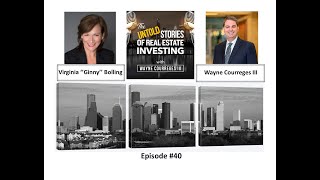
Interview (YouTube, Apr 7, 2023) with Ginny (Jenny) Bolling, a 40-year real estate professional who started in state right-of-way acquisitions for the Florida Department of Transportation and later moved into investing and syndications. Highlights: supervised acquisition of over 600 properties; earned the Senior Right of Way Associate designation; 30+ years as a licensed broker; LP in 544 multifamily units (Houston) and GP of 117 units (Jacksonville). Topics covered: appraisal and negotiation practices for eminent domain/right-of-way work; Florida-specific market headwinds (property tax assessment practices, hurricane-driven insurance cost increases, insurers exiting market, legislative response including Senate Bill 102 "Live Local"); conservative underwriting practices (stress insurance and tax assumptions), asset-class preferences (multifamily/value-add, development, medical, self-storage, mobile home parks, assisted living); evolution of syndication after the JOBS Act; lender/bank risk and opportunities from over-levered/distressed loans; passive-investor guidance (use of retirement/custodial accounts, SEC-regulated PPM structure). Contact/resources mentioned: pivotalrealestateinvestments.com; YouTube channel 'Pivot to Prosperity'; email as spoken in transcript.
Questions this video answers
April 7, 2023
Over 600 properties
Senior Right of Way Associate
40 years
544 units (limited partner)
Chapters
Welcome to the Untold Stories of Real Estate Investing hosted by Wayne Courageous iii, a place where active and passive investors come to hear the good, bad and ugly of real estate investing. Our guests consist of experienced operators and investors who want others to succeed by sharing their stories. If you're looking to syndicate deals or grow your wealth passively in real estate, you've come to the right show. It's now time to sit back, take mental notes and enjoy next episode of the Untold Stories of Real Estate Investing.
Welcome to the Untold Stories of Real Estate Investing. This is your host, Wayne Courageous. I'm excited to connect with Jenny Bowling today. She's been in real estate for 40 years, working mainly as a consultant, expert in acquisitions in the governmental arena. As such, she has extensive knowledge and ability to understand and work through land title, land use, zoning, valuation, contracting, litigation, permitting and environmental issues, as well as closing complex transactions. Some of the highlights that I want to point out here is she's acquired and supervised the acquisition of over 600 properties. She's earned the designation of senior right of way associate. She dealt with the first foreclosure property that she acquired back in 1987. A real estate broker over 30 years and, you know, currently holds rentals both in Florida and Texas. She's a limited partner in, in 544 units in Houston and a general partner of 117 units in Jacksonville, Florida. Excited to have this conversation. Jenny, thank you for being on.
Thank you. And thank you for having me. It's an honor.
Yeah. One thing I loved about your background when, you know, we were connecting before, but also when I was, you know, just learning about you prior to our show is just the number of years and the experience you have in our real estate industry. You're, you know, you truly have, you know, the background and probably the passion of real estate investing that, you know, that I definitely have. So I'm excited to learn from you and our listeners will learn as well as they follow along. But tell us about your background and sort of, you know, how you got into real estate and sort of your journey thus far.
Well, thank you. It's kind of interesting. My parents actually flipped houses when I was growing up. We didn't call it that or think of it that way, but as soon as we moved in, they'd give us a paintbrush and tell all four of us to go start painting, whatever. So I actually went to college to be in marketing and did what I thought was a practice interview with the Florida Department of Transportation, and that was graduating From University of Central Florida. And by the end of the hour long interview, I had a job offer to go buy property using other people's money, so to speak, you know, the state of Florida's money. And so I never looked back. It was so interesting to get involved with buying property for the state and it was so complex dealing with appraisals. And you have an appraisal and the property owner has an appraisal and the attorney and all their experts and you're trying to put it all together and negotiate settlements. And I thought that was just a blast to have so many experts right there at your fingertips.
Was the appraisal, when you're working through that, is it similar. Has much changed over the years and how they look at income versus like comparison, you know, equity type properties, like how do they, I mean how if anything has changed over the years when they value from an appraisal standpoint, it.
Has, it's changed some, but not tremendously. And much depends on where you are and what your experience is. The only reason I think I enjoyed doing it for the state of Florida was because they aggressively wanted to negotiate. They weren't acting like you can't, can't counteroffer you, you must do this or we're condemning. They wanted to keep it out of court and aggressively gave us authority to, to push for settlements. And initially it was hard because, you know, the attorneys for the property appraisers just were getting outlandish appraisals. And they still do that. But I mean, you know, they know that there will be compromise. But on the state side, the idea was always to get market value, true market value, and they in Florida would use appraisers that represented oftentimes both sides of the fence, so that it was an expert that on a witness stand would be able to say, look, I do business for both sides now, some departments of transportation, there are several districts I mainly worked for District 4 out of Fort Lauderdale. So they all had their own management. So some weren't as aggressive that way as, as we were. But then in 1994 though, the, the biggest change was the legislature changed it so that the attorneys would benefit 33% basically off the first offer versus the settlement, which meant you better make that first offer higher so that it's not worth them litigating. So the push was every benefit of the doubt, you know, give to the property owner. And, and there was a lot of that with certain appraisers anyway. But, so that was a big, big change. But otherwise overall, you Know, in the state of Florida, it's been, in the districts I've worked with, it's. It's been pretty much they try to get a legit appraisal, you know, that the property owner appraiser is going to give even more benefit of the depth to highest and best use and all that. And you just, you're going to be in the middle.
Have you dealt with any. With the state of Florida leasing property through third party owners or. And has it sort of shifted to that? Because I mean, owning property is expensive. You know, it is, you know, you know, and I asked that because, you know, in Washington D.C. we had, I was managing properties that the federal government leased and. But they leased it. The government didn't, you know, they didn't own those properties. So I'm just, it's interesting to know like in state of Florida that they were looking to actually purchase these properties. Is that still the mindset or shift or is it.
Well, I can't say. I've been representing them in the, the last 10 years much real seven years. Yeah, I was up in Maryland actually not long ago. But generally for the right of way projects, what I was involved with was where we were buying property for a project and we needed to get it cleared for construction. So any leasing was short term and we typically handled it ourselves. And it was a very limited basis because not only the liability, but there was just so many other things that came into it with them bringing more and more onto the property and, you know, the problems kind of escalated.
Yeah. So when you left seven, eight years ago, what have you been doing since with real estate investing and.
Well, I got involved in investing and initially I started out with flipping properties with a good friend of mine. And I knew at that time though just based on my experience in the 1980s, when I was an appraiser in the 80s, the firm I worked with had me start with residential. And I quickly figured out I really like business decisions more. So I moved into commercial and I started while we were doing the flipping. She was the boots on the ground, I was the broker and able to do the contractual parts of it. And I had started reading books on syndicating and I had started learning how I was going to be able to participate in a commercial manner. And so that's pretty much what I've been doing is building that.
So from a syndication standpoint and joint.
Ventures and that kind of thing. But we were doing a lot of flipping, you know, during that time. And then I was going to launch my company as Covid started okay. And with all the talk of tenants not paying rent, I delayed and man, it turned out to be the best years to, to have gotten in. Really a lot of that was because of the federal dollars you couldn't have anticipated.
But yeah, yeah, the timing, talking about this a little bit before where it's, you know, it's hard to time real estate markets and really we share the same philosophy and that's always a good time to buy real estate. It's just always, you know, buying. Right. And as you mentioned, the business plan and the team beforehand. But so what asset classes are you most interested in and why?
Well, let me not let that little tidbit that we talked about before coming on go go without emphasizing because it's like a three legged stool. It's critical that you have that location and the team and the plan. And the team has to be willing and able and committed to not only start, but finish. And you being in asset management, you know it better than anybody. That, that's, that's a vital part of the whole thing. And while some companies don't have it under their own company, they do the third party thing, which is what I do. It's vital to, to have all those three components and, and to buy. Right. You know, as we were saying. So, so the, the market is still good to be active out there. If you have all those three components, you have to buy it. Right. I'm a very conservative underwriter and so I'm looking my, my teams are looking at first and foremost multifamily. The darling of the day is still multifamily because of the housing shortage. I don't know if you realize I've been involved with the Florida Apartment Association. I've gotten quite involved statewide with. I met with legislators a couple weeks ago and we were introducing them, making sure they Understood Senate Bill 102, which just got signed by DeSantis and several other opportunities for them to use some tools and help ensure cities and counties know what tools are available to increase the number of units, housing units. So multifamily is first and foremost, I would say. And I've been more looking for value add, but I have finally gotten over my PTSD from the 1980s and I am looking for potential to build. But land entitlement and all that, with my background, it'd be crazy if I didn't try to use some of that. But also medical, office, mobile home parks, self storage, those are all looked at routinely. A lot of offers been made, but haven't won Any contracts, because there's. Spend some crazy money out there in Florida, to be quite frank. The other classes, assisted living, you know, the, the silver tsunami is coming, and I, I do feel like in the right situation, I would get into some smaller as well as larger facilities, but I don't want to operate them. I need to know the operators because that just is. Is just too much to try to try to get into.
When you're underwriting properties in Florida, what I mean, I'm thinking insurance. Is property taxes as high as it is here? Because y' all don't have an income. Do you have income, state tax?
No, we don't, but we do lots.
Of similarities between Florida and Texas. So I assume property taxes is, you know, a big revenue generator. So how insurance and these hurricanes and all, how's that impacting your underwriting and where you're seeing, you know, pricing out properties to buy?
Well, they are. You just hit the two biggest factors that have some. Some challenges now. You can go ahead and get the per diem rates and whatnot on the taxes and go ahead and calculate what it will be most likely after. You know, that's if. If the appraisal office, the assessor's office updates the value right after you buy, and you should assume they will. But even though they call it market value so that they don't get too many appeals, they pretty much put it. Put it at 80 to 90% of market value. I've done a lot of tax appeals, so you need to adjust that for your underwriting. And then the insurance is such a wild card. It's tripled for a lot of different, different property types. And that's, that's the, that's the crazy thing. You just need to be super conservative and get, get real estimates before you close and be sure that you're. You're figuring it could get worse.
Yeah, that's the, the struggle on the coast. Coastal cities, like, I focus a lot in Houston. And yeah, insurance rates going, you know, 40 to 60% higher in some cases more than what people underwrote. And so if you're not having the reserves or your property's not cash flowing, you know, it's just another hurdle that a lot of these owners are having to, to go through and to explain to their investors of, you know, why the property isn't. It's just hard to, you know, know how high to do insurance when, you know, seems like every other year there's a major storm hitting the US So.
Well, there's some legislation that. And even A special session that occurred in Florida because it was getting so impossible to find insurance because so many of the companies have left the state and citizens is the name of the fail safe state run insurance and they're getting overloaded. And so there was some legislation, I think it was, the bill was signed actually maybe yesterday on limiting some of the lawsuit potential exposure there. And it'll be interesting to see the insurance companies, you know, need to respond. There's probably actually a business case for investors to form a company to, to come in as well, but.
Sure. Well, and you mentioned the bill that DeSantis just signed. You know, when you think of Florida, there's a lot of people moving to Florida. It's, it's a, it's a state that's for many reasons, you know, a great place to live. But with this, the shortage of housing, is that bill more focused on workforce housing? You know, what, what is, what's the opportunity there now that this bill is passed for real estate investors to take, you know, really take the lead and help with the housing shortage?
Well, it was termed live local because the, the emphasis was on affordable housing or is on affordable housing. It does give some funding to two of the major programs that are in the state. And then there is also the tax credit approach that I think a lot of states have where you can have a 4 or 9% tax abatement, if you will, on the properties. And you do have to commit to a certain term of keeping the certain number of units even. And it depends on where you are. Everybody's got. Every government has a little different angle on what they want to require on the properties. But it seems that more and more of the trend is to have a certain percentage of a market rate apartment building dedicated to the affordable housing. And they're encouraging even to do some support services like financial literacy training and things like that like Habitat usually will do. So I think there's some, some there's a push towards not just throwing money at it, but solving the problem which is hopefully going to occur.
Yeah. So I, we call it opportunity zones here in Texas. So it's probably similar there where investors are incentivized to build workforce housing and in such the government is providing tax relief.
Is that we have opportunity zones. It's not that I haven't really heard of it being really geared towards affordable housing so much as. Rebuilding basically refreshing communities. It's really urban renewal more than, than anything because there's a big slant towards businesses and they even encourage you to buy businesses that are floundering within these zones.
Well, I love the education aspect of it too. You know, we, I feel like schools that should be a, you know, financial literacy and management should be a class, you know, but, you know, it puts a lot on the parents, but the parents don't have that background or knowledge of it either. It just makes a chain effect moving forward of, you know, kids getting out of debt and building a foundation for their future. So, so now that you're focusing on real estate syndications, talk to us about where you think we are in today's market from a financial standpoint of where the banks, I mean, we're hearing a lot of negativity with banks, you know, having, you know, cash flow issues and, you know, Silicon Valley, which is actually one of our lenders on a property. We haven't had any issues yet, but they just were brought out by, I believe, a bank in North Carolina. But sort of given your history in real estate, where do you, where do you sort of see us where we are today and does it reflect or match up to anything previously that you've, you've experienced?
Well, it does kind of give you some flashbacks to the 80s when the RTC and the FDIC were taking over banks. I don't think that it's that far and wide. I think from what I'm hearing, it's certain banks that have gotten overly aggressive and it sounds and seems like the bigger institutions are going to be able to back them up in many respects. I do think that the feds need to back off on the hikes, you know, but at the same time, inflation is important to nip too. So I, I, I wasn't entirely against the quarter point they just raised, but I'm hoping there's a good pause because it does take time for all that to catch up. And obviously some banks weren't. I mean, you know, it's been decades for people to have even learned from that. And, and most of the people that went through that, my peers, are retiring in droves so that that experience isn't being relayed really. So I think that there's, people are much smarter, they've learned a lot. I don't think it's going to be a contagion. I could be wrong, but I don't think it will be. And I do think it is going to present more opportunities from the people that got overly aggressive. As, you know, we were talking, it was very hard to buy property for the last few years because there was crazy money, you know, being thrown at some of these, these Opportunities and, and those will now become opportunities, I think for us.
Yeah, absolutely. Well, especially because you think about two or three years ago when people were buying or investors were buying properties, whether it's private, you know, buying their own investment privately or syndicating to buy the property. But rate caps weren't really the, you know, a lot of people were buying these variable or properties on variable loans and not or so thinking about rate caps, you know, because rates were so low for so long. So when you talk about opportunities, I mean that is the opportunity, right? Is, is people are those, the debt service on those properties is just really hurting a lot of properties. And so it is either you refinance or you sell. But if you're refinancing in your, you know, your rate is doubled since you initially bought the property, you know, you, you potentially have an issue with your debt service coverage ratio not hitting, you know, at least the 1.25 ratio. So I think you're right. I think there's a lot of opportunities for that are going to be coming up because they're not going to be able to refinance. And if they do refinance, it's going to be a higher loan to value or you're going to have to bring in more capital. Right. So your, your, your debt to loan ratio is going to be a lot higher. So you're going to, and the interest rate and your, your interest rate. Right. So I think that's what the banks, you know, I think moving forward, I agree with you that it's, it's gonna, I still think it's going to be a struggle, but I feel like the struggle is going to be with the buyer having to even more so have a strong business plan and then bring more capital, you know, to purchase a property. So where we were getting 80% loan to value, you know, I, most of our properties now are 65 loan to value. And, and that could even get a little higher where you know, it could go down to like 60% loan to value. So it just means we have to raise more capital and that shifts the risk from the lenders as well. And then if they can start consolidating, you know, these lenders start consolidating, you know, that could be a challenge too in a way where there's fewer lenders lending real estate type capital. So it'll be interesting to see, but I'm excited for the opportunity. So those investors out there listening, you know, this is the time to really be focused on broker relationships and finding off market opportunities. To find those properties that may be suffering because of the loans.
I agree. And actually we're meeting with bankers and talking with them as well too, because it could be they know of a property that's in trouble, but they don't want to take it back.
Right.
And if there's enough equity and a way to revise the plans, you know, they might not have to take it back. So we're trying to be sure that we're aggressively talking to the bankers and, and letting other investors know the same because we don't want the industry to suffer. We want, we want a good reputation in the syndication world. And I, I think it's really important that people appreciate that it's a team sport and if you goof, try to fix it, you know, try to reach out to the other professionals out there and get it fixed so that it's not going to be, you know, bruising the whole industry.
Yeah, no, it's a great point with the lenders piece that relationship is key. And there are stories of, you know, the loan going to another syndicator, more experienced indicator without them even having to bring in any additional equity or anything. It just, you know, so those having that track record and the experience definitely helps those get those type of opportunities a lot faster and easier. But no, it's a really great, great point. So. Well, during your investing career, I mean, has there ever been a time where, you know, it was a huge learning experience where you, you look back and you're like, I wish I knew that before I went through that experience, you know, for investors to, to learn from you?
Well, I, I can tell you the first thing that strikes me is I wish I'd known I could have been buying commercial property before. That's, that's the, the thing that I, you know, really want to impress upon people is that they don't have to limit themselves to the stock market and that there's other assets out there, many different types. They don't have to like multi family. There's other things too. But the other thing is that, and connected to that, you can move your money to these other places and use the retirement dollars you have. You don't have to use your savings. There's usually a lot more resources through your retirement accounts. And so the custodial accounts are a big thing that I wish I'd learned years before. And it's passive investing. It's easy to do what you like and go be busy and have a family and, and have your money working for you 100%.
But you know that these type of asset classes, it's fairly new, you know, last 10 years or so. Can you talk to us a little bit more about syndication and sort of where it's come in the last 10 years? Because I do think that people think that they missed the boat years and years ago, but really you didn't like this. Things have changed, evolved and you know, from a time, from a timing standpoint, you know, anybody that's listening to this podcast learn about real estate investing, you know, they're still part of that initial wave of investors that are getting into passive investing.
And that's very true. I, I kind of beat myself up for not being on the cutting edge because I like to pride myself on knowing cutting edge stuff. But, and since I was buying property from, from people that were actually pooling money years ago, you know, I, I should have been able to figure it out then. But, but really, truly, it was the jobs acts of 2012 and 17 that were put in place because of all the small and mid sized banks closing after the Great Recession. Trump, one of the things that he talked about, or that's often cited, was that the small and mid sized people and businesses lost their resources for capital. And so the crowdfunding and syndication parts of that jobs act made it possible for people to pool money. And, and it was kind of a rebirth of syndicating. It was applied more to real estate than it had been before, as I understand it. It of course was always used in newspapers and sporting and syndicating isn't a new term. But in real estate, no longer did the business model mean it wasn't linear anymore, where you get a source, you package a product and distribute, whether it's services or materials. Now Harvard calls it the information age business model. They pride syndicating as the best business model, in fact, for the information age, because now it's a proliferation of resources and ways of doing things in all three steps. So that's what syndicating is. Basically. It's taking the best of all that you can choose from and putting it together. And, and so did that answer your question?
It does. And we were talking a little bit earlier too. I think as time goes on, people hopefully will advocate and push for even just the ability to invest in alternative investments in their 401ks. And you know, just, I mean, I think the, we've said on the show before and you know, the herd mentality of most investors is the stock market, 401k, invest in the Roth and you know, all those things I still do as well. You know, like, I, along with everyone out there, has lost 20, 25 of their, you know, stock market over the last year or so. But I still have investments there. And in a way, one of the things I Learned back in 0809, you know, when I look back, is I wish I bought more stocks during that time because everything in ways on sale, right? But you got to have, you know, cash to do that. And at that point, I didn't have much cash. I was getting out of the Marine Cor and just starting my life. But, but, you know, just investing during those, those down markets, whether it's alternative investments like real estate and such. But you did answer the question. One thing you mentioned is staying on cutting edge. And one of the things that, you know, went to a conference in January, but they were talking about like the Metaverse and investing, you know, and, and so in the airport I bought a book and still, for whatever reasons I, I get the underlying principles of it, but investing in real estate in the Metaverse. But I, you know, 10 years from now, I don't want to have a podcast like, oh, I should have, you know, looked more into that. But, you know, it's, you know, things evolve and change and, and if you're still, you know, on the fence about passive investing, you know, getting educated and, and meeting people and learning, you know, learning what? Investing, because can be a challenge for a lot of people to, you know, invest with a group of people, syndicators. But you're doing that in a way with stock market, these companies. Like, you're exactly, you're investing and you don't know who's going to be running that company or, you know, so it's just getting educated and knowing the team, who's, who's executing the business plan.
So, and I think that that's a critical part for us as syndicators is making sure that we really get to know our investors and that they get the opportunity to really get to know us, because that's the best way to have the business venture over so many years have good results because you need to support each other, trust each other, know each other, you know, know, like. And trust is the, the terms that most people use. But I think that one of my most common things that I end up talking to people about when you go to these networking events or any event and they ask you what you do is making sure that they know that there are SEC guidelines that we have to operate under. It's controlled. It's not just a loosely done Joint venture. It's basically a formal joint venture. It's papered with a private placement memorandum. And so that gives them the opportunity to read and know the operating agreement between the partners and what happens if there's something that goes wrong and whatnot. And I think that's a really important thing for them to know and to read in advance before there's an actual deal so that they can get familiar and not feel so. So, you know, scared to. To take a move. And, and one other thing that's probably worth mentioning too, because when I was an appraiser in the 80s and I would do this research, and this was the mid-1980s, right. And I'm looking at how little people paid for property even in the 1970s. And I'm like, man, I wish I could have bought that. Right. I was in school at the time. Right. It's all relative. You just got to pull the trigger.
Right.
That's the thing. If you're not in the game, you can't. You can't play. And there's a good. Well, that's a good metaphor. If, if you're not in the game, you can't play.
Yeah, yeah. If you're sitting on the sidelines, you're not getting any better, so. Well, I appreciate that. And one of the questions I always ask towards the end is, you know, what's your proudest moment in real EST investing? But before we go to that question, is there anything you want to cover that we haven't covered today?
No, I think. I think the big message right now for people is that it's always a good time to buy real estate if you buy it. Right. And the syndication model allows people to control their risk better than many, many, many other ways of investing. And like you pointed out, in the stock market, you don't know those people. And really, for passive investors, the amount of time it takes or that they should be taking to invest, say, fifty hundred thousand dollars of. Of capital in the stock market, it's pretty much the same amount of time to invest in syndicating. You just have to know how to get that money ready to deploy. But, yeah, so that's what I would say.
Yeah. And to add to that, I think that's a really great point, is you talk about risk and managing risk from a syndication point. In my view, you're sharing the risk with others. You're not the person bringing in $3 million to buy that asset. You know, 50, 100,000, 250. I've have investors that do 500,000 or more. But it's still a smaller portion of what it would cost if you're doing it on your own. So from a risk standpoint and the ability to diversify in more real estate or other investments, you just have that more the ability through syndication. So all well said. I would love to ask you my last question and that's what's your proudest moment in real estate investing? And then if you can share how our listeners can be in touch with you, we'll close it up.
Proudest moment. I guess I still kind of go back to one of those Department of Transportation success stories I was involved with. We had a two story L shaped condominium where we had to take off half of it and we had like seven attorneys on the other side and seven owners with all their tenants in the building. And we were able to negotiate, I was able to negotiate with them a settlement where we cut off the building and we were able to build that wing on the south side. And getting all these adversarial parties to sign on agreements, it was like a year, year and a half negotiation. And plus our side of the attorney, it was just a huge closing and a huge feat. And so that's probably my proudest.
Love it. Well, how can people reach out to.
You so you can put it the right way? My website's up on the background there. Pivotal real estate investments.com and I have a YouTube channel where I interview people like yourself and, and, and others. And I'd like to do that by the way. And that's called Pivot to prosperity. It's on YouTube. And Jenny bowling@pivotal rei llc.com that's not so important. LinkedIn or any of these, you know, ways is is just fine. Perfect.
Well Jenny, really appreciate you sharing your knowledge and enjoyed getting to know you a little bit today. So thank you and I look forward to staying in touch.
Likewise. Thank you. You take care.
That's all for this episode. We hope you subscribe, share and leave a review of the show. For more information about passively investing in multifamily apartments, check out Wayne's free ebook by going to forward slash ebook. Also follow us on Facebook by searching CREI Partners this was the untold stories of real estate investing.
More from Wayne

September 2026 Meetup: Investing Ahead of Growth: The Bryan–College Station Opportunity





May 2026 Meetup - Apartment Complexes & Passive Investors: Opportunities & Risks


March 2026 Meetup - Reading the Market: Economic Indicators Every Investor Should Know


February 2026 Meetup - Syndication 101: How CREI Partners Structures Deals for Investors

Build-to-Rent (BTR) Communities Explained: Why Investors Are Paying Attention