Igor Shaltanov - Diversifying Assets and Mitigating Risks in Real Estate Investing
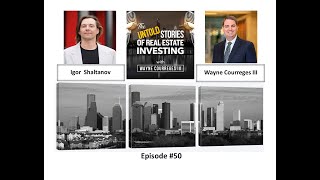
Interview (podcast) of Igor Shaltanov by Wayne Courreges III describing Igor’s background as a former professional athlete who transitioned into entrepreneurship and real estate. Igor recounts early real-estate influences, his move into U.S. single-family rentals (2015) and later multifamily/syndication, founding Avista Fund (2020). He discusses investing for international investors (ITIN/EIN, wiring, feeder funds), fund strategy (diversify by location, operator, asset class), and contact/resources.
Questions this video answers
2015
2020
Limited partner to 17 deals, 3,050+ multifamily units, cumulative value over $483 million.
Igor@ivistafund.com
winrealestategame.com (referred to as 'Win Realestate Game' / 'WYN Realestategame.com' in the episode)
Chapters
Welcome to the Untold Stories of Real Estate Investing hosted by Wayne Courageous iii. A place where active and passive investors come to hear the good, bad and ugly of real estate investing. Our guests consist of experienced operators and investors who want others to succeed by sharing their stories. If you're looking to syndicate deals or grow your wealth passively in real estate, you've come to the right show. It's now time to sit back, take mental notes and enj our next episode of the Untold Stories of Real Estate Investing.
All right, welcome back to the Untold Stories of Real Estate Investing. This is your host, Wayne Courageous. So today we're going to be talking with Igor Shednov, founder and managing partner of Avista Fund is a former professional athlete who transitioned into successful entrepreneurship and real estate investment. Guided by discipline and a relentless drive for excellence, Igor has founded and managed thriving companies and businesses in Southern California. 2015. Igor ventured into real estate and established a vista fund in 2020. This privately held firm focuses on raising capital from investors and investing in income generating value add multif family properties. Their mission is to provide local as well as international investors with access to US real estate, safeguarding and growing their wealth amidst high inflation rates in their local countries and currencies. They are currently serving as a limited partner to 17 different real estate deals. 3050 plus multif family units with a cumulative value of over 483 million. Hey, thank you for being on our show.
Welcome. Thank you Wayne. Thank you for having me. It's always pleasure right to be on the show and share the ideas.
Yeah, I always tell you my, my fun part is getting to know you before the show and we're like 15 minutes there like oh, we probably should start recording because already so much content and you already easy to talk to. So this should be a really great show. So thank you again for your time. Tell us more about where you are. You know I mentioned professional athletes so you know, what sport, etc. You know, love to, for the listeners to get to know you a little bit better.
Yeah, that's, that's actually. Yeah. Thank you for your question. It's actually really a good story. Right. And then when, when people asking me I was like how far back should I go? Right. All the way back to my childhood. Right. Is it just a little bit back to professional career and stuff like that? But it was a lot of fun stories for sure. Not to say my wife is professional athlete. Her dad is professional, her brother is professional athlete. So me, myself, I was playing water polo was back in the days I was swimming for a long time. And then maybe at the age of 13, from 7 to 13. And then my parents start to catch me up, right? I was playing video games, skipping practices, Like, I was like, so bored by swimming. And then my dad, he was like, you know what? I have a guy who has a water polo connections. Do you want to try that one? Because they want to put me in something similar. And I was, yeah, let's try it, right? Because, you know, I always need people and challenge and bowl and, you know, to. I don't know, I was always, like, challenged by playing with the ball, right? And playing with the minds and people right against me. I was never, like, probably at the age of maybe 40 plus, I started to challenge myself mentally, right? When you're playing golf, right, you're just really playing with yourself, right? But then back then it was just people, right? I want connect to people, talk to people, play with people and stuff like that. Swimming was just so boring. Like one stroke after another, and then you turn, you come back. I was like, man, I can't do it anymore. So anyways, and then, short story, right? I went to professional, went to army, right? Served there. And then I was Dino Moscow team, it was in Russia, Moscow. And then I became national player. And then I was traveling all over the world. I just did everything I can, right, Just to travel different countries and then digest that culture, the. The food, right? And then it was just absolutely amazing experience. So my wife played basketball. And then how we met, we actually went to Turkey in 2005. And all of a sudden we're like, okay, she was a basketball national team, I was a water polo national team. And we just met a delegation meeting, and we started to talk to each other like, oh, you know what, we should probably meet in. Back in Moscow, right? And we just start to date and we had the first son in 2009. So the. Throughout the career was so many ups and downs, meaning, so the mental challenges and it really set the pattern of discipline, right? Perseverance and, you know, staying on the one and focus on one thing, right? Because the sport is just absolutely a roller coaster. Like, one day you're on the top, and then you got a bad game and you're just all the way on the bottom, right? And then you gotta, you know, put yourself together, right? And you be your best the next day, and then you're at the top again, right? And you got this streak of, let's say, a couple weeks, you're one of the best ones in the world and then you just go all the way down. So it was just absolute roller coaster, right? As every game in the world. But what happened is I just want to give me a little bit of the story of the finance as well. The professional career was something artificial feeling, right? Because you play the sports, which is kind of a game, and then at the end of the month you get a bunch of money and then you play sports and you got a bunch of money. So all the expenses covered for. So the travel cover for the food is travel for. So when you stop playing, that's like you hitting the wall. Like you're going 100 miles per hour and then you just all of a sudden you just hit the wall and you just crashed, right? That's why I can just really relate to every professional who is playing sports right now. Because back then in seven for me, I think when I stopped playing and you're trying to go to work because I had a jd My first degree was a physical education, right. And coach. My second degree was a jd And I was trying to go and. And find myself at work as a lawyer, right? And nobody wants to accept me. Like no one. They said, what is your experience working? I was like, nothing. I was like, we're not taking you. Thank you. Right. And then I start to realize how different is the playing sports and then entering just a, you know, I would say regular life for each person, right? Going to work, finding that job, right. Getting that income. Because all of a sudden from the income bracket on the top, you just get to the zero, right? And you got to climb that ladder again. It was just very, very challenging.
So, yeah, you know, it's you with your military background too, you can also respect that. I see a lot of people, a lot of my friends that I was in the Marine Corps with back in. Was it 2003 or so?
They're.
Some of them are retiring and they're having that, you know, they're making good money on the military side and they have this experience, but translating that into the civilian world, like, for example, like your sports background, you know, the ups and downs that you experience is huge on developing the mindset of, you know, not giving up and working hard and, you know, all those things that are tangible, especially in real estate investing. So how did you transition into real estate investing? I guess if I read it correctly, 2015, you took the dive in real estate investing where you did you do some legal work before real estate investing. So what was that period of the story?
It's thank you for that. Question. It's amazing story as well. And the same idea. Should I go back and first time ever, like I just reflect on that question multiple times by myself in the garage, like sitting, sitting on a chair, right? First time ever, I was maybe about like 10 or 11 years old and my neighbor tells me, you know what, I have go and pick up with my mom, check for the rental. And I was like, hold on, check for the rental? What do you mean by that, right? And he said, oh, we got a bunch of apartments and then one of them is renting to somebody, blah, blah, blah. I was like, wow, what does that mean? I was like shocked because I didn't know nothing about. I know like people go to work, that's how you make money, you come back home, right? And all that regular stuff. And then that's the first time ever. The second time when I was a little bit more conscious still, like, absolutely newbie, right? Had nothing to do with irr, right? ROI had no idea what that means. So. And then my mom was social worker, right? She was working in government hospital, right? And then she managed to get one apartment because it was just her benefit after 20 years working or maybe like 10 years, let's say they gave her one and then the second one came. It was like a special thing. You need to divorce your husband, right? And you split the families. Now you got one apartment which is used to one family, and then another apartment kind of goes to another family. So my mom, my, my mom and my sister, because I have sister as well, they got one place and we got the second place. And then they just being regular people say, oh, we're going to keep them, we're going to live in that one maybe sometimes and we can give somebody to live in that one, one of our relatives. And I was like, oh, I heard that idea from the guy. You can rent it to the people, right? Then it was back then, it's like a long time ago, maybe 20 years ago. And there was the first, my entrepreneurial idea. So listen, if we remodel and I have money coming in from sports, right? It's just, you know, it's enough income. I was never able to spend all of my salary, right? So. And then we just doing the full blown remodeling on one brand new apartment, like A plus, new building. And then I telling my mom and they live in that old one and I tell my mom, listen, what if we're gonna leave right from this place and you go to brand new, just a new kitchen, new floors, we just put all the n furniture in there. And she said no, no, no, no, no, I don't want to do that. I was like, why? So I don't want to do that. I got used to that place. There's a, you know, let's say forest here, right? We got bus station, blah, blah. I was like, what do you mean? There's a brand new place, you can go there and we're gonna, we do a little bit of touch ups and we rent this place. It's just like what does that mean, rent? Anyways, it took me about maybe six months to convince them as that remodeling goes in progress, right? That was like six months talking to them. Listen, you're going to be in a beautiful place. It's a brand new so you it, you've been working so hard. Anyways, I convinced them. So I asked my neighbors and then we just did a little bit of touch up. We put some wallpapers and we rented to two students. Like not, not the students. They rented to two students who just got the work and they were kind of combining income to pay for rent. And then the first month I got the money, I was absolutely like mind blowing for me. I was like man, I just did nothing. I like I did a little bit of prep work, right, of course, but I just got the money. I was like man, this is impossible. What if I get 10 of those? I was like, man, what If I get 20, like 30 of those things, right? And they just going to be paying me. And I got ignited by that idea, first time ever, so. And then now moving into a couple of things. Idea number one was so my wife brother was drafted by Clippers. So his first contract was $1.7 million. So it was a huge, it's like going on the stock market. It's a huge spike in financial, you name it, right? Financial resources, right? So we didn't have a financial background. No one was investor from the family. So you know what happens then, right? So after two years, right, we got into the huge debt from 1.7, so went down to probably minus $300,000, right, in debt. So and, and the idea of that was 70% of the professional players, MLB, NFL, right, NBA, you name it, right? The 70% of them, it's staggering number. Just think about that number. So they go bankrupt within two years as they stop playing. So they just go chase that high level like you know, lifestyle, right? They just buy all those liabilities, not the assets, right? And just, it just explodes, right? And you know, it's Gone, right? The same thing. It was a Powerball. If we want a Powerball, it's same thing, right? Because there's no. There's one thing education. And I was missing completely that thing, right? I was missing that education. And then I start to tip into the real estate world. And basically what happened is so my wife, brother, he went back to Russia, he started to play professional, right? He kind of moved out from United States and we stayed here. So. And then one of the more. I remember one of the mornings I wake up And I have 120,000, I think, in the credit card debt. I was barely. It was 2010. I was barely speaking English, like, almost not, right? And then there's ID caller on the phone, and there's a Citibank calling and then U.S. bank calling. And then. And then all the family, they were like so scared to pick the phone, and they were handing the phone to me, and I was the one who needs to pick up the phone, learn what to say, right? Build a strategy how to close all those things. And again, I couldn't sleep for maybe a couple. Couple weeks first, right? Because I was like, man, this is a lot of responsibilities. There's a this, this and that. There's a lot of, like, there's a mortgage on the house. There's. I mean, there's any. Anyways, it's. It's a basic story of the, you know, professional outlet going up, acquiring a lot of liabilities. No assets exploded, right? And then I learned that story. Listen, from. Yes, it happened, but it was a great lesson for myself. What can I do better? This, this. What. The transformation really happened. I said, okay. And. And again, it's never. It didn't happen immediately. Why? Because I got my. My first. When I sold my first apartment in Russia, right? And I converted money into US dollar. It was $271,000. I remember that. And I got a bunch of like, let's say $20,000 sitting on the account and I'm going to fitness club. And it was just a name guy, David, right? He's maybe like 71 years old, new York teacher who just moved to California. Every day, relax, working out in the morning, right? Very, very slow, right? Always smiling. And we talking all the time and sound after workout. I was like, david, you feel like you look like a smart guy, right? You must be doing something with your money, right? Can you tell me where you put your money? I said, oh, I'm in the stock market. You know what? I have a really good. And he was like, very, very Kind of not push, I would say he was like very gentle not to give me advice as much, but saying, listen, I got one guy I can really trust and I can give it to you, right? So you basically, you give him your money. So. And then he gave me the guy and it was, I made it. I married Price company, right? His name was Kyle, I remember still. And I gave him that $300,000. And then after one year, I just looking up at the statement and I was like, okay, market is down a little bit. So it's about to be the same amount of money. But then the percentage for the broker is there, right? They still made the money on the percentage. They don't care. Like it's going to be up and down. It's going to be something like it's flat. They don't care. They're gonna make that 1.5 to whatever point percent rate and stuff like that. And I was like, it's not gonna work like that. I need to like three to four lives to build to what I wanted to be, right? There's, there's got to be different way. And then that same time, I bought a couple apartments back in Russia as well. So I was living here. And the problem was the currency exchange rate spikes up and down. So I was able to use that spike, right? And I just convert the amount of money, right? And I bought multiple apartments. I sold one, but I bought multiple back then, right? So. And I start unconsciously putting the money into the real estate. So I put it in the stock market in real estate. So after one year I just look up, right, on my performance and I said, which one is doing better, right? Like let's, let's, let's talk through the numbers. Let's not be emotional, right? And then I said, okay, so the apartments are rented, people are paying the rent. It was cash purchase, right? There's no mortgage, but anyway, so it wasn't a huge amount, but it's always a plus, right? And then the equity inside of meaning the price of apartment, like growing. I was like, man, okay, so. And it makes me think first it was one year only, right? And then couple years in, I was like, okay, what's going on now? And then, okay, stock market this and then you file the taxes, whatever you make on stuff, the stock market, right? So it's going to be taxed. I was like, why? Because it's a short term, right? You guess this and that. And then just, oh my goodness. I was like, man, so meaning. So if you want to make 10 you got to make a 20 right on stock market. And then I started to look at statistics. Is it possible to make 20% unless you're trading or doing something like exceptional. You got inside. So you can't, right? You can't really do that because it's going to go up and down and 7% maybe if you're lucky enough, right? And you are time span, right, of like five years, three years. Anyways, what happened is I'm talking about the transition. So I start to compare, right, Two different vehicles. I said, listen, it's not working. It's just not. So they're gonna take 1.5% for the fee. You're gonna put 50% of taxes right, as an income. And then at the end of the day, right, what are you gonna get? So there's no way. So. And then I just call my broker. I said, listen, Kyle, I found better way to make money, right? I'm gonna go all in in real estate. And he said that if you feel like that, let's do it, right? Then he just, you know, closed my account. And that was my. That's it. That was just. I was all done with the stock market. I said, I don't want to do that, right? If I'm not professional, if I'm not trading, I have no time to do that. I'm gonna go into real estate. So in 2015, it was the first transition. Then after, from. I said, okay, let me buy a single family house, right? If I own apartment rates, I want to own the house, right? And then I got into the houses. So. And what is that?
Was that in Russia or in the United States?
California. It was California. Received California, right. And then I bought that house. It was like 450, let's say purchase. And then it's got to get like remodeling, kitchen remodeling. It was. Was like absolutely trashed background backyard. So I did the backyard remodeling. Put some beautiful place. I mean, listen, I made it nice place. It was just a. Probably like a C plus B minus neighborhood. So the perfect neighborhood, which not too much of the, you know, too much of the luxury stuff, right? When it's not too bad where you can't get people into the house. So anyways, and then I remodeled that. I rented to the people. So that one was leverage. Was I started to. I started to listen actually for biggerpockets.com. so the bigger pockets was huge. It was a Josh Torkin back then. So Brandon Turner just start to pop up a little bit, right? He just hired him, I think. And then through the bigger pockets, I started to learn the things like, why would you use your cat? Because remember I was buying cash, right? You said, why would you use the money? Because the biggest advantage of real estate, it's a leverage. I was like, man, that's true. Like, why would I use all my cash money, right? How much return is on my cash money? It's like, it's minimal, right? And I start to really process the information as a businessman, right? Because, you know, before it was just setting aside money unconsciously and then start in 2015. I was like starting really putting the spreadsheets and saying, okay, what's the return on my investment? What's the time frame rate? So what's the leverage? How much it cost, how much the property management, how much time I personally spend? Because I own the business as well, right? Back then, so that same time, so. And then if I kind of shift my mind from one thing to another, right? Because I'm losing here, right? And again, this is nature of the world, right? If you shift and you focus, right. You lose something, right? Anyways, and then basically the. The lesson was I was probably, I was lucky enough again, California, it's appreciation play. It's not about rental as much. If you can find a good deal, it's going to be like, you know, you're going to be like, you know, the God of the deals, right? So anyways, and then I finished that remodeling. I rented to the people. It took about like two to three months to actually rent it. It was not the best market for the renters. It was kind of buyers, I would say market, right? People, like kind of. I don't know why. Actually, it was not expensive to rent it, but it was just, you know, just a market like that, right? It took me like a three months. I remember that very clear. Why? Because I was the one who was paying mortgage that time, right? And I was like counting every month. And it's like, how much time is gonna take me to recapture all of this money, right? If you got a cash flow of 400 to $200 per month, right? So basically, so I learned a lesson very quick. So if I got. I mean, one thing was, okay, they call me all the time, right? They just pick up the phone and say, oh, you know what? My curtain just dropped a little bit, like couple inches. Can you fix it? I was like, really? Oh, my window is open. Yeah, you can close it, right? So. And again, it was just ridiculous requests, right? And then that Was my another transition because in, in my other like investment experience back there, right? People were not calling me on the minor things, right? Oh yeah, if you got flooded, they might call you, right? But if something needs to be fixed like and it's a minor problem, they will never call you, right? And it's probably cultural differences as well. So anyways, when in America, I said, okay, let's look again, apple to apples, right? Let's see if I get multiplied by 10 on those houses. So how many calls I'm going to get tenfold. So if I multiply by 10 and people left and I need to pay mortgage, right? How much response like liabilities I'm going to have, right? And I started to kind of basically 10x that thing, right? I was like, man, this is not going to work. It's just not right, because you're going to become a property management person, right? You're going to be running around. So basically you bought yourself a lot of business, right? And I asked myself, do you want to be in that business owning like a single family pieces, right? Absolutely not. And again, it worked really well for me. But then I start to think through the scaling, right, As a business model. So and then that time probably 2017ish maybe. And then I was like walking around and then I have a mentor for my other business. I have a mentor, his name is Michael, right? And I talking to him every month, right, about the KPIs of my company performance and all that stuff in real estate as well. And then at the end of the meeting it's always maybe, let's say 10, it's about an hour meeting, right? And maybe about 10, 15 meeting, 10, 15 minutes. We're talking about real estate because he's a real estate investor and I'm real estate investor. And then I said, Michael, listen, I'm in this single family right now. It doesn't work. He said, yeah, sure enough it doesn't, right? I said, what do you do? So tell me what you do. He said, you know what, there's a, there's a model where you can buy apartments. I say, really? How you can buy apartments? And then again, listen to bigger pockets. It was the first time ever I heard about syndication idea. It was Kathy Fitake, right? She lives in Malibu right now. And then she was like talking about Utah development and they do like a like 100 units, 200 units. I was like, oh my goodness, I should find $20 million to buy like apartment complicated by myself. It was my first idea. I was like, I Was kind of hesitant, like where I'm going to find $20 million, right? And it's got to be some like big operations, big company. And I was under impression it's impossible for, for a while. But then walking on the streets, driving passed by, I was like, oh, I want to buy this building. Oh, I want to buy that building. So I want to do this, I want to do that. I start to put that idea into my mind. Listen, I want to be apartment owner. Like the single family died for me at that point. Like it's gone, right? Because before I was like walk around and then driving around, say, oh, probably this house is pretty good, right? Oh, this house is really nice. I can remodel, I can put new this, this roof and then, you know, either rent it or sell it. Anyways, this is the transition in my mind. I was like, okay, from one door, right? One request to a hundred doors, one request to one person maintaining, right? One mortgage and all that, blah, blah, blah, people paying and stuff. So I started to really educate myself through the different resources. And then all the friends around myself who was the, I would say, involved in syndication, I started to ask them, what would you guys recommend? What are the companies, right, where we can go, so what should we do? And then I start to evolve myself into apartment world, right? And you know, this is a little long story about the transition to apartments. Another.
It's a fantastic transition because there's a lot of people. I was in your shoes too. And, and I had a single family home in California and it took several months, probably three or four months for it to lease. It was, you know, some renovations we had to do. But, but during that time you, you are paying the mortgage, right? And then you are thinking and stressing out too, and you're like, why not leasing? Like, what is, what's wrong with this property? Checking the mls, et cetera. So there's a lot. And I love the multi family space because, you know, especially if you're buying, right, and on your cash flow and you, you have good financing terms, etcetera, you could, you know, have a, you know, out of 100 units, say 30 units vacant, I mean, obviously nobody wants that. But you look at your break even point and you're still able to pay the service. So it helps the, reduce the stress load for sure. I love how you've had these experiences and you have quickly pivoted and you've always been reflective. That's one of the things I'm getting out of you on your podcast, on this podcast Is, you know, no matter where we are on our financial journey, it's good to pause, reflect, don't get emotions involved. You've mentioned that. Like, be, you know, look at the numbers and then make decisions and pivot, you know, And I always preach diversification. Like, I love, I'm. I like, I like the stock market. You know, I, I love real estate, but the pie on my side, the real estate is a larger pie, but the diversification is important in my, in my view. You know, I see that too. With. Recently I had a call with someone who has had a lot of syndication or a lot of investments into multifamily. We're talking multifamily here. And he retired. So a lot of that passive income for those deals that he was in stopped paying distributions. And so he's expecting on his retirement side to have this income. Right. And you know, just made me think afterwards, I was like, you know, it's like, it's a good lesson learned that, you know, for me, because I'm always reflective similar to you. It's like having all your eggs in one basket. When that basket is not doing well, it's, you know, it's good to have other sources of income. So. Hey, listeners, it's Wayne Courageous. I just want to pause real quick to say thank you for listening to our show. I hope that you're getting a lot of value out of it. If I could ask you to go ahead and like, subscribe and share this podcast, that would mean a lot. It will get a lot of other investors like yourself learning about the process and the steps to successfully invest in real estate, either as a passive or an active investor. I also want to do a quick introduction of CREI Partners. I'm the managing principal for CREI Partners and we started it back in 2019 with one goal, to grow your wealth passively in real estate. We do so by buying assets in multifamily, build to rent communities and RV boat storage facilities. And we do so in areas that have strong market fundamentals and also have strong partnerships with other real estate investors such as ourselves. We personally discovered that passively investing in real estate was a really great blend for people that are busy like yourself, and that you can invest passively in real estate and still reap the rewards of the returns, the tax benefits, et cetera. If you're interested in learning more about passively investing, check out our website. We do a lot of content through our passive investor coaching program, through our podcast, our blogs, and just other information that we do on a daily basis. Check out creipartners.com again creipartners.com if you're interested in building the relationship and joining our investor club, there's a link there to join. We'll set up a call and continue building the relationship with you. We're super excited to have that opportunity and I want us to get back to the show and hopefully again you're enjoying the conversation and look forward to connecting soon. Thank you. So shifting gears. So one of the things, I mean it's just a random question and it probably it's always been something in my mind but when I'm working with investors, passive investors in particular, I tend to get more passive investors from the Middle East, Asia and in talking with people from Russia and Ukraine in those areas they're not as real estate investment minded. It's almost. And I spoke to one person at a conference and they said we're afraid to lose what we've earned or what we have. And I wanted, I mean I don't know if you've been asked that before but I'm always just curious especially from an international investor standpoint, do you see a lot of investors like yourself that are buying these apartments in Russia, Ukraine, etc that or, and, or passive investing in the United States? And I'll stop there, I mean because this is something I've just noticed culturally. Maybe it's culturally or, or what have you on history but I'm not seeing as many real estate investors from that part of the world and I may just be in a small little world that I'm in. Just curious to your thoughts now.
It's a good question. Yeah. And it's a legit question as well. So the, the one thing is for sure there's, I'm trying to soften that idea so because the social media and the world in general makes, makes us put against each other all the time. Right. So the people hesitant if they are living in I would say an average bubble, right. They watch TV and so and, and it's very hard to get out of this space of the mind, mental space I'm talking about. Right. Because a lot of it and again if you same applied to the world so you look at the South Africa like I went there a couple years ago and then oh there's Mallory gonna get bite, you're gonna get killed and there's people and then you go there and there's nothing in existence of what you heard from. What you heard right from hurt people. So and, and the same in Russia, right. The one Thing and I was going on the tour, meaning on the call, it was maybe about 20 people. And one thing they told me constantly, oh, you know what, it's too far. It's like a way too far. We have no control over that. We don't trust. And the reason why, because the mental space and what they think of based on where they at this, how the business conducted in that place. All right, so. And what I found useful, educate them, telling them listen. So example will be. And a good example. It was my experience for sure. So if I bought something, right? No, let's start from this. So you want to hold the value in something stable. And then you start to educate them what could be very, very stable if. And again, I'll take the Russia example because it's close for me. So let's say if you hold the value in rubles, and they say, oh, I got 20 million rubles, tomorrow is going to be 30 million rubles. I said, yes, but it's, it's a little bit of fake. You know why? Because the value, right, should be holding something like predictable. You can predict five years from now it's going to be this much of the value, right? So, and then they telling you, oh, I can give you 50 return. I said, then what? In the dirt and mud, in gold and bitcoin and real estate, in what can I predict the price of this thing in the future? Can I go back and say it was the same hundred years ago? And then you start to ask those questions to people and then, and then you tell them there's. There's one thing for sure in the United States, it's a low enforcement and the court system like you can't pay the money to the judge, right, to make a favorable decision if you own something. The ownership and constitution of the United States, right? If you own something and you got a deed of trust, you name it, the paperwork, it belongs to you, period. Right? It cannot be flex, it cannot be like change, it cannot be like interpret a different way. And this is the experience they have back there. So this is, this is the barrier. That's why it's very hard for them to believe on that other side. And again, they've never been here, right? And maybe some of them was one time in vacation and it's a different, different story, right? So, and then as you start to, and again, it's hard, but as you start to ask those questions. So if you go to the court system, right, and you got ownership of something, right? So would they take it from you? Is it going to be big of the risk for yourself, right? And then, so you tell all of the stories and then you combine that with value proposition saying if you convert your something, blah, blah, yuan into American dollar, right? And then it's going to be five years from now more than you are a supply. Because look at the graph. Last 10 years, it's just going this way, right? It's not going down, right? Yuan is not getting stronger, or let's say ruble is not getting stronger, right? It's just diminishing against the strong currency, right? So by you doing this one move, an example will be the June of the last year, right? It was $1, will cost 56 rubles. Now it's 96. So by you doing just a conversion, not investment, forget about the investment, you double the value of your value. I'm not even talking about currency because you. I'm talking about the value proposition, right? So if you start to educate them, but then imagine one thing. So you convert that, you get double already and then you invest it in real estate and you got double in five years. There's. And then you convert back to whatever currency you want, you name it, right? It could be rupee, whatever, yuan, ruble. Now you get so much more value, right? And then once you start to put this idea into the mind, you're like, oh, you know what this might be makes sense. And again, they don't change the mind yet, but they start to. And again, this is the same idea as me. I was infected by a real estate idea back then. So it took me to digest this, to prove the concept for myself, to go deeper, right? To understand, to experience that on yourself first, right? To then preach it to the people. So, and the same with them, if they got that idea of value, not because they stuck in the idea of oh, I got UI or I got ruble, right? And they just kind of leave in that bubble value proposition. So did I ask her? Did I answer your question?
Absolutely, you answer that question because that there's different laws and respect towards real estate ownership in the United States, right? And these other countries may not have that. So they're worried about losing. The idea of investing into property is even a bigger risk for people outside of the country who don't really understand what we're doing. Now. You also mentioned education. That was another huge, huge aspect of it. And you know, we do that through podcasts and there's blogs and there's other things, but people need to experience. And what's nice is you've You've, you've trailed the path or blazed the path before. And so you can relate to a lot of these international investors. I want to shift the conversation a little bit to how do international investors invest in the United States? And you know, we talk about your, you know, your fund as well, like how I assume you bring in internationals into the fund, international investors in the fund. If not, you know, let us know that too. But just curious, for those that are trying or wanting to invest, you know, they listen to this podcast when they're outside the country and they want to invest in multiplying. How's that work? I actually, you know, was excited to ask you that question before the podcast because it's something that I'm interested too, from a syndication standpoint.
Help. Gotcha. Yeah. So the idea was in the beginning, the idea was to actually help. And again, I was always coming from the help mindset because if you can show the people the path, right. How they can multiply their value, it's just mind boggling for me. Right. And again, it's just a shared experience. So the one thing was I was thinking about, okay, we're gonna go hard on that and we'll do like advertising maybe even so out there. And then I just stopped, I just absolutely stopped that idea when the war started. When, when that happened because I was on the calls with the people, they were interested and then they were asking me the questions. Very funny. Right. What if the, the wire transfer just stops? Like, what if the Swift will be just discontinued? Like disconnected as a. There's no way, I said there's no way when to like next century already. Right. And then we just talking about the Swift disconnection and then where. And then like week after it just actually clicked and happened. Right. And that was just absolutely mind boggling back then. Unbelievable. So, but then there's still couple people who did this, right? They did apply for EIM number. Right. And then having that EIN number, they were investing into the deals directly as an llc? No, as an individual.
As an individual.
Okay. As an individual, yeah. So what I'm saying Itin, because I'm missing with the ion. You're right. EIN is LLC number. Right. So itin, what is the identification tax? I forgot what's the acronym stands for? But again, so ITIN number, which is basically the text number when you're going to be reporting the taxes. Okay.
I didn't realize you could invest as an individual. I thought you had to do the llc. So that's.
No, no, you can't. Right. You still can. And that's why I'm kind of mentioning that. And I, I know a couple people because I, I don't work with as of today. So I just, you know, I stopped that. Ideas in general. Right. So. And then they, what they did, they just acquired that ITIN number and then using that ITIM number, they just invest directly into the deal. That was one idea, right?
Did they use the bank from the country that they were living or did they have to get a bank account in the United States?
Actually, actually, what they did, they just directly send it from, in our case was Kazakhstan. Okay. So because they found a country, there's a bunch of them like Turkey will be favorable to that. Right. As well. So they just. And again, the people who is, who, who's able or available or capable of investing, they pretty sophisticated, right? If, if the newspaper telling you there's no transfers in this, and then you call them and say, listen, you know, we can do anything. Like we can transfer money and we can do this and that. So that means, what I'm saying is that means they do have an accounts in Kazakhstan. They have an accounts in Turkey. The, the sophisticated business man world, right, People. And there's nothing stops them saying, oh, no. Right. And then you just stop. So if. No, they say, okay, there's got to be different way to do that and I'll find that way. So, Meaning again, so they acquire ITIN number and they go like this. So the other idea was they acquire ITIN number and they open llc. All right. And it could be through the partner, which is in the United States because there's a lot of them have a friend or somebody, right. And then, or it could be like individual, which is a little bit harder, but still possible. And the open that LLC and then through that LLC already kind of doing like your investments as well.
Okay, well, it sounds, I don't want to simplify it, but it sounds much easier than what I had thought in my mind, because I had thought it more of an LLC setting that up. And you know, there's, there's always that process, especially if you're on the, you know, from international. So.
Well, let's let me deep into that because on LLC level, right. They'll still ask you the Social Security number. And that's why I'm saying they will find the partner who's saying, listen, let's, I don't know, let's maybe go together. Let's do this. Or maybe you're going to be, you know, minor ownership, but I'm going to be the majority. Right. Stakeholder and stuff like that. And this is what I heard and seen multiple times. But then if you just go LLC with international person, it's going to be a little bit challenging because you know, I don't know how you're going to be open that one under what number or name? Right, right.
No, it's, it's really great info. I, I haven't taken any international investors into any of our deals, but only because I haven't had any international investors come and reach out.
So one other thing I heard and again I never done that as well myself. Right. There's a feeder funds, for example, we invest in market space capital out of Houston. So they have a, and it's a South America. Right. And they have a group which is the, so how do you call that? The, the financial advisors group. So what they did, they opened the Fidder fund in South. I think it was Argentina, if I'm not mistaken, in Argentina. And I connected to them on Zoom as well to just dig deeper into international space. Right. And they said what we did, we opened the Fidder fund first. So we open the Fidder fund, we put all the money into Argentina fund first and then we open LLC in the US So that feeder fund will transfer the money to llc. So the LLC will become automatically. Right. Accredited investor. Why? Because it's five plus million dollars. Right. And then through that Lance, they're going to be investing into the deal or different deals because they already have accredited entity.
So in the home country they raise the capital into these feeder fund, hit that 5 million threshold. So they can invest in any, you know.
Yeah.
Really any investment because they're at an accredited. Accredited status.
Yeah.
Interesting. I didn't, I mean that wasn't something I had thought about either. So. But you make a good point. Like these sophisticated people around the world, they don't just hit a wall, like they find a way around the wall. So, you know, you said it really well there. So talk to us, we got a few minutes left and so shift into your fund and you know, what differentiates it? Why did you start it? You know, tell, tell the listeners more about what, what you're doing on the real estate investments currently.
Yeah, so that's a good question. So there's, there's a three. And again I'm going through the lens of myself first so the people can relate. There was three, three things I want to tackle all this, right. The one is location. The number two is going to be the people who is actually executing Number three, the asset class. So my only concern was because again the, the idea was simple, right? You can go with one person, let's say you can go with one group and say we put all our money in one group and let's test the water, let's see if the deal works, it works. If it doesn't, what you fail or what? So that was my question. And then the idea of the fund was okay, we need to diversify. And again it's coming from my business background, right? Because if you invest in money, all right, and that person get hit by the bus, what happens? So that was my question number one as an investor, right? So what happened? Do they have partners? Is a company, is that going to run without that person? And again, this was my question number one. The second question was like you said, if multifamily is not paying dividends anymore, what happens then? So do we go with a different avenue? They would go storage, right. And stuff like that. And then number three was location wise, right? If California has the bill passed and saying everybody will become rent control like every single, like every single region or whatever the, the city, right? So that's another trouble, right? Because that's going to put the pressure on our business, right, in California. So our actually first two adults was in California. They were. And then it was Oakland, California and then we moved on since then. Why? Again because number one, we don't want to stuck with one group like and again the idea of that they might be doing really good job but they tied up to one asset class in general. Let's say that group in Auckland, California, they just absolutely amazing of doing one thing. They condurden old buildings into workforce housing. Yeah. Small studio. Have they ever done the land development, brand new construction? Sometimes, but no. Right. They have one niche and they're really good. They tied up to local government, they have all the necessary tools, right. To. To kind of force whatever they needed, right. Whatever they need for the project. They can pull the strengths and then fight it all the time. And I really love it, right. Do I want to be all in with my money on that one thing? I don't know. It's really good, it works, right. But I do want to be exposed to, let's say Houston, right. As well. So Houston, in what sense do you want to be in multifamily Houston? Do you want to be storage facility Houston? And again in the fund you can get to choose those things, right? And then multifamily will give you a little bit probably less risk, a less return Shifting over to storage mobile home parks. Right. It's going to be a little bit more opportunistic. And again, this is the talk about the risk level and tolerance. So the first idea was we went to nine one. Nine to one. So we'll do nine multifamily deals and we'll cut one with a storage. Right. And the reason why, because we want to get the exposure. I'm not even sure we do some private equity investing as well. I'm not even sure that piece because it's open over the head. Right. So. And again, the whole idea to build a portfolio which is. Could be balanced right. Between the location execution team and the asset class. So. And those three things was like three pillars of the fund. Right. Because again, if you can find a good team, right. And you say, listen, this is a really good team and we want to be in Texas. And they are in Texas. And what are they doing? Oh, you know what they doing? Just a storage facility. Absolutely amazing. So let's go there. Right? Why? Because we want to get our investors exposed to the storage as well. Why? Because it's not as institutional, it's not consolidated. Right. There's a multi family. All right. What is the big guys playing the game. Right. And it's very stable. Right. Very boring, less risk, but. Right. We want to get exposure to the more return. And those are the things we kind of focus on. That's great.
Well, is there anything you want to cover before I ask you? I always ask the. The last question. We don't have to go to the last question yet. If there's other topics you want to cover, I always ask, what's your proudest moment in real estate investing? And then close it up with how people can reach out to you if they have questions or want to build a relationship.
Yeah.
And we don't have to go there yet. If there's anything else you want to cover, we have some time, but just wanted to.
No, no, no. I'm good. So I don't want to cover anything. So. But then I think the proudest moment. I heard it from the podcast with Jeff. Right. And I was like, man, what is my proudest moment? Right. And then Jeff gave us a great example when it was proud of supporting the people. I think my proudest moment was. And again, I'll be a little bit more selfish just to this aha Moment. Right. Finding that real estate idea. All right. Because at certain point of my life I was so disappointed because there is no high return, low risk investments. And I was like man, either you should go all in and be like a gambler, casino game, right. And stock market and stuff like that, or you should just, you know, suck it up, right? And wait, here's 2% and you wait 25 lives right, before you get rich and stuff like that. That. And then once I found it and then the money started to come in and I proved that concept. So I was like, wow, I'm so proud. Why? Because I can share that with people. You know, it's like a hidden gem of things which is actually working. All right. And then the other thing, there's a barrier of people saying, oh, I heard it. But it's like everything on YouTube, right? It's advertising. It doesn't work now. But then you went like couple years ahead of them, like five years ahead of them, and you're saying, listen, this thing works. Do you want to see that? Yes. Here's the, you know, the bank statements, right? The, the dividends are coming, right? So and then the appreciation is here. Here's the sale of the property, right. Here's the money and stuff like that. So. And then, so the idea of the real estate, I think the aha moment of saying, okay, this stuff works, all right. And, and it works in the sense of. I like that word. It's not my words, right. A real estate id, it's a get rich for sure. It takes time, right? It does. Perseverance, time, discipline. But it's a for sure. It's not like, oh, maybe in 20 years, right. I've never seen people in 20 years from now. I mean, back then, right? So saying, oh, I got, I lost everything because I was real estate investor. Like.
That'S huge. Yeah. And what you're doing too, as you mentioned earlier, is diversification as well. So I mean there's, as a real estate investor, just like in stocks, there's growth stocks, value stocks. Same thing on, you know, even on multi family as well. So how can people reach out to Igor?
So, yeah, they can go to Wyn W I N. Right. Realestate, game.com and they're going to download the ultimate guide and syndication how to win the syndication deals.
Love it. Well, thank you for being on. It was a great. I really enjoyed getting to know you and, and learning your story and, you know, looking forward to keep building the relationship. So thanks for being on.
Yes, thank you, Wayne. Thank you for having me. It's always a pleasure to share. Right. And you know, if you can, if I can help any somehow, you guys reach out Igor@ivistafund.com and I'll be glad to respond to you guys.
Sounds good and we'll put that in the show comments as well. But you have a great rest of the day and thank you all for listening in.
That's all for this episode. We hope you subscribe, share and leave a review of the show. For more information about passively investing in multi family apartments, check out Wayne's free ebook by going to creipartners.com also follow us on Facebook by searching CREI partners. This was the Untold stories of Real Estate Investing.
More from Wayne

September 2026 Meetup: Investing Ahead of Growth: The Bryan–College Station Opportunity





May 2026 Meetup - Apartment Complexes & Passive Investors: Opportunities & Risks


March 2026 Meetup - Reading the Market: Economic Indicators Every Investor Should Know


February 2026 Meetup - Syndication 101: How CREI Partners Structures Deals for Investors

Build-to-Rent (BTR) Communities Explained: Why Investors Are Paying Attention