Investment Meetup June 24, 2024
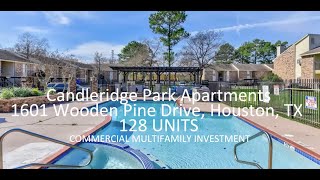
Recording of an investment meetup (host Wayne Courreges III) presenting a 506(c) accredited‑investor offering for Candle Ridge Park Apartments (a 128‑unit garden‑style multifamily near north Houston). The sponsor reviews property due diligence, Houston market fundamentals, a negotiated purchase price ($11.8M), capital stack and pro forma five‑year financials, loan terms (assumption of a 3.82% fixed‑rate loan), investor classes (Class A/B/C with minimums and preferred returns), and closing timeline (target mid‑July; close expected ~July 15). The presentation includes a live Q&A covering 1031 exchange eligibility, cost segregation/bonus depreciation, GP equity (~$650k), and self‑directed IRA acceptance.
Questions this video answers
$11,800,000
128 units (88 one‑bedrooms, 42 two‑bedrooms).
3.82% fixed rate (assumption/loan approval expected by the week of the presentation).
Targeted close around July 15 (with one‑month extension available to mid‑August).
Approximately $650,000 (over 5% of the equity).
Chapters
All right, welcome everybody. Thank you so much for joining us this evening. I'm excited to share about Candle Ridge Park Apartments. Several of you that are already on the call this evening are have already invested in the deal. So thank you for your support. Thank you for being on. We are going to go through our slide decks. We have updated our investment pro forma based on our recent financials that are coming our way from the the ownership, the current ownership. So excited to go through this with everybody. I do want to start off just because I'm respecting everybody's time. This is a 506c investment opportunity that are just for accredited investors and if you're not sure if you're an accredited investor, I wanted to go through that in the very beginning. So if you are an individual not filing taxes as a married or joint partner, that minimum salary is 200,000. For married filing jointly, that salary is 300,000. That income is 300,000 per year or if you don't meet the salary requirements, the net worth requirement is 1 million excluding primary residence. So if those don't fit Yalls criteria, that's okay. We have other investment opportunities that will come up in the Future that are 506B offering that are open for both accredited and sophisticated investors. So just want to start off with that as respectful of everybody's time. We've got quite a few people joining this evening and again I appreciate your time and look forward about sharing about this investment opportunity. So disclaimer all investments have risk. This is not a solicitation to sell securities. The only document that can do that is through our private placement memorandum which we have available on our investor portal. We always recommend talking to your attorney, talking to your tax consultant. In no way is this providing any legal, tax, financial or any other type of advice. We're presenting an opportunity and that opportunity and more details come through the private placement memorandum. This is again a 506 offering for accredited investors. So there are a few reasons why I absolutely love this deal. For one, we typically buy one or two assets every year. This would be our first purchase or acquisition in 2024. I started getting this opportunity back in February of earlier this year and took several months negotiating the price, getting the terms, getting comfortable with the asset and it just got more and more exciting as the deal went on. So there are three reasons why One, I really love this deal is we're purchasing less than the 2023 tax appraised value. Now we all know that the tax appraised value isn't the actual valuation of the asset. But when you're already buying less than the tax appraised value, you're already getting substantial tax savings which impact our net operating income. Helps the cash flow to our investors. The other thing I love about this deal is we, you know a lot of deals that were bought in a couple of years ago, a few years ago are, you know, have been struggling with the valuations. Well this deal was bought in 2019. It was a fixed rate debt and we're going to talk about that a little later in the presentation. But we're only paying 80$500 per door more than what they purchased in 2019. So in essence we're getting pretty good basis in my opinion of the asset when they've done a lot of renovations on the interior and, and on the exterior as well. This is an off market opportunity. We are getting fortunate that we are getting better deals from brokers now that we are showing track record of closing, that we're good people to work with, etc. So this was not a bidding war. There was no offering memorandum. This is going straight through the seller via the broker and negotiating. And again it took several months again when we found out about the opportunity in February. So the exceptional reason number two is I'm liking buying properties that doesn't have a lot of competing multifamily. I found throughout my experiences that when I have a property that surrounded my by multifamily we start competing with rents in the same type of demographic etc. Who are wanting to be in that area. This property is similar to our other asset called Majestic Apartments is about a one and a half mile away, the nearest apartment. So there's literally no competition around Candle Ridge Park Apartments other than, you know, a lot of jobs. Right. A lot of opportunities for the need of housing. And so we're going to show that map and show a high level of where this location is. But from a standpoint of not having to compete on a day to day basis with the apartment next door, this has really been a key factor in the success of our investments is reducing competition as much as as much as possible. Exceptional reason number three, this is a cash flow year one type deal. This and we're going to go through the financial shortly. But this is not a deal where I have to go in and do a major renovation, a major lift to hit cash flow for our investors. So this is a year one cash flow tax depreciation. For those that are not too familiar with the tax depreciation. You know, passive income is offset by passive losses and those passive losses come through tax depreciation. And so again, you would want to talk to your tax advisor on that. And I'm happy to answer questions as well, but heavily lean into your tax advisor consultant. This is a 3.82% fixed rate debt that we are assuming the loan and we should have that approval of the loan by Saturday of this week. So we are very far in the process of getting that alone approval with the partner's net worth, liquidity and experience. That has actually been a really easy process for us. And so I'm super excited about that because we hear out there that there are a lot of struggles with getting refinancing done in this particular market. We've spoken to the lender at least three times today and I'll tell you, they have all been very good conversations and feeling very confident that we'll get that approval for the loan on by Saturday of this week. So this is not an ordinary multifamily deal. I do not find deals that are typically ordinary. They've got to be a good value add, good basis that help me sleep at night. So with that said, let me share a bit more about myself. I'm a deal sponsor focused in Texas. We're based in Central Texas and We've got about 37 million assets under management, primarily in Houston, and I'll show those assets shortly. We've got properties in Louisiana and Alabama as well, and here in Bryan, College Station. My whole career has been in commercial real estate. Ever since leaving the marine Corps in 2007. I know nothing but commercial real estate, managing and operating commercial real estate. Now, there's always highs and lows during the markets. And so my experience both working with a Fortune 125 company and then also through our investments has weathered me pretty well in trying to find opportunities like this one that helps create cash flow. Day one. I've got an MBA from the University of North Carolina, a Master of Arts in Economics from University of Oklahoma. We also have a meetup. And I checked Today we have 1498 members. So if you're not a member of our meetup, definitely join. It's the fourth Monday of each month, which is today. So we're doing this investment for our webinar for our meetup. But typically we'll have guest speakers. I'll speak about multifamily investing. Um, so definitely help us get to 1500 members. Podcast host of the Untold Stories of Real Estate Investing, and then former US Marine, Eagle Scout and member of Rotary Club of Brian So of the 37 million assets under management, we've got about 28 million assets under management in Houston now. We are the primary lead sponsor of all of our investments. So we are not raising capital for other people's deals and then stepping away. We're very heavily involved and that's really why we only do one or two deals a year. So in Houston presently we've got Ivy at the galleria. That's 101 units. That was a full deep repositioning, deep value add property that's still undergoing the value add component of it. And then we've got Vanderbilt Lodge, the similar property where we were doing a major amount of renovations and turning that into the value add, devalue add opportunity as well. And then in October 2023 we bought Majestic Apartments. This is a cash flow and a day one type deal like Candle Ridge Park Apartments where we've had our, you know, quarterly distributions as we said we would during our distribution. I will say Majestic Apartments and Candle Ridge Park Apartments is really the future of where CRI Partners is going. I'm looking for day one cash flow with high DSCR debt service coverage ratio where we're not having to go in and do a major amount of renovations and, and an uplift. So that's where the future is. And as we pivot to more of those assets, I think it's a benefit for our investors and ourselves as we all value the, the cash flow. So we've got an amazing experience partnership on our team. This is a team sport. I can't do it all by myself. So we've got Angie Martinez with Beam Investment Group. She's based out of Houston as well. She started investing in residential real estate in 2009 and then transitioned to commercial real estate. Currently invested in 2081 multif family units. She's a a partner of mine on another deal majest and just been an outstanding resource partner. Ant than with Bulas Capital Group is also on our team, our partnership. He, he and this Group have about 30 million assets under management. Has about 2,689 units, about 458,000 net rentable square feet of multi family self storage and short term rentals. This guy, he and I are on weekly calls with our property management team working through asset management, diving in on our properties. He's a huge value add to this property. If anything were to happen to me. Ann and Andrew are heavy hitters and can continue with the baton to the, to the closing line. And then we've got Dr. Mink, Shamani I call him Raj. He's with Rei Do Capital LLC. Raj owns and manages several rental properties in Houston, has invested in multifamily syndications for more than seven years. He's invested both as a limited partner and general partner in more than 2,000 apartment units. He's another outstanding partner that I've tried to get partnered with for the last three years. And this one crossed all the check marks for him and his, his investors. So between our experience partnership, We've got over 30 years of experience in all cycles of the market. So let's talk about the Houston market. I am extremely bullish on Houston. To me, this is a city that is continuing to grow, it's continuing to diversify and it's one of those cities that is going to, you know, be the fourth largest US Metro at some point in the in the Future. It has 2.3 million residents. It's the Texas largest city, fourth in the U.S. and so, you know, looking to surpass Chicago to be the third and largest in the U.S. at some point in the future. The U.S. census fastest growing metro, second rank. It's ranked number five in population growth. Projected population growth from 21 to 26 to 7.1%. Unemployment rate at 4.5%. I'm going to pause a little on the QR code in the bottom right corner if y' all start deciding, hey, I'm interested in learning more investing. You're not going to hard commit or anything today, but go ahead and put your name and information. It sort of puts you all in line for investment opportunity and again just starts that conversation of for investment. So other reasons why I'm like in Houston a lot. If I look at the 22 ranking for people relocating, it went from the 12th ranked city of relocation to the 5th ranked city. You know, you hear a lot of growth and a lot of things happening in Dallas and you know, I tend to agree there's a lot of things happening in Dallas, but the facts are too that Houston is surpassing that growth, you know, and you look at Austin, you know, signing on the ranks and I'm from Austin, love Austin. Good to see San Antonio ranked 14. But you know, we're, it's not just driven on technology and stuff. We've got the medical center, the Port of Houston, obviously oil and gas and others. And we'll talk about that shortly. Bringing in people. So city market review, it's the number one startup capital of Texas according to Smartest Dollar in 2022. Number one most diverse cities in America, number two top metros for job growth on the US Bureau of Labor Statistics in 2019, there's over 3 million number of workers in the Houston metro. It's a number five cities of the future in North America according to FDI intelligence. Number two cities to go and eat food and wine. 2019 the number one best cities for millennials According to the Langston Company in 2019, Houston has a global presence $120.7 billion of top US exporting metro with the number one port in the USA by by international tonnage, 33.3 million passengers handled by the Houston airport system. You know, there are two major airports in Houston, 220 trading partner countries, national 94 international consulates home to 23 Fortune 500 companies. It's the number one best hospitals in America rated ranked by the US News and World Report and 14 major institutions of higher learning. For many of those on this call, I'm seeing names here that we're all a lot of them from Texas. So we know a lot about Houston already. But now as we zone in, so that was sort of the macro of Houston, why I'm loving Houston and why we've continued to invest there. Now I'm going to sort of zone in on exactly where this location is. So our company really focuses on the north and west of Houston. So there's this quadrant and I tell brokers and you know, our team to focus on assets. North Houston, West Houston. And so this fits right along north Houston close to Spring. We've got there's about 4,400 businesses, 20 major companies and 70,000 employees. 18 million square feet of retail, office and industrial space in this area. Greenspoint place includes a 36 acre campus with six office buildings of Class A office ranging from 200 to 450,000 square feet. In this area we've got major employers that include ups, Baker Hughes, United, Halliburton, Amazon, Toyota. The property right next, and I'll show an area of the property right next to Canada Ridge Park Apartments is actually Toyota's distribution center. So again, surrounded by jobs in a great location in north Houston. So when we look, I'm always looking at jobs because you know, from the standpoint of multifamily, you know, people want to live near where they work and they want to live near great retail and shopping opportunities. So when we look at in a 2 mile radius there are 10 employers and within that, you know, Aline Independent School District, Carmax, Cardinal Health, Gulf States, Toyota, you've got Lone Star College, Nimit High School, Sam's Club, Spring Independent schools. The task, Commercial concrete. You've got all these jobs within the two miles we've already gone over how in the area within the 5 mile there's 4400 businesses, 20 major companies, etc. But when we also look at like schools, like where's, where's the nearest schools in the area? For those that are living at the community within one mile of the property you have the high school, elementary and middle school and the, the school bus picks up right at the front. And that matters because we want to have families, we want to have people that sort of set root in the community and stay at the property as long as possible. So this is a little, an aerial of the property. You sort of see how, you know, we're about four little over four miles to the George Bush International Continental Airport. You've got Lone Star College, North Harris Nimitz High School, Chester Nimitz Senior High. This massive shaded purple area is the Gulf States Toyota Vehicle Processing Center. And then in the dotted lines here you've got Candle Ridge Park Apartments. What I always like to show in this picture too is up north here you've got a lot of housing developments, a lot of retail off 1960. And so there are a lot of people that live in this area. And then when you have again the nearest apartment at a one and a half mile away, you know it's, it really boosts the occupancy and the financial stability of the asset. So this is a 1985 built property. I would say it's in a B plus North Houston location. We've done inspections on the roof, H vac, plumbing, electrical, all that has been completed. We've ran cameras through the lines, the PVC pipe and so we know we have a very good idea of where we are. Earlier or late last week, the boiler, which was a line item in one of our capital budgets went out. And so, you know, talking with the seller and making a, you know, you know, try to come up with a negotiation of making it a win win for them, you know, they're paying the bulk of the prop of the boiler, which is about a $60,000 expense. We had assumed 60,000 and we'll contribute 20,000. So right off the bat there's about a $40,000 savings of having a new boiler on the asset that we're not having to, to pay the full price. So we start seeing that overall, like the property's in really great condition. We've done several on site tours if anyone on this call wants to go tour the property with me. Happy to schedule a time because it really shows really well. And if you look at like the exterior here, there's a lot of brick facade. So I've had properties where we've had to go in and replace a lot of the hardy plank and the siding. Well, it's very limited here and so we'll do some paint and we'll do some touch ups. But a lot of the amenities that we would normally put in our properties such as gazebo and new grill area, playground, dog park, fitness center, all that is done. We are not having to spend money on these type of amenities because they're already in place. There's already a business center as well, already carports, all the two bedrooms have washer, dryer, hookups. So the bones is really good. We just need to go in and just continue maintaining and managing the asset to the best of our ability. That's been, you know, proven that we're capable of doing and you know, pushing the income, reducing expenses as much as we can this market and keep keep occupancy. We'll talk more about strategy shortly. But it's 128units, mix of 88 one bedrooms and 42 bedrooms. It's a two story garden style building, has eight buildings. Rents range from 800 to $1300 depending on the floor plan. I want to point out this picture here is pretty indicative of all the units. So we in our budget have 102 units that are expecting to have some type of renovation. But the reality is, is most of these units have already had the vinyl flooring, the backsplash, the painted cabinets, the hardware. A lot of these units already have that. So it's just a very. For us, it's exciting because when we did the underwriting and then we inspected, you know, those are savings that we will see post closing. But we still want that bucket of money just to ensure that we have enough reserves in case, you know, one of these units is destroyed by a resident, etc. We can go in and, and make those renovations. But what you see here is pretty standard for the renovated units. One of the things that I'm also looking at as a real estate professional is supply. So a lot of markets in Texas grew significantly over the last several years as people were relocating to Texas. And that is still the case. But when that happens, developers start building and so you start getting this supply and demand. So when I'm looking at properties I want to see within, you know, four miles or so, what is our competition with new supply and when I look at it, there's five properties, they total 749. But the nearest one, which is about four miles away, you know, again it goes back like there's not a lot of that competition of, of properties surrounding us, right? So that to me is very positive. These newer properties that are coming in, these five properties, again, the nearest one is four miles away. But these are all class A type properties. The other thing I'm really liking, you know, about multifamily and buying now when other people are in a way running away, there's not, you know, there's not this buying frenzy that there was a few years ago. And if you think about it, if you're buying now, when there's just a lot of supply, if the supply is taken over the next three years and there's not a lot of new development permits, what happens in the next three years is that that supply is going to tighten. And so when we buy now and we've got a great solid asset in a great location and then there's not a lot of new supply coming on over the next few years, we're going to have a real tightening of supply in the, in three to four years, which positions us for an opportunity to grow our rents and really potentially push our exit purchase price as high as possible. Because there's going to be more buyers, more people looking when there's, you know, this supply imbalance and then that's when the developers will start developing again and you know, eventually we'll see another supply outweigh in the demand. But that's something to be really mindful of on this investment, which is one of the reasons why just again, bullish on, on buying it. And one of the things I always look for in Houston is ensuring we're not in a tax or shimmy a flood zone if it's touching a flood zone or in a flood zone or been impacted at all in any of the priorities storms in the last 10 years. We are not buyers. And so when we looked at this property, we looked at the 10 year history of losses, there has not been any. There were a lot of storms, as you know, that you may be familiar with in the news recently about Houston. I went to Houston, went to Cantoridge Park Apartments the day after one of those big rainstorms. No power outage, no issues. There was some wind damage to one of the fence post behind the playground and that's already been fixed. So when you heard about power outages and all that, you know, fortunately for Candle Ridge park, they did not experience any of that. Even though they had the storms. It's just, you know, the infrastructure and just the location is really great. So no issues there. But I always want to point that out because it is always a risk in Houston. So why have that as a risk if we can possibly reduce it? So CRI partners, we always are third partying property management for our multifamily assets. And so we've partnered with mldc, who's a very boutique management company based in Houston. We've grown with them. At first they, you know, we weren't able to get them as our management company because they have a certain amount of units and a certain amount of revenue that they require before they manage. And I like that because they're not just taking everybody. And so our relationship and our scale in Houston, we're able to partner with them. This will be our third property that we partner with them on. And you know, as we are on weekly calls and the relationship is so key because that boots on the ground is what really, really matters. We're there weekly. We, you know, we can, you know, focus on asset management, which we will. But the property manager and the property management team, the regionals really matter. And one of the properties that we had had a regional that had 20 properties under his supervision with another company. And we transitioned to MLDC when we had enough scale. And their regionals oversee five properties and so much smaller boutique company. But they're also much more of an extension of our ownership than the traditional third party management. They're not owners, but because of size it's, you know, just I keep mentioning boutique. But that, that really is the differentiator for them and for us, for our investors. So we've got a few more slides here. Definitely put questions in the Q and A. I'll answer as many as I can. The deal breakdown here though. Sources of funds. So the total loan is 7,000,751 833. It's a, it's a weird number here because they've already started paying the principal and the interest on the debt. So the first five years was interest only. And now we're getting into P and I. So the total loan will continue reducing until we go to closing. Investor equity is 5.7 million. And then the uses of the funds is the site acquisition is 11.8. It started off at 13.2 million and we negotiated down to 11.8. That's when I mentioned starting in February we had several months of negotiation. So we got them down to a very good Basis capital expenditures. As I mentioned, we did our due diligence. We have a very, very good idea of what needs to be done. We've got 758000 allocated towards capital. Now this capital is not having to be spent day one and it won't be spent day one. It's only as needed and when the need, you know, presents itself. So we want to make sure we're staying very liquid on our cash and we're not spending bad money. If it doesn't increase net operating income through increasing revenues or decrease in expenses, you know, we're not going to do it. I mean obviously if a boiler goes out or roofs, leaks or whatever, we, we will make those replacements and repairs. But we're not just spending money to spend money. Acquisition fee 265,000. Loan fees and closing 328,000. We've got contingency reserves of 300,000. So our total fund is 13,000,451, 8, 33. If we go into the loan breakdown as I mentioned, the total Purchase price is 11,800,000. Price per door is 92,000. A couple of years ago and I could show stats on this. I mean deals like this were going 130, 140,000 a door. Interest rates obviously are making a big impact impacting cap rates and such. But that's just the cycle of real estate. It's not, you know, I very confidently feel that we're at the bottom of the curve. I don't see interest rates increasing. If anything, I think a lot more cash is coming to the market. There's going to be more opportunities for buyers to start coming in. And when that happens, you'll start seeing pricing start going up again. So buying at 92,000 a door in 1985 asset pitched roof in a great location is again to me a solid basis. The five years remaining is 3.82% fixed rate. We are going to be paying principal and interest and I'll share about our debt service coverage ratio shortly. But the loan to value is 65% as is and again P and I for five years. So let's talk about financials again. Just have a few slides left. But with the five year revenue performa we anticipate year one effective gross income being at 1.6 million. We're doing that in a way where we're not doing major renovations and we're not doing major rent increases. So we're going to be slowly turning the needle on rent increases, averaging about $40 in rent bumps. And so it's not a whole lot. You know, it's when we do renewals, we'll do 3%. But it's overall the value of this play is like it's already cash flowing and it already has a good tenant base. So what we want to do is go in, do minor renovations as needed, but keep the base of the population. And slowly over the next few years, you know, just continue pushing rents where we can. When we look at year two, year three, year four, you know, a lot of the numbers get higher because our loss gained a lease. As we turn units, we'll start seeing that number reduce our vacancy. You know, we'll keep that around 9% for the first couple years and then trending off to 8% vacancy, our credit loss, bad debt, we always keep this high. I mean this used to be 0.5%. And in previous years before COVID we've increased this to year one 3%. And it's just making, you know, sure that we have enough bad debt accounted for in case, you know, residents need to be evicted, etc. But notice that we're stabilizing the bad debt at 2%. I fully anticipate this to being 0.5% as we bring in our residents and go through the background checks, etc. As needed. But just being conservative, we want to make sure our bad debt is accounted for. Rubs we're going to keep that consistent. Our other income is a number that, you know, there's a lot of opportunities to grow in. And so, you know, just based on other properties we have in the market, you know, we put in our projections to, you know, really try to push other income. And what I wanted to show on this slide is the management performance. So I never showed the asset management, you know, the buyer performa to our management company. I always want to see what they're projecting. And so what they're projecting is similar rents. You know, $34 increase in market rents, $20 market rent recapture, not a huge amounts. Right. And so if we're able to do more, and obviously we're going to try to do more, the numbers even push higher. But if you look at their net revenue, we're at 1.6 12. And that's pretty close in line with what we have year 11 million 6, 10. So it's always good to have your management company back up what you're assuming. And so, but you know, again, we're, we're not pushing a whole lot on rents and we're keeping economic occupancy at 14% so it's different than normal vacancy where you have like people not leasing a unit. It, this is more like not leasing a unit and, or those people that are in lease, you know, they lease a unit but they're not paying. So for us, you know it's 80, about 86% occupied or paying lease. And then that trends down as we stabilize. Notice that 11%, 89% economic occupancy as our like long term stable number which on our assets we typically are seeing about you know, 6% so 94% economic vacancy. So again there's plenty of opportunities for just being conservative for our underwriting on our expense side. This is pretty standard across our portfolio. So we're very confident on, on what our management fee is going to be, where our general GNA and contract services marketing efforts, where our payroll. So we feel very good. I, I don't underwrite to the seller's numbers. It's always on, you know, what we're doing and with MLDC and, and what we're doing at other properties. So feel very good there. Insurance actually I'm keeping it at 131,000 year one. But our number that just came in is close to 122,000. So I'm still going to stay conservative. And then we've got sizable increases in year two and three just to make sure we're staying on top of insurance real estate taxes. The first two years are locked in. Year one appraised value already came in so it's 224,000. Year two will not exceed what we're purchasing the property for. So again the first two years taxes are what they are. Year three, four and five are projections. And so what I want us to really focus on is this expense ratio. 50, 53.8%, 52.6:5,000, like this is a pretty healthy number and it's not overly aggressive. Obviously we want to try to reduce that where we can, but this is where we would typically see. But when we go down to the debt service coverage ratio, most assets that people purchase are barely hitting debt service. Right. So typically the Fannie Freddie loans, they want to see a 1.25 debt service coverage ratio. So for every dollar in MOR payment they want to see 25 cents of leftover money to go towards, you know, controllable expenses. So when you look at that DSCR, we're at a 1.66. And I, I've shown this before with other investors who are asking but if I did absolutely nothing and I just kept the cash flow and the expenses the same as the management current company. I just did nothing on the revenue, didn't do anything different. My DSCR is 1.25. So you know we are going to see savings in taxes, we are seeing savings in payroll and other market other expenses. So our DSCR is going to increase based off that benefit. Break even economic occupancy is 68.6%. So really you know you could have up to like 40 vacant units to break even. So from a risk standpoint again this is a very attractive deal because of the DSCR and the break even the cash on cash year one's 4.7% year two, 6% year three 7.3. Cap rate at purchase is 6.3%. So all in all again this is just you know we can go through these numbers one on one as well if there's any questions, happy to go through it. But these are the type of deals that help me sleep at night when we have such a strong, you know, basis of DSCR and break even. So let's. It's been a few slides on the bedroom comp. So the what you're going to see is with Candle Ridge it's already pretty stable assets where we're not having to go in and do 180, 150 rents. It's already at or near market. And to me that's a good thing because when you used to have like properties with sponsors be like hey we're gonna go and do all these renovations and get a 200 rent bump. Like that's doable and it has been done. But in this market it becomes more difficult to retrade and get new. It takes a lot of marketing dollars, a lot of time to risk to find that right person who's going to pay rent, etc on time. So what I like about this is not a huge, you know, lost the gain in, in, in lease amount. So Candle ridge on the one bedroom it's 923amonth, A$30 a square foot. You see a century park, it's A$76 and Andalusia is 1.55. So we're lower and we have room but we're also not the lowest which I'm liking. On the two bedroom, two bath the average actual rent per square foot's A$33. Andalusia is 1.37. We got Century park at $46. So again we've got room to grow and our comp stack but we are also not the lowest either. So I like that. And again just on the standpoint that we're not having to go and reposition to a lot of new residents to do the asset. So just couple more slides here. There are three investor classes. Class A, it's a $500,000 investment. I can take two $250,000 investments or one $500,000 investment. And what that does is it pays 10% starting first quarter. So if you invest 500,000, the annual return is 50,000 per year. Now there's no upside, but that 50,000 is paid to you as the investor, the priority investor starting that first quarter. So that's class A investor. Now you got class B investor. The minimum investments, 100,000. That would be an 8% preferred return and a split of 80, 20. So an 80% limited partner, 20% general partner. So that has better, much better returns. And again, this is a prep return. So if year one we don't hit 8%, then it accrues into the following year and thereafter until you're made whole. On the class C side, that's a minimum investment of 50,000. And that preferred return is 7%. And the LP GP split is 7,525. So the returns on this, if we look at a class a, the net LP investor returns is 10%. Because each year you know you're, you're getting 10% return. And then your LP investor equity multiple is 1.5 or profiting about 250,000. With a class B investor, your internal rate of return is 16.16%, 2.01x equity multiple with the average LP cash on cash 6.71. Again, we'll accrue, we'll get that 8% pref. But the cash flow averaging year over year is about 6.71. And then in class C, the LP investor internal rate of return is 15.09%, equity multiples 1.92 and average cash on cash is 6.71%. These average cash on cash distributions, our projections starting in year one, right. So we're, this is taken into account that we're going to be pushing cash flow starting year one and not having to wait year two, year three for us to start distributing. So show some, some examples on this. So this is a class A investor example. So say an investor on this call does 500,000. Year one, the return of that is 50,000. Year two is 50,000 three, 50,000 and so forth. Year five, we sell. And so their profit, when you look at all the investments that they have made, it's 250,000. So they get the 500,000 returned plus 250,000 over the period of the investment. Now, this is not. There's no equity upside on this. So this 10% is, you know, for those investors who prioritize cash flow, they want priority stack and the repayment process. If you are interested, this is one of those investor classes that you need to jump on quickly because I have several investors who are circling this and will likely do that this week. So if you're interested, the minimum investments, 250,000 max is 500,000. So if I go to the next Investor, it's a $100,000 investor. Again, this is a 2.01 equity multiple, 16.6 LP investors. So year one, you would see about a 4,174 cash flow return, year two, 5,560 year three, 7,037 year four increases. So over the life of the Property, you'll have $101,075 in returns plus the 100,000 of your initial investment returned. And that's where you get that 2.01 equity multiple. When you look at all the cash on cash and the averages, that's where you get the 6.71% average return. All right, and then the last Class C example. So say an investor invests fifty thousand. This equity multiple is 1.92. LP is 15.09 year. You know, now you put in fifty thousand year one, twenty, eighty seven year two, two thousand seven, eighty three thousand five, eighteen so forth. So over the five years, you'll return forty six thousand, one hundred and seventy six in return, plus the fifty thousand that you've invested. That's where we get the 1.92. The cash on cash is going to be the same as the class B investors because it's distributed after we make class A investor whole at that 10%. So again, I'm going to send a recording. I'm happy to go through questions and underwriting, etc. But just a high level of sort of just the example of the different classes. I always like to do sensitivity analysis. And so for class B and class C, we're assuming a 5.75 exit cap rate. And this is one of those, like, who knows where it's going to be in five years. I'll share how I think it's going to be. If today's cap rate's about a 6% in Houston, if anybody on this call believes that there will be a rate decrease over the next 5 years of at least 25 basis points, then we should be near the 5.75 exit cap rate. So that's how I, I'm assuming one 25 basis point decrease in the next 5 years. If we see 3 basis points or, excuse me, 75 basis points or 100 basis points over the next 5 years, you know, there is a good chance that the exit cap rates could be a lot less. And so the less, less of the cap rate, the higher the returns. So the five and a half cap rate, we're looking at a 2.1 equity multiple and it, it goes from there. So just a few years ago we were doing 3 and a half, 4% cap rates and then when rates started increasing and you know, it changed drastically. Right. But again, if for those like me believe there's going to be one, at least one rate cut, then that's sort of where I stand. Say I'm completely wrong and we're going to stay around that 6% exit cap. Although we're still at a 1.9 equity multiple for the Class B investor, 1.8 at 6.25 exit cap or 6.5. So again, I like to show that, just sort of show like, you know, what the other opportunities for both additional returns and then also, you know, less returns depending on where cap rate is going to be. Sensitivity analysis, class C. I already shared my methodology on why I'm at a 5.75 exit cap rate. But if you're looking at, you know, hey, if it's a five and a half or 5.25, those equity multiples increase really nicely at those lower, lower cap rates. So this is one of those, you know, who knows what's going to be in five years. But you know, I definitely don't see it being higher and then going back to the supply and demand where there's just not a lot of new supply coming being developed. Now all the, all the existing supply is being developed and it's going to come online, that's going to be taken over the next three years and there's not any new permits or anything that's really driving for the future. So it's going to position us really well, you know, the next five years. So I've got a quick video here of the asset and then we'll finish up. All right, so Kenridge park investment timeline. We signed the Alloy in March. PSA was signed in April. We finished our due diligence in mid May. We've already raised about 40% of the capital raise. We're finalizing the next 60% or so over the next few weeks and then we're expecting to close July 15th. We do have an extension ability for one month for mid August but we're trying to target mid July and looking good for that deadline again we should get the loan approval this week and we're pushing on our capital raise right now. So we will look to sell 2028 to 2029. We won't wait till the end of year five to sell. So we'll start looking to market mid-2028. So that way we have plenty of time to list the property, sell it and so that way we can hit our returns in our timeline as projected. This is a mention the 506C offering. So we'll need to have a CPA or we use Verify Investor.com to verify a third party verification of the accredited investor status. So something to be considered of. It's a very easy process if you have not invested in one of these type of investments before. Happy to walk it through with you and to make it again just an easy process. So with that said, if you're interested, use that QR code or email me and we can talk through it. If it's your first time investing again, I will walk through it. There's a lot of terms, a lot of things if you've got, if you're gone through a lot of the processes before, you're going to know about the equity multiples and cash on cash, internal rate of returns and all these other things. But if you're, if you're not able to understand all that, no worries. I'm happy to have one on one conversations and try to get you spun up. So if you have questions, I'm going to open the Q A now. Is it possible to use this investment as a replacement property in a 1031 exchange? So this investment does allow a 1031 exchange for a minimum of $1 million. So if, if you have at least a million dollar 1031 exchange, that is something that we could look at. We would need to have those conversations with the lender like now because they're in the process of approving the loan and it would be sort of set up as a tenant in common. So we would have our entity with our limited partners and us as investors and then we'll have your entity through a TIC agreement. So happy to discuss that. Will investing in this property accelerate depreciation or segregation, study tax benefits? So the answer is yes, we'll do a cost seg right after we close on on the property and we have a real estate tax Advisor such that will take that cost study segregation, take the investments and go through bonus depreciation. Now for 2024, it's 60% of bonus depreciation. So House, the, the House has approved a bill that would get us back to 100% tax depreciation and sort of retroactively go back to when those, those depreciations got less and less. So that's sort of on the table. The Senate hasn't approved that yet because there's other pork that's put in that bill that they're not liking. So we'll see on, on that. But yes, we'll, we'll do a bonus depreciation on that. One of the questions is how much is the general partnership investing? So myself along with other general partners, we've got about 650,000 invested in the deal. So it's over 5% of the, of the equity. So we again believe in the asset and where we're, where we're going with it. So any other questions, feel free to put it in. Yeah, great question. Is the plan to refinance the property or sell at the end of four to five year term? So the plan is to sell. I'm always looking at like worst case scenario. So we'll look at selling into four, into five. Now if we have to refinance, say we're not getting into a situation where we are, it's a good market to sell. We are going to have to either refinance or sell at the end of year five because that will be the expiration of that loan. But when we're already buying at a 65% loan to value, if the residents are paying our mortgage and that's what they are doing, they're paying our mortgage over the next five years, then our loan to value is close to 55% over the next five years. And so when you look at that perspective, it will be very easy for us to refinance, cash out as much to our investors as possible and then hold on the asset and look to have returns post that refinance. That is a backup. We don't anticipate that being the case. I think right now we're sort of in the toughest real estate market that we've seen in a long time. And so you know, think about all the people that bought in 2007, 2008 and then really well that's what I'm anticipating for us over the next five years. So what kind of first year tax write off benefits would be likely with 150,000 investment. So right now I would anticipate, so I want you to, you know, not listen to what I say because your tax consultant, everybody's situation is going to be different. But in my experience in doing this we typically would see about a 60% of that. So it'd be about a 90,000 tax write off. Now obviously it accrues to a future year with capital gains. And for those that are listening and not too sure what this all means, the the income that is being provided by the property is being offset by the losses that the depreciation will have on the asset. So you'll have your income but it'll be offset by the depreciation. And so you know if Your investment is 150,000 and you know your depreciation is 90,000, that 90,000 can be used on other passive income as a write off. So it's a huge, huge benefit. So that's what I would anticipate 60% and that would be the full bonus depreciation amount. But everybody's going to be a little different. And I'm happy to have a call with our real estate tax consultant who will be the one who does this. And then also we use Madison Specs for our cost seg so you know, we can have further conversations on that. It's a great question. One of the questions is do you accept self directed IRAs? The answer is yes, we do self directed IRAs all the time. Solo 401ks as well. So if you have the opportunity to invest through a self directed IRA or solo 401k, we still have plenty of time to do that. There are several investors that have have done that and it's a easy process and we can walk through that with you when the time comes. Other ways to invest obviously is cash through wire or ach. We have our portal through Invest Next and so all of our investments and updates, we do monthly updates along with annual K1s etc, all that will be in one spot. Any other questions? So my cell number is 512-710-2500. I'm gonna put that in the, the chat box here just so everybody has it. Feel free to text me tonight or call me tomorrow and you know, happy to set up some time we go through. Any questions? If a lot of the things I had a friend of mine just say I got about 10% of what you said and that's understandable because a lot of real estate acronyms, etc, it, it just will take time for everybody to get all of it. But I'm happy to walk through it and make it a little easier outside this presentation. All right. Well, I appreciate everybody's time. I'm going to ahead stop recording and again, if you have any questions or any anything, let me know. But I appreciate your time this evening and glad we're able to stop right at 8:00'. Clock. Just respecting everybody's time. Thanks everybody.
More from Wayne

September 2026 Meetup: Investing Ahead of Growth: The Bryan–College Station Opportunity





May 2026 Meetup - Apartment Complexes & Passive Investors: Opportunities & Risks


March 2026 Meetup - Reading the Market: Economic Indicators Every Investor Should Know


February 2026 Meetup - Syndication 101: How CREI Partners Structures Deals for Investors

Build-to-Rent (BTR) Communities Explained: Why Investors Are Paying Attention