Jeff Greenberg- Diving into the Depths of Commercial Real Estate
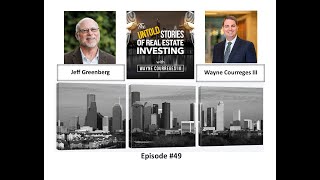
Interview (Untold Stories of Real Estate Investing) with Jeff Greenberg (CEO of Synergetic Investment Group). Jeff explains his shift from active GP to running customizable private-equity funds that let investors opt into syndicated deals via an investor portal and receive a single consolidated K-1. Key topics: fund mechanics (customizable deal-level choice, capital commitments, K-1 timing/extensions), sponsor vetting and underwriting scrutiny, preferred asset classes (multifamily, student housing, self-storage, mobile home parks, assisted living, build-to-rent and alternative cash-flow plays), market selection ("smile states" and caution on Florida insurance), examples of alternative investments (ATMs, car washes, accounts receivable, bitcoin mining depreciation), and a listener resource ("46 questions to ask a deal sponsor"). Episode includes contact info for Jeff (synergeticig.com) and promotional content for CREI Partners.
Questions this video answers
September 21, 2023.
SIGCRE.com ("46 questions to ask a deal sponsor").
synergeticig.com (Synergetic Investment Group).
Chapters
Welcome to the Untold Stories of Real Estate Investing hosted by Wayne Courageous iii. A place where active and passive investors come to hear the good, bad and ugly of real estate investing. Our guests consist of experienced operators and investors who want others to succeed by sharing their stories. If you're looking to syndicate deals or grow your wealth passively in real estate, you've come to the right show. It's now time to sit back, take mental notes and enjoy next episode of the Untold Stories of Real Estate Investing.
Welcome to the Untold Stories of Real Estate Investing. I'm your host, Wayne Courageous. Today I'm super excited to have Jeff Greenberg back to our podcast. He was our podcast number five when we first started getting our podcast going. So we're going to have a really great conversation. But let me reintroduce him. He's the CEO and managing member of Synergetic and Investment Group LLC, also known as SIG. For over 12 years he has managed all aspects of commercial real estate ownership including acquisitions, investor relations, operations, value add implementations and dispositions through the SIG Wealth Fund. A diversified and customizable equity fund, SIG provides the opportunity for high net worth individuals to passively invest in commercial real estate. With best in class commercial deal syndicators, Jeff uses his extensive experience and network to help investors discover and invest in high quality alternative investments. Jeff has been involved in projects worth nearly $150 million consisting of over 2,000 units. He's been involved with stabilize and value add properties including student housing, as well as short term rental and market rate multifamily properties. Welcome to our show, Jeff.
Thank you very much Wayne. I'm excited to be here.
Yeah, I am so excited for you to be here. We had a great conversation just catching up prior to this and I told him I was like we should have just pushed recorded from the very beginning. So super excited. When we first talked about when we first had you on the show, when this podcast was getting going, episode five, we talked heavily on student housing. Want to start there? I sounds like you're, you're at your last student housing property that you own in Georgia. How was the ride with student housing? Any overall lessons learned or anything that you want to share before we pivot into more of what you're doing today?
Well, I mean student housing I think is a great asset type. There's a lot of advantages to it, there's a lot of disadvantages. We, we talked a lot about that before as far as the, the specific things involved with student housing. The property that we're selling coming up. It's been seven years that we've held onto this property and it's, you know, time to cash out. But I really like student housing. I do like working with students too. I mean being involved in that end of it has been a great run.
Yeah. And so you had been more so on the general partnership side of, I mean it meant multi family, short term rental, student housing, etc. What was the reason for you to sell off all, you know, pretty much all the assets other than the one on, at least on the student housing. What was the. Was it was just time to sell with that five to seven year hold period or was it.
Yeah, all of the properties it was time to sell and that's always what we're looking for. I mean I've had properties for, for six years. I've had this one for seven. I've had properties for two and a half years. I've had properties for three, three years. I think I had one other for six years. It, it's going, I'm going to look at what the best time is for the investors as far as when we should cash out and take advantage of any added value that we brought to the properties. And some properties, just from the nature of the properties took longer to add that value and some of them got Covid, kind of slowed things down. So sometimes we had to reschedule or replan depending on the market. But it was time to sell them and move on to my next, my next adventure which we'll be talking about.
Yeah, it's great segue. So a lot of times on this podcast we've talked a lot with multifamily syndicators or other general partners who are sharing their experiences in real estate and such. But we haven't really talked about a fund to fund model or a private equity fund. So that's what we're going to be talking about today and really just learning as much as we can from Jeff here on what he's doing and how it actually is benefiting his investors that are going through this fund model. So Jeff, share what you're doing, what the overall fund like structure is and how it benefits your investors.
Okay, first let me, let me start with the reason I made the transition. Because for the, the past 12 years with all of my deals I was the main gp. There were, I did have partners and so sometimes there was, there was two of us, sometimes there was three of us or five of us on the GP side. But I was always where the buck stopped. So I was the main GP on that. And I realized that there was a lot of things that I didn't enjoy doing about the business. And acquisitions didn't really excite me. You know, going out and getting broker relationships and finding the deals and closing on the deals, you know, that was part, all part of it. And those were hats that I had to wear, but it didn't excite me as much. And then on the last deal we had, which was a 225 unit, I brought on somebody to asset manage because that was also one area that I didn't care much for was the asset management. And I brought her on and she became part of our GP team. And working with her just pushed me over the edge in realizing that there's other people that do the asset management a lot better than I do and enjoyed it a lot more. And I enjoy just watching her work. I enjoyed coming to meetings and having her organized and going through all the details. And I decided all I want to do is work with people like her. And so that's what I've been doing for the last couple years, is investing with people that I trust that do their part of the deal, you know, very efficiently. And now what I do is I'm on the equity side where I raise money and I do the part that I enjoy, which is talking to investors, which is working with investors, helping them get into quality deals and, and to looking after the investors. And so that's what I'm doing now. Now, as far as how I'm doing this, I have two different equity funds, private equity funds, which are customizable. And most people wonder, what does that mean, customizable? Well, typically in a fund you're going to have a criteria as far as what you're going to invest in. And typically it's going to be a narrow criteria because you want investors to be interested in it and not to have it too broad, where you would scare some people off and say, no, I don't want to do this or I don't want to do that. So you want to keep it narrowly focused, maybe on a region, maybe on a specific asset type or asset class, or maybe a specific operator. And once you're in the fund, you're in everything. You have no other choices. It's pretty much a blind fund where you're in whatever is brought into the fund. Well, on my fund you have a choice. It's customizable in that if I bring a new opportunity to the fund, everybody in the fund or even out of the fund has an opportunity to decide whether or not they want to be in it. So new people could come into the fund and invest in that deal and now become part of the fund. Or people that are in the fund can also invest in that deal or, or pass if that's not something they want. And at the end of the day they get 1k1. No matter how many deals within the fund they're in, they'll get 1k1 at the end of the year. So it makes it very simple for the investors and they get to self diversify. So some of the deals that we bring in are going to be higher on cash flow, some of the deals are going to be higher on capital appreciation. And investors can decide which ones they want to be in based on, you know, their own criteria and their own goals.
Yeah, so I'm pretty visual. So say I'm bringing in $100,000 to your fund. Do I have access to this portal? And then I'm choosing how much of each or like how much I want to invest in what is offerings within that portal? Yes, how do you. And then from there my. Is it more of the one on one conversations that we have or is it when I go in the portal I can select if I want to be part of multifamily or retail because I know it's a diversified fund, which is really amazing compared to, you know, some of these other funds that are very focused in on one type of asset class. So how, how does that sort of work for, you know, say if I'm investing at 100,000, what would my experience be like inside the portal?
And okay, first of all, there are some that are, have been pre funded that are available at this point in time for someone to invest in. But typically the way it happens is I bring in a new new opportunity and I start to market, market the new opportunity. Now that 100,000, you could decide, okay, I want to put 50 in this and then maybe I want to put 50 in something else or maybe I. You could, I could even divide it up into smaller increments. But let's say I committed the entire $100,000 to this one opportunity they brought up and then I bring in another opportunity. Yes, you would have to bring additional funds in because that 100,000 is already committed to that one deal. But if you only committed 50 to the new deal that came in, you now have 50 that you can use for other opportunities that come in. Or you could just wait until the new deal comes in and then you could fund it so you Know those, those are your options.
Right. And so when you, one of the benefits of this that we talked about is you get one K1 even though you're investing in multiple deals, but you're still, you're still waiting on those general partners on those deals to get you there. So how does that all roll up? And from a timing standpoint, I mean, I guess you would just anticipate to, you know, potentially file taxes, you know, later in the year, like most of us real estate investors do. But has that been an issue so far in your experience? I mean, from a passive side, it's a huge benefit to get that one K1. But from your side, it, what it, I mean, it seems like a lot.
We can't, we can't get the K1, the one K1 out until all the K1s are in. So as, as real estate investors, you know, we tell investors plan on filing an extension anytime you're investing in, in real estate or a syndication, because that typically is a problem. And yes, we, we do have that issue. We get on the cases of the sponsors to get the K1s as quickly as possible. But yes, all the K1s have to come into the fund before we can issue K1s. That's, that's one of, one of the pain points that we can't do much to avoid. Yeah.
One thing I love about you, Jeff, is you've got a lot of active general partner experiences through, you know, multiple asset classes. There are a lot of people that are getting into the space that are doing these fund to fund models or private equity funds that had no experience in real estate investing or, you know, just what all goes involved into day to day. And for me, and we've talked about it on the show before, that's what concerns me. It's these, it's those funds that are coming into these other people's deals where they have no control over what's going on and they really don't even know how to vet them any better than their limited partners. And I'm not just saying this because you're on the show. I genuinely mean this. Your experience and what I've known of you for the last few years, that risk sort of goes away because you're vetting these sponsors like maybe no other group is that, or maybe other groups are, but maybe not to the detail and level that you are. So share with us on what, what all goes into vetting these sponsors. What are you looking for? Because that's really the game changer here, is that you're, you're taking on that responsibility and you're adding that value through your experience so that limited partners don't have to go through the whole process of vetting and, you know, sourcing their own sponsors.
You're abs, you're absolutely right. And I feel that same pain when I, when I hear new people that are just jumping in as equity raisers and they haven't gone through the operation side of it. I am so glad that I did go through the 12 years of operations. So a lot of times, especially a multifamily, when something comes to me, I go and I look at it and there's sometimes I could find problems in five minutes, you know, as far as, with the assumptions going into the underwriting. And the numbers could all look very pretty and you could make, you know, just wonderful numbers, wonderful returns with very little likelihood of ever achieving those. So you're absolutely right. And when I tell people about vetting an opportunity, number one is the sponsor. Number one to me is who is the sponsor? You know, what have they done, what, what is their team like, who's in charge of the operations? You know, then we could go on to the deal, we could talk about the deal, you know, the debt, what kind of debt is, what kind of reserves, what kind of break even occupancy, you know, different assumptions on raising rents. And what if you can't raise rents? How are you protecting my investment? You know, what are the steps that you're taking to make sure this investment is going to be as safe as possible? And, and we know in all of these deals there's always risk. So we want to know what the sponsor is doing. And if I feel comfortable with a sponsor, then I'm much more likely to like the deal. But I get people all the time bringing deals to me and saying, hey, I want you to raise money for my deal. And I look at them, I don't even know you. Who are you? The deal isn't important. You're important. And if I don't know you and I don't trust you, I'm not even going to look at your deal. I won't waste my time. And I think that's a problem with the newer fundraisers that don't know the business as well. You know, as well as investors coming in say, hey, I'm just going to go straight into the deal. Well, what are they doing to vet the deal? What knowledge do they have to evaluate the deal as well and you know, the sponsor and the whole bit. So those are you know, some of the things, the main thing is I'm spending time with the deal sponsor. I have a deal sponsor right now that I'm looking at. I like them quite a bit. I've met him before and we've on like two or three conversations. I think we have our third conversation coming up next week to continue talking about, you know, how we will fit together and how we can work together. Before I go and just raise money, the one thing about my fund and having it all set up, it allows me to go quick. So if I've already vetted the sponsor and I'm already comfortable, comfortable the sponsor, as soon as they have an opportunity come up, I'm ready to pounce because I don't have to form a new LLC or I don't have to do any other work. I can put it up on my portal and we could be ready to go in a couple of days. But the main thing is, is I'm vetting the person, their team, their track record and then I could quickly go over the deal when it comes in.
Yeah, I think well said. And I just want to for our listeners so there's no miscommunication or assumptions being made. Most investors that are passive coming in, they're sitting in that limited partner stack and for those that are actively handling the investments or the deal sourcing or asset management etc, they are on the general partner side, they're on the active side. And so where Jeff has been for the most of his, you know, he said 12 years had been more on that active general partner side. Now through this fund, he's investing like you would as the listener, as a limited partner, however, they're doing it as a fundamental and he is the one that is sourcing and working with sponsors directly to push, you know, his investors capital. So it's, it's interesting concept because most content and a lot of things that are going on out there are, you know, you network and you build a relationship with these sponsors and then you vet, etc. You being the listener or the passive investor here, Jeff is doing that and he's doing that with many sponsors across many asset classes. So I wanted to make that point there. Did you want to add anything to that before I have my next question?
Well, the thing is, is besides the vetting part of it, we know because we're coming in with a bigger check, we negotiate with the deal sponsor to get, to get our fees taken care of and to get our, to make our profit. But for the most part the investor is not at any disadvantage because we'll typically give investors equal to or better than what they would go. If they go straight in, we actually can do better. Sometimes it may be very slightly lower, but typically they're going to get about the same as they would if they went straight in. But they have us as a representative. They have us looking after them, looking after the deal, evaluating the financials as they come in. I don't know how many passive investors actually go through and, and look at the reports and the financials and ask questions about it each, each month or each quarter as they come in.
And so that hey listeners, it's Wayne Courageous. I just want to pause real quick to say thank you for listening to our show. I hope that you're getting a lot of value out of it. If I could ask you to go ahead and like subscribe and share this podcast, that would mean a lot. It will get a lot of other investors like yourself learning about the process and the steps to successfully invest in real estate, either as a passive or an active investor. I also want to do a quick introduction of CR partners. I'm the managing principal for CI partners and we started it back in 2019 with one goal, to grow your wealth passively in real estate. We do so by buying assets in multifamily, build to rent communities and RV boat storage facilities. And we do so in areas that have strong market fundamentals and also have strong partnerships with other real estate investors such as ourselves. We personally discovered that passively investing in real estate was a really great blend for people that are busy like yourself and that you can invest passively in real estate and still reap the rewards of the returns, the tax benefits, et cetera. If you're interested in learning more about passively investing, check out our website. We do a lot of content through our passive investor coaching program, through our podcast, our blogs, and just other information that we do on a daily basis. Check out creipartners.com again creipartners.com if you're interested in building the relationship and joining our investor club, there's a link there to join. We'll set up a call and continue building the relationship with you. We're super excited to have that opportunity and I want us to get back to the show and hopefully again you're enjoying the conversation and look forward to connecting soon. Come in. Thank you.
And so that we take that on looking out as a third party away from the sponsor themselves.
Yeah, yeah, I like that. And one thing you had mentioned, you know, is before you Even look at the deal, you look at the sponsor and the team that's behind the deal. And so for people that are thinking about passive investing or have been passive investing, you know, they're likely to work with sponsors and syndicators that they know and trust and you know, who have they vetted, which is important, but that a lot of times your network may not have access to a bunch of different sponsor syndicators. So, you know, I've seen you at multiple conferences. You're out there, you're meeting people, you're of course vetting these sponsors as people are, as they come on. So it's just another advantage for investors who are looking to even be even more passive in a way where they're not having to truly, you know, build these relationships and source these deals. They can, they can work, work with your firm on that.
Yeah, we're another layer for them of protection. We are looking out for them for sure.
So what asset classes are you bullish and now and are you seeing more within your fund currently?
Well, the, I mean obviously multi family is probably going to be our biggest, our biggest asset type. But I also like self storage, mobile home parks are looking good right now. I, I want to get more involved in assisted living. That's going to be a big demand as the population gets older and older. So those are some of the ones that I'm, you know, currently looking at. There's also bill to rent that I've looking some at that but looking at, looking for experts in some of those different areas. And that's, that's the thing is with those other asset types, I do want to look for the experts, somebody that I could really trust that and, and build on their knowledge of that particular business.
Yeah. And so with each of those asset classes, you see different cash flow and equity at the, you know, at the end of the, the life cycle. So each, you know, multi family right now is, I would say hurting. I mean, because I've got multifamily and it's doing pretty well. But it's, if we were to sell today, it would have, it would be much more impacted than if we had sold, you know, a year or two ago. Right. And so are you seeing that the similar headwinds that multifamily is into other asset classes such as storage, build a rent that you had mentioned?
In some cases, yes, but there are some that are, that are stronger on the cash flow side and maybe not as strong on the capital appreciation. So you're always looking for balance. But most people, these Days are looking for cash flow and so I'm looking for more cash flow assets. I know some people now that have been in multi family for years and now we're doing car washes.
Right.
So there's, there's all different things out there that a lot of us didn't think about. There's another, another fund. Well there was one I, they were talking about purchasing accounts receivable. So and then that you buy from hospitals, you go and you get a discount on accounts receivable and then you just have to wait 30, 60 days while those come in or another one is on judgments. I know somebody buying judgments. So if you sue somebody and you get a judgment, you know, you would become like the collection agents to, to collect on those. So there's all different ways of making money and those, those are more cash flow but they really you know, aren't any capital appreciation end of it.
Yeah, it is funny. I, I do see a lot of people for that were in the multifamily seem like be hurting over to the car washes and for a little bit it was the ATMs. Like that was a couple months, few months maybe.
I still see the ATMs.
I haven't seen as many as often but then now I'm you know, seeing tons of car washes and you know, I'm one of those members that you know the car wash paid $32 but get unlimited car washes. So it does cash flow for sure. So.
Well the ATMs is all cash flow. No, no capital appreciation zero. Because at the end of whatever time, five, ten years, those machines are worthless. But you do get the depreciation write off. So you get close to 100% write off on the taxes. So that's another thing to be looking at, you know, depending on what your tax needs are. The bitcoin mining that we went into purchasing on the machines, I, I was pretty surprised at the first K1. It was 90 by 90. 98% of that was depreciation. So whatever I invested in there, 98 of it was, was depreciated out and didn't have to pay taxes on.
Yeah, my problem with the ATM ones though is like I never carry cash and I go to these convenience stores and bank like I don't see many people pulling out money. But I don't know, I guess there's.
There'S still, there's still some.
I guess today I got my kids, I have a football game and I've got to pay for tickets and cash. But it, you Know, between Venmo and Zell and everything else, I'm like, what? Really? In five to seven years, you know what, what is even the more the need then with all these different apps?
You're absolutely right. And I haven't looked into it, but those people that have been doing it saying that there's still the demand. I mean, I haven't looked at the data, so I don't really know because I haven't gone that direction. But they're still convinced. You know, I'm absolutely with you. You've got your, your Venmo and your, and the apps and everything, ways of transferring, but there's still people that need, need those ATMs.
Yeah, there's something to be said about just having cash. It's a, it's a good feeling, though for me, it becomes like Monopoly money every time I have money in my wallet. It goes a lot faster than I had.
It sure does, doesn't it? So.
All right. Hey, I want to, I do want to talk a little bit about, you know, for those that are getting into these funds and such. We had talked about before this call briefly about the SEC guidance and restrictions and such on these type of funds. And you're. Because you're coming in, investing in a deal through the fund as a limited partner, you don't, you're not exposed to, you know, these SEC restrictions, such. But can you talk more about that and sort of just bring in what's the SEC guidance on these type of funds and sort of where you see, you know, potential movement with, well, etc.
Yeah, the thing is a lot of people want to go in as a co gp. They want to come in and be on the GP side and be an equity raiser. Well, if you're on the GP side and you're raising equity, you cannot be compensated based on the amount of money that you bring in. That's, that's number one. No, no, the other thing is, is you have to be doing something else other than just raising money on the GP side. There can't be a direct correlation between how much money you get compensated or how many shares you get compensated and the raising of money. There has to be other things in there. Now, I know a lot of people go ahead and do it and it's the same thing, you know, as, as cheating on your taxes. You know, it doesn't matter until, until somebody audits you or you get caught and jump and, and, and jumping the stop sign as well. You know, driving through the stop sign. At some point, something's going to happen. And that's the way, you know, I mean, I, I feel that at some point you're going to see more things going on on the LP side. We don't have that issue. We're on the LP side. All of our compensation comes, you know, on the LP side and comes through the fund. And so it's as if we were a million dollar investor that we would get certain better terms than somebody coming in on a 50,000 investor. And so because we get those extra, those better terms so I can be compensated with without affecting the returns of investors, the investors in my fund.
Yeah, that's, that's important right there. So by investors investing in your fund, they're not, their returns are not being impacted from what they would have normally gotten if they went directly with the sponsor. Right. But since you've negotiated better terms, your investors still get that return that the sponsor was offering. But because your, your work throughout the whole period and leading up to that through vetting and reviewing the deal, et cetera, that's where you're making your compensation. Is that, that difference that you, right. You, you negotiated.
So. Yeah, and it depends on how well I negotiated on that. But I mean, I just want to make it clear that in some cases they may be getting a slightly smaller return, but typically, you know, it's, it's, it's a fraction, you know, fraction of a percentage. So it's, it's not very much. But there is also the possibility that we could get you more on one deal. You know, the terms that we got were, were very favorable and I may be able to push some of that back onto the investor side. So they possibly could get more than if they went straight into the deal.
Yeah. So we're getting close into wrapping up our show and it's been a lot of great content. We talked a lot about asset classes. Obviously the fund talk to us a little bit about the markets and I mean like areas of the United States that you're, you're liking to invest and you know, anything have changed from different markets that you would have invested a year or two ago versus today.
Well, the biggest problem is when you're a gp, you don't want to know a little bit about a lot of markets. You want to narrow down and, and focus in on your markets. And that was a mistake I did in the beginning is going all over the place and not being an expert in any one area. And I think that's real important for new people to, to focus in. Well, the advantage I Have is I'm dealing with other experts, and they could be focused all over the place, but they become an expert in whatever area they are interested in. And therefore, I can diversify myself out without, you know, thinning my reach. So I'm open to many different areas. You know, typically we look at the smile states, you know, the southwest and the west and, you know, a little bit on the east over there. But once I'm working with a deal sponsor, I want them to convince me why I want to be in that area. So I may be open to some new area, but they have to convince me why I want to be there. I'm a little concerned right now about Florida with, you know, with the insurance, you know, insurance companies pulling out of there with they're getting more flooding, you know, and more storms. You know, it is of concern, but I have to make those decisions, you know, alongside of this sponsor if I really want to work on that.
Yeah, I've not heard this smile states, so that is something I to the podcast that we previously had. What sticks out for me on that one was you had mentioned, you know, the jockey, you know, how you bet on the jockey, you know, so anyway, just funny how you take little things from, you know, the smile states may be a common thing, but I had not heard that until today.
I hear that a lot of time it's made mo mostly your sun states, you know, that, you know, have the warmer weather and, you know, everybody stays away from a lot of the. A lot of the areas. But the thing is, is, you know, hey, there's some great deals. There's great deals in those other states, too. And, you know, there's. There's no one real estate market. There's many, many, many, many different little real estate markets. And sometimes neighborhoods, you know, there's good neighborhoods, there's bad neighborhoods. So even. Even when things are going bad in some areas, that doesn't mean things are going bad, aren't going great in others. And so it's. You've got to evaluate each, you know, each one. I mean, one of our properties is. Is in Kansas City. You know, I never knew anything about Kansas City until. Until, you know, the sponsor, you know, brought it to me, and I'd known him for a long time. I had actually worked with him before. And so I said, okay, fine, we'll go to Kansas City. It's Kansas City, Missouri. I understand that's supposed to be the better part of Kansas City rather than Kansas City, Kansas. Yeah, but. But yeah, you know, there's good Places in many, many different markets. You just need to be, to either be the expert in whatever those markets are or work with those people that really have thoroughly researched those markets.
Absolutely. Well, is there anything on the show that we haven't covered that you want to cover now?
Well, the one thing I want to do is I want to give your, your listeners a gift. It's 46 questions to ask a deal sponsor before you invest. And you could get that at s I g c r e.com sponsor and that will give you an idea. Even if you're planning on being on the GP side, these are good questions to think about because you're, you know, very likely your investors may be looking to ask those questions. So it's good to have the answers. If you're a passive investor, it's a good idea to, to ask those questions to learn about the sponsor and their history and just to get to know them. And as you said, it's the jockey. I bet on the jockey and then I'll look at the horse.
Yeah, we'll put that in the show notes for sure. I always ask this at the end of their podcast and after I, I ask it also share your, your contact information, how people can reach out to you. So the question I always end up is, what is your proudest moment in real estate? Whether it's passive, active, and then if you could share your contact info.
The proudest moment was it happens to be on this property that I still.
Own.
The student housing. And we, you know, it was, it's a small property, it's 36 units. And we put about $500,000 into fixing it up, you know, all new floors, renovated, the whole thing. And then, then afterwards, well, first I had my property manager interviewing students to get their evaluation of, you know, how we were doing and, and about the property and the property management. Their videos were such, so bad. So I actually went down to the property because I have a video background and I interviewed the students and I, I put them on, on video, asking them what they thought about what we had done to the property. You know, what would they tell other students? You know, just basically making a marketing piece. But the last question that I always asked each student, since they didn't know I was the owner, I asked them, if you could talk to the owner, what would you tell the owner? And I had this one young lady that went and said, thank you, thank you. Now I have a place that I could actually show my mother.
Oh, wow.
You know, I mean, I get teared. I get teared up thinking about that now. It was just so beautiful that she felt comfortable enough that and safe enough in this property that she was going to bring her mother in and, and we would have decorating contests, you know, decorating their room and stuff. And she was, she had something that she was proud of. I mean, this is a low economic area and some of these kids just didn't have the opportunity to, to live in a place that was halfway as nice. And so that was definitely a touching moment for me.
Yeah, I got chills when you said that. That's pretty awesome.
Yeah, it was, it was beautiful. I mean, it was beautiful, beautiful young girl and you know, 20 year old or so. And that was just her statement got to me.
That's the fun part on the, you know, at least that I really, really enjoy is making the communities better. Because you do see, especially when you buy the properties that have just been neglected for so long and you give it the love it needs. You know, the residents appreciate it very much. So. Jeff, thank you so much for being on our show today. A lot of great insights. How can people reach out to you?
You could get me at jeffynergetic IG.com that's S Y N E R G-E-T-I C I G.com or my website, which is synergetic IG.com all right, well, thanks.
For being on our show and I look forward to seeing you at a conference soon.
Yep. Hopefully we'll see each other.
That's all for this episode. We hope you subscribe, share and leave a review of the show. For more information about passively investing in multifamily apartments, check out Wayne's free ebook by going to forward slash ebook. Also, follow us on Facebook by searching CREI Partners. This was the untold stories of real estate investing.
More from Wayne

September 2026 Meetup: Investing Ahead of Growth: The Bryan–College Station Opportunity





May 2026 Meetup - Apartment Complexes & Passive Investors: Opportunities & Risks


March 2026 Meetup - Reading the Market: Economic Indicators Every Investor Should Know


February 2026 Meetup - Syndication 101: How CREI Partners Structures Deals for Investors

Build-to-Rent (BTR) Communities Explained: Why Investors Are Paying Attention