Jerome Myers -The Untold Stories of Real Estate Investing Podcast-Taking the Red Pill in Real Estate
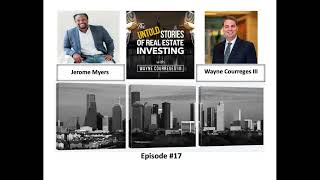
Podcast interview (Wayne Courreges III hosts) with Jerome Myers about his journey from a Fortune-500 engineering role to becoming a multifamily real estate investor and coach. Key topics: Myers Methods (find, fund, fix, flip), the 'red pill' personal-development model (six levels: self-image, relationships, work, health, prosperity, significance), single-family fix-and-flip experience leading into multifamily JV deals, hard-money vs. private lending (rates, terms, and differences), diversity/representation in real estate, mindset/habit-replacement strategies (vision mirror, avoiding negative news), and practical advice for active and passive investors. Includes examples (Richmond row house flip; ~$90k rehab) and mentions an in-person conference (Mid Atlantic Multifamily Investing Conference, Mar 19–31, 2021).
Questions this video answers
Find, Fund, Fix, Flip.
Self-image; Relationships; Work; Health; Prosperity; Significance.
Approximately 8.5% (low end) up to about 20% (high end).
About 6 to 18 months.
About $90,000.
Chapters
Welcome to the Untold Stories of Real Estate Investing, hosted by Wayne Courageous iii, a place where active and passive investors come to hear the good, bad and ugly of real estate investing. Our guests consist of experienced operators and investors who want others to succeed by sharing their stories. If you're looking to syndicate deals or grow your wealth passively in real estate, you've come to the right show. It's now time to sit back, take mental notes and enjoy next episode of the Untold Stories of Real Estate Investing.
Welcome to the Untold Stories of Real Estate Investing. I'm your host, Wayne Courageous. For our next episode, I look forward to having a great discussion with Jerome Myers. Jerome leads the Myers Development Group LLC and got his career started as an engineer and built a very successful $20 million division of a Fortune 500 company. However, after several years in a row of laying off half the workforce, Jerome no longer wanted to be a part of the corporate environment. Jerome calls this time in his life the Matrix. When he started questioning everything he was taught to be true, he spent several years diving deep into the personal work to redefine who he was and what he wanted out of life. Jerome began working in real estate and flipping houses in Virginia, and over the years, he's moved to North Carolina to build his multifamily real estate portfolio. Jerome is passionate about helping others find their way to happiness and achieving their dreams outside of real estate. Jerome hosts the Dream Catchers and Myers Methods Presents Multifamily Missteps podcast. He volunteers on stem, which is science, technology, engineering and math boards, and enjoys traveling internationally. Welcome to the show, Jerome.
Wayne. Glad to be with you, man. Thanks for having me on.
Yeah, I'm really excited to have you on. I. I know before the show we were getting to know each other, but I'm excited to talk through your experiences and your background for our listeners. So before we get started, is there anything I missed out of that intro for you, man?
I mean, that was one of the most detailed and eloquent bios that I've ever heard about me. We certainly didn't write that on our end. So thank you so much for digging in and doing some research, man. No, I mean, the only thing I think worth mentioning is I like to call myself a corporate America dropout. I think a lot of people are aspiring to do their own thing, but they just haven't figured out how. You said it a whole lot nicer. But, yeah, I just like to be called a dropout.
Well, corporate dropout, which I like. What was your path to real Estate. I mean, obviously, Fortune 500 engineer position. If you could walk us through that part of your life. And you know, when you're going through the matrix and figuring out what were the next steps for you, love to know about how you started in real estate. Yeah.
So me and my buddy Duron were sitting on the stoop, sophomore year of college, and he started doing the math. I was paying 395. I had two other roommates who were paying 395. He lived downstairs, and he was doing the same thing in his unit. We multiplied it all out. I was making 700 grand a year. We never saw him, we never talked to him. You're like, how in the world does this happen? He had third party property management, and I was just like, this is phenomenal. Right. He figured out how to decouple his time for money. The issue was I grew up the son of a soldier and a stay at home mom. By the way, thank you for your service. And, you know, we didn't have those conversations around the dinner table about owning multimillion dollar real estate. It was, you know, you buy a house, you pay it off eventually, then you retire with some government pension. And that was the kind of story that you're supposed to go on. And so I went and got good grades, went to a good school, got good grades there, ended up getting a pretty good job. And I started on that path of, you know, getting married, having 2.5 kids, and having a car payment, a mortgage, and having to go to handcuffs so that you can't actually ever get free. And what I realized when I got to the top, for me, the pinnacle was being employee number two on January 13th of 2015 and on September 30th, having 175 people on my team and, you know, doing $20 million in revenue that year. Right. And getting to the end Christmas Eve, get the phone call. It's about 4:45. Hey, Jerome. We had a phenomenal year. We appreciated 30% profit margin, but we're gonna cut about half the folks in your division. Oh, you sure? Yeah. I mean, we don't have another choice. But it's Christmas Eve. Yeah. I don't want to argue about it. We're gonna enjoy our family. You should do the same. Click right? And so I get to spend between Christmas and New Year's figuring out who had a job when we came back from the break. How fun was that? And I wasn't cut out for it was the first time I did it. I wasn't impacted. In 2009, and so it's like, well, how do you do this and what actually makes sense? How do you make this as objective as possible? And so I went through all that and promised myself that I would never do it again. Fast forward to a couple of days before Thanksgiving, and I'm telling people not to spend their money on Black Friday because I don't know what's going to happen. And so that was when I realized that I'd done something wrong. And so I went back and I grabbed that dream that I put on the shelf because I didn't know how to get there in college and said, okay, I'm going to go buy an apartment. And so I walked out, and I know we'll dig into this a little bit later on, but I walked out and I went to the banks and I was like, hey, I just had this hugely profitable division over Fortune 5 that I led. Surely you want to give me a million dollars so I can start my real estate investing career. I can go buy this building. It's 23 units. And he said, yeah, no. What do you mean, no? I've got 800 credit score. I got money in the bank. I just built a big business. So I got P and L experience. I'm a licensed engineer. I got an mba. I can give you whatever credentials you want. Six Sigma, black belt.
What do you want?
Like, we want you to have executed the same business plan with a property of similar size. And we want your net worth to be in excess of the property. And we want you to have 10% liquidity after you close. Like, oh, well, I didn't know that's what it took in order to buy a building. I hadn't done any of the programs to learn what it actually took. And so that put me in a place where I had to figure out what I was going to do. And so the first thing you do because I'm stubborn is when I knocked on more doors at different banks, they all told me the same thing. So, you know, I was over 10. And so then I started fixing and flipping. And so I'll pause there and see where we go.
All right, we are going to get into that flipping side of the real estate. But some of the things I heard there is that barrier to entry on these bigger deals. So you've had the experience, you had the education, maybe not the experience in the multifamily that the banks wanted. I'm sure as we get later in the show, we'll talk about how we got to add team members to offset that. So you could but quick stop that realization that either we do it slow or do it the way that you're about to go into about flipping houses and do single family or you scale with the team that has already had that experience and all, you know, great, great intro and thank you for sharing your path. So one of the things I've noticed on social media and you post often and I really enjoy your posts and for those listeners out there, you know, follow Jerome on LinkedIn stuff, generally a lot of really good content and I'm not just saying that because you're on the show, but really generally mean that. But you talk about the red pill and the Myers Methods. Can you share with our listeners about what do you mean by taking the red pill and then what are the methods, the Myers methods that you like to talk about?
Yeah, so I'll go to Myers Methods first because it's quicker and easier to explain. Red pill has some depth and then we may spend a little time there. So Myers Methods is our four step process to owning and operating multifamily investments. You gotta find, fund, fix and flip the property. And that is the order that we do every single time. And I think every other operator does in the country, but they may describe it a different way. And so finding deals, I think is the most important thing. And if you don't have a ton of money, finding the deal is what makes you valuable to the partnership. I will mix in that there's four things that every investor is trying to overcome. Knowledge, deal flow, experience and capital. And it's in that order that you need to overcome those things. It doesn't matter how much capital you have if you don't have an experienced operator, as I found out when I went to the banks after getting out of corporate, right? It doesn't matter if I have experience if I don't have a deal, because you can't apply the experience against the deal. And you don't know if you have a deal or not if you don't have the knowledge, right? And so I build you up that way. So knowledge, deal flow, experience and capital back to Myers Method. So you got to find a deal. So I encourage everybody to get knowledgeable so they can actually find a deal and then you fund the deal and that's going through your due diligence, that's connecting with the banks, putting your team together, bringing all the money into the deal so that you can actually close. Once you close, then you begin the process of fixing it and that's executing your business plan. There's a whole lot of attention on the first two steps, finding and funding deals. There's very little attention paid to the actual operations or asset management. And that's where you actually make your money. Think about it. Six months to buy the deal, 60 months to own the deal, right? You're gonna spend a whole lot more time in the 60 months. And so I think people should focus on that more than what we actually do. But all of the shiny razzle dazzle is in finding and getting the deal funded. And once you get the close, nobody really cares. And the misnomer kind of to the point of this podcast is that everybody makes money on every deal. Well, if you don't operate, you're going to screw it up. And this is why the banks want experienced operators in the deal and then flipping it. That can be one or two things a lot of people hear about brrrr. I know people go to bigger pockets and they're going to brrrr this and brrrr that in single family. But I think commercial real estate is where brrrr actually originated. Right. So you're gonna go in, you're gonna force the appreciation and, and you can refinance. We like to take all of our original investment back out. And you can usually do that after about two years if you buy the property, right. And the business plan goes as you would like for it to go, or you can harvest all the equity by selling it. And so two exit strategies for us in general. And so, you know, find, fund fix and flip is the Myers method of multifamily investing. Now to go over to the red pill. So there was a movie that came out for some folks, it's pretty important for me, it's called the Matrix and the protagonist Neo was presented opportunity by a guy named Morpheus to take a red or a blue pill. And the red pill promised you truth. The blue pill you had blissful ignorance. Right? And when I encourage people to take the red pill, I want you to live in truth. I want you to live not only in truth and understanding about the world, but live your truth. Right? And I think we live in a space where people are kind of playing shell games and putting on masks and pretending because they want the world to accept them and they think they have to be something other than what they are instead of actually changing into that. But in our world, the world is dream catchers. We talk about taking the red pill. And when you take the red pill, it's adopting our life, our model for centered life. Everybody's talking about Balance. But the thing with balance is if you are balanced, you can't move. And if you don't believe me, I want you to evenly distribute your weight on both your feet and try to take a step, guarantee you will be stuck in the same place. And so we believe that you have to move. But what you can do is be centered. You can have that space where you're able to move. But know who you truly are and what you're about. And guess the last piece there is living out your stated values and beliefs. When you have congruency against those two things or across those, then people will begin to trust you really pretty quickly. So the red pill has six levels, right? Starts with self image, and that's basically how many promises that you make that you keep to yourself. Next level is relationships. And there we look to make sure that you have mutual benefit in the folks that you're interacting with with. Usually when you have poor self esteem, you give everything away because you just want people to hang out with you instead of having an expectation that there's some reciprocity. The next level is work. And we believe when you fix the relationship with yourself and the relationship with those around you, then your work becomes more enjoyable because you get to do more of what you enjoy doing. That right there, those three, I consider that the nucleus, and that's where all the stress in your world comes from. I haven't run into an instance yet where somebody presented something to me that has stress that wasn't tied to those three. The next level is health. So if we can take care of the stress and make it manageable, then you can eliminate the destructive behaviors that we usually act against so that we can kind of soothe or numb the pain that adversely impacts our health. Following health is prosperity. So prosperity after health. Because if you have prosperity before health, the health will steal all of your prosperity. And we want you to create an abundance. We want people to be wealthy financially and in life. And then the final thing is significance, right? Significance is going out and positively impacting the lives of other people. So self image, relationships, work, health, prosperity, significance. Six levels to the red pill.
And that's awesome. I mean, it has a little thing to do with real estate, but really that's just life in general. So what was the mindset of your process of like, hey, I wanted to come out with these things. And then using the metaphor of the red pill of truth, as you had mentioned with the Matrix.
Yes, I wish I was that smart. So what happened was I was coaching people. I've been coaching people for a pretty long time and what I realized is like these things kept popping up, right. And it was the same thing over and over again. Like I don't like myself, so I put on this mask and then my relationships don't work well and I don't understand why they don't work well. Well, you're not being the person who you truly say you want to be in your actions. That's why it's not working. Oh, so if you fix that, then you fix this.
Yeah.
So take the red pill. Change emanates from within. Right. I believe in frequency. I believe in vibration. I believe in energy. And so if you're putting that stuff off, then you attract it back to you. Now it's not woo woo. You don't just go sit in a corner and everything happens for you. I believe in hard work too, but I do believe that you have to have the intestinal fortitude in order to go out and do the thing. And that is really hard work. And a lot of people don't want to do that work. And so I'm pretty polarizing when it comes to that because I don't shy away from it. There's a lot of people who. And I. And I'd be a whole lot wealthier if I was somebody who would just tell people the stuff they want to hear and give them shiny objects. But I just don't believe in that because I don't. I want the result more than I want people's money.
And part of that is the mindset. So starting out, you know, especially in investing in real estate, you know, it's a lot of work to hide what we see on TV of these fix and flip type shows. And you know, a lot of times it comes easy. Finding the property comes easy. But the truth is it's not. So that mindset of investing in real estate has to have some type of vision or some type of, you know, your truth, whatever that reason may be. So what advice would you give both active and passive investors to have when it comes to mindset to be successful in real estate?
Yeah, I think mindset is probably 95% of the jam. Right. And it's just a commitment and belief that it's going to happen. What I would tell somebody who is getting into real estate or wants to get in real estate about mindset is that this is not for the faint at heart. You are going to get hit in the mouth. It doesn't matter how much education you do, it doesn't matter how many Mentors, you have something is going to go different than what you plan. And your belief that that's going to happen makes you a better planner, creating risk mitigation strategies. But also you're not under the delusion that when something happens that it's weird or it's out of the ordinary. And so now you don't have to re or fix your paradigm. You can just move forward in the space knowing, okay, this is something that I have to do and then continue to move through it.
When you coach others, do you put out there a vision board? I mean, that was something that my mentor recommended us to do. Sort of. Sort of see where you would be in the next year, next five years, through images or things. Is that something that you have subscribed to or how do you help others change their mindset or get the commitment to live to that. To that mindset?
Yeah. So changing the mindset is really based on the people you surround yourself with and the content you consume. And so we've got some strategies that we use with habit stacking and replacement. So, like, it's interesting when people, like, I'll take it really religious, like when people fast, right, they're. They're just going cold turkey on something. They don't do it anymore. But the whole idea is really not to go cold turkey, but to replace habit. That's not serving you with one that does. For instance, some people turn on the news first thing when they wake up in the morning. I encourage you not to do that. I encourage you to listen something that's going to be motivational, empowering, or educational. Right. Because that changes the way the day starts for those who don't really pay attention. The news isn't doing anything to make you feel better. It's just giving you more fear, gloom and doom. And so if you start your day that way, then it puts you in a space mentally where you're looking for the things that are going to hurt you and instead of for the things that are going to help you. The other piece of that question that you asked with the vision board, I will say that we have a vision mirror. And so I think most people brush their teeth once or twice a day and they do it in a mirror. And you know, the thing that I always think about is those white spots that always end up on the mirror. I always wondered how they got there till I flicked the toothbrush out one day and I saw a spider. I was like, oh, that's how it happens. But anyway, sorry. We put pictures on the mirror. Right. So that we can see that while we're brushing our teeth. And it's just a check in that. Oh, well, okay. These are the things that I'm aspiring to. These are the things I want. It's a subliminal reminder that, hey, this is what we're trying to get to. In addition to that, I really want people to be able to look at themselves in the mirror every day and look in their eyes. And when you can do that and sleep well, then you know, you probably lived a pretty good day. If you have some shame, if you have some trouble, some guilt about it, then you probably should have done something a little bit different. And the goal is when you wake up the next morning, that you can look yourself in the eyes and say, all right, today I'm going to live that out. And this goes back to the stated values and morals and living those out. And I think if you have solid ones, then you don't have to adjust or modify those wherever you go, and you should be unapologetic about them.
Yeah, I love that, especially with the vision mirror. I have not heard that before for whatever reason, but I like that. And something implied. And then just not starting your day with the news. I'm guilty of that. Or social media. I'm definitely guilty of that. Or checking emails first thing when you wake up, definitely starting your day. So that would be something that I take away and think about further. One of the things that I'd love to talk to you about is sort of just your experience as a black entrepreneur in real estate. Has that caused any setbacks on your journey? Has it provided opportunities? And I asked that, and what really drove that question was you had posted, really, when it came down to conferences, you were seeing the same people. And so I just wanted to get your thoughts and see if you would share with our audience. You know, what has your experience been? You know, you've. You've been able to successfully, you know, get through, you know, education and corporate career and, you know, now through entrepreneurship. So love to hear your feedback and experience.
Yeah, I appreciate your courage on asking a question like that and even caring enough to bring back that post. You know, for me, I don't think about it in terms of skin color, but here's what I know. When I go to different conferences, I'll end up in the back of the room. There'll be a cluster of three or four people, and they'll say, where are all the black people? And they got a whisper right, where are all the black people? And for Me, it's hilarious because it's like, well, where are they? So I'll take it back to corporate America and then I'll come back to the question. So when I got my first job as a kind of engineer and I got identified as a high potential, and I started getting mentorship from different executives within the company, and I was working at a company that had 17,000 employees, and there was one African American executive, one out of 17,000. And I would tell Craig all the time. I was like, craig, man, you're an inspiration. Like, you make it, make it possible or make me believe that it's possible for me to do it, because, I mean, nobody else has done it. So this is awesome. Like, keep doing it. And he tell me how he was tired or he was thinking about doing this or doing that. I was like, no, like, you got to keep going until some more get there so that we make this more normal. And so now when I go to look at conference websites and when I think about the ideas, facts, and figures that go with, you know, who owns real estate and who lives in the real estate that's owned, I have a question and it's like, why is Everybody in between 40 and 50 and Caucasian? And nobody really has a great answer for me. Now I've been fortunate enough to speak at what I consider to be all the top conferences, except for best ever at this point point. And I don't just want to be Craig, though. And I think that's the issue that I have. I think there are so many people, like, I think I do a decent job as a multifamily investor, but there are a lot of guys that are doing it at a much higher level than I am, and they're not speaking anywhere. And so some of it is, well, they don't want to speak. And I was guilty of that. Before May of 2019, you wouldn't see any pictures of me on social media. I did everything I could to fly under the radar because, you know, that's what you're taught to do. And when I thought about that some more, there was a couple of things that really kind of shuttered me. One, that's what you're taught to do when you're doing things illegally because you don't want people to know that you're actually prospering. Two, if nobody knows you, they can't do business with you. If I wasn't on social media, Wayne, we probably wouldn't have met. You're all the way down in Austin. I'm out here on the east coast. You're interested in markets in Texas. I buy pretty much in my own backyard only. Right? Like, unless we happen to be at a conference at the same time, it wouldn't happen. But because I was on social, I get the opportunity to have this great conversation with you today. And so I'm challenging people to have the same realization that I had that you're not doing anybody any favors by hiding your success if people are asking you to participate and speak and you aren't. And I'm also challenging podcast hosts and conference organizers to be intentional about having some diversity on their platform. It helps grow your base. If you're only talking to people who look like you and only having guests on that look like you, then you're missing so many other people who, who could potentially be listeners and drive those download accounts up or sell more tickets to. And for me, I don't understand why, because at the end of the day, it comes back to the state of morals and values. Like, as long as you're open about how you feel and what you think, like, you want to attract more of those people in. This is a team sport, right? There's. It doesn't matter how much money I have, I won't have enough money to do all the deals. And oh, by the way, there's too many deals out there for me to try to buy all of them. And so having more people in the ecosystem that are going to be great landlords, right? People who actually care about the residents and want them to have a great experience. I want as many of those people in the people who just want to make money and don't care about the folks who are actually living in a property, I want them to go do something else. Because when you talk about somebody's home, they deserve a great experience. From my perspective.
Yeah. And I think that the mentorship and really just bringing awareness. We're talking about being black, but really we grew up middle class. And I'm not, you know, putting this back on me. I didn't know about real estate, really about real estate investing until I started dating somebody whose dad was really successful in real estate. And by that knowledge of, okay, this, there can be something different than, as you know, you had stated earlier, where, you know, you buy the house, you buy the car, you have your kids, and you sort of are handcuffed to that until you retire and then have some government pension. But I think there goes to your point of successful entrepreneurs going out and sharing their story, because everybody's going to have a Different background color or not, it's. Everybody's going to have a different path. And that path is going to be, I would say, shared, but more easily relatable to other people that are listening and saying, hey, this person did it. I can do it. But just the awareness and why, I think. And this is going back. Well, why I said that is, you know, I think there is a gap of educating black Americans or any Americans of color, women, and it does tend to be more of a white male career. Now. I have seen. I've been in the industry 13 years. I have seen a shift. You know, there are diversity programs and they're really pushing across, you know, all bases of companies and real estate in general, which has been really fantastic. I mean, and we're seeing that on the political side as well in America. But there still has to be a lot more to be done. And it is. It's not something comfortable as a white American in real estate can talk about on a podcast. But I do think it is important and I am getting out of my comfort zone asking these type of questions because I. I do feel like there needs to be awareness and I do feel like we, all of us can do better. But I think doing better is, to your point, sharing success stories so others can say, hey, I can do it, or there's. There's a different path than doing the traditional American dream of buying a house and then living in debt, et cetera.
So, yeah, and if I can just extend the point one thing and go back to the news, like, you know, minorities on the news in general are represented as people who are involved in crime and. Or there's some great atrocity that happens. The celebration of creation of wealth is not synonymous with that. And so the diversity initiatives and things that you speak of are great for employees, but what I'm really looking for is for people to own stuff. Right. Equity is the grand, I think, it. Levels of playing field. When you actually have ownership and you sit at it because you have a seat at the table, you can actually make impact. And the concentration of Caucasians being there is because that's where wealth is created. Right. I mean, it's not hard to figure out where the money's made. Real estate, technology. Right. And if you look at who's involved in those spaces, it's going to be that paradigm. Is there anything wrong with that? No. I want everybody to make money, but I want other people to see examples of other folks doing it than what is kind of the. The bias today.
Yeah. So I thank you for sharing, sharing that. And I think, you know, there needs to be more, more discussions. And I will say, you know, if there are other people that, you know, I can connect with and learn more, please share that with me. I'd love to have on the podcast and continue doing what I can to, to learn more. And at the end of the day, we all have influence over our sphere. It's something that over, especially over the last year, it's definitely opened my eyes a little bit more. So shifting gears a little, going back to getting you're gung ho, talking to banks and trying to buy a property, you had that realization that single family fix and flip. Let's go there on. Tell us about your first fix and flip. How did you find it and what were some of the pros and cons of getting into that single family side of the business?
Yeah. So I'll say this, that some people may not like it. I think all single family is good for is flipping. Right. I don't think it's a strategy for buying hold. I don't think it's a real strategy for creating wealth. I think it's a strategy for transactions. And so the first single family fix and flip that we did was a row house in Richmond, Virginia. We bought it off of mls. It was, I don't remember if it was a foreclosure, pre foreclosure, can't remember. But we're able to buy it at a great price and go in and it was a kind of historic home, go in and refinish the hardwoods, fix some of the termite damage, new kitchen, update all the lighting and the plumbing, added a laundry room in and I think we even added a bathroom. And after we did that, we were able to come back out, present at the market and make what we consider to be a whole lot of money. Right. And that was really exciting for us because things worked out as we planned. You know, I didn't really understand how expensive hard money was, even though I've been lending it. And when the tables turned and I was borrowing it from other people, I was really shocked and surprised how that worked. And that property went as well as I think you could expect for your first flip. I did have a GC that was running it for me who has some struggles along the way. And some of the plans that we had didn't go as we were hoping they would. And to be honest, some of the materials didn't have the workmanship that we loved. And so we had to redo a few things. But at the end of the day, we were able to get through the project. And so that thing is pretty telling. And what I'll say is, you know, we probably were going to go this way anyway. You know, HGTV doesn't tell the whole story. Right. There's a whole lot more to it, especially on the financial side.
Hey, you mentioned hard money. Did I hear right? Did you do hard money loan to get that property?
I did do a hard money.
I don't think we've ever talked on the show about hard money loans and how that works. Can you go into that? Because I'm actually interested that as well.
Yeah. So I think there's two ways of getting capital outside of traditional institutions. Hard money lenders and then private money. And the difference between the two is one is really set up as kind of a bank, and it's super formal and they have their process and they've got these really lengthy contracts that you sign and et cetera, et cetera, et cetera. And the other folks are a little more relaxed and they just want a first lien on the property and. And they're not coming out and checking behind you and saying, oh, yeah, you're not as far as we thought you were, et cetera. And so with the hard money, you know, you expect to pay somewhere between, I'll say on the low end, eight and a half, and could be as high as 20%, depending on your lender. And there's some points along the way, and they usually have some form of a monthly payment, just like what you would with the bank, but it's interest only. They expect you to have some money in the game, so they want your money in first and then they'll put in the rest. And, you know, sometimes you get 100% on the construction, but they'll only do a certain percentage of the actual acquisition costs. And I mean, that's kind of the way it goes. And with the hard monies, you put what we call the draw request, then after the work is completed, to get reimbursed for the work that's been done. You're just drawing down against the money that's allocated for your construction budget.
So it's good for especially properties that, correct me if I'm wrong, but need a lot of renovation. But the plan is you've got a strategy. It's an access to capital to get it done. And then as soon as that strategy is done, you flip it or refinance. I mean, you obviously don't want to stay in that high interest Loan long. So these are more short term. Get you through a period of time, get you capital to finance your renovation project or, you know, to buy the property. Am I hearing that right?
Yeah, Correct. So usually the terms are somewhere between six and 18 months, depending on the type of project you're doing.
How do you go about finding hard money loans?
If you type in hard money lender in Google, they'll pop up, but you have to be careful with that because it's really, really easy to set up a website, and there's some pretty intense financial documents that have to go back and forth. And so I would ask for a referral from somebody who's actually fixing flipping in your market. And usually you can get those contacts through your local RIA and there's some companies that lend nationally, but, you know, I'm not a paid spokesperson for any of them, so we could talk offline if you want to talk about folks that I've used in the past.
Yeah. And I, you know, I'm not. I don't do the hard money loans or take the hard money loans. But, you know, I think, you know, people that are listening in are getting in. I mean, I think that's how you started. And, you know, you need capital. That was one of the things that is a. Is a hurdle for so many people, and it's just something we haven't really dived into on the. On the show. So how many of those single family flips did you do before you realized, okay, I need to scale and multifamily. Move into multifamily.
Yeah. So I was in the middle of my second one, which was a $90,000 rehab, and I was leaving the house at 4, and there were some nights that I didn't come back until midnight, and I was like, this is worse than a job. And so we started aggressively trying to get back to the spot. And it's funny. I was sitting on the stoop of that house, and a guy pulled up in a white Dodge Ram. He's like, hey, man, we're getting ready to start a project down the street. Do you mind if I check out your finishes? And we're walking through. He's like, man, you took that wall out. That's pretty good. And I really like your granite selection. Ooh, this tile with this insert looks really nice as well. Like, really like what you did here. We might have to change our plan a little bit, do a little nicer on the finishes. And then he said, hey, do you know anything about that building in Churchill? I was like, yeah, I do. I tried to buy it four or five months ago. He said, yeah, I'm getting ready to put an offer on it. So I was like, man, you're the guy I've been looking for. The bank said, I need somebody with experience. You obviously have experience if you're going to make an offer. Yeah, I got a couple of buildings. And I was like, please don't leave me out. Like, you're the guy. Like, you have the key to where I'm trying to get to. And sure enough, he went and made that offer without me because I couldn't articulate the value that I was going to bring to the team. And so he had no reason to part with me. He had money, he had experience, and he had the deal right. So he didn't need me, and his offer got rejected. And he talked to a guy that I was lending money to when I had a job, and he said, I only do that if Jerome does it, because he brought the deal to me first, and I only feel comfortable he does a deal with me. So fast forward, we get that first deal done. And that was moving into multifamily. We still did some fix and flips, but that was when we made the transition, when we closed on that one.
The team that even on that one, you were trying to get on a team or add to the team. So how did you finally get the team? You know, the net worth, the liquidity, the experience? How did you. How did you get all those pieces together to make your first deal?
Yeah, so it wasn't my contract. Right. I joined somebody else's team on the deal, and he had all the pieces. I was coming in because I had a pretty deep project management experience. And so I was able to help with putting the project plan together and.
Then work through the construction closing up. We got a couple more questions here, but what are some. What are some of the good, bad, and ugly of real estate investing?
You can lose a ton of money if you're not careful and people want to skimp on the education. I'm not telling anybody to go spend $30,000 on a program because I don't know if that's the right answer, because I didn't do that. But most people aren't willing to do what I did do, which is listen to 40 hours of content a week and consume like piranha to make sure that I got exposure to the things that I need exposure to in order to not run off the road, is what I call it. But, you know, finding a coach that charges a reasonable rate to go on the journey with you. Investing in a course or some courses that take you end to end, exponentially increase the speed with which you actually get to the place that you want to go. And that time is worth a lot of money. Our portfolio will probably be three, four, maybe even five times what it is today. Had I done that, but because I went through the school of hard knocks, we are where we are. Are we apologetic about it? No, because we probably wouldn't have developed the system that we did, which doesn't exist, where we focus on joint ventures instead of doing syndications and a few other pieces that we think are pretty special. But at the end of the day, I don't think that you have to go down the path that I did. The good. You get a tremendous amount of freedom and you can improve the community. We want our investments to make an impact. It's not just about making money, although some people want to boil it down to that. We want to improve the community. We want people to feel good about the place that they call home and be proud of it. And we want to be proud to own it. And so for me, that's probably the most meaningful thing. Because when you think about it, even before we got into coronavirus or Covid or whatever you want to call it, going home is where they spent the majority of their time. It's the environment where you spend the majority of your time. And so to be the person that owns that is a very. It's an honor. Right. It's a big deal. And I think people just kind of discount it when they come in and have poor intentions.
Yeah, I wish. I wish we had so much more conversation because I think there's. This has already added a lot of value to our listeners and myself, but want to typically close on this last question. And really I think you might have hit it a little bit on the good with those communities and such. But I always ask, what are your proudest moments investing in real estate?
I'll be honest, man, Whenever somebody who is associated with the community closes a deal. For instance, we had a guy who bought something on November 9th and on January 19th he went full cycle on that. So he bought a portfolio. I call it portfolios. Two properties, a 14 unit and a four. And he sold the four unit because it was smaller than what he really wanted to own. He wanted to own the 14, but the owner had both and wanted to sell both. So he bought that, went and sold it online or sold it, listed it, got that sold and I mean, he did a 300% IRR in two months. Like, that's real money going in somebody's pocket. Right. And use the strategy, walk through the whole thing with them, negotiated the deal that's changing his family's wealth, position. And oh, by the way, he still has a 14 unit that he got at an amazing cost basis. So, you know, that is what it is for me. I want people to make money. But here's the other piece of that, that 14 unit. He went in, he painted the building, fixed the driveways, started making improvements within people's units, cut the trees back because they were overgrown. Like he's making an impact with his investment and putting money in his pocket is for me, the ideal situation and way that real estate should work.
Yeah, yeah. It's powerful. Tell us more about that program and any other insights or ways that people can reach out to you, find you, because, you know, I think everybody needs to as listening should reach out. I think you provide tremendous power, I would say power and just the mindset and just helping people take that red pill and take their game to the next level.
Yeah, I mean, so we've got a conference coming up March 19th through the 31st of 2021. Extremely excited about it. From my view, it's the most diverse conference that you'll find in the country. And there is no pitch on the back end. Right. We're just having people come in and share their experiences on how they got into investing. We're not bragging about how many doors we have or don't have or assets under management. We're telling you real stories about how we got from where we were, which is how most people sit in their seats, will be in corporate America trying to figure out how they were going to get free to freedom or advancing down that path to becoming free. And they can grab tickets if they're interested in learning more about that@myersmethods.com con2021 and it was called the Mid Atlantic Multifamily Investing Conference. And we want to put two to 300 people there, man. And it's not zoom and it's not Facebook groups. You can pick the table that you sit at and the people that you talk to, just like you would if you were at any other conference.
Awesome. Well, thank you, Jerome, for being on the show and I enjoyed getting to know you better. And I think we went into a lot of depth stuff on this, on the show. And again, just appreciate your time and if I can do anything for you, just let me know Wayne.
Same thing, man. Look forward to growing on this real estate investing journey with you.
That's all for this episode. We hope you subscribe, share and leave a review of the show. For more information about passively investing in multi multifamily apartments, check out Wayne's free ebook by going to creipartners.com ebook Also, follow us on Facebook by searching CREI partners. This was the untold stories of Real Estate Investing.
More from Wayne

September 2026 Meetup: Investing Ahead of Growth: The Bryan–College Station Opportunity





May 2026 Meetup - Apartment Complexes & Passive Investors: Opportunities & Risks


March 2026 Meetup - Reading the Market: Economic Indicators Every Investor Should Know


February 2026 Meetup - Syndication 101: How CREI Partners Structures Deals for Investors

Build-to-Rent (BTR) Communities Explained: Why Investors Are Paying Attention