K-1 & Tax Benefits: What Every Passive Investor Should Know
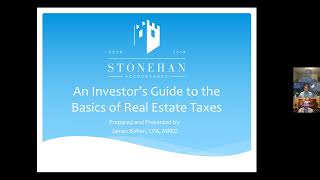
Recorded meetup (Feb 24, 2025) introducing K-1 and real-estate tax benefits for passive investors. Hosts Wayne Courreges III (C Partners) with guest CPA James Bowen (Stonehand Accountancy) cover partnership/K-1 treatment, depreciation and bonus depreciation, cost segregation, passive vs. active/material participation/real estate professional status, entity choices (LLC/partnership, S corp, C corp, REIT), debt basis/qualified non‑recourse loans, opportunity zones, distributions vs taxable events, and practical strategies for multifamily investments. Format is presentation + live Q&A.
Questions this video answers
February 24, 2025
Host: Wayne Courreges III (C Partners). Guest presenter: James Bowen, CPA (Stonehand Accountancy).
Fourth Monday of every month.
Over 1,500 members (per meetup.com statement cited by Wayne).
Email: jb@stonehand.com. Cell: 208-92-9690.
Chapters
All right, welcome to K1 and tax benefits. What every passive investor should know. We just finished up our networking and had some great conversations February 24, 2025. This is a recording that we're going to be sending out to our investors and other people that have signed up, but also to you for those that are joining in. So this meetup meets on the first, or, excuse me, the fourth Monday of every month. We've done this for a few years. We're according to themeatup.com it's where we have the second largest membership in the world, which I think is pretty cool, like over 1500 members. So obviously we've got, you know, about 14 people on today. But it's pretty cool that it is growing because it just shows there's a lot of interest in multifamily investing in particular. But really we come here, we've been talking about the good, bad and ugly. We've brought in previously. You know, obviously our CPA, James Bowen's here today. We've brought in, you know, solo 401k experts. We brought in attorneys, we brought in other sponsors and syndicators. We've, you know, really just been really pushing up heavily on passive investor education. So we're super excited to continue that this year. But last month we spoke heavily on diversifying into multifamily investments. And so every month we'll be going a little further and of course, educating. So the discussions obviously here are to educate passive investors just to make you more comfortable, more confident to invest again. It's the fourth Monday of each month. We've, we're in our meeting obviously now, but the networking breakouts typically 7:05 to 7:15. We'll do our guest presentation up to about 7:50ish, and then we'll open it up for Q and A and some networking. A little bit about myself, I was with CBRE for about 16 years. I started CREI. So CBRE is a big Fortune 150 company. I did a lot of, you know, property management, asset management for a large portfolio in Austin. So I was in Washington, D.C. houston, Austin, then back to Houston. So got a lot of exposure between all the different asset classes. In 2019 though, I started C Partners and really dove in heavily on multifamily. But since 2019, we've done retail, build to rent, communities, storage. We're about to do a hotel development, office retail. So our portfolio has definitely been expanded and diversified, but our bread and butters is multifamily. Several of you on the call today have invested in Our multifamily and you know, seeing the cash flow, seeing the tax appreciation, which is what James will be, you know, heavily talking about today. And so we're continuing to grow and big part of that is to have investors that are educated and excited to come on the ride with us. Prior to, you know, CR partners and then my days with CBRE, I served in the U.S. marine Corps from 2003 to 2007. So a little bit on my personal life. I've been married to my wife Jennifer for over 15 years. My son Hunter just turned 13. Lily turns 12 in a few months. And my Emma, she turns 10 and two months. So we got some birthdays coming up. But you know, they're my why they keep me grounded. My family, I'm at home right now and my family is like all over. My daughter Lily is doing tennis in Houston. My son's doing football. My Emma was doing gymnastics. So we're a busy family. Like I know many of you so I really appreciate yalls time this evening. So really want to push this passive investor coaching program. It's absolutely free. There's calculate over five hours. I was going through it last night. There's over five hours of content. So we do these monthly meetups which is great. But if you want to go in and really get a deep dive of how to analyze a deal, all from a passive investor standpoint, how to analyze a deal, what tools to look at to see if it, you know, say you're in North Carolina and you're looking at a deal in Houston. You what technologies out there make it easier for you so you don't have to necessarily come travel, you know, what websites, you know, to look at flood zones and crime and you know, neighborhood demographics with salaries, et cetera. So I don't charge for this. This is something that I just felt like was needed because whether you're investing with CRA Partners or somebody else, you, you just really want to be educated. Right. And so passive investor coaching dot com, if you go and enroll that you'll get an email with a username and login again, it's free and it's if you just want to do a deep dive. Not everybody likes to read books. So this is a video content that we created that I hope it's helpful. All right, well, enough about me, enough about CRO Partners. Let's turn the focus to James Bowen. James is a multifaceted real estate professional, CPA and entrepreneur growing up as a fourth generation real estate developer, starting his career working for a big four Financial institutions and operating his own fund are the unique ingredients that make him uniquely positioned to provide financial support and advice to commercial real estate businesses, funds and syndicators. As the founder of Stone Hand Accountancy, he manages over $20 million of real estate while also providing accounting, tax and fractional CFO services to the real estate industry. And with that, I'm going to stop sharing. I'm going to turn it over to my friend, but also our CPA for all of our investments and personal Mr. James Bowen.
Wayne, thanks for that awesome intro and thanks for having me on. It's been really cool to be your CPA for the past couple years and watch the growth that your firm has had. You're such a kind guy. I just love the way you interact with people both on these conference, both on these networking events and live in conferences and really happy to be working with you. Thank you, James. All right, so I've got a short little presentation prepared for y' all just to give a little highlight overview. You know, when we're talking about taxes, there's a lot of nuances. The devil's always in the details. I like to say that the tax code is a mile wide, each section is a mile deep. And I really focus on real estate taxes and specifically partnership taxes, which is the investment vehicle for most of real estate. So we're going to click through the slide here. This is something that compliance makes me put up. So we're just going to leave that there for a second and move on to the next slide. So a little bit more about me. Wayne did a great job of introducing me. So stonehand was founded with the namesake of my grandfather, David Stone, who built over 10,000 apartments in Southern California. I went and have two divisions, Stonehand Accountancy, where I do work for people like Wayne, and then I also have the family office division where we've been buying assets in Idaho and trying to get some of that wealth outside of California. Been a CPA for 13 years. I'm licensed still in California and Idaho. Fourth generation real estate developer. While I was born in Southern California, I grew up in Las Vegas because my dad built thousands of units out there. I did 15 years in Los Angeles. I like to say I speed ran corporate America where after my public accounting career I was promoted to CFO at a private fund. At 30 I went to USC. I have three degrees from that school including a master's in real estate development and after moving away from Los Angeles, live on a small farm in Idaho which has its own tax benefits as well. So One of the best things about real estate in my opinion is that has incredible favorable tax advantages. You know, there's some investments out there, like a lot of you from in Texas, that invest in oil and gas and those arguably have better tax write offs. But with oil and gas, it seems much more likely that those tax write offs might become real losses. The beauty with real estate is when you buy something you get to benefit from something called depreciation. Depreciation is basically expensing the amount that you paid for the building. Over time, you own it. There are ways to accelerate that depreciation through what are called cost segregation studies or using bonus depreciation. But some of the other benefits is that long term hold create capital gains. Like I mentioned, you will be getting cash flow, but oftentimes your K1 or which is a document that's reported to owners of a partnership, much like a W2 or a 1099. Partners in a partnership get a K1, so you'll often see a rental loss on that K1, but you'll still be getting cash flow. So it's called paper losses, but actual cash distributions. Thirdly, this is one of my favorite ones is you're able to monetize long term appreciation not through a sale, but through a refinance. And those are called debt finance distributions. And oftentimes those are tax free to investors and it's a great way to capture some of that equity that's been created without having to sell. Oftentimes you get most of your initial investment back and then you get cash flow for forever until they sell it. And some people like to call that an infinity return. And then lastly, there's heavily favored legislation involved with real estate. Something that came about with the last tax Jobs Cuts act was opportunity zones that have some crazy good tax advantages to them. So when we're talking about taxes, like I said, it's incredibly nuanced. And there are a litany of income taxes. And I'm sure not just income taxes, but different types of taxes. And I'm sure I might. I must have missed some even with this exhaustive list here. So what we're mainly going to be talking about is income tax. As you can see here, that's your ordinary income, your capital gain, your investment income, they all fall into this idea of income. And within income, those ordinary incomes can have different attributes to them. So we'll get back to that in a second. But then there's also payroll and self employment taxes, there's sales tax, there's property taxes, there's foreign taxes and international taxes called FIRPTA and eci, which is effectively connected income. You have state taxes, most of you are in Texas. You're lucky enough not to have those. And then a lot of the times there can be city taxes and then estate, inheritance and gift taxes. So what we're really going to be talking about today is income taxes. And within income taxes and ordinary income there's a few different categories. So we'll get into that here in a minute. Moving on. This is kind of where we're at with maximum tax rates today. So corporations are paying a max of 21%, individuals 37. Remember now individuals are graduated. So at certain income tiers you might be paying 25% or less or more. There's self employment and payroll. That is called FICA taxes and that's your Social Security and Medicare. Then if you make over 250k as a married filing jointly couple, you get hit with what's called net investment income tax, the NIT, which is 3.8%. Then you get additional Medicare tax for super high earners. And then from the land of California they're hitting you with 12.3% at their max level. And and if you really make too much money, then everyone has mental health problems and they charge you an an extra 1% mental health tax services tax in California. So these things add up quickly. And minimizing your taxes legally is something that my firm specializes in and that is incredibly important. And real estate is a great way to get income that is tax sheltered. So going into income types of income again, you might often hear about passive investing. And when you invest in the stock market and you're getting interest and dividends, that is a slightly different type of income from the IRS's eyes. That's called portfolio income. And portfolio income is different than ordinary income and it's often subject to tax at ordinary rates and then also to that additional 3.8% net investment income tax. So that's passive investing, which someone might think, oh, passive investing, the stock market, interest, dividends. But no, that's portfolio income. And so what real estate gives you is ordinary trader business passive income. So think about if you invest in your friend's restaurant, you don't run the restaurant, you're just a passive investor. All of your income from that activity is going to be deemed passive in the IRS code unless you're using certain short term rental loopholes or you're really running the deal and a real estate professional, you're going to be investing in projects as a passive investor. And that is this ordinary trader business line on the slide here. It's not portfolio income and it's ordinary income. And that ordinary income can be what's termed passive or active. And so for most investors investing with Wayne, they're passive and passive investors and subject to passive loss rules. Luckily, you guys don't get hit with the 3.8% net investment income tax on the ordinary income, although that could come in at capital gains as well. So just high level investors in real estate end up falling into two categories. Dealer versus investor. When you're investing with Wayne, you're almost always going to be considered on the investor side of things, which is going to lead to triggering those capital gains at a favorable rate. Dealers are people who are more or less in the condo or single family home business, where just like building a widget in a factory, the IRS looks at people building and selling condos and single family homes. As dealers of real property. Your wholesalers can get caught in this as well. And that's where everything that's a dealer property is going to be ordinary income. What the benefit of being an investor is is when you hold things for long term and the IRS looks at intent when the investment is made, you get to qualify for long term capital gains upon an exit. And that is a great place to be. Once again, passive versus active is something that's talked about a lot in the real estate industry. So like I said, passive losses can only be offset by passive income and interest and dividends are considered passive income. And I'm sorry, I misspoke earlier, passive rentals still can be subject to the 3.8% investment income attacks because you're not actively in that trade or business. So we're getting into the little weeds here that might not apply to some of the investors, but maybe will do for others. So for example, if you're a real estate broker or real estate agent, you can qualify as a real estate professional and you can start to get some of those benefits of depreciation. So there's basically four levels of passive versus active versus material participation versus real estate professional. But first, like I said, you're, you're passive. You're investing in a restaurant and not running it, or you're investing in Wayne's properties. Same concept. It's passive income to you. Now if you own your own single family rental, say now, and you do a little bit of work on it and you're actively involved and you make decisions, you can take losses up to $25,000 a year against that, and that's really caps out there. But if you start to make too much money then that starts to get phased out as well. The third threshold when looking at ordinary income and business activities is material participation. This is when you know you're more or less running the business. It's a seven factor test. Some of the safe harbor ones are working over 500 hours in the activity or working over 100 hours in the activity and no one works more than you. That's how people can take advantage of the short term rental loophole. And then lastly, like I said is the real estate professional status and that's for your developers like Wayne, your property managers, your construction guys, people who like are really getting their hands dirty with the real estate. This is how people are able to qualify themselves as a real estate professional. And just one of the spouses on a married filing jointly return has to qualify for this real estate professional status in order to take advantage of it. So for example, my wife and I wanted to have a more traditional marriage and husband and wife role. So I'm working so many hours as a cpa I'm not able to qualify as a real estate professional. Even though I'm involved with with multiple rental properties going on, I can't qualify because over 50% of my personal service working hours are over what I would be spending in real estate. So what we did is created a part time job for my wife where she went and took all the real estate classes and is now managing some of our properties. So working 15 to 20 hours a week as a part time job is going to qualify our family as a real estate professional. So even if I invested in one of Wayne's deals and he gives me a lot of passive write offs from it, I would be able to take advantage of all those write offs because my wife qualifies as a real estate professional. So when you're looking at your family structure as well, if someone's working a little less than the other, oftentimes you can save more in taxes by having the spouse be the real estate professional than they would in any other job just from the savings on taxes alone. So I know we're getting a little bit in the weeds here. Wayne, please stop me if anyone has a question. I've got kind of my PowerPoint slide up here and not watching the chat.
James, we have one raised hand. Tim, I don't know if you want to ask your question now or wait. Either way it works.
If you want to unmute, sure, let's go.
I have a quick one just to yeah, thanks, James.
Just to clarify, the benefits of being active are you can offset your other income with those losses with the real estate professional status, Correct?
Correct. So if you know, like I said, I'm making Money As a CPA, I pay myself a W2 and get a K1 for the business profits that can be offset with the losses from real estate. Like I said, the paper losses from depreciation which we're going to get into right now. Right.
Even if you had a W2 job because your wife is a professional, the the what would be normally passive losses in your investments become active losses that you can use to offset your W2 active income.
Exactly. And that's the beauty of it. Side question, are you going to talk.
At all about like the difference between public REIT tax taxation or is that not in the scope?
I can hit on that right now. So public REIT taxation, it that will usually come through as a few ways on income and how it's reported. So when you're, when you're investing a stock, it's usually a corporation entity. And REITs pay off dividends. That's part of the rule that they have to conform to in order to not pay taxes. We're not getting too much into entity type in this slide deck. But there's a few types of business ownership structures. There's corporations which pay the tax at the corporate level like I said. My accounting firm is currently a C corporation, like I said, but I'm turning it into an S corp. So the differences between that is with the C corporation, if I had any profits left, I would pay 21% corporate taxes on that. But what I do is I bonus myself out a salary at the end of the year. So I'm just paying income and payroll taxes and maximizing my Social Security contributions that way. And then when I convert to an S corporation, I'll have my payroll which covers the base salary and then any profits will flow through to me on a K1 and I'll pay taxes on that. And then we get to the land of the partnerships. And the partnerships are really complete flow through entities. And the main form of partnership in this day and age is called a LLC or limited liability company. And those limited liability companies were something that has been brought about by corporate law over the past 20, 30 years. And they've replaced a lot of limited partnerships. And most of the time LLCs are taxes partnerships. The beauty of them is that they're this cool amorphous vehicle where you can make an election with the IRS and turn an LLC into an S Corp for example. So those are kind of the three corporate structures there that are the main ones. And then REITs are a special type of C corporation that make a re election to be taxed as a reit. And they can legally avoid corporate tax by distributing out all their income as dividends. So when you invest in this in the stock market, you'll get your, you know, combined 1099 brokerage statement from Charles Schwab or whatever. And for the stuff from your reit you'll have dividend income and that's that portfolio income like I said. Now REITs benefit from something from the last TJCA act called the 199A pass through deduction. So pass through investments like Wayne's and Wayne's partnerships. My S Corp as well, for example, qualify for something called 20% deduction. So if you get 100k income from it, you can take 20%, 20k, there's some thresholds and limitations and qualifications for it and just write 20k off of it and pay taxes on 80k. And the idea was, was to create parity between the reduced C Corp tax that the last tax act brought in and the people living in the partnership flow through world. And what they did is they allowed REITs to take advantage of this 199A deduction. So on your 1099 you'll see dividends which are taxable and then 199A dividends which REITs qualify for. And you can write off 20% of your REIT dividends just off the top. And then lastly on those 1099 you'll get from REITs is something called a non dividend distribution. And this is where their cash earnings are in excess of their taxable income because of depreciation and they're able to give you a little bit more money than they give you in dividends. Does that help answer your question, Tim? It does.
Just to further piggyback on that is unlike the private real estate investments though, they don't get passed through depreciation losses to the partners of the investor with a rent. You do, you do not correct, you.
Do not get any of those bonus depreciation benefits, but you do get, you know, that benefit of the depreciation shelter tax flow. But you're not able to take advantage of a lot of the strategy I like to do is doing cost segregations and front loading a lot of the write offs in the first year. That's a huge strategy that I and a lot of clients use. Like I said, I Live on a farm. We did a cost segregation study on the farm and we're able to write off a lot of trees and fences and land improvements. And the same thing applies to real estate, which I'll get into right now. It's the perfect slide for it. So depreciation is considered like a phantom expense. You paid for the building up front and now you're riding it off over the life of the asset. And the IRS has different lives or years that you can write off investments or assets over time. So for residential real estate, it's 27 and a half years. People ask me, why is it 27 or why is it not 27 and why is it not 28? Well, half of Congress wanted 27, half of Congress wanted 28 and the other half wanted lunch. So they settled in the middle. And then on the commercial side, that's for your hotels, your retail, industrial, it's 39 years. And then when you get into things that are eligible for bonus depreciation, FNF stands for furniture and fixtures. Using a lot of accounting lingo here, PP&E means property, plant and equipment. That can be five years. Think about like your computers. And then land improvements. Like I said, on my farm I have a bunch of fences that's considered a land improvement and that's written off over 15 years. And so the commercial and residential real estate, the stuff that goes over straight line, that gets recaptured at a statutory 25% recapture rate, but the stuff that you take as bonus depreciation, which is nerdy, section 1245 property, that gets recaptured at ordinary rates and that just runs through the rental income line on your K1s. So we talked about bonus depreciation a lot. It's been slowly phased out over the last few years and everyone's saying it's coming back. 100 bonus is coming back. They've already, you know, marked it in their books. Trump says it's something he wants to do with his next tax act and it will probably come back to 100%, honestly. But you gotta wait for it to happen. You know, it's not there yet. So like I said, the great thing about real estate is you're able to get a lot of write offs in the first year. And so how people do that is they order what's called a cost segregation study report, where they go in and look and say like, hey, if you bought something for a million dollars, call it 200k was for the land. And we look at that $800,000 building and you know, if it's an apartment? How much was custom cabinetry, how much was specialty electrical? How much are the IT systems in there? And you're trying to, you know, find out what percent of that 800k can be subject to this bonus depreciation. And that's how people are able to get large write offs in the year they make real estate investments. Oftentimes people ride the waves where they invest in things, they build up these passive losses and then they get years of sales where they get passive gains on the investments that they've been in. And they're built up, passive losses oftentimes will offset some of that gain. Or if they take that gain and put it into a new investment, as people call a lazy 1031 exchange, we can get to that more later. They take the new depreciation to offset the current gain. So that's a little bit on a bonus depreciation here. Let's see if there's a chat. Oh, we passed the recording limit here. That's all right, I'll leave just the chat box.
That was somebody's AI, not ours.
Good. Okay. All right, Ethan, you need a better plan.
You got the free version?
Yeah. Okay, moving on, some ideas of taxable income. So what is taxable income? So if a property has positive income after expenses and depreciation are deducted from rental revenues, then you could be in positive income. If you have more depreciation than actual cash flow operations, then you have taxable loss. Now, all things normal, if a partnership makes a quarterly distribution to you, so long as you have tax basis, which you usually get from an allocation of the debt, just a simple distribution of cash is not taxable income. Sometimes if you foreclose on a note and take title of secured property that doesn't, that's not necessarily taxable income because your basis in the note will now apply to the loan. Now let's say on the other side of the equation, you're the person owning that property and you have a loan out against it and that loan just straight up gets forgiven, then that's considered taxable income to you. Now here's another example. Let's say same property, you get that loan not forgiven, but you refinance it and take $400,000 out. Or if Wayne gets a qualified non recourse loan and distribute it to investors, they get basis for their allocation of debt and take a distribution that's not taxable income. And then there's no deduction allowed for capital reserves. Just putting money from one account to another to save for a rainy day. That's where that idea of depreciation comes from. And that's when you make that capital reserve investment. It can either be expensed as a repair or depreciated over time. And then we kind of skip, we talked about this slide a little bit before. I'll just go high level through it again because reputation is key and taxes are complicated and nerds with glasses like me have to explain it in detail. So like I said, corporations subject to highest tax rates in addition to double taxation. So like I said, they're paying 21% tax rate at the corporate level and then any earnings above that that are a dividend of the corporation are paid to the owners and then the owners pay tax on those dividends at ordinary tax rates. So corporations always have this double tax environment. And Mark asked a question here. Are there situations where using a C corp to hold your real estate investments is beneficial maybe 0.1% of the time? I can't think of a time when it is. But there could be certain times when you're an international investor and need to own it through a C corp. That makes sense. Otherwise you become subject to firpta personally. That's about the only time I see it. Maybe if you're part of a big publicly traded company using it through a C corp for maybe some credit reasons might make sense. But oftentimes I really don't see real estate held in a C corp. And then the, and then your second question here. The criteria for a loan to become basis for an LP is that the loan has to be what's called a qualified non recourse loan. And non recourse means that for example in Wayne syndications Wayne isn't signing recourse for the project. If Wayne was the guy on the hook for the whole loan, all the debt basis would be allocated to him. Most of the time you can get what's called qualified non recourse. So qualified means a mortgage secured by real property and non recourse means that it's non, it's not recourse to any one of the llc. And that's how it gets allocated to each investor on a K1 and that allocation increases their basis in the investment. Does that answer your question?
Yeah, it helps. But I guess most investments I'm in, it seems like one of the partners, general partners, is signing for the loan. So that would tell me I wouldn't get any of it for, for the.
Basis though it depends. Like if there are just standard carve out like recourse carve outs like Bad boy actors that could be oftentimes what the recourse is for. But I do have some clients where you know, the, the promoter and the syndicator is the one on the recourse loan and then they get all the debt basis. And so using proper taxable income methods we, we follow who's really at risk and allocate income expenses accordingly. So for example, let's say there's a recourse loan to Wayne and in the first year you basically gotten a hundred thousand dollars of write offs. We would look to allocate income to those investors who are receiving distributions. So in that instance those distributions of taxable income would match those distributions would match the taxable income in that, in that sense. So it's really important to understand when you're investing into an asset whether the promoter is using recourse or non recourse debt. Cause it does have tax implications for you.
Yeah. Since you just mentioned accelerated depreciation, is it possible when the agreement's written up, the partnership agreement, can one investor have a disproportionate amount of accelerated depreciation allocated to them as part of the deal for them getting into it?
Yep. One of the beauties of LLCs and partnerships is that you can specially allocate items of income and expense exactly like that. There has to be an economic reason behind it, but usually those are substantiated. Now S corporations, like I said, are a different type of pass through vehicle where they pass through the net income to the owners. And in that scenario you can't specially allocate things through a corporation. Every thing that comes into an S corp has to be distributed and allocated in the exact ownership percentages of the S corporation. Which is why you see a lot of. There's a few other limitations on ownership with escorts. We're running out of time I'm not going to get into. But that's why you see most of the things done through partnerships. I went into details on REITs a lot more. And then there's trust, which is a whole nother four hour conversation as well. And then other tax exempt entities can own real estate as well too.
Yeah, thanks.
Absolutely. Once again we had REITs in here as well. There's a few more limitations opposed on them. Sometimes they're used in private funds markets, but they're available in the public market as most people know about them. I'm not going to get into the weeds with you guys here. And then here's an example of kind of how those entities I said are used in the structure. So the deal entity, or what's often called a propco, is the entity that owns the property. Most of the times your lenders like to see this because they want to have a quote unquote bankruptcy remote entity owning the property. That just means the LLC owns the property. Simple as you can bring your investors into this. This is where when you invest in a passive investment, you're actually getting limited partnership or LLC membership interest in the propco or the deal entity. And then oftentimes I coach my managers and my real estate syndication promoters and fund managers to split up the fee and promotes they get between a manager vehicle and a promoter entity to help for their tax purposes. Getting towards the end here, I mentioned opportunity zones. These things are available for investment for the next year and 10 months unless they extend and renew it. It had a lot of bipartisan support, so I think we'll see a renewal of this program. And it was a way to spur investment into impoverished zones that were designated by each governor around the country. And if you invest one of them, you have to, to get the benefits, you have to invest capital gains into it. You defer tax on those capital gains until 2026. And if you hold this opportunity zone investment for over 10 years, any new tax on that sale of a property over 10 years is tax free. It's one of the only places in the IRS code that completely eliminates tax, does not defer the tax, or require a step up for your heirs to take advantage of. So. Well, I can't believe time just flew talking about taxes there. And so I want to save a little bit of time for people have questions. People want to get in touch with me after this. James Bohan, CPA, MRD that's how you can find me on LinkedIn. There's my email address and there's my personal cell phone number and I'll open it up to questions here.
Hey James, since this will turn into a recording podcast too, can you read out your email and your phone number for those that won't see the slides?
Great. Yeah. So for people listening online that can't see the slides, my email address is jbstonehand.com that's stone like a rock and Han like Han Solo. JB stonehand.com and my cell phone number is 208-92-9690.
Yeah, I had a question, James, on the opportunity Opportune. I can't speak opportunity. I don't know why I can't say that word right now.
Zones. Yes.
If you, if I'm going to go buy in one of those zones a property. Do I get any benefits from being in that zone or is it just the capital gain? If I were to invest capital gains from somewhere else in.
You have to invest capital gains to take advantage of the cap, the tax advantages. So the idea this, this came up with some ex Facebook people I think is the people who put it together is that there's all these wealthy venture capitalists out there that are sitting on just, you know, long term capital gains that they don't ever want to realize. So they thought this would be a way for them to sell some stock and invest into census designated or communities across the nation to spur investment there. How they came about was a bit gamified and that's another story. But what was really cool is what I saw is that student housing was a huge play in this because if you look at it, the incomes around college towns is really low because students are not making money but their income is more or less guaranteed by mom and dad to pay the rent. So that was a huge strategy I saw with the Opportunity Zone game. There's still a decent amount of Runway left to take advantage of it.
That makes sense.
Thanks James.
Any questions? I'm going to stop the recording now actually and then that way people may be more comfortable sharing or asking questions. So I am going to do that right now.
More from Wayne

September 2026 Meetup: Investing Ahead of Growth: The Bryan–College Station Opportunity





May 2026 Meetup - Apartment Complexes & Passive Investors: Opportunities & Risks


March 2026 Meetup - Reading the Market: Economic Indicators Every Investor Should Know


February 2026 Meetup - Syndication 101: How CREI Partners Structures Deals for Investors

Build-to-Rent (BTR) Communities Explained: Why Investors Are Paying Attention