Keishia Kennedy-Untold Stories of Real Estate Investing-Balancing Military with Scaling Real Estate
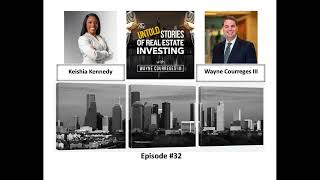
Interview with Keisha (Keisha) Kennedy, Army National Guard veteran and founder of Kennedy Remedy Investments, about her 11+ year real estate journey. Keisha describes beginning in 2011 with cash purchases of single-family homes while working abroad, learning tenant/contractor and property-management lessons, then founding Kennedy Remedy (April 2021) to scale into multifamily via syndications—investing as an LP in several small deals and acting as co-GP/asset manager on larger deals (examples: 56-unit Waco, 120-unit Des Moines, and a planned 174-unit deal). She discusses cash-out refinances to redeploy capital, vetting sponsors/mentors, using masterminds, and her mission to build generational wealth for minorities and veterans.
Chapters
Welcome to the Untold Stories of Real Estate Investing hosted by Wayne Courageous iii, a place where active and passive investors come to hear the good, bad and ugly of real estate investing. Our guests consist of experienced operators and investors who want others to succeed by sharing their stories. If you're looking to syndicate deals or grow your wealth passively in real estate, you've come to the right show. It's now time to sit back, take mental notes and enjoy next episode of the Untold Stories of Real Estate Investing.
Welcome to the Untold Stories of Real Estate Investing. I'm your host, Wayne Courageous. Today I'm excited to connect with Kesha, who's the founder and owner of Kennedy Remedy Investments, focusing on multifamily real estate investing. Kesha is an ARM army veteran with six years of service in the Army National Guard. During her enlistment, she was a human resource specialist and also deployed to Kuwait as part of Operation Enduring Freedom. She has also pursued education by earning a Bachelor of Science in Chemistry as well as a second Bachelor of Science in Exercise Science and a Master of Arts in Homeland Security. Following her enlistment, she began investing in real estate in 2011 and began expanding her managing the portfolio properties for the past 11 years. In April 2021, she decided to take the next step on her entrepreneurial journey by founding Kennedy Remedy Investments. Welcome to our show, Kesha.
Thank you for having me. I'm so excited to be a part of your show. Thank you.
Absolutely. I'm so grateful for your service and you're having this call this podcast 10:00pm in Kuwait. So awesome that you're, you're working on a capital raise and buying these properties, et cetera. So you're, you're doing extremely awesome things and just really appreciate your time. So I'd love to just sort of, you know, start off with your story in real estate. How'd you get started? How'd you go about finding your first property and just go where the conversation flows?
Yes. Great. So I am physically located in Kuwait, as he had just mentioned, which is an hour flight from Dubai, because a lot of people don't know where Kuwait is at, but they definitely know where Dubai is at. So I always like to reference Dubai. And so I am from the Richmond, Virginia area. My father was in the military, so I have lived all over. I actually was born in Germany, graduated high school in Germany, and also lived in Kentucky, California, Colorado, and Virginia. And so my father's last duty assignment was at Virginia Commonwealth University and University of Richmond. And so I graduated from there with my Bachelor of Science. And so once I graduated. Sorry, when I was attending vcu, I joined the Army National Guard. I forgot to mention that part. And I deployed to Kuwait for one year and then I returned, graduated and after I graduated, I came abroad to be a military contractor to get that tax free money. And that's when I first started investing in real estate. I didn't come from a wealthy family. I was self taught. My father did have property, my grandmother had property, my great grandfather had property as well. But no one actually sat me down and say, hey Kesha, you need to invest your money in assets. And so I decided to take the tax free money that I had in 2011 and start investing in real estate. And I started off with this single family home after the market had first crashed. It was built in 2010, I purchased it in 2011, so it was still fairly new. All I had to do is just pull up the flooring, the carpet and lay down some new flooring. And again, I purchased that when I was residing in Kuwait. And so my parents went to go view the property and they became the property manager while I was abroad. So that's how I got started with my first property. I will never forget that property. And, and I will never forget the tenant's first and last name. It was definitely a learning experience, I.
Will say, like having your family there probably helped ease the stress. And I'll tell you what, I was in, I was stationed in Okinawa, Japan, when we had a property I had. I bought my first property in 29 palms right outside the Marine Corps base. And I had some friends that rented it out and everything was fine until I told them that I was going to sell the property. Well, they, they took that opportunity to move back on base. So it sat vacant for like six months and eventually got completely destroyed by some kids or whoever. Insurance fixed it up, but I didn't have family. My parents like to go check on the property or go source it or be property managers. So being in Kuwait, I'm sure you were just happy that somebody that you knew, that you trusted obviously would help take care of your property.
Yeah, my parents were definitely a blessing and still is a blessing now because after I brought that first property, I had to figure it out on my own on how to, you know, rent it out and everything like that. And so the next year I just continued to buy bank foreclosure properties, duplexes and single family homes. And so I still have my rental portfolio to this day and I'm keeping that so I can pass that down. To my siblings, my parents and hopefully my future children that I plan on having.
Yeah. And so talk to us. Did you use like your VA home loan? I guess you couldn't because you weren't living in the property or you just use that tax free money that you talked about living in Kuwait to put the down payment on?
Correct. So all of my properties I paid with cash except for one. And I have never used my VA loan. So I still have that resource. When I do, you know, move back to the States, I can, I can use it. So I've been saving, saving to use it because as you mentioned, once you purchase your home through the VA loan, you have to reside in that property. So I'm physically here, so I can't use it.
Okay. I want to dive into that a little bit more. So you use, you buy all your properties in cash but the one you said.
Correct, correct. Except for one. And just I kept that open, you know, because I don't have any, any type of debt. So I wanted to keep that open to use my, my credit. But yeah, I purchased my property with cash. Back then when the market crashed, it was.
Right.
It was a great market and a great time to purchase. Nowadays I would not purchase anything with cash. With cash.
The market is what we're, you know, what we typically do is leverage real estate. Right. That was, that's part of the big thing. So did you have you refinanced or do anything with those properties or they just continue, I guess they're paid off and you know, they just have the cash flow for you?
Yes. So that is a good question. I am now in the process of three refis. I'm so excited about that. This is my first time, you know, doing a refi because like I said, I paid cash for them. And we are closing the 18th of April. I'm so excited. Or is it the 16th of April? I think it's the 16th of April. I am so excited about that. So I can take that cash and redeploy it into deals. So yeah, we closed on the 18th of April. I just checked. Nice.
Okay, so you're going to, so three of those homes, you're going to refinance. And let's talk about the benefits of refinancing homes. And it deals with taxes. Right. So I, you know, correct me if I'm wrong but you know, if you're refinancing single family or any, you know, loan that's not taxable. Am I right? Usually that the sell. So you're, you're I mean, you put that money in initially, but now you've got your cash plus the equity that you've grown over the years. Able to pull that out without having that tax bill is huge.
Correct. And I'm still going to cash flow. So that is the main factor why I am refiing is, you know, using that equity that has been built up over 10 years. Imagine how much equity I had built up using that equity, taking it out, still cash flowing, don't have to worry about taxes and then redeploy it into another deal or deals which is going to be more than one deal, of course.
Right.
With the, with the amount of capital I'm getting back. So I'm really excited about that. I finally made that decision to execute because I keep hearing, you know, cash refi, cash refi. And so I'm leveraging the properties that I already own. Might as well do it.
Yeah, I mean, for me, I'm like, so I'm pretty risk adverse guy. Like I'm a, you know, say, middle of the road, pretty boring guy. And I think like, if you're refinancing to a point where you're not like over leveraging and you could potentially like sell, you know, and not be upside down on the loan, then I think it's extremely smart. And then the second thing you're doing is like, you're taking that money and it may not be all the money, but it's sounds like a good percentage of it and redeploying it into, you know, real estate assets that, you know, say multifamily as an example, where you're going to be getting additional, you know, tax benefits from the depreciation of the asset, you know, the growth, the equity, et cetera. So. And it's not, you know, you're not doing a 1031, you're not, you didn't sell the property and you're deploying that cash. You know, you're truly just taking the equity of the refinance of your home or your homes and deploying those to grow your wealth.
Yes.
Such a cool. I mean, like, we haven't really talked about that on our, on our show, but I think you know a lot of people. But again, you gotta. We don't want to get into a situation where we were back in the, you know, real estate downTurn back in 0809, right. Where people are just over leveraging and they're just, you're not being smart and you know, hedging risk on their investments. But you know, if you're still cash flowing and, you know, still have that opportunity to sell at, you know, whenever, if and whenever you decide, you know, what a great strategy.
Yes. And I will be sharing, you know, my refi process on my social media platform. I love sharing my journey and educating others as well, you know, new investors or investors that just haven't even thought about refi. So I will be sharing my journey and showing people what I am reinvesting that money into to inspire as many people as possible.
Well, we'll make sure we post that social media on our links.
Yes.
Notes. One thing. So before we start going into, like, the multifamily stuff, I love talking about single family because most people start in single family. You know, it's. It's the, I would say, arguably the easier way to go about real estate investing. Right. And so you had mentioned that's that first property that you bought and that your parents, you know, checked out and you were in Kuwait. You said you had to learn about, you know, finding the right renters and finding, you know, pretty much learning everything on your own. Could you share what lessons learned and things that you, you wish you knew then that, you know now?
Yeah, there I've, I've been doing this for 11 years, so of course there are lessons learned. I would be doing a disservice to your listeners if I said, oh, no. Yeah. So the, the first tenant, I learned the hard way, she was a Section 8 tenant, also known as a housing choice voucher nowadays. And I realized that you can't help everyone. You know, they might look good on paper. They might, you know, give you a sad story so you can rent it out to them. And basically that's. That's what happened. I let her rent out the house. Well, I rented out the house to her and she had everyone staying there. It came to a point where I was overseas and my handyman reached out and said, keisha, I don't even know who lives in the house. So I had to, you know, I had to get her out and do kind of like a cash for keys type incident so she wouldn't lose her voucher. And it was a big mess. And then her child's father was doing, you know, some illegal activity in the home. So I just, I was like, no, it's time to, to draw the line. And so after that, I realized I have to be strategic with who I am renting my property to, because this is an asset. This is a business. This is not personal. And so once I started doing that, I got Better resources, results, you know, the type of tenant that I should be looking for instead of just trying to rent the home to anyone that, you know, told me the story about their children and they're looking for a property and, you know, I had to be a business owner and not a listening ear. And so that was one of the stories. The other story was same home, different year. I rented it out to someone and then that tenant had explained that her sister was looking for a property. And I'm like, okay, she's a great tenant, no worries. And I rented it out to her sister, which was a duplex, a two story duplex across the street from her. And so the sister moved in and you know, she paid for the first two months and then after that I didn't hear anything from her. And so I really didn't want to get her sister involved. But I'm like, is your sister okay? Is she sick? She's like, oh yeah, my sister's fine. And I'm like, okay. So I had to, you know, evict the sister. She didn't show up for court. So I have ran into a lot of tenant issues and I've also ran into contractor issues, but those were the two tenant issues, the biggest tenant issues that I ran into so far. So I've had a total of three evictions within the last 11 years. I think that's not too bad. Right? And I had one contractor issue and that was when the contractor, this is when I first started out again, he ended up painting the property and he literally painted everything. So the light fixture, the filter to the indoor H vac air handler, I mean, he painted literally everything. I couldn't believe it. I was like, never again. So you had to be mindful when you're, when you're hiring. You know, the cheapest is not always the better. So again, I had to learn earlier on. This was 11 years ago, so I am much wiser today. And that's how I'm able to have long term tenants and not have an issue and treat it as a business. Because also when I started out, I wasn't raising the rent again. I was self taught. And so now of course I'm doing increases. And it's definitely a lesson learned. And I realized that I had to get a coach and a mentor when I scaled up to multifamily because I didn't want to go through those same mistakes that I made in rental properties. And I'm so happy that I never quit and never gave up because again, I'm Doing that cash out refi. And I'm so excited about that.
Yeah. So going back to that first incident, like, it's a business. It's not personal. I have a. It's easy for me because I'm very business and not emotional about properties or things. And, you know, my wife could say I could probably be more emotional just in general, but, like, I'm definitely like, you know, hey, if you're not paying your rent, you can't live here type situation. Right.
Yeah, but.
But there's so many people that just have, like, my wife is, is that exact person, like, she would, you know, she's a therapist, marriage family counselor. And I have to, you know, remind her sometimes, not all the time, but sometimes like, bill your clients, like, hey, you got to bill. You're in a business. And, you know, it's not that she doesn't want to build, she just doesn't. That's not her mindset of making money or whatever. Right. And so, you know, in real estate, you have people that join that want to be landlords, but may have a struggle because their personality is not one to, you know, to potentially like, hurt people. And it's not like a negative thing of hurting people, like, physically, but just, you know, sometimes it's tough. Like, I had a. This past weekend, I was at a property and, you know, somebody, one of the residents came in and he owes like $5,000. And, you know, it's a, it's a, it's a property that we're, we're on contract for. And he was so upset. You know, just. It was tough. Like, it, you know, you feel for, you know, these people sometimes when they struggle so much, but the end of the day, like, you know, it's a business. And so you said it so well there. And it's a huge lesson learned for everybody listening here.
So, yeah, absolutely, you have to de. Attach those emotions. And so I had a mindset that I wanted to help everyone. You know, everyone should have a second chance. And some of these big apartments and these bigger management companies weren't giving the opportunity for people to rent. And so I said, okay, I'm going to give someone opportunity. And yeah, it was definitely a lesson learned. I'm happy I went through that again. It made me wiser and into the woman that I am today, a business owner. So it was definitely a lesson learned and would love to share more.
All right, so before we go to multifamily, I got one more question, because on your second example, you talked about the contractor or Actually, maybe that was your third. Your second one was the sister. The sister. But let's go to the contractor one. So the contractor. You know, there's a couple of things with contractors that I think, and I've mentioned this on my show before, but, you know, one, risk management. So many people have work being done on an investment property or their property and they don't have an insurance document or insurance listing them as an additional insured or like their company. And so that's always like a huge red flag concern for me. Right. And something that everybody should make sure that whoever's working on your property has insurance. But two, scope of work, it's got to be detailed, right. And it has to have, like time and like, what's the time of doing this scope and what's the expectation? So detailed. So now that you've had that experience, what changes are you doing with your scope of documents or just vetting your contractors? Because everyone in real estate is dealing with contractors to do.
Yes, referrals. I am really big on referrals. Very big on referrals. Now, you know, you can put a picture up on your website and say that you did it, but I am really big on referrals. That is number one. And then number two, of course, is the contract ensuring that it's very detailed when it comes to exactly what they're supposed to be doing. Be specific with it. If they're supposed to be renovating the entire home. Ensure. I know one of my coaches said that one of the contractors didn't even hang his door properly because it wasn't in the contract. So ensuring, you know, everything, the insurance, the deadline, the timeline, the materials, the labor, just going through it strategically to ensure that I don't get burnt again and use those referrals. Referrals, Referrals, referrals.
Now, how do you feel about doing business with family on that? You know, like, I have a hard time with family doing any type of contracting work, etc, because, you know, if they don't, it comes too close, too personal. Like if it's not done the way it is, then it like causes family drama. So just curious, I mean, your parents helping you on some of these, managing the properties. But how, you know, how does that family dynamic sometimes get into play when you're the owner?
Yeah, we actually haven't ran into any issues, thank God. I used to work for my father. He had a private security company and we always, we know how to not mix, you know, personal feelings and emotions with business. And I've never ran into an issue with him when I worked for him in his private security company and his and in his martial arts school. And so far within the last 11 years, I never ran into any issues with my mother, my father, my sisters, or my brother when they're trying to support me in this real estate journey. Thankfully, I can rely on them because if not, it would be a tough business. I will say I do have a handyman that basically manages. Manages it for me. And he does all the repairs and those turn ins when tenants are moving out. So he handles 98%. My parents will probably handle 2%. If he can't do something other than that, the business runs itself. He runs the business for me. So that is a blessing within itself. And we met him through, like I mentioned earlier, my father had a private security company and so he did security at multifamily commercial assets. And so he was the handyman back in the day. And that's how we connected with him. And I've, I've had him since. He does everything, plumbing, H vac, electrical, Anything that I need, he can take care of it from A to Z. He even helped me flip a home too. So I'm so thankful to have him on my team. If something happens to him, man, I don't know what to do because he has me spoiled.
Yeah. You mentioned the word team and it's a team sport. It doesn't matter like the size of property or the class of property. It's a team sport, you know, and having people to. That you can trust and rely on really, really helps.
Yeah.
You know, whatever the cycle property is.
Yeah, yeah. I wouldn't be able to do this alone, not from Kuwait. It's really challenging to have a thorough property management company that you can truly rely on. And so again, I'm so thankful to have them on our team.
All right, so let's shift gears to Kennedy Remedy Investments. So started in April 2021. So last year, what was behind the push to get into multifamily investments? How's it been going for you and love to hear your stories along the way since starting this investment firm.
Yes. So I wanted to scale last year since I started investing in residential 11 years ago. And I said, hey, I'm going to take down an apartment by myself. And I started reading and realized I learned a lot just by reading and realized that it's, you know, it's based on the asset itself with the loan. And I came across the word apartment syndication and said, what is this? And so I just started diving in more and just became addictive and started listening to podcasts, reading blogs and man, you mean I can leverage someone else's money and they will invest in a deal and they're going to help me take down this deal with the team. Okay, this is amazing. I don't have to do it myself. And so I ended up finding a mentor and join their program and invested in a deal that another person from that group had. And that's how I started. So I invested in my first deal, 27 units as a limited partner. And a limited partner is someone who invests in a deal and they're investing passively. So I brought my money to the deal and I'm receiving the benefits such as like the tax benefits, appreciation, the profit from sell and refi and also return on my capital. So I was really excited to be a part of this deal and it was in Richmond, Virginia and that's where I'm from. So I was really already knew the area. I just had to learn the terms, you know, investment terms when it comes to commercial because it's like learning a second language. And so once I understood that I felt comfortable. But first I had to vet the partnership team. You know, you want to make sure that you like know and trust them. You want to ensure that they know the market and that they understand the business plan. And then you also want to make sure that you check their due diligence because they can sell you anything. So you want to make sure you check their underwriting. You want to make sure that you check the market itself and just do your due diligence. And that's exactly what I did. And that's how I was able to invest in that deal. And then later I invested that same month 81 units in Florence, Kentucky as a limited partner and then two student housing deals. So Pennsylvania we got 19 units. And then South Carolina it's 24 units. And so I did all of this within two to three month time frame as a limited partner. And I had the opportunity to be a COGP on a deal in Waco, Texas, 56 units that we closed in December of last year. And then about three weeks ago we closed on Des Moines, 120 units as a CO GP and now we have another deal, 174 units that we are closing next month. So I'm really excited to be a part of three deals as a cogp. So I'm helping raising capital and I'm also asset managing as well. So those are my two roles while living abroad in Kuwait.
Yeah, so you're, I mean the last, what, 11, 12 years, like you've been all in on real estate being active. But do you ever ask yourself the question now having experience like the limited partner side, passive investing, you know, you're receiving that cash flow but you're not active in the role. You know, you've added it up front. But once you've added and you put in your money like you're expecting that the team can execute the plan versus these other deals where you're co GP and you're doing the asset management, there's a lot more work involved. Is there a balance for you? Because sometimes I'm like, man, being a limited partner is a good thing. Like I can, you know, trust that someone else is, you know, that I vetted and feel comfortable with is doing, doing the heavy lifting while, you know, I received mailbox money.
Yes. So I wanted to start off as a limited partner to understand the, the role and the communication that is between the general partner and limited partner. So when I did have the opportunity, I understood instead of going in there blindly. And so after receiving that first distribution last year, I said, man, I actually prefer for being a limited partner, just like you mentioned. All I have to do is just open up an email, read updates, monthly updates, occupancy, you know, net operating income, see the pictures of the renovation and collect my distribution. I honestly prefer being a limited partner over a gp. And so the last two deals when I was a co gp, I also invested in that deal too. So I am invested as a co, GP and lp. However, if you are going to be a gp, a general partner, which is an active role in a syndication, you are going to work. You're going to work from the beginning and you're going to work till it's closed. So be prepared to put in that sweat equity. So a general partner is someone that's active in the deal. So they will find the deal boots on the ground, due diligence, ensuring that the business plan is executed and so asset managing. Then we also have investor relations and attracting capital. So there are many roles and that the general partnership does play. There are fees involved, you know, from the limited partnership side, but we definitely earn those fees. It is a lot of sweat equity that's being put in the deal to ensure that we get the best returns for our investors. So to answer your question, I prefer being an LP over a gp.
All right, so the follow up question to that, Keisha, is are you going to be using a lot of the money that you're getting from the refi towards LP gp, a little bit of both. Like, what's your strategy?
Yeah, so actually this year or next year, I would love to invest in a deal as a JV structure because of the more cash flow. So I'm going to use some of my capital for that. Of course, the GP role, you know, bring it being a KP on a deal. I have already, you know, invested in other deals as LPs, and then I also want to save my capital to invest in on the deals that I'm going to have in the future for GP opportunities, because I believe in putting my skin in the game. The GP team that I partner up with believes the same. If it's a good deal and we're presenting it to an lp, that is one of the questions you should ask is, is the GP investing in on this deal? So I'm using that capital for a little bit of everything. I'm going to diversify it.
Yeah, love it. Yeah. It's going to give you a lot of options too, and have that, you know, diversification where you can have that passive income, but you also can continue in growing your, your experience and bringing your investors along too, to grow their wealth through real estate. So what have been some roadblocks, potential hurdles that you've experienced along the way, whether it's through single family, multifamily, just in general. Be curious to hear what roadblocks you got.
Yeah, I will discuss multifamily since we touched on residential earlier. So the biggest roadblock, I would say, is in multifamily is just trying to get into a great partnership with someone because there are a lot of teams out there, but you want to ensure that you vet the team. In order to scale, you have to be in a deal with someone. Right. So it's not going to be easy. If you're listening to this show and thinking that, hey, I want to get into a deal, it's going to take time. It takes time to build those relationships up. It will not happen overnight. And you shouldn't want it to happen overnight because when you're in a syndication, it is a relationship. I refer to it as a marriage. It's just like going out and purchasing a home with your spouse. You are married to them until it's sold. And so you want to make sure that if you are trying to scale, you have to vet the partnership team and you're going to have. It's going to take time. It's going to take time to get into these deals. A lot of people are so eager to get into these deals and it's not going to happen overnight. So I would say that was one of the roadblocks. However, because of the networking that I do within our mastermind, that's how I was able to leverage and get into those deals. So it wasn't necessarily a roadblock. I just wanted to use that question as a learning experience for someone that expects to just go out here and be a gp Because I hear it all the time. People will come up to me or book a call and say, hey, I want to work with you. But I'm like, I don't even. I don't even know you. I don't even know you. It takes time to build up those relationships, and I have. Have a partnership team that I enjoy working with and I want to keep it that way.
Yeah, I feel like once you get that team, it turns into more of a rinse and repeat cycle. Everybody knows their strengths and what they can bring to the table and so definitely agree. I mean, you can have multiple teams and partnerships, but finding those groups or that one group that aligns with your values and everything that you're able to bring, I think is huge. Now, you mentioned mastermind. You mentioned mentorship programs earlier. That is, I mean, without having that sensei or that person to help you get through, you know, how to underwrite a deal, how to find deals off market, how to build, you know, a team, etc. How to do the asset management and operate the property. You know, that is a huge roadblock for anybody that doesn't have that resources. What do you, what did you look for in finding that mentor or are joining that mastermind? You know, what were the things you were looking for and to make you feel comfortable like that was the right group, because there's many groups out there. So I'm just curious on what your thoughts are on that.
Yeah, I wanted to ensure that they actually had the experience. And I'm big on referrals, so I vetted them and I asked for referrals. I wanted to see, you know, how many, how many full cycles that they've went through, how many deals have they underwrote, how many offers have they put in? What are their core values, you know, what, how long have they been working with their team and what is their underwriting look like? And there was a list of questions that I wanted to ask to ensure that we were a good fit for each other. But I'm so grateful and thankful that I did join them because that is actually One roadblock that I would have ran into if I didn't go through a syndication, if I tried to do it myself, as I mentioned earlier, how I wanted to just purchase an apartment on my own, well, eventually I would have ran out of capital. So that would have been one road roadblock. But I am so happy that I invested in myself. You know, once you invest in yourself, you're creating that freedom in the future. It might not be freedom now, but that was the best investment that I made was putting, for putting forth money into myself because no one's going to help me but myself. Right. And so I believe that I'm worth that. A lot of people will say, hey, why are you paying for a mastermind? Why are you paying for a coach though? It's the best thing that you can do. A lot of people, you know, football players, basketball players, they have a coach. It's the same thing. And so I look at this as a business and in order to be successful, I wanted to get a coach and a mentor. And that's what I've done. I'm leveraging their experience. I'm leveraging, you know, they've made those mistakes along the way, like I may win the residential space. So you have to vet them. Not all gurus are created equal. You know, they might say that they're good, but ensuring that they have a success track record is important for me because if they can do it, that means I can do it.
Yep. Well, you, we've mentioned this earlier, like this is a business and in business it's all about return on investments. Right. Your return on. So you know, when I'm spending thousands of dollars on a mastermind or joining a mentorship program, it's, it's to continue to learning, but it's also to be around people who are doing deals and who I could eventually partner with. Right. And so you're building those relationships. So in my mind, I, I justify things it just who I am and I'm like, well, if I can make, you know, this amount of money by joining and spending this money, I can get this amount of money just by having the doors open and have it done a lot quicker. Because you're leveraging, you know, the talent within that group, but also the experience within the group is huge.
So yeah, absolutely. And that's how I was able to get in those other deals as code gp, because I built those relationships over time and I felt comfortable with partnering up with them. You know, they are part of the network, we are part of the same coach. So it's a perfect, perfect partnership.
Well, as we start closing up our podcast here, I've got two more questions. This question I am really curious on just overlooked aspects of real estate investing. Whether it's a newbie or someone experienced. What are you seeing out there that is potentially going to cause investment mistakes or has caused investment mistakes for people out there looking for deals regardless of the asset class?
Yes, I always want to go back to. Okay, we'll start with multifamily. As I mentioned earlier, just being too eager to get into a deal and not vetting the sponsor team that you're trying to work with. Whether it's. If you're trying to work with them to be a GP or lp, just take your time. Not all deals are created equal. Just because you see a deal and there's going to be so many deals, ensure that that deal meets your investment terms. Are they meeting the. If you have a 8 to 12% cash on cash, are they meeting that? And if not, then don't invest in their deal because a lot of people will present so many. I get presented deals all the time, but I'm not going to invest in it just because it's on the table. So I want to make sure that it's going to meet my goals when it comes to investing. So don't be eager to jump into a syndication as a limited partner or a GP or a general partner. And then also ensure that you underwrite the deal. Well, not underwrite it, but do your due diligence on the deal to ensure that the business plan that the GP team is sharing with you is. Can be executed. You just have to be very mindful. I've heard so many stories and I don't want that to happen to any of your listeners, and I'm definitely not going to let it happen to me. So that is one good tip when it comes to diving into multifamily, whether it's an LP or gp, just be mindful because this is an investment and there are risks.
Yeah, yeah. I think, you know, those that are listening to the podcast and reading, I mean, it's all about education. And the more, you know, the more you can ask questions and really just do a sniff test. Like if you're being presented that opportunity, you know, you'll hopefully have a, you know, an offering memorandum or a deal that you can go through and then a private placement memorandum where you can review. But I think ultimately, you know, checking like rent, gross and expense, you know, what, what's the value add story? What what's the story of what we're trying to accomplish? Is this a cash flowing deal or is this a deal that it's a deep value add so we're not going to have much cash flow but so at the end we're going to reap the benefits from the sell and there's no right or wrong, it's just making sure your investment criteria and priorities are aligned with that type of deal. So really well said on that. And I always ask this question and so I'll obviously ask you, but what are your proudest moments investing in real estate?
Yes, that's a good question. I would say the second cogp opportunity that I had in Des Moines, Iowa I helped raise capital and also asset managed. It was 120 units. And so my why in being a general partner is to help educate as many minorities as possible. I am a minority, a woman of color and so I am helping bridging the wealth gap for minorities and I am doing that by leveraging my social media by educating as many people as possible, especially minorities and fellow veterans. We are the last to opportunities as such. And so I love doing 506B deals because I can present that to the less fortunate and help them get into these deals. So in order to do that I am using my social media platform. So that is my why helping as many minorities as possible in veterans. And then my second why is impacting the community through our value add strategy and also generational wealth and financial freedom. But my main reason is helping minorities just as myself. And so on that deal I helped raise capital and all the investors that I brought to that deal were all minorities. So that is one of the biggest, proudest moment thus far in real estate. That is a big movement. I posted about it on my social media platform and and then my second one would be my sister, she's 25 years old, she invested in on the deal in Des Moines as well Iowa that we closed. So again, so proud of that investment.
Yeah, well I know so many people are looking up to you and just appreciative of what you're doing and educating and helping people who would not have had access potentially otherwise. Yeah, you're going out and helping. We talked about, you know, before the show that what we're wanting and what we're seeing is going to take time with minorities, women and women of color. So we were talking earlier that it's just incredible what you're doing and what you've accomplished and that you just continue bringing people and building people up around you. To help. So love what you're doing and I'm so grateful for you being on our show. Is there any other items or anything you'd like to share on our show or about your company?
Sure. I like to leave them with the Beginner's Guide to Investing as a Limited Partner. If you are interested to learn more, go on my website which is Kennedy like the President Remedy R E M E D Y investments with an S.com guide. You will see the guide on there. Just put in your email address and your name and it will be sent to you. So in that guide it includes what is a limited partner, the benefits of a limited partner, a sample deal, questions to ask your sponsor team. And so I hope that guides you along your way. And then also at the bottom you'll see a link to book a call with me. But yeah, I would love to leave that with your listeners. And then I'm also on LinkedIn. Keisha Kennedy K E I S H I A Also on Facebook, the business name kennedyremedy Investments, Instagram kennedyremedy. So feel free to reach out. This is part of the business that I truly enjoy. As I mentioned earlier, education is very important and vital in succeeding in real estate. And so I'm willing to help everyone. So even if you're not a minority or if you're not a fellow veteran, feel free to reach out because we have, you know, investors from all walks of life and I just want to help you to start building that generational wealth and financial freedom for your family and make that money work for you. Because there are two things that we are guaranteed in life and we are guaranteed of taxes and inflation. So in order to beat that inflation and those taxes, this is a good way to make your money work for you by investing in real estate, tangible asset. Because working for yourself for 20 to 30 years, like society has, has taught us that is not the way to go nowadays. So working for yourself is a risk and we don't want you to have that risk. We want you to to put that capital to use in a deal.
And tell us what the slogan is for your Kennedy Remedy Investments. You said something before our show that.
I just thought was yes. So my company's name is Kennedy Remedy Investment. So we are the remedy for your investment.
Love it. Well Kesha, thank you so much for being on our show and we'll put in our show notes how people can reach out to you. Obviously you mentioned that on the audio as well, but excited for people to get to know you more and again, thanks for your service and all you're doing. We'll talk soon.
All right. Thank you for having me. I had a wonderful time.
That's all for this episode. We hope you subscribe, share and leave a review of the show. For more information about passively investing in multifamily apartments, check out Wayne's free ebook by going to creipartners.com ebook Also, follow us on Facebook by searching CREI partners. This was the untold story.
More from Wayne

September 2026 Meetup: Investing Ahead of Growth: The Bryan–College Station Opportunity





May 2026 Meetup - Apartment Complexes & Passive Investors: Opportunities & Risks


March 2026 Meetup - Reading the Market: Economic Indicators Every Investor Should Know


February 2026 Meetup - Syndication 101: How CREI Partners Structures Deals for Investors

Build-to-Rent (BTR) Communities Explained: Why Investors Are Paying Attention